mirror of
https://github.com/speed47/spectre-meltdown-checker.git
synced 2026-05-25 08:43:09 +02:00
Compare commits
3 Commits
| Author | SHA1 | Date | |
|---|---|---|---|
 github-actions[bot] github-actions[bot]
|
f9c3d19f72 | ||
|
github-actions[bot]
|
8389d9593c | ||
 Stéphane Lesimple Stéphane Lesimple
|
3a822fdcf2 |
@@ -0,0 +1,34 @@
|
||||
name: autoupdate
|
||||
|
||||
on:
|
||||
workflow_dispatch:
|
||||
schedule:
|
||||
- cron: '42 9 * * *'
|
||||
|
||||
jobs:
|
||||
autoupdate:
|
||||
runs-on: ubuntu-latest
|
||||
steps:
|
||||
- uses: actions/checkout@v4
|
||||
- name: Install prerequisites
|
||||
run: sudo apt-get update && sudo apt-get install -y --no-install-recommends iucode-tool sqlite3 unzip
|
||||
- name: Update microcode versions
|
||||
run: ./spectre-meltdown-checker.sh --update-builtin-fwdb
|
||||
- name: Check git diff
|
||||
id: diff
|
||||
run: |
|
||||
echo change="$(git diff spectre-meltdown-checker.sh | awk '/MCEDB/ { if(V) { print V" to "$4; exit } else { V=$4 } }')" >> "$GITHUB_OUTPUT"
|
||||
echo nbdiff="$(git diff spectre-meltdown-checker.sh | grep -cE -- '^\+# [AI],')" >> "$GITHUB_OUTPUT"
|
||||
git diff
|
||||
cat "$GITHUB_OUTPUT"
|
||||
- name: Create Pull Request if needed
|
||||
if: steps.diff.outputs.nbdiff != '0'
|
||||
uses: peter-evans/create-pull-request@v7
|
||||
with:
|
||||
token: ${{ secrets.SMC_PR_PAT }}
|
||||
branch: autoupdate-fwdb
|
||||
commit-message: "update: fwdb from ${{ steps.diff.outputs.change }}, ${{ steps.diff.outputs.nbdiff }} microcode changes"
|
||||
title: "[Auto] Update fwdb from ${{ steps.diff.outputs.change }}"
|
||||
body: |
|
||||
Automated PR to update fwdb from ${{ steps.diff.outputs.change }}
|
||||
Detected ${{ steps.diff.outputs.nbdiff }} microcode changes
|
||||
@@ -1,185 +0,0 @@
|
||||
name: build
|
||||
|
||||
on:
|
||||
push:
|
||||
branches:
|
||||
- test
|
||||
- source
|
||||
|
||||
jobs:
|
||||
build:
|
||||
|
||||
runs-on: ubuntu-latest
|
||||
|
||||
steps:
|
||||
- uses: actions/checkout@v6
|
||||
with:
|
||||
persist-credentials: true
|
||||
- name: install prerequisites
|
||||
run: sudo apt-get update && sudo apt-get install -y shellcheck shfmt jq sqlite3 iucode-tool make
|
||||
- name: update Intel model list
|
||||
run: ./scripts/update_intel_models.sh
|
||||
- name: build and check
|
||||
run: |
|
||||
make build fmt-check shellcheck
|
||||
mv spectre-meltdown-checker.sh dist/
|
||||
- name: check direct execution
|
||||
run: |
|
||||
set -x
|
||||
expected=$(cat .github/workflows/expected_cve_count)
|
||||
cd dist
|
||||
|
||||
json=$(sudo ./spectre-meltdown-checker.sh --batch json || true)
|
||||
|
||||
# Validate JSON is well-formed (and show it if not)
|
||||
echo "$json" | jq . >/dev/null || {
|
||||
echo "Invalid JSON produced by spectre-meltdown-checker.sh"
|
||||
echo "$json"
|
||||
exit 1
|
||||
}
|
||||
|
||||
# Validate required keys exist
|
||||
for key in meta system cpu cpu_microcode vulnerabilities; do
|
||||
echo "$json" | jq -e ".$key" >/dev/null || {
|
||||
echo "Missing top-level key: $key"
|
||||
echo "$json" | jq .
|
||||
exit 1
|
||||
}
|
||||
done
|
||||
|
||||
# Use -r to get raw scalars (no quotes)
|
||||
fmtver=$(echo "$json" | jq -r '.meta.format_version // empty')
|
||||
if [ "$fmtver" != "1" ]; then
|
||||
echo "Unexpected format_version: $fmtver"
|
||||
echo "$json" | jq .
|
||||
exit 1
|
||||
fi
|
||||
|
||||
run_as_root=$(echo "$json" | jq -r '.meta.run_as_root // empty')
|
||||
if [ "$run_as_root" != "true" ]; then
|
||||
echo "Expected run_as_root=true, got: $run_as_root"
|
||||
echo "$json" | jq .
|
||||
exit 1
|
||||
fi
|
||||
|
||||
mocked=$(echo "$json" | jq -r '.meta.mocked // "false"')
|
||||
if [ "$mocked" = "true" ]; then
|
||||
echo "mocked=true must never appear in production"
|
||||
echo "$json" | jq .
|
||||
exit 1
|
||||
fi
|
||||
|
||||
# Count CVEs robustly (as a number)
|
||||
nb=$(echo "$json" | jq -r '[.vulnerabilities[].cve] | length')
|
||||
if [ "$nb" -ne "$expected" ]; then
|
||||
echo "Invalid number of CVEs reported: $nb instead of $expected"
|
||||
echo "$json" | jq '.vulnerabilities[].cve'
|
||||
exit 1
|
||||
else
|
||||
echo "OK $nb CVEs reported"
|
||||
fi
|
||||
|
||||
# Validate json-terse backward compatibility
|
||||
nb_terse=$(sudo ./spectre-meltdown-checker.sh --batch json-terse | jq -r 'map(.CVE) | length')
|
||||
if [ "$nb_terse" -ne "$expected" ]; then
|
||||
echo "json-terse backward compat broken: $nb_terse CVEs instead of $expected"
|
||||
exit 1
|
||||
else
|
||||
echo "OK json-terse backward compat: $nb_terse CVEs"
|
||||
fi
|
||||
- name: check docker compose run execution
|
||||
run: |
|
||||
expected=$(cat .github/workflows/expected_cve_count)
|
||||
cd dist
|
||||
docker compose build
|
||||
json=$(docker compose run --rm spectre-meltdown-checker --batch json || true)
|
||||
echo "$json" | jq . > /dev/null
|
||||
fmtver=$(echo "$json" | jq '.meta.format_version')
|
||||
if [ "$fmtver" != "1" ]; then
|
||||
echo "Unexpected format_version: $fmtver"
|
||||
exit 1
|
||||
fi
|
||||
nb=$(echo "$json" | jq '.vulnerabilities[].cve' | wc -l)
|
||||
if [ "$nb" -ne "$expected" ]; then
|
||||
echo "Invalid number of CVEs reported: $nb instead of $expected"
|
||||
exit 1
|
||||
else
|
||||
echo "OK $nb CVEs reported"
|
||||
fi
|
||||
- name: check docker run execution
|
||||
run: |
|
||||
expected=$(cat .github/workflows/expected_cve_count)
|
||||
cd dist
|
||||
docker build -t spectre-meltdown-checker .
|
||||
json=$(docker run --rm --privileged -v /boot:/boot:ro -v /dev/cpu:/dev/cpu:ro -v /lib/modules:/lib/modules:ro spectre-meltdown-checker --batch json || true)
|
||||
echo "$json" | jq . > /dev/null
|
||||
fmtver=$(echo "$json" | jq '.meta.format_version')
|
||||
if [ "$fmtver" != "1" ]; then
|
||||
echo "Unexpected format_version: $fmtver"
|
||||
exit 1
|
||||
fi
|
||||
nb=$(echo "$json" | jq '.vulnerabilities[].cve' | wc -l)
|
||||
if [ "$nb" -ne "$expected" ]; then
|
||||
echo "Invalid number of CVEs reported: $nb instead of $expected"
|
||||
exit 1
|
||||
else
|
||||
echo "OK $nb CVEs reported"
|
||||
fi
|
||||
- name: check fwdb update (separated)
|
||||
run: |
|
||||
cd dist
|
||||
nbtmp1=$(find /tmp 2>/dev/null | wc -l)
|
||||
./spectre-meltdown-checker.sh --update-fwdb; ret=$?
|
||||
if [ "$ret" != 0 ]; then
|
||||
echo "Non-zero return value: $ret"
|
||||
exit 1
|
||||
fi
|
||||
nbtmp2=$(find /tmp 2>/dev/null | wc -l)
|
||||
if [ "$nbtmp1" != "$nbtmp2" ]; then
|
||||
echo "Left temporary files!"
|
||||
exit 1
|
||||
fi
|
||||
if ! [ -e ~/.mcedb ]; then
|
||||
echo "No .mcedb file found after updating fwdb"
|
||||
exit 1
|
||||
fi
|
||||
- name: check fwdb update (builtin)
|
||||
run: |
|
||||
cd dist
|
||||
nbtmp1=$(find /tmp 2>/dev/null | wc -l)
|
||||
./spectre-meltdown-checker.sh --update-builtin-fwdb; ret=$?
|
||||
if [ "$ret" != 0 ]; then
|
||||
echo "Non-zero return value: $ret"
|
||||
exit 1
|
||||
fi
|
||||
nbtmp2=$(find /tmp 2>/dev/null | wc -l)
|
||||
if [ "$nbtmp1" != "$nbtmp2" ]; then
|
||||
echo "Left temporary files!"
|
||||
exit 1
|
||||
fi
|
||||
- name: create a pull request to ${{ github.ref_name }}-build
|
||||
run: |
|
||||
# all the files in dist/* and .github/* must be moved as is to the -build branch root, move them out for now:
|
||||
tmpdir=$(mktemp -d)
|
||||
mv ./dist/* .github $tmpdir/
|
||||
rm -rf ./dist
|
||||
|
||||
git fetch origin ${{ github.ref_name }}-build
|
||||
git checkout -f ${{ github.ref_name }}-build
|
||||
rm -rf doc/
|
||||
mv $tmpdir/* .
|
||||
rm -rf src/ scripts/ img/
|
||||
mkdir -p .github
|
||||
rsync -vaP --delete $tmpdir/.github/ .github/
|
||||
|
||||
git add --all
|
||||
echo =#=#= DIFF CACHED
|
||||
git diff --cached
|
||||
echo =#=#= STATUS
|
||||
git status
|
||||
echo =#=#= COMMIT
|
||||
git config --global user.name "github-actions[bot]"
|
||||
git config --global user.email "41898282+github-actions[bot]@users.noreply.github.com"
|
||||
git log ${{ github.ref }} -1 --format=format:'%s%n%n built from commit %H%n dated %ai%n by %an (%ae)%n%n %b'
|
||||
git log ${{ github.ref }} -1 --format=format:'%s%n%n built from commit %H%n dated %ai%n by %an (%ae)%n%n %b' | git commit -F -
|
||||
git push
|
||||
@@ -1 +0,0 @@
|
||||
32
|
||||
@@ -1 +0,0 @@
|
||||
spectre-meltdown-checker.sh
|
||||
-877
@@ -1,877 +0,0 @@
|
||||
# Project Overview
|
||||
|
||||
spectre-meltdown-checker is a single self-contained shell script (`spectre-meltdown-checker.sh`) that detects system vulnerability to several transient execution CPU CVEs (Spectre, Meltdown, and related). It supports Linux and BSD (FreeBSD, NetBSD, DragonFlyBSD) on x86, amd64, ARM, and ARM64.
|
||||
|
||||
The script must stay POSIX-compatible, and not use features only available in specific shells such as `bash` or `zsh`. The `local` keyword is accepted however.
|
||||
|
||||
## Project Mission
|
||||
|
||||
This tool exists to give system administrators simple, actionable answers to two questions:
|
||||
|
||||
1. **Am I vulnerable?**
|
||||
2. **What do I have to do to mitigate these vulnerabilities on my system?**
|
||||
|
||||
The script does not run exploits and cannot guarantee security. It reports whether a system is **affected**, **vulnerable**, or **mitigated** against known transient execution vulnerabilities, and provides detailed insight into the prerequisites for full mitigation (microcode, kernel, hypervisor, etc.).
|
||||
|
||||
### Why this tool still matters
|
||||
|
||||
Even though the Linux `sysfs` hierarchy (`/sys/devices/system/cpu/vulnerabilities/`) now reports mitigation status for most vulnerabilities, this script provides value beyond what `sysfs` offers:
|
||||
|
||||
- **Independent of kernel knowledge**: A given kernel only understands vulnerabilities known at compile time. This script's detection logic is maintained independently, so it can identify gaps a kernel doesn't yet know about.
|
||||
- **Detailed prerequisite breakdown**: Mitigating a vulnerability can involve multiple layers (microcode, host kernel, hypervisor, guest kernel, software). The script shows exactly which pieces are in place and which are missing.
|
||||
- **No-runtime kernel analysis**: The script can inspect a kernel image before it is booted (`--kernel`, `--config`, `--map`), verifying it carries the expected mitigations.
|
||||
- **Backport-aware**: It detects actual capabilities rather than checking version strings, so it works correctly with vendor kernels that silently backport or forward-port patches.
|
||||
- **Covers gaps in sysfs**: Some vulnerabilities (e.g. Zenbleed) are not reported through `sysfs` at all.
|
||||
|
||||
### Terminology
|
||||
|
||||
These terms have precise meanings throughout the codebase and output:
|
||||
|
||||
- **Affected**: The CPU hardware, as shipped from the factory, is known to be concerned by a vulnerability. Says nothing about whether the vulnerability is currently exploitable.
|
||||
- **Vulnerable**: The system uses an affected CPU *and* has no (or insufficient) mitigations in place, meaning the vulnerability can be exploited.
|
||||
- **Mitigated**: A previously vulnerable system has all required layers updated so the vulnerability cannot be exploited.
|
||||
|
||||
## Branch Model
|
||||
|
||||
The project uses 4 branches organized in two pipelines (production and dev/test). Developers work on the source branches; CI builds the monolithic script and pushes it to the corresponding output branch.
|
||||
|
||||
| Branch | Contents | Pushed by |
|
||||
|--------|----------|-----------|
|
||||
| **`test`** | Dev/test source (split files + Makefile) | Developers |
|
||||
| **`test-build`** | Monolithic test script (built artifact) | CI from `test` |
|
||||
| **`source`** | Production source (split files + Makefile) | Developers |
|
||||
| **`source-build`** | Monolithic test script (built artifact) | CI from `source` |
|
||||
| **`master`** | Monolithic production script (built artifact) | PR by developers from `source-build` |
|
||||
|
||||
- **`source`** and **`test`** contain the split source files and the Makefile. These are the branches developers commit to.
|
||||
- **`master`**, **`source-build`** and **`test-build`** contain only the monolithic `spectre-meltdown-checker.sh` built by CI. Nobody commits to these directly.
|
||||
- **`master`** is the preexisting production branch that users pull from. It cannot be renamed.
|
||||
- **`test-build`** is a testing branch that users can pull from to test pre-release versions.
|
||||
- **`source-build`** is a preprod branch to prepare the artifact before merging to **`master`**.
|
||||
|
||||
Typical workflow:
|
||||
1. Feature/fix branches are created from `test` and merged back into `test`.
|
||||
2. CI builds the script and pushes it to `test-build` for testing.
|
||||
3. When ready for release, `test` is merged into `source`.
|
||||
4. CI builds the script and pushes it to `source-build` for production.
|
||||
5. Developer creates a PR from `source-build` to `master`.
|
||||
|
||||
## Versioning
|
||||
|
||||
The project follows semantic versioning in the format `X.Y.Z`:
|
||||
|
||||
- **X** = the current year, in `YY` format.
|
||||
- **Y** = the number of CVEs supported by the script, which corresponds to the number of files under `src/vulns/`.
|
||||
- **Z** = `MMDDVAL`, where `MMDD` is the UTC build date and `VAL` is a 3-digit value (000–999) that increases monotonically throughout the day, computed as `seconds_since_midnight_UTC * 1000 / 86400`.
|
||||
|
||||
The version is patched automatically by `build.sh` into the `VERSION=` variable of the assembled script. The source file (`src/libs/001_core_header.sh`) carries a placeholder value that is overwritten at build time.
|
||||
|
||||
## Linting and Testing
|
||||
|
||||
```bash
|
||||
# Assemble the final script
|
||||
make build
|
||||
|
||||
# Lint the generated script
|
||||
make fmt-check shellcheck
|
||||
|
||||
# Run the script (requires root for full results)
|
||||
sudo ./spectre-meltdown-checker.sh
|
||||
|
||||
# Run specific tests that we might have just added (variant name)
|
||||
sudo ./spectre-meltdown-checker.sh --variant l1tf --variant taa
|
||||
|
||||
# Run specific tests that we might have just added (CVE name)
|
||||
sudo ./spectre-meltdown-checker.sh --cve CVE-2018-3640 --cve CVE-2022-40982
|
||||
|
||||
# Batch JSON mode (comprehensive output)
|
||||
sudo ./spectre-meltdown-checker.sh --batch json | python3 -m json.tool
|
||||
|
||||
# Batch JSON terse mode (legacy flat array)
|
||||
sudo ./spectre-meltdown-checker.sh --batch json-terse | python3 -m json.tool
|
||||
|
||||
# Update microcode firmware database
|
||||
sudo ./spectre-meltdown-checker.sh --update-fwdb
|
||||
|
||||
# Docker
|
||||
docker-compose build && docker-compose run --rm spectre-meltdown-checker
|
||||
```
|
||||
|
||||
There is no separate test suite. CI (`.github/workflows/check.yml`) runs shellcheck, tab-indentation checks, a live execution test validating 19 CVEs, Docker builds, and a firmware DB update test that checks for temp file leaks.
|
||||
|
||||
## Architecture
|
||||
|
||||
The entire tool is a single bash script with no external script dependencies. Key structural sections:
|
||||
|
||||
- **Output/logging functions** (~line 253): `pr_warn`, `pr_info`, `pr_verbose`, `pr_debug`, `explain`, `pstatus`, `pvulnstatus` - verbosity-aware output with color support
|
||||
- **CPU detection** (~line 2171): `parse_cpu_details`, `is_intel`/`is_amd`/`is_hygon`, `read_cpuid`, `read_msr`, `is_cpu_smt_enabled` - hardware identification via CPUID/MSR registers
|
||||
- **Kernel architecture detection** (`src/libs/365_kernel_arch.sh`): `is_arm_kernel`/`is_x86_kernel` - detects the **target kernel's** architecture (not the host CPU) using kernel artifacts (System.map symbols, kconfig, kernel image), with `cpu_vendor` as a fast path for live mode. Results are cached in `g_kernel_arch`. Use these helpers to guard arch-specific kernel/kconfig/System.map checks and to select the appropriate verdict messages. In no-hw mode, the target kernel may differ from the host CPU architecture.
|
||||
- **CPU architecture detection** (`src/libs/360_cpu_smt.sh`): `is_x86_cpu`/`is_arm_cpu` - detects the **host CPU's** architecture via `cpu_vendor`. Use these to gate hardware operations (CPUID, MSR, microcode) that require the physical CPU to be present. Always use positive logic: `if is_x86_cpu` (not `if ! is_arm_cpu`). These two sets of helpers are independent — a vuln check may need both, each guarding different lines.
|
||||
- **Microcode database** (embedded): Intel/AMD microcode version lookup via `read_mcedb`/`read_inteldb`; updated automatically via `.github/workflows/autoupdate.yml`
|
||||
- **Kernel analysis** (~line 1568): `extract_kernel`, `try_decompress` - extracts and inspects kernel images (handles gzip, bzip2, xz, lz4, zstd compression)
|
||||
- **Vulnerability checks**: 19 `check_CVE_<year>_<number>()` functions, each with `_linux()` and `_bsd()` variants. Uses whitelist logic (assumes affected unless proven otherwise)
|
||||
- **Batch output emitters** (`src/libs/250_output_emitters.sh`): `_emit_json_full`, `_emit_json_terse`, `_emit_text`, `_emit_nrpe`, `_emit_prometheus`, plus JSON section builders (`_build_json_meta`, `_build_json_system`, `_build_json_cpu`, `_build_json_cpu_microcode`)
|
||||
- **Main flow** (~line 6668): Parse options → detect CPU → loop through requested CVEs → output results (text/json/json-terse/nrpe/prometheus) → cleanup
|
||||
|
||||
### JSON Batch Output Formats
|
||||
|
||||
Two JSON formats are available via `--batch`:
|
||||
|
||||
- **`--batch json`** (comprehensive): A top-level object with five sections:
|
||||
- `meta` — script version, format version, timestamp, `mode` (`live`, `no-runtime`, `no-hw`, `hw-only`), run mode flags (`run_as_root`, `reduced_accuracy`, `mocked`, `paranoid`, `sysfs_only`, `extra`)
|
||||
- `system` — kernel release/version/arch/cmdline, CPU count, SMT status, hypervisor host detection
|
||||
- `cpu` — `arch` discriminator (`x86` or `arm`), vendor, friendly name, then an arch-specific sub-object (`cpu.x86` or `cpu.arm`) with identification fields (family/model/stepping/CPUID/codename for x86; part\_list/arch\_list for ARM) and a `capabilities` sub-object containing hardware flags as booleans/nulls
|
||||
- `cpu_microcode` — `installed_version`, `latest_version`, `microcode_up_to_date`, `is_blacklisted`, firmware DB source/info
|
||||
- `vulnerabilities` — array of per-CVE objects: `cve`, `name`, `aliases`, `cpu_affected`, `status`, `vulnerable`, `info`, `sysfs_status`, `sysfs_message`
|
||||
|
||||
- **`--batch json-terse`** (legacy): A flat array of objects with four fields: `NAME`, `CVE`, `VULNERABLE` (bool/null), `INFOS`. This is the original format, preserved for backward compatibility.
|
||||
|
||||
The comprehensive format is built in two phases: static sections (`meta`, `system`, `cpu`, `cpu_microcode`) are assembled after `check_cpu()` completes, and per-CVE entries are accumulated during the main CVE loop via `_emit_json_full()`. The sysfs data for each CVE is captured by `sys_interface_check()` into `g_json_cve_sysfs_status`/`g_json_cve_sysfs_msg` globals, which are read by the emitter and reset after each CVE to prevent cross-CVE leakage. CPU affection is determined via the already-cached `is_cpu_affected()`.
|
||||
|
||||
When adding new `cap_*` variables (for a new CVE or updated hardware support), they must be added to `_build_json_cpu()` in `src/libs/250_output_emitters.sh`. Per-CVE data is handled automatically.
|
||||
|
||||
## Key Design Principles
|
||||
|
||||
These rules are non-negotiable and govern how every part of the script is written:
|
||||
|
||||
### 1. Production-safe
|
||||
|
||||
It must always be okay to run this script in a production environment.
|
||||
|
||||
- **1a. Non-destructive**: Never modify the system. If the script loads a kernel module it needs (e.g. `cpuid`, `msr`), it must unload it on exit.
|
||||
- **1b. Report only**: Never attempt to "fix" or "mitigate" any vulnerability, or modify any configuration. The script reports status and leaves all decisions to the sysadmin.
|
||||
- **1c. No exploit execution**: Never run any kind of exploit or proof-of-concept. This would violate rule 1a, could cause unpredictable system behavior, and may produce wrong conclusions (especially for Spectre-class PoCs that require very specific build options and prerequisites).
|
||||
|
||||
### 2. Never hardcode kernel versions
|
||||
|
||||
Never look at the kernel version string to determine whether it supports a mitigation. This would defeat the script's purpose: it must detect mitigations in unknown, vendor-patched, or backported kernels. Similarly, do not blindly trust what `sysfs` reports when it is possible to verify directly.
|
||||
|
||||
### 3. Never hardcode microcode versions (with one exception)
|
||||
|
||||
Never look at the microcode version to determine whether it has the proper mitigation mechanisms. Instead, probe for the mechanisms themselves (CPUID bits, MSR values), as the kernel would.
|
||||
|
||||
**Exception**: When a vulnerability is fixed purely by a microcode update and the fix exposes **no** detectable CPUID bit, MSR bit, or ARCH\_CAP flag, then we must hardcode the known-fixing microcode versions for each affected CPU stepping. In this case, build a `<vuln>_ucode_list` table of `FF-MM-SS/platformid_mask,fixed_ucode_version` tuples (sourced from the Intel affected processor list and the Intel-Linux-Processor-Microcode-Data-Files release notes), match against `cpu_cpuid` + `cpu_platformid` in `is_cpu_affected()`, and store the required version in a `g_<vuln>_fixed_ucode_version` global. The CVE check then compares `cpu_ucode` against this threshold. Because Intel never lists EOL CPUs, the microcode list may be incomplete: keep a model blacklist as a fallback so that affected CPUs without a known fix are still flagged as affected (the CVE check should handle the empty `g_<vuln>_fixed_ucode_version` case by reporting VULN with "no microcode update available"). See Reptar (`g_reptar_fixed_ucode_version`) and BPI (`g_bpi_fixed_ucode_version`) for reference implementations.
|
||||
|
||||
### 4. `/proc/cpuinfo` fallback for CPUID reads
|
||||
|
||||
The primary way to read CPU capability bits is via `read_cpuid` (which uses `/dev/cpu/N/cpuid`). However, this device may be unavailable — most commonly inside virtual machines where the `cpuid` kernel module cannot be loaded. When `read_cpuid` returns `READ_CPUID_RET_ERR` (could not read at all), we can fall back to checking `/proc/cpuinfo` flags as a secondary source, **in live mode only**.
|
||||
|
||||
This works because the kernel always has direct access to CPUID (it doesn't need `/dev/cpu`), and exposes the results as flags in `/proc/cpuinfo`. When a hypervisor virtualizes a CPUID bit for the guest, the guest kernel sees it and reports it in `/proc/cpuinfo`. This is the same information `read_cpuid` would return if the device were available.
|
||||
|
||||
**Rules:**
|
||||
- This is strictly a fallback: `read_cpuid` via `/dev/cpu/N/cpuid` remains the primary method.
|
||||
- Only use it when `read_cpuid` returned `READ_CPUID_RET_ERR` (device unavailable), **never** when it returned `READ_CPUID_RET_KO` (device available but bit is 0 — meaning the CPU/hypervisor explicitly reports the feature as absent).
|
||||
- Only in live mode (`$g_mode = live`), since `/proc/cpuinfo` is not available in other modes.
|
||||
- Only for CPUID bits that the kernel exposes as `/proc/cpuinfo` flags. Not all bits have a corresponding flag — only those listed in the kernel's `capflags.c`. If a bit has no `/proc/cpuinfo` flag, no fallback is possible.
|
||||
- The fallback depends on the running kernel being recent enough to know about the CPUID bit in question. An older kernel won't expose a flag it doesn't know about, so the fallback will silently not trigger — which is fine (we just stay at UNKNOWN, same as the ERR case without fallback).
|
||||
|
||||
**Known mappings** (CPUID bit → `/proc/cpuinfo` flag → script `cap_*` variable):
|
||||
|
||||
| CPUID source | `/proc/cpuinfo` flag | `cap_*` variable |
|
||||
|---|---|---|
|
||||
| Intel 0x7.0.EDX[26] / AMD 0x80000008.EBX[14] | `ibrs` | `cap_ibrs` |
|
||||
| AMD 0x80000008.EBX[12] | `ibpb` | `cap_ibpb` |
|
||||
| Intel 0x7.0.EDX[27] / AMD 0x80000008.EBX[15] | `stibp` | `cap_stibp` |
|
||||
| Intel 0x7.0.EDX[31] / AMD 0x80000008.EBX[24,25] | `ssbd` / `virt_ssbd` | `cap_ssbd` |
|
||||
| Intel 0x7.0.EDX[28] | `flush_l1d` | `cap_l1df` |
|
||||
| Intel 0x7.0.EDX[10] | `md_clear` | `cap_md_clear` |
|
||||
| Intel 0x7.0.EDX[29] | `arch_capabilities` | `cap_arch_capabilities` |
|
||||
|
||||
**Implementation pattern** in `check_cpu()`:
|
||||
|
||||
```sh
|
||||
read_cpuid 0x7 0x0 $EDX 31 1 1
|
||||
ret=$?
|
||||
if [ $ret = $READ_CPUID_RET_OK ]; then
|
||||
cap_ssbd='Intel SSBD'
|
||||
elif [ $ret = $READ_CPUID_RET_ERR ] && [ "$g_mode" = live ]; then
|
||||
# CPUID device unavailable (e.g. in a VM): fall back to /proc/cpuinfo
|
||||
if grep ^flags "$g_procfs/cpuinfo" | grep -qw ssbd; then
|
||||
cap_ssbd='Intel SSBD (cpuinfo)'
|
||||
ret=$READ_CPUID_RET_OK
|
||||
fi
|
||||
fi
|
||||
```
|
||||
|
||||
When the fallback sets a `cap_*` variable, append ` (cpuinfo)` to the value string so the output makes it clear the information was derived from `/proc/cpuinfo` rather than read directly from hardware. Update `ret` to `READ_CPUID_RET_OK` so downstream status display logic (`pstatus`) reports YES rather than UNKNOWN.
|
||||
|
||||
### 5. Assume affected unless proven otherwise (whitelist approach)
|
||||
|
||||
When a CPU is not explicitly known to be unaffected by a vulnerability, assume that it is affected. This conservative default has been the right call since the early Spectre/Meltdown days and remains sound.
|
||||
|
||||
### 6. No-runtime mode
|
||||
|
||||
The script can analyze a non-running kernel via `--kernel`, `--config`, `--map` flags, allowing verification before deployment.
|
||||
|
||||
## CVE Inclusion Criteria
|
||||
|
||||
A vulnerability should be supported by this tool when mitigating it requires **kernel modifications**, **microcode modifications**, or **both**.
|
||||
|
||||
A vulnerability is **out of scope** when:
|
||||
|
||||
- Mitigation is handled entirely by a driver or userspace software update (e.g. CVE-2019-14615, which requires an Intel driver update).
|
||||
- The vulnerability is a regression from a bad backport and cannot be detected without hardcoding kernel versions (violates rule 2).
|
||||
- The vendor has determined it is not a new attack and issued no kernel or microcode changes, leaving nothing for the script to check.
|
||||
- The industry has collectively decided not to address the vulnerability (no mitigations exist), leaving nothing to verify.
|
||||
|
||||
When evaluating whether to add a new CVE, check the [information-tagged issues](https://github.com/speed47/spectre-meltdown-checker/issues?q=is%3Aissue+label%3Ainformation) for prior discussion and precedent.
|
||||
|
||||
## POSIX Compliance
|
||||
|
||||
The script must run on both Linux and BSD systems (FreeBSD, NetBSD, DragonFlyBSD). This means all external tool invocations must use only POSIX-specified options. Many tools have GNU extensions that are not available on BSD, or BSD extensions that are not available on GNU/Linux. When in doubt, test on both.
|
||||
|
||||
Common traps to avoid:
|
||||
|
||||
| Tool | Non-portable usage | Portable alternative |
|
||||
|------|--------------------|----------------------|
|
||||
| `sed` | `-r` (GNU extended regex flag) | `-E` (accepted by both GNU and BSD) |
|
||||
| `grep` | `-P` (Perl regex, GNU only) | Use `awk` or rework the pattern |
|
||||
| `sort` | `-V` (version sort, GNU only) | Extract numeric fields and compare with `awk` or shell arithmetic |
|
||||
| `cut` | `-w` (whitespace delimiter, BSD only) | `awk '{print $N}'` |
|
||||
| `stat` | `-c %Y` (GNU format) | Try GNU first, fall back to BSD: `stat -c %Y ... 2>/dev/null \|\| stat -f %m ...` |
|
||||
| `date` | `-d @timestamp` (GNU only) | Try GNU first, fall back to BSD: `date -d @ts ... 2>/dev/null \|\| date -r ts ...` |
|
||||
| `xargs` | `-r` (no-op if empty, GNU only) | Guard with a prior `[ -n "..." ]` check, or accept the harmless empty invocation |
|
||||
| `readlink` | `-f` (canonicalize, GNU only) | Use only in Linux-specific code paths, or reimplement with `cd`/`pwd` |
|
||||
| `dd` | `iflag=`, `oflag=` (GNU only) | Use only in Linux-specific code paths (e.g. `/dev/cpu/*/msr`) |
|
||||
| `base64` | `-w N` (set line-wrap width, GNU only; BusyBox doesn't support it) | Pipe through `tr -d '\n'` to remove newlines instead of `-w0` |
|
||||
|
||||
When a tool genuinely has no portable equivalent, restrict the non-portable call to a platform-specific code path (i.e. inside a BSD-only or Linux-only branch) and document why.
|
||||
|
||||
## Return Codes
|
||||
|
||||
0 = not vulnerable, 2 = vulnerable, 3 = unknown, 255 = error
|
||||
|
||||
## Variable naming conventions
|
||||
|
||||
This script uses the following naming rules for variables:
|
||||
|
||||
`UPPER_SNAKE_CASE` : Constants and enums (e.g. READ_MSR_RET_OK, EAX), declared with `readonly` on the assignment line (e.g. `readonly FOO="bar"`).
|
||||
When they're used as values affected to "Out-parameters" of a function, they should follow the `<FUNC>_RET_*` pattern.
|
||||
Such variables should be declared right above the definition of the function they're dedicated to.
|
||||
Other general constants go at the top of the file, below the `VERSION` affectation.
|
||||
`opt_*` : Command-line options set during argument parsing (e.g. opt_verbose, opt_batch).
|
||||
`cpu_*` : CPU identification/state filled by parse_cpu_details() (e.g. cpu_family, cpu_model).
|
||||
`cap_*` : CPU capability flags read from hardware/firmware (e.g. cap_verw_clear, cap_rdcl_no).
|
||||
All `cap_*` variables are set in `check_cpu()`. They come in two flavors:
|
||||
- **Immunity bits** (`cap_*_no`): The CPU vendor declares this hardware is not affected by a vulnerability.
|
||||
The `_no` suffix mirrors the vendor's own bit naming (e.g. RDCL_NO, GDS_NO, TSA_SQ_NO).
|
||||
These are consumed in `is_cpu_affected()` to mark a CPU as immune.
|
||||
- **Mitigation bits** (all other `cap_*`): Microcode or hardware provides a mechanism to work around
|
||||
a vulnerability the CPU *does* have (e.g. cap_verw_clear, cap_ibrs, cap_ssbd).
|
||||
These are consumed in `check_CVE_*_linux()` functions to assess mitigation status.
|
||||
`affected_*` : Per-CVE vulnerability status from is_cpu_affected() (e.g. affected_l1tf).
|
||||
`ret_<func>_*` : "Out-parameters" set by a function for its caller (e.g. ret_read_cpuid_value, ret_read_msr_msg).
|
||||
The <func> matches the function name so ownership is obvious, these variables can't be written
|
||||
to by any other function than <func>, nor by toplevel.
|
||||
`g_*` : Other global (i.e. non-`local`) variables that don't match cases previously described.
|
||||
`<name>` : Scratch/temporary variables inside functions (e.g. core, msg, col).
|
||||
These must be declared as `local`. These must not match any naming pattern above.
|
||||
Any variable that is only used in the scope of a given function falls in this category.
|
||||
|
||||
Additionally, all vars must start with a [a-z] character, never by an underscore.
|
||||
|
||||
## Function naming conventions
|
||||
|
||||
Functions follow two naming tiers:
|
||||
|
||||
`public_function` : Top-level functions called directly from the main flow or from other public functions.
|
||||
Examples: `parse_cpu_details`, `read_cpuid`, `check_CVE_2017_5754`.
|
||||
|
||||
`_private_function` : Utility/helper functions that exist solely to factorize code shared by other functions.
|
||||
These must never be called directly from the top-level main flow.
|
||||
Examples: `_echo`, `_emit_json`, `_cve_registry_field`.
|
||||
|
||||
## How to Implement a New CVE Check
|
||||
|
||||
Adding a new CVE follows a fixed pattern. Every check uses the same three-function structure and the same decision algorithm. This section walks through both.
|
||||
|
||||
### Prerequisites
|
||||
|
||||
Before writing code, verify the CVE meets the inclusion criteria (see "CVE Inclusion Criteria" above). The vulnerability must require kernel and/or microcode changes to mitigate.
|
||||
|
||||
### Step 1: Create the Vulnerability File
|
||||
|
||||
Create `src/vulns/CVE-YYYY-NNNNN.sh`. When no real CVE applies, two placeholder ranges are reserved:
|
||||
|
||||
- **`CVE-0000-NNNN`** — permanent placeholder for supplementary `--extra`-only checks that will never receive a real CVE (e.g. SLS / compile-time hardening).
|
||||
- **`CVE-9999-NNNN`** — temporary placeholder for real vulnerabilities awaiting CVE assignment. Once the real CVE is issued, rename the file, the registry entry, the `--variant` alias, and the function symbols across the codebase.
|
||||
|
||||
The file header must follow this exact format:
|
||||
|
||||
- **Line 1**: vim modeline (`# vim: set ts=4 sw=4 sts=4 et:`)
|
||||
- **Line 2**: 31 `#` characters (`###############################`)
|
||||
- **Line 3**: `# CVE-YYYY-NNNNN, Alias1, Alias2, Complete Name` — the CVE number followed by
|
||||
all known aliases and the complete name as listed in the `dist/README.md` top table.
|
||||
- **Line 4**: empty
|
||||
|
||||
The file must contain exactly three functions:
|
||||
|
||||
```sh
|
||||
# vim: set ts=4 sw=4 sts=4 et:
|
||||
###############################
|
||||
# CVE-YYYY-NNNNN, Short Name, Complete Name
|
||||
|
||||
check_CVE_YYYY_NNNNN() {
|
||||
check_cve 'CVE-YYYY-NNNNN'
|
||||
}
|
||||
|
||||
check_CVE_YYYY_NNNNN_linux() {
|
||||
# ... (see Step 3)
|
||||
}
|
||||
|
||||
check_CVE_YYYY_NNNNN_bsd() {
|
||||
if ! is_cpu_affected "$cve"; then
|
||||
pvulnstatus "$cve" OK "your CPU vendor reported your CPU model as not affected"
|
||||
else
|
||||
pvulnstatus "$cve" UNK "your CPU is affected, but mitigation detection has not yet been implemented for BSD in this script"
|
||||
fi
|
||||
}
|
||||
```
|
||||
|
||||
The entry point calls `check_cve`, which prints the CVE header and dispatches to `_linux()` or `_bsd()` based on `$g_os`. If BSD mitigations are not yet understood, use the stub above - it correctly reports UNK rather than a false OK.
|
||||
|
||||
### Step 2: Register the CVE in the CPU Affection Logic
|
||||
|
||||
In `src/libs/200_cpu_affected.sh`, add an `affected_yourname` variable and populate it inside `is_cpu_affected()`. The variable follows the whitelist principle: **assume affected (`1`) unless you can prove the CPU is immune (`0`)**. Two kinds of evidence can prove immunity:
|
||||
|
||||
- **Static identifiers**: CPU vendor, family, model, stepping - these identify the hardware design.
|
||||
- **Hardware immunity `cap_*` bits**: CPUID or MSR bits that the CPU vendor defines to explicitly declare "this hardware is not affected" (e.g. `cap_rdcl_no` for Meltdown, `cap_ssb_no` for Variant 4, `cap_gds_no` for Downfall, `cap_tsa_sq_no`/`cap_tsa_l1_no` for TSA). These are read in `check_cpu()` and stored as `cap_*` globals.
|
||||
|
||||
Never use microcode version strings.
|
||||
|
||||
When populating the CPU model list, use the **most recent version** of the Linux kernel source as the authoritative reference. The relevant lists are typically found in `arch/x86/kernel/cpu/common.c` (`cpu_vuln_blacklist`) or in the vulnerability-specific mitigation source file. Cross-reference the kernel list with the vendor's published advisory to catch any models the kernel hasn't added yet. Always document the kernel commit hash(es) you based the list on in a comment above the model checks, so future maintainers can diff against newer kernels.
|
||||
|
||||
**Important**: Do not confuse hardware immunity bits with *mitigation* capability bits. A hardware immunity bit (e.g. `GDS_NO`, `TSA_SQ_NO`) declares that the CPU design is architecturally free of the vulnerability - it belongs here in `is_cpu_affected()`. A mitigation capability bit (e.g. `VERW_CLEAR`, `MD_CLEAR`) indicates that updated microcode provides a mechanism to work around a vulnerability the CPU *does* have - it belongs in the `check_CVE_YYYY_NNNNN_linux()` function (Phase 2), where it is used to determine whether mitigations are in place.
|
||||
|
||||
**JSON output**: If the new CVE introduces new `cap_*` variables in `check_cpu()` (whether immunity bits or mitigation bits), these must also be added to the `_build_json_cpu()` function in `src/libs/250_output_emitters.sh`, inside the `capabilities` sub-object. Use the same name as the shell variable without the `cap_` prefix (e.g. `cap_tsa_sq_no` becomes `"tsa_sq_no"` in JSON), and emit it via `_json_cap`. The per-CVE vulnerability data (affection, status, sysfs) is handled automatically by the existing `_emit_json_full()` function and requires no changes when adding a new CVE.
|
||||
|
||||
### Step 3: Implement the Linux Check
|
||||
|
||||
The `_linux()` function follows a standard algorithm with four phases:
|
||||
|
||||
**Phase 1 - Initialize and check sysfs:**
|
||||
|
||||
```sh
|
||||
check_CVE_YYYY_NNNNN_linux() {
|
||||
local status sys_interface_available msg
|
||||
status=UNK
|
||||
sys_interface_available=0
|
||||
msg=''
|
||||
if sys_interface_check "$VULN_SYSFS_BASE/vuln_name"; then
|
||||
sys_interface_available=1
|
||||
status=$ret_sys_interface_check_status
|
||||
fi
|
||||
```
|
||||
|
||||
`sys_interface_check` reads `/sys/devices/system/cpu/vulnerabilities/<name>` and parses the kernel's own assessment into `ret_sys_interface_check_status` (OK/VULN/UNK) and `ret_sys_interface_check_fullmsg`. If the sysfs file doesn't exist (older kernel, or the CVE predates kernel awareness), it returns false and `sys_interface_available` stays 0.
|
||||
|
||||
**Phase 2 - Custom detection (kernel + runtime):**
|
||||
|
||||
Guarded by `if [ "$opt_sysfs_only" != 1 ]; then` so users who trust sysfs can skip it.
|
||||
|
||||
This is where the real detection lives. Check for mitigations at each layer:
|
||||
|
||||
- **Kernel support**: Determine whether the kernel carries the mitigation code. Three sources of evidence are available, and any one of them is sufficient:
|
||||
|
||||
- **Kernel image** (`$g_kernel`): Search for strings or symbols that prove the mitigation code is compiled in.
|
||||
```sh
|
||||
if grep -q 'mitigation_string' "$g_kernel"; then
|
||||
kernel_mitigated="found mitigation evidence in kernel image"
|
||||
fi
|
||||
```
|
||||
Guard with `if [ -n "$g_kernel_err" ]; then` first - the kernel image may be unavailable.
|
||||
|
||||
- **Kernel config** (`$opt_config`): Look for the `CONFIG_*` option that enables the mitigation.
|
||||
```sh
|
||||
if [ -n "$opt_config" ] && grep -q '^CONFIG_MITIGATION_NAME=y' "$opt_config"; then
|
||||
kernel_mitigated="found mitigation config option enabled"
|
||||
fi
|
||||
```
|
||||
|
||||
- **System.map** (`$opt_map`): Look for function names directly linked to the mitigation.
|
||||
```sh
|
||||
if [ -n "$opt_map" ] && grep -q 'mitigation_function_name' "$opt_map"; then
|
||||
kernel_mitigated="found mitigation function in System.map"
|
||||
fi
|
||||
```
|
||||
|
||||
Each source may independently be unavailable (no-runtime mode without the file, or stripped kernel), so check all that are present. A match in any one confirms kernel support.
|
||||
|
||||
**Architecture awareness:** Kernel symbols, kconfig options, and kernel-image strings are architecture-specific. An x86 host may be inspecting an ARM kernel (or vice versa) in offline mode, so always use positive-logic arch guards from `src/libs/365_kernel_arch.sh` and `src/libs/360_cpu_smt.sh`. This prevents searching for irrelevant strings (e.g. x86 `spec_store_bypass` in an ARM kernel image) and ensures verdict messages and `explain` text match the target architecture (e.g. "update CPU microcode" for x86 vs "update firmware for SMCCC ARCH_WORKAROUND_2" for ARM).
|
||||
|
||||
Use **positive logic** — always `if is_x86_kernel` (not `if ! is_arm_kernel`) and `if is_x86_cpu` (not `if ! is_arm_cpu`). This ensures unknown architectures (MIPS, RISC-V, PowerPC) are handled safely by defaulting to "skip" rather than "execute."
|
||||
|
||||
Two sets of helpers serve different purposes — in no-hw mode the host CPU and the kernel being inspected can be different architectures, so the correct guard depends on what is being checked:
|
||||
- **`is_x86_kernel`/`is_arm_kernel`**: Gate checks that inspect **kernel artifacts** (kernel image strings, kconfig, System.map). These detect the architecture of the target kernel, not the host, so they work correctly in offline/no-hw mode when analyzing a foreign kernel.
|
||||
- **`is_x86_cpu`/`is_arm_cpu`**: Gate **hardware operations** that require the host CPU to be a given architecture (CPUID, MSR reads, `/proc/cpuinfo` flags, microcode version checks). These always reflect the running host CPU.
|
||||
- Within a single vuln check, you may need **both** guards independently — e.g. `is_x86_cpu` for the microcode/MSR check and `is_x86_kernel` for the kernel image grep, not one wrapping the other.
|
||||
|
||||
Example:
|
||||
```sh
|
||||
# x86-specific kernel image search
|
||||
if [ -n "$g_kernel" ] && is_x86_kernel; then
|
||||
mitigation=$("${opt_arch_prefix}strings" "$g_kernel" | grep x86_specific_string)
|
||||
fi
|
||||
# ARM-specific System.map search
|
||||
if [ -n "$opt_map" ] && is_arm_kernel; then
|
||||
mitigation=$(grep -w arm_mitigation_function "$opt_map")
|
||||
fi
|
||||
# x86-specific hardware read
|
||||
if is_x86_cpu; then
|
||||
read_cpuid 0x7 0x0 "$EDX" 26 1 1
|
||||
fi
|
||||
```
|
||||
The same applies to Phase 4 verdict messages: when the explanation or remediation advice differs between architectures (e.g. "CPU microcode update" vs "firmware/kernel update"), branch on `is_arm_kernel`/`is_x86_kernel` rather than on `cpu_vendor`, because `cpu_vendor` reflects the host, not the target kernel.
|
||||
|
||||
- **Runtime state** (live mode only): Read MSRs, check cpuinfo flags, parse dmesg, inspect debugfs. All runtime-only checks — including `/proc/cpuinfo` flags — must be guarded by `if [ "$g_mode" = live ]`, both when collecting the evidence in Phase 2 and when using it in Phase 4. In Phase 4, use explicit live/non-live branches so that live-only variables (e.g. cpuinfo flags, MSR values) are never referenced in the non-live path.
|
||||
```sh
|
||||
if [ "$g_mode" = live ]; then
|
||||
read_msr 0xADDRESS
|
||||
ret=$?
|
||||
if [ "$ret" = "$READ_MSR_RET_OK" ]; then
|
||||
# check specific bits in ret_read_msr_value_lo / ret_read_msr_value_hi
|
||||
fi
|
||||
else
|
||||
pstatus blue N/A "not testable in non-live mode"
|
||||
fi
|
||||
```
|
||||
|
||||
- **Microcode capabilities**: Check CPUID bits or MSR flags that indicate the CPU firmware supports the mitigation. Never compare microcode version numbers directly.
|
||||
|
||||
Close the `opt_sysfs_only` block with the forced-sysfs fallback:
|
||||
```sh
|
||||
elif [ "$sys_interface_available" = 0 ]; then
|
||||
msg="/sys vulnerability interface use forced, but it's not available!"
|
||||
status=UNK
|
||||
fi
|
||||
```
|
||||
|
||||
**Phase 3 - CPU affection gate:**
|
||||
|
||||
```sh
|
||||
if ! is_cpu_affected "$cve"; then
|
||||
pvulnstatus "$cve" OK "your CPU vendor reported your CPU model as not affected"
|
||||
```
|
||||
|
||||
If the CPU is not affected, nothing else matters - report OK and return. This overrides any sysfs or custom detection result.
|
||||
|
||||
**Phase 4 - Final status determination:**
|
||||
|
||||
For affected CPUs, combine the evidence from Phase 2 into a final verdict. The dispatch
|
||||
works through `msg`: if Phase 1 (sysfs) or a sysfs override set `msg` to non-empty, use
|
||||
it directly; otherwise run own logic or fall back to the raw sysfs result.
|
||||
|
||||
```sh
|
||||
elif [ -z "$msg" ]; then
|
||||
# msg is empty: sysfs either wasn't available, or gave a standard
|
||||
# response that wasn't overridden. Use our own logic when we have it.
|
||||
if [ "$opt_sysfs_only" != 1 ]; then
|
||||
# --- own logic using Phase 2 variables ---
|
||||
if [ "$microcode_ok" = 1 ] && [ -n "$kernel_mitigated" ]; then
|
||||
pvulnstatus "$cve" OK "Both kernel and microcode mitigate the vulnerability"
|
||||
else
|
||||
pvulnstatus "$cve" VULN "Neither kernel nor microcode mitigate the vulnerability"
|
||||
explain "Remediation advice here..."
|
||||
fi
|
||||
else
|
||||
# --sysfs-only: Phase 2 variables are unset, fall back to the
|
||||
# raw sysfs result (status + fullmsg were set in Phase 1).
|
||||
pvulnstatus "$cve" "$status" "$ret_sys_interface_check_fullmsg"
|
||||
fi
|
||||
else
|
||||
# msg was explicitly set - either by the "sysfs not available" elif
|
||||
# above, or by a sysfs override in Phase 1. Use it as-is.
|
||||
pvulnstatus "$cve" "$status" "$msg"
|
||||
fi
|
||||
}
|
||||
```
|
||||
|
||||
The `opt_sysfs_only` guard inside the `[ -z "$msg" ]` branch is **critical**: without it,
|
||||
`--sysfs-only` mode would fall into own-logic with all Phase 2 variables unset, producing
|
||||
wrong results. The `else` at line `pvulnstatus "$cve" "$status" "$ret_sys_interface_check_fullmsg"`
|
||||
is safe because it is only reachable when sysfs was available (if it wasn't, the "sysfs not
|
||||
available" `elif` at the end of Phase 2 would have set `msg`, sending us to the other branch).
|
||||
|
||||
The exact combination logic depends on the CVE. Some require **both** microcode and kernel fixes (report VULN if either is missing). Others are mitigated by **either** layer alone (report OK if one is present). Some also require SMT to be disabled - check with `is_cpu_smt_enabled()`.
|
||||
|
||||
**Sysfs overrides:** When the kernel's sysfs reporting is known to be incorrect for certain
|
||||
messages (e.g. old kernels misclassifying a partial mitigation as fully mitigated), add an
|
||||
override in Phase 1 after `sys_interface_check` returns. The override sets both `status` and
|
||||
`msg`, which routes Phase 4 to the `else` branch - bypassing own logic entirely. This is
|
||||
correct because the override and own logic will always agree on the verdict. Example:
|
||||
|
||||
```sh
|
||||
if sys_interface_check "$VULN_SYSFS_BASE/vuln_name"; then
|
||||
sys_interface_available=1
|
||||
status=$ret_sys_interface_check_status
|
||||
# Override: old kernels (before <commit>) incorrectly reported this as mitigated
|
||||
if echo "$ret_sys_interface_check_fullmsg" | grep -qi 'Mitigation:.*partial mitigation.*missing piece'; then
|
||||
status=VULN
|
||||
msg="Vulnerable: partial mitigation, missing piece (your kernel incorrectly reports this as mitigated, it was fixed in more recent kernels)"
|
||||
fi
|
||||
fi
|
||||
```
|
||||
|
||||
When adding a sysfs override, also add an `explain` call in the `else` branch of Phase 4
|
||||
(where `msg` is non-empty) to tell the user why the kernel says "Mitigated" while the script
|
||||
reports vulnerable. Additionally, in Phase 2, add a kernel-image grep to inform the user
|
||||
whether their kernel has the corrected reporting (the post-fix kernel will contain the new
|
||||
vulnerability string in its image).
|
||||
|
||||
**Kernel source inventory:** Before writing any code, audit the kernel source history for
|
||||
four categories of information that the script consumes in different modes:
|
||||
|
||||
1. **Sysfs messages** — every version of the string the kernel has ever produced for
|
||||
`/sys/devices/system/cpu/vulnerabilities/<name>`. Used in live mode to parse the
|
||||
kernel's own assessment, and in no-runtime mode to grep for known strings in `$g_kernel`.
|
||||
2. **Kconfig option names** — every `CONFIG_*` symbol that enables or controls the
|
||||
mitigation. Used in no-runtime mode to check `$opt_config`. Kconfig names change over
|
||||
time (e.g. `CONFIG_GDS_FORCE_MITIGATION` → `CONFIG_MITIGATION_GDS_FORCE` →
|
||||
`CONFIG_MITIGATION_GDS`), and vendor kernels may use their own names, so all variants
|
||||
must be catalogued.
|
||||
3. **Kernel function names** — functions introduced specifically for the mitigation (e.g.
|
||||
`gds_select_mitigation`, `gds_apply_mitigation`, `l1tf_select_mitigation`). Used in
|
||||
no-runtime mode to check `$opt_map` (System.map): the presence of a mitigation function
|
||||
proves the kernel was compiled with the mitigation code, even if the config file is
|
||||
unavailable.
|
||||
4. **CPU affection logic** — the complete algorithm the kernel uses to decide whether a
|
||||
CPU is affected by the vulnerability (i.e. whether it sets the `X86_BUG_*` flag). This
|
||||
is what the script must replicate in `is_cpu_affected()`. The kernel typically uses a
|
||||
combination of:
|
||||
- **Model blacklists/whitelists**: explicit lists of CPU vendor/family/model/stepping
|
||||
values (e.g. `cpu_vuln_blacklist[]` in `arch/x86/kernel/cpu/common.c`). These lists
|
||||
can change between kernel versions — models may be added when new errata surface
|
||||
(e.g. client Skylake was initially missing from GDS and added in a follow-up commit).
|
||||
- **MSR/CPUID immunity bits**: hardware bits that the CPU vendor defines to declare
|
||||
"this hardware is not affected" (e.g. `ARCH_CAP_GDS_NO`, `ARCH_CAP_RDCL_NO`). These
|
||||
bits are already read in `check_cpu()` and stored as `cap_*_no` globals.
|
||||
- **Feature dependencies**: some vulnerabilities only apply when a specific CPU feature
|
||||
is present (e.g. GDS requires AVX because GATHER instructions need it; TAA requires
|
||||
TSX). If the feature is absent or disabled, the CPU is immune.
|
||||
- **Vendor scoping**: most vulnerabilities are vendor-specific (Intel-only, AMD-only),
|
||||
but some span multiple vendors. Document which vendors are checked.
|
||||
|
||||
The inventory must trace how this logic evolved across kernel versions, because models
|
||||
are sometimes added in follow-up commits (as with Skylake for GDS) and the script must
|
||||
include the most complete and up-to-date list. Document every commit that changed the
|
||||
model list or the affection conditions.
|
||||
|
||||
The script may run on any kernel — from early release candidates that first introduced
|
||||
support, through every stable release, up to the latest mainline, as well as vendor kernels
|
||||
(RHEL, SUSE, Ubuntu, etc.). The inventory must catalogue every variant across all of these,
|
||||
including:
|
||||
|
||||
- Messages/configs/functions that only existed briefly between two commits in the same
|
||||
release cycle.
|
||||
- Format changes (e.g. field reordering, renamed labels, renamed Kconfig symbols).
|
||||
- New states added in later kernels (e.g. new flush modes, new mitigation strategies).
|
||||
- Reporting corrections where a later kernel changed its assessment of what counts as
|
||||
mitigated (e.g. a message that said `"Mitigation: ..."` in kernel A is reclassified as
|
||||
`"Vulnerable: ..."` in kernel B under the same conditions).
|
||||
- Functions that were added, renamed, or split across commits (e.g. a single
|
||||
`gds_mitigation_update()` later split into `gds_select_mitigation()` +
|
||||
`gds_apply_mitigation()`).
|
||||
- CPU model list changes (models added or removed from the vulnerability blacklist in
|
||||
follow-up commits or stable backports).
|
||||
|
||||
Document all discovered variants as comments in the CVE file, grouped by the kernel commit
|
||||
that introduced or changed them, so future readers can understand the evolution at a glance.
|
||||
See `src/vulns/CVE-2018-3646.sh` (Phase 1 comment block) for a reference example.
|
||||
|
||||
This inventory matters because later kernels may have a different — and more accurate — view
|
||||
of what is vulnerable versus mitigated for a given vulnerability, as understanding progresses
|
||||
over time. The script must be able to reach the same conclusions as the most recent kernel,
|
||||
even when running under an old kernel that misreports a vulnerability as mitigated. This is
|
||||
exactly what sysfs overrides (described above) are for: when the inventory reveals that an
|
||||
old kernel's message is now known to be wrong, add an override in Phase 1 to correct the
|
||||
status, and use the Phase 2 kernel-image grep to tell the user whether their kernel has the
|
||||
corrected reporting.
|
||||
|
||||
**How to build the inventory - git blame walkback method:**
|
||||
|
||||
The goal is to find every commit that changed the sysfs output strings, Kconfig symbols,
|
||||
mitigation function names, or CPU affection logic for a given vulnerability. The method uses
|
||||
`git blame` iteratively, walking backwards through history until the vulnerability's support
|
||||
no longer exists.
|
||||
|
||||
1. **Locate the relevant code.** Most vulnerability code lives in two files:
|
||||
`arch/x86/kernel/cpu/bugs.c` (mitigation logic and sysfs reporting) and
|
||||
`arch/x86/kernel/cpu/common.c` (CPU affection detection). Find:
|
||||
- The `*_show_state()` function for the vulnerability (e.g. `l1tf_show_state()`,
|
||||
`mds_show_state()`) and the corresponding `case X86_BUG_*` in `cpu_show_common()`.
|
||||
Both paths can produce messages: the show_state function handles the mitigated cases,
|
||||
while `cpu_show_common()` handles `"Not affected"` (common to all bugs) and
|
||||
`"Vulnerable"` (fallthrough). Some vulnerabilities also use string arrays (e.g.
|
||||
`l1tf_vmx_states[]`, `spectre_v1_strings[]`) — include those in the audit.
|
||||
- The `*_select_mitigation()` and `*_apply_mitigation()` functions (or a single
|
||||
`*_update_mitigation()` in older code). These are the function names that appear in
|
||||
System.map and can be checked via `$opt_map`.
|
||||
- The `Kconfig` entries: search `arch/x86/Kconfig` (and `arch/x86/Kconfig.cpu` or
|
||||
similar) for `CONFIG_*` symbols related to the mitigation. Note every name variant
|
||||
across kernel versions.
|
||||
- The **CPU affection detection** in `arch/x86/kernel/cpu/common.c`: find where
|
||||
`X86_BUG_<name>` is set. This typically involves a lookup in `cpu_vuln_blacklist[]`
|
||||
(or `cpu_vuln_whitelist[]`) combined with checks on `IA32_ARCH_CAPABILITIES` MSR
|
||||
bits and CPU feature flags. Document:
|
||||
- The complete model list (vendor, family, model, stepping ranges).
|
||||
- Which `ARCH_CAP_*` bits grant immunity (e.g. `ARCH_CAP_GDS_NO`).
|
||||
- Which CPU features are prerequisites (e.g. AVX for GDS, TSX for TAA).
|
||||
- Any other conditions (hypervisor detection, microcode version checks, etc.).
|
||||
- How this logic evolved: models added/removed in follow-up commits.
|
||||
|
||||
2. **Blame the current code.** Run `git blame` on the relevant line range:
|
||||
|
||||
```
|
||||
git blame -L<start>,<end> arch/x86/kernel/cpu/bugs.c
|
||||
```
|
||||
|
||||
For each line that contributes to the sysfs output (format strings, string arrays, enum
|
||||
lookups, conditional branches that select different messages), note the commit hash.
|
||||
|
||||
3. **Walk back one commit at a time.** For each commit found in step 2, check the state of
|
||||
the file **before** that commit to see what changed:
|
||||
|
||||
```
|
||||
git show <commit>^:arch/x86/kernel/cpu/bugs.c | grep -n -A10 '<function_name>'
|
||||
```
|
||||
|
||||
Compare the output strings, format patterns, and conditional logic with the version after
|
||||
the commit. Record any differences: added/removed/renamed states, reordered fields,
|
||||
changed conditions.
|
||||
|
||||
4. **Repeat until the vulnerability disappears.** Take the oldest commit found and check the
|
||||
parent. Eventually you reach a version where the `case X86_BUG_*` for this vulnerability
|
||||
does not exist - that is the boundary.
|
||||
|
||||
5. **Watch for non-obvious string changes.** Some commits change the output without touching
|
||||
the format strings themselves:
|
||||
- **Condition changes**: A commit may change *when* a branch is taken (e.g. switching from
|
||||
`cpu_smt_control == CPU_SMT_ENABLED` to `sched_smt_active()`), which changes which
|
||||
message appears for the same hardware state, even though the strings are identical.
|
||||
- **Enum additions**: A new entry in a string array (e.g. adding `"flush not necessary"` to
|
||||
`l1tf_vmx_states[]`) adds a new possible message without changing the format string.
|
||||
- **Early returns**: Adding or removing an early-return path changes which messages are
|
||||
reachable (e.g. returning `L1TF_DEFAULT_MSG` for `FLUSH_AUTO` before reaching the VMX
|
||||
format string).
|
||||
- **Mechanical changes**: `sprintf` → `sysfs_emit`, `const` qualifications, whitespace
|
||||
reformats - these do not change strings and can be noted briefly or omitted.
|
||||
|
||||
6. **Cross-check with `git log`.** After the blame walkback, run a targeted `git log` to
|
||||
confirm no commits were missed:
|
||||
|
||||
```
|
||||
git log --all --oneline -- arch/x86/kernel/cpu/bugs.c | xargs -I{} \
|
||||
sh -c 'git show {} -- arch/x86/kernel/cpu/bugs.c | grep -q "<vuln_name>" && echo {}'
|
||||
```
|
||||
|
||||
Any commit that touches lines mentioning the vulnerability name should already be in
|
||||
your inventory. If one is missing, inspect it.
|
||||
|
||||
7. **Audit the stable tree.** After completing the mainline inventory, repeat the process on
|
||||
the linux-stable repository (`~/linux-stable`). Stable/LTS branches can carry backports
|
||||
that differ from mainline in subtle ways:
|
||||
|
||||
- **Partial backports**: A stable branch may backport the mitigation but not the VMX
|
||||
reporting, producing a simpler set of messages than mainline (e.g. 4.4.y has l1tf's
|
||||
`"PTE Inversion"` but no VMX flush state reporting at all).
|
||||
- **Stable-only commits**: Maintainers sometimes make stable-specific changes that never
|
||||
existed in mainline (e.g. renaming a string to match upstream without backporting the
|
||||
full commit that originally renamed it).
|
||||
- **Backport batching**: Multiple mainline commits may land in the same stable release,
|
||||
meaning intermediate formats (that existed briefly between mainline commits) may never
|
||||
have shipped in any stable release. Note this when it happens - it narrows the set of
|
||||
messages that real-world kernels can produce, but the script should still handle the
|
||||
intermediate formats since someone could be running a mainline rc kernel.
|
||||
- **Missing backports**: Some stable branches reach EOL before a fix is backported (e.g.
|
||||
the `sched_smt_active()` change was not backported to 4.17.y or 4.18.y). This doesn't
|
||||
change the strings but can change which message appears for the same hardware state.
|
||||
|
||||
Check each LTS/stable branch that was active when the vulnerability's sysfs support was
|
||||
introduced. A quick way to identify relevant branches:
|
||||
|
||||
```
|
||||
cd ~/linux-stable
|
||||
for branch in $(git branch -r | grep 'linux-'); do
|
||||
count=$(git show "$branch:arch/x86/kernel/cpu/bugs.c" 2>/dev/null | grep -c '<vuln_name>')
|
||||
[ "$count" -gt 0 ] && echo "$branch: $count matches"
|
||||
done
|
||||
```
|
||||
|
||||
Then for each branch with matches, show the output function and compare it with mainline.
|
||||
Document stable-specific differences in a separate `--- stable backports ---` section of
|
||||
the inventory comment.
|
||||
|
||||
**Comment format in CVE files:**
|
||||
|
||||
The inventory comment goes in Phase 1, right after `sys_interface_check` returns successfully.
|
||||
Group entries chronologically by commit, newest last. For each commit, show the hash, the
|
||||
kernel version it appeared in, and the exact message(s)/config(s)/function(s) it introduced
|
||||
or changed. Use `+` to indicate incremental additions to an enum or format. Example:
|
||||
|
||||
```sh
|
||||
# Kernel source inventory for <vuln>, traced via git blame:
|
||||
#
|
||||
# --- sysfs messages ---
|
||||
# all versions:
|
||||
# "Not affected" (cpu_show_common, <commit>)
|
||||
# "Vulnerable" (cpu_show_common fallthrough, <commit>)
|
||||
#
|
||||
# <commit> (<version>, <what changed>):
|
||||
# "Mitigation: <original message>"
|
||||
# <commit> (<version>, <what changed>):
|
||||
# "Mitigation: <new message format>"
|
||||
# <field>: value1 | value2 | value3
|
||||
# <commit> (<version>, <what changed>):
|
||||
# <field>: + value4
|
||||
#
|
||||
# all messages start with either "Not affected", "Mitigation", or "Vulnerable"
|
||||
#
|
||||
# --- Kconfig symbols ---
|
||||
# <commit> (<version>): CONFIG_ORIGINAL_NAME (y/n)
|
||||
# <commit> (<version>): renamed to CONFIG_NEW_NAME
|
||||
# <commit> (<version>): replaced by CONFIG_ANOTHER_NAME (on/off, no force)
|
||||
# vendor kernels: CONFIG_VENDOR_SPECIFIC_NAME (RHEL 8.x)
|
||||
#
|
||||
# --- kernel functions (for $opt_map / System.map) ---
|
||||
# <commit> (<version>): <vuln>_mitigation_update()
|
||||
# <commit> (<version>): split into <vuln>_select_mitigation() + <vuln>_apply_mitigation()
|
||||
#
|
||||
# --- CPU affection logic (for is_cpu_affected) ---
|
||||
# <commit> (<version>, initial model list):
|
||||
# Intel: MODEL_A, MODEL_B, MODEL_C (all steppings)
|
||||
# Intel: MODEL_D (stepping 0x0 - 0x5 only)
|
||||
# <commit> (<version>, added missing models):
|
||||
# Intel: + MODEL_E, MODEL_F
|
||||
# immunity: ARCH_CAP_<NAME>_NO (bit NN of IA32_ARCH_CAPABILITIES)
|
||||
# feature dependency: requires <FEATURE> (if absent, CPU is immune)
|
||||
# vendor scope: Intel only (no AMD/Hygon/other entries)
|
||||
```
|
||||
|
||||
The final line of the sysfs section (`all messages start with ...`) is a summary that helps
|
||||
verify the grep patterns used to derive `status` from the message are complete.
|
||||
|
||||
### Cross-Cutting Features
|
||||
|
||||
Several command-line options affect the logic inside `_linux()` checks. New CVE implementations must account for them where relevant.
|
||||
|
||||
#### `--explain` (`opt_explain`)
|
||||
|
||||
When the user passes `--explain`, the `explain()` function prints actionable "How to fix" remediation advice. Call `explain` whenever reporting a VULN status, so the user knows what concrete steps to take:
|
||||
|
||||
```sh
|
||||
pvulnstatus "$cve" VULN "Neither kernel nor microcode mitigate the vulnerability"
|
||||
explain "Update your kernel to a version that includes the mitigation, and update your CPU microcode. If you are using a distro, make sure you are up to date."
|
||||
```
|
||||
|
||||
The text should be specific: mention kernel parameters to set (`nosmt`), sysctl knobs to toggle, or which component needs updating. If SMT must be disabled, say so explicitly. Multiple `explain` calls can be made for different failure paths, each tailored to the specific gap found. `explain` is a no-op when `--explain` was not passed, so it is always safe to call.
|
||||
|
||||
#### `--paranoid` (`opt_paranoid`)
|
||||
|
||||
Paranoid mode raises the bar for what counts as "mitigated". In normal mode, conditional mitigations or partial defenses may be accepted as sufficient. In paranoid mode, only the **maximum security configuration** qualifies as OK.
|
||||
|
||||
The most common effect is requiring SMT (Hyper-Threading) to be disabled. For example, MDS and TAA mitigations are considered incomplete in paranoid mode if SMT is still enabled, because a sibling thread could still exploit the vulnerability:
|
||||
|
||||
```sh
|
||||
if [ "$opt_paranoid" != 1 ] || [ "$kernel_smt_allowed" = 0 ]; then
|
||||
pvulnstatus "$cve" OK "Microcode and kernel mitigate the vulnerability"
|
||||
else
|
||||
pvulnstatus "$cve" VULN "Mitigation is active but SMT must be disabled for full protection"
|
||||
fi
|
||||
```
|
||||
|
||||
Other paranoid-mode effects include requiring unconditional (rather than conditional) L1D flushing, or requiring TSX to be fully disabled. When implementing a new CVE, consider whether there is a stricter configuration that paranoid mode should enforce and add the appropriate `opt_paranoid` branches.
|
||||
|
||||
#### `--vmm` (`opt_vmm`)
|
||||
|
||||
The `--vmm` option tells the script whether the system is a hypervisor host running untrusted virtual machines. It accepts three values: `auto` (default, auto-detect by looking for `qemu`/`kvm`/`xen` processes), `yes` (force hypervisor mode), or `no` (force non-hypervisor mode). The result is stored in `g_has_vmm` by the `check_has_vmm()` function.
|
||||
|
||||
Some vulnerabilities (e.g. L1TF/CVE-2018-3646, ITLBMH/CVE-2018-12207) only matter - or require additional mitigations - when the host is running a hypervisor with untrusted guests. If `g_has_vmm` is 0, the system can be reported as not vulnerable to these VMM-specific aspects:
|
||||
|
||||
```sh
|
||||
if [ "$g_has_vmm" = 0 ]; then
|
||||
pvulnstatus "$cve" OK "this system is not running a hypervisor"
|
||||
else
|
||||
# check hypervisor-specific mitigations (L1D flushing, EPT, etc.)
|
||||
fi
|
||||
```
|
||||
|
||||
CVEs that need VMM context should call `check_has_vmm` early in their `_linux()` function. Note the interaction with paranoid mode: when `--paranoid` is active and `--vmm` was not explicitly set, the script assumes a hypervisor is present (`g_has_vmm=2`), erring on the side of caution.
|
||||
|
||||
### Step 4: Wire Up and Test
|
||||
|
||||
1. **Add the CVE to `CVE_REGISTRY`** in `src/libs/002_core_globals.sh` with the correct fields: `CVE-YYYY-NNNNN|JSON_KEY|affected_var_suffix|Complete Name and Aliases`. This is the single source of truth for CVE metadata — it drives `cve2name()`, `is_cpu_affected()`, and the supported CVE list.
|
||||
2. **Add a `--variant` alias** in `src/libs/230_util_optparse.sh`: add a new `case` entry mapping a short name (e.g. `rfds`, `downfall`) to `opt_cve_list="$opt_cve_list CVE-YYYY-NNNNN"`, and add that short name to the `help)` echo line. The CVE is already selectable via `--cve CVE-YYYY-NNNNN` (this is handled generically by the existing `--cve` parsing code), but the `--variant` alias provides the user-friendly short name.
|
||||
3. **Update `dist/README.md`**: Add the CVE in **both** tables — the "Supported CVEs" reference table at the top (CVE link, description, alias) **and** the "Am I at risk?" matrix (with the correct leak/mitigation indicators per boundary). Also add a detailed description paragraph in the `<details>` section at the bottom.
|
||||
4. **Build** the monolithic script with `make`.
|
||||
5. **Test live**: Run the built script and confirm your CVE appears in the output and reports a sensible status.
|
||||
6. **Test batch JSON**: Run with `--batch json` and pipe through `python3 -m json.tool` to verify:
|
||||
- The output is valid JSON.
|
||||
- The new CVE appears in the `vulnerabilities` array with correct `cve`, `name`, `aliases`, `cpu_affected`, `status`, `vulnerable`, `info`, `sysfs_status`, and `sysfs_message` fields.
|
||||
- If new `cap_*` variables were added in `check_cpu()`, they appear in `cpu.capabilities` (see Step 2 JSON note).
|
||||
- Run with `--batch json-terse` as well to verify backward-compatible output.
|
||||
7. **Test no-runtime**: Run with `--kernel`/`--config`/`--map` pointing to a kernel image and verify the no-runtime code path reports correctly.
|
||||
8. **Test `--variant` and `--cve`**: Run with `--variant <shortname>` and `--cve CVE-YYYY-NNNNN` separately to confirm both selection methods work and produce the same output.
|
||||
9. **Lint**: Run `shellcheck` on the monolithic script and fix any warnings.
|
||||
|
||||
### Key Rules to Remember
|
||||
|
||||
- **Never hardcode kernel or microcode versions** - detect capabilities directly (design principles 2 and 3). Exception: when a microcode fix has no detectable indicator, hardcode fixing versions per CPU (see principle 3).
|
||||
- **Assume affected by default** - only mark a CPU as unaffected when there is positive evidence (design principle 4).
|
||||
- **Always handle both live and non-live modes** — use `$g_mode` to branch (`if [ "$g_mode" = live ]`), and print `N/A "not testable in non-live mode"` for runtime-only checks when not in live mode. Inside CVE checks, `live` is the only mode with runtime access (hw-only skips the CVE loop). Outside CVE checks (e.g. `check_cpu`), use the `has_runtime` helper which returns true for both `live` and `hw-only`.
|
||||
- **Use `explain()`** when reporting VULN to give actionable remediation advice (see "Cross-Cutting Features" above).
|
||||
- **Handle `--paranoid` and `--vmm`** when the CVE has stricter mitigation tiers or VMM-specific aspects (see "Cross-Cutting Features" above).
|
||||
- **Keep JSON output in sync** - when adding new `cap_*` variables, add them to `_build_json_cpu()` in `src/libs/250_output_emitters.sh` (see Step 2 JSON note above). Per-CVE fields are handled automatically.
|
||||
- **All indentation must use 4 spaces** (CI enforces this via `fmt-check`; the vim modeline `et` enables expandtab).
|
||||
- **Guard arch-specific checks with positive logic** — use `is_x86_kernel`/`is_arm_kernel` for kernel artifact checks, `is_x86_cpu`/`is_arm_cpu` for hardware operations. Always use positive form (`if is_x86_cpu`, not `if ! is_arm_cpu`) so unknown architectures default to "skip." Never use `cpu_vendor` to branch on architecture in Phase 2/4 — it reflects the host, not the target kernel being inspected.
|
||||
- **Stay POSIX-compatible** - no bashisms, no GNU-only flags in portable code paths.
|
||||
|
||||
## Function documentation headers
|
||||
|
||||
Every function must have a documentation header immediately above its definition. The format is:
|
||||
|
||||
```sh
|
||||
# <short description of what the function does>
|
||||
# Sets: <comma-separated list of global variables written by this function>
|
||||
# Returns: <return value constants or description>
|
||||
<function_name>()
|
||||
{
|
||||
```
|
||||
|
||||
**Header lines** (all optional except the description):
|
||||
|
||||
| Line | When to include | Example |
|
||||
|--------------|-----------------|---------|
|
||||
| Description | Always | `# Read CPUID register value across one or all cores` |
|
||||
| `# Args:` | When the function takes positional parameters | `# Args: $1=msr_address $2=cpu_index(optional, default 0)` |
|
||||
| `# Sets:` | When the function writes any `ret_*` or other global variable | `# Sets: ret_read_cpuid_value, ret_read_cpuid_msg` |
|
||||
| `# Returns:` | When the function uses explicit return codes (constants) | `# Returns: READ_CPUID_RET_OK \| READ_CPUID_RET_ERR \| READ_CPUID_RET_KO` |
|
||||
| `# Callers:` | **Required** for `_private` (underscore-prefixed) functions | `# Callers: pvulnstatus, pstatus` |
|
||||
|
||||
**Rules:**
|
||||
|
||||
- The `# Sets:` line is critical - it makes global side effects explicit so any reviewer can immediately see what a function mutates.
|
||||
- The `# Callers:` line is required for all `_`-prefixed functions. It documents which functions depend on this helper, making it safe to refactor.
|
||||
- Keep descriptions to one line when possible. If more context is needed, add continuation comment lines before the structured lines.
|
||||
- Parameter documentation uses `$1=name` format. Append `(optional, default X)` for optional parameters.
|
||||
- **Exception**: `check_CVE_*` functions (`check_CVE_YYYY_NNNNN`, `_linux`, `_bsd`) are exempt from the documentation header requirement. They are self-explanatory, take no arguments, and live in dedicated `src/vulns/CVE-YYYY-NNNNN.sh` files whose line-3 header already describes the vulnerability.
|
||||
|
||||
**Full example:**
|
||||
|
||||
```sh
|
||||
# Read a single MSR register on one CPU core
|
||||
# Args: $1=msr_address $2=cpu_index(optional, default 0)
|
||||
# Sets: ret_read_msr_value, ret_read_msr_msg
|
||||
# Returns: READ_MSR_RET_OK | READ_MSR_RET_ERR | READ_MSR_RET_KO
|
||||
read_msr()
|
||||
{
|
||||
```
|
||||
|
||||
**Private function example:**
|
||||
|
||||
```sh
|
||||
# Emit a single CVE result as a JSON object to the batch output buffer
|
||||
# Args: $1=cve_id $2=status $3=message
|
||||
# Callers: _record_result
|
||||
_emit_json()
|
||||
{
|
||||
```
|
||||
@@ -85,7 +85,7 @@ However I see a few reasons why this script might still be useful to you, and th
|
||||
|
||||
- The script can be pointed at a kernel image, and will deep dive into it, telling you if this kernel will mitigate vulnerabilities that might be present on your system. This is a good way to verify before booting a new kernel, that it'll mitigate the vulnerabilities you expect it to, especially if you modified a few config options around these topics.
|
||||
|
||||
- The script will also work regardless of the custom patches that might be integrated in the kernel you're running (or you're pointing it to, in no-runtime mode), and completely ignores the advertised kernel version, to tell whether a given kernel mitigates vulnerabilities. This is especially useful for non-vanilla kernel, where patches might be backported, sometimes silently (this has already happened, too).
|
||||
- The script will also work regardless of the custom patches that might be integrated in the kernel you're running (or you're pointing it to, in offline mode), and completely ignores the advertised kernel version, to tell whether a given kernel mitigates vulnerabilities. This is especially useful for non-vanilla kernel, where patches might be backported, sometimes silently (this has already happened, too).
|
||||
|
||||
- Educational purposes: the script gives interesting insights about a vulnerability, and how the different parts of the system work together to mitigate it.
|
||||
|
||||
@@ -1,23 +0,0 @@
|
||||
SHFMT := shfmt
|
||||
SHFMT_OPTS := -i 4 -ci -ln bash
|
||||
|
||||
OUTPUT := spectre-meltdown-checker.sh
|
||||
SRC_FILES := $(shell find src -name '*.sh' -type f) build.sh
|
||||
|
||||
.PHONY: all build shellcheck fmt fmt-check
|
||||
|
||||
all: build shellcheck fmt-check
|
||||
|
||||
build:
|
||||
@./build.sh $(OUTPUT)
|
||||
|
||||
shellcheck: $(OUTPUT)
|
||||
@echo Running shellcheck...
|
||||
@shellcheck $(OUTPUT)
|
||||
|
||||
fmt:
|
||||
$(SHFMT) -w $(SHFMT_OPTS) $(SRC_FILES)
|
||||
|
||||
fmt-check:
|
||||
@echo Checking formatting...
|
||||
@$(SHFMT) -d $(SHFMT_OPTS) $(SRC_FILES)
|
||||
+36
-124
@@ -16,37 +16,18 @@ CVE | Name | Aliases
|
||||
[CVE-2018-3620](https://cve.mitre.org/cgi-bin/cvename.cgi?name=CVE-2018-3620) | L1 Terminal Fault | Foreshadow-NG (OS/SMM)
|
||||
[CVE-2018-3646](https://cve.mitre.org/cgi-bin/cvename.cgi?name=CVE-2018-3646) | L1 Terminal Fault | Foreshadow-NG (VMM)
|
||||
[CVE-2018-12126](https://cve.mitre.org/cgi-bin/cvename.cgi?name=CVE-2018-12126) | Microarchitectural Store Buffer Data Sampling | MSBDS, Fallout
|
||||
[CVE-2018-12127](https://cve.mitre.org/cgi-bin/cvename.cgi?name=CVE-2018-12127) | Microarchitectural Load Port Data Sampling | MLPDS, RIDL
|
||||
[CVE-2018-12130](https://cve.mitre.org/cgi-bin/cvename.cgi?name=CVE-2018-12130) | Microarchitectural Fill Buffer Data Sampling | MFBDS, ZombieLoad
|
||||
[CVE-2018-12207](https://cve.mitre.org/cgi-bin/cvename.cgi?name=CVE-2018-12207) | Machine Check Exception on Page Size Changes | iTLB Multihit, No eXcuses
|
||||
[CVE-2018-12127](https://cve.mitre.org/cgi-bin/cvename.cgi?name=CVE-2018-12127) | Microarchitectural Load Port Data Sampling | MLPDS, RIDL
|
||||
[CVE-2019-11091](https://cve.mitre.org/cgi-bin/cvename.cgi?name=CVE-2019-11091) | Microarchitectural Data Sampling Uncacheable Memory | MDSUM, RIDL
|
||||
[CVE-2019-11135](https://cve.mitre.org/cgi-bin/cvename.cgi?name=CVE-2019-11135) | TSX Asynchronous Abort | TAA, ZombieLoad V2
|
||||
[CVE-2018-12207](https://cve.mitre.org/cgi-bin/cvename.cgi?name=CVE-2018-12207) | Machine Check Exception on Page Size Changes | iTLB Multihit, No eXcuses
|
||||
[CVE-2020-0543](https://cve.mitre.org/cgi-bin/cvename.cgi?name=CVE-2020-0543) | Special Register Buffer Data Sampling | SRBDS, CROSSTalk
|
||||
[CVE-2022-21123](https://cve.mitre.org/cgi-bin/cvename.cgi?name=CVE-2022-21123) | Shared Buffers Data Read | SBDR, MMIO Stale Data
|
||||
[CVE-2022-21125](https://cve.mitre.org/cgi-bin/cvename.cgi?name=CVE-2022-21125) | Shared Buffers Data Sampling | SBDS, MMIO Stale Data
|
||||
[CVE-2022-21166](https://cve.mitre.org/cgi-bin/cvename.cgi?name=CVE-2022-21166) | Device Register Partial Write | DRPW, MMIO Stale Data
|
||||
[CVE-2022-29900](https://cve.mitre.org/cgi-bin/cvename.cgi?name=CVE-2022-29900) | Arbitrary Speculative Code Execution with Return Instructions | Retbleed (AMD)
|
||||
[CVE-2022-29901](https://cve.mitre.org/cgi-bin/cvename.cgi?name=CVE-2022-29901) | Arbitrary Speculative Code Execution with Return Instructions | Retbleed (Intel), RSBA
|
||||
[CVE-2022-40982](https://cve.mitre.org/cgi-bin/cvename.cgi?name=CVE-2022-40982) | Gather Data Sampling | Downfall, GDS
|
||||
[CVE-2023-20569](https://cve.mitre.org/cgi-bin/cvename.cgi?name=CVE-2023-20569) | Return Address Security | Inception, SRSO
|
||||
[CVE-2023-20588](https://cve.mitre.org/cgi-bin/cvename.cgi?name=CVE-2023-20588) | AMD Division by Zero Speculative Data Leak | DIV0
|
||||
[CVE-2023-20593](https://cve.mitre.org/cgi-bin/cvename.cgi?name=CVE-2023-20593) | Cross-Process Information Leak | Zenbleed
|
||||
[CVE-2023-23583](https://cve.mitre.org/cgi-bin/cvename.cgi?name=CVE-2023-23583) | Redundant Prefix Issue | Reptar
|
||||
[CVE-2023-28746](https://cve.mitre.org/cgi-bin/cvename.cgi?name=CVE-2023-28746) | Register File Data Sampling | RFDS
|
||||
[CVE-2024-28956](https://cve.mitre.org/cgi-bin/cvename.cgi?name=CVE-2024-28956) | Indirect Target Selection | ITS
|
||||
[CVE-2024-36350](https://cve.mitre.org/cgi-bin/cvename.cgi?name=CVE-2024-36350) | Transient Scheduler Attack, Store Queue | TSA-SQ
|
||||
[CVE-2024-36357](https://cve.mitre.org/cgi-bin/cvename.cgi?name=CVE-2024-36357) | Transient Scheduler Attack, L1 | TSA-L1
|
||||
[CVE-2025-40300](https://cve.mitre.org/cgi-bin/cvename.cgi?name=CVE-2025-40300) | VM-Exit Stale Branch Prediction | VMScape
|
||||
[CVE-2024-45332](https://cve.mitre.org/cgi-bin/cvename.cgi?name=CVE-2024-45332) | Branch Privilege Injection | BPI
|
||||
[CVE-2025-54505](https://cve.mitre.org/cgi-bin/cvename.cgi?name=CVE-2025-54505) | AMD Zen1 Floating-Point Divider Stale Data Leak | FPDSS
|
||||
|
||||
The following entries are ARM64 silicon errata that the kernel actively works around. They have no assigned CVE; they are tracked only by ARM's erratum numbers. Select them with `--errata <number>` or the associated `--variant` mnemonic.
|
||||
|
||||
ID | Name | Affected cores
|
||||
-- | ---- | --------------
|
||||
CVE-0001-0001 | Speculative AT TLB corruption (errata 1165522, 1319367, 1319537, 1530923) | Cortex-A55/A57/A72/A76
|
||||
CVE-0001-0002 | Speculative unprivileged load (errata 2966298, 3117295) | Cortex-A510/A520
|
||||
CVE-0001-0003 | MSR SSBS not self-synchronizing (erratum 3194386 + siblings) | Cortex-A76/A77/A78/A78C/A710/A715/A720/A720AE/A725, X1/X1C/X2/X3/X4/X925, Neoverse-N1/N2/N3/V1/V2/V3/V3AE
|
||||
|
||||
## Am I at risk?
|
||||
|
||||
@@ -64,29 +45,18 @@ CVE-2018-3615 (Foreshadow, SGX) | ✅ (3) | ✅ (3) | ✅ (3) | ✅ (3) | Microc
|
||||
CVE-2018-3620 (Foreshadow-NG, OS/SMM) | 💥 | ✅ | ✅ | ✅ | Kernel update
|
||||
CVE-2018-3646 (Foreshadow-NG, VMM) | ✅ | ✅ | 💥 | 💥 | Kernel update (or disable EPT/SMT)
|
||||
CVE-2018-12126 (MSBDS, Fallout) | 💥 | 💥 (1) | 💥 | 💥 (1) | Microcode + kernel update
|
||||
CVE-2018-12127 (MLPDS, RIDL) | 💥 | 💥 (1) | 💥 | 💥 (1) | Microcode + kernel update
|
||||
CVE-2018-12130 (MFBDS, ZombieLoad) | 💥 | 💥 (1) | 💥 | 💥 (1) | Microcode + kernel update
|
||||
CVE-2018-12207 (iTLB Multihit, No eXcuses) | ✅ | ✅ | ☠️ | ✅ | Hypervisor update (or disable hugepages)
|
||||
CVE-2018-12127 (MLPDS, RIDL) | 💥 | 💥 (1) | 💥 | 💥 (1) | Microcode + kernel update
|
||||
CVE-2019-11091 (MDSUM, RIDL) | 💥 | 💥 (1) | 💥 | 💥 (1) | Microcode + kernel update
|
||||
CVE-2019-11135 (TAA, ZombieLoad V2) | 💥 | 💥 (1) | 💥 | 💥 (1) | Microcode + kernel update
|
||||
CVE-2018-12207 (iTLB Multihit, No eXcuses) | ✅ | ✅ | ☠️ | ✅ | Hypervisor update (or disable hugepages)
|
||||
CVE-2020-0543 (SRBDS, CROSSTalk) | 💥 (2) | 💥 (2) | 💥 (2) | 💥 (2) | Microcode + kernel update
|
||||
CVE-2022-21123 (SBDR, MMIO Stale Data) | 💥 | 💥 (1) | 💥 | 💥 (1) | Microcode + kernel update
|
||||
CVE-2022-21125 (SBDS, MMIO Stale Data) | 💥 | 💥 (1) | 💥 | 💥 (1) | Microcode + kernel update
|
||||
CVE-2022-21166 (DRPW, MMIO Stale Data) | 💥 | 💥 (1) | 💥 | 💥 (1) | Microcode + kernel update
|
||||
CVE-2022-29900 (Retbleed AMD) | 💥 | ✅ | 💥 | ✅ | Kernel update (+ microcode for IBPB)
|
||||
CVE-2022-29901 (Retbleed Intel, RSBA) | 💥 | ✅ | 💥 | ✅ | Microcode + kernel update (eIBRS or IBRS)
|
||||
CVE-2022-40982 (Downfall, GDS) | 💥 | 💥 | 💥 | 💥 | Microcode update (or disable AVX)
|
||||
CVE-2023-20569 (Inception, SRSO) | 💥 | ✅ | 💥 | ✅ | Microcode + kernel update
|
||||
CVE-2023-20588 (DIV0) | 💥 | 💥 (1) | 💥 | 💥 (1) | Kernel update (+ disable SMT)
|
||||
CVE-2023-20593 (Zenbleed) | 💥 | 💥 | 💥 | 💥 | Microcode update (or kernel workaround)
|
||||
CVE-2023-23583 (Reptar) | ☠️ | ☠️ | ☠️ | ☠️ | Microcode update
|
||||
CVE-2023-28746 (RFDS) | 💥 | ✅ | 💥 | ✅ | Microcode + kernel update
|
||||
CVE-2024-28956 (ITS) | 💥 | ✅ | 💥 (4) | ✅ | Microcode + kernel update
|
||||
CVE-2024-36350 (TSA-SQ) | 💥 | 💥 (1) | 💥 | 💥 (1) | Microcode + kernel update
|
||||
CVE-2024-36357 (TSA-L1) | 💥 | 💥 (1) | 💥 | 💥 (1) | Microcode + kernel update
|
||||
CVE-2025-40300 (VMScape) | ✅ | ✅ | 💥 | ✅ | Kernel update (IBPB on VM-exit)
|
||||
CVE-2024-45332 (BPI) | 💥 | ✅ | 💥 | ✅ | Microcode update
|
||||
CVE-2025-54505 (FPDSS) | 💥 | 💥 | 💥 | 💥 | Kernel update
|
||||
|
||||
> 💥 Data can be leaked across this boundary.
|
||||
|
||||
@@ -100,8 +70,6 @@ CVE-2025-54505 (FPDSS) | 💥 | 💥 | 💥 | 💥 | Kernel update
|
||||
|
||||
> (3) CVE-2018-3615 (Foreshadow SGX) inverts the normal trust model: the OS reads SGX enclave data. It is irrelevant unless the system runs SGX enclaves, and the attacker must already have OS-level access.
|
||||
|
||||
> (4) VM→Host leakage applies only to certain affected CPU models (Skylake-X, Kaby Lake, Comet Lake). Ice Lake, Tiger Lake, and Rocket Lake are only affected for native (user-to-kernel) attacks, not guest-to-host.
|
||||
|
||||
## Detailed CVE descriptions
|
||||
|
||||
<details>
|
||||
@@ -141,38 +109,26 @@ A guest VM can exploit L1TF to read memory belonging to the host or other guests
|
||||
|
||||
**CVE-2018-12126 — Microarchitectural Store Buffer Data Sampling (MSBDS, Fallout)**
|
||||
|
||||
**CVE-2018-12127 — Microarchitectural Load Port Data Sampling (MLPDS, RIDL)**
|
||||
|
||||
**CVE-2018-12130 — Microarchitectural Fill Buffer Data Sampling (MFBDS, ZombieLoad)**
|
||||
|
||||
**CVE-2018-12127 — Microarchitectural Load Port Data Sampling (MLPDS, RIDL)**
|
||||
|
||||
**CVE-2019-11091 — Microarchitectural Data Sampling Uncacheable Memory (MDSUM, RIDL)**
|
||||
|
||||
These four CVEs are collectively known as "MDS" (Microarchitectural Data Sampling) vulnerabilities. They exploit different CPU internal buffers — store buffer, fill buffer, load ports, and uncacheable memory paths — that can leak recently accessed data across privilege boundaries during speculative execution. An unprivileged attacker can observe data recently processed by the kernel or other processes. Mitigation requires a microcode update (providing the MD_CLEAR mechanism) plus a kernel update that uses VERW to clear affected buffers on privilege transitions. Disabling Hyper-Threading (SMT) provides additional protection because sibling threads share these buffers. The performance impact is low to significant, depending on the frequency of kernel transitions and whether SMT is disabled.
|
||||
|
||||
**CVE-2018-12207 — Machine Check Exception on Page Size Changes (iTLB Multihit, No eXcuses)**
|
||||
|
||||
A malicious guest VM can trigger a machine check exception (MCE) — crashing the entire host — by creating specific conditions in the instruction TLB involving page size changes. This is a denial-of-service vulnerability affecting hypervisors running untrusted guests. Mitigation requires either disabling hugepage use in the hypervisor or updating the hypervisor to avoid the problematic iTLB configurations. The performance impact ranges from low to significant depending on the approach: disabling hugepages can substantially impact memory-intensive workloads.
|
||||
|
||||
**CVE-2019-11135 — TSX Asynchronous Abort (TAA, ZombieLoad V2)**
|
||||
|
||||
On CPUs with Intel TSX, a transactional abort can leave data from the line fill buffers in a state observable through side channels, similar to the MDS vulnerabilities but triggered through TSX. Mitigation requires a microcode update plus kernel support to either clear affected buffers or disable TSX entirely (via the TSX_CTRL MSR). The performance impact is low to significant, similar to MDS, with the option to eliminate the attack surface entirely by disabling TSX at the cost of losing transactional memory support.
|
||||
|
||||
**CVE-2018-12207 — Machine Check Exception on Page Size Changes (iTLB Multihit, No eXcuses)**
|
||||
|
||||
A malicious guest VM can trigger a machine check exception (MCE) — crashing the entire host — by creating specific conditions in the instruction TLB involving page size changes. This is a denial-of-service vulnerability affecting hypervisors running untrusted guests. Mitigation requires either disabling hugepage use in the hypervisor or updating the hypervisor to avoid the problematic iTLB configurations. The performance impact ranges from low to significant depending on the approach: disabling hugepages can substantially impact memory-intensive workloads.
|
||||
|
||||
**CVE-2020-0543 — Special Register Buffer Data Sampling (SRBDS, CROSSTalk)**
|
||||
|
||||
Certain special CPU instructions (RDRAND, RDSEED, EGETKEY) read data through a shared staging buffer that is accessible across all cores via speculative execution. An attacker running code on any core can observe the output of these instructions from a victim on a different core, including extracting cryptographic keys from SGX enclaves (a complete ECDSA key was demonstrated). This is notable as one of the first cross-core speculative execution attacks. Mitigation requires a microcode update that serializes access to the staging buffer, plus a kernel update to manage the mitigation. Performance impact is low, mainly affecting workloads that heavily use RDRAND/RDSEED.
|
||||
|
||||
**CVE-2022-21123, CVE-2022-21125, CVE-2022-21166 — Processor MMIO Stale Data (SBDR, SBDS, DRPW)**
|
||||
|
||||
A class of MMIO (Memory-Mapped I/O) vulnerabilities where stale data from CPU internal fill buffers can be inferred through side-channel attacks during MMIO operations. Three sub-vulnerabilities are covered: Shared Buffers Data Read (SBDR, CVE-2022-21123), Shared Buffers Data Sampling (SBDS, CVE-2022-21125), and Device Register Partial Write (DRPW, CVE-2022-21166). Affected Intel CPUs include Haswell through Rocket Lake server and client processors, plus Tremont Atom cores. Mitigation requires a microcode update providing the FB_CLEAR capability (VERW instruction clears fill buffers) plus a kernel update (Linux 5.19+) that invokes VERW at kernel/user transitions and VM entry/exit. When SMT is enabled, sibling threads can still exploit the vulnerability even with mitigations active. Performance impact is low, as the VERW mechanism is shared with the existing MDS mitigation.
|
||||
|
||||
**CVE-2022-29900 — Arbitrary Speculative Code Execution with Return Instructions (Retbleed AMD)**
|
||||
|
||||
On AMD processors from families 0x15 through 0x17 (Bulldozer through Zen 2) and Hygon family 0x18, an attacker can exploit return instructions to redirect speculative execution and leak kernel memory, bypassing retpoline mitigations that were effective against Spectre V2. Unlike Spectre V2 which targets indirect jumps and calls, Retbleed specifically targets return instructions, which were previously considered safe. Mitigation requires a kernel update providing either the untrained return thunk (safe RET) or IBPB-on-entry mechanism, plus a microcode update providing IBPB support on Zen 1/2. On Zen 1/2, SMT should be disabled for full protection when using IBPB-based mitigation. Performance impact is medium.
|
||||
|
||||
**CVE-2022-29901 — Arbitrary Speculative Code Execution with Return Instructions (Retbleed Intel, RSBA)**
|
||||
|
||||
On Intel Skylake through Rocket Lake processors with RSB Alternate Behavior (RSBA), return instructions can be speculatively redirected via the Branch Target Buffer when the Return Stack Buffer underflows, bypassing retpoline mitigations. Mitigation requires either Enhanced IBRS (eIBRS, via microcode update) or a kernel compiled with IBRS-on-entry support (Linux 5.19+). Call depth tracking (stuffing) is an alternative mitigation available from Linux 6.2+. Plain retpoline does NOT mitigate this vulnerability on RSBA-capable CPUs. Performance impact is medium to high.
|
||||
|
||||
**CVE-2022-40982 — Gather Data Sampling (GDS, Downfall)**
|
||||
|
||||
The AVX GATHER instructions can leak data from previously used vector registers across privilege boundaries through the shared gather data buffer. This affects any software using AVX2 or AVX-512 on vulnerable Intel processors. Mitigation is provided by a microcode update that clears the gather buffer, or alternatively by disabling the AVX feature entirely. Performance impact is negligible for most workloads but can be significant (up to 50%) for AVX-heavy applications such as HPC and AI inference.
|
||||
@@ -181,10 +137,6 @@ The AVX GATHER instructions can leak data from previously used vector registers
|
||||
|
||||
On AMD Zen 1 through Zen 4 processors, an attacker can manipulate the return address predictor to redirect speculative execution on return instructions, leaking kernel memory. Mitigation requires both a kernel update (providing SRSO safe-return sequences or IBPB-on-entry) and a microcode update (providing SBPB on Zen 3/4, or IBPB support on Zen 1/2 — which additionally requires SMT to be disabled). Performance impact ranges from low to significant depending on the chosen mitigation and CPU generation.
|
||||
|
||||
**CVE-2023-20588 — AMD Division by Zero Speculative Data Leak (DIV0)**
|
||||
|
||||
On AMD Zen 1 processors, a #DE (divide-by-zero) exception can leave stale quotient data from a previous division in the divider unit, observable by a subsequent division via speculative side channels. This can leak data across any privilege boundary, including between SMT sibling threads sharing the same physical core. Mitigation requires a kernel update (Linux 6.5+) that adds a dummy division (`amd_clear_divider()`) on every exit to userspace and before VMRUN, preventing stale data from persisting. No microcode update is needed. Disabling SMT provides additional protection because the kernel mitigation does not cover cross-SMT-thread leaks. Performance impact is negligible.
|
||||
|
||||
**CVE-2023-20593 — Cross-Process Information Leak (Zenbleed)**
|
||||
|
||||
A bug in AMD Zen 2 processors causes the VZEROUPPER instruction to incorrectly zero register files during speculative execution, leaving stale data from other processes observable in vector registers. This can leak data across any privilege boundary, including from the kernel and other processes, at rates up to 30 KB/s per core. Mitigation is available either through a microcode update that fixes the bug, or through a kernel workaround that sets the FP_BACKUP_FIX bit (bit 9) in the DE_CFG MSR, disabling the faulty optimization. Either approach alone is sufficient. Performance impact is negligible.
|
||||
@@ -193,14 +145,6 @@ A bug in AMD Zen 2 processors causes the VZEROUPPER instruction to incorrectly z
|
||||
|
||||
A bug in Intel processors causes unexpected behavior when executing instructions with specific redundant REX prefixes. Depending on the circumstances, this can result in a system crash (MCE), unpredictable behavior, or potentially privilege escalation. Any software running on an affected CPU can trigger the bug. Mitigation requires a microcode update. Performance impact is low.
|
||||
|
||||
**CVE-2023-28746 — Register File Data Sampling (RFDS)**
|
||||
|
||||
On certain Intel Atom and hybrid processors (Goldmont, Goldmont Plus, Tremont, Gracemont, and the Atom cores of Alder Lake and Raptor Lake), the register file can retain stale data from previous operations that is accessible via speculative execution, allowing an attacker to infer data across privilege boundaries. Mitigation requires both a microcode update (providing the RFDS_CLEAR capability) and a kernel update (CONFIG_MITIGATION_RFDS, Linux 6.9+) that uses the VERW instruction to clear the register file on privilege transitions. CPUs with the RFDS_NO capability bit are not affected. Performance impact is low.
|
||||
|
||||
**CVE-2024-28956 — Indirect Target Selection (ITS)**
|
||||
|
||||
On certain Intel processors (Skylake-X stepping 6+, Kaby Lake, Comet Lake, Ice Lake, Tiger Lake, Rocket Lake), an attacker can train the indirect branch predictor to speculatively execute a targeted gadget in the kernel, bypassing eIBRS protections. The Branch Target Buffer (BTB) uses only partial address bits to index indirect branch targets, allowing user-space code to influence kernel-space speculative execution. Some affected CPUs (Ice Lake, Tiger Lake, Rocket Lake) are only vulnerable to native user-to-kernel attacks, not guest-to-host (VMX) attacks. Mitigation requires both a microcode update (IPU 2025.1 / microcode-20250512+, which fixes IBPB to fully flush indirect branch predictions) and a kernel update (CONFIG_MITIGATION_ITS, Linux 6.15+) that aligns branch/return thunks or uses RSB stuffing. Performance impact is low.
|
||||
|
||||
**CVE-2024-36350 — Transient Scheduler Attack, Store Queue (TSA-SQ)**
|
||||
|
||||
On AMD Zen 3 and Zen 4 processors, the CPU's transient scheduler may speculatively retrieve stale data from the store queue during certain timing windows, allowing an attacker to infer data from previous store operations across privilege boundaries. The attack can also leak data between SMT sibling threads. Mitigation requires both a microcode update (exposing the VERW_CLEAR capability) and a kernel update (CONFIG_MITIGATION_TSA, Linux 6.16+) that uses the VERW instruction to clear CPU buffers on user/kernel transitions and before VMRUN. The kernel also clears buffers on idle when SMT is active. Performance impact is low to medium.
|
||||
@@ -209,36 +153,17 @@ On AMD Zen 3 and Zen 4 processors, the CPU's transient scheduler may speculative
|
||||
|
||||
On AMD Zen 3 and Zen 4 processors, the CPU's transient scheduler may speculatively retrieve stale data from the L1 data cache during certain timing windows, allowing an attacker to infer data in the L1D cache across privilege boundaries. Mitigation requires the same microcode and kernel updates as TSA-SQ: a microcode update exposing VERW_CLEAR and a kernel update (CONFIG_MITIGATION_TSA, Linux 6.16+) that clears CPU buffers via VERW on privilege transitions. Performance impact is low to medium.
|
||||
|
||||
**CVE-2025-40300 — VM-Exit Stale Branch Prediction (VMScape)**
|
||||
|
||||
After a guest VM exits to the host, stale branch predictions from the guest can influence host-side speculative execution before the kernel returns to userspace, allowing a local attacker to leak host kernel memory. This affects Intel processors from Sandy Bridge through Arrow Lake/Lunar Lake, AMD Zen 1 through Zen 5 families, and Hygon family 0x18. Only systems running a hypervisor with untrusted guests are at risk. Mitigation requires a kernel update (CONFIG_MITIGATION_VMSCAPE, Linux 6.18+) that issues IBPB before returning to userspace after a VM exit. No specific microcode update is required beyond existing IBPB support. Performance impact is low.
|
||||
|
||||
**CVE-2024-45332 — Branch Privilege Injection (BPI)**
|
||||
|
||||
A race condition in the branch predictor update mechanism of Intel processors (Coffee Lake through Raptor Lake, plus some server and Atom parts) allows user-space branch predictions to briefly influence kernel-space speculative execution, undermining eIBRS and IBPB protections. This means systems relying solely on eIBRS for Spectre V2 mitigation may not be fully protected without the microcode fix. Mitigation requires a microcode update (intel-microcode 20250512+) that fixes the asynchronous branch predictor update timing so that eIBRS and IBPB work as originally intended. No kernel changes are required. Performance impact is negligible.
|
||||
|
||||
**CVE-2025-54505 — AMD Zen1 Floating-Point Divider Stale Data Leak (FPDSS)**
|
||||
|
||||
On AMD Zen1 and Zen+ processors (EPYC 7001, EPYC Embedded 3000, Athlon 3000 with Radeon, Ryzen 3000 with Radeon, Ryzen PRO 3000 with Radeon Vega), the hardware floating-point divider can retain partial quotient data from previous operations. Under certain circumstances, those results can be leaked to another thread sharing the same divider, crossing any privilege boundary. This was assigned CVE-2025-54505 and published by AMD as AMD-SB-7053 on 2026-04-17. Mitigation requires a kernel update (mainline commit e55d98e77561, "x86/CPU: Fix FPDSS on Zen1", Linux 7.1) that sets bit 9 (ZEN1_DENORM_FIX_BIT) of MSR 0xc0011028 (MSR_AMD64_FP_CFG) unconditionally on every Zen1 CPU at boot, disabling the hardware optimization responsible for the leak. No microcode update is required: the chicken bit is present in Zen1 silicon from the factory and is independent of microcode revision. Performance impact is limited to a small reduction in floating-point divide throughput, which is why AMD does not enable the bit by default in hardware.
|
||||
|
||||
</details>
|
||||
|
||||
## Unsupported CVEs
|
||||
|
||||
Several transient execution CVEs are not covered by this tool, for various reasons (duplicates, only
|
||||
affecting non-supported hardware or OS, theoretical with no known exploitation, etc.).
|
||||
The complete list along with the reason for each exclusion is available in the
|
||||
[UNSUPPORTED_CVE_LIST.md](doc/UNSUPPORTED_CVE_LIST.md) file.
|
||||
|
||||
## Scope
|
||||
|
||||
Supported operating systems:
|
||||
- Linux (all versions, flavors and distros)
|
||||
- FreeBSD, NetBSD, DragonFlyBSD and derivatives (others BSDs are [not supported](doc/FAQ.md#which-bsd-oses-are-supported))
|
||||
- FreeBSD, NetBSD, DragonFlyBSD and derivatives (others BSDs are [not supported](FAQ.md#which-bsd-oses-are-supported))
|
||||
|
||||
For Linux systems, the tool will detect mitigations, including backported non-vanilla patches, regardless of the advertised kernel version number and the distribution (such as Debian, Ubuntu, CentOS, RHEL, Fedora, openSUSE, Arch, ...), it also works if you've compiled your own kernel. More information [here](doc/FAQ.md#how-does-this-script-work).
|
||||
For Linux systems, the tool will detect mitigations, including backported non-vanilla patches, regardless of the advertised kernel version number and the distribution (such as Debian, Ubuntu, CentOS, RHEL, Fedora, openSUSE, Arch, ...), it also works if you've compiled your own kernel. More information [here](FAQ.md#how-does-this-script-work).
|
||||
|
||||
Other operating systems such as MacOS, Windows, ESXi, etc. [will never be supported](doc/FAQ.md#why-is-my-os-not-supported).
|
||||
Other operating systems such as MacOS, Windows, ESXi, etc. [will never be supported](FAQ.md#why-is-my-os-not-supported).
|
||||
|
||||
Supported architectures:
|
||||
- `x86` (32 bits)
|
||||
@@ -250,29 +175,7 @@ Supported architectures:
|
||||
|
||||
What is the purpose of this tool? Why was it written? How can it be useful to me? How does it work? What can I expect from it?
|
||||
|
||||
All these questions (and more) have detailed answers in the [FAQ](doc/FAQ.md), please have a look!
|
||||
|
||||
## Operating modes
|
||||
|
||||
The script supports four operating modes, depending on whether you want to inspect the running kernel, a kernel image, the CPU hardware, or a combination.
|
||||
|
||||
| Mode | Flag | CPU hardware | Running kernel | Kernel image | Use case |
|
||||
|------|------|:---:|:---:|:---:|----------|
|
||||
| **Live** *(default)* | *(none)* | Yes | Yes | auto-detect | Day-to-day auditing of the current system |
|
||||
| **No-runtime** | `--no-runtime` | Yes | No | required | Check a different kernel against this CPU (e.g. pre-deployment) |
|
||||
| **No-hardware** | `--no-hw` | No | No | required | Pure static analysis of a kernel image for another system or architecture |
|
||||
| **Hardware-only** | `--hw-only` | Yes | No | No | Quickly check CPU affectedness without inspecting any kernel |
|
||||
|
||||
In **Live** mode (the default), the script inspects both the CPU and the running kernel.
|
||||
You can optionally pass `--kernel`, `--config`, or `--map` to point the script at files it couldn't auto-detect.
|
||||
|
||||
In **No-runtime** mode, the script still reads the local CPU (CPUID, MSRs, microcode) but skips all running-kernel artifacts (`/sys`, `/proc`, `dmesg`).
|
||||
Use this when you have a kernel image from another system but want to evaluate it against the current CPU.
|
||||
|
||||
In **No-hardware** mode, both CPU inspection and running-kernel artifacts are skipped entirely.
|
||||
This is useful for cross-architecture analysis, for example inspecting an ARM kernel image on an x86 workstation.
|
||||
|
||||
In **Hardware-only** mode, the script only reports CPU information and per-CVE hardware affectedness, without inspecting any kernel.
|
||||
All these questions (and more) have detailed answers in the [FAQ](FAQ.md), please have a look!
|
||||
|
||||
## Running the script
|
||||
|
||||
@@ -280,23 +183,23 @@ In **Hardware-only** mode, the script only reports CPU information and per-CVE h
|
||||
|
||||
- Get the latest version of the script using `curl` *or* `wget`
|
||||
|
||||
```bash
|
||||
curl -L https://meltdown.ovh -o spectre-meltdown-checker.sh
|
||||
wget https://meltdown.ovh -O spectre-meltdown-checker.sh
|
||||
```
|
||||
```bash
|
||||
curl -L https://meltdown.ovh -o spectre-meltdown-checker.sh
|
||||
wget https://meltdown.ovh -O spectre-meltdown-checker.sh
|
||||
```
|
||||
|
||||
- Inspect the script. You never blindly run scripts you downloaded from the Internet, do you?
|
||||
|
||||
```bash
|
||||
vim spectre-meltdown-checker.sh
|
||||
```
|
||||
```bash
|
||||
vim spectre-meltdown-checker.sh
|
||||
```
|
||||
|
||||
- When you're ready, run the script as root
|
||||
|
||||
```bash
|
||||
chmod +x spectre-meltdown-checker.sh
|
||||
sudo ./spectre-meltdown-checker.sh
|
||||
```
|
||||
```bash
|
||||
chmod +x spectre-meltdown-checker.sh
|
||||
sudo ./spectre-meltdown-checker.sh
|
||||
```
|
||||
|
||||
### Using a docker container
|
||||
|
||||
@@ -324,6 +227,15 @@ docker run --rm --privileged -v /boot:/boot:ro -v /dev/cpu:/dev/cpu:ro -v /lib/m
|
||||
|
||||
## Example of script output
|
||||
|
||||
- AMD EPYC-Milan running under Debian Trixie
|
||||
- Intel Haswell CPU running under Ubuntu 16.04 LTS
|
||||
|
||||

|
||||
|
||||
- AMD Ryzen running under OpenSUSE Tumbleweed
|
||||
|
||||
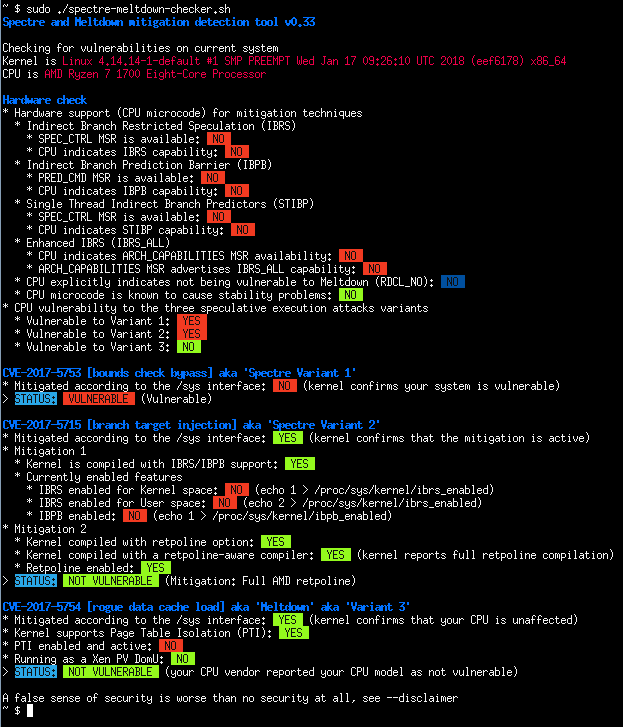
|
||||
|
||||
- Batch mode (JSON flavor)
|
||||
|
||||

|
||||
|
||||
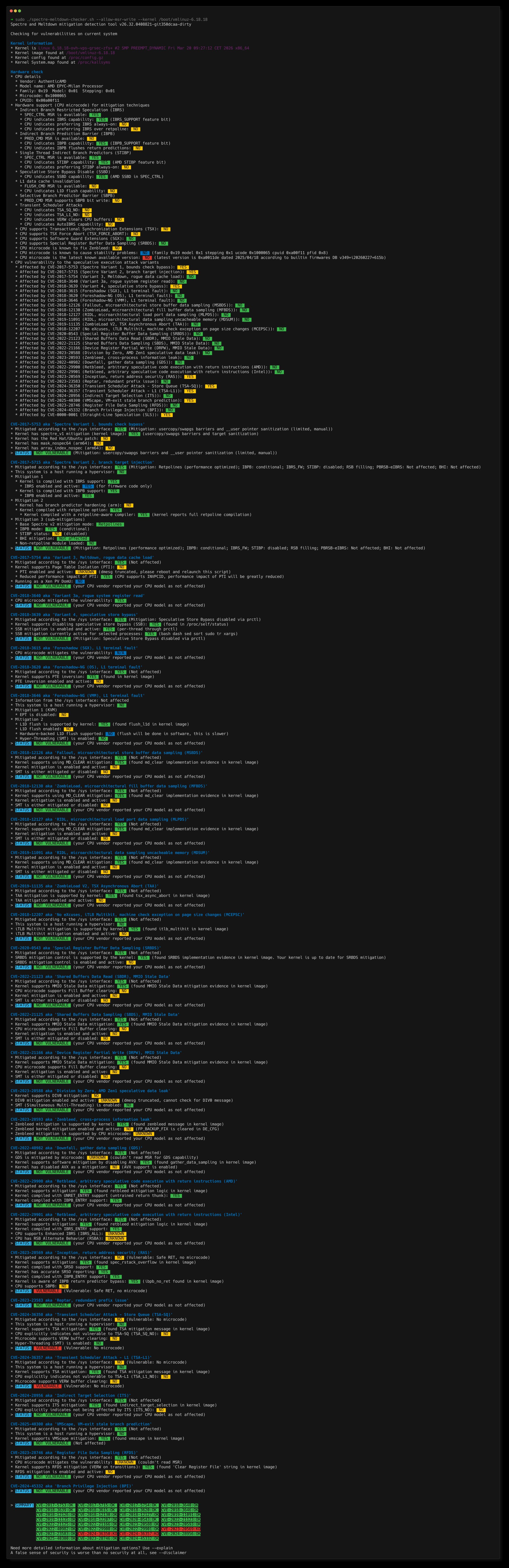
|
||||
@@ -1,60 +0,0 @@
|
||||
#!/bin/sh
|
||||
# vim: set ts=4 sw=4 sts=4 et:
|
||||
# Assemble spectre-meltdown-checker.sh from src/ fragments.
|
||||
# Usage: ./build.sh [output_file]
|
||||
# default output: spectre-meltdown-checker.sh
|
||||
set -e
|
||||
|
||||
SRCDIR="$(dirname "$0")/src"
|
||||
OUTPUT="${1:-$(dirname "$0")/spectre-meltdown-checker.sh}"
|
||||
|
||||
SECTIONS="
|
||||
libs/*.sh
|
||||
vulns-helpers/*.sh
|
||||
vulns/*.sh
|
||||
main.sh
|
||||
db/*.sh
|
||||
"
|
||||
|
||||
first=1
|
||||
for pattern in $SECTIONS; do
|
||||
# shellcheck disable=SC2086
|
||||
for file in "$SRCDIR"/$pattern; do
|
||||
[ -f "$file" ] || continue
|
||||
# source file marker
|
||||
relpath="${file#"$SRCDIR"/}"
|
||||
if [ "$first" = 1 ]; then
|
||||
# first file (001_core_header.sh): emit verbatim, keeps shebang
|
||||
cat "$file"
|
||||
first=0
|
||||
else
|
||||
# separator blank line + source marker between fragments
|
||||
echo ""
|
||||
echo "# >>>>>> $relpath <<<<<<"
|
||||
echo ""
|
||||
# strip accidental shebang on line 1
|
||||
{
|
||||
IFS= read -r line
|
||||
case "$line" in
|
||||
'#!'*) ;; # skip shebang
|
||||
*) printf '%s\n' "$line" ;;
|
||||
esac
|
||||
cat
|
||||
} <"$file"
|
||||
fi
|
||||
done
|
||||
done >"$OUTPUT"
|
||||
|
||||
chmod +x "$OUTPUT"
|
||||
|
||||
# Patch VERSION= with semantic version: X.Y.Z
|
||||
# X=YY, Y=number of CVE files in src/vulns/, Z=MMDDVAL
|
||||
# VAL is a 3-digit (000-999) value derived from seconds since midnight UTC
|
||||
cve_count=$(find "$SRCDIR/vulns" -maxdepth 1 -name '*.sh' -type f | wc -l | tr -d ' ')
|
||||
epoch=$(date -u +%s)
|
||||
secs_since_midnight=$((epoch % 86400))
|
||||
val=$(printf '%03d' $((secs_since_midnight * 1000 / 86400)))
|
||||
version="$(date -u +%y).${cve_count}.$(date -u +%m%d)${val}"
|
||||
sed -i "s/^VERSION=.*/VERSION='${version}'/" "$OUTPUT"
|
||||
|
||||
echo "Assembled $OUTPUT ($(wc -l <"$OUTPUT") lines, version $version)"
|
||||
Vendored
-319
@@ -1,319 +0,0 @@
|
||||
# Unsupported CVEs
|
||||
|
||||
This document lists transient execution CVEs that have been evaluated and determined to be **out of scope** for this tool. See the [Which rules are governing the support of a CVE in this tool?](dist/FAQ.md#which-rules-are-governing-the-support-of-a-cve-in-this-tool) section in the FAQ for the general policy.
|
||||
|
||||
CVEs are grouped by reason for exclusion:
|
||||
|
||||
- [Already covered by an existing CVE check](#already-covered-by-an-existing-cve-check) — subvariants or subsets whose mitigations are already detected under a parent CVE.
|
||||
- [No kernel or microcode mitigations to check](#no-kernel-or-microcode-mitigations-to-check) — no fix has been issued, or the mitigation is not detectable by this tool.
|
||||
- [Not a transient/speculative execution vulnerability](#not-a-transientspeculative-execution-vulnerability) — wrong vulnerability class entirely.
|
||||
|
||||
---
|
||||
|
||||
# Already covered by an existing CVE check
|
||||
|
||||
These CVEs are subvariants or subsets of vulnerabilities already implemented in the tool. Their mitigations are detected as part of the parent CVE's checks.
|
||||
|
||||
## CVE-2018-3693 — Bounds Check Bypass Store (Spectre v1.1)
|
||||
|
||||
- **Issue:** [#236](https://github.com/speed47/spectre-meltdown-checker/issues/236)
|
||||
- **Red Hat advisory:** [Speculative Store Bypass / Bounds Check Bypass (CVE-2018-3693)](https://access.redhat.com/solutions/3523601)
|
||||
- **CVSS:** 5.6 (Medium)
|
||||
- **Covered by:** CVE-2017-5753 (Spectre V1)
|
||||
|
||||
A subvariant of Spectre V1 where speculative store operations can write beyond validated buffer boundaries before the bounds check resolves, allowing an attacker to alter cache state and leak information via side channels.
|
||||
|
||||
**Why out of scope:** The mitigations are identical to CVE-2017-5753 (Spectre V1): `lfence` instructions after bounds checks and `array_index_nospec()` barriers in kernel code. There is no separate sysfs entry, no new CPU feature flag, and no distinct microcode change. This tool's existing CVE-2017-5753 checks already detect these mitigations (`__user pointer sanitization`, `usercopy/swapgs barriers`), so CVE-2018-3693 is fully covered as part of Spectre V1.
|
||||
|
||||
## CVE-2018-15572 — SpectreRSB (Return Stack Buffer)
|
||||
|
||||
- **Issue:** [#224](https://github.com/speed47/spectre-meltdown-checker/issues/224)
|
||||
- **Research paper:** [Spectre Returns! Speculation Attacks using the Return Stack Buffer (WOOT'18)](https://arxiv.org/abs/1807.07940)
|
||||
- **Kernel fix:** [commit fdf82a7856b3](https://github.com/torvalds/linux/commit/fdf82a7856b32d905c39afc85e34364491e46346) (Linux 4.18.1)
|
||||
- **CVSS:** 6.5 (Medium)
|
||||
- **Covered by:** CVE-2017-5715 (Spectre V2)
|
||||
|
||||
The `spectre_v2_select_mitigation` function in the Linux kernel before 4.18.1 did not always fill the RSB upon a context switch, allowing userspace-to-userspace SpectreRSB attacks on Skylake+ CPUs where an empty RSB falls back to the BTB.
|
||||
|
||||
**Why out of scope:** This CVE is a Spectre V2 mitigation gap (missing RSB filling on context switch), not a distinct hardware vulnerability. It is already fully covered by this tool's CVE-2017-5715 (Spectre V2) checks, which detect whether the kernel performs RSB filling on CPUs vulnerable to RSB underflow (Skylake+ and RSBA-capable CPUs). A missing RSB fill is flagged as a caveat ("RSB filling missing on Skylake+") in the Spectre V2 verdict.
|
||||
|
||||
## CVE-2019-1125 — Spectre SWAPGS gadget
|
||||
|
||||
- **Issue:** [#301](https://github.com/speed47/spectre-meltdown-checker/issues/301)
|
||||
- **Kernel fix:** [commit 18ec54fdd6d1](https://github.com/torvalds/linux/commit/18ec54fdd6d18d92025af097cd042a75cf0ea24c) (Linux 5.3)
|
||||
- **CVSS:** 5.6 (Medium)
|
||||
- **Covered by:** CVE-2017-5753 (Spectre V1)
|
||||
|
||||
A Spectre V1 subvariant where the `SWAPGS` instruction can be speculatively executed on x86 CPUs, allowing an attacker to leak kernel memory via a side channel on the GS segment base value.
|
||||
|
||||
**Why out of scope:** This is a Spectre V1 subvariant whose mitigation (SWAPGS barriers) shares the same sysfs entry as CVE-2017-5753. This tool's existing CVE-2017-5753 checks already detect SWAPGS barriers: a mitigated kernel reports `"Mitigation: usercopy/swapgs barriers and __user pointer sanitization"`, while a kernel lacking the fix reports `"Vulnerable: __user pointer sanitization and usercopy barriers only; no swapgs barriers"`. CVE-2019-1125 is therefore fully covered as part of Spectre V1.
|
||||
|
||||
## CVE-2021-26341 — AMD Straight-Line Speculation (direct branches)
|
||||
|
||||
- **Bulletin:** [AMD-SB-1026](https://www.amd.com/en/resources/product-security/bulletin/amd-sb-1026.html)
|
||||
- **Affected CPUs:** AMD Zen 1, Zen 2
|
||||
- **CVSS:** 6.5 (Medium)
|
||||
- **Covered by:** CVE-0000-0001 (SLS supplementary check)
|
||||
|
||||
AMD Zen 1/Zen 2 CPUs may transiently execute instructions beyond unconditional direct branches (JMP, CALL), potentially allowing information disclosure via side channels.
|
||||
|
||||
**Why out of scope:** This is the AMD-specific direct-branch subset of the broader Straight-Line Speculation (SLS) class. The kernel mitigates it via `CONFIG_MITIGATION_SLS` (formerly `CONFIG_SLS`), which enables the GCC flag `-mharden-sls=all` to insert INT3 after unconditional control flow instructions. Since this is a compile-time-only mitigation with no sysfs interface, no MSR, and no per-CVE CPU feature flag, it cannot be checked using the standard CVE framework. A supplementary SLS check is available via `--extra` mode, which covers this CVE's mitigation as well.
|
||||
|
||||
## CVE-2020-13844 — ARM Straight-Line Speculation
|
||||
|
||||
- **Advisory:** [ARM Developer Security Update (June 2020)](https://developer.arm.com/Arm%20Security%20Center/Speculative%20Processor%20Vulnerability)
|
||||
- **Affected CPUs:** Cortex-A32, A34, A35, A53, A57, A72, A73, and broadly all speculative Armv8-A cores
|
||||
- **CVSS:** 5.5 (Medium)
|
||||
- **Covered by:** CVE-0000-0001 (SLS supplementary check)
|
||||
|
||||
ARM processors may speculatively execute instructions past unconditional control flow changes (RET, BR, BLR). GCC and Clang support `-mharden-sls=all` for aarch64, but the Linux kernel never merged the patches to enable it: a `CONFIG_HARDEN_SLS_ALL` series was submitted in 2021 but rejected upstream.
|
||||
|
||||
**Why out of scope:** This is the ARM-specific subset of the broader Straight-Line Speculation (SLS) class. The supplementary SLS check available via `--extra` mode detects affected ARM CPU models and reports that no kernel mitigation is currently available.
|
||||
|
||||
## CVE-2024-2201 — Native BHI (Branch History Injection without eBPF)
|
||||
|
||||
- **Issue:** [#491](https://github.com/speed47/spectre-meltdown-checker/issues/491)
|
||||
- **Research:** [InSpectre Gadget / Native BHI (VUSec)](https://www.vusec.net/projects/native-bhi/)
|
||||
- **Intel advisory:** [Branch History Injection (Intel)](https://www.intel.com/content/www/us/en/developer/articles/technical/software-security-guidance/technical-documentation/branch-history-injection.html)
|
||||
- **Affected CPUs:** Intel CPUs with eIBRS (Ice Lake+, 10th gen+, and virtualized Intel guests)
|
||||
- **CVSS:** 4.7 (Medium)
|
||||
- **Covered by:** CVE-2017-5715 (Spectre V2)
|
||||
|
||||
VUSec researchers demonstrated that the original BHI mitigation (disabling unprivileged eBPF) was insufficient: 1,511 native kernel gadgets exist that allow exploiting Branch History Injection without eBPF, leaking arbitrary kernel memory at ~3.5 kB/sec on Intel CPUs.
|
||||
|
||||
**Why out of scope:** CVE-2024-2201 is not a new hardware vulnerability — it is the same BHI hardware bug as CVE-2022-0002, but proves that eBPF restriction alone was never sufficient. The required mitigations are identical: `BHI_DIS_S` hardware control (MSR `IA32_SPEC_CTRL` bit 10), software BHB clearing loop at syscall entry and VM exit, or retpoline with RRSBA disabled. These are all already detected by this tool's CVE-2017-5715 (Spectre V2) checks, which parse the `BHI:` suffix from `/sys/devices/system/cpu/vulnerabilities/spectre_v2` and check for `CONFIG_MITIGATION_SPECTRE_BHI` in no-runtime mode. No new sysfs entry, MSR, kernel config option, or boot parameter was introduced for this CVE.
|
||||
|
||||
## CVE-2020-0549 — L1D Eviction Sampling (CacheOut)
|
||||
|
||||
- **Issue:** [#341](https://github.com/speed47/spectre-meltdown-checker/issues/341)
|
||||
- **Advisory:** [INTEL-SA-00329](https://www.intel.com/content/www/us/en/developer/articles/technical/software-security-guidance/advisory-guidance/l1d-eviction-sampling.html)
|
||||
- **Affected CPUs:** Intel Skylake through 10th gen (Tiger Lake+ not affected)
|
||||
- **CVSS:** 6.5 (Medium)
|
||||
- **Covered by:** CVE-2018-12126 / CVE-2018-12127 / CVE-2018-12130 / CVE-2019-11091 (MDS) and CVE-2018-3646 (L1TF)
|
||||
|
||||
An Intel-specific data leakage vulnerability where L1 data cache evictions can be exploited in combination with MDS or TAA side channels to leak data across security boundaries.
|
||||
|
||||
**Why out of scope:** The June 2020 microcode update that addresses this CVE does not introduce any new MSR bits or CPUID flags — it reuses the existing MD_CLEAR (`CPUID.7.0:EDX[10]`) and L1D_FLUSH (`MSR_IA32_FLUSH_CMD`, 0x10B) infrastructure already deployed for MDS and L1TF. The Linux kernel has no dedicated sysfs entry in `/sys/devices/system/cpu/vulnerabilities/` for this CVE; instead, it provides an opt-in per-task L1D flush via `prctl(PR_SPEC_L1D_FLUSH)` and the `l1d_flush=on` boot parameter, which piggyback on the same L1D flush mechanism checked by the existing L1TF and MDS vulnerability modules. In practice, a system with up-to-date microcode and MDS/L1TF mitigations in place is already protected against L1D Eviction Sampling.
|
||||
|
||||
## CVE-2025-20623 — Shared Microarchitectural Predictor State (10th Gen Intel)
|
||||
|
||||
- **Advisory:** [INTEL-SA-01247](https://www.intel.com/content/www/us/en/security-center/advisory/intel-sa-01247.html)
|
||||
- **Affected CPUs:** Intel 10th Generation Core Processors only
|
||||
- **CVSS:** 5.6 (Medium)
|
||||
- **Covered by:** CVE-2024-45332 (BPI)
|
||||
|
||||
Shared microarchitectural predictor state on 10th generation Intel CPUs may allow information disclosure.
|
||||
|
||||
**Why out of scope:** Very narrow scope (single CPU generation). Mitigated by the same microcode update as CVE-2024-45332 (BPI) and handled through the existing Spectre V2 framework. No dedicated sysfs entry or kernel mitigation beyond what BPI already provides.
|
||||
|
||||
## CVE-2025-24495 — Lion Cove BPU Initialization
|
||||
|
||||
- **Advisory:** [INTEL-SA-01322](https://www.intel.com/content/www/us/en/security-center/advisory/intel-sa-01322.html)
|
||||
- **Research:** [Training Solo (VUSec)](https://www.vusec.net/projects/training-solo/)
|
||||
- **Affected CPUs:** Intel Core Ultra with Lion Cove core only (Lunar Lake, Arrow Lake)
|
||||
- **CVSS:** 6.8 (Medium, CVSS v4)
|
||||
- **Covered by:** CVE-2024-28956 (ITS)
|
||||
|
||||
A branch predictor initialization issue specific to Intel's Lion Cove microarchitecture, discovered as part of the "Training Solo" research.
|
||||
|
||||
**Why out of scope:** This is a subset of the ITS (Indirect Target Selection) vulnerability (CVE-2024-28956). It shares the same sysfs entry (`/sys/devices/system/cpu/vulnerabilities/indirect_target_selection`) and kernel mitigation framework. Since ITS (CVE-2024-28956) is implemented in this tool, Lion Cove BPU is already covered automatically.
|
||||
|
||||
---
|
||||
|
||||
# No kernel or microcode mitigations to check
|
||||
|
||||
These CVEs are real vulnerabilities, but no kernel or microcode fix has been issued, the mitigation is delegated to individual software, or the fix is not detectable by this tool.
|
||||
|
||||
## CVE-2018-3665 — Lazy FP State Restore (LazyFP)
|
||||
|
||||
- **Advisory:** [INTEL-SA-00145](https://www.intel.com/content/www/us/en/developer/articles/technical/software-security-guidance/advisory-guidance/lazy-fp-state-restore.html)
|
||||
- **Research paper:** [LazyFP: Leaking FPU Register State using Microarchitectural Side-Channels (Stecklina & Prescher, 2018)](https://arxiv.org/abs/1806.07480)
|
||||
- **Affected CPUs:** Intel Core family (Sandy Bridge through Kaby Lake) when lazy FPU switching is in use
|
||||
- **CVSS:** 4.3 (Medium)
|
||||
|
||||
Intel CPUs using lazy FPU state switching may speculatively expose another process's FPU/SSE/AVX register contents (including AES round keys and other cryptographic material) across context switches. The `#NM` (device-not-available) exception normally used to trigger lazy restore is delivered late enough that dependent instructions can transiently execute against the stale FPU state before the fault squashes them.
|
||||
|
||||
**Why out of scope:** The Linux mitigation is to use eager FPU save/restore, which was already the default on Intel CPUs with XSAVEOPT well before disclosure, and was then hard-enforced upstream by the removal of all lazy FPU code in Linux 4.14 (Andy Lutomirski's "x86/fpu: Hard-disable lazy FPU mode" cleanup). There is no `/sys/devices/system/cpu/vulnerabilities/` entry, no CPUID flag, no MSR, and no kernel config option that reflects this mitigation — detection on a running kernel would require hardcoding kernel version ranges, which is against this tool's design principles (same rationale as CVE-2019-15902). In practice, any supported kernel today is eager-FPU-only, and CPUs advertising XSAVEOPT/XSAVES cannot enter the vulnerable lazy-switching mode regardless of kernel configuration.
|
||||
|
||||
## CVE-2018-9056 — BranchScope
|
||||
|
||||
- **Issue:** [#169](https://github.com/speed47/spectre-meltdown-checker/issues/169)
|
||||
- **Research paper:** [BranchScope (ASPLOS 2018)](http://www.cs.ucr.edu/~nael/pubs/asplos18.pdf)
|
||||
- **Red Hat bug:** [#1561794](https://bugzilla.redhat.com/show_bug.cgi?id=1561794)
|
||||
- **CVSS:** 5.6 (Medium)
|
||||
|
||||
A speculative execution attack exploiting the directional branch predictor, allowing an attacker to infer data by manipulating the shared branch prediction state (pattern history table). Initially demonstrated on Intel processors.
|
||||
|
||||
**Why out of scope:** No kernel or microcode mitigations have been issued. Red Hat closed their tracking bug as "CLOSED CANTFIX", concluding that "this is a hardware processor issue, not a Linux kernel flaw" and that "it is specific to a target software which uses sensitive information in branching expressions." The mitigation responsibility falls on individual software to avoid using sensitive data in conditional branches, which is out of the scope of this tool.
|
||||
|
||||
## CVE-2019-15902 — Spectre V1 backport regression
|
||||
|
||||
- **Issue:** [#304](https://github.com/speed47/spectre-meltdown-checker/issues/304)
|
||||
- **CVSS:** 5.6 (Medium)
|
||||
|
||||
A backporting mistake in Linux stable/longterm kernel versions (4.4.x through 4.4.190, 4.9.x through 4.9.190, 4.14.x through 4.14.141, 4.19.x through 4.19.69, and 5.2.x through 5.2.11) swapped two code lines in `ptrace_get_debugreg()`, placing the `array_index_nospec()` call after the array access instead of before, reintroducing a Spectre V1 vulnerability.
|
||||
|
||||
**Why out of scope:** This is a kernel bug (bad backport), not a hardware vulnerability. The flawed code is not detectable on a running kernel without hardcoding kernel version ranges, which is against this tool's design principles. As the tool author noted: "it's going to be almost impossible to detect it on a running kernel."
|
||||
|
||||
## CVE-2020-12965 — Transient Execution of Non-Canonical Accesses (SLAM)
|
||||
|
||||
- **Issue:** [#478](https://github.com/speed47/spectre-meltdown-checker/issues/478)
|
||||
- **Bulletin:** [AMD-SB-1010](https://www.amd.com/en/corporate/product-security/bulletin/amd-sb-1010)
|
||||
- **Research paper:** [SLAM (VUSec)](https://www.vusec.net/projects/slam/)
|
||||
- **CVSS:** 7.5 (High)
|
||||
|
||||
AMD CPUs may transiently execute non-canonical loads and stores using only the lower 48 address bits, potentially resulting in data leakage. The SLAM research (2023) demonstrated that this could be exploited on existing AMD Zen+/Zen2 CPUs and could also affect future CPUs with Intel LAM, AMD UAI, or ARM TBI features.
|
||||
|
||||
**Why out of scope:** AMD's mitigation guidance is for software vendors to "analyze their code for any potential vulnerabilities" and insert LFENCE or use existing speculation mitigation techniques in their own code. No microcode or kernel-level mitigations have been issued. The responsibility falls on individual software, not on the kernel or firmware, leaving nothing for this script to check.
|
||||
|
||||
## CVE-2020-24511 — Domain-Type Confusion (IBRS Scope)
|
||||
|
||||
- **Issue:** [#409](https://github.com/speed47/spectre-meltdown-checker/issues/409)
|
||||
- **Advisory:** [INTEL-SA-00464](https://www.intel.com/content/www/us/en/security-center/advisory/intel-sa-00464.html)
|
||||
- **Affected CPUs:** Intel Skylake through Comet Lake (different steppings; see advisory for details)
|
||||
- **CVSS:** 6.5 (Medium)
|
||||
|
||||
Improper isolation of shared resources in some Intel processors allows an authenticated user to potentially enable information disclosure via local access. Specifically, the Indirect Branch Restricted Speculation (IBRS) mitigation may not be fully applied after certain privilege-level transitions, allowing residual branch predictions to cross security boundaries.
|
||||
|
||||
**Why out of scope:** The mitigation is exclusively a microcode update (released June 2021) with no corresponding Linux kernel sysfs entry in `/sys/devices/system/cpu/vulnerabilities/`, no new CPUID bit, no new MSR, and no kernel configuration option. The only way to detect the fix would be to maintain a per-CPU-stepping minimum microcode version lookup table, which is brittle and high-maintenance. Additionally, Intel dropped microcode support for Sandy Bridge and Ivy Bridge in the same timeframe, leaving those generations permanently unpatched with no mitigation path available.
|
||||
|
||||
## CVE-2020-24512 — Observable Timing Discrepancy (Trivial Data Value)
|
||||
|
||||
- **Issue:** [#409](https://github.com/speed47/spectre-meltdown-checker/issues/409)
|
||||
- **Advisory:** [INTEL-SA-00464](https://www.intel.com/content/www/us/en/security-center/advisory/intel-sa-00464.html)
|
||||
- **Affected CPUs:** Intel Skylake through Tiger Lake (broad scope; see advisory for details)
|
||||
- **CVSS:** 2.8 (Low)
|
||||
|
||||
Observable timing discrepancy in some Intel processors allows an authenticated user to potentially enable information disclosure via local access. Certain cache optimizations treat "trivial data value" cache lines (e.g., all-zero lines) differently from non-trivial lines, creating a timing side channel that can distinguish memory content patterns.
|
||||
|
||||
**Why out of scope:** Like CVE-2020-24511, this is a microcode-only fix with no Linux kernel sysfs entry, no CPUID bit, no MSR, and no kernel configuration option. Detection would require a per-CPU-stepping microcode version lookup table. The vulnerability has low severity (CVSS 2.8) and practical exploitation is limited. Intel dropped microcode support for Sandy Bridge and Ivy Bridge, leaving those generations permanently vulnerable.
|
||||
|
||||
## CVE-2021-26318 — AMD Prefetch Attacks through Power and Time
|
||||
|
||||
- **Issue:** [#412](https://github.com/speed47/spectre-meltdown-checker/issues/412)
|
||||
- **Bulletin:** [AMD-SB-1017](https://www.amd.com/en/resources/product-security/bulletin/amd-sb-1017.html)
|
||||
- **Research paper:** [AMD Prefetch Attacks through Power and Time (USENIX Security '22)](https://www.usenix.org/conference/usenixsecurity22/presentation/lipp)
|
||||
- **CVSS:** 5.5 (Medium)
|
||||
|
||||
The x86 PREFETCH instruction on AMD CPUs leaks timing and power information, enabling a microarchitectural KASLR bypass from unprivileged userspace. The researchers demonstrated kernel address space layout recovery and kernel memory leakage at ~52 B/s using Spectre gadgets.
|
||||
|
||||
**Why out of scope:** AMD acknowledged the research but explicitly stated they are "not recommending any mitigations at this time," as the attack leaks kernel address layout information (KASLR bypass) but does not directly leak kernel data across address space boundaries. KPTI was never enabled on AMD by default in the Linux kernel as a result. No microcode, kernel, or sysfs mitigations have been issued, leaving nothing for this script to check.
|
||||
|
||||
## CVE-2024-7881 — ARM Prefetcher Privilege Escalation
|
||||
|
||||
- **Affected CPUs:** Specific ARM cores only
|
||||
- **CVSS:** 5.1 (Medium)
|
||||
|
||||
The prefetch engine on certain ARM cores can fetch data from privileged memory locations. Mitigation is disabling the affected prefetcher via the `CPUACTLR6_EL1[41]` register bit.
|
||||
|
||||
**Why out of scope:** ARM-specific with very narrow scope and no Linux sysfs integration. The mitigation is a per-core register tweak, not a kernel or microcode update detectable by this tool.
|
||||
|
||||
## CVE-2024-36348 — AMD Transient Scheduler Attack (UMIP bypass)
|
||||
|
||||
- **Bulletin:** [AMD-SB-7029](https://www.amd.com/en/resources/product-security/bulletin/amd-sb-7029.html)
|
||||
- **CVSS:** 3.8 (Low)
|
||||
|
||||
A transient execution vulnerability in some AMD processors may allow a user process to speculatively infer CPU configuration registers even when UMIP is enabled.
|
||||
|
||||
**Why out of scope:** AMD has determined that "leakage of CPU Configuration does not result in leakage of sensitive information" and has marked this CVE as "No fix planned" across all affected product lines. No microcode or kernel mitigations have been issued, leaving nothing for this script to check.
|
||||
|
||||
## CVE-2024-36349 — AMD Transient Scheduler Attack (TSC_AUX leak)
|
||||
|
||||
- **Bulletin:** [AMD-SB-7029](https://www.amd.com/en/resources/product-security/bulletin/amd-sb-7029.html)
|
||||
- **CVSS:** 3.8 (Low)
|
||||
|
||||
A transient execution vulnerability in some AMD processors may allow a user process to infer TSC_AUX even when such a read is disabled.
|
||||
|
||||
**Why out of scope:** AMD has determined that "leakage of TSC_AUX does not result in leakage of sensitive information" and has marked this CVE as "No fix planned" across all affected product lines. No microcode or kernel mitigations have been issued, leaving nothing for this script to check.
|
||||
|
||||
## No CVE — BlindSide (Speculative Probing)
|
||||
|
||||
- **Issue:** [#374](https://github.com/speed47/spectre-meltdown-checker/issues/374)
|
||||
- **Research paper:** [Speculative Probing: Hacking Blind in the Spectre Era (VUSec, ACM CCS 2020)](https://www.vusec.net/projects/blindside/)
|
||||
- **Red Hat advisory:** [Article 5394291](https://access.redhat.com/articles/5394291)
|
||||
- **Affected CPUs:** All CPUs vulnerable to Spectre V2 (BTB-based speculative execution)
|
||||
|
||||
An attack technique that combines a pre-existing kernel memory corruption bug (e.g., a heap buffer overflow) with speculative execution to perform "Speculative BROP" (Blind Return-Oriented Programming). Instead of crashing the system when probing invalid addresses, BlindSide performs the probing speculatively: faults are suppressed in the speculative domain, and information is leaked via cache timing side channels. This allows an attacker to silently derandomize kernel memory layout and bypass KASLR/FGKASLR without triggering any fault.
|
||||
|
||||
**Why out of scope:** BlindSide is an exploitation technique, not a discrete hardware vulnerability: no CVE was assigned. Red Hat explicitly states it is "not a new flaw, but a new attack." It requires a pre-existing kernel memory corruption bug as a prerequisite, and the speculative execution aspect leverages the same BTB behavior as Spectre V2 (CVE-2017-5715). No dedicated microcode update, kernel config, MSR, CPUID bit, or sysfs entry exists for BlindSide. The closest hardware mitigations (IBPB, IBRS, STIBP, Retpoline) are already covered by this tool's Spectre V2 checks.
|
||||
|
||||
## No CVE — TLBleed (TLB side-channel)
|
||||
|
||||
- **Issue:** [#231](https://github.com/speed47/spectre-meltdown-checker/issues/231)
|
||||
- **Research paper:** [Defeating Cache Side-channel Protections with TLB Attacks (VUSec, USENIX Security '18)](https://www.vusec.net/projects/tlbleed/)
|
||||
- **Red Hat blog:** [Temporal side-channels and you: Understanding TLBleed](https://www.redhat.com/en/blog/temporal-side-channels-and-you-understanding-tlbleed)
|
||||
- **Affected CPUs:** Intel CPUs with Hyper-Threading (demonstrated on Skylake, Coffee Lake, Broadwell Xeon)
|
||||
|
||||
A timing side-channel attack exploiting the shared Translation Lookaside Buffer (TLB) on Intel hyperthreaded CPUs. By using machine learning to analyze TLB hit/miss timing patterns, an attacker co-located on the same physical core can extract cryptographic keys (demonstrated with 99.8% success rate on a 256-bit EdDSA key). OpenBSD disabled Hyper-Threading by default in response.
|
||||
|
||||
**Why out of scope:** No CVE was ever assigned — Intel explicitly declined to request one. Intel stated the attack is "not related to Spectre or Meltdown" and has no plans to issue a microcode fix, pointing to existing constant-time coding practices in cryptographic software as the appropriate defense. No Linux kernel mitigation was ever merged. Red Hat's guidance was limited to operational advice (disable SMT, use CPU pinning) rather than a software fix. The only OS-level response was OpenBSD disabling Hyper-Threading by default. With no CVE, no microcode update, and no kernel mitigation, there is nothing for this script to check.
|
||||
|
||||
---
|
||||
|
||||
# Not a transient/speculative execution vulnerability
|
||||
|
||||
These are hardware flaws but not side-channel or speculative execution issues. They fall outside the vulnerability class this tool is designed to detect.
|
||||
|
||||
## CVE-2019-11157 — Plundervolt (VoltJockey)
|
||||
|
||||
- **Issue:** [#335](https://github.com/speed47/spectre-meltdown-checker/issues/335)
|
||||
- **Advisory:** [INTEL-SA-00289](https://www.intel.com/content/www/us/en/security-center/advisory/intel-sa-00289.html)
|
||||
- **Research:** [Plundervolt (plundervolt.com)](https://plundervolt.com/)
|
||||
- **Affected CPUs:** Intel Core 6th–10th gen (Skylake through Comet Lake) with SGX
|
||||
- **CVSS:** 7.1 (High)
|
||||
|
||||
A voltage fault injection attack where a privileged attacker (ring 0) uses the software-accessible voltage scaling interface to undervolt the CPU during SGX enclave computations, inducing predictable bit flips that compromise enclave integrity and confidentiality. Intel's microcode fix locks down the voltage/frequency scaling MSRs to prevent software-initiated undervolting.
|
||||
|
||||
**Why out of scope:** Not a transient or speculative execution vulnerability — this is a fault injection attack exploiting voltage manipulation, with no side-channel or speculative execution component. It requires ring 0 access and targets SGX enclaves specifically. While Intel issued a microcode update that locks voltage controls, there is no Linux kernel sysfs entry, no CPUID flag, and no kernel-side mitigation to detect. The fix is purely a microcode-level lockdown of voltage scaling registers, which is not exposed in any standard interface this tool can query.
|
||||
|
||||
## CVE-2020-8694 / CVE-2020-8695 — Platypus (RAPL Power Side Channel)
|
||||
|
||||
- **Issue:** [#384](https://github.com/speed47/spectre-meltdown-checker/issues/384)
|
||||
- **Advisory:** [INTEL-SA-00389](https://www.intel.com/content/www/us/en/security-center/advisory/intel-sa-00389.html)
|
||||
- **Research:** [PLATYPUS (platypusattack.com)](https://platypusattack.com/)
|
||||
- **Affected CPUs:** Intel Core (Sandy Bridge+), Intel Xeon (Sandy Bridge-EP+)
|
||||
- **CVSS:** 5.6 (Medium) / 6.5 (Medium)
|
||||
|
||||
A software-based power side-channel attack exploiting Intel's Running Average Power Limit (RAPL) interface. By monitoring energy consumption reported through the `powercap` sysfs interface or the `MSR_RAPL_POWER_UNIT` / `MSR_PKG_ENERGY_STATUS` MSRs, an unprivileged attacker can statistically distinguish instructions and operands, recover AES-NI keys from SGX enclaves, and break kernel ASLR.
|
||||
|
||||
**Why out of scope:** Not a transient or speculative execution vulnerability — this is a power analysis side-channel attack with no speculative execution component. The mitigations (microcode update restricting RAPL energy reporting to privileged access, and kernel restricting the `powercap` sysfs interface) are not exposed via `/sys/devices/system/cpu/vulnerabilities/`. There is no dedicated sysfs vulnerability entry, no CPUID flag, and no kernel configuration option for this tool to check.
|
||||
|
||||
## CVE-2023-31315 — SinkClose (AMD SMM Lock Bypass)
|
||||
|
||||
- **Issue:** [#499](https://github.com/speed47/spectre-meltdown-checker/issues/499)
|
||||
- **Bulletin:** [AMD-SB-7014](https://www.amd.com/en/resources/product-security/bulletin/amd-sb-7014.html)
|
||||
- **Research:** [AMD SinkClose (IOActive, DEF CON 32)](https://www.ioactive.com/resources/amd-sinkclose-universal-ring-2-privilege-escalation)
|
||||
- **Affected CPUs:** AMD Zen 1–5 (EPYC, Ryzen, Threadripper, Embedded)
|
||||
- **CVSS:** 7.5 (High)
|
||||
|
||||
Improper validation in a model-specific register (MSR) allows a program with ring 0 (kernel) access to modify System Management Mode (SMM) configuration while SMI lock is enabled, escalating privileges from ring 0 to ring -2 (SMM). AMD provides two mitigation paths: BIOS/AGESA firmware updates (all product lines) and hot-loadable microcode updates (EPYC server processors only).
|
||||
|
||||
**Why out of scope:** Not a transient or speculative execution vulnerability — this is a privilege escalation via MSR manipulation, with no side-channel component. It requires ring 0 access as a prerequisite, fundamentally different from Spectre/Meltdown-class attacks where unprivileged code can leak data across privilege boundaries. There is no Linux kernel sysfs entry and no kernel-side mitigation. Although AMD provides hot-loadable microcode for some EPYC processors, the client and embedded product lines are mitigated only through BIOS firmware updates, which this tool cannot detect.
|
||||
|
||||
## CVE-2024-56161 — EntrySign (AMD Microcode Signature Bypass)
|
||||
|
||||
- **Affected CPUs:** AMD Zen 1-5
|
||||
- **CVSS:** 7.2 (High)
|
||||
|
||||
A weakness in AMD's microcode signature verification (AES-CMAC hash) allows loading arbitrary unsigned microcode with administrator privileges.
|
||||
|
||||
**Why out of scope:** This is a microcode integrity/authentication issue, not a speculative execution vulnerability. It does not involve transient execution side channels and is outside the scope of this tool.
|
||||
|
||||
## CVE-2025-29943 — StackWarp (AMD SEV-SNP)
|
||||
|
||||
- **Affected CPUs:** AMD Zen 1-5
|
||||
- **CVSS:** Low
|
||||
|
||||
Exploits a synchronization failure in the AMD stack engine via an undocumented MSR bit, targeting AMD SEV-SNP confidential VMs. Requires hypervisor-level (ring 0) access.
|
||||
|
||||
**Why out of scope:** Not a transient/speculative execution side channel. This is an architectural attack on AMD SEV-SNP confidential computing that requires hypervisor access, which is outside the threat model of this tool.
|
||||
|
||||
## No CVE — Jump Conditional Code (JCC) Erratum
|
||||
|
||||
- **Issue:** [#329](https://github.com/speed47/spectre-meltdown-checker/issues/329)
|
||||
- **Intel whitepaper:** [Mitigations for Jump Conditional Code Erratum](https://www.intel.com/content/dam/support/us/en/documents/processors/mitigations-jump-conditional-code-erratum.pdf)
|
||||
- **Affected CPUs:** Intel 6th through 10th generation Core and Xeon processors (Skylake through Cascade Lake)
|
||||
|
||||
A microarchitectural correctness erratum where a conditional jump instruction that straddles or ends at a 64-byte instruction fetch boundary can corrupt the branch predictor state, potentially causing incorrect execution. Intel addressed this in a November 2019 microcode update. Compilers and assemblers (GCC, LLVM, binutils) also introduced alignment options (`-mbranch-alignment`, `-x86-branches-within-32B-boundaries`) to pad jump instructions away from boundary conditions, preserving performance on CPUs with updated microcode.
|
||||
|
||||
**Why out of scope:** The JCC erratum is a microarchitectural correctness bug, not a transient or speculative execution side-channel vulnerability. No CVE was ever assigned. Red Hat noted that privilege escalation "has not been ruled out" but made no definitive security finding, and no exploit has been demonstrated. There is no Linux sysfs entry, no CPUID bit, and no MSR flag exposing the mitigation status. The microcode fix introduces no detectable hardware indicator, so checking for it would require maintaining a per-CPU-stepping minimum microcode version table (the design principle 3 exception) — costly to maintain without a CVE anchor or confirmed exploitability to justify the ongoing work. The kernel compiler mitigation is a build-time-only change (instruction alignment) with no observable runtime state.
|
||||
Vendored
-393
@@ -1,393 +0,0 @@
|
||||
# JSON Output Format
|
||||
|
||||
`--batch json` emits a single, self-contained JSON object that describes the
|
||||
scan environment and the result of every CVE check. You can feed it to your
|
||||
monitoring system, to a SIEM, to a time-series database, you name it.
|
||||
|
||||
```sh
|
||||
sudo ./spectre-meltdown-checker.sh --batch json | jq .
|
||||
```
|
||||
|
||||
## Top-level schema
|
||||
|
||||
```
|
||||
{
|
||||
"meta": { ... }, // Run metadata and flags
|
||||
"system": { ... }, // Kernel and host context
|
||||
"cpu": { ... }, // CPU hardware identification
|
||||
"cpu_microcode": { ... }, // Microcode version and status
|
||||
"vulnerabilities": [ ... ] // One object per checked CVE
|
||||
}
|
||||
```
|
||||
|
||||
`format_version` in `meta` is an integer that will be incremented on
|
||||
backward-incompatible schema changes. The current value is **1**.
|
||||
|
||||
## Section reference
|
||||
|
||||
### `meta`
|
||||
|
||||
Run metadata. Always present.
|
||||
|
||||
| Field | Type | Values | Meaning |
|
||||
|---|---|---|---|
|
||||
| `script_version` | string | e.g. `"25.30.0250400123"` | Script version |
|
||||
| `format_version` | integer | `1` | JSON schema version; incremented on breaking changes |
|
||||
| `timestamp` | string | ISO 8601 UTC, e.g. `"2025-04-07T12:00:00Z"` | When the scan started |
|
||||
| `os` | string | e.g. `"Linux"`, `"FreeBSD"` | Output of `uname -s` |
|
||||
| `mode` | string | `"live"` / `"no-runtime"` / `"no-hw"` / `"hw-only"` | Operating mode (see [modes](README.md#operating-modes)) |
|
||||
| `run_as_root` | boolean | | Whether the script ran as root. Non-root scans skip MSR reads and may miss mitigations |
|
||||
| `reduced_accuracy` | boolean | | Kernel image, config, or System.map was missing; some checks fall back to weaker heuristics |
|
||||
| `paranoid` | boolean | | `--paranoid` mode: stricter criteria (e.g. requires SMT disabled, IBPB always-on) |
|
||||
| `sysfs_only` | boolean | | `--sysfs-only`: only the kernel's own sysfs report was used, not independent detection |
|
||||
| `extra` | boolean | | `--extra`: additional experimental checks were enabled |
|
||||
| `mocked` | boolean | | One or more CPU values were overridden for testing. Results do **not** reflect the real system |
|
||||
|
||||
**Example:**
|
||||
```json
|
||||
"meta": {
|
||||
"script_version": "25.30.025040123",
|
||||
"format_version": 1,
|
||||
"timestamp": "2025-04-07T12:00:00Z",
|
||||
"os": "Linux",
|
||||
"mode": "live",
|
||||
"run_as_root": true,
|
||||
"reduced_accuracy": false,
|
||||
"paranoid": false,
|
||||
"sysfs_only": false,
|
||||
"extra": false,
|
||||
"mocked": false
|
||||
}
|
||||
```
|
||||
|
||||
**Important flags for fleet operators:**
|
||||
|
||||
- `run_as_root: false` means the scan was incomplete. Treat results as lower
|
||||
confidence. Alert separately: results may be missing or wrong.
|
||||
- `sysfs_only: true` means the script trusted the kernel's self-report without
|
||||
independent verification. Some older kernels misreport their mitigation
|
||||
status. Do not use `--sysfs-only` for production fleet monitoring.
|
||||
- `paranoid: true` raises the bar: only compare `vulnerable` counts across
|
||||
hosts with the same `paranoid` value.
|
||||
- `mocked: true` must never appear on a production host. If it does, every
|
||||
downstream result is fabricated.
|
||||
|
||||
---
|
||||
|
||||
### `system`
|
||||
|
||||
Kernel and host environment. Always present.
|
||||
|
||||
| Field | Type | Values | Meaning |
|
||||
|---|---|---|---|
|
||||
| `kernel_release` | string \| null | e.g. `"6.1.0-21-amd64"` | Output of `uname -r` (null in no-runtime, no-hw, and hw-only modes) |
|
||||
| `kernel_version` | string \| null | e.g. `"#1 SMP Debian …"` | Output of `uname -v` (null in no-runtime, no-hw, and hw-only modes) |
|
||||
| `kernel_arch` | string \| null | e.g. `"x86_64"` | Output of `uname -m` (null in no-runtime, no-hw, and hw-only modes) |
|
||||
| `kernel_image` | string \| null | e.g. `"/boot/vmlinuz-6.1.0-21-amd64"` | Path passed via `--kernel`, or null if not specified |
|
||||
| `kernel_config` | string \| null | | Path passed via `--config`, or null |
|
||||
| `kernel_version_string` | string \| null | | Kernel version banner extracted from the image |
|
||||
| `kernel_cmdline` | string \| null | | Kernel command line from `/proc/cmdline` (live mode) or the image |
|
||||
| `cpu_count` | integer \| null | | Number of logical CPUs detected |
|
||||
| `smt_enabled` | boolean \| null | | Whether SMT (HyperThreading) is currently active; null if undeterminable |
|
||||
| `hypervisor_host` | boolean \| null | | Whether this machine is detected as a VM host (running KVM, Xen, VMware, etc.) |
|
||||
| `hypervisor_host_reason` | string \| null | | Human-readable explanation of why `hypervisor_host` was set |
|
||||
|
||||
**`hypervisor_host`** materially changes the risk profile of several CVEs.
|
||||
L1TF (CVE-2018-3646) and MDS (CVE-2018-12126/12130/12127) are significantly
|
||||
more severe on hypervisor hosts because they can be exploited across VM
|
||||
boundaries by a malicious guest. Prioritise remediation where
|
||||
`hypervisor_host: true`.
|
||||
|
||||
---
|
||||
|
||||
### `cpu`
|
||||
|
||||
CPU hardware identification. `null` when `--no-hw` is active, or when
|
||||
`--arch-prefix` is set (host CPU info is then suppressed to avoid mixing
|
||||
with a different-arch target kernel).
|
||||
|
||||
The object uses `arch` as a discriminator: `"x86"` for Intel/AMD/Hygon CPUs,
|
||||
`"arm"` for ARM/Cavium/Phytium. Arch-specific fields live under a matching
|
||||
sub-object (`cpu.x86` or `cpu.arm`), so consumers never see irrelevant null
|
||||
fields from the other architecture.
|
||||
|
||||
#### Common fields
|
||||
|
||||
| Field | Type | Values | Meaning |
|
||||
|---|---|---|---|
|
||||
| `arch` | string | `"x86"` / `"arm"` | CPU architecture family; determines which sub-object is present |
|
||||
| `vendor` | string \| null | e.g. `"GenuineIntel"`, `"ARM"` | CPU vendor string |
|
||||
| `friendly_name` | string \| null | e.g. `"Intel(R) Core(TM) i7-9700K CPU @ 3.60GHz"` | Human-readable CPU model |
|
||||
|
||||
#### `cpu.x86` (present when `arch == "x86"`)
|
||||
|
||||
| Field | Type | Values | Meaning |
|
||||
|---|---|---|---|
|
||||
| `family` | integer \| null | | CPU family number |
|
||||
| `model` | integer \| null | | CPU model number |
|
||||
| `stepping` | integer \| null | | CPU stepping number |
|
||||
| `cpuid` | string \| null | hex, e.g. `"0x000906ed"` | Full CPUID leaf 1 EAX value |
|
||||
| `platform_id` | integer \| null | | Intel platform ID (from MSR 0x17); null on AMD |
|
||||
| `hybrid` | boolean \| null | | Whether this is a hybrid CPU (P-cores + E-cores, e.g. Alder Lake) |
|
||||
| `codename` | string \| null | e.g. `"Coffee Lake"` | Intel CPU codename; null on AMD |
|
||||
| `capabilities` | object | | CPU feature flags (see below) |
|
||||
|
||||
#### `cpu.arm` (present when `arch == "arm"`)
|
||||
|
||||
| Field | Type | Values | Meaning |
|
||||
|---|---|---|---|
|
||||
| `part_list` | string \| null | e.g. `"0xd0b 0xd05"` | Space-separated ARM part numbers across cores (big.LITTLE may have several) |
|
||||
| `arch_list` | string \| null | e.g. `"8 8"` | Space-separated ARM architecture levels across cores |
|
||||
| `capabilities` | object | | ARM-specific capability flags (currently empty; reserved for future use) |
|
||||
|
||||
#### `cpu.x86.capabilities`
|
||||
|
||||
Every capability is a **tri-state**: `true` (present), `false` (absent), or
|
||||
`null` (not applicable or could not be read, e.g. when not root or on AMD for
|
||||
Intel-specific features).
|
||||
|
||||
| Capability | Meaning |
|
||||
|---|---|
|
||||
| `spec_ctrl` | SPEC_CTRL MSR (Intel: ibrs + ibpb via WRMSR; required for many mitigations) |
|
||||
| `ibrs` | Indirect Branch Restricted Speculation |
|
||||
| `ibpb` | Indirect Branch Prediction Barrier |
|
||||
| `ibpb_ret` | IBPB on return (enhanced form) |
|
||||
| `stibp` | Single Thread Indirect Branch Predictors |
|
||||
| `ssbd` | Speculative Store Bypass Disable |
|
||||
| `l1d_flush` | L1D cache flush instruction |
|
||||
| `md_clear` | VERW clears CPU buffers (MDS mitigation) |
|
||||
| `arch_capabilities` | IA32_ARCH_CAPABILITIES MSR is present |
|
||||
| `rdcl_no` | Not susceptible to RDCL (Meltdown-like attacks) |
|
||||
| `ibrs_all` | Enhanced IBRS always-on mode supported |
|
||||
| `rsba` | RSB may use return predictions from outside the RSB |
|
||||
| `l1dflush_no` | Not susceptible to L1D flush side-channel |
|
||||
| `ssb_no` | Not susceptible to Speculative Store Bypass |
|
||||
| `mds_no` | Not susceptible to MDS |
|
||||
| `taa_no` | Not susceptible to TSX Asynchronous Abort |
|
||||
| `pschange_msc_no` | Page-size-change MSC not susceptible |
|
||||
| `tsx_ctrl_msr` | TSX_CTRL MSR is present |
|
||||
| `tsx_ctrl_rtm_disable` | RTM disabled via TSX_CTRL |
|
||||
| `tsx_ctrl_cpuid_clear` | CPUID HLE/RTM bits cleared via TSX_CTRL |
|
||||
| `gds_ctrl` | GDS_CTRL MSR present (GDS mitigation control) |
|
||||
| `gds_no` | Not susceptible to Gather Data Sampling |
|
||||
| `gds_mitg_dis` | GDS mitigation disabled |
|
||||
| `gds_mitg_lock` | GDS mitigation locked |
|
||||
| `rfds_no` | Not susceptible to Register File Data Sampling |
|
||||
| `rfds_clear` | VERW clears register file stale data |
|
||||
| `its_no` | Not susceptible to Indirect Target Selection |
|
||||
| `sbdr_ssdp_no` | Not susceptible to SBDR/SSDP |
|
||||
| `fbsdp_no` | Not susceptible to FBSDP |
|
||||
| `psdp_no` | Not susceptible to PSDP |
|
||||
| `fb_clear` | Fill buffer cleared on idle/C6 |
|
||||
| `rtm` | Restricted Transactional Memory (TSX RTM) present |
|
||||
| `tsx_force_abort` | TSX_FORCE_ABORT MSR present |
|
||||
| `tsx_force_abort_rtm_disable` | RTM disabled via TSX_FORCE_ABORT |
|
||||
| `tsx_force_abort_cpuid_clear` | CPUID RTM cleared via TSX_FORCE_ABORT |
|
||||
| `sgx` | Software Guard Extensions present |
|
||||
| `srbds` | SRBDS affected |
|
||||
| `srbds_on` | SRBDS mitigation active |
|
||||
| `amd_ssb_no` | AMD: not susceptible to Speculative Store Bypass |
|
||||
| `hygon_ssb_no` | Hygon: not susceptible to Speculative Store Bypass |
|
||||
| `ipred` | Indirect Predictor Barrier support |
|
||||
| `rrsba` | Restricted RSB Alternate (Intel Retbleed mitigation) |
|
||||
| `bhi` | Branch History Injection mitigation support |
|
||||
| `tsa_sq_no` | Not susceptible to TSA-SQ |
|
||||
| `tsa_l1_no` | Not susceptible to TSA-L1 |
|
||||
| `verw_clear` | VERW clears CPU buffers |
|
||||
| `autoibrs` | AMD AutoIBRS (equivalent to enhanced IBRS on Intel) |
|
||||
| `sbpb` | Selective Branch Predictor Barrier (AMD Inception mitigation) |
|
||||
| `avx2` | AVX2 supported (relevant to Downfall / GDS) |
|
||||
| `avx512` | AVX-512 supported (relevant to Downfall / GDS) |
|
||||
|
||||
---
|
||||
|
||||
### `cpu_microcode`
|
||||
|
||||
Microcode version and status. `null` under the same conditions as `cpu`.
|
||||
|
||||
| Field | Type | Values | Meaning |
|
||||
|---|---|---|---|
|
||||
| `installed_version` | string \| null | hex, e.g. `"0xf4"` | Currently running microcode revision |
|
||||
| `latest_version` | string \| null | hex | Latest known-good version in the firmware database; null if CPU is not in the database |
|
||||
| `microcode_up_to_date` | boolean \| null | | Whether `installed_version == latest_version`; null if either is unavailable |
|
||||
| `is_blacklisted` | boolean | | Whether the installed microcode is known to cause instability and must be rolled back |
|
||||
| `message` | string \| null | | Human-readable note from the firmware database (e.g. changelog excerpt) |
|
||||
| `db_source` | string \| null | | Which database was used (e.g. `"Intel-SA"`, `"MCExtractor"`) |
|
||||
| `db_info` | string \| null | | Database revision or date |
|
||||
|
||||
**`is_blacklisted: true`** means the installed microcode is known to cause
|
||||
system instability or incorrect behaviour. Treat this as a P1 incident: roll
|
||||
back to the previous microcode immediately.
|
||||
|
||||
**`microcode_up_to_date: false`** means a newer microcode is available. This
|
||||
does not necessarily mean the system is vulnerable (the current microcode may
|
||||
still include all required mitigations), but warrants investigation.
|
||||
|
||||
---
|
||||
|
||||
### `vulnerabilities`
|
||||
|
||||
Array of CVE check results. One object per checked CVE, in check order.
|
||||
Empty array (`[]`) if no CVEs were checked (unusual; would require `--cve`
|
||||
with an unknown CVE ID).
|
||||
|
||||
| Field | Type | Values | Meaning |
|
||||
|---|---|---|---|
|
||||
| `cve` | string | e.g. `"CVE-2017-5753"` | CVE identifier |
|
||||
| `name` | string | e.g. `"SPECTRE VARIANT 1"` | Short key name used in batch formats |
|
||||
| `aliases` | string \| null | e.g. `"Spectre Variant 1, bounds check bypass"` | Full name including all known aliases |
|
||||
| `cpu_affected` | boolean | | Whether this CPU's hardware design is affected by this CVE |
|
||||
| `status` | string | `"OK"` / `"VULN"` / `"UNK"` | Check outcome (see below) |
|
||||
| `vulnerable` | boolean \| null | `false` / `true` / `null` | `false`=OK, `true`=VULN, `null`=UNK |
|
||||
| `info` | string | | Human-readable description of the specific mitigation state or reason |
|
||||
| `sysfs_status` | string \| null | `"OK"` / `"VULN"` / `"UNK"` / null | Status as reported by the kernel via `/sys/devices/system/cpu/vulnerabilities/`; null if sysfs was not consulted for this CVE, or if the CVE's check read sysfs in silent/quiet mode (raw message is still captured in `sysfs_message`) |
|
||||
| `sysfs_message` | string \| null | | Raw text from the sysfs file (e.g. `"Mitigation: PTI"`); null if sysfs was not consulted |
|
||||
|
||||
#### Status values
|
||||
|
||||
| `status` | `vulnerable` | Meaning |
|
||||
|---|---|---|
|
||||
| `"OK"` | `false` | CPU is unaffected by design, or all required mitigations are in place |
|
||||
| `"VULN"` | `true` | CPU is affected and mitigations are missing or insufficient |
|
||||
| `"UNK"` | `null` | The script could not determine the status (missing kernel info, insufficient privileges, or no detection logic for this platform) |
|
||||
|
||||
#### `cpu_affected` explained
|
||||
|
||||
`cpu_affected: false` with `status: "OK"` means the CPU hardware is
|
||||
architecturally immune, no patch was ever needed.
|
||||
|
||||
`cpu_affected: true` with `status: "OK"` means the hardware has the weakness
|
||||
but all required mitigations (kernel, microcode, or both) are in place.
|
||||
|
||||
This distinction matters for fleet auditing: filter on `cpu_affected: true` to
|
||||
see only systems where mitigation effort was actually required and confirmed.
|
||||
|
||||
#### `sysfs_status` vs `status`
|
||||
|
||||
`sysfs_status` is the raw kernel self-report. `status` is the script's
|
||||
independent assessment, which may differ:
|
||||
|
||||
- The script may **upgrade** a sysfs `"VULN"` to `"OK"` when it detects a
|
||||
silent backport that the kernel doesn't know about.
|
||||
- The script may **downgrade** a sysfs `"OK"` to `"VULN"` when it detects an
|
||||
incomplete mitigation the kernel doesn't flag (e.g. L1TF on a hypervisor
|
||||
host with SMT still enabled, or TSA in `user` mode on a VMM host).
|
||||
- `sysfs_status` is `null` when the kernel has no sysfs entry for this CVE
|
||||
(older kernels, or CVEs not yet tracked by the kernel).
|
||||
|
||||
Always use `status` / `vulnerable` for alerting. Use `sysfs_status` for
|
||||
diagnostics and audit trails.
|
||||
|
||||
**Example:**
|
||||
```json
|
||||
{
|
||||
"cve": "CVE-2017-5715",
|
||||
"name": "SPECTRE VARIANT 2",
|
||||
"aliases": "Spectre Variant 2, branch target injection",
|
||||
"cpu_affected": true,
|
||||
"status": "OK",
|
||||
"vulnerable": false,
|
||||
"info": "Full generic retpoline is mitigating the vulnerability",
|
||||
"sysfs_status": "OK",
|
||||
"sysfs_message": "Mitigation: Retpolines; IBPB: conditional; IBRS_FW; STIBP: conditional; RSB filling; PBRSB-eIBRS: Not affected; BHI: Not affected"
|
||||
}
|
||||
```
|
||||
|
||||
---
|
||||
|
||||
## Exit codes
|
||||
|
||||
The script exits with:
|
||||
|
||||
| Code | Meaning |
|
||||
|---|---|
|
||||
| `0` | All checked CVEs are `OK` |
|
||||
| `2` | At least one CVE is `VULN` |
|
||||
| `3` | No CVEs are `VULN`, but at least one is `UNK` |
|
||||
|
||||
These exit codes are the same in all batch modes and in interactive mode.
|
||||
Use them in combination with the JSON body for reliable alerting.
|
||||
|
||||
---
|
||||
|
||||
## Caveats and edge cases
|
||||
|
||||
**No-runtime mode (`--no-runtime`)**
|
||||
`system.kernel_release`, `kernel_version`, and `kernel_arch` are null (those
|
||||
come from `uname`, which reports the running kernel, not the inspected one).
|
||||
`meta.mode: "no-runtime"` signals this. `system.kernel_image` and
|
||||
`system.kernel_version_string` carry the inspected image path and banner
|
||||
instead.
|
||||
|
||||
**No-hardware mode (`--no-hw`)**
|
||||
`cpu` and `cpu_microcode` are null. CVE checks that rely on hardware
|
||||
capability detection (`cap_*` flags, MSR reads) will report `status: "UNK"`.
|
||||
`cpu_affected` will be `false` for all CVEs (cannot determine affection without
|
||||
hardware info). `meta.mode: "no-hw"` signals this.
|
||||
|
||||
**Hardware-only mode (`--hw-only`)**
|
||||
Only CPU information and per-CVE affectedness are reported. No kernel
|
||||
inspection is performed, so vulnerability mitigations are not checked.
|
||||
`meta.mode: "hw-only"` signals this.
|
||||
|
||||
**`--sysfs-only`**
|
||||
The script trusts the kernel's sysfs report without running independent
|
||||
detection. `meta.sysfs_only: true` flags this. Some older kernels misreport
|
||||
their status. Do not use for production fleet monitoring.
|
||||
|
||||
**`--paranoid`**
|
||||
Enables defense-in-depth checks beyond the security community consensus.
|
||||
A `status: "OK"` under `paranoid: true` means a higher bar was met. Do not
|
||||
compare results across hosts with different `paranoid` values.
|
||||
|
||||
**`reduced_accuracy`**
|
||||
Set when the kernel image, config file, or System.map could not be read.
|
||||
Some checks fall back to weaker heuristics and may report `"UNK"` for CVEs
|
||||
that are actually mitigated.
|
||||
|
||||
**Non-x86 architectures (ARM, ARM64)**
|
||||
On ARM, `cpu.arch` is `"arm"` and the `cpu.arm` sub-object carries `part_list`
|
||||
and `arch_list`. The x86-specific sub-object is absent (no null noise).
|
||||
`cpu.arm.capabilities` is currently empty; ARM-specific flags will be added
|
||||
there as needed.
|
||||
|
||||
**`mocked: true`**
|
||||
Must never appear on a production host. If it does, the results are
|
||||
fabricated and every downstream alert is unreliable.
|
||||
|
||||
---
|
||||
|
||||
## Schema stability
|
||||
|
||||
`meta.format_version` is incremented on backward-incompatible changes (field
|
||||
removal or type change). Additive changes (new fields) do not increment the
|
||||
version; consumers must tolerate unknown fields.
|
||||
|
||||
Recommended practice: check `format_version == 1` at parse time and reject
|
||||
or alert on any other value until you have tested compatibility with the new
|
||||
version.
|
||||
|
||||
---
|
||||
|
||||
## Migration from `json-terse`
|
||||
|
||||
The legacy `--batch json-terse` format emits a flat array of objects:
|
||||
|
||||
```json
|
||||
[
|
||||
{"NAME": "SPECTRE VARIANT 1", "CVE": "CVE-2017-5753", "VULNERABLE": false, "INFOS": "..."},
|
||||
...
|
||||
]
|
||||
```
|
||||
|
||||
It carries no system, CPU, or microcode context. It has no sysfs data. It
|
||||
uses uppercase field names.
|
||||
|
||||
To migrate:
|
||||
|
||||
1. Replace `--batch json-terse` with `--batch json`.
|
||||
2. The equivalent of the old `VULNERABLE` field is `vulnerabilities[].vulnerable`.
|
||||
3. The equivalent of the old `INFOS` field is `vulnerabilities[].info`.
|
||||
4. The equivalent of the old `NAME` field is `vulnerabilities[].name`.
|
||||
5. The old format is still available as `--batch json-terse` for transition
|
||||
periods.
|
||||
Vendored
-382
@@ -1,382 +0,0 @@
|
||||
{
|
||||
"$schema": "https://json-schema.org/draft/2020-12/schema",
|
||||
"$id": "https://github.com/speed47/spectre-meltdown-checker/dist/batch_json.schema.json",
|
||||
"title": "spectre-meltdown-checker --batch json output",
|
||||
"description": "Schema for the comprehensive JSON output produced by spectre-meltdown-checker.sh --batch json. format_version 1.",
|
||||
"type": "object",
|
||||
"required": ["meta", "system", "cpu", "cpu_microcode", "vulnerabilities"],
|
||||
"additionalProperties": false,
|
||||
"properties": {
|
||||
|
||||
"meta": {
|
||||
"description": "Run metadata and option flags.",
|
||||
"type": "object",
|
||||
"required": [
|
||||
"script_version", "format_version", "timestamp", "os", "mode",
|
||||
"run_as_root", "reduced_accuracy", "paranoid", "sysfs_only",
|
||||
"extra", "mocked"
|
||||
],
|
||||
"additionalProperties": false,
|
||||
"properties": {
|
||||
"script_version": {
|
||||
"description": "Script version string, e.g. '25.30.0250400123'.",
|
||||
"type": ["string", "null"]
|
||||
},
|
||||
"format_version": {
|
||||
"description": "JSON schema version. Incremented on backward-incompatible changes. Current value: 1.",
|
||||
"type": "integer",
|
||||
"const": 1
|
||||
},
|
||||
"timestamp": {
|
||||
"description": "ISO 8601 UTC timestamp of when the scan started, e.g. '2025-04-07T12:00:00Z'.",
|
||||
"type": ["string", "null"]
|
||||
},
|
||||
"os": {
|
||||
"description": "Operating system name from uname -s, e.g. 'Linux', 'FreeBSD'.",
|
||||
"type": ["string", "null"]
|
||||
},
|
||||
"mode": {
|
||||
"description": "Operating mode: 'live' (default), 'no-runtime' (--no-runtime), 'no-hw' (--no-hw), or 'hw-only' (--hw-only).",
|
||||
"type": "string",
|
||||
"enum": ["live", "no-runtime", "no-hw", "hw-only"]
|
||||
},
|
||||
"run_as_root": {
|
||||
"description": "Whether the script ran as root. Non-root scans skip MSR reads and may produce incomplete or inaccurate results.",
|
||||
"type": "boolean"
|
||||
},
|
||||
"reduced_accuracy": {
|
||||
"description": "True when the kernel image, config, or System.map was missing. Some checks fall back to weaker heuristics.",
|
||||
"type": ["boolean", "null"]
|
||||
},
|
||||
"paranoid": {
|
||||
"description": "True when --paranoid was set: stricter criteria (e.g. requires SMT disabled, IBPB always-on).",
|
||||
"type": "boolean"
|
||||
},
|
||||
"sysfs_only": {
|
||||
"description": "True when --sysfs-only was set: the script trusted the kernel's own sysfs report without independent detection.",
|
||||
"type": "boolean"
|
||||
},
|
||||
"extra": {
|
||||
"description": "True when --extra was set: additional experimental checks were enabled.",
|
||||
"type": "boolean"
|
||||
},
|
||||
"mocked": {
|
||||
"description": "True when one or more CPU values were overridden for testing. Results do NOT reflect the real system.",
|
||||
"type": ["boolean", "null"]
|
||||
}
|
||||
}
|
||||
},
|
||||
|
||||
"system": {
|
||||
"description": "Kernel and host environment context.",
|
||||
"type": ["object", "null"],
|
||||
"required": [
|
||||
"kernel_release", "kernel_version", "kernel_arch",
|
||||
"kernel_image", "kernel_config", "kernel_version_string",
|
||||
"kernel_cmdline", "cpu_count", "smt_enabled",
|
||||
"hypervisor_host", "hypervisor_host_reason"
|
||||
],
|
||||
"additionalProperties": false,
|
||||
"properties": {
|
||||
"kernel_release": {
|
||||
"description": "Output of uname -r (live mode only), e.g. '6.1.0-21-amd64'. Null in other modes.",
|
||||
"type": ["string", "null"]
|
||||
},
|
||||
"kernel_version": {
|
||||
"description": "Output of uname -v (live mode only), e.g. '#1 SMP Debian …'. Null in other modes.",
|
||||
"type": ["string", "null"]
|
||||
},
|
||||
"kernel_arch": {
|
||||
"description": "Output of uname -m (live mode only), e.g. 'x86_64'. Null in other modes.",
|
||||
"type": ["string", "null"]
|
||||
},
|
||||
"kernel_image": {
|
||||
"description": "Path to the kernel image passed via --kernel. Null in live mode.",
|
||||
"type": ["string", "null"]
|
||||
},
|
||||
"kernel_config": {
|
||||
"description": "Path to the kernel config passed via --config. Null if not provided.",
|
||||
"type": ["string", "null"]
|
||||
},
|
||||
"kernel_version_string": {
|
||||
"description": "Kernel version banner extracted from the image. Null if unavailable.",
|
||||
"type": ["string", "null"]
|
||||
},
|
||||
"kernel_cmdline": {
|
||||
"description": "Kernel command line from /proc/cmdline (live mode) or the image. Null if unavailable.",
|
||||
"type": ["string", "null"]
|
||||
},
|
||||
"cpu_count": {
|
||||
"description": "Number of logical CPUs detected (max core ID + 1). Null if undeterminable.",
|
||||
"type": ["integer", "null"],
|
||||
"minimum": 1
|
||||
},
|
||||
"smt_enabled": {
|
||||
"description": "Whether SMT (HyperThreading) is currently enabled. Null if the script could not determine the state.",
|
||||
"type": ["boolean", "null"]
|
||||
},
|
||||
"hypervisor_host": {
|
||||
"description": "Whether this machine is detected as a VM host (running KVM, Xen, VMware, etc.). Null if undeterminable.",
|
||||
"type": ["boolean", "null"]
|
||||
},
|
||||
"hypervisor_host_reason": {
|
||||
"description": "Human-readable explanation of why hypervisor_host was set. Null if hypervisor_host is false or null.",
|
||||
"type": ["string", "null"]
|
||||
}
|
||||
}
|
||||
},
|
||||
|
||||
"cpu": {
|
||||
"description": "CPU hardware identification. Null when --no-hw is active or when --arch-prefix is set (host CPU info is then suppressed to avoid mixing with a different-arch target kernel). Contains an 'arch' discriminator ('x86' or 'arm') and a matching arch-specific sub-object with identification fields and capabilities.",
|
||||
"oneOf": [
|
||||
{ "type": "null" },
|
||||
{
|
||||
"type": "object",
|
||||
"description": "x86 CPU (Intel, AMD, Hygon).",
|
||||
"required": ["arch", "vendor", "friendly_name", "x86"],
|
||||
"additionalProperties": false,
|
||||
"properties": {
|
||||
"arch": { "type": "string", "const": "x86" },
|
||||
"vendor": {
|
||||
"description": "CPU vendor string: 'GenuineIntel', 'AuthenticAMD', or 'HygonGenuine'.",
|
||||
"type": ["string", "null"]
|
||||
},
|
||||
"friendly_name": {
|
||||
"description": "Human-readable CPU model from /proc/cpuinfo, e.g. 'Intel(R) Core(TM) i7-9700K CPU @ 3.60GHz'.",
|
||||
"type": ["string", "null"]
|
||||
},
|
||||
"x86": {
|
||||
"type": "object",
|
||||
"required": ["family", "model", "stepping", "cpuid", "platform_id", "hybrid", "codename", "capabilities"],
|
||||
"additionalProperties": false,
|
||||
"properties": {
|
||||
"family": {
|
||||
"description": "CPU family number.",
|
||||
"type": ["integer", "null"]
|
||||
},
|
||||
"model": {
|
||||
"description": "CPU model number.",
|
||||
"type": ["integer", "null"]
|
||||
},
|
||||
"stepping": {
|
||||
"description": "CPU stepping number.",
|
||||
"type": ["integer", "null"]
|
||||
},
|
||||
"cpuid": {
|
||||
"description": "Full CPUID leaf 1 EAX value as a hex string, e.g. '0x000906ed'.",
|
||||
"type": ["string", "null"],
|
||||
"pattern": "^0x[0-9a-f]+$"
|
||||
},
|
||||
"platform_id": {
|
||||
"description": "Intel platform ID from MSR 0x17. Null on AMD.",
|
||||
"type": ["integer", "null"]
|
||||
},
|
||||
"hybrid": {
|
||||
"description": "Whether this is a hybrid CPU (P-cores + E-cores, e.g. Alder Lake). Null if undeterminable.",
|
||||
"type": ["boolean", "null"]
|
||||
},
|
||||
"codename": {
|
||||
"description": "Intel CPU codename, e.g. 'Coffee Lake'. Null on AMD.",
|
||||
"type": ["string", "null"]
|
||||
},
|
||||
"capabilities": {
|
||||
"description": "CPU feature flags detected via CPUID and MSR reads. Every value is tri-state: true=present, false=absent, null=not applicable or unreadable.",
|
||||
"type": "object",
|
||||
"additionalProperties": false,
|
||||
"properties": {
|
||||
"spec_ctrl": { "type": ["boolean", "null"], "description": "SPEC_CTRL MSR present (Intel; enables IBRS + IBPB via WRMSR)" },
|
||||
"ibrs": { "type": ["boolean", "null"], "description": "IBRS supported (via SPEC_CTRL, IBRS_SUPPORT, or cpuinfo fallback)" },
|
||||
"ibpb": { "type": ["boolean", "null"], "description": "IBPB supported (via SPEC_CTRL, IBPB_SUPPORT, or cpuinfo fallback)" },
|
||||
"ibpb_ret": { "type": ["boolean", "null"], "description": "IBPB on return (enhanced form)" },
|
||||
"stibp": { "type": ["boolean", "null"], "description": "STIBP supported (Intel/AMD/HYGON or cpuinfo fallback)" },
|
||||
"ssbd": { "type": ["boolean", "null"], "description": "SSBD supported (SPEC_CTRL, VIRT_SPEC_CTRL, non-architectural MSR, or cpuinfo fallback)" },
|
||||
"l1d_flush": { "type": ["boolean", "null"], "description": "L1D cache flush instruction" },
|
||||
"md_clear": { "type": ["boolean", "null"], "description": "VERW clears CPU buffers (MDS mitigation)" },
|
||||
"arch_capabilities": { "type": ["boolean", "null"], "description": "IA32_ARCH_CAPABILITIES MSR is present" },
|
||||
"rdcl_no": { "type": ["boolean", "null"], "description": "Not susceptible to RDCL (Meltdown-like attacks)" },
|
||||
"ibrs_all": { "type": ["boolean", "null"], "description": "Enhanced IBRS always-on mode supported" },
|
||||
"rsba": { "type": ["boolean", "null"], "description": "RSB may use return predictions from outside the RSB" },
|
||||
"l1dflush_no": { "type": ["boolean", "null"], "description": "Not susceptible to L1D flush side-channel" },
|
||||
"ssb_no": { "type": ["boolean", "null"], "description": "Not susceptible to Speculative Store Bypass" },
|
||||
"mds_no": { "type": ["boolean", "null"], "description": "Not susceptible to MDS" },
|
||||
"taa_no": { "type": ["boolean", "null"], "description": "Not susceptible to TSX Asynchronous Abort" },
|
||||
"pschange_msc_no": { "type": ["boolean", "null"], "description": "Page-size-change MSC not susceptible" },
|
||||
"tsx_ctrl_msr": { "type": ["boolean", "null"], "description": "TSX_CTRL MSR is present" },
|
||||
"tsx_ctrl_rtm_disable": { "type": ["boolean", "null"], "description": "RTM disabled via TSX_CTRL" },
|
||||
"tsx_ctrl_cpuid_clear": { "type": ["boolean", "null"], "description": "CPUID HLE/RTM bits cleared via TSX_CTRL" },
|
||||
"gds_ctrl": { "type": ["boolean", "null"], "description": "GDS_CTRL MSR present" },
|
||||
"gds_no": { "type": ["boolean", "null"], "description": "Not susceptible to Gather Data Sampling" },
|
||||
"gds_mitg_dis": { "type": ["boolean", "null"], "description": "GDS mitigation disabled" },
|
||||
"gds_mitg_lock": { "type": ["boolean", "null"], "description": "GDS mitigation locked" },
|
||||
"rfds_no": { "type": ["boolean", "null"], "description": "Not susceptible to Register File Data Sampling" },
|
||||
"rfds_clear": { "type": ["boolean", "null"], "description": "VERW clears register file stale data" },
|
||||
"its_no": { "type": ["boolean", "null"], "description": "Not susceptible to Indirect Target Selection" },
|
||||
"sbdr_ssdp_no": { "type": ["boolean", "null"], "description": "Not susceptible to SBDR/SSDP" },
|
||||
"fbsdp_no": { "type": ["boolean", "null"], "description": "Not susceptible to FBSDP" },
|
||||
"psdp_no": { "type": ["boolean", "null"], "description": "Not susceptible to PSDP" },
|
||||
"fb_clear": { "type": ["boolean", "null"], "description": "Fill buffer cleared on idle/C6" },
|
||||
"rtm": { "type": ["boolean", "null"], "description": "Restricted Transactional Memory (TSX RTM) present" },
|
||||
"tsx_force_abort": { "type": ["boolean", "null"], "description": "TSX_FORCE_ABORT MSR present" },
|
||||
"tsx_force_abort_rtm_disable": { "type": ["boolean", "null"], "description": "RTM disabled via TSX_FORCE_ABORT" },
|
||||
"tsx_force_abort_cpuid_clear": { "type": ["boolean", "null"], "description": "CPUID RTM cleared via TSX_FORCE_ABORT" },
|
||||
"sgx": { "type": ["boolean", "null"], "description": "Software Guard Extensions present" },
|
||||
"srbds": { "type": ["boolean", "null"], "description": "SRBDS affected" },
|
||||
"srbds_on": { "type": ["boolean", "null"], "description": "SRBDS mitigation active" },
|
||||
"amd_ssb_no": { "type": ["boolean", "null"], "description": "AMD: not susceptible to Speculative Store Bypass" },
|
||||
"hygon_ssb_no": { "type": ["boolean", "null"], "description": "Hygon: not susceptible to Speculative Store Bypass" },
|
||||
"ipred": { "type": ["boolean", "null"], "description": "Indirect Predictor Barrier support" },
|
||||
"rrsba": { "type": ["boolean", "null"], "description": "Restricted RSB Alternate (Intel Retbleed mitigation)" },
|
||||
"bhi": { "type": ["boolean", "null"], "description": "Branch History Injection mitigation support" },
|
||||
"tsa_sq_no": { "type": ["boolean", "null"], "description": "Not susceptible to TSA-SQ" },
|
||||
"tsa_l1_no": { "type": ["boolean", "null"], "description": "Not susceptible to TSA-L1" },
|
||||
"verw_clear": { "type": ["boolean", "null"], "description": "VERW clears CPU buffers" },
|
||||
"autoibrs": { "type": ["boolean", "null"], "description": "AMD AutoIBRS (equivalent to enhanced IBRS on Intel)" },
|
||||
"sbpb": { "type": ["boolean", "null"], "description": "Selective Branch Predictor Barrier (AMD Inception mitigation): true if PRED_CMD MSR SBPB bit write succeeded; false if write failed; null if not verifiable (non-root, CPUID error, or CPU does not report SBPB support)" },
|
||||
"avx2": { "type": ["boolean", "null"], "description": "AVX2 supported (relevant to Downfall / GDS)" },
|
||||
"avx512": { "type": ["boolean", "null"], "description": "AVX-512 supported (relevant to Downfall / GDS)" }
|
||||
}
|
||||
}
|
||||
}
|
||||
}
|
||||
}
|
||||
},
|
||||
{
|
||||
"type": "object",
|
||||
"description": "ARM CPU (ARM, Cavium, Phytium).",
|
||||
"required": ["arch", "vendor", "friendly_name", "arm"],
|
||||
"additionalProperties": false,
|
||||
"properties": {
|
||||
"arch": { "type": "string", "const": "arm" },
|
||||
"vendor": {
|
||||
"description": "CPU vendor string: 'ARM', 'CAVIUM', or 'PHYTIUM'.",
|
||||
"type": ["string", "null"]
|
||||
},
|
||||
"friendly_name": {
|
||||
"description": "Human-readable CPU model, e.g. 'ARM v8 model 0xd0b'.",
|
||||
"type": ["string", "null"]
|
||||
},
|
||||
"arm": {
|
||||
"type": "object",
|
||||
"required": ["part_list", "arch_list", "capabilities"],
|
||||
"additionalProperties": false,
|
||||
"properties": {
|
||||
"part_list": {
|
||||
"description": "Space-separated list of ARM part numbers detected across cores, e.g. '0xd0b 0xd05' (big.LITTLE).",
|
||||
"type": ["string", "null"]
|
||||
},
|
||||
"arch_list": {
|
||||
"description": "Space-separated list of ARM architecture levels detected across cores, e.g. '8 8'.",
|
||||
"type": ["string", "null"]
|
||||
},
|
||||
"capabilities": {
|
||||
"description": "ARM-specific CPU capability flags. Currently empty; reserved for future use.",
|
||||
"type": "object",
|
||||
"additionalProperties": false,
|
||||
"properties": {}
|
||||
}
|
||||
}
|
||||
}
|
||||
}
|
||||
}
|
||||
]
|
||||
},
|
||||
|
||||
"cpu_microcode": {
|
||||
"description": "Microcode version and firmware database status. Null under the same conditions as cpu.",
|
||||
"type": ["object", "null"],
|
||||
"required": [
|
||||
"installed_version", "latest_version", "microcode_up_to_date",
|
||||
"is_blacklisted", "message", "db_source", "db_info"
|
||||
],
|
||||
"additionalProperties": false,
|
||||
"properties": {
|
||||
"installed_version": {
|
||||
"description": "Currently running microcode revision as a hex string, e.g. '0xf4'. Null if unreadable.",
|
||||
"type": ["string", "null"],
|
||||
"pattern": "^0x[0-9a-f]+$"
|
||||
},
|
||||
"latest_version": {
|
||||
"description": "Latest known-good microcode version from the firmware database, as a hex string. Null if the CPU is not in the database.",
|
||||
"type": ["string", "null"],
|
||||
"pattern": "^0x[0-9a-f]+$"
|
||||
},
|
||||
"microcode_up_to_date": {
|
||||
"description": "True when installed_version equals latest_version. Null if either is unavailable.",
|
||||
"type": ["boolean", "null"]
|
||||
},
|
||||
"is_blacklisted": {
|
||||
"description": "True when the installed microcode is known to cause instability and must be rolled back immediately.",
|
||||
"type": "boolean"
|
||||
},
|
||||
"message": {
|
||||
"description": "Human-readable note from the firmware database (e.g. changelog excerpt). Null if absent.",
|
||||
"type": ["string", "null"]
|
||||
},
|
||||
"db_source": {
|
||||
"description": "Which firmware database was used, e.g. 'Intel-SA', 'MCExtractor'. Null if unavailable.",
|
||||
"type": ["string", "null"]
|
||||
},
|
||||
"db_info": {
|
||||
"description": "Firmware database revision or date string. Null if unavailable.",
|
||||
"type": ["string", "null"]
|
||||
}
|
||||
}
|
||||
},
|
||||
|
||||
"vulnerabilities": {
|
||||
"description": "Array of CVE check results, one per checked CVE, in check order.",
|
||||
"type": "array",
|
||||
"items": {
|
||||
"type": "object",
|
||||
"required": [
|
||||
"cve", "name", "aliases", "cpu_affected",
|
||||
"status", "vulnerable", "info",
|
||||
"sysfs_status", "sysfs_message"
|
||||
],
|
||||
"additionalProperties": false,
|
||||
"properties": {
|
||||
"cve": {
|
||||
"description": "CVE identifier, e.g. 'CVE-2017-5753'. May be 'CVE-0000-0001' for non-CVE checks such as SLS.",
|
||||
"type": "string",
|
||||
"pattern": "^CVE-[0-9]{4}-[0-9]+$"
|
||||
},
|
||||
"name": {
|
||||
"description": "Short key name used across batch formats, e.g. 'SPECTRE VARIANT 1'.",
|
||||
"type": "string"
|
||||
},
|
||||
"aliases": {
|
||||
"description": "Full name including all known aliases, e.g. 'Spectre Variant 1, bounds check bypass'. Null if not in the registry.",
|
||||
"type": ["string", "null"]
|
||||
},
|
||||
"cpu_affected": {
|
||||
"description": "Whether this CPU's hardware design is affected by this CVE. False when hardware is architecturally immune.",
|
||||
"type": "boolean"
|
||||
},
|
||||
"status": {
|
||||
"description": "Check outcome: 'OK'=not vulnerable or unaffected, 'VULN'=vulnerable, 'UNK'=could not determine.",
|
||||
"type": "string",
|
||||
"enum": ["OK", "VULN", "UNK"]
|
||||
},
|
||||
"vulnerable": {
|
||||
"description": "Boolean encoding of status: false=OK, true=VULN, null=UNK.",
|
||||
"type": ["boolean", "null"]
|
||||
},
|
||||
"info": {
|
||||
"description": "Human-readable description of the specific mitigation state or reason for the verdict.",
|
||||
"type": "string"
|
||||
},
|
||||
"sysfs_status": {
|
||||
"description": "Status as reported by the kernel via /sys/devices/system/cpu/vulnerabilities/. Null if sysfs was not consulted for this CVE (older kernels, or CVE not tracked by the kernel).",
|
||||
"type": ["string", "null"],
|
||||
"enum": ["OK", "VULN", "UNK", null]
|
||||
},
|
||||
"sysfs_message": {
|
||||
"description": "Raw text from the sysfs vulnerability file, e.g. 'Mitigation: PTI'. Null if sysfs was not consulted.",
|
||||
"type": ["string", "null"]
|
||||
}
|
||||
}
|
||||
}
|
||||
}
|
||||
|
||||
}
|
||||
}
|
||||
Vendored
-154
@@ -1,154 +0,0 @@
|
||||
# NRPE Output Format
|
||||
|
||||
`--batch nrpe` produces output that conforms to the
|
||||
[Nagios Plugin Development Guidelines](https://nagios-plugins.org/doc/guidelines.html),
|
||||
making it directly consumable by Nagios, Icinga, Zabbix (via NRPE), and
|
||||
compatible monitoring stacks.
|
||||
|
||||
```sh
|
||||
sudo ./spectre-meltdown-checker.sh --batch nrpe
|
||||
```
|
||||
|
||||
## Output structure
|
||||
|
||||
The plugin emits one mandatory status line followed by optional long output:
|
||||
|
||||
```
|
||||
STATUS: summary | checked=N vulnerable=N unknown=N
|
||||
NOTE: ... ← context notes (when applicable)
|
||||
[CRITICAL] CVE-XXXX-YYYY (NAME): description
|
||||
[UNKNOWN] CVE-XXXX-YYYY (NAME): description
|
||||
```
|
||||
|
||||
### Line 1 (status line)
|
||||
|
||||
Always present. Parsed by every Nagios-compatible monitoring system.
|
||||
|
||||
```
|
||||
STATUS: summary | perfdata
|
||||
```
|
||||
|
||||
| Field | Values | Meaning |
|
||||
|---|---|---|
|
||||
| `STATUS` | `OK` / `CRITICAL` / `UNKNOWN` | Overall check outcome (see below) |
|
||||
| `summary` | human-readable string | Count and CVE IDs of affected checks |
|
||||
| `perfdata` | `checked=N vulnerable=N unknown=N` | Machine-readable counters for graphing |
|
||||
|
||||
#### Status values
|
||||
|
||||
| Status | Exit code | Condition |
|
||||
|---|---|---|
|
||||
| `OK` | `0` | All CVE checks passed |
|
||||
| `CRITICAL` | `2` | At least one CVE is vulnerable |
|
||||
| `UNKNOWN` | `3` | No VULN found, but at least one check is inconclusive **or** the script was not run as root and found apparent vulnerabilities (see below) |
|
||||
|
||||
#### Summary format
|
||||
|
||||
| Condition | Summary |
|
||||
|---|---|
|
||||
| All OK | `All N CVE checks passed` |
|
||||
| VULN only | `N/T CVE(s) vulnerable: CVE-A CVE-B ...` |
|
||||
| VULN + UNK | `N/T CVE(s) vulnerable: CVE-A CVE-B ..., M inconclusive` |
|
||||
| UNK only | `N/T CVE checks inconclusive` |
|
||||
| Non-root + VULN | `N/T CVE(s) appear vulnerable (unconfirmed, not root): CVE-A ...` |
|
||||
| Non-root + VULN + UNK | `N/T CVE(s) appear vulnerable (unconfirmed, not root): CVE-A ..., M inconclusive` |
|
||||
|
||||
### Lines 2+ (long output)
|
||||
|
||||
Shown in the detail/extended info view of most monitoring frontends.
|
||||
Never parsed by the monitoring core; safe to add or reorder.
|
||||
|
||||
#### Context notes
|
||||
|
||||
Printed before per-CVE details when applicable. Notes are emitted in this
|
||||
order when more than one applies:
|
||||
|
||||
| Note | Condition |
|
||||
|---|---|
|
||||
| `NOTE: paranoid mode active, stricter mitigation requirements applied` | `--paranoid` was used |
|
||||
| `NOTE: hypervisor host detected (reason); L1TF/MDS severity is elevated` | System is detected as a VM host (KVM, Xen, VMware…) |
|
||||
| `NOTE: not a hypervisor host` | System is confirmed not a VM host |
|
||||
| `NOTE: not running as root; MSR reads skipped, results may be incomplete` | Script ran without root privileges |
|
||||
|
||||
When VMM detection did not run (e.g. `--no-hw`), neither the
|
||||
`hypervisor host detected` nor the `not a hypervisor host` note is printed.
|
||||
|
||||
#### Per-CVE detail lines
|
||||
|
||||
One line per non-OK CVE. VULN entries (`[CRITICAL]`) appear before UNK
|
||||
entries (`[UNKNOWN]`); within each group the order follows the CVE registry.
|
||||
|
||||
```
|
||||
[CRITICAL] CVE-XXXX-YYYY (SHORT NAME): mitigation status description
|
||||
[UNKNOWN] CVE-XXXX-YYYY (SHORT NAME): reason check was inconclusive
|
||||
```
|
||||
|
||||
## Exit codes
|
||||
|
||||
| Code | Nagios meaning | Condition |
|
||||
|---|---|---|
|
||||
| `0` | OK | All checked CVEs are mitigated or hardware-unaffected |
|
||||
| `2` | CRITICAL | At least one CVE is vulnerable (script ran as root) |
|
||||
| `3` | UNKNOWN | At least one check inconclusive, or apparent VULN found without root |
|
||||
| `255` | - | Script error (bad arguments, unsupported platform) |
|
||||
|
||||
Exit code `1` (WARNING) is not used; there is no "degraded but acceptable"
|
||||
state for CPU vulnerability mitigations.
|
||||
|
||||
## Non-root behaviour
|
||||
|
||||
Running without root privileges skips MSR reads and limits access to some
|
||||
kernel interfaces. When the script finds apparent vulnerabilities without root:
|
||||
|
||||
- The status word becomes `UNKNOWN` instead of `CRITICAL`
|
||||
- The exit code is `3` instead of `2`
|
||||
- The summary says `appear vulnerable (unconfirmed, not root)`
|
||||
- A `NOTE: not running as root` line is added to the long output
|
||||
|
||||
**Recommendation:** always run with `sudo` for authoritative results. A
|
||||
`CRITICAL` from a root-run scan is a confirmed vulnerability; an `UNKNOWN`
|
||||
from a non-root scan is a signal to investigate further.
|
||||
|
||||
## Hypervisor hosts
|
||||
|
||||
When `NOTE: hypervisor host detected` is present, L1TF (CVE-2018-3646) and
|
||||
MDS (CVE-2018-12126/12130/12127) carry significantly higher risk because
|
||||
they can be exploited across VM boundaries by a malicious guest. Prioritise
|
||||
remediation on these hosts.
|
||||
|
||||
## Examples
|
||||
|
||||
**All mitigated (root):**
|
||||
```
|
||||
OK: All 31 CVE checks passed | checked=31 vulnerable=0 unknown=0
|
||||
NOTE: not a hypervisor host
|
||||
```
|
||||
Exit: `0`
|
||||
|
||||
**Two CVEs vulnerable (root):**
|
||||
```
|
||||
CRITICAL: 2/31 CVE(s) vulnerable: CVE-2018-3615 CVE-2019-11135 | checked=31 vulnerable=2 unknown=0
|
||||
NOTE: not a hypervisor host
|
||||
[CRITICAL] CVE-2018-3615 (L1TF SGX): your CPU supports SGX and the microcode is not up to date
|
||||
[CRITICAL] CVE-2019-11135 (TAA): Your kernel doesn't support TAA mitigation, update it
|
||||
```
|
||||
Exit: `2`
|
||||
|
||||
**Apparent vulnerabilities, non-root scan:**
|
||||
```
|
||||
UNKNOWN: 2/31 CVE(s) appear vulnerable (unconfirmed, not root): CVE-2018-3615 CVE-2019-11135 | checked=31 vulnerable=2 unknown=0
|
||||
NOTE: not a hypervisor host
|
||||
NOTE: not running as root; MSR reads skipped, results may be incomplete
|
||||
[CRITICAL] CVE-2018-3615 (L1TF SGX): your CPU supports SGX and the microcode is not up to date
|
||||
[CRITICAL] CVE-2019-11135 (TAA): Your kernel doesn't support TAA mitigation, update it
|
||||
```
|
||||
Exit: `3`
|
||||
|
||||
**Inconclusive checks, paranoid mode, VMM host:**
|
||||
```
|
||||
UNKNOWN: 3/31 CVE checks inconclusive | checked=31 vulnerable=0 unknown=3
|
||||
NOTE: paranoid mode active, stricter mitigation requirements applied
|
||||
NOTE: hypervisor host detected (kvm); L1TF/MDS severity is elevated
|
||||
[UNKNOWN] CVE-2018-3646 (L1TF VMM): SMT is enabled on a hypervisor host, not mitigated under paranoid mode
|
||||
```
|
||||
Exit: `3`
|
||||
Vendored
-413
@@ -1,413 +0,0 @@
|
||||
# Prometheus Batch Mode
|
||||
|
||||
`--batch prometheus` emits Prometheus text-format metrics that can be fed into any
|
||||
Prometheus-compatible monitoring stack. It is designed for **fleet-scale security
|
||||
monitoring**: run the script periodically on every host, push the output to a
|
||||
Prometheus Pushgateway (or drop it into a node_exporter textfile directory), then
|
||||
alert and dashboard from Prometheus/Grafana like any other infrastructure metric.
|
||||
|
||||
---
|
||||
|
||||
## Quick start
|
||||
|
||||
### Pushgateway (recommended for cron/batch fleet scans)
|
||||
|
||||
```sh
|
||||
#!/bin/sh
|
||||
PUSHGATEWAY="http://pushgateway.internal:9091"
|
||||
INSTANCE=$(hostname -f)
|
||||
|
||||
spectre-meltdown-checker.sh --batch prometheus \
|
||||
| curl --silent --show-error --data-binary @- \
|
||||
"${PUSHGATEWAY}/metrics/job/smc/instance/${INSTANCE}"
|
||||
```
|
||||
|
||||
Run this as root via cron or a systemd timer on every host. The Pushgateway
|
||||
retains the last pushed value, so Prometheus scrapes it on its own schedule.
|
||||
A stale-data alert (`smc_last_scan_timestamp_seconds`) catches hosts that stopped
|
||||
reporting.
|
||||
|
||||
### node_exporter textfile collector
|
||||
|
||||
```sh
|
||||
#!/bin/sh
|
||||
TEXTFILE_DIR="/var/lib/node_exporter/textfile_collector"
|
||||
TMP="${TEXTFILE_DIR}/smc.prom.$$"
|
||||
|
||||
spectre-meltdown-checker.sh --batch prometheus > "$TMP"
|
||||
mv "$TMP" "${TEXTFILE_DIR}/smc.prom"
|
||||
```
|
||||
|
||||
The atomic `mv` prevents node_exporter from reading a partially written file.
|
||||
node_exporter must be started with `--collector.textfile.directory` pointing at
|
||||
`TEXTFILE_DIR`.
|
||||
|
||||
---
|
||||
|
||||
## Metric reference
|
||||
|
||||
All metric names are prefixed `smc_` (spectre-meltdown-checker). All metrics
|
||||
are **gauges**: they represent the state at the time of the scan, not a running
|
||||
counter.
|
||||
|
||||
---
|
||||
|
||||
### `smc_build_info`
|
||||
|
||||
Script metadata. Always value `1`; all data is in labels.
|
||||
|
||||
| Label | Values | Meaning |
|
||||
|---|---|---|
|
||||
| `version` | string | Script version (e.g. `25.30.0250400123`) |
|
||||
| `mode` | `live` / `no-runtime` / `no-hw` / `hw-only` | Operating mode (see below) |
|
||||
| `run_as_root` | `true` / `false` | Whether the script ran as root. Non-root scans skip MSR reads and may miss mitigations |
|
||||
| `paranoid` | `true` / `false` | `--paranoid` mode: stricter criteria (e.g. requires SMT disabled) |
|
||||
| `sysfs_only` | `true` / `false` | `--sysfs-only` mode: only the kernel's own sysfs report was used, not independent detection |
|
||||
| `reduced_accuracy` | `true` / `false` | Kernel information was incomplete (no kernel image, config, or map); some checks may be less precise |
|
||||
| `mocked` | `true` / `false` | Debug/test mode: CPU values were overridden. Results do **not** reflect the real system |
|
||||
|
||||
**Example:**
|
||||
```
|
||||
smc_build_info{version="25.30.0250400123",mode="live",run_as_root="true",paranoid="false",sysfs_only="false",reduced_accuracy="false",mocked="false"} 1
|
||||
```
|
||||
|
||||
**Important labels for fleet operators:**
|
||||
|
||||
- `run_as_root="false"` means the scan was incomplete. Treat those results as
|
||||
lower confidence and alert separately.
|
||||
- `sysfs_only="true"` means the script trusted the kernel's self-report without
|
||||
independent verification. The kernel may be wrong about its own mitigation
|
||||
status (known to happen on older kernels).
|
||||
- `paranoid="true"` raises the bar: a host with `paranoid="true"` and
|
||||
`vulnerable_count=0` is held to a higher standard than one with `paranoid="false"`.
|
||||
Do not compare counts across hosts with different `paranoid` values.
|
||||
- `mocked="true"` must never appear on a production host; if it does, the results
|
||||
are fabricated and every downstream alert is unreliable.
|
||||
|
||||
---
|
||||
|
||||
### `smc_system_info`
|
||||
|
||||
Operating system and kernel metadata. Always value `1`.
|
||||
|
||||
Absent entirely when none of `kernel_release`, `kernel_arch`, or
|
||||
`hypervisor_host` can be determined (e.g. non-live mode with no VMM detection).
|
||||
Each label is emitted only when its value is known; missing labels are
|
||||
omitted rather than set to an empty string.
|
||||
|
||||
| Label | Values | Meaning |
|
||||
|---|---|---|
|
||||
| `kernel_release` | string | Output of `uname -r`; emitted only in live mode |
|
||||
| `kernel_arch` | string | Output of `uname -m`; emitted only in live mode |
|
||||
| `hypervisor_host` | `true` / `false` | Whether this machine is detected as a hypervisor host (running KVM, Xen, VMware, etc.); absent when VMM detection did not run (e.g. `--no-hw`) |
|
||||
|
||||
**Example:**
|
||||
```
|
||||
smc_system_info{kernel_release="5.15.0-100-generic",kernel_arch="x86_64",hypervisor_host="false"} 1
|
||||
```
|
||||
|
||||
**`hypervisor_host`** materially changes the risk profile of several CVEs.
|
||||
L1TF (CVE-2018-3646) and MDS (CVE-2018-12126/12130/12127) are significantly more
|
||||
severe on hypervisor hosts because they can be exploited across VM boundaries by
|
||||
a malicious guest. Always prioritise remediation on hosts where
|
||||
`hypervisor_host="true"`.
|
||||
|
||||
---
|
||||
|
||||
### `smc_cpu_info`
|
||||
|
||||
CPU hardware and microcode metadata. Always value `1`. Absent when `--no-hw`
|
||||
is used or when `--arch-prefix` is set (host CPU info is suppressed to avoid
|
||||
mixing with a different-arch target kernel).
|
||||
|
||||
Common labels (always emitted when the data is available):
|
||||
|
||||
| Label | Values | Meaning |
|
||||
|---|---|---|
|
||||
| `vendor` | string | CPU vendor (e.g. `GenuineIntel`, `AuthenticAMD`, `HygonGenuine`, `ARM`) |
|
||||
| `model` | string | CPU friendly name from `/proc/cpuinfo` |
|
||||
| `arch` | `x86` / `arm` | Architecture family; determines which arch-specific labels follow |
|
||||
| `smt` | `true` / `false` | Whether SMT (HyperThreading) is currently enabled; absent if undeterminable |
|
||||
| `microcode` | hex string | Installed microcode version (e.g. `0xf4`); absent if unreadable |
|
||||
| `microcode_latest` | hex string | Latest known-good microcode version from the firmware database; absent if the CPU is not in the database |
|
||||
| `microcode_up_to_date` | `true` / `false` | Whether `microcode == microcode_latest`; absent if either is unavailable |
|
||||
| `microcode_blacklisted` | `true` / `false` | Whether the installed microcode is known to cause problems and should be rolled back; emitted whenever `microcode` is emitted |
|
||||
|
||||
x86-only labels (emitted when `arch="x86"`):
|
||||
|
||||
| Label | Values | Meaning |
|
||||
|---|---|---|
|
||||
| `family` | integer string | CPU family number |
|
||||
| `model_id` | integer string | CPU model number |
|
||||
| `stepping` | integer string | CPU stepping number |
|
||||
| `cpuid` | hex string | Full CPUID value (e.g. `0x000906ed`) |
|
||||
| `codename` | string | Intel CPU codename (e.g. `Coffee Lake`); absent on AMD/Hygon |
|
||||
|
||||
ARM-only labels (emitted when `arch="arm"`):
|
||||
|
||||
| Label | Values | Meaning |
|
||||
|---|---|---|
|
||||
| `part_list` | string | Space-separated list of ARM part numbers across cores (e.g. `0xd0b 0xd05` on big.LITTLE) |
|
||||
| `arch_list` | string | Space-separated list of ARM architecture levels across cores (e.g. `8 8`) |
|
||||
|
||||
**x86 example:**
|
||||
```
|
||||
smc_cpu_info{vendor="GenuineIntel",model="Intel(R) Core(TM) i7-9700K CPU @ 3.60GHz",arch="x86",family="6",model_id="158",stepping="13",cpuid="0x000906ed",codename="Coffee Lake",smt="true",microcode="0xf4",microcode_latest="0xf4",microcode_up_to_date="true",microcode_blacklisted="false"} 1
|
||||
```
|
||||
|
||||
**ARM example:**
|
||||
```
|
||||
smc_cpu_info{vendor="ARM",model="ARM v8 model 0xd0b",arch="arm",part_list="0xd0b 0xd05",arch_list="8 8",smt="false"} 1
|
||||
```
|
||||
|
||||
**Microcode labels:**
|
||||
|
||||
- `microcode_up_to_date="false"` means a newer microcode is available in the
|
||||
firmware database. This does not necessarily mean the system is vulnerable
|
||||
(the current microcode may still provide all required mitigations), but it
|
||||
warrants investigation.
|
||||
- `microcode_blacklisted="true"` means the installed microcode is known to
|
||||
cause system instability or incorrect behaviour and must be rolled back
|
||||
immediately. Treat this as a P1 incident.
|
||||
- `microcode_latest` may be absent if the CPU is not in the firmware database
|
||||
(very new, very old, or exotic CPUs).
|
||||
|
||||
**`smt`** affects the risk level of several CVEs (MDS, L1TF). For those CVEs,
|
||||
full mitigation requires disabling SMT in addition to kernel and microcode updates.
|
||||
The script accounts for this in its status assessment; use this label to audit
|
||||
which hosts still have SMT enabled.
|
||||
|
||||
---
|
||||
|
||||
### `smc_vulnerability_status`
|
||||
|
||||
One time series per CVE. The **numeric value** encodes the check result:
|
||||
|
||||
| Value | Meaning |
|
||||
|---|---|
|
||||
| `0` | Not vulnerable (CPU is unaffected by design, or all required mitigations are in place) |
|
||||
| `1` | Vulnerable (mitigations are missing or insufficient) |
|
||||
| `2` | Unknown (the script could not determine the status, e.g. due to missing kernel info or insufficient privileges) |
|
||||
|
||||
| Label | Values | Meaning |
|
||||
|---|---|---|
|
||||
| `cve` | CVE ID string | The CVE identifier (e.g. `CVE-2017-5753`) |
|
||||
| `name` | string | Human-readable CVE name and aliases (e.g. `Spectre Variant 1, bounds check bypass`) |
|
||||
| `cpu_affected` | `true` / `false` | Whether this CPU's hardware design is concerned by this CVE |
|
||||
|
||||
**Example:**
|
||||
```
|
||||
smc_vulnerability_status{cve="CVE-2017-5753",name="Spectre Variant 1, bounds check bypass",cpu_affected="true"} 0
|
||||
smc_vulnerability_status{cve="CVE-2017-5715",name="Spectre Variant 2, branch target injection",cpu_affected="true"} 1
|
||||
smc_vulnerability_status{cve="CVE-2022-29900",name="Retbleed, arbitrary speculative code execution with return instructions (AMD)",cpu_affected="false"} 0
|
||||
```
|
||||
|
||||
**`cpu_affected` explained:**
|
||||
|
||||
A value of `0` with `cpu_affected="false"` means the CPU hardware is architecturally
|
||||
immune to this CVE, no patch was needed or applied.
|
||||
|
||||
A value of `0` with `cpu_affected="true"` means the CPU has the hardware weakness
|
||||
but all required mitigations (kernel, microcode, or both) are in place.
|
||||
|
||||
This distinction is important when auditing a fleet: if you need to verify that
|
||||
all at-risk systems are patched, filter on `cpu_affected="true"` to exclude
|
||||
hardware-immune systems from the analysis.
|
||||
|
||||
---
|
||||
|
||||
### `smc_vulnerable_count`
|
||||
|
||||
Number of CVEs with status `1` (vulnerable) in this scan. Value is `0` when
|
||||
no CVEs are vulnerable.
|
||||
|
||||
---
|
||||
|
||||
### `smc_unknown_count`
|
||||
|
||||
Number of CVEs with status `2` (unknown) in this scan. A non-zero value
|
||||
typically means the scan lacked sufficient privileges or kernel information.
|
||||
Treat unknown the same as vulnerable for alerting purposes.
|
||||
|
||||
---
|
||||
|
||||
### `smc_last_scan_timestamp_seconds`
|
||||
|
||||
Unix timestamp (seconds since epoch) when the scan completed. Use this to
|
||||
detect hosts that have stopped reporting.
|
||||
|
||||
---
|
||||
|
||||
## Alerting rules
|
||||
|
||||
```yaml
|
||||
groups:
|
||||
- name: spectre_meltdown_checker
|
||||
rules:
|
||||
|
||||
# Fire when any CVE is confirmed vulnerable
|
||||
- alert: SMCVulnerable
|
||||
expr: smc_vulnerable_count > 0
|
||||
for: 0m
|
||||
labels:
|
||||
severity: critical
|
||||
annotations:
|
||||
summary: "{{ $labels.instance }} has {{ $value }} vulnerable CVE(s)"
|
||||
description: >
|
||||
Run spectre-meltdown-checker.sh interactively on {{ $labels.instance }}
|
||||
for remediation guidance.
|
||||
|
||||
# Fire when status is unknown (usually means scan ran without root)
|
||||
- alert: SMCUnknown
|
||||
expr: smc_unknown_count > 0
|
||||
for: 0m
|
||||
labels:
|
||||
severity: warning
|
||||
annotations:
|
||||
summary: "{{ $labels.instance }} has {{ $value }} CVE(s) with unknown status"
|
||||
description: >
|
||||
Ensure the checker runs as root on {{ $labels.instance }}.
|
||||
|
||||
# Fire when a host stops reporting (scan not run in 8 days)
|
||||
- alert: SMCScanStale
|
||||
expr: time() - smc_last_scan_timestamp_seconds > 8 * 86400
|
||||
for: 0m
|
||||
labels:
|
||||
severity: warning
|
||||
annotations:
|
||||
summary: "{{ $labels.instance }} has not reported scan results in 8 days"
|
||||
|
||||
# Fire when installed microcode is known-bad
|
||||
- alert: SMCMicrocodeBlacklisted
|
||||
expr: smc_cpu_info{microcode_blacklisted="true"} == 1
|
||||
for: 0m
|
||||
labels:
|
||||
severity: critical
|
||||
annotations:
|
||||
summary: "{{ $labels.instance }} is running blacklisted microcode"
|
||||
description: >
|
||||
The installed microcode ({{ $labels.microcode }}) is known to cause
|
||||
instability. Roll back to the previous version immediately.
|
||||
|
||||
# Fire when scan ran without root (results may be incomplete)
|
||||
- alert: SMCScanNotRoot
|
||||
expr: smc_build_info{run_as_root="false"} == 1
|
||||
for: 0m
|
||||
labels:
|
||||
severity: warning
|
||||
annotations:
|
||||
summary: "{{ $labels.instance }} scan ran without root privileges"
|
||||
|
||||
# Fire when mocked data is detected on a production host
|
||||
- alert: SMCScanMocked
|
||||
expr: smc_build_info{mocked="true"} == 1
|
||||
for: 0m
|
||||
labels:
|
||||
severity: critical
|
||||
annotations:
|
||||
summary: "{{ $labels.instance }} scan results are mocked and unreliable"
|
||||
```
|
||||
|
||||
---
|
||||
|
||||
## Useful PromQL queries
|
||||
|
||||
```promql
|
||||
# All vulnerable CVEs across the fleet
|
||||
smc_vulnerability_status == 1
|
||||
|
||||
# Vulnerable CVEs on hosts that are also hypervisor hosts (highest priority)
|
||||
smc_vulnerability_status == 1
|
||||
* on(instance) group_left(hypervisor_host)
|
||||
smc_system_info{hypervisor_host="true"}
|
||||
|
||||
# Vulnerable CVEs on affected CPUs only (excludes hardware-immune systems)
|
||||
smc_vulnerability_status{cpu_affected="true"} == 1
|
||||
|
||||
# Fleet-wide: how many hosts are vulnerable to each CVE
|
||||
count by (cve, name) (smc_vulnerability_status == 1)
|
||||
|
||||
# Hosts with outdated microcode, with CPU model context
|
||||
smc_cpu_info{microcode_up_to_date="false"}
|
||||
|
||||
# Hosts with SMT still enabled (relevant for MDS/L1TF remediation)
|
||||
smc_cpu_info{smt="true"}
|
||||
|
||||
# For a specific CVE: hosts affected by hardware but fully mitigated
|
||||
smc_vulnerability_status{cve="CVE-2018-3646", cpu_affected="true"} == 0
|
||||
|
||||
# Proportion of fleet that is fully clean (no vulnerable, no unknown)
|
||||
(
|
||||
count(smc_vulnerable_count == 0 and smc_unknown_count == 0)
|
||||
/
|
||||
count(smc_vulnerable_count >= 0)
|
||||
)
|
||||
|
||||
# Hosts where scan ran without root, results less reliable
|
||||
smc_build_info{run_as_root="false"}
|
||||
|
||||
# Hosts with sysfs_only mode, independent detection was skipped
|
||||
smc_build_info{sysfs_only="true"}
|
||||
|
||||
# Vulnerable CVEs joined with kernel release for patch tracking
|
||||
smc_vulnerability_status == 1
|
||||
* on(instance) group_left(kernel_release)
|
||||
smc_system_info
|
||||
|
||||
# Vulnerable CVEs joined with CPU model and microcode version
|
||||
smc_vulnerability_status == 1
|
||||
* on(instance) group_left(vendor, model, microcode, microcode_up_to_date)
|
||||
smc_cpu_info
|
||||
```
|
||||
|
||||
---
|
||||
|
||||
## Caveats and edge cases
|
||||
|
||||
**No-runtime mode (`--no-runtime`)**
|
||||
`smc_system_info` will have no `kernel_release` or `kernel_arch` labels (those
|
||||
come from `uname`, which reports the running kernel, not the inspected one).
|
||||
`mode="no-runtime"` in `smc_build_info` signals this. No-runtime mode is
|
||||
primarily useful for pre-deployment auditing, not fleet runtime monitoring.
|
||||
|
||||
**No-hardware mode (`--no-hw`)**
|
||||
`smc_cpu_info` is not emitted. CPU and microcode labels are absent from all
|
||||
queries. CVE checks that rely on hardware capability detection (`cap_*` flags,
|
||||
MSR reads) will report `unknown` status. `mode="no-hw"` in `smc_build_info`
|
||||
signals this.
|
||||
|
||||
**Cross-arch inspection (`--arch-prefix`)**
|
||||
When a cross-arch toolchain prefix is passed, the script suppresses the host
|
||||
CPU metadata so it does not get mixed with data from a different-arch target
|
||||
kernel: `smc_cpu_info` is not emitted, the same as under `--no-hw`.
|
||||
|
||||
**Hardware-only mode (`--hw-only`)**
|
||||
Only hardware detection is performed; CVE checks are skipped. `smc_cpu_info`
|
||||
is emitted but no `smc_vulnerability_status` metrics appear (and
|
||||
`smc_vulnerable_count` / `smc_unknown_count` are `0`). `mode="hw-only"` in
|
||||
`smc_build_info` signals this.
|
||||
|
||||
**`--sysfs-only`**
|
||||
The script trusts the kernel's sysfs report (`/sys/devices/system/cpu/vulnerabilities/`)
|
||||
without running its own independent detection. Some older kernels are known to
|
||||
misreport their mitigation status. `sysfs_only="true"` in `smc_build_info`
|
||||
flags this condition. Do not use `--sysfs-only` for production fleet monitoring.
|
||||
|
||||
**`--paranoid`**
|
||||
Enables defense-in-depth checks beyond the security community consensus (e.g.
|
||||
requires SMT to be disabled, IBPB always-on). A host is only `vulnerable_count=0`
|
||||
under `paranoid` if it meets this higher bar. Do not compare `vulnerable_count`
|
||||
across hosts with different `paranoid` values.
|
||||
|
||||
**`reduced_accuracy`**
|
||||
Set when the kernel image, config file, or System.map could not be read. Some
|
||||
checks fall back to weaker heuristics and may report `unknown` for CVEs that are
|
||||
actually mitigated. This typically happens when the script runs without root or
|
||||
on a kernel with an inaccessible image.
|
||||
|
||||
**Label stability**
|
||||
Prometheus identifies time series by their full label set. If a script upgrade
|
||||
adds or renames a label (e.g. a new `smc_cpu_info` label is added for a new CVE),
|
||||
Prometheus will create a new time series and the old one will become stale. Plan
|
||||
for this in long-retention dashboards by using `group_left` joins rather than
|
||||
hardcoding label matchers.
|
||||

Binary file not shown.
|
Before Width: | Height: | Size: 1.4 MiB |
@@ -1,80 +0,0 @@
|
||||
#!/bin/sh
|
||||
# vim: set ts=4 sw=4 sts=4 et:
|
||||
# Download and parse Linux kernel's intel-family.h to generate src/libs/003_intel_models.sh.
|
||||
# Usage: scripts/update_intel_models.sh
|
||||
|
||||
set -eu
|
||||
|
||||
SCRIPTDIR="$(cd "$(dirname "$0")" && pwd)"
|
||||
REPODIR="$(dirname "$SCRIPTDIR")"
|
||||
OUTFILE="$REPODIR/src/libs/003_intel_models.sh"
|
||||
URL="https://raw.githubusercontent.com/torvalds/linux/refs/heads/master/arch/x86/include/asm/intel-family.h"
|
||||
|
||||
TMPFILE=$(mktemp /tmp/intel-family-XXXXXX.h)
|
||||
trap 'rm -f "$TMPFILE"' EXIT INT TERM
|
||||
|
||||
echo "Downloading $URL ..."
|
||||
wget -q -O "$TMPFILE" "$URL"
|
||||
echo "Parsing intel-family.h ..."
|
||||
|
||||
{
|
||||
cat <<'HEADER'
|
||||
# vim: set ts=4 sw=4 sts=4 et:
|
||||
# AUTO-GENERATED FILE — DO NOT EDIT MANUALLY.
|
||||
# Generated by scripts/update_intel_models.sh from:
|
||||
# https://raw.githubusercontent.com/torvalds/linux/refs/heads/master/arch/x86/include/asm/intel-family.h
|
||||
# Run scripts/update_intel_models.sh to refresh when new Intel CPU families are added to the kernel.
|
||||
# shellcheck disable=SC2034
|
||||
{
|
||||
HEADER
|
||||
|
||||
awk '
|
||||
/^#define INTEL_[A-Z0-9_]+[[:space:]]+IFM\(/ {
|
||||
name = $2
|
||||
|
||||
# Skip wildcard and notational markers
|
||||
if (name == "INTEL_ANY") next
|
||||
if (name ~ /_START$/) next
|
||||
if (name ~ /_LAST$/) next
|
||||
|
||||
# Extract the IFM(...) argument string
|
||||
line = $0
|
||||
sub(/.*IFM\(/, "", line) # line is now: "N, 0xNN) ..."
|
||||
|
||||
# Extract family
|
||||
family = line
|
||||
sub(/,.*/, "", family)
|
||||
gsub(/[[:space:]]/, "", family)
|
||||
# Skip non-numeric families (e.g. X86_FAMILY_ANY)
|
||||
if (family !~ /^[0-9]+$/) next
|
||||
|
||||
# Extract model
|
||||
rest = line
|
||||
sub(/^[^,]+, */, "", rest) # remove "N, "
|
||||
model = rest
|
||||
sub(/\).*/, "", model)
|
||||
gsub(/[[:space:]]/, "", model)
|
||||
|
||||
# Extract optional C comment and convert to shell comment
|
||||
comment = ""
|
||||
if (index($0, "/*") > 0) {
|
||||
c = $0
|
||||
sub(/.*\/\*/, "/* ", c)
|
||||
gsub(/ +/, " ", c)
|
||||
sub(/ *\*\/.*/, " */", c)
|
||||
comment = "\t# " c
|
||||
}
|
||||
|
||||
# Strip INTEL_ prefix; prepend INTEL_FAM<family>_
|
||||
sub(/^INTEL_/, "", name)
|
||||
varname = "INTEL_FAM" family "_" name
|
||||
|
||||
printf "\treadonly %s=$(( %s ))%s\n", varname, model, comment
|
||||
}
|
||||
' "$TMPFILE"
|
||||
|
||||
printf '}\n'
|
||||
|
||||
} | shfmt -i 4 -ci -ln bash > "$OUTFILE"
|
||||
|
||||
echo "Generated $OUTFILE ($(wc -l < "$OUTFILE") lines)"
|
||||
Executable
+9191
File diff suppressed because it is too large
Load Diff
@@ -1,153 +0,0 @@
|
||||
# %%% ENDOFINTELDB
|
||||
# vim: set ts=4 sw=4 sts=4 et:
|
||||
# Merged INTELDB: HTML (authoritative) + CSV history (supplementary) + XLSX (legacy/stale)
|
||||
# HTML source: https://www.intel.com/content/www/us/en/developer/topic-technology/software-security-guidance/processors-affected-consolidated-product-cpu-model.html
|
||||
# CSV source: https://github.com/intel/Intel-affected-processor-list
|
||||
# XSLX source: https://software.intel.com/content/dam/www/public/us/en/documents/affected-processors-transient-execution-attacks-by-cpu-aug02.xlsx
|
||||
#
|
||||
# N: Not affected
|
||||
# S: Affected, software fix
|
||||
# H: Affected, hardware fix
|
||||
# M: Affected, MCU update needed
|
||||
# B: Affected, BIOS update needed
|
||||
# X: Affected, no planned mitigation
|
||||
# Y: Affected (no details available)
|
||||
# MS: Affected, MCU + software fix
|
||||
# HS: Affected, hardware + software fix
|
||||
# HM: Affected, hardware + MCU fix
|
||||
#
|
||||
# Entries may have an optional hybrid qualifier after the CPUID:
|
||||
# 0xCPUID,H=1,... matches only hybrid CPUs (CPUID.0x7.EDX[15]=1)
|
||||
# 0xCPUID,H=0,... matches only non-hybrid CPUs (CPUID.0x7.EDX[15]=0)
|
||||
# 0xCPUID,... matches any CPU (no qualifier = fallback)
|
||||
#
|
||||
# %%% INTELDB
|
||||
#
|
||||
# XSLX
|
||||
#
|
||||
# 0x000206A7,2017-5715=Y,2017-5753=Y,2017-5754=Y,2018-12126=Y,2018-12127=Y,2018-12130=Y,2018-12207=Y,2018-3615=Y,2018-3620=Y,2018-3639=Y,2018-3640=Y,2018-3646=Y,2019-11135=N,2020-0543=N,
|
||||
# 0x000206D6,2017-5715=Y,2017-5753=Y,2017-5754=Y,2018-12126=Y,2018-12127=Y,2018-12130=Y,2018-12207=Y,2018-3615=Y,2018-3620=Y,2018-3639=Y,2018-3640=Y,2018-3646=Y,2019-11135=N,2020-0543=N,
|
||||
# 0x000206D7,2017-5715=Y,2017-5753=Y,2017-5754=Y,2018-12126=Y,2018-12127=Y,2018-12130=Y,2018-12207=Y,2018-3615=Y,2018-3620=Y,2018-3639=Y,2018-3640=Y,2018-3646=Y,2019-11135=N,2020-0543=N,
|
||||
# 0x00030673,2017-5715=Y,2017-5753=Y,2017-5754=Y,2018-12126=Y,2018-12127=N,2018-12130=N,2018-12207=N,2018-3615=N,2018-3620=N,2018-3639=N,2018-3640=N,2018-3646=N,2019-11135=N,2020-0543=N,
|
||||
# 0x00030678,2017-5715=Y,2017-5753=Y,2017-5754=Y,2018-12126=Y,2018-12127=N,2018-12130=N,2018-12207=N,2018-3615=N,2018-3620=N,2018-3639=N,2018-3640=N,2018-3646=N,2019-11135=N,2020-0543=N,
|
||||
# 0x00030679,2017-5715=Y,2017-5753=Y,2017-5754=Y,2018-12126=Y,2018-12127=N,2018-12130=N,2018-12207=N,2018-3615=N,2018-3620=N,2018-3639=N,2018-3640=N,2018-3646=N,2019-11135=N,2020-0543=N,
|
||||
# 0x000306A9,2017-5715=Y,2017-5753=Y,2017-5754=Y,2018-12126=Y,2018-12127=Y,2018-12130=Y,2018-12207=Y,2018-3615=Y,2018-3620=Y,2018-3639=Y,2018-3640=Y,2018-3646=Y,2019-11135=N,2020-0543=Y,
|
||||
# 0x000306C3,2017-5715=Y,2017-5753=Y,2017-5754=Y,2018-12126=Y,2018-12127=Y,2018-12130=Y,2018-12207=Y,2018-3615=Y,2018-3620=Y,2018-3639=Y,2018-3640=Y,2018-3646=Y,2019-11135=N,2020-0543=Y,
|
||||
# 0x000306D4,2017-5715=Y,2017-5753=Y,2017-5754=Y,2018-12126=Y,2018-12127=Y,2018-12130=Y,2018-12207=Y,2018-3615=Y,2018-3620=Y,2018-3639=Y,2018-3640=Y,2018-3646=Y,2019-11135=Y,2020-0543=Y,
|
||||
# 0x000306E4,2017-5715=Y,2017-5753=Y,2017-5754=Y,2018-12126=Y,2018-12127=Y,2018-12130=Y,2018-12207=Y,2018-3615=Y,2018-3620=Y,2018-3639=Y,2018-3640=Y,2018-3646=Y,2019-11135=N,2020-0543=N,
|
||||
# 0x000306E7,2017-5715=Y,2017-5753=Y,2017-5754=Y,2018-12126=Y,2018-12127=Y,2018-12130=Y,2018-12207=Y,2018-3615=Y,2018-3620=Y,2018-3639=Y,2018-3640=Y,2018-3646=Y,2019-11135=N,2020-0543=N,
|
||||
# 0x00040651,2017-5715=Y,2017-5753=Y,2017-5754=Y,2018-12126=Y,2018-12127=Y,2018-12130=Y,2018-12207=Y,2018-3615=Y,2018-3620=Y,2018-3639=Y,2018-3640=Y,2018-3646=Y,2019-11135=N,2020-0543=Y,
|
||||
# 0x00040661,2017-5715=Y,2017-5753=Y,2017-5754=Y,2018-12126=Y,2018-12127=Y,2018-12130=Y,2018-12207=Y,2018-3615=Y,2018-3620=Y,2018-3639=Y,2018-3640=Y,2018-3646=Y,2019-11135=N,2020-0543=Y,
|
||||
# 0x00040671,2017-5715=Y,2017-5753=Y,2017-5754=Y,2018-12126=Y,2018-12127=Y,2018-12130=Y,2018-12207=Y,2018-3615=Y,2018-3620=Y,2018-3639=Y,2018-3640=Y,2018-3646=Y,2019-11135=Y,2020-0543=Y,
|
||||
# 0x000406A0,2017-5715=Y,2017-5753=Y,2017-5754=Y,2018-12126=Y,2018-12127=N,2018-12130=N,2018-12207=N,2018-3615=N,2018-3620=N,2018-3639=N,2018-3640=N,2018-3646=N,2019-11135=N,2020-0543=N,
|
||||
# 0x000406C3,2017-5715=Y,2017-5753=Y,2017-5754=Y,2018-12126=Y,2018-12127=N,2018-12130=N,2018-12207=N,2018-3615=N,2018-3620=N,2018-3639=N,2018-3640=N,2018-3646=N,2019-11135=N,2020-0543=N,
|
||||
# 0x000406C4,2017-5715=Y,2017-5753=Y,2017-5754=Y,2018-12126=Y,2018-12127=N,2018-12130=N,2018-12207=N,2018-3615=N,2018-3620=N,2018-3639=N,2018-3640=N,2018-3646=N,2019-11135=N,2020-0543=N,
|
||||
# 0x000406D8,2017-5715=Y,2017-5753=Y,2017-5754=Y,2018-12126=Y,2018-12127=N,2018-12130=N,2018-12207=N,2018-3615=N,2018-3620=N,2018-3639=N,2018-3640=N,2018-3646=N,2019-11135=N,2020-0543=N,
|
||||
# 0x000406E3,2017-5715=MS,2017-5753=S,2017-5754=S,2018-12126=MS,2018-12127=MS,2018-12130=MS,2018-12207=S,2018-3615=MS,2018-3620=MS,2018-3639=MS,2018-3640=M,2018-3646=MS,2019-11135=MS,2020-0543=MS,
|
||||
# 0x0005065A,2017-5715=HS,2017-5753=S,2017-5754=N,2018-12126=N,2018-12127=N,2018-12130=N,2018-12207=S,2018-3615=N,2018-3620=N,2018-3639=HS,2018-3640=N,2018-3646=N,2019-11135=N,2020-0543=N,2022-40982=M,
|
||||
# 0x00050662,2017-5715=Y,2017-5753=Y,2017-5754=Y,2018-12126=Y,2018-12127=Y,2018-12130=Y,2018-12207=Y,2018-3615=Y,2018-3620=Y,2018-3639=Y,2018-3640=Y,2018-3646=Y,2019-11135=Y,2020-0543=N,
|
||||
# 0x000506A0,2017-5715=Y,2017-5753=Y,2017-5754=Y,2018-12126=Y,2018-12127=N,2018-12130=N,2018-12207=N,2018-3615=N,2018-3620=N,2018-3639=N,2018-3640=N,2018-3646=N,2019-11135=N,2020-0543=N,
|
||||
# 0x000506C9,2017-5715=MS,2017-5753=S,2017-5754=N,2018-12126=N,2018-12127=N,2018-12130=N,2018-12207=N,2018-3615=N,2018-3620=N,2018-3639=MS,2018-3640=N,2018-3646=N,2019-11135=N,2020-0543=N,2022-40982=N,
|
||||
# 0x000506D0,2017-5715=Y,2017-5753=Y,2017-5754=Y,2018-12126=Y,2018-12127=N,2018-12130=N,2018-12207=N,2018-3615=N,2018-3620=N,2018-3639=N,2018-3640=N,2018-3646=N,2019-11135=N,2020-0543=N,
|
||||
# 0x00060650,2017-5715=Y,2017-5753=Y,2017-5754=Y,2018-12126=Y,2018-12127=N,2018-12130=N,2018-12207=N,2018-3615=N,2018-3620=N,2018-3639=N,2018-3640=N,2018-3646=N,2019-11135=N,2020-0543=N,
|
||||
# 0x000606A0,2017-5715=Y,2017-5753=Y,2017-5754=N,2018-12126=N,2018-12127=N,2018-12130=N,2018-12207=N,2018-3615=N,2018-3620=N,2018-3639=Y,2018-3640=N,2018-3646=N,2019-11135=N,2020-0543=N,
|
||||
# 0x000606A4,2017-5715=HS,2017-5753=S,2017-5754=N,2018-12126=N,2018-12127=N,2018-12130=N,2018-12207=N,2018-3615=N,2018-3620=N,2018-3639=HS,2018-3640=N,2018-3646=N,2019-11135=N,2020-0543=N,2022-40982=M,
|
||||
# 0x000606A5,2017-5715=HS,2017-5753=S,2017-5754=N,2018-12126=N,2018-12127=N,2018-12130=N,2018-12207=N,2018-3615=N,2018-3620=N,2018-3639=HS,2018-3640=N,2018-3646=N,2019-11135=N,2020-0543=N,2022-40982=M,
|
||||
# 0x000606E1,2017-5715=Y,2017-5753=Y,2017-5754=Y,2018-12126=Y,2018-12127=N,2018-12130=N,2018-12207=N,2018-3615=N,2018-3620=N,2018-3639=N,2018-3640=N,2018-3646=N,2019-11135=N,2020-0543=N,
|
||||
# 0x0007065A,2017-5715=Y,2017-5753=Y,2017-5754=Y,2018-12126=Y,2018-12127=N,2018-12130=N,2018-12207=N,2018-3615=N,2018-3620=N,2018-3639=N,2018-3640=N,2018-3646=N,2019-11135=N,2020-0543=N,
|
||||
# 0x00080660,2017-5715=Y,2017-5753=Y,2017-5754=N,2018-12126=N,2018-12127=N,2018-12130=N,2018-12207=N,2018-3615=N,2018-3620=N,2018-3639=Y,2018-3640=N,2018-3646=N,2019-11135=N,2020-0543=N,
|
||||
# 0x00080664,2017-5715=HS,2017-5753=S,2017-5754=N,2018-12126=N,2018-12127=N,2018-12130=N,2018-12207=N,2018-3615=N,2018-3620=N,2018-3639=HS,2018-3640=N,2018-3646=N,2019-11135=N,2020-0543=N,2022-40982=N,
|
||||
# 0x000806A0,2017-5715=HS,2017-5753=S,2017-5754=N,2018-12126=HM,2018-12127=N,2018-12130=N,2018-12207=S,2018-3615=N,2018-3620=N,2018-3639=HS,2018-3640=N,2018-3646=N,2019-11135=N,2020-0543=N,2022-40982=N,
|
||||
# 0x000806A1,2017-5715=HS,2017-5753=S,2017-5754=N,2018-12126=HM,2018-12127=N,2018-12130=N,2018-12207=S,2018-3615=N,2018-3620=N,2018-3639=HS,2018-3640=N,2018-3646=N,2019-11135=N,2020-0543=N,2022-40982=N,
|
||||
# 0x000806C0,2017-5715=HS,2017-5753=S,2017-5754=N,2018-12126=N,2018-12127=N,2018-12130=N,2018-12207=N,2018-3615=N,2018-3620=N,2018-3639=HS,2018-3640=N,2018-3646=N,2019-11135=N,2020-0543=N,2022-40982=M,
|
||||
# 0x000806D0,2017-5715=HS,2017-5753=S,2017-5754=N,2018-12126=N,2018-12127=N,2018-12130=N,2018-12207=N,2018-3615=N,2018-3620=N,2018-3639=HS,2018-3640=N,2018-3646=N,2019-11135=N,2020-0543=N,2022-40982=M,
|
||||
# 0x00090670,2017-5715=HS,2017-5753=S,2017-5754=N,2018-12126=N,2018-12127=N,2018-12130=N,2018-12207=N,2018-3615=N,2018-3620=N,2018-3639=HS,2018-3640=N,2018-3646=N,2019-11135=N,2020-0543=N,2022-40982=N,
|
||||
# 0x00090671,2017-5715=HS,2017-5753=S,2017-5754=N,2018-12126=N,2018-12127=N,2018-12130=N,2018-12207=N,2018-3615=N,2018-3620=N,2018-3639=HS,2018-3640=N,2018-3646=N,2019-11135=N,2020-0543=N,2022-40982=N,
|
||||
# 0x00090673,2017-5715=HS,2017-5753=S,2017-5754=N,2018-12126=N,2018-12127=N,2018-12130=N,2018-12207=N,2018-3615=N,2018-3620=N,2018-3639=HS,2018-3640=N,2018-3646=N,2019-11135=N,2020-0543=N,2022-40982=N,
|
||||
# 0x00090674,2017-5715=HS,2017-5753=S,2017-5754=N,2018-12126=N,2018-12127=N,2018-12130=N,2018-12207=N,2018-3615=N,2018-3620=N,2018-3639=HS,2018-3640=N,2018-3646=N,2019-11135=N,2020-0543=N,2022-40982=N,
|
||||
# 0x000906A0,2017-5715=HS,2017-5753=S,2017-5754=N,2018-12126=N,2018-12127=N,2018-12130=N,2018-12207=N,2018-3615=N,2018-3620=N,2018-3639=MS,2018-3640=N,2018-3646=N,2019-11135=N,2020-0543=N,2022-40982=N,
|
||||
# 0x000906A2,2017-5715=HS,2017-5753=S,2017-5754=N,2018-12126=N,2018-12127=N,2018-12130=N,2018-12207=N,2018-3615=N,2018-3620=N,2018-3639=MS,2018-3640=N,2018-3646=N,2019-11135=N,2020-0543=N,2022-40982=N,
|
||||
# 0x000A0650,2017-5715=HS,2017-5753=S,2017-5754=N,2018-12126=N,2018-12127=N,2018-12130=N,2018-12207=S,2018-3615=N,2018-3620=N,2018-3639=HS,2018-3640=M,2018-3646=N,2019-11135=N,2020-0543=N,2022-40982=M,
|
||||
# 0x000A0651,2017-5715=HS,2017-5753=S,2017-5754=N,2018-12126=N,2018-12127=N,2018-12130=N,2018-12207=S,2018-3615=N,2018-3620=N,2018-3639=HS,2018-3640=M,2018-3646=N,2019-11135=N,2020-0543=N,2022-40982=M,
|
||||
# 0x000A0670,2017-5715=HS,2017-5753=S,2017-5754=N,2018-12126=N,2018-12127=N,2018-12130=N,2018-12207=N,2018-3615=N,2018-3620=N,2018-3639=HS,2018-3640=N,2018-3646=N,2019-11135=N,2020-0543=N,2022-40982=M,
|
||||
# 0x000A0680,2017-5715=Y,2017-5753=Y,2017-5754=N,2018-12126=N,2018-12127=N,2018-12130=N,2018-12207=Y,2018-3615=N,2018-3620=N,2018-3639=Y,2018-3640=Y,2018-3646=N,2019-11135=N,2020-0543=N,
|
||||
#
|
||||
# HTML/CSV
|
||||
#
|
||||
# 0x000306F2,2024-45332=N,2024-28956_IBPB=N,2024-28956_GH=N,2024-28956_cBPF=N,2024-31068=N,2024-36242=N,2024-23984=N,2024-25939=N,2023-28746=N,2023-22655=N,2023-38575=N,2023-39368=N,2023-23583=N,2022-40982=N,2022-26373=N,2022-21233=N,2022-29901=N,2022-28693=N,2022-21166=MS,2022-21125=N,2022-21123=N,2022-21180=N,2022-0001=N,2022-0002=N,2021-0145=N,2021-33120=N,2021-0089=S,2021-0086=S,2020-24511=N,2020-24512=N,2020-24513=N,2020-8695=X,2020-8698=N,2020-0543=N,2022-21127=N,2020-0550=X,2020-0551_zero=X,2020-0551_stale=X,2020-0549=N,2020-8696=N,2020-0548=N,2018-12207=S,2019-11135=N,2019-1125=S,2018-12127=MS,2018-12126=MS,2018-12130=MS,2018-3615=MS,2018-3620=MS,2018-3646=MS,2018-3639=MS,2018-3640=M,2017-5754=S,2017-5715=MS,2017-5753=S,
|
||||
# 0x000306F4,2024-45332=N,2024-28956_IBPB=N,2024-28956_GH=N,2024-28956_cBPF=N,2024-31068=N,2024-36242=N,2024-23984=N,2024-25939=N,2023-28746=N,2023-22655=N,2023-38575=N,2023-39368=N,2023-23583=N,2022-40982=N,2022-26373=N,2022-21233=N,2022-29901=N,2022-28693=N,2022-21166=MS,2022-21125=N,2022-21123=N,2022-21180=N,2022-0001=N,2022-0002=N,2021-0145=N,2021-33120=N,2021-0089=S,2021-0086=S,2020-24511=N,2020-24512=N,2020-24513=N,2020-8695=X,2020-8698=N,2020-0543=N,2022-21127=N,2020-0550=X,2020-0551_zero=X,2020-0551_stale=X,2020-0549=N,2020-8696=N,2020-0548=N,2018-12207=S,2019-11135=MS,2019-1125=S,2018-12127=MS,2018-12126=MS,2018-12130=MS,2018-3615=MS,2018-3620=MS,2018-3646=MS,2018-3639=MS,2018-3640=M,2017-5754=S,2017-5715=MS,2017-5753=S,
|
||||
# 0x000406F1,2024-45332=N,2024-28956_IBPB=N,2024-28956_GH=N,2024-28956_cBPF=N,2024-31068=N,2024-36242=N,2024-23984=N,2024-25939=N,2023-28746=N,2023-22655=N,2023-38575=N,2023-39368=N,2023-23583=N,2022-40982=N,2022-26373=N,2022-21233=N,2022-29901=N,2022-28693=N,2022-21166=MS,2022-21125=N,2022-21123=N,2022-21180=N,2022-0001=N,2022-0002=N,2021-0145=N,2021-33120=N,2021-0089=S,2021-0086=S,2020-24511=N,2020-24512=N,2020-24513=N,2020-8695=X,2020-8698=N,2020-0543=N,2022-21127=N,2020-0550=X,2020-0551_zero=X,2020-0551_stale=X,2020-0549=N,2020-8696=N,2020-0548=N,2018-12207=S,2019-11135=MS,2019-1125=S,2018-12127=MS,2018-12126=MS,2018-12130=MS,2018-3615=MS,2018-3620=MS,2018-3646=MS,2018-3639=MS,2018-3640=M,2017-5754=S,2017-5715=MS,2017-5753=S,
|
||||
# 0x00050653,2024-45332=N,2024-28956_IBPB=N,2024-28956_GH=N,2024-28956_cBPF=N,2024-31068=N,2024-36242=N,2024-23984=N,2024-25939=N,2023-28746=N,2023-22655=N,2023-38575=N,2023-39368=N,2023-23583=N,2022-40982=N,2022-26373=N,2022-21233=N,2022-29901=S,2022-28693=N,2022-21166=MS,2022-21125=N,2022-21123=N,2022-21180=N,2022-0001=N,2022-0002=N,2021-0145=N,2021-33120=N,2021-0089=S,2021-0086=S,2020-24511=N,2020-24512=N,2020-24513=N,2020-8695=M,2020-8698=N,2020-0543=N,2022-21127=N,2020-0550=N,2020-0551_zero=X,2020-0551_stale=X,2020-0549=M,2020-8696=MS,2020-0548=MS,2018-12207=S,2019-11135=MS,2019-1125=S,2018-12127=MS,2018-12126=MS,2018-12130=MS,2018-3615=MS,2018-3620=MS,2018-3646=MS,2018-3639=MS,2018-3640=M,2017-5754=S,2017-5715=MS,2017-5753=S,
|
||||
# 0x00050654,2024-45332=N,2024-28956_IBPB=N,2024-28956_GH=N,2024-28956_cBPF=N,2024-31068=N,2024-36242=N,2024-23984=N,2024-25939=N,2023-28746=N,2023-22655=N,2023-38575=N,2023-39368=N,2023-23583=N,2022-40982=M,2022-26373=N,2022-21233=N,2022-29901=S,2022-28693=N,2022-21166=MS,2022-21125=N,2022-21123=N,2022-21180=N,2022-0001=N,2022-0002=N,2021-0145=N,2021-33120=N,2021-0089=S,2021-0086=S,2020-24511=N,2020-24512=N,2020-24513=N,2020-8695=M,2020-8698=N,2020-0543=N,2022-21127=N,2020-0550=N,2020-0551_zero=X,2020-0551_stale=X,2020-0549=M,2020-8696=MS,2020-0548=MS,2018-12207=S,2019-11135=MS,2019-1125=S,2018-12127=MS,2018-12126=MS,2018-12130=MS,2018-3615=MS,2018-3620=MS,2018-3646=MS,2018-3639=MS,2018-3640=M,2017-5754=S,2017-5715=MS,2017-5753=S,
|
||||
# 0x00050656,2024-31068=N,2024-36242=N,2024-23984=N,2024-25939=N,2023-28746=N,2023-22655=N,2023-38575=N,2023-39368=N,2023-23583=N,2022-40982=M,2022-26373=S,2022-21233=N,2022-38090=N,2022-29901=N,2022-28693=S,2022-21166=MS,2022-21125=N,2022-21123=N,2022-2118=N,2022-0001=S,2022-0002=S,2021-0145=N,2021-33120=N,2021-0089=S,2021-0086=S,2020-24511=M,2020-24512=N,2020-24513=N,2020-8695=M,2020-8698=N,2020-0543=N,2022-21127=N,2020-0550=N,2020-0551_zero=X,2020-0551_stale=X,2020-0549=M,2020-8696=MS,2020-0548=MS,2018-12207=S,2019-11135=MS,2019-1125=S,2018-12127=N,2018-12126=N,2018-12130=N,2018-3615=N,2018-3620=N,2018-3646=N,2018-3639=HS,2018-3640=N,2017-5754=N,2017-5715=HS,2017-5753=S,
|
||||
# 0x00050657,2024-31068=N,2024-36242=N,2024-23984=N,2024-25939=N,2023-28746=N,2023-22655=N,2023-38575=N,2023-39368=N,2023-23583=N,2022-40982=M,2022-26373=S,2022-21233=N,2022-38090=N,2022-29901=N,2022-28693=S,2022-21166=MS,2022-21125=N,2022-21123=N,2022-2118=N,2022-0001=S,2022-0002=S,2021-0145=N,2021-33120=N,2021-0089=S,2021-0086=S,2020-24511=M,2020-24512=N,2020-24513=N,2020-8695=M,2020-8698=N,2020-0543=N,2022-21127=N,2020-0550=N,2020-0551_zero=X,2020-0551_stale=X,2020-0549=M,2020-8696=MS,2020-0548=MS,2018-12207=S,2019-11135=MS,2019-1125=S,2018-12127=N,2018-12126=N,2018-12130=N,2018-3615=N,2018-3620=N,2018-3646=N,2018-3639=HS,2018-3640=N,2017-5754=N,2017-5715=HS,2017-5753=S,
|
||||
# 0x0005065B,2024-45332=M,2024-28956_IBPB=M,2024-28956_GH=S,2024-28956_cBPF=S,2024-31068=M,2024-36242=N,2024-23984=M,2024-25939=M,2023-28746=N,2023-22655=N,2023-38575=N,2023-39368=N,2023-23583=N,2022-40982=M,2022-26373=S,2022-21233=N,2022-29901=N,2022-28693=S,2022-21166=MS,2022-21125=N,2022-21123=N,2022-21180=N,2022-0001=S,2022-0002=S,2021-0145=N,2021-33120=N,2021-0089=S,2021-0086=S,2020-24511=M,2020-24512=N,2020-24513=N,2020-8695=M,2020-8698=N,2020-0543=N,2022-21127=N,2020-0550=N,2020-0551_zero=X,2020-0551_stale=N,2020-0549=N,2020-8696=N,2020-0548=N,2018-12207=S,2019-11135=N,2019-1125=S,2018-12127=N,2018-12126=N,2018-12130=N,2018-3615=N,2018-3620=N,2018-3646=N,2018-3639=HS,2018-3640=N,2017-5754=N,2017-5715=HS,2017-5753=S,
|
||||
# 0x00050663,2024-45332=N,2024-28956_IBPB=N,2024-28956_GH=N,2024-28956_cBPF=N,2024-31068=N,2024-36242=N,2024-23984=N,2024-25939=N,2023-28746=N,2023-22655=N,2023-38575=N,2023-39368=N,2023-23583=N,2022-40982=N,2022-26373=N,2022-21233=N,2022-29901=N,2022-28693=N,2022-21166=MS,2022-21125=N,2022-21123=N,2022-21180=N,2022-0001=N,2022-0002=N,2021-0145=N,2021-33120=N,2021-0089=S,2021-0086=S,2020-24511=N,2020-24512=N,2020-24513=N,2020-8695=N,2020-8698=X,2020-0543=N,2022-21127=N,2020-0550=X,2020-0551_zero=X,2020-0551_stale=X,2020-0549=N,2020-8696=N,2020-0548=N,2018-12207=S,2019-11135=MS,2019-1125=S,2018-12127=MS,2018-12126=MS,2018-12130=MS,2018-3615=MS,2018-3620=MS,2018-3646=MS,2018-3639=MS,2018-3640=M,2017-5754=S,2017-5715=MS,2017-5753=S,
|
||||
# 0x00050664,2024-45332=N,2024-28956_IBPB=N,2024-28956_GH=N,2024-28956_cBPF=N,2024-31068=N,2024-36242=N,2024-23984=N,2024-25939=N,2023-28746=N,2023-22655=N,2023-38575=N,2023-39368=N,2023-23583=N,2022-40982=N,2022-26373=N,2022-21233=N,2022-29901=N,2022-28693=N,2022-21166=MS,2022-21125=N,2022-21123=N,2022-21180=N,2022-0001=N,2022-0002=N,2021-0145=N,2021-33120=N,2021-0089=S,2021-0086=S,2020-24511=N,2020-24512=N,2020-24513=N,2020-8695=X,2020-8698=N,2020-0543=N,2022-21127=N,2020-0550=X,2020-0551_zero=X,2020-0551_stale=X,2020-0549=N,2020-8696=N,2020-0548=N,2018-12207=S,2019-11135=MS,2019-1125=S,2018-12127=MS,2018-12126=MS,2018-12130=MS,2018-3615=MS,2018-3620=MS,2018-3646=MS,2018-3639=MS,2018-3640=M,2017-5754=S,2017-5715=MS,2017-5753=S,
|
||||
# 0x00050665,2024-45332=N,2024-28956_IBPB=N,2024-28956_GH=N,2024-28956_cBPF=N,2024-31068=N,2024-36242=N,2024-23984=N,2024-25939=N,2023-28746=N,2023-22655=N,2023-38575=N,2023-39368=N,2023-23583=N,2022-40982=N,2022-26373=N,2022-21233=N,2022-29901=N,2022-28693=N,2022-21166=MS,2022-21125=N,2022-21123=N,2022-21180=N,2022-0001=N,2022-0002=N,2021-0145=N,2021-33120=N,2021-0089=S,2021-0086=S,2020-24511=N,2020-24512=N,2020-24513=N,2020-8695=X,2020-8698=N,2020-0543=N,2022-21127=N,2020-0550=X,2020-0551_zero=X,2020-0551_stale=X,2020-0549=N,2020-8696=N,2020-0548=N,2018-12207=S,2019-11135=MS,2019-1125=S,2018-12127=MS,2018-12126=MS,2018-12130=MS,2018-3615=MS,2018-3620=MS,2018-3646=MS,2018-3639=MS,2018-3640=M,2017-5754=S,2017-5715=MS,2017-5753=S,
|
||||
# 0x000506CA,2024-45332=N,2024-28956_IBPB=N,2024-28956_GH=N,2024-28956_cBPF=N,2024-31068=N,2024-36242=N,2024-23984=N,2024-25939=N,2023-28746=MS,2023-22655=N,2023-38575=N,2023-39368=N,2023-23583=N,2022-40982=N,2022-26373=N,2022-21233=S,2022-29901=N,2022-28693=N,2022-21166=N,2022-21125=N,2022-21123=N,2022-21180=N,2022-0001=N,2022-0002=S,2021-0145=N,2021-33120=N,2021-0089=S,2021-0086=S,2020-24511=N,2020-24512=N,2020-24513=M,2020-8695=M,2020-8698=N,2020-0543=N,2022-21127=N,2020-0550=N,2020-0551_zero=N,2020-0551_stale=N,2020-0549=N,2020-8696=N,2020-0548=N,2018-12207=N,2019-11135=N,2019-1125=S,2018-12127=N,2018-12126=N,2018-12130=N,2018-3615=N,2018-3620=N,2018-3646=N,2018-3639=MS,2018-3640=N,2017-5754=N,2017-5715=MS,2017-5753=S,
|
||||
# 0x000506E3,2024-45332=N,2024-28956_IBPB=N,2024-28956_GH=N,2024-28956_cBPF=N,2024-31068=N,2024-36242=N,2024-23984=N,2024-25939=N,2023-28746=N,2023-22655=N,2023-38575=N,2023-39368=N,2023-23583=N,2022-40982=M,2022-26373=N,2022-21233=N,2022-29901=S,2022-28693=N,2022-21166=MS,2022-21125=MS,2022-21123=MS,2022-21180=MS,2022-0001=N,2022-0002=N,2021-0145=N,2021-33120=N,2021-0089=S,2021-0086=S,2020-24511=N,2020-24512=M,2020-24513=N,2020-8695=M,2020-8698=N,2020-0543=MS,2022-21127=MS,2020-0550=N,2020-0551_zero=S,2020-0551_stale=S,2020-0549=M,2020-8696=MS,2020-0548=MS,2018-12207=S,2019-11135=MS,2019-1125=S,2018-12127=MS,2018-12126=MS,2018-12130=MS,2018-3615=MS,2018-3620=MS,2018-3646=MS,2018-3639=MS,2018-3640=M,2017-5754=S,2017-5715=MS,2017-5753=S,
|
||||
# 0x000506F1,2024-45332=N,2024-28956_IBPB=N,2024-28956_GH=N,2024-28956_cBPF=N,2024-31068=N,2024-36242=N,2024-23984=N,2024-25939=N,2023-28746=MS,2023-22655=N,2023-38575=N,2023-39368=N,2023-23583=N,2022-40982=N,2022-26373=N,2022-21233=S,2022-29901=N,2022-28693=N,2022-21166=N,2022-21125=N,2022-21123=N,2022-21180=N,2022-0001=N,2022-0002=S,2021-0145=N,2021-33120=N,2021-0089=S,2021-0086=S,2020-24511=N,2020-24512=N,2020-24513=M,2020-8695=M,2020-8698=N,2020-0543=N,2022-21127=N,2020-0550=N,2020-0551_zero=N,2020-0551_stale=N,2020-0549=N,2020-8696=N,2020-0548=N,2018-12207=N,2019-11135=N,2019-1125=S,2018-12127=N,2018-12126=N,2018-12130=N,2018-3615=N,2018-3620=N,2018-3646=N,2018-3639=MS,2018-3640=N,2017-5754=N,2017-5715=MS,2017-5753=S,
|
||||
# 0x000606A6,2024-45332=M,2024-28956_IBPB=M,2024-28956_GH=N,2024-28956_cBPF=S,2024-31068=N,2024-36242=S,2024-23984=M,2024-25939=N,2023-28746=N,2023-22655=MB,2023-38575=N,2023-39368=N,2023-23583=M,2022-40982=M,2022-26373=S,2022-21233=MS,2022-29901=N,2022-28693=N,2022-21166=MS,2022-21125=N,2022-21123=N,2022-21180=N,2022-0001=S,2022-0002=S,2021-0145=N,2021-33120=N,2021-0089=S,2021-0086=S,2020-24511=N,2020-24512=N,2020-24513=N,2020-8695=M,2020-8698=N,2020-0543=N,2022-21127=N,2020-0550=N,2020-0551_zero=N,2020-0551_stale=N,2020-0549=N,2020-8696=N,2020-0548=N,2018-12207=N,2019-11135=N,2019-1125=S,2018-12127=N,2018-12126=N,2018-12130=N,2018-3615=N,2018-3620=N,2018-3646=N,2018-3639=HS,2018-3640=N,2017-5754=N,2017-5715=HS,2017-5753=S,
|
||||
# 0x000606C1,2024-45332=M,2024-28956_IBPB=M,2024-28956_GH=N,2024-28956_cBPF=S,2024-31068=N,2024-36242=S,2024-23984=M,2024-25939=N,2023-28746=N,2023-22655=MB,2023-38575=N,2023-39368=N,2023-23583=M,2022-40982=M,2022-26373=S,2022-21233=MS,2022-29901=N,2022-28693=N,2022-21166=MS,2022-21125=N,2022-21123=N,2022-21180=N,2022-0001=S,2022-0002=S,2021-0145=N,2021-33120=N,2021-0089=S,2021-0086=S,2020-24511=N,2020-24512=N,2020-24513=N,2020-8695=M,2020-8698=N,2020-0543=N,2022-21127=N,2020-0550=N,2020-0551_zero=N,2020-0551_stale=N,2020-0549=N,2020-8696=N,2020-0548=N,2018-12207=N,2019-11135=N,2019-1125=S,2018-12127=N,2018-12126=N,2018-12130=N,2018-3615=N,2018-3620=N,2018-3646=N,2018-3639=HS,2018-3640=N,2017-5754=N,2017-5715=HS,2017-5753=S,
|
||||
# 0x000706A1,2024-31068=N,2024-36242=N,2024-23984=N,2024-25939=N,2023-28746=MBS,2023-22655=N,2023-38575=N,2023-39368=N,2023-23583=N,2022-40982=N,2022-26373=N,2022-21233=S,2022-38090=S,2022-29901=N,2022-28693=N,2022-21166=N,2022-21125=N,2022-21123=N,2022-2118=N,2022-0001=S,2022-0002=S,2021-0145=N,2021-33120=N,2021-0089=S,2021-0086=S,2020-24511=N,2020-24512=N,2020-24513=M,2020-8695=M,2020-8698=N,2020-0543=N,2022-21127=N,2020-0550=N,2020-0551_zero=N,2020-0551_stale=N,2020-0549=N,2020-8696=N,2020-0548=N,2018-12207=N,2019-11135=N,2019-1125=S,2018-12127=N,2018-12126=N,2018-12130=N,2018-3615=N,2018-3620=N,2018-3646=N,2018-3639=MS,2018-3640=N,2017-5754=S,2017-5715=MS,2017-5753=S,
|
||||
# 0x000706A8,2024-45332=M,2024-28956_IBPB=N,2024-28956_GH=N,2024-28956_cBPF=N,2024-31068=N,2024-36242=N,2024-23984=N,2024-25939=N,2023-28746=MBS,2023-22655=N,2023-38575=N,2023-39368=N,2023-23583=N,2022-40982=N,2022-26373=N,2022-21233=S,2022-29901=N,2022-28693=N,2022-21166=N,2022-21125=N,2022-21123=N,2022-21180=N,2022-0001=S,2022-0002=S,2021-0145=N,2021-33120=N,2021-0089=S,2021-0086=S,2020-24511=N,2020-24512=N,2020-24513=M,2020-8695=M,2020-8698=N,2020-0543=N,2022-21127=N,2020-0550=N,2020-0551_zero=N,2020-0551_stale=N,2020-0549=N,2020-8696=N,2020-0548=N,2018-12207=N,2019-11135=N,2019-1125=S,2018-12127=N,2018-12126=N,2018-12130=N,2018-3615=N,2018-3620=N,2018-3646=N,2018-3639=HS,2018-3640=N,2017-5754=N,2017-5715=MS,2017-5753=S,
|
||||
# 0x000706E5,2024-45332=M,2024-28956_IBPB=N,2024-28956_GH=N,2024-28956_cBPF=S,2024-31068=N,2024-36242=N,2024-23984=N,2024-25939=N,2023-28746=N,2023-22655=N,2023-38575=N,2023-39368=N,2023-23583=M,2022-40982=M,2022-26373=S,2022-21233=S,2022-29901=N,2022-28693=S,2022-21166=MS,2022-21125=MS,2022-21123=MS,2022-21180=N,2022-0001=S,2022-0002=S,2021-0145=M,2021-33120=N,2021-0089=S,2021-0086=S,2020-24511=M,2020-24512=M,2020-24513=N,2020-8695=M,2020-8698=M,2020-0543=N,2022-21127=N,2020-0550=N,2020-0551_zero=N,2020-0551_stale=HM,2020-0549=N,2020-8696=N,2020-0548=N,2018-12207=S,2019-11135=N,2019-1125=S,2018-12127=N,2018-12126=HM,2018-12130=N,2018-3615=N,2018-3620=N,2018-3646=N,2018-3639=HS,2018-3640=N,2017-5754=N,2017-5715=HS,2017-5753=S,
|
||||
# 0x00080665,2024-45332=N,2024-28956_IBPB=N,2024-28956_GH=N,2024-28956_cBPF=N,2024-31068=N,2024-36242=N,2024-23984=N,2024-25939=N,2023-28746=X,2023-22655=N,2023-38575=N,2023-39368=N,2023-23583=N,2022-40982=N,2022-26373=N,2022-21233=S,2022-29901=N,2022-28693=N,2022-21166=MS,2022-21125=N,2022-21123=N,2022-21180=N,2022-0001=S,2022-0002=S,2021-0145=N,2021-33120=M,2021-0089=S,2021-0086=S,2020-24511=N,2020-24512=N,2020-24513=M,2020-8695=M,2020-8698=N,2020-0543=N,2022-21127=N,2020-0550=N,2020-0551_zero=N,2020-0551_stale=N,2020-0549=N,2020-8696=N,2020-0548=N,2018-12207=N,2019-11135=N,2019-1125=S,2018-12127=N,2018-12126=N,2018-12130=N,2018-3615=N,2018-3620=N,2018-3646=N,2018-3639=HS,2018-3640=N,2017-5754=N,2017-5715=HS,2017-5753=S,
|
||||
# 0x00080667,2024-45332=N,2024-28956_IBPB=N,2024-28956_GH=N,2024-28956_cBPF=N,2024-31068=N,2024-36242=N,2024-23984=N,2024-25939=N,2023-28746=MS,2023-22655=N,2023-38575=N,2023-39368=N,2023-23583=N,2022-40982=N,2022-26373=N,2022-21233=S,2022-29901=N,2022-28693=N,2022-21166=MS,2022-21125=N,2022-21123=N,2022-21180=N,2022-0001=S,2022-0002=S,2021-0145=N,2021-33120=M,2021-0089=S,2021-0086=S,2020-24511=N,2020-24512=N,2020-24513=N,2020-8695=M,2020-8698=N,2020-0543=N,2022-21127=N,2020-0550=N,2020-0551_zero=N,2020-0551_stale=N,2020-0549=N,2020-8696=N,2020-0548=N,2018-12207=N,2019-11135=N,2019-1125=S,2018-12127=N,2018-12126=N,2018-12130=N,2018-3615=N,2018-3620=N,2018-3646=N,2018-3639=MS,2018-3640=N,2017-5754=N,2017-5715=HS,2017-5753=S,
|
||||
# 0x000806C1,2024-45332=M,2024-28956_IBPB=M,2024-28956_GH=N,2024-28956_cBPF=S,2024-31068=N,2024-36242=N,2024-23984=N,2024-25939=N,2023-28746=N,2023-22655=N,2023-38575=N,2023-39368=N,2023-23583=M,2022-40982=M,2022-26373=S,2022-21233=S,2022-29901=N,2022-28693=N,2022-21166=MB,2022-21125=MB,2022-21123=MB,2022-21180=N,2022-0001=S,2022-0002=S,2021-0145=M,2021-33120=N,2021-0089=S,2021-0086=S,2020-24511=N,2020-24512=M,2020-24513=N,2020-8695=M,2020-8698=M,2020-0543=N,2022-21127=N,2020-0550=N,2020-0551_zero=N,2020-0551_stale=N,2020-0549=N,2020-8696=N,2020-0548=N,2018-12207=N,2019-11135=N,2019-1125=S,2018-12127=N,2018-12126=N,2018-12130=N,2018-3615=N,2018-3620=N,2018-3646=N,2018-3639=HS,2018-3640=N,2017-5754=N,2017-5715=HS,2017-5753=S,
|
||||
# 0x000806C2,2024-45332=M,2024-28956_IBPB=M,2024-28956_GH=N,2024-28956_cBPF=S,2024-31068=N,2024-36242=N,2024-23984=N,2024-25939=N,2023-28746=N,2023-22655=N,2023-38575=N,2023-39368=N,2023-23583=M,2022-40982=M,2022-26373=S,2022-21233=S,2022-29901=N,2022-28693=N,2022-21166=N,2022-21125=N,2022-21123=N,2022-21180=N,2022-0001=S,2022-0002=S,2021-0145=M,2021-33120=N,2021-0089=S,2021-0086=S,2020-24511=N,2020-24512=M,2020-24513=N,2020-8695=N,2020-8698=M,2020-0543=N,2022-21127=N,2020-0550=N,2020-0551_zero=N,2020-0551_stale=N,2020-0549=N,2020-8696=N,2020-0548=N,2018-12207=N,2019-11135=N,2019-1125=S,2018-12127=N,2018-12126=N,2018-12130=N,2018-3615=N,2018-3620=N,2018-3646=N,2018-3639=HS,2018-3640=N,2017-5754=N,2017-5715=HS,2017-5753=S,
|
||||
# 0x000806D1,2024-45332=M,2024-28956_IBPB=M,2024-28956_GH=N,2024-28956_cBPF=S,2024-31068=N,2024-36242=N,2024-23984=N,2024-25939=N,2023-28746=N,2023-22655=N,2023-38575=N,2023-39368=N,2023-23583=M,2022-40982=M,2022-26373=S,2022-21233=S,2022-29901=N,2022-28693=N,2022-21166=MB,2022-21125=N,2022-21123=N,2022-21180=N,2022-0001=S,2022-0002=S,2021-0145=N,2021-33120=N,2021-0089=S,2021-0086=S,2020-24511=N,2020-24512=N,2020-24513=N,2020-8695=M,2020-8698=N,2020-0543=N,2022-21127=N,2020-0550=N,2020-0551_zero=N,2020-0551_stale=N,2020-0549=N,2020-8696=N,2020-0548=N,2018-12207=N,2019-11135=N,2019-1125=S,2018-12127=N,2018-12126=N,2018-12130=N,2018-3615=N,2018-3620=N,2018-3646=N,2018-3639=HS,2018-3640=N,2017-5754=N,2017-5715=HS,2017-5753=S,
|
||||
# 0x000806E9,2024-45332=N,2024-28956_IBPB=N,2024-28956_GH=N,2024-28956_cBPF=N,2024-31068=N,2024-36242=N,2024-23984=N,2024-25939=N,2023-28746=N,2023-22655=N,2023-38575=N,2023-39368=N,2023-23583=N,2022-40982=M,2022-26373=N,2022-21233=N,2022-29901=S,2022-28693=N,2022-21166=MS,2022-21125=MS,2022-21123=MS,2022-21180=S,2022-0001=N,2022-0002=N,2021-0145=N,2021-33120=N,2021-0089=S,2021-0086=S,2020-24511=N,2020-24512=M,2020-24513=N,2020-8695=M,2020-8698=N,2020-0543=M,2022-21127=M,2020-0550=N,2020-0551_zero=S,2020-0551_stale=S,2020-0549=M,2020-8696=MS,2020-0548=MS,2018-12207=S,2019-11135=MS,2019-1125=S,2018-12127=MS,2018-12126=MS,2018-12130=MS,2018-3615=MS,2018-3620=MS,2018-3646=MS,2018-3639=MS,2018-3640=M,2017-5754=S,2017-5715=MS,2017-5753=S,
|
||||
# 0x000806EA,2024-45332=M,2024-28956_IBPB=N,2024-28956_GH=N,2024-28956_cBPF=N,2024-31068=N,2024-36242=N,2024-23984=N,2024-25939=N,2023-28746=N,2023-22655=N,2023-38575=N,2023-39368=N,2023-23583=N,2022-40982=M,2022-26373=N,2022-21233=N,2022-29901=S,2022-28693=N,2022-21166=MS,2022-21125=MS,2022-21123=MS,2022-21180=S,2022-0001=N,2022-0002=N,2021-0145=N,2021-33120=N,2021-0089=S,2021-0086=S,2020-24511=N,2020-24512=M,2020-24513=N,2020-8695=M,2020-8698=N,2020-0543=MS,2022-21127=MS,2020-0550=N,2020-0551_zero=S,2020-0551_stale=S,2020-0549=M,2020-8696=MS,2020-0548=MS,2018-12207=S,2019-11135=MS,2019-1125=S,2018-12127=MS,2018-12126=MS,2018-12130=MS,2018-3615=MS,2018-3620=MS,2018-3646=MS,2018-3639=MS,2018-3640=M,2017-5754=S,2017-5715=MS,2017-5753=S,
|
||||
# 0x000806EB,2024-45332=M,2024-28956_IBPB=N,2024-28956_GH=N,2024-28956_cBPF=N,2024-31068=N,2024-36242=N,2024-23984=N,2024-25939=N,2023-28746=N,2023-22655=N,2023-38575=N,2023-39368=N,2023-23583=N,2022-40982=M,2022-26373=N,2022-21233=N,2022-29901=S,2022-28693=N,2022-21166=MS,2022-21125=MS,2022-21123=MS,2022-21180=S,2022-0001=N,2022-0002=N,2021-0145=N,2021-33120=N,2021-0089=S,2021-0086=S,2020-24511=N,2020-24512=M,2020-24513=N,2020-8695=M,2020-8698=N,2020-0543=MS,2022-21127=MS,2020-0550=N,2020-0551_zero=S,2020-0551_stale=S,2020-0549=M,2020-8696=MS,2020-0548=MS,2018-12207=S,2019-11135=MS,2019-1125=S,2018-12127=MS,2018-12126=MS,2018-12130=MS,2018-3615=N,2018-3620=N,2018-3646=N,2018-3639=MS,2018-3640=M,2017-5754=N,2017-5715=MS,2017-5753=S,
|
||||
# 0x000806EC,2024-45332=M,2024-28956_IBPB=M,2024-28956_GH=S,2024-28956_cBPF=S,2024-31068=N,2024-36242=N,2024-23984=N,2024-25939=N,2023-28746=N,2023-22655=N,2023-38575=N,2023-39368=N,2023-23583=N,2022-40982=M,2022-26373=S,2022-21233=N,2022-29901=N,2022-28693=S,2022-21166=MS,2022-21125=MS,2022-21123=MS,2022-21180=S,2022-0001=S,2022-0002=S,2021-0145=N,2021-33120=N,2021-0089=S,2021-0086=S,2020-24511=M,2020-24512=M,2020-24513=N,2020-8695=M,2020-8698=N,2020-0543=MS,2022-21127=MS,2020-0550=N,2020-0551_zero=S,2020-0551_stale=S,2020-0549=M,2020-8696=MS,2020-0548=MS,2018-12207=S,2019-11135=MS,2019-1125=S,2018-12127=N,2018-12126=N,2018-12130=N,2018-3615=N,2018-3620=N,2018-3646=N,2018-3639=HS,2018-3640=N,2017-5754=N,2017-5715=HS,2017-5753=S,
|
||||
# 0x000806F5,2024-45332=M,2024-28956_IBPB=N,2024-28956_GH=N,2024-28956_cBPF=N,2024-31068=M,2024-36242=S,2024-23984=M,2024-25939=N,2023-28746=N,2023-22655=MB,2023-38575=M,2023-39368=M,2023-23583=M,2022-40982=N,2022-26373=S,2022-21233=HS,2022-29901=N,2022-28693=HS,2022-21166=N,2022-21125=N,2022-21123=N,2022-21180=N,2022-0001=HS,2022-0002=HS,2021-0145=N,2021-33120=N,2021-0089=S,2021-0086=S,2020-24511=N,2020-24512=N,2020-24513=N,2020-8695=N,2020-8698=N,2020-0543=N,2022-21127=N,2020-0550=N,2020-0551_zero=N,2020-0551_stale=N,2020-0549=N,2020-8696=N,2020-0548=N,2018-12207=N,2019-11135=N,2019-1125=S,2018-12127=N,2018-12126=N,2018-12130=N,2018-3615=N,2018-3620=N,2018-3646=N,2018-3639=HS,2018-3640=N,2017-5754=N,2017-5715=HS,2017-5753=S,
|
||||
# 0x000806F6,2024-45332=M,2024-28956_IBPB=N,2024-28956_GH=N,2024-28956_cBPF=N,2024-31068=M,2024-36242=S,2024-23984=M,2024-25939=N,2023-28746=N,2023-22655=MB,2023-38575=M,2023-39368=M,2023-23583=M,2022-40982=N,2022-26373=S,2022-21233=HS,2022-29901=N,2022-28693=HS,2022-21166=N,2022-21125=N,2022-21123=N,2022-21180=N,2022-0001=HS,2022-0002=HS,2021-0145=N,2021-33120=N,2021-0089=S,2021-0086=S,2020-24511=N,2020-24512=N,2020-24513=N,2020-8695=N,2020-8698=N,2020-0543=N,2022-21127=N,2020-0550=N,2020-0551_zero=N,2020-0551_stale=N,2020-0549=N,2020-8696=N,2020-0548=N,2018-12207=N,2019-11135=N,2019-1125=S,2018-12127=N,2018-12126=N,2018-12130=N,2018-3615=N,2018-3620=N,2018-3646=N,2018-3639=HS,2018-3640=N,2017-5754=N,2017-5715=HS,2017-5753=S,
|
||||
# 0x000806F7,2024-45332=M,2024-28956_IBPB=N,2024-28956_GH=N,2024-28956_cBPF=N,2024-31068=M,2024-36242=S,2024-23984=M,2024-25939=N,2023-28746=N,2023-22655=MB,2023-38575=M,2023-39368=M,2023-23583=M,2022-40982=N,2022-26373=S,2022-21233=HS,2022-29901=N,2022-28693=HS,2022-21166=N,2022-21125=N,2022-21123=N,2022-21180=N,2022-0001=HS,2022-0002=HS,2021-0145=N,2021-33120=N,2021-0089=S,2021-0086=S,2020-24511=N,2020-24512=N,2020-24513=N,2020-8695=N,2020-8698=N,2020-0543=N,2022-21127=N,2020-0550=N,2020-0551_zero=N,2020-0551_stale=N,2020-0549=N,2020-8696=N,2020-0548=N,2018-12207=N,2019-11135=N,2019-1125=S,2018-12127=N,2018-12126=N,2018-12130=N,2018-3615=N,2018-3620=N,2018-3646=N,2018-3639=HS,2018-3640=N,2017-5754=N,2017-5715=HS,2017-5753=S,
|
||||
# 0x000806F8,2024-45332=M,2024-28956_IBPB=N,2024-28956_GH=N,2024-28956_cBPF=N,2024-31068=M,2024-36242=S,2024-23984=M,2024-25939=N,2023-28746=N,2023-22655=MB,2023-38575=M,2023-39368=M,2023-23583=M,2022-40982=N,2022-26373=S,2022-21233=HS,2022-29901=N,2022-28693=HS,2022-21166=N,2022-21125=N,2022-21123=N,2022-21180=N,2022-0001=HS,2022-0002=HS,2021-0145=N,2021-33120=N,2021-0089=S,2021-0086=S,2020-24511=N,2020-24512=N,2020-24513=N,2020-8695=N,2020-8698=N,2020-0543=N,2022-21127=N,2020-0550=N,2020-0551_zero=N,2020-0551_stale=N,2020-0549=N,2020-8696=N,2020-0548=N,2018-12207=N,2019-11135=N,2019-1125=S,2018-12127=N,2018-12126=N,2018-12130=N,2018-3615=N,2018-3620=N,2018-3646=N,2018-3639=HS,2018-3640=N,2017-5754=N,2017-5715=HS,2017-5753=S,
|
||||
# 0x00090660,2024-45332=N,2024-28956_IBPB=N,2024-28956_GH=N,2024-28956_cBPF=N,2024-31068=N,2024-36242=N,2024-23984=N,2024-25939=N,2023-28746=MS,2023-22655=N,2023-38575=N,2023-39368=N,2023-23583=N,2022-40982=N,2022-26373=N,2022-21233=S,2022-29901=N,2022-28693=N,2022-21166=MS,2022-21125=N,2022-21123=N,2022-21180=N,2022-0001=S,2022-0002=S,2021-0145=N,2021-33120=M,2021-0089=S,2021-0086=S,2020-24511=N,2020-24512=N,2020-24513=M,2020-8695=N,2020-8698=N,2020-0543=N,2022-21127=N,2020-0550=N,2020-0551_zero=N,2020-0551_stale=N,2020-0549=N,2020-8696=N,2020-0548=N,2018-12207=N,2019-11135=N,2019-1125=S,2018-12127=N,2018-12126=N,2018-12130=N,2018-3615=N,2018-3620=N,2018-3646=N,2018-3639=HS,2018-3640=N,2017-5754=N,2017-5715=HS,2017-5753=S,
|
||||
# 0x00090661,2024-45332=N,2024-28956_IBPB=N,2024-28956_GH=N,2024-28956_cBPF=N,2024-31068=N,2024-36242=N,2024-23984=N,2024-25939=N,2023-28746=MS,2023-22655=N,2023-38575=N,2023-39368=N,2023-23583=N,2022-40982=N,2022-26373=N,2022-21233=S,2022-29901=N,2022-28693=N,2022-21166=MS,2022-21125=N,2022-21123=N,2022-21180=N,2022-0001=S,2022-0002=S,2021-0145=N,2021-33120=M,2021-0089=S,2021-0086=S,2020-24511=N,2020-24512=N,2020-24513=M,2020-8695=N,2020-8698=N,2020-0543=N,2022-21127=N,2020-0550=N,2020-0551_zero=N,2020-0551_stale=N,2020-0549=N,2020-8696=N,2020-0548=N,2018-12207=N,2019-11135=N,2019-1125=S,2018-12127=N,2018-12126=N,2018-12130=N,2018-3615=N,2018-3620=N,2018-3646=N,2018-3639=HS,2018-3640=N,2017-5754=N,2017-5715=HS,2017-5753=S,
|
||||
# 0x00090672,2024-45332=M,2024-28956_IBPB=N,2024-28956_GH=N,2024-28956_cBPF=N,2024-31068=M,2024-36242=N,2024-23984=N,2024-25939=N,2023-28746=MS,2023-22655=N,2023-38575=M,2023-39368=M,2023-23583=M,2022-40982=N,2022-26373=S,2022-21233=S,2022-29901=N,2022-28693=MS,2022-21166=N,2022-21125=N,2022-21123=N,2022-21180=N,2022-0001=MS,2022-0002=MS,2021-0145=N,2021-33120=N,2021-0089=S,2021-0086=S,2020-24511=N,2020-24512=N,2020-24513=N,2020-8695=M,2020-8698=N,2020-0543=N,2022-21127=N,2020-0550=N,2020-0551_zero=N,2020-0551_stale=N,2020-0549=N,2020-8696=N,2020-0548=N,2018-12207=N,2019-11135=N,2019-1125=S,2018-12127=N,2018-12126=N,2018-12130=N,2018-3615=N,2018-3620=N,2018-3646=N,2018-3639=HS,2018-3640=N,2017-5754=N,2017-5715=HS,2017-5753=S,
|
||||
# 0x00090675,H=0,2024-45332=M,2024-28956_IBPB=N,2024-28956_GH=N,2024-28956_cBPF=N,2024-31068=M,2024-36242=N,2024-23984=N,2024-25939=N,2023-28746=N,2023-22655=N,2023-38575=M,2023-39368=M,2023-23583=M,2022-40982=N,2022-26373=S,2022-21233=S,2022-29901=N,2022-28693=N,2022-21166=N,2022-21125=N,2022-21123=N,2022-21180=N,2022-0001=MS,2022-0002=MS,2021-0145=N,2021-33120=N,2021-0089=S,2021-0086=S,2020-24511=N,2020-24512=N,2020-24513=N,2020-8695=M,2020-8698=N,2020-0543=N,2022-21127=N,2020-0550=N,2020-0551_zero=N,2020-0551_stale=N,2020-0549=N,2020-8696=N,2020-0548=N,2018-12207=N,2019-11135=N,2019-1125=S,2018-12127=N,2018-12126=N,2018-12130=N,2018-3615=N,2018-3620=N,2018-3646=N,2018-3639=MS,2018-3640=N,2017-5754=N,2017-5715=HS,2017-5753=S,
|
||||
# 0x00090675,H=1,2024-45332=M,2024-28956_IBPB=N,2024-28956_GH=N,2024-28956_cBPF=N,2024-31068=M,2024-36242=N,2024-23984=N,2024-25939=N,2023-28746=MS,2023-22655=N,2023-38575=M,2023-39368=M,2023-23583=M,2022-40982=N,2022-26373=S,2022-21233=S,2022-29901=N,2022-28693=N,2022-21166=N,2022-21125=N,2022-21123=N,2022-21180=N,2022-0001=MS,2022-0002=MS,2021-0145=N,2021-33120=N,2021-0089=S,2021-0086=S,2020-24511=N,2020-24512=N,2020-24513=N,2020-8695=M,2020-8698=N,2020-0543=N,2022-21127=N,2020-0550=N,2020-0551_zero=N,2020-0551_stale=N,2020-0549=N,2020-8696=N,2020-0548=N,2018-12207=N,2019-11135=N,2019-1125=S,2018-12127=N,2018-12126=N,2018-12130=N,2018-3615=N,2018-3620=N,2018-3646=N,2018-3639=MS,2018-3640=N,2017-5754=N,2017-5715=HS,2017-5753=S,
|
||||
# 0x000906A3,2024-45332=M,2024-28956_IBPB=N,2024-28956_GH=N,2024-28956_cBPF=N,2024-31068=M,2024-36242=N,2024-23984=N,2024-25939=N,2023-28746=MS,2023-22655=N,2023-38575=M,2023-39368=M,2023-23583=M,2022-40982=N,2022-26373=S,2022-21233=S,2022-29901=N,2022-28693=N,2022-21166=N,2022-21125=N,2022-21123=N,2022-21180=N,2022-0001=MS,2022-0002=MS,2021-0145=N,2021-33120=N,2021-0089=S,2021-0086=S,2020-24511=N,2020-24512=N,2020-24513=N,2020-8695=M,2020-8698=N,2020-0543=N,2022-21127=N,2020-0550=N,2020-0551_zero=N,2020-0551_stale=N,2020-0549=N,2020-8696=N,2020-0548=N,2018-12207=N,2019-11135=N,2019-1125=S,2018-12127=N,2018-12126=N,2018-12130=N,2018-3615=N,2018-3620=N,2018-3646=N,2018-3639=MS,2018-3640=N,2017-5754=N,2017-5715=HS,2017-5753=S,
|
||||
# 0x000906A4,H=0,2024-45332=M,2024-28956_IBPB=N,2024-28956_GH=N,2024-28956_cBPF=N,2024-31068=N,2024-36242=N,2024-23984=N,2024-25939=N,2023-28746=MS,2023-22655=N,2023-38575=N,2023-39368=N,2023-23583=N,2022-40982=N,2022-26373=N,2022-21233=N,2022-29901=N,2022-28693=N,2022-21166=N,2022-21125=N,2022-21123=N,2022-21180=N,2022-0001=HS,2022-0002=HS,2021-0145=N,2021-33120=N,2021-0089=S,2021-0086=S,2020-24511=N,2020-24512=N,2020-24513=N,2020-8695=N,2020-8698=N,2020-0543=N,2022-21127=N,2020-0550=N,2020-0551_zero=N,2020-0551_stale=N,2020-0549=N,2020-8696=N,2020-0548=N,2018-12207=N,2019-11135=N,2019-1125=S,2018-12127=N,2018-12126=N,2018-12130=N,2018-3615=N,2018-3620=N,2018-3646=N,2018-3639=HS,2018-3640=N,2017-5754=N,2017-5715=HS,2017-5753=S,
|
||||
# 0x000906A4,H=1,2024-45332=M,2024-28956_IBPB=N,2024-28956_GH=N,2024-28956_cBPF=N,2024-31068=M,2024-36242=N,2024-23984=N,2024-25939=N,2023-28746=MS,2023-22655=N,2023-38575=M,2023-39368=M,2023-23583=M,2022-40982=N,2022-26373=S,2022-21233=S,2022-29901=N,2022-28693=N,2022-21166=N,2022-21125=N,2022-21123=N,2022-21180=N,2022-0001=MS,2022-0002=MS,2021-0145=N,2021-33120=N,2021-0089=S,2021-0086=S,2020-24511=N,2020-24512=N,2020-24513=N,2020-8695=M,2020-8698=N,2020-0543=N,2022-21127=N,2020-0550=N,2020-0551_zero=N,2020-0551_stale=N,2020-0549=N,2020-8696=N,2020-0548=N,2018-12207=N,2019-11135=N,2019-1125=S,2018-12127=N,2018-12126=N,2018-12130=N,2018-3615=N,2018-3620=N,2018-3646=N,2018-3639=MS,2018-3640=N,2017-5754=N,2017-5715=HS,2017-5753=S,
|
||||
# 0x000906C0,2021-0089=S,2021-0086=S,2020-24511=N,2020-24512=N,2020-24513=M,2020-8695=M,2020-8698=N,2020-0543=N,2022-21127=N,2020-0550=N,2020-0551_zero=N,2020-0551_stale=N,2020-0549=N,2020-8696=N,2020-0548=N,2018-12207=N,2019-11135=N,2019-1125=S,2018-12127=N,2018-12126=N,2018-12130=N,2018-3615=N,2018-3620=N,2018-3646=N,2018-3639=HS,2018-3640=N,2017-5754=N,2017-5715=HS,2017-5753=S,
|
||||
# 0x000906E9,2024-45332=N,2024-28956_IBPB=N,2024-28956_GH=N,2024-28956_cBPF=N,2024-31068=N,2024-36242=N,2024-23984=N,2024-25939=N,2023-28746=N,2023-22655=N,2023-38575=N,2023-39368=N,2023-23583=N,2022-40982=M,2022-26373=N,2022-21233=N,2022-29901=S,2022-28693=N,2022-21166=MS,2022-21125=MS,2022-21123=MS,2022-21180=S,2022-0001=N,2022-0002=N,2021-0145=N,2021-33120=N,2021-0089=S,2021-0086=S,2020-24511=N,2020-24512=M,2020-24513=N,2020-8695=M,2020-8698=N,2020-0543=MS,2022-21127=MS,2020-0550=N,2020-0551_zero=S,2020-0551_stale=S,2020-0549=M,2020-8696=MS,2020-0548=MS,2018-12207=S,2019-11135=MS,2019-1125=S,2018-12127=MS,2018-12126=MS,2018-12130=MS,2018-3615=MS,2018-3620=MS,2018-3646=MS,2018-3639=MS,2018-3640=M,2017-5754=S,2017-5715=MS,2017-5753=S,
|
||||
# 0x000906EA,2024-45332=N,2024-28956_IBPB=N,2024-28956_GH=N,2024-28956_cBPF=N,2024-31068=N,2024-36242=N,2024-23984=N,2024-25939=N,2023-28746=N,2023-22655=N,2023-38575=N,2023-39368=N,2023-23583=N,2022-40982=M,2022-26373=N,2022-21233=N,2022-29901=S,2022-28693=N,2022-21166=MS,2022-21125=MS,2022-21123=MS,2022-21180=S,2022-0001=N,2022-0002=N,2021-0145=N,2021-33120=N,2021-0089=S,2021-0086=S,2020-24511=N,2020-24512=M,2020-24513=N,2020-8695=M,2020-8698=N,2020-0543=MS,2022-21127=MS,2020-0550=N,2020-0551_zero=S,2020-0551_stale=S,2020-0549=M,2020-8696=MS,2020-0548=MS,2018-12207=S,2019-11135=MS,2019-1125=S,2018-12127=MS,2018-12126=MS,2018-12130=MS,2018-3615=MS,2018-3620=MS,2018-3646=MS,2018-3639=MS,2018-3640=M,2017-5754=S,2017-5715=MS,2017-5753=S,
|
||||
# 0x000906EB,2024-31068=N,2024-36242=N,2024-23984=N,2024-25939=N,2023-28746=N,2023-22655=N,2023-38575=N,2023-39368=N,2023-23583=N,2022-40982=M,2022-26373=N,2022-21233=N,2022-38090=N,2022-29901=S,2022-28693=N,2022-21166=MS,2022-21125=MS,2022-21123=MS,2022-2118=S,2022-0001=N,2022-0002=N,2021-0145=N,2021-33120=N,2021-0089=S,2021-0086=S,2020-24511=N,2020-24512=M,2020-24513=N,2020-8695=M,2020-8698=N,2020-0543=MS,2022-21127=MS,2020-0550=N,2020-0551_zero=S,2020-0551_stale=S,2020-0549=M,2020-8696=MS,2020-0548=MS,2018-12207=S,2019-11135=MS,2019-1125=S,2018-12127=MS,2018-12126=MS,2018-12130=MS,2018-3615=MS,2018-3620=MS,2018-3646=MS,2018-3639=MS,2018-3640=M,2017-5754=S,2017-5715=MS,2017-5753=S,
|
||||
# 0x000906EC,2024-45332=N,2024-28956_IBPB=N,2024-28956_GH=N,2024-28956_cBPF=N,2024-31068=N,2024-36242=N,2024-23984=N,2024-25939=N,2023-28746=N,2023-22655=N,2023-38575=N,2023-39368=N,2023-23583=N,2022-40982=M,2022-26373=S,2022-21233=N,2022-29901=S,2022-28693=N,2022-21166=MS,2022-21125=MS,2022-21123=MS,2022-21180=S,2022-0001=N,2022-0002=N,2021-0145=N,2021-33120=N,2021-0089=S,2021-0086=S,2020-24511=N,2020-24512=M,2020-24513=N,2020-8695=M,2020-8698=N,2020-0543=MS,2022-21127=MS,2020-0550=N,2020-0551_zero=S,2020-0551_stale=S,2020-0549=M,2020-8696=MS,2020-0548=MS,2018-12207=S,2019-11135=MS,2019-1125=S,2018-12127=MS,2018-12126=MS,2018-12130=MS,2018-3615=N,2018-3620=N,2018-3646=N,2018-3639=HS,2018-3640=M,2017-5754=N,2017-5715=MS,2017-5753=S,
|
||||
# 0x000906ED,2024-45332=M,2024-28956_IBPB=M,2024-28956_GH=S,2024-28956_cBPF=S,2024-31068=N,2024-36242=N,2024-23984=N,2024-25939=N,2023-28746=N,2023-22655=N,2023-38575=N,2023-39368=N,2023-23583=N,2022-40982=M,2022-26373=S,2022-21233=N,2022-29901=N,2022-28693=S,2022-21166=MS,2022-21125=MS,2022-21123=MS,2022-21180=S,2022-0001=S,2022-0002=S,2021-0145=N,2021-33120=N,2021-0089=S,2021-0086=S,2020-24511=M,2020-24512=M,2020-24513=N,2020-8695=M,2020-8698=N,2020-0543=MS,2022-21127=MS,2020-0550=N,2020-0551_zero=S,2020-0551_stale=S,2020-0549=M,2020-8696=MS,2020-0548=MS,2018-12207=S,2019-11135=MS,2019-1125=S,2018-12127=N,2018-12126=N,2018-12130=N,2018-3615=N,2018-3620=N,2018-3646=N,2018-3639=HS,2018-3640=M,2017-5754=N,2017-5715=HS,2017-5753=S,
|
||||
# 0x000A0652,2024-45332=M,2024-28956_IBPB=M,2024-28956_GH=S,2024-28956_cBPF=S,2024-31068=N,2024-36242=N,2024-23984=N,2024-25939=N,2023-28746=N,2023-22655=N,2023-38575=N,2023-39368=N,2023-23583=N,2022-40982=M,2022-26373=S,2022-21233=N,2022-29901=N,2022-28693=S,2022-21166=MS,2022-21125=MS,2022-21123=MS,2022-21180=S,2022-0001=S,2022-0002=S,2021-0145=N,2021-33120=N,2021-0089=S,2021-0086=S,2020-24511=M,2020-24512=M,2020-24513=N,2020-8695=M,2020-8698=N,2020-0543=N,2022-21127=N,2020-0550=N,2020-0551_zero=S,2020-0551_stale=N,2020-0549=N,2020-8696=N,2020-0548=N,2018-12207=S,2019-11135=N,2019-1125=S,2018-12127=N,2018-12126=N,2018-12130=N,2018-3615=N,2018-3620=N,2018-3646=N,2018-3639=HS,2018-3640=M,2017-5754=N,2017-5715=HS,2017-5753=S,
|
||||
# 0x000A0653,2024-45332=M,2024-28956_IBPB=M,2024-28956_GH=S,2024-28956_cBPF=S,2024-31068=N,2024-36242=N,2024-23984=N,2024-25939=N,2023-28746=N,2023-22655=N,2023-38575=N,2023-39368=N,2023-23583=N,2022-40982=M,2022-26373=S,2022-21233=N,2022-29901=N,2022-28693=S,2022-21166=MS,2022-21125=MS,2022-21123=MS,2022-21180=S,2022-0001=S,2022-0002=S,2021-0145=N,2021-33120=N,2021-0089=S,2021-0086=S,2020-24511=M,2020-24512=M,2020-24513=N,2020-8695=M,2020-8698=N,2020-0543=N,2022-21127=N,2020-0550=N,2020-0551_zero=S,2020-0551_stale=N,2020-0549=N,2020-8696=N,2020-0548=N,2018-12207=S,2019-11135=N,2019-1125=S,2018-12127=N,2018-12126=N,2018-12130=N,2018-3615=N,2018-3620=N,2018-3646=N,2018-3639=HS,2018-3640=M,2017-5754=N,2017-5715=HS,2017-5753=S,
|
||||
# 0x000A0655,2024-45332=M,2024-28956_IBPB=M,2024-28956_GH=S,2024-28956_cBPF=S,2024-31068=N,2024-36242=N,2024-23984=N,2024-25939=N,2023-28746=N,2023-22655=N,2023-38575=N,2023-39368=N,2023-23583=N,2022-40982=M,2022-26373=S,2022-21233=N,2022-29901=N,2022-28693=S,2022-21166=MS,2022-21125=MS,2022-21123=MS,2022-21180=S,2022-0001=S,2022-0002=S,2021-0145=N,2021-33120=N,2021-0089=S,2021-0086=S,2020-24511=M,2020-24512=M,2020-24513=N,2020-8695=M,2020-8698=N,2020-0543=N,2022-21127=N,2020-0550=N,2020-0551_zero=S,2020-0551_stale=N,2020-0549=N,2020-8696=N,2020-0548=N,2018-12207=S,2019-11135=N,2019-1125=S,2018-12127=N,2018-12126=N,2018-12130=N,2018-3615=N,2018-3620=N,2018-3646=N,2018-3639=HS,2018-3640=M,2017-5754=N,2017-5715=HS,2017-5753=S,
|
||||
# 0x000A0660,2024-45332=M,2024-28956_IBPB=M,2024-28956_GH=S,2024-28956_cBPF=S,2024-31068=N,2024-36242=N,2024-23984=N,2024-25939=N,2023-28746=N,2023-22655=N,2023-38575=N,2023-39368=N,2023-23583=N,2022-40982=M,2022-26373=S,2022-21233=N,2022-29901=N,2022-28693=S,2022-21166=MS,2022-21125=MS,2022-21123=MS,2022-21180=S,2022-0001=S,2022-0002=S,2021-0145=N,2021-33120=N,2021-0089=S,2021-0086=S,2020-24511=M,2020-24512=M,2020-24513=N,2020-8695=M,2020-8698=N,2020-0543=N,2022-21127=N,2020-0550=N,2020-0551_zero=S,2020-0551_stale=N,2020-0549=N,2020-8696=N,2020-0548=N,2018-12207=S,2019-11135=N,2019-1125=S,2018-12127=N,2018-12126=N,2018-12130=N,2018-3615=N,2018-3620=N,2018-3646=N,2018-3639=HS,2018-3640=M,2017-5754=N,2017-5715=HS,2017-5753=S,
|
||||
# 0x000A0661,2024-45332=M,2024-28956_IBPB=M,2024-28956_GH=S,2024-28956_cBPF=S,2024-31068=N,2024-36242=N,2024-23984=N,2024-25939=N,2023-28746=N,2023-22655=N,2023-38575=N,2023-39368=N,2023-23583=N,2022-40982=M,2022-26373=S,2022-21233=N,2022-29901=N,2022-28693=S,2022-21166=MS,2022-21125=MS,2022-21123=MS,2022-21180=S,2022-0001=S,2022-0002=S,2021-0145=N,2021-33120=N,2021-0089=S,2021-0086=S,2020-24511=M,2020-24512=M,2020-24513=N,2020-8695=M,2020-8698=N,2020-0543=N,2022-21127=N,2020-0550=N,2020-0551_zero=S,2020-0551_stale=N,2020-0549=N,2020-8696=N,2020-0548=N,2018-12207=S,2019-11135=N,2019-1125=S,2018-12127=N,2018-12126=N,2018-12130=N,2018-3615=N,2018-3620=N,2018-3646=N,2018-3639=HS,2018-3640=M,2017-5754=N,2017-5715=HS,2017-5753=S,
|
||||
# 0x000A0671,2024-45332=M,2024-28956_IBPB=M,2024-28956_GH=N,2024-28956_cBPF=S,2024-31068=N,2024-36242=N,2024-23984=N,2024-25939=N,2023-28746=N,2023-22655=N,2023-38575=N,2023-39368=N,2023-23583=M,2022-40982=M,2022-26373=S,2022-21233=S,2022-29901=N,2022-28693=N,2022-21166=MS,2022-21125=N,2022-21123=N,2022-21180=S,2022-0001=S,2022-0002=S,2021-0145=M,2021-33120=N,2021-0089=S,2021-0086=S,2020-24511=N,2020-24512=N,2020-24513=N,2020-8695=N,2020-8698=N,2020-0543=N,2022-21127=N,2020-0550=N,2020-0551_zero=S,2020-0551_stale=N,2020-0549=N,2020-8696=N,2020-0548=N,2018-12207=N,2019-11135=N,2019-1125=S,2018-12127=N,2018-12126=N,2018-12130=N,2018-3615=N,2018-3620=N,2018-3646=N,2018-3639=HS,2018-3640=N,2017-5754=N,2017-5715=HS,2017-5753=S,
|
||||
# 0x000A06A4,2024-45332=M,2024-28956_IBPB=N,2024-28956_GH=N,2024-28956_cBPF=N,2024-31068=M,2024-36242=N,2024-23984=N,2024-25939=N,2023-28746=N,2023-22655=N,2023-38575=N,2023-39368=N,2023-23583=N,2022-40982=N,2022-26373=N,2022-21233=N,2022-29901=N,2022-28693=HS,2022-21166=N,2022-21125=N,2022-21123=N,2022-21180=N,2022-0001=HS,2022-0002=HS,2021-0145=N,2021-33120=N,2021-0089=S,2021-0086=S,2020-24511=N,2020-24512=N,2020-24513=N,2020-8695=N,2020-8698=N,2020-0543=N,2022-21127=N,2020-0550=N,2020-0551_zero=N,2020-0551_stale=N,2020-0549=N,2020-8696=N,2020-0548=N,2018-12207=N,2019-11135=N,2019-1125=S,2018-12127=N,2018-12126=N,2018-12130=N,2018-3615=N,2018-3620=N,2018-3646=N,2018-3639=HS,2018-3640=N,2017-5754=N,2017-5715=HS,2017-5753=S,
|
||||
# 0x000A06D0,2024-31068=N,2024-36242=N,2024-23984=N,2024-25939=N,2023-28746=N,2023-22655=N,2023-38575=N,2023-39368=N,2023-23583=N,2022-40982=N,2022-26373=N,2022-21233=N,2022-38090=N,2022-29901=N,2022-28693=HS,2022-21166=N,2022-21125=N,2022-21123=N,2022-2118=N,2022-0001=HS,2022-0002=HS,2021-0145=N,2021-33120=N,2021-0089=S,2021-0086=S,2020-24511=N,2020-24512=N,2020-24513=N,2020-8695=N,2020-8698=N,2020-0543=N,2022-21127=N,2020-0550=N,2020-0551_zero=N,2020-0551_stale=N,2020-0549=N,2020-8696=N,2020-0548=N,2018-12207=N,2019-11135=N,2019-1125=S,2018-12127=N,2018-12126=N,2018-12130=N,2018-3615=N,2018-3620=N,2018-3646=N,2018-3639=HS,2018-3640=N,2017-5754=N,2017-5715=HS,2017-5753=S,
|
||||
# 0x000A06D1,2024-45332=N,2024-28956_IBPB=N,2024-28956_GH=N,2024-28956_cBPF=N,2024-31068=N,2024-36242=N,2024-23984=N,2024-25939=N,2023-28746=N,2023-22655=N,2023-38575=N,2023-39368=N,2023-23583=N,2022-40982=N,2022-26373=N,2022-21233=N,2022-29901=N,2022-28693=HS,2022-21166=N,2022-21125=N,2022-21123=N,2022-21180=N,2022-0001=HS,2022-0002=HS,2021-0145=N,2021-33120=N,2021-0089=S,2021-0086=S,2020-24511=N,2020-24512=N,2020-24513=N,2020-8695=N,2020-8698=N,2020-0543=N,2022-21127=N,2020-0550=N,2020-0551_zero=N,2020-0551_stale=N,2020-0549=N,2020-8696=N,2020-0548=N,2018-12207=N,2019-11135=N,2019-1125=S,2018-12127=N,2018-12126=N,2018-12130=N,2018-3615=N,2018-3620=N,2018-3646=N,2018-3639=HS,2018-3640=N,2017-5754=N,2017-5715=HS,2017-5753=S,
|
||||
# 0x000A06E1,2024-45332=N,2024-28956_IBPB=N,2024-28956_GH=N,2024-28956_cBPF=N,2024-31068=N,2024-36242=S,2024-23984=N,2024-25939=N,2023-28746=N,2023-22655=N,2023-38575=N,2023-39368=N,2023-23583=N,2022-40982=N,2022-26373=N,2022-21233=N,2022-29901=N,2022-28693=HS,2022-21166=N,2022-21125=N,2022-21123=N,2022-21180=N,2022-0001=HS,2022-0002=HS,2021-0145=N,2021-33120=N,2021-0089=S,2021-0086=S,2020-24511=N,2020-24512=N,2020-24513=N,2020-8695=N,2020-8698=N,2020-0543=N,2022-21127=N,2020-0550=N,2020-0551_zero=N,2020-0551_stale=N,2020-0549=N,2020-8696=N,2020-0548=N,2018-12207=N,2019-11135=N,2019-1125=S,2018-12127=N,2018-12126=N,2018-12130=N,2018-3615=N,2018-3620=N,2018-3646=N,2018-3639=HS,2018-3640=N,2017-5754=N,2017-5715=HS,2017-5753=S,
|
||||
# 0x000A06F2,2024-31068=N,2024-36242=S,2024-23984=N,2024-25939=N,2023-28746=N,2023-22655=N,2023-38575=N,2023-39368=N,2023-23583=N,2022-40982=N,2022-26373=N,2022-21233=N,2022-38090=N,2022-29901=N,2022-28693=HS,2022-21166=N,2022-21125=N,2022-21123=N,2022-2118=N,2022-0001=HS,2022-0002=HS,2021-0145=N,2021-33120=N,2021-0089=S,2021-0086=S,2020-24511=N,2020-24512=N,2020-24513=N,2020-8695=N,2020-8698=N,2020-0543=N,2022-21127=N,2020-0550=N,2020-0551_zero=N,2020-0551_stale=N,2020-0549=N,2020-8696=N,2020-0548=N,2018-12207=N,2019-11135=N,2019-1125=S,2018-12127=N,2018-12126=N,2018-12130=N,2018-3615=N,2018-3620=N,2018-3646=N,2018-3639=HS,2018-3640=N,2017-5754=N,2017-5715=HS,2017-5753=S,
|
||||
# 0x000A06F3,2024-45332=N,2024-28956_IBPB=N,2024-28956_GH=N,2024-28956_cBPF=N,2024-31068=N,2024-36242=S,2024-23984=N,2024-25939=N,2023-28746=N,2023-22655=N,2023-38575=N,2023-39368=N,2023-23583=N,2022-40982=N,2022-26373=N,2022-21233=N,2022-29901=N,2022-28693=HS,2022-21166=N,2022-21125=N,2022-21123=N,2022-21180=N,2022-0001=HS,2022-0002=HS,2021-0145=N,2021-33120=N,2021-0089=S,2021-0086=S,2020-24511=N,2020-24512=N,2020-24513=N,2020-8695=N,2020-8698=N,2020-0543=N,2022-21127=N,2020-0550=N,2020-0551_zero=N,2020-0551_stale=N,2020-0549=N,2020-8696=N,2020-0548=N,2018-12207=N,2019-11135=N,2019-1125=S,2018-12127=N,2018-12126=N,2018-12130=N,2018-3615=N,2018-3620=N,2018-3646=N,2018-3639=HS,2018-3640=N,2017-5754=N,2017-5715=HS,2017-5753=S,
|
||||
# 0x000B0650,2024-45332=M,2024-28956_IBPB=N,2024-28956_GH=N,2024-28956_cBPF=N,2024-31068=N,2024-36242=N,2024-23984=N,2024-25939=N,2023-28746=N,2023-22655=N,2023-38575=N,2023-39368=N,2023-23583=N,2022-40982=N,2022-26373=N,2022-21233=N,2022-29901=N,2022-28693=HS,2022-21166=N,2022-21125=N,2022-21123=N,2022-21180=N,2022-0001=HS,2022-0002=HS,2021-0145=N,2021-33120=N,2021-0089=S,2021-0086=S,2020-24511=N,2020-24512=N,2020-24513=N,2020-8695=N,2020-8698=N,2020-0543=N,2022-21127=N,2020-0550=N,2020-0551_zero=N,2020-0551_stale=N,2020-0549=N,2020-8696=N,2020-0548=N,2018-12207=N,2019-11135=N,2019-1125=S,2018-12127=N,2018-12126=N,2018-12130=N,2018-3615=N,2018-3620=N,2018-3646=N,2018-3639=HS,2018-3640=N,2017-5754=N,2017-5715=HS,2017-5753=S,
|
||||
# 0x000B0664,2024-45332=M,2024-28956_IBPB=N,2024-28956_GH=N,2024-28956_cBPF=N,2024-31068=N,2024-36242=S,2024-23984=N,2024-25939=N,2023-28746=N,2023-22655=N,2023-38575=N,2023-39368=N,2023-23583=N,2022-40982=N,2022-26373=N,2022-21233=N,2022-29901=N,2022-28693=HS,2022-21166=N,2022-21125=N,2022-21123=N,2022-21180=N,2022-0001=HS,2022-0002=HS,2021-0145=N,2021-33120=N,2021-0089=S,2021-0086=S,2020-24511=N,2020-24512=N,2020-24513=N,2020-8695=N,2020-8698=N,2020-0543=N,2022-21127=N,2020-0550=N,2020-0551_zero=N,2020-0551_stale=N,2020-0549=N,2020-8696=N,2020-0548=N,2018-12207=N,2019-11135=N,2019-1125=S,2018-12127=N,2018-12126=N,2018-12130=N,2018-3615=N,2018-3620=N,2018-3646=N,2018-3639=HS,2018-3640=N,2017-5754=N,2017-5715=HS,2017-5753=S,
|
||||
# 0x000B0671,H=0,2024-45332=M,2024-28956_IBPB=N,2024-28956_GH=N,2024-28956_cBPF=N,2024-31068=M,2024-36242=N,2024-23984=N,2024-25939=N,2023-28746=N,2023-22655=N,2023-38575=M,2023-39368=N,2023-23583=N,2022-40982=N,2022-26373=S,2022-21233=S,2022-29901=N,2022-28693=HS,2022-21166=N,2022-21125=N,2022-21123=N,2022-21180=N,2022-0001=HS,2022-0002=HS,2021-0145=N,2021-33120=N,2021-0089=S,2021-0086=S,2020-24511=N,2020-24512=N,2020-24513=N,2020-8695=N,2020-8698=N,2020-0543=N,2022-21127=N,2020-0550=N,2020-0551_zero=N,2020-0551_stale=N,2020-0549=N,2020-8696=N,2020-0548=N,2018-12207=N,2019-11135=N,2019-1125=S,2018-12127=N,2018-12126=N,2018-12130=N,2018-3615=N,2018-3620=N,2018-3646=N,2018-3639=HS,2018-3640=N,2017-5754=N,2017-5715=HS,2017-5753=S,
|
||||
# 0x000B0671,H=1,2024-45332=M,2024-28956_IBPB=N,2024-28956_GH=N,2024-28956_cBPF=N,2024-31068=M,2024-36242=N,2024-23984=N,2024-25939=N,2023-28746=MS,2023-22655=N,2023-38575=M,2023-39368=M,2023-23583=N,2022-40982=N,2022-26373=S,2022-21233=S,2022-29901=N,2022-28693=HS,2022-21166=N,2022-21125=N,2022-21123=N,2022-21180=N,2022-0001=HS,2022-0002=HS,2021-0145=N,2021-33120=N,2021-0089=S,2021-0086=S,2020-24511=N,2020-24512=N,2020-24513=N,2020-8695=N,2020-8698=N,2020-0543=N,2022-21127=N,2020-0550=N,2020-0551_zero=N,2020-0551_stale=N,2020-0549=N,2020-8696=N,2020-0548=N,2018-12207=N,2019-11135=N,2019-1125=S,2018-12127=N,2018-12126=N,2018-12130=N,2018-3615=N,2018-3620=N,2018-3646=N,2018-3639=HS,2018-3640=N,2017-5754=N,2017-5715=HS,2017-5753=S,
|
||||
# 0x000B06A2,2024-45332=M,2024-28956_IBPB=N,2024-28956_GH=N,2024-28956_cBPF=N,2024-31068=M,2024-36242=N,2024-23984=N,2024-25939=N,2023-28746=MS,2023-22655=N,2023-38575=M,2023-39368=N,2023-23583=M,2022-40982=N,2022-26373=S,2022-21233=S,2022-29901=N,2022-28693=HS,2022-21166=N,2022-21125=N,2022-21123=N,2022-21180=N,2022-0001=HS,2022-0002=HS,2021-0145=N,2021-33120=N,2021-0089=S,2021-0086=S,2020-24511=N,2020-24512=N,2020-24513=N,2020-8695=N,2020-8698=N,2020-0543=N,2022-21127=N,2020-0550=N,2020-0551_zero=N,2020-0551_stale=N,2020-0549=N,2020-8696=N,2020-0548=N,2018-12207=N,2019-11135=N,2019-1125=S,2018-12127=N,2018-12126=N,2018-12130=N,2018-3615=N,2018-3620=N,2018-3646=N,2018-3639=HS,2018-3640=N,2017-5754=N,2017-5715=HS,2017-5753=S,
|
||||
# 0x000B06A3,2024-45332=M,2024-28956_IBPB=N,2024-28956_GH=N,2024-28956_cBPF=N,2024-31068=M,2024-36242=N,2024-23984=N,2024-25939=N,2023-28746=MS,2023-22655=N,2023-38575=M,2023-39368=N,2023-23583=M,2022-40982=N,2022-26373=S,2022-21233=S,2022-29901=N,2022-28693=HS,2022-21166=N,2022-21125=N,2022-21123=N,2022-21180=N,2022-0001=HS,2022-0002=HS,2021-0145=N,2021-33120=N,2021-0089=S,2021-0086=S,2020-24511=N,2020-24512=N,2020-24513=N,2020-8695=N,2020-8698=N,2020-0543=N,2022-21127=N,2020-0550=N,2020-0551_zero=N,2020-0551_stale=N,2020-0549=N,2020-8696=N,2020-0548=N,2018-12207=N,2019-11135=N,2019-1125=S,2018-12127=N,2018-12126=N,2018-12130=N,2018-3615=N,2018-3620=N,2018-3646=N,2018-3639=HS,2018-3640=N,2017-5754=N,2017-5715=HS,2017-5753=S,
|
||||
# 0x000B06A8,2024-45332=M,2024-28956_IBPB=N,2024-28956_GH=N,2024-28956_cBPF=N,2024-31068=M,2024-36242=N,2024-23984=N,2024-25939=N,2023-28746=MS,2023-22655=N,2023-38575=M,2023-39368=N,2023-23583=M,2022-40982=N,2022-26373=S,2022-21233=S,2022-29901=N,2022-28693=HS,2022-21166=N,2022-21125=N,2022-21123=N,2022-21180=N,2022-0001=HS,2022-0002=HS,2021-0145=N,2021-33120=N,2021-0089=S,2021-0086=S,2020-24511=N,2020-24512=N,2020-24513=N,2020-8695=N,2020-8698=N,2020-0543=N,2022-21127=N,2020-0550=N,2020-0551_zero=N,2020-0551_stale=N,2020-0549=N,2020-8696=N,2020-0548=N,2018-12207=N,2019-11135=N,2019-1125=S,2018-12127=N,2018-12126=N,2018-12130=N,2018-3615=N,2018-3620=N,2018-3646=N,2018-3639=HS,2018-3640=N,2017-5754=N,2017-5715=HS,2017-5753=S,
|
||||
# 0x000B06D1,2024-45332=M,2024-28956_IBPB=N,2024-28956_GH=N,2024-28956_cBPF=N,2024-31068=N,2024-36242=N,2024-23984=N,2024-25939=N,2023-28746=N,2023-22655=N,2023-38575=N,2023-39368=N,2023-23583=M,2022-40982=N,2022-26373=S,2022-21233=S,2022-29901=N,2022-28693=HS,2022-21166=N,2022-21125=N,2022-21123=N,2022-21180=N,2022-0001=HS,2022-0002=HS,2021-0145=N,2021-33120=N,2021-0089=S,2021-0086=S,2020-24511=N,2020-24512=N,2020-24513=N,2020-8695=N,2020-8698=N,2020-0543=N,2022-21127=N,2020-0550=N,2020-0551_zero=N,2020-0551_stale=N,2020-0549=N,2020-8696=N,2020-0548=N,2018-12207=N,2019-11135=N,2019-1125=S,2018-12127=N,2018-12126=N,2018-12130=N,2018-3615=N,2018-3620=N,2018-3646=N,2018-3639=HS,2018-3640=N,2017-5754=N,2017-5715=HS,2017-5753=S,
|
||||
# 0x000B06E0,2024-45332=M,2024-28956_IBPB=N,2024-28956_GH=N,2024-28956_cBPF=N,2024-31068=N,2024-36242=N,2024-23984=N,2024-25939=N,2023-28746=MS,2023-22655=N,2023-38575=N,2023-39368=M,2023-23583=N,2022-40982=N,2022-26373=N,2022-21233=N,2022-29901=N,2022-28693=N,2022-21166=N,2022-21125=N,2022-21123=N,2022-21180=N,2022-0001=HS,2022-0002=HS,2021-0145=N,2021-33120=N,2021-0089=S,2021-0086=S,2020-24511=N,2020-24512=N,2020-24513=N,2020-8695=N,2020-8698=N,2020-0543=N,2022-21127=N,2020-0550=N,2020-0551_zero=N,2020-0551_stale=N,2020-0549=N,2020-8696=N,2020-0548=N,2018-12207=N,2019-11135=N,2019-1125=S,2018-12127=N,2018-12126=N,2018-12130=N,2018-3615=N,2018-3620=N,2018-3646=N,2018-3639=HS,2018-3640=N,2017-5754=N,2017-5715=HS,2017-5753=S,
|
||||
# 0x000B06F2,2024-45332=M,2024-28956_IBPB=N,2024-28956_GH=N,2024-28956_cBPF=N,2024-31068=M,2024-36242=N,2024-23984=N,2024-25939=N,2023-28746=MS,2023-22655=N,2023-38575=M,2023-39368=M,2023-23583=M,2022-40982=N,2022-26373=S,2022-21233=S,2022-29901=N,2022-28693=HS,2022-21166=N,2022-21125=N,2022-21123=N,2022-21180=N,2022-0001=HS,2022-0002=HS,2021-0145=N,2021-33120=N,2021-0089=S,2021-0086=S,2020-24511=N,2020-24512=N,2020-24513=N,2020-8695=N,2020-8698=N,2020-0543=N,2022-21127=N,2020-0550=N,2020-0551_zero=N,2020-0551_stale=N,2020-0549=N,2020-8696=N,2020-0548=N,2018-12207=N,2019-11135=N,2019-1125=S,2018-12127=N,2018-12126=N,2018-12130=N,2018-3615=N,2018-3620=N,2018-3646=N,2018-3639=HS,2018-3640=N,2017-5754=N,2017-5715=HS,2017-5753=S,
|
||||
# 0x000B06F5,2024-45332=M,2024-28956_IBPB=N,2024-28956_GH=N,2024-28956_cBPF=N,2024-31068=M,2024-36242=N,2024-23984=N,2024-25939=N,2023-28746=MS,2023-22655=N,2023-38575=M,2023-39368=M,2023-23583=M,2022-40982=N,2022-26373=S,2022-21233=S,2022-29901=N,2022-28693=HS,2022-21166=N,2022-21125=N,2022-21123=N,2022-21180=N,2022-0001=HS,2022-0002=HS,2021-0145=N,2021-33120=N,2021-0089=S,2021-0086=S,2020-24511=N,2020-24512=N,2020-24513=N,2020-8695=N,2020-8698=N,2020-0543=N,2022-21127=N,2020-0550=N,2020-0551_zero=N,2020-0551_stale=N,2020-0549=N,2020-8696=N,2020-0548=N,2018-12207=N,2019-11135=N,2019-1125=S,2018-12127=N,2018-12126=N,2018-12130=N,2018-3615=N,2018-3620=N,2018-3646=N,2018-3639=HS,2018-3640=N,2017-5754=N,2017-5715=HS,2017-5753=S,
|
||||
# 0x000C0652,2024-45332=M,2024-28956_IBPB=N,2024-28956_GH=N,2024-28956_cBPF=N,2024-31068=N,2024-36242=N,2024-23984=N,2024-25939=N,2023-28746=N,2023-22655=N,2023-38575=N,2023-39368=N,2023-23583=N,2022-40982=N,2022-26373=S,2022-21233=S,2022-29901=N,2022-28693=HS,2022-21166=N,2022-21125=N,2022-21123=N,2022-21180=N,2022-0001=HS,2022-0002=HS,2021-0145=N,2021-33120=N,2021-0089=S,2021-0086=S,2020-24511=N,2020-24512=N,2020-24513=N,2020-8695=N,2020-8698=N,2020-0543=N,2022-21127=N,2020-0550=N,2020-0551_zero=N,2020-0551_stale=N,2020-0549=N,2020-8696=N,2020-0548=N,2018-12207=N,2019-11135=N,2019-1125=S,2018-12127=N,2018-12126=N,2018-12130=N,2018-3615=N,2018-3620=N,2018-3646=N,2018-3639=HS,2018-3640=N,2017-5754=N,2017-5715=HS,2017-5753=S,
|
||||
# 0x000C0662,2024-45332=M,2024-28956_IBPB=N,2024-28956_GH=N,2024-28956_cBPF=N,2024-31068=N,2024-36242=N,2024-23984=N,2024-25939=N,2023-28746=N,2023-22655=N,2023-38575=N,2023-39368=N,2023-23583=N,2022-40982=N,2022-26373=S,2022-21233=S,2022-29901=N,2022-28693=HS,2022-21166=N,2022-21125=N,2022-21123=N,2022-21180=N,2022-0001=HS,2022-0002=HS,2021-0145=N,2021-33120=N,2021-0089=S,2021-0086=S,2020-24511=N,2020-24512=N,2020-24513=N,2020-8695=N,2020-8698=N,2020-0543=N,2022-21127=N,2020-0550=N,2020-0551_zero=N,2020-0551_stale=N,2020-0549=N,2020-8696=N,2020-0548=N,2018-12207=N,2019-11135=N,2019-1125=S,2018-12127=N,2018-12126=N,2018-12130=N,2018-3615=N,2018-3620=N,2018-3646=N,2018-3639=HS,2018-3640=N,2017-5754=N,2017-5715=HS,2017-5753=S,
|
||||
# 0x000C0664,2024-45332=M,2024-28956_IBPB=N,2024-28956_GH=N,2024-28956_cBPF=N,2024-31068=N,2024-36242=N,2024-23984=N,2024-25939=N,2023-28746=N,2023-22655=N,2023-38575=N,2023-39368=N,2023-23583=N,2022-40982=N,2022-26373=S,2022-21233=S,2022-38090=S,2022-29901=N,2022-28693=HS,2022-21166=N,2022-21125=N,2022-21123=N,2022-2118=N,2022-0001=HS,2022-0002=HS,2021-0145=N,2021-33120=N,2021-0089=S,2021-0086=S,2020-24511=N,2020-24512=N,2020-24513=N,2020-8695=N,2020-8698=N,2020-0543=N,2022-21127=N,2020-0550=N,2020-0551_zero=N,2020-0551_stale=N,2020-0549=N,2020-8696=N,2020-0548=N,2018-12207=N,2019-11135=N,2019-1125=S,2018-12127=N,2018-12126=N,2018-12130=N,2018-3615=N,2018-3620=N,2018-3646=N,2018-3639=HS,2018-3640=N,2017-5754=N,2017-5715=HS,2017-5753=S,
|
||||
# 0x000C06C2,2024-45332=N,2024-28956_IBPB=N,2024-28956_GH=N,2024-28956_cBPF=N,2024-31068=N,2024-36242=S,2024-23984=N,2024-25939=N,2023-28746=N,2023-22655=N,2023-38575=N,2023-39368=N,2023-23583=N,2022-40982=N,2022-26373=S,2022-21233=N,2022-29901=N,2022-28693=HS,2022-21166=N,2022-21125=N,2022-21123=N,2022-21180=N,2022-0001=HS,2022-0002=HS,2021-0145=N,2021-33120=N,2021-0089=S,2021-0086=S,2020-24511=N,2020-24512=N,2020-24513=N,2020-8695=N,2020-8698=N,2020-0543=N,2022-21127=N,2020-0550=N,2020-0551_zero=N,2020-0551_stale=N,2020-0549=N,2020-8696=N,2020-0548=N,2018-12207=N,2019-11135=N,2019-1125=S,2018-12127=N,2018-12126=N,2018-12130=N,2018-3615=N,2018-3620=N,2018-3646=N,2018-3639=HS,2018-3640=N,2017-5754=N,2017-5715=HS,2017-5753=S,
|
||||
# 0x000C06C3,2024-45332=N,2024-28956_IBPB=N,2024-28956_GH=N,2024-28956_cBPF=N,2024-31068=N,2024-36242=S,2024-23984=N,2024-25939=N,2023-28746=N,2023-22655=N,2023-38575=N,2023-39368=N,2023-23583=N,2022-40982=N,2022-26373=S,2022-21233=N,2022-29901=N,2022-28693=HS,2022-21166=N,2022-21125=N,2022-21123=N,2022-21180=N,2022-0001=HS,2022-0002=HS,2021-0145=N,2021-33120=N,2021-0089=S,2021-0086=S,2020-24511=N,2020-24512=N,2020-24513=N,2020-8695=N,2020-8698=N,2020-0543=N,2022-21127=N,2020-0550=N,2020-0551_zero=N,2020-0551_stale=N,2020-0549=N,2020-8696=N,2020-0548=N,2018-12207=N,2019-11135=N,2019-1125=S,2018-12127=N,2018-12126=N,2018-12130=N,2018-3615=N,2018-3620=N,2018-3646=N,2018-3639=HS,2018-3640=N,2017-5754=N,2017-5715=HS,2017-5753=S,
|
||||
# 0x000C06F2,2024-45332=M,2024-28956_IBPB=N,2024-28956_GH=N,2024-28956_cBPF=N,2024-31068=M,2021-0089=S,2021-0086=S,2020-24511=N,2020-24512=N,2020-24513=N,2020-8695=N,2020-8698=N,2020-0543=N,2022-21127=N,2020-0550=N,2020-0551_zero=N,2020-0551_stale=N,2020-0549=N,2020-8696=N,2020-0548=N,2018-12207=N,2019-11135=N,2019-1125=S,2018-12127=N,2018-12126=N,2018-12130=N,2018-3615=N,2018-3620=N,2018-3646=N,2018-3639=HS,2018-3640=N,2017-5754=N,2017-5715=HS,2017-5753=S,
|
||||
#
|
||||
# %%% ENDOFINTELDB
|
||||
@@ -1,613 +0,0 @@
|
||||
# vim: set ts=4 sw=4 sts=4 et:
|
||||
# We're using MCE.db from the excellent platomav's MCExtractor project
|
||||
# The builtin version follows, but the user can download an up-to-date copy (to be stored in their $HOME) by using --update-fwdb
|
||||
# To update the builtin version itself (by *modifying* this very file), use --update-builtin-fwdb
|
||||
#
|
||||
# The format below is:
|
||||
# X,CPUID_HEX,MICROCODE_VERSION_HEX,YYYYMMDD
|
||||
# with X being either I for Intel, or A for AMD
|
||||
# When the date is unknown it defaults to 20000101
|
||||
|
||||
# %%% MCEDB v349+i20260227+615b
|
||||
# I,0x00000611,0xFF,0x00000B27,19961218
|
||||
# I,0x00000612,0xFF,0x000000C6,19961210
|
||||
# I,0x00000616,0xFF,0x000000C6,19961210
|
||||
# I,0x00000617,0xFF,0x000000C6,19961210
|
||||
# I,0x00000619,0xFF,0x000000D2,19980218
|
||||
# I,0x00000630,0xFF,0x00000013,19960827
|
||||
# I,0x00000632,0xFF,0x00000020,19960903
|
||||
# I,0x00000633,0xFF,0x00000036,19980923
|
||||
# I,0x00000634,0xFF,0x00000037,19980923
|
||||
# I,0x00000650,0x01,0x00000040,19990525
|
||||
# I,0x00000650,0x02,0x00000041,19990525
|
||||
# I,0x00000650,0x08,0x00000045,19990525
|
||||
# I,0x00000651,0x01,0x00000040,19990525
|
||||
# I,0x00000652,0x01,0x0000002A,19990512
|
||||
# I,0x00000652,0x02,0x0000002C,19990517
|
||||
# I,0x00000652,0x04,0x0000002B,19990512
|
||||
# I,0x00000653,0x01,0x00000010,19990628
|
||||
# I,0x00000653,0x02,0x0000000C,19990518
|
||||
# I,0x00000653,0x04,0x0000000B,19990520
|
||||
# I,0x00000653,0x08,0x0000000D,19990518
|
||||
# I,0x00000660,0x01,0x0000000A,19990505
|
||||
# I,0x00000665,0x10,0x00000003,19990505
|
||||
# I,0x0000066A,0x02,0x0000000C,19990505
|
||||
# I,0x0000066A,0x08,0x0000000D,19990505
|
||||
# I,0x0000066A,0x20,0x0000000B,19990505
|
||||
# I,0x0000066D,0x02,0x00000005,19990312
|
||||
# I,0x0000066D,0x08,0x00000006,19990312
|
||||
# I,0x0000066D,0x20,0x00000007,19990505
|
||||
# I,0x00000670,0xFF,0x00000007,19980602
|
||||
# I,0x00000671,0x04,0x00000014,19980811
|
||||
# I,0x00000672,0x04,0x00000038,19990922
|
||||
# I,0x00000673,0x04,0x0000002E,19990910
|
||||
# I,0x00000680,0xFF,0x00000017,19990610
|
||||
# I,0x00000681,0x01,0x0000000D,19990921
|
||||
# I,0x00000681,0x04,0x00000010,19990921
|
||||
# I,0x00000681,0x08,0x0000000F,19990921
|
||||
# I,0x00000681,0x10,0x00000011,19990921
|
||||
# I,0x00000681,0x20,0x0000000E,19990921
|
||||
# I,0x00000683,0x08,0x00000008,19991015
|
||||
# I,0x00000683,0x20,0x00000007,19991015
|
||||
# I,0x00000686,0x01,0x00000007,20000505
|
||||
# I,0x00000686,0x02,0x0000000A,20000504
|
||||
# I,0x00000686,0x04,0x00000002,20000504
|
||||
# I,0x00000686,0x10,0x00000008,20000505
|
||||
# I,0x00000686,0x80,0x0000000C,20000504
|
||||
# I,0x0000068A,0x10,0x00000001,20001102
|
||||
# I,0x0000068A,0x20,0x00000004,20001207
|
||||
# I,0x0000068A,0x80,0x00000005,20001207
|
||||
# I,0x00000690,0xFF,0x00000004,20000206
|
||||
# I,0x00000691,0xFF,0x00000001,20020527
|
||||
# I,0x00000692,0xFF,0x00000001,20020620
|
||||
# I,0x00000694,0xFF,0x00000002,20020926
|
||||
# I,0x00000695,0x10,0x00000007,20041109
|
||||
# I,0x00000695,0x20,0x00000007,20041109
|
||||
# I,0x00000695,0x80,0x00000047,20041109
|
||||
# I,0x00000696,0xFF,0x00000001,20000707
|
||||
# I,0x000006A0,0x04,0x00000003,20000110
|
||||
# I,0x000006A1,0x04,0x00000001,20000306
|
||||
# I,0x000006A4,0xFF,0x00000001,20000616
|
||||
# I,0x000006B0,0xFF,0x0000001A,20010129
|
||||
# I,0x000006B1,0x10,0x0000001C,20010215
|
||||
# I,0x000006B1,0x20,0x0000001D,20010220
|
||||
# I,0x000006B4,0x10,0x00000001,20020110
|
||||
# I,0x000006B4,0x20,0x00000002,20020111
|
||||
# I,0x000006D0,0xFF,0x00000006,20030522
|
||||
# I,0x000006D1,0xFF,0x00000009,20030709
|
||||
# I,0x000006D2,0xFF,0x00000010,20030814
|
||||
# I,0x000006D6,0x20,0x00000018,20041017
|
||||
# I,0x000006D8,0xFF,0x00000021,20060831
|
||||
# I,0x000006E0,0xFF,0x00000008,20050215
|
||||
# I,0x000006E1,0xFF,0x0000000C,20050413
|
||||
# I,0x000006E4,0xFF,0x00000026,20050816
|
||||
# I,0x000006E8,0x20,0x00000039,20051115
|
||||
# I,0x000006EC,0x20,0x00000054,20060501
|
||||
# I,0x000006EC,0x80,0x00000059,20060912
|
||||
# I,0x000006F0,0xFF,0x00000005,20050818
|
||||
# I,0x000006F1,0xFF,0x00000012,20051129
|
||||
# I,0x000006F2,0x01,0x0000005D,20101002
|
||||
# I,0x000006F2,0x20,0x0000005C,20101002
|
||||
# I,0x000006F4,0xFF,0x00000028,20060417
|
||||
# I,0x000006F5,0xFF,0x00000039,20060727
|
||||
# I,0x000006F6,0x01,0x000000D0,20100930
|
||||
# I,0x000006F6,0x04,0x000000D2,20101001
|
||||
# I,0x000006F6,0x20,0x000000D1,20101001
|
||||
# I,0x000006F7,0x10,0x0000006A,20101002
|
||||
# I,0x000006F7,0x40,0x0000006B,20101002
|
||||
# I,0x000006F9,0xFF,0x00000084,20061012
|
||||
# I,0x000006FA,0x80,0x00000095,20101002
|
||||
# I,0x000006FB,0x01,0x000000BA,20101003
|
||||
# I,0x000006FB,0x04,0x000000BC,20101003
|
||||
# I,0x000006FB,0x08,0x000000BB,20101003
|
||||
# I,0x000006FB,0x10,0x000000BA,20101003
|
||||
# I,0x000006FB,0x20,0x000000BA,20101003
|
||||
# I,0x000006FB,0x40,0x000000BC,20101003
|
||||
# I,0x000006FB,0x80,0x000000BA,20101003
|
||||
# I,0x000006FD,0x01,0x000000A4,20101002
|
||||
# I,0x000006FD,0x20,0x000000A4,20101002
|
||||
# I,0x000006FD,0x80,0x000000A4,20101002
|
||||
# I,0x00000F00,0xFF,0xFFFF0001,20000130
|
||||
# I,0x00000F01,0xFF,0xFFFF0007,20000404
|
||||
# I,0x00000F02,0xFF,0xFFFF000B,20000518
|
||||
# I,0x00000F03,0xFF,0xFFFF0001,20000518
|
||||
# I,0x00000F04,0xFF,0xFFFF0010,20000803
|
||||
# I,0x00000F05,0xFF,0x0000000C,20000824
|
||||
# I,0x00000F06,0xFF,0x00000004,20000911
|
||||
# I,0x00000F07,0x01,0x00000012,20020716
|
||||
# I,0x00000F07,0x02,0x00000008,20001115
|
||||
# I,0x00000F08,0xFF,0x00000008,20001101
|
||||
# I,0x00000F09,0xFF,0x00000008,20010104
|
||||
# I,0x00000F0A,0x01,0x00000013,20020716
|
||||
# I,0x00000F0A,0x02,0x00000015,20020821
|
||||
# I,0x00000F0A,0x04,0x00000014,20020716
|
||||
# I,0x00000F11,0xFF,0x0000000A,20030729
|
||||
# I,0x00000F12,0x04,0x0000002E,20030502
|
||||
# I,0x00000F13,0xFF,0x00000005,20030508
|
||||
# I,0x00000F20,0xFF,0x00000001,20010423
|
||||
# I,0x00000F21,0xFF,0x00000003,20010529
|
||||
# I,0x00000F22,0xFF,0x00000005,20030729
|
||||
# I,0x00000F23,0xFF,0x0000000D,20010817
|
||||
# I,0x00000F24,0x02,0x0000001F,20030605
|
||||
# I,0x00000F24,0x04,0x0000001E,20030605
|
||||
# I,0x00000F24,0x10,0x00000021,20030610
|
||||
# I,0x00000F25,0x01,0x00000029,20040811
|
||||
# I,0x00000F25,0x02,0x0000002A,20040811
|
||||
# I,0x00000F25,0x04,0x0000002B,20040811
|
||||
# I,0x00000F25,0x10,0x0000002C,20040826
|
||||
# I,0x00000F26,0x02,0x00000010,20040805
|
||||
# I,0x00000F27,0x02,0x00000038,20030604
|
||||
# I,0x00000F27,0x04,0x00000037,20030604
|
||||
# I,0x00000F27,0x08,0x00000039,20030604
|
||||
# I,0x00000F29,0x02,0x0000002D,20040811
|
||||
# I,0x00000F29,0x04,0x0000002E,20040811
|
||||
# I,0x00000F29,0x08,0x0000002F,20040811
|
||||
# I,0x00000F30,0xFF,0x00000013,20030815
|
||||
# I,0x00000F31,0xFF,0x0000000B,20031021
|
||||
# I,0x00000F32,0x0D,0x0000000A,20040511
|
||||
# I,0x00000F33,0x0D,0x0000000C,20050421
|
||||
# I,0x00000F34,0x1D,0x00000017,20050421
|
||||
# I,0x00000F36,0xFF,0x00000007,20040309
|
||||
# I,0x00000F37,0xFF,0x00000003,20031218
|
||||
# I,0x00000F40,0xFF,0x00000006,20040318
|
||||
# I,0x00000F41,0x02,0x00000016,20050421
|
||||
# I,0x00000F41,0xBD,0x00000017,20050422
|
||||
# I,0x00000F42,0xFF,0x00000003,20050421
|
||||
# I,0x00000F43,0x9D,0x00000005,20050421
|
||||
# I,0x00000F44,0x9D,0x00000006,20050421
|
||||
# I,0x00000F46,0xFF,0x00000004,20050411
|
||||
# I,0x00000F47,0x9D,0x00000003,20050421
|
||||
# I,0x00000F48,0x01,0x0000000C,20060508
|
||||
# I,0x00000F48,0x02,0x0000000E,20080115
|
||||
# I,0x00000F48,0x5F,0x00000007,20050630
|
||||
# I,0x00000F49,0xBD,0x00000003,20050421
|
||||
# I,0x00000F4A,0x5C,0x00000004,20051214
|
||||
# I,0x00000F4A,0x5D,0x00000002,20050610
|
||||
# I,0x00000F60,0xFF,0x00000005,20050124
|
||||
# I,0x00000F61,0xFF,0x00000008,20050610
|
||||
# I,0x00000F62,0x04,0x0000000F,20051215
|
||||
# I,0x00000F63,0xFF,0x00000005,20051010
|
||||
# I,0x00000F64,0x01,0x00000002,20051215
|
||||
# I,0x00000F64,0x34,0x00000004,20051223
|
||||
# I,0x00000F65,0x01,0x00000008,20060426
|
||||
# I,0x00000F66,0xFF,0x0000001B,20060310
|
||||
# I,0x00000F68,0x22,0x00000009,20060714
|
||||
# I,0x00001632,0x00,0x00000002,19980610
|
||||
# I,0x00010650,0xFF,0x00000002,20060513
|
||||
# I,0x00010660,0xFF,0x00000004,20060612
|
||||
# I,0x00010661,0x01,0x00000043,20101004
|
||||
# I,0x00010661,0x02,0x00000042,20101004
|
||||
# I,0x00010661,0x80,0x00000044,20101004
|
||||
# I,0x00010670,0xFF,0x00000005,20070209
|
||||
# I,0x00010671,0xFF,0x00000106,20070329
|
||||
# I,0x00010674,0xFF,0x84050100,20070726
|
||||
# I,0x00010676,0x01,0x0000060F,20100929
|
||||
# I,0x00010676,0x04,0x0000060F,20100929
|
||||
# I,0x00010676,0x10,0x0000060F,20100929
|
||||
# I,0x00010676,0x40,0x0000060F,20100929
|
||||
# I,0x00010676,0x80,0x0000060F,20100929
|
||||
# I,0x00010677,0x10,0x0000070A,20100929
|
||||
# I,0x0001067A,0x11,0x00000A0B,20100928
|
||||
# I,0x0001067A,0x44,0x00000A0B,20100928
|
||||
# I,0x0001067A,0xA0,0x00000A0B,20100928
|
||||
# I,0x000106A0,0xFF,0xFFFF001A,20071128
|
||||
# I,0x000106A1,0xFF,0xFFFF000B,20080220
|
||||
# I,0x000106A2,0xFF,0xFFFF0019,20080714
|
||||
# I,0x000106A4,0x03,0x00000012,20130621
|
||||
# I,0x000106A5,0x03,0x0000001D,20180511
|
||||
# I,0x000106C0,0xFF,0x00000007,20070824
|
||||
# I,0x000106C1,0xFF,0x00000109,20071203
|
||||
# I,0x000106C2,0x01,0x00000217,20090410
|
||||
# I,0x000106C2,0x04,0x00000218,20090410
|
||||
# I,0x000106C2,0x08,0x00000219,20090410
|
||||
# I,0x000106C9,0xFF,0x00000007,20090213
|
||||
# I,0x000106CA,0x01,0x00000107,20090825
|
||||
# I,0x000106CA,0x04,0x00000107,20090825
|
||||
# I,0x000106CA,0x08,0x00000107,20090825
|
||||
# I,0x000106CA,0x10,0x00000107,20090825
|
||||
# I,0x000106D0,0xFF,0x00000005,20071204
|
||||
# I,0x000106D1,0x08,0x00000029,20100930
|
||||
# I,0x000106E0,0xFF,0xFFFF0022,20090116
|
||||
# I,0x000106E1,0xFF,0xFFFF000D,20090206
|
||||
# I,0x000106E2,0xFF,0xFFFF0011,20090924
|
||||
# I,0x000106E3,0xFF,0xFFFF0011,20090512
|
||||
# I,0x000106E4,0xFF,0x00000003,20130701
|
||||
# I,0x000106E5,0x13,0x0000000A,20180508
|
||||
# I,0x000106F0,0xFF,0xFFFF0009,20090210
|
||||
# I,0x000106F1,0xFF,0xFFFF0007,20090210
|
||||
# I,0x00020650,0xFF,0xFFFF0008,20090218
|
||||
# I,0x00020651,0xFF,0xFFFF0018,20090818
|
||||
# I,0x00020652,0x12,0x00000011,20180508
|
||||
# I,0x00020654,0xFF,0xFFFF0007,20091124
|
||||
# I,0x00020655,0x92,0x00000007,20180423
|
||||
# I,0x00020661,0x01,0x00000104,20091023
|
||||
# I,0x00020661,0x02,0x00000105,20110718
|
||||
# I,0x000206A0,0xFF,0x00000029,20091102
|
||||
# I,0x000206A1,0xFF,0x00000007,20091223
|
||||
# I,0x000206A2,0xFF,0x00000027,20100502
|
||||
# I,0x000206A3,0xFF,0x00000009,20100609
|
||||
# I,0x000206A4,0xFF,0x00000022,20100414
|
||||
# I,0x000206A5,0xFF,0x00000007,20100722
|
||||
# I,0x000206A6,0xFF,0x90030028,20100924
|
||||
# I,0x000206A7,0x12,0x0000002F,20190217
|
||||
# I,0x000206C0,0xFF,0xFFFF001C,20091214
|
||||
# I,0x000206C1,0xFF,0x00000006,20091222
|
||||
# I,0x000206C2,0x03,0x0000001F,20180508
|
||||
# I,0x000206D0,0xFF,0x80000006,20100816
|
||||
# I,0x000206D1,0xFF,0x80000106,20101201
|
||||
# I,0x000206D2,0xFF,0xAF506958,20110714
|
||||
# I,0x000206D3,0xFF,0xAF50696A,20110816
|
||||
# I,0x000206D5,0xFF,0xAF5069E5,20120118
|
||||
# I,0x000206D6,0x6D,0x00000621,20200304
|
||||
# I,0x000206D7,0x6D,0x0000071A,20200324
|
||||
# I,0x000206E0,0xFF,0xE3493401,20090108
|
||||
# I,0x000206E1,0xFF,0xE3493402,20090224
|
||||
# I,0x000206E2,0xFF,0xFFFF0004,20081001
|
||||
# I,0x000206E3,0xFF,0xE4486547,20090701
|
||||
# I,0x000206E4,0xFF,0xFFFF0008,20090619
|
||||
# I,0x000206E5,0xFF,0xFFFF0018,20091215
|
||||
# I,0x000206E6,0x04,0x0000000D,20180515
|
||||
# I,0x000206F0,0xFF,0x00000005,20100729
|
||||
# I,0x000206F1,0xFF,0x00000008,20101013
|
||||
# I,0x000206F2,0x05,0x0000003B,20180516
|
||||
# I,0x00030650,0xFF,0x00000009,20120118
|
||||
# I,0x00030651,0xFF,0x00000110,20131014
|
||||
# I,0x00030660,0xFF,0x00000003,20101103
|
||||
# I,0x00030661,0xFF,0x0000010F,20150721
|
||||
# I,0x00030669,0xFF,0x0000010D,20130515
|
||||
# I,0x00030671,0xFF,0x00000117,20130410
|
||||
# I,0x00030672,0xFF,0x0000022E,20140401
|
||||
# I,0x00030673,0xFF,0x83290100,20190916
|
||||
# I,0x00030678,0x02,0x00000838,20190422
|
||||
# I,0x00030678,0x0C,0x00000838,20190422
|
||||
# I,0x00030679,0x0F,0x0000090D,20190710
|
||||
# I,0x000306A0,0xFF,0x00000007,20110407
|
||||
# I,0x000306A2,0xFF,0x0000000C,20110725
|
||||
# I,0x000306A4,0xFF,0x00000007,20110908
|
||||
# I,0x000306A5,0xFF,0x00000009,20111110
|
||||
# I,0x000306A6,0xFF,0x00000004,20111114
|
||||
# I,0x000306A8,0xFF,0x00000010,20120220
|
||||
# I,0x000306A9,0x12,0x00000021,20190213
|
||||
# I,0x000306C0,0xFF,0xFFFF0013,20111110
|
||||
# I,0x000306C1,0xFF,0xFFFF0014,20120725
|
||||
# I,0x000306C2,0xFF,0xFFFF0006,20121017
|
||||
# I,0x000306C3,0x32,0x00000028,20191112
|
||||
# I,0x000306D1,0xFF,0xFFFF0009,20131015
|
||||
# I,0x000306D2,0xFF,0xFFFF0009,20131219
|
||||
# I,0x000306D3,0xFF,0xE3121338,20140825
|
||||
# I,0x000306D4,0xC0,0x0000002F,20191112
|
||||
# I,0x000306E0,0xFF,0xE920080F,20121113
|
||||
# I,0x000306E2,0xFF,0xE9220827,20130523
|
||||
# I,0x000306E3,0xFF,0x00000308,20130321
|
||||
# I,0x000306E4,0xED,0x0000042E,20190314
|
||||
# I,0x000306E6,0xED,0x00000600,20130619
|
||||
# I,0x000306E7,0xED,0x00000715,20190314
|
||||
# I,0x000306F0,0xFF,0xFFFF0017,20130730
|
||||
# I,0x000306F1,0xFF,0xD141D629,20140416
|
||||
# I,0x000306F2,0x6F,0x00000049,20210811
|
||||
# I,0x000306F3,0xFF,0x0000000D,20160211
|
||||
# I,0x000306F4,0x80,0x0000001A,20210524
|
||||
# I,0x00040650,0xFF,0xFFFF000B,20121206
|
||||
# I,0x00040651,0x72,0x00000026,20191112
|
||||
# I,0x00040660,0xFF,0xFFFF0011,20121012
|
||||
# I,0x00040661,0x32,0x0000001C,20191112
|
||||
# I,0x00040670,0xFF,0xFFFF0006,20140304
|
||||
# I,0x00040671,0x22,0x00000022,20191112
|
||||
# I,0x000406A0,0xFF,0x80124001,20130521
|
||||
# I,0x000406A8,0xFF,0x0000081F,20140812
|
||||
# I,0x000406A9,0xFF,0x0000081F,20140812
|
||||
# I,0x000406C1,0xFF,0x0000010B,20140814
|
||||
# I,0x000406C2,0xFF,0x00000221,20150218
|
||||
# I,0x000406C3,0x01,0x00000368,20190423
|
||||
# I,0x000406C4,0x01,0x00000411,20190423
|
||||
# I,0x000406D0,0xFF,0x0000000E,20130612
|
||||
# I,0x000406D8,0x01,0x0000012D,20190916
|
||||
# I,0x000406E1,0xFF,0x00000020,20141111
|
||||
# I,0x000406E2,0xFF,0x0000002C,20150521
|
||||
# I,0x000406E3,0xC0,0x000000F0,20211112
|
||||
# I,0x000406E8,0xFF,0x00000026,20160414
|
||||
# I,0x000406F0,0xFF,0x00000014,20150702
|
||||
# I,0x000406F1,0xFF,0x0B000041,20240216
|
||||
# I,0x00050650,0xFF,0x8000002B,20160208
|
||||
# I,0x00050651,0xFF,0x8000002B,20160208
|
||||
# I,0x00050652,0xFF,0x80000037,20170502
|
||||
# I,0x00050653,0x97,0x01000191,20230728
|
||||
# I,0x00050654,0xB7,0x02007006,20230306
|
||||
# I,0x00050655,0xB7,0x03000010,20181116
|
||||
# I,0x00050656,0xFF,0x04003901,20241212
|
||||
# I,0x00050657,0xBF,0x05003901,20241212
|
||||
# I,0x0005065A,0xFF,0x86002302,20210416
|
||||
# I,0x0005065B,0xBF,0x07002B01,20241212
|
||||
# I,0x00050661,0xFF,0xF1000008,20150130
|
||||
# I,0x00050662,0x10,0x0000001C,20190617
|
||||
# I,0x00050663,0x10,0x0700001C,20210612
|
||||
# I,0x00050664,0x10,0x0F00001A,20210612
|
||||
# I,0x00050665,0x10,0x0E000015,20230803
|
||||
# I,0x00050670,0xFF,0xFFFF0030,20151113
|
||||
# I,0x00050671,0xFF,0x000001B6,20180108
|
||||
# I,0x000506A0,0xFF,0x00000038,20150112
|
||||
# I,0x000506C0,0xFF,0x00000002,20140613
|
||||
# I,0x000506C2,0x01,0x00000014,20180511
|
||||
# I,0x000506C8,0xFF,0x90011010,20160323
|
||||
# I,0x000506C9,0x03,0x00000048,20211116
|
||||
# I,0x000506CA,0x03,0x00000028,20211116
|
||||
# I,0x000506D1,0xFF,0x00000102,20150605
|
||||
# I,0x000506E0,0xFF,0x00000018,20141119
|
||||
# I,0x000506E1,0xFF,0x0000002A,20150602
|
||||
# I,0x000506E2,0xFF,0x0000002E,20150815
|
||||
# I,0x000506E3,0x36,0x000000F0,20211112
|
||||
# I,0x000506E8,0xFF,0x00000034,20160710
|
||||
# I,0x000506F0,0xFF,0x00000010,20160607
|
||||
# I,0x000506F1,0x01,0x0000003E,20231005
|
||||
# I,0x00060660,0xFF,0x0000000C,20160821
|
||||
# I,0x00060661,0xFF,0x0000000E,20170128
|
||||
# I,0x00060662,0xFF,0x00000022,20171129
|
||||
# I,0x00060663,0x80,0x0000002A,20180417
|
||||
# I,0x000606A0,0xFF,0x80000031,20200308
|
||||
# I,0x000606A4,0xFF,0x0B000280,20200817
|
||||
# I,0x000606A5,0x87,0x0C0002F0,20210308
|
||||
# I,0x000606A6,0x87,0x0D000421,20250819
|
||||
# I,0x000606C0,0xFF,0xFD000220,20210629
|
||||
# I,0x000606C1,0x10,0x010002F1,20250819
|
||||
# I,0x000606E0,0xFF,0x0000000B,20161104
|
||||
# I,0x000606E1,0xFF,0x00000108,20190423
|
||||
# I,0x000606E4,0xFF,0x0000000C,20190124
|
||||
# I,0x000706A0,0xFF,0x00000026,20170712
|
||||
# I,0x000706A1,0x01,0x00000042,20240419
|
||||
# I,0x000706A8,0x01,0x00000026,20241205
|
||||
# I,0x000706E0,0xFF,0x0000002C,20180614
|
||||
# I,0x000706E1,0xFF,0x00000042,20190420
|
||||
# I,0x000706E2,0xFF,0x00000042,20190420
|
||||
# I,0x000706E3,0xFF,0x81000008,20181002
|
||||
# I,0x000706E4,0xFF,0x00000046,20190905
|
||||
# I,0x000706E5,0x80,0x000000CC,20250724
|
||||
# I,0x00080650,0xFF,0x00000018,20180108
|
||||
# I,0x00080664,0xFF,0x4C000025,20230926
|
||||
# I,0x00080665,0xFF,0x4C000026,20240228
|
||||
# I,0x00080667,0xFF,0x4C000026,20240228
|
||||
# I,0x000806A0,0xFF,0x00000010,20190507
|
||||
# I,0x000806A1,0x10,0x00000033,20230113
|
||||
# I,0x000806C0,0xFF,0x00000068,20200402
|
||||
# I,0x000806C1,0x80,0x000000BE,20250724
|
||||
# I,0x000806C2,0xC2,0x0000003E,20250724
|
||||
# I,0x000806D0,0xFF,0x00000054,20210507
|
||||
# I,0x000806D1,0xC2,0x00000058,20250724
|
||||
# I,0x000806E9,0x10,0x000000F6,20240201
|
||||
# I,0x000806E9,0xC0,0x000000F6,20240201
|
||||
# I,0x000806EA,0xC0,0x000000F6,20240201
|
||||
# I,0x000806EB,0xD0,0x000000F6,20240201
|
||||
# I,0x000806EC,0x94,0x00000100,20241117
|
||||
# I,0x000806F1,0xFF,0x800003C0,20220327
|
||||
# I,0x000806F2,0xFF,0x8C0004E0,20211112
|
||||
# I,0x000806F3,0xFF,0x8D000520,20220812
|
||||
# I,0x000806F4,0x10,0x2C000421,20250825
|
||||
# I,0x000806F4,0x87,0x2B000661,20250825
|
||||
# I,0x000806F5,0x10,0x2C000421,20250825
|
||||
# I,0x000806F5,0x87,0x2B000661,20250825
|
||||
# I,0x000806F6,0x10,0x2C000421,20250825
|
||||
# I,0x000806F6,0x87,0x2B000661,20250825
|
||||
# I,0x000806F7,0x87,0x2B000661,20250825
|
||||
# I,0x000806F8,0x10,0x2C000421,20250825
|
||||
# I,0x000806F8,0x87,0x2B000661,20250825
|
||||
# I,0x00090660,0xFF,0x00000009,20200617
|
||||
# I,0x00090661,0x01,0x0000001A,20240405
|
||||
# I,0x00090670,0xFF,0x00000019,20201111
|
||||
# I,0x00090671,0xFF,0x0000001C,20210614
|
||||
# I,0x00090672,0x07,0x0000003E,20251012
|
||||
# I,0x00090674,0xFF,0x00000219,20210425
|
||||
# I,0x00090675,0x07,0x0000003E,20251012
|
||||
# I,0x000906A0,0xFF,0x0000001C,20210614
|
||||
# I,0x000906A1,0xFF,0x0000011F,20211104
|
||||
# I,0x000906A2,0xFF,0x00000315,20220102
|
||||
# I,0x000906A3,0x80,0x0000043B,20251012
|
||||
# I,0x000906A4,0x40,0x0000000C,20250710
|
||||
# I,0x000906A4,0x80,0x0000043B,20251012
|
||||
# I,0x000906C0,0x01,0x24000026,20230926
|
||||
# I,0x000906E9,0x2A,0x000000F8,20230928
|
||||
# I,0x000906EA,0x22,0x000000FA,20240728
|
||||
# I,0x000906EB,0x02,0x000000F6,20240201
|
||||
# I,0x000906EC,0x22,0x000000F8,20240201
|
||||
# I,0x000906ED,0x22,0x00000104,20241114
|
||||
# I,0x000A0650,0xFF,0x000000BE,20191010
|
||||
# I,0x000A0651,0xFF,0x000000C2,20191113
|
||||
# I,0x000A0652,0x20,0x00000100,20241114
|
||||
# I,0x000A0653,0x22,0x00000100,20241114
|
||||
# I,0x000A0654,0xFF,0x000000C6,20200123
|
||||
# I,0x000A0655,0x22,0x00000100,20241114
|
||||
# I,0x000A0660,0x80,0x00000102,20241114
|
||||
# I,0x000A0661,0x80,0x00000100,20241114
|
||||
# I,0x000A0670,0xFF,0x0000002C,20201124
|
||||
# I,0x000A0671,0x02,0x00000065,20250724
|
||||
# I,0x000A0680,0xFF,0x80000002,20200121
|
||||
# I,0x000A06A1,0xFF,0x00000017,20230518
|
||||
# I,0x000A06A2,0xFF,0x00000011,20230627
|
||||
# I,0x000A06A4,0xE6,0x00000028,20250924
|
||||
# I,0x000A06C0,0xFF,0x00000013,20230901
|
||||
# I,0x000A06C1,0xFF,0x00000005,20231201
|
||||
# I,0x000A06D0,0xFF,0x10000680,20240818
|
||||
# I,0x000A06D1,0x20,0x0A000133,20251009
|
||||
# I,0x000A06D1,0x95,0x01000405,20251031
|
||||
# I,0x000A06E1,0x97,0x01000303,20251202
|
||||
# I,0x000A06F0,0xFF,0x80000360,20240130
|
||||
# I,0x000A06F3,0x01,0x03000382,20250730
|
||||
# I,0x000B0650,0x80,0x0000000D,20250925
|
||||
# I,0x000B0664,0xFF,0x00000030,20250529
|
||||
# I,0x000B0670,0xFF,0x0000000E,20220220
|
||||
# I,0x000B0671,0x32,0x00000133,20251008
|
||||
# I,0x000B0674,0x32,0x00000133,20251008
|
||||
# I,0x000B06A2,0xE0,0x00006134,20251008
|
||||
# I,0x000B06A3,0xE0,0x00006134,20251008
|
||||
# I,0x000B06A8,0xE0,0x00006134,20251008
|
||||
# I,0x000B06D0,0xFF,0x0000001A,20240610
|
||||
# I,0x000B06D1,0x80,0x00000125,20250828
|
||||
# I,0x000B06E0,0x19,0x00000021,20250912
|
||||
# I,0x000B06F2,0x07,0x0000003E,20251012
|
||||
# I,0x000B06F5,0x07,0x0000003E,20251012
|
||||
# I,0x000B06F6,0x07,0x0000003E,20251012
|
||||
# I,0x000B06F7,0x07,0x0000003E,20251012
|
||||
# I,0x000C0652,0x82,0x0000011B,20250803
|
||||
# I,0x000C0660,0xFF,0x00000018,20240516
|
||||
# I,0x000C0662,0x82,0x0000011B,20250803
|
||||
# I,0x000C0664,0x82,0x0000011B,20250803
|
||||
# I,0x000C06A2,0x82,0x0000011B,20250803
|
||||
# I,0x000C06C0,0xFF,0x00000012,20250325
|
||||
# I,0x000C06C1,0xFF,0x00000115,20251203
|
||||
# I,0x000C06C2,0xFF,0x00000115,20251203
|
||||
# I,0x000C06C3,0xFF,0x00000115,20251203
|
||||
# I,0x000C06F1,0x87,0x210002D3,20250825
|
||||
# I,0x000C06F2,0x87,0x210002D3,20250825
|
||||
# I,0x000D0670,0xFF,0x00000003,20250825
|
||||
# I,0x000D06D0,0xFF,0x00000340,20250807
|
||||
# I,0x00FF0671,0xFF,0x0000010E,20220907
|
||||
# I,0x00FF0672,0xFF,0x0000000D,20210816
|
||||
# I,0x00FF0675,0xFF,0x0000000D,20210816
|
||||
# A,0x00000F00,0xFF,0x02000008,20070614
|
||||
# A,0x00000F01,0xFF,0x0000001C,20021031
|
||||
# A,0x00000F10,0xFF,0x00000003,20020325
|
||||
# A,0x00000F11,0xFF,0x0000001F,20030220
|
||||
# A,0x00000F48,0xFF,0x00000046,20040719
|
||||
# A,0x00000F4A,0xFF,0x00000047,20040719
|
||||
# A,0x00000F50,0xFF,0x00000024,20021212
|
||||
# A,0x00000F51,0xFF,0x00000025,20030115
|
||||
# A,0x00010F50,0xFF,0x00000041,20040225
|
||||
# A,0x00020F10,0xFF,0x0000004D,20050428
|
||||
# A,0x00040F01,0xFF,0xC0012102,20050916
|
||||
# A,0x00040F0A,0xFF,0x00000068,20060920
|
||||
# A,0x00040F13,0xFF,0x0000007A,20080508
|
||||
# A,0x00040F14,0xFF,0x00000062,20060127
|
||||
# A,0x00040F1B,0xFF,0x0000006D,20060920
|
||||
# A,0x00040F33,0xFF,0x0000007B,20080514
|
||||
# A,0x00060F80,0xFF,0x00000083,20060929
|
||||
# A,0x000C0F1B,0xFF,0x0000006E,20060921
|
||||
# A,0x000F0F00,0xFF,0x00000005,20020627
|
||||
# A,0x000F0F01,0xFF,0x00000015,20020627
|
||||
# A,0x00100F00,0xFF,0x01000020,20070326
|
||||
# A,0x00100F20,0xFF,0x010000CA,20100331
|
||||
# A,0x00100F22,0xFF,0x010000C9,20100331
|
||||
# A,0x00100F2A,0xFF,0x01000084,20000101
|
||||
# A,0x00100F40,0xFF,0x01000085,20080501
|
||||
# A,0x00100F41,0xFF,0x010000DB,20111024
|
||||
# A,0x00100F42,0xFF,0x01000092,20081021
|
||||
# A,0x00100F43,0xFF,0x010000C8,20100311
|
||||
# A,0x00100F52,0xFF,0x010000DB,20000101
|
||||
# A,0x00100F53,0xFF,0x010000C8,20000101
|
||||
# A,0x00100F62,0xFF,0x010000C7,20100311
|
||||
# A,0x00100F80,0xFF,0x010000DA,20111024
|
||||
# A,0x00100F81,0xFF,0x010000D9,20111012
|
||||
# A,0x00100F91,0xFF,0x010000D9,20000101
|
||||
# A,0x00100FA0,0xFF,0x010000DC,20111024
|
||||
# A,0x00120F00,0xFF,0x03000002,20100324
|
||||
# A,0x00200F30,0xFF,0x02000018,20070921
|
||||
# A,0x00200F31,0xFF,0x02000057,20080502
|
||||
# A,0x00200F32,0xFF,0x02000034,20080307
|
||||
# A,0x00300F01,0xFF,0x0300000E,20101004
|
||||
# A,0x00300F10,0xFF,0x03000027,20111209
|
||||
# A,0x00500F00,0xFF,0x0500000B,20100601
|
||||
# A,0x00500F01,0xFF,0x0500001A,20100908
|
||||
# A,0x00500F10,0xFF,0x05000029,20130121
|
||||
# A,0x00500F20,0xFF,0x05000119,20130118
|
||||
# A,0x00580F00,0xFF,0x0500000B,20100601
|
||||
# A,0x00580F01,0xFF,0x0500001A,20100908
|
||||
# A,0x00580F10,0xFF,0x05000028,20101124
|
||||
# A,0x00580F20,0xFF,0x05000103,20110526
|
||||
# A,0x00600F00,0xFF,0x06000017,20101029
|
||||
# A,0x00600F01,0xFF,0x0600011F,20110227
|
||||
# A,0x00600F10,0xFF,0x06000425,20110408
|
||||
# A,0x00600F11,0xFF,0x0600050D,20110627
|
||||
# A,0x00600F12,0xFF,0x0600063E,20180207
|
||||
# A,0x00600F20,0xFF,0x06000852,20180206
|
||||
# A,0x00610F00,0xFF,0x0600100E,20111102
|
||||
# A,0x00610F01,0xFF,0x0600111F,20180305
|
||||
# A,0x00630F00,0xFF,0x0600301C,20130817
|
||||
# A,0x00630F01,0xFF,0x06003109,20180227
|
||||
# A,0x00660F00,0xFF,0x06006108,20150302
|
||||
# A,0x00660F01,0xFF,0x0600611A,20180126
|
||||
# A,0x00670F00,0xFF,0x06006705,20180220
|
||||
# A,0x00680F00,0xFF,0x06000017,20101029
|
||||
# A,0x00680F01,0xFF,0x0600011F,20110227
|
||||
# A,0x00680F10,0xFF,0x06000410,20110314
|
||||
# A,0x00690F00,0xFF,0x06001009,20110613
|
||||
# A,0x00700F00,0xFF,0x0700002A,20121218
|
||||
# A,0x00700F01,0xFF,0x07000110,20180209
|
||||
# A,0x00730F00,0xFF,0x07030009,20131206
|
||||
# A,0x00730F01,0xFF,0x07030106,20180209
|
||||
# A,0x00800F00,0xFF,0x0800002A,20161006
|
||||
# A,0x00800F10,0xFF,0x0800100C,20170131
|
||||
# A,0x00800F11,0xFF,0x08001139,20240822
|
||||
# A,0x00800F12,0xFF,0x08001279,20241111
|
||||
# A,0x00800F82,0xFF,0x0800820E,20240815
|
||||
# A,0x00810F00,0xFF,0x08100004,20161120
|
||||
# A,0x00810F10,0xFF,0x0810101B,20240716
|
||||
# A,0x00810F11,0xFF,0x08101104,20240703
|
||||
# A,0x00810F80,0xFF,0x08108002,20180605
|
||||
# A,0x00810F81,0xFF,0x0810810E,20241112
|
||||
# A,0x00820F00,0xFF,0x08200002,20180214
|
||||
# A,0x00820F01,0xFF,0x08200105,20241111
|
||||
# A,0x00830F00,0xFF,0x08300027,20190401
|
||||
# A,0x00830F10,0xFF,0x0830107F,20241111
|
||||
# A,0x00850F00,0xFF,0x08500004,20180212
|
||||
# A,0x00860F00,0xFF,0x0860000E,20200127
|
||||
# A,0x00860F01,0xFF,0x0860010F,20241118
|
||||
# A,0x00860F81,0xFF,0x08608109,20241118
|
||||
# A,0x00870F00,0xFF,0x08700004,20181206
|
||||
# A,0x00870F10,0xFF,0x08701035,20241118
|
||||
# A,0x00880F40,0xFF,0x08804005,20210312
|
||||
# A,0x00890F00,0xFF,0x08900007,20200921
|
||||
# A,0x00890F01,0xFF,0x08900103,20201105
|
||||
# A,0x00890F02,0xFF,0x08900203,20230915
|
||||
# A,0x00890F10,0xFF,0x08901003,20230919
|
||||
# A,0x008A0F00,0xFF,0x08A0000B,20241125
|
||||
# A,0x00A00F00,0xFF,0x0A000033,20200413
|
||||
# A,0x00A00F10,0xFF,0x0A00107A,20240226
|
||||
# A,0x00A00F11,0xFF,0x0A0011DE,20250418
|
||||
# A,0x00A00F12,0xFF,0x0A001247,20250327
|
||||
# A,0x00A00F80,0xFF,0x0A008005,20230707
|
||||
# A,0x00A00F82,0xFF,0x0A00820F,20241111
|
||||
# A,0x00A10F00,0xFF,0x0A10004B,20220309
|
||||
# A,0x00A10F01,0xFF,0x0A100104,20220207
|
||||
# A,0x00A10F0B,0xFF,0x0A100B07,20220610
|
||||
# A,0x00A10F10,0xFF,0x0A101020,20220913
|
||||
# A,0x00A10F11,0xFF,0x0A101158,20250609
|
||||
# A,0x00A10F12,0xFF,0x0A101253,20250612
|
||||
# A,0x00A10F80,0xFF,0x0A108005,20230613
|
||||
# A,0x00A10F81,0xFF,0x0A10810C,20241112
|
||||
# A,0x00A20F00,0xFF,0x0A200025,20200121
|
||||
# A,0x00A20F10,0xFF,0x0A201030,20241111
|
||||
# A,0x00A20F12,0xFF,0x0A201213,20241205
|
||||
# A,0x00A40F00,0xFF,0x0A400016,20210330
|
||||
# A,0x00A40F40,0xFF,0x0A404002,20210408
|
||||
# A,0x00A40F41,0xFF,0x0A40410A,20241111
|
||||
# A,0x00A50F00,0xFF,0x0A500014,20241111
|
||||
# A,0x00A60F00,0xFF,0x0A600005,20211220
|
||||
# A,0x00A60F11,0xFF,0x0A601119,20230613
|
||||
# A,0x00A60F12,0xFF,0x0A60120C,20241110
|
||||
# A,0x00A60F13,0xFF,0x0A601302,20250228
|
||||
# A,0x00A70F00,0xFF,0x0A700003,20220517
|
||||
# A,0x00A70F40,0xFF,0x0A704001,20220721
|
||||
# A,0x00A70F41,0xFF,0x0A70410A,20241108
|
||||
# A,0x00A70F42,0xFF,0x0A704202,20230713
|
||||
# A,0x00A70F52,0xFF,0x0A70520A,20241111
|
||||
# A,0x00A70F80,0xFF,0x0A70800A,20241111
|
||||
# A,0x00A70FC0,0xFF,0x0A70C00A,20241111
|
||||
# A,0x00A80F00,0xFF,0x0A80000B,20241122
|
||||
# A,0x00A80F01,0xFF,0x0A80010A,20241119
|
||||
# A,0x00A90F00,0xFF,0x0A90000C,20250710
|
||||
# A,0x00A90F01,0xFF,0x0A90010D,20250612
|
||||
# A,0x00AA0F00,0xFF,0x0AA00009,20221006
|
||||
# A,0x00AA0F01,0xFF,0x0AA00116,20230619
|
||||
# A,0x00AA0F02,0xFF,0x0AA0021C,20250612
|
||||
# A,0x00B00F00,0xFF,0x0B00004D,20240318
|
||||
# A,0x00B00F10,0xFF,0x0B001016,20240318
|
||||
# A,0x00B00F20,0xFF,0x0B002032,20241003
|
||||
# A,0x00B00F21,0xFF,0x0B002161,20251105
|
||||
# A,0x00B00F80,0xFF,0x0B008011,20241211
|
||||
# A,0x00B00F81,0xFF,0x0B008121,20251020
|
||||
# A,0x00B10F00,0xFF,0x0B10000F,20240320
|
||||
# A,0x00B10F10,0xFF,0x0B101058,20251105
|
||||
# A,0x00B20F40,0xFF,0x0B204037,20251019
|
||||
# A,0x00B40F00,0xFF,0x0B400034,20240318
|
||||
# A,0x00B40F40,0xFF,0x0B404035,20251020
|
||||
# A,0x00B40F41,0xFF,0x0B404108,20251020
|
||||
# A,0x00B60F00,0xFF,0x0B600037,20251019
|
||||
# A,0x00B60F80,0xFF,0x0B608038,20251019
|
||||
# A,0x00B70F00,0xFF,0x0B700037,20251019
|
||||
@@ -1,52 +0,0 @@
|
||||
#! /bin/sh
|
||||
# SPDX-License-Identifier: GPL-3.0-only
|
||||
# vim: set ts=4 sw=4 sts=4 et:
|
||||
# shellcheck disable=SC2317,SC2329,SC3043
|
||||
#
|
||||
# Spectre & Meltdown checker
|
||||
#
|
||||
# Check for the latest version at:
|
||||
# https://github.com/speed47/spectre-meltdown-checker
|
||||
# git clone https://github.com/speed47/spectre-meltdown-checker.git
|
||||
# or wget https://meltdown.ovh -O spectre-meltdown-checker.sh
|
||||
# or curl -L https://meltdown.ovh -o spectre-meltdown-checker.sh
|
||||
#
|
||||
# Stephane Lesimple
|
||||
#
|
||||
VERSION='1.0.0'
|
||||
|
||||
# --- Common paths and basedirs ---
|
||||
readonly VULN_SYSFS_BASE="/sys/devices/system/cpu/vulnerabilities"
|
||||
readonly SYSKERNEL_BASE="/sys/kernel"
|
||||
readonly DEBUGFS_BASE="$SYSKERNEL_BASE/debug"
|
||||
readonly SYS_MODULE_BASE="/sys/module"
|
||||
readonly CPU_DEV_BASE="/dev/cpu"
|
||||
readonly BSD_CPUCTL_DEV_BASE="/dev/cpuctl"
|
||||
|
||||
trap 'exit_cleanup' EXIT
|
||||
trap 'pr_warn "interrupted, cleaning up..."; exit_cleanup; exit 1' INT
|
||||
# Clean up temporary files and undo module/mount side effects on exit
|
||||
exit_cleanup() {
|
||||
local saved_ret=$?
|
||||
# cleanup the temp decompressed config & kernel image
|
||||
[ -n "${g_dumped_config:-}" ] && [ -f "$g_dumped_config" ] && rm -f "$g_dumped_config"
|
||||
[ -n "${g_kerneltmp:-}" ] && [ -f "$g_kerneltmp" ] && rm -f "$g_kerneltmp"
|
||||
[ -n "${g_kerneltmp2:-}" ] && [ -f "$g_kerneltmp2" ] && rm -f "$g_kerneltmp2"
|
||||
[ -n "${g_sls_text_tmp:-}" ] && [ -f "$g_sls_text_tmp" ] && rm -f "$g_sls_text_tmp"
|
||||
[ -n "${g_mcedb_tmp:-}" ] && [ -f "$g_mcedb_tmp" ] && rm -f "$g_mcedb_tmp"
|
||||
[ -n "${g_intel_tmp:-}" ] && [ -d "$g_intel_tmp" ] && rm -rf "$g_intel_tmp"
|
||||
[ -n "${g_linuxfw_tmp:-}" ] && [ -f "$g_linuxfw_tmp" ] && rm -f "$g_linuxfw_tmp"
|
||||
[ "${g_mounted_debugfs:-}" = 1 ] && umount "$DEBUGFS_BASE" 2>/dev/null
|
||||
[ "${g_mounted_procfs:-}" = 1 ] && umount "$g_procfs" 2>/dev/null
|
||||
[ "${g_insmod_cpuid:-}" = 1 ] && rmmod cpuid 2>/dev/null
|
||||
[ "${g_insmod_msr:-}" = 1 ] && rmmod msr 2>/dev/null
|
||||
[ "${g_kldload_cpuctl:-}" = 1 ] && kldunload cpuctl 2>/dev/null
|
||||
[ "${g_kldload_vmm:-}" = 1 ] && kldunload vmm 2>/dev/null
|
||||
exit "$saved_ret"
|
||||
}
|
||||
|
||||
# if we were git clone'd, adjust VERSION
|
||||
if [ -d "$(dirname "$0")/.git" ] && command -v git >/dev/null 2>&1; then
|
||||
g_commit=$(git -C "$(dirname "$0")" describe --always --dirty --abbrev=7 --match=- 2>/dev/null)
|
||||
[ -n "$g_commit" ] && VERSION="$VERSION-git$g_commit"
|
||||
fi
|
||||
@@ -1,251 +0,0 @@
|
||||
# vim: set ts=4 sw=4 sts=4 et:
|
||||
# Print command-line usage information to stdout
|
||||
show_usage() {
|
||||
# shellcheck disable=SC2086
|
||||
cat <<EOF
|
||||
Modes:
|
||||
* Live mode: $(basename $0) [options] [--kernel <kimage>] [--config <kconfig>] [--map <mapfile>]
|
||||
Inspect the currently running kernel within the context of the CPU it's running on.
|
||||
You can optionally specify --kernel, --config, or --map to help the script locate files it couldn't auto-detect
|
||||
|
||||
* No-runtime mode: $(basename $0) [options] --no-runtime <--kernel <kimage>> [--config <kconfig>] [--map <mapfile>]
|
||||
Inspect the CPU hardware, but skips all running-kernel artifacts (/sys, /proc, dmesg).
|
||||
Use this when you have a kernel image different from the kernel you're running but want to check it against this CPU.
|
||||
|
||||
* No-hardware mode: $(basename $0) [options] --no-hw <--kernel <kimage>> [--config <kconfig>] [--map <mapfile>]
|
||||
Ignore both CPU hardware and running-kernel artifacts. Use this for pure static analysis of a kernel image,
|
||||
for example when inspecting a kernel targeted for another system or CPU.
|
||||
|
||||
* Hardware-only mode: $(basename $0) [options] --hw-only
|
||||
Only inspect the CPU hardware, and report information and affectedness per vulnerability.
|
||||
|
||||
Vulnerability selection:
|
||||
--variant VARIANT specify which variant you'd like to check, by default all variants are checked.
|
||||
can be used multiple times (e.g. --variant 3a --variant l1tf). For a list use 'help'.
|
||||
--cve CVE specify which CVE you'd like to check, by default all supported CVEs are checked
|
||||
can be used multiple times (e.g. --cve CVE-2017-5753 --cve CVE-2020-0543)
|
||||
--errata NUMBER specify a vendor-numbered erratum (e.g. ARM64 erratum 1530923) that has no CVE
|
||||
assigned. Maps the erratum to the corresponding check. For a list use 'help'.
|
||||
Can be used multiple times (e.g. --errata 1530923 --errata 3194386).
|
||||
|
||||
Check scope:
|
||||
--no-sysfs don't use the /sys interface even if present [Linux]
|
||||
--sysfs-only only use the /sys interface, don't run our own checks [Linux]
|
||||
|
||||
Strictness:
|
||||
--paranoid require all mitigations to be enabled to the fullest extent, including those that
|
||||
are not strictly necessary but provide defense in depth (e.g. SMT disabled, IBPB
|
||||
always-on); without this flag, the script follows the security community consensus
|
||||
--extra run additional checks for issues that don't have a CVE but are still security-relevant,
|
||||
such as compile-time mitigations not enabled by default (e.g. Straight-Line Speculation)
|
||||
|
||||
Hardware and platform:
|
||||
--cpu [#,all] interact with CPUID and MSR of CPU core number #, or all (default: CPU core 0)
|
||||
--vmm [auto,yes,no] override the detection of the presence of a hypervisor, default: auto
|
||||
--allow-msr-write allow probing for write-only MSRs, this might produce kernel logs or be blocked by your system
|
||||
--arch-prefix PREFIX specify a prefix for cross-inspecting a kernel of a different arch, for example "aarch64-linux-gnu-",
|
||||
so that invoked tools will be prefixed with this (i.e. aarch64-linux-gnu-objdump)
|
||||
--coreos special mode for CoreOS (use an ephemeral toolbox to inspect kernel) [Linux]
|
||||
|
||||
Output:
|
||||
--batch FORMAT produce machine readable output; FORMAT is one of:
|
||||
text (default), short, json, json-terse, nrpe, prometheus
|
||||
--no-color don't use color codes
|
||||
--verbose, -v increase verbosity level, possibly several times
|
||||
--explain produce an additional human-readable explanation of actions to take to mitigate a vulnerability
|
||||
|
||||
Firmware database:
|
||||
--update-fwdb update our local copy of the CPU microcodes versions database (using the awesome
|
||||
MCExtractor project and the Intel firmwares GitHub repository)
|
||||
--update-builtin-fwdb same as --update-fwdb but update builtin DB inside the script itself
|
||||
|
||||
Debug:
|
||||
--dump-mock-data used to mimick a CPU on an other system, mainly used to help debugging this script
|
||||
|
||||
Return codes:
|
||||
0 (not vulnerable), 2 (vulnerable), 3 (unknown), 255 (error)
|
||||
|
||||
IMPORTANT:
|
||||
A false sense of security is worse than no security at all.
|
||||
Please use the --disclaimer option to understand exactly what this script does.
|
||||
|
||||
EOF
|
||||
}
|
||||
|
||||
# Print the legal disclaimer about tool accuracy and limitations
|
||||
show_disclaimer() {
|
||||
cat <<EOF
|
||||
Disclaimer:
|
||||
|
||||
This tool does its best to determine whether your system is immune (or has proper mitigations in place) for the
|
||||
collectively named "transient execution" (aka "speculative execution") vulnerabilities that started to appear
|
||||
since early 2018 with the infamous Spectre & Meltdown.
|
||||
|
||||
This tool does NOT attempt to run any kind of exploit, and can't 100% guarantee that your system is secure,
|
||||
but rather helps you verifying whether your system has the known correct mitigations in place.
|
||||
However, some mitigations could also exist in your kernel that this script doesn't know (yet) how to detect, or it might
|
||||
falsely detect mitigations that in the end don't work as expected (for example, on backported or modified kernels).
|
||||
|
||||
Your system affectability to a given vulnerability depends on your CPU model and CPU microcode version, whereas the
|
||||
mitigations in place depend on your CPU (model and microcode), your kernel version, and both the runtime configuration
|
||||
of your CPU (through bits set through the MSRs) and your kernel. The script attempts to explain everything for each
|
||||
vulnerability, so you know where your system stands. For a given vulnerability, detailed information is sometimes
|
||||
available using the \`--explain\` switch.
|
||||
|
||||
Please also note that for the Spectre-like vulnerabilities, all software can possibly be exploited, in which case
|
||||
this tool only verifies that the kernel (which is the core of the system) you're using has the proper protections
|
||||
in place. Verifying all the other software is out of the scope of this tool, as it can't be done in a simple way.
|
||||
As a general measure, ensure you always have the most up to date stable versions of all the software you use,
|
||||
especially for those who are exposed to the world, such as network daemons and browsers.
|
||||
|
||||
For more information and answers to related questions, please refer to the FAQ.md file.
|
||||
|
||||
This tool has been released in the hope that it'll be useful, but don't use it to jump to conclusions about your security.
|
||||
|
||||
EOF
|
||||
}
|
||||
|
||||
g_os=$(uname -s)
|
||||
|
||||
# parse options
|
||||
opt_kernel=''
|
||||
opt_config=''
|
||||
opt_map=''
|
||||
opt_runtime=1
|
||||
opt_no_color=0
|
||||
opt_batch=0
|
||||
opt_batch_format='text'
|
||||
opt_verbose=1
|
||||
opt_cve_list=''
|
||||
opt_cve_all=1
|
||||
opt_no_sysfs=0
|
||||
opt_sysfs_only=0
|
||||
opt_coreos=0
|
||||
opt_arch_prefix=''
|
||||
opt_hw_only=0
|
||||
opt_no_hw=0
|
||||
opt_vmm=-1
|
||||
opt_allow_msr_write=0
|
||||
opt_cpu=0
|
||||
opt_explain=0
|
||||
# Canonical run mode, set at the end of option parsing.
|
||||
# Values: live, no-runtime, no-hw, hw-only
|
||||
g_mode='live'
|
||||
|
||||
# Return 0 (true) if runtime state is accessible (procfs, sysfs, dmesg, debugfs).
|
||||
# True in live and hw-only modes; false in no-runtime and no-hw modes.
|
||||
has_runtime() { [ "$g_mode" = live ] || [ "$g_mode" = hw-only ]; }
|
||||
opt_paranoid=0
|
||||
opt_extra=0
|
||||
opt_mock=0
|
||||
|
||||
g_critical=0
|
||||
g_unknown=0
|
||||
g_nrpe_total=0
|
||||
g_nrpe_vuln_count=0
|
||||
g_nrpe_unk_count=0
|
||||
g_nrpe_vuln_ids=''
|
||||
g_nrpe_vuln_details=''
|
||||
g_nrpe_unk_details=''
|
||||
g_smc_vuln_output=''
|
||||
g_smc_ok_count=0
|
||||
g_smc_vuln_count=0
|
||||
g_smc_unk_count=0
|
||||
g_smc_system_info_line=''
|
||||
g_smc_cpu_info_line=''
|
||||
|
||||
# CVE Registry: single source of truth for all CVE metadata.
|
||||
# Fields: cve_id|json_key_name|affected_var_suffix|complete_name_and_aliases|arch
|
||||
#
|
||||
# The optional `arch` field gates whether the check is run at all, based on the
|
||||
# host CPU architecture and the inspected kernel architecture. Values:
|
||||
# x86 - only relevant when host CPU or inspected kernel is x86/amd64
|
||||
# arm - only relevant when host CPU or inspected kernel is ARM/ARM64
|
||||
# (empty) - always relevant (shared logic across architectures, e.g. Spectre V1-V4)
|
||||
# The gate only applies to default "all CVEs" runs; explicit --cve/--variant/--errata
|
||||
# selection bypasses it (if the user asks for it, they get it regardless of arch).
|
||||
#
|
||||
# Three ranges of placeholder IDs are reserved when no real CVE applies:
|
||||
# CVE-0000-NNNN: permanent placeholder for supplementary checks (--extra only)
|
||||
# that will never receive a real CVE (e.g. SLS, compile-time hardening).
|
||||
# CVE-0001-NNNN: permanent placeholder for vendor-numbered errata that will never
|
||||
# receive a CVE (e.g. ARM64 silicon errata tracked only by erratum ID).
|
||||
# Selectable via --errata <number>.
|
||||
# CVE-9999-NNNN: temporary placeholder for real vulnerabilities awaiting CVE
|
||||
# assignment. Rename across the codebase once the real CVE is issued.
|
||||
readonly CVE_REGISTRY='
|
||||
CVE-2017-5753|SPECTRE VARIANT 1|variant1|Spectre Variant 1, bounds check bypass|
|
||||
CVE-2017-5715|SPECTRE VARIANT 2|variant2|Spectre Variant 2, branch target injection|
|
||||
CVE-2017-5754|MELTDOWN|variant3|Variant 3, Meltdown, rogue data cache load|
|
||||
CVE-2018-3640|VARIANT 3A|variant3a|Variant 3a, rogue system register read|
|
||||
CVE-2018-3639|VARIANT 4|variant4|Variant 4, speculative store bypass|
|
||||
CVE-2018-3615|L1TF SGX|variantl1tf_sgx|Foreshadow (SGX), L1 terminal fault|x86
|
||||
CVE-2018-3620|L1TF OS|variantl1tf|Foreshadow-NG (OS), L1 terminal fault|x86
|
||||
CVE-2018-3646|L1TF VMM|variantl1tf|Foreshadow-NG (VMM), L1 terminal fault|x86
|
||||
CVE-2018-12126|MSBDS|msbds|Fallout, microarchitectural store buffer data sampling (MSBDS)|x86
|
||||
CVE-2018-12130|MFBDS|mfbds|ZombieLoad, microarchitectural fill buffer data sampling (MFBDS)|x86
|
||||
CVE-2018-12127|MLPDS|mlpds|RIDL, microarchitectural load port data sampling (MLPDS)|x86
|
||||
CVE-2019-11091|MDSUM|mdsum|RIDL, microarchitectural data sampling uncacheable memory (MDSUM)|x86
|
||||
CVE-2019-11135|TAA|taa|ZombieLoad V2, TSX Asynchronous Abort (TAA)|x86
|
||||
CVE-2018-12207|ITLBMH|itlbmh|No eXcuses, iTLB Multihit, machine check exception on page size changes (MCEPSC)|x86
|
||||
CVE-2020-0543|SRBDS|srbds|Special Register Buffer Data Sampling (SRBDS)|x86
|
||||
CVE-2022-21123|SBDR|mmio|Shared Buffers Data Read (SBDR), MMIO Stale Data|x86
|
||||
CVE-2022-21125|SBDS|mmio|Shared Buffers Data Sampling (SBDS), MMIO Stale Data|x86
|
||||
CVE-2022-21166|DRPW|mmio|Device Register Partial Write (DRPW), MMIO Stale Data|x86
|
||||
CVE-2023-20588|DIV0|div0|Division by Zero, AMD Zen1 speculative data leak|x86
|
||||
CVE-2023-20593|ZENBLEED|zenbleed|Zenbleed, cross-process information leak|x86
|
||||
CVE-2022-40982|DOWNFALL|downfall|Downfall, gather data sampling (GDS)|x86
|
||||
CVE-2022-29900|RETBLEED AMD|retbleed|Retbleed, arbitrary speculative code execution with return instructions (AMD)|x86
|
||||
CVE-2022-29901|RETBLEED INTEL|retbleed|Retbleed, arbitrary speculative code execution with return instructions (Intel)|x86
|
||||
CVE-2023-20569|INCEPTION|inception|Inception, return address security (RAS)|x86
|
||||
CVE-2023-23583|REPTAR|reptar|Reptar, redundant prefix issue|x86
|
||||
CVE-2024-36350|TSA_SQ|tsa|Transient Scheduler Attack - Store Queue (TSA-SQ)|x86
|
||||
CVE-2024-36357|TSA_L1|tsa|Transient Scheduler Attack - L1 (TSA-L1)|x86
|
||||
CVE-2024-28956|ITS|its|Indirect Target Selection (ITS)|x86
|
||||
CVE-2025-40300|VMSCAPE|vmscape|VMScape, VM-exit stale branch prediction|x86
|
||||
CVE-2023-28746|RFDS|rfds|Register File Data Sampling (RFDS)|x86
|
||||
CVE-2024-45332|BPI|bpi|Branch Privilege Injection (BPI)|x86
|
||||
CVE-0000-0001|SLS|sls|Straight-Line Speculation (SLS)|
|
||||
CVE-2025-54505|FPDSS|fpdss|FPDSS, AMD Zen1 Floating-Point Divider Stale Data Leak|x86
|
||||
CVE-0001-0001|ARM SPEC AT|arm_spec_at|ARM64 errata 1165522/1319367/1319537/1530923, Speculative AT TLB corruption|arm
|
||||
CVE-0001-0002|ARM SPEC UNPRIV LOAD|arm_spec_unpriv_load|ARM64 errata 2966298/3117295, Speculative unprivileged load|arm
|
||||
CVE-0001-0003|ARM SSBS NOSYNC|arm_ssbs_nosync|ARM64 erratum 3194386, MSR SSBS not self-synchronizing|arm
|
||||
'
|
||||
|
||||
# Derive the supported CVE list from the registry
|
||||
g_supported_cve_list=$(echo "$CVE_REGISTRY" | grep '^CVE-' | cut -d'|' -f1)
|
||||
|
||||
# Look up a field from the CVE registry
|
||||
# Args: $1=cve_id $2=field_number (see CVE_REGISTRY format above)
|
||||
# Callers: cve2name, _is_cpu_affected_cached, pvulnstatus
|
||||
_cve_registry_field() {
|
||||
local line
|
||||
line=$(echo "$CVE_REGISTRY" | grep -E "^$1\|")
|
||||
if [ -z "$line" ]; then
|
||||
echo "$0: error: invalid CVE '$1' passed to _cve_registry_field()" >&2
|
||||
exit 255
|
||||
fi
|
||||
echo "$line" | cut -d'|' -f"$2"
|
||||
}
|
||||
|
||||
# find a sane command to print colored messages, we prefer `printf` over `echo`
|
||||
# because `printf` behavior is more standard across Linux/BSD
|
||||
# we'll try to avoid using shell builtins that might not take options
|
||||
g_echo_cmd_type='echo'
|
||||
# ignore SC2230 here because `which` ignores builtins while `command -v` doesn't, and
|
||||
# we don't want builtins here. Even if `which` is not installed, we'll fallback to the
|
||||
# `echo` builtin anyway, so this is safe.
|
||||
# shellcheck disable=SC2230
|
||||
if command -v printf >/dev/null 2>&1; then
|
||||
g_echo_cmd=$(command -v printf)
|
||||
g_echo_cmd_type='printf'
|
||||
elif which echo >/dev/null 2>&1; then
|
||||
g_echo_cmd=$(which echo)
|
||||
else
|
||||
# maybe the `which` command is broken?
|
||||
[ -x /bin/echo ] && g_echo_cmd=/bin/echo
|
||||
# for Android
|
||||
[ -x /system/bin/echo ] && g_echo_cmd=/system/bin/echo
|
||||
fi
|
||||
# still empty? fallback to builtin
|
||||
[ -z "$g_echo_cmd" ] && g_echo_cmd='echo'
|
||||
@@ -1,105 +0,0 @@
|
||||
# vim: set ts=4 sw=4 sts=4 et:
|
||||
# AUTO-GENERATED FILE — DO NOT EDIT MANUALLY.
|
||||
# Generated by scripts/update_intel_models.sh from:
|
||||
# https://raw.githubusercontent.com/torvalds/linux/refs/heads/master/arch/x86/include/asm/intel-family.h
|
||||
# Run scripts/update_intel_models.sh to refresh when new Intel CPU families are added to the kernel.
|
||||
# shellcheck disable=SC2034
|
||||
{
|
||||
readonly INTEL_FAM5_PENTIUM_75=$((0x02)) # /* P54C */
|
||||
readonly INTEL_FAM5_PENTIUM_MMX=$((0x04)) # /* P55C */
|
||||
readonly INTEL_FAM5_QUARK_X1000=$((0x09)) # /* Quark X1000 SoC */
|
||||
readonly INTEL_FAM6_PENTIUM_PRO=$((0x01))
|
||||
readonly INTEL_FAM6_PENTIUM_II_KLAMATH=$((0x03))
|
||||
readonly INTEL_FAM6_PENTIUM_III_DESCHUTES=$((0x05))
|
||||
readonly INTEL_FAM6_PENTIUM_III_TUALATIN=$((0x0B))
|
||||
readonly INTEL_FAM6_PENTIUM_M_DOTHAN=$((0x0D))
|
||||
readonly INTEL_FAM6_CORE_YONAH=$((0x0E))
|
||||
readonly INTEL_FAM6_CORE2_MEROM=$((0x0F))
|
||||
readonly INTEL_FAM6_CORE2_MEROM_L=$((0x16))
|
||||
readonly INTEL_FAM6_CORE2_PENRYN=$((0x17))
|
||||
readonly INTEL_FAM6_CORE2_DUNNINGTON=$((0x1D))
|
||||
readonly INTEL_FAM6_NEHALEM=$((0x1E))
|
||||
readonly INTEL_FAM6_NEHALEM_G=$((0x1F)) # /* Auburndale / Havendale */
|
||||
readonly INTEL_FAM6_NEHALEM_EP=$((0x1A))
|
||||
readonly INTEL_FAM6_NEHALEM_EX=$((0x2E))
|
||||
readonly INTEL_FAM6_WESTMERE=$((0x25))
|
||||
readonly INTEL_FAM6_WESTMERE_EP=$((0x2C))
|
||||
readonly INTEL_FAM6_WESTMERE_EX=$((0x2F))
|
||||
readonly INTEL_FAM6_SANDYBRIDGE=$((0x2A))
|
||||
readonly INTEL_FAM6_SANDYBRIDGE_X=$((0x2D))
|
||||
readonly INTEL_FAM6_IVYBRIDGE=$((0x3A))
|
||||
readonly INTEL_FAM6_IVYBRIDGE_X=$((0x3E))
|
||||
readonly INTEL_FAM6_HASWELL=$((0x3C))
|
||||
readonly INTEL_FAM6_HASWELL_X=$((0x3F))
|
||||
readonly INTEL_FAM6_HASWELL_L=$((0x45))
|
||||
readonly INTEL_FAM6_HASWELL_G=$((0x46))
|
||||
readonly INTEL_FAM6_BROADWELL=$((0x3D))
|
||||
readonly INTEL_FAM6_BROADWELL_G=$((0x47))
|
||||
readonly INTEL_FAM6_BROADWELL_X=$((0x4F))
|
||||
readonly INTEL_FAM6_BROADWELL_D=$((0x56))
|
||||
readonly INTEL_FAM6_SKYLAKE_L=$((0x4E)) # /* Sky Lake */
|
||||
readonly INTEL_FAM6_SKYLAKE=$((0x5E)) # /* Sky Lake */
|
||||
readonly INTEL_FAM6_SKYLAKE_X=$((0x55)) # /* Sky Lake */
|
||||
readonly INTEL_FAM6_KABYLAKE_L=$((0x8E)) # /* Sky Lake */
|
||||
readonly INTEL_FAM6_KABYLAKE=$((0x9E)) # /* Sky Lake */
|
||||
readonly INTEL_FAM6_COMETLAKE=$((0xA5)) # /* Sky Lake */
|
||||
readonly INTEL_FAM6_COMETLAKE_L=$((0xA6)) # /* Sky Lake */
|
||||
readonly INTEL_FAM6_CANNONLAKE_L=$((0x66)) # /* Palm Cove */
|
||||
readonly INTEL_FAM6_ICELAKE_X=$((0x6A)) # /* Sunny Cove */
|
||||
readonly INTEL_FAM6_ICELAKE_D=$((0x6C)) # /* Sunny Cove */
|
||||
readonly INTEL_FAM6_ICELAKE=$((0x7D)) # /* Sunny Cove */
|
||||
readonly INTEL_FAM6_ICELAKE_L=$((0x7E)) # /* Sunny Cove */
|
||||
readonly INTEL_FAM6_ICELAKE_NNPI=$((0x9D)) # /* Sunny Cove */
|
||||
readonly INTEL_FAM6_ROCKETLAKE=$((0xA7)) # /* Cypress Cove */
|
||||
readonly INTEL_FAM6_TIGERLAKE_L=$((0x8C)) # /* Willow Cove */
|
||||
readonly INTEL_FAM6_TIGERLAKE=$((0x8D)) # /* Willow Cove */
|
||||
readonly INTEL_FAM6_SAPPHIRERAPIDS_X=$((0x8F)) # /* Golden Cove */
|
||||
readonly INTEL_FAM6_EMERALDRAPIDS_X=$((0xCF)) # /* Raptor Cove */
|
||||
readonly INTEL_FAM6_GRANITERAPIDS_X=$((0xAD)) # /* Redwood Cove */
|
||||
readonly INTEL_FAM6_GRANITERAPIDS_D=$((0xAE))
|
||||
readonly INTEL_FAM19_DIAMONDRAPIDS_X=$((0x01)) # /* Panther Cove */
|
||||
readonly INTEL_FAM6_BARTLETTLAKE=$((0xD7)) # /* Raptor Cove */
|
||||
readonly INTEL_FAM6_LAKEFIELD=$((0x8A)) # /* Sunny Cove / Tremont */
|
||||
readonly INTEL_FAM6_ALDERLAKE=$((0x97)) # /* Golden Cove / Gracemont */
|
||||
readonly INTEL_FAM6_ALDERLAKE_L=$((0x9A)) # /* Golden Cove / Gracemont */
|
||||
readonly INTEL_FAM6_RAPTORLAKE=$((0xB7)) # /* Raptor Cove / Enhanced Gracemont */
|
||||
readonly INTEL_FAM6_RAPTORLAKE_P=$((0xBA))
|
||||
readonly INTEL_FAM6_RAPTORLAKE_S=$((0xBF))
|
||||
readonly INTEL_FAM6_METEORLAKE=$((0xAC)) # /* Redwood Cove / Crestmont */
|
||||
readonly INTEL_FAM6_METEORLAKE_L=$((0xAA))
|
||||
readonly INTEL_FAM6_ARROWLAKE_H=$((0xC5)) # /* Lion Cove / Skymont */
|
||||
readonly INTEL_FAM6_ARROWLAKE=$((0xC6))
|
||||
readonly INTEL_FAM6_ARROWLAKE_U=$((0xB5))
|
||||
readonly INTEL_FAM6_LUNARLAKE_M=$((0xBD)) # /* Lion Cove / Skymont */
|
||||
readonly INTEL_FAM6_PANTHERLAKE_L=$((0xCC)) # /* Cougar Cove / Darkmont */
|
||||
readonly INTEL_FAM6_WILDCATLAKE_L=$((0xD5))
|
||||
readonly INTEL_FAM18_NOVALAKE=$((0x01)) # /* Coyote Cove / Arctic Wolf */
|
||||
readonly INTEL_FAM18_NOVALAKE_L=$((0x03)) # /* Coyote Cove / Arctic Wolf */
|
||||
readonly INTEL_FAM6_ATOM_BONNELL=$((0x1C)) # /* Diamondville, Pineview */
|
||||
readonly INTEL_FAM6_ATOM_BONNELL_MID=$((0x26)) # /* Silverthorne, Lincroft */
|
||||
readonly INTEL_FAM6_ATOM_SALTWELL=$((0x36)) # /* Cedarview */
|
||||
readonly INTEL_FAM6_ATOM_SALTWELL_MID=$((0x27)) # /* Penwell */
|
||||
readonly INTEL_FAM6_ATOM_SALTWELL_TABLET=$((0x35)) # /* Cloverview */
|
||||
readonly INTEL_FAM6_ATOM_SILVERMONT=$((0x37)) # /* Bay Trail, Valleyview */
|
||||
readonly INTEL_FAM6_ATOM_SILVERMONT_D=$((0x4D)) # /* Avaton, Rangely */
|
||||
readonly INTEL_FAM6_ATOM_SILVERMONT_MID=$((0x4A)) # /* Merriefield */
|
||||
readonly INTEL_FAM6_ATOM_SILVERMONT_MID2=$((0x5A)) # /* Anniedale */
|
||||
readonly INTEL_FAM6_ATOM_AIRMONT=$((0x4C)) # /* Cherry Trail, Braswell */
|
||||
readonly INTEL_FAM6_ATOM_AIRMONT_NP=$((0x75)) # /* Lightning Mountain */
|
||||
readonly INTEL_FAM6_ATOM_GOLDMONT=$((0x5C)) # /* Apollo Lake */
|
||||
readonly INTEL_FAM6_ATOM_GOLDMONT_D=$((0x5F)) # /* Denverton */
|
||||
readonly INTEL_FAM6_ATOM_GOLDMONT_PLUS=$((0x7A)) # /* Gemini Lake */
|
||||
readonly INTEL_FAM6_ATOM_TREMONT_D=$((0x86)) # /* Jacobsville */
|
||||
readonly INTEL_FAM6_ATOM_TREMONT=$((0x96)) # /* Elkhart Lake */
|
||||
readonly INTEL_FAM6_ATOM_TREMONT_L=$((0x9C)) # /* Jasper Lake */
|
||||
readonly INTEL_FAM6_ATOM_GRACEMONT=$((0xBE)) # /* Alderlake N */
|
||||
readonly INTEL_FAM6_ATOM_CRESTMONT_X=$((0xAF)) # /* Sierra Forest */
|
||||
readonly INTEL_FAM6_ATOM_CRESTMONT=$((0xB6)) # /* Grand Ridge */
|
||||
readonly INTEL_FAM6_ATOM_DARKMONT_X=$((0xDD)) # /* Clearwater Forest */
|
||||
readonly INTEL_FAM6_XEON_PHI_KNL=$((0x57)) # /* Knights Landing */
|
||||
readonly INTEL_FAM6_XEON_PHI_KNM=$((0x85)) # /* Knights Mill */
|
||||
readonly INTEL_FAM15_P4_WILLAMETTE=$((0x01)) # /* Also Xeon Foster */
|
||||
readonly INTEL_FAM15_P4_PRESCOTT=$((0x03))
|
||||
readonly INTEL_FAM15_P4_PRESCOTT_2M=$((0x04))
|
||||
readonly INTEL_FAM15_P4_CEDARMILL=$((0x06)) # /* Also Xeon Dempsey */
|
||||
}
|
||||
@@ -1,127 +0,0 @@
|
||||
# vim: set ts=4 sw=4 sts=4 et:
|
||||
# Human-friendly codename lookup for Intel CPUs.
|
||||
# Depends on constants from 003_intel_models.sh being set.
|
||||
|
||||
# Print the human-friendly codename for the current Intel CPU, or nothing if unknown.
|
||||
# Reads: cpu_family, cpu_model (set by parse_cpu_details)
|
||||
get_intel_codename() {
|
||||
case "$cpu_family" in
|
||||
5)
|
||||
case "$cpu_model" in
|
||||
"$INTEL_FAM5_PENTIUM_75") echo "Pentium 75 (P54C)" ;;
|
||||
"$INTEL_FAM5_PENTIUM_MMX") echo "Pentium MMX (P55C)" ;;
|
||||
"$INTEL_FAM5_QUARK_X1000") echo "Quark X1000" ;;
|
||||
esac
|
||||
;;
|
||||
6)
|
||||
case "$cpu_model" in
|
||||
"$INTEL_FAM6_PENTIUM_PRO") echo "Pentium Pro" ;;
|
||||
"$INTEL_FAM6_PENTIUM_II_KLAMATH") echo "Pentium II (Klamath)" ;;
|
||||
"$INTEL_FAM6_PENTIUM_III_DESCHUTES") echo "Pentium III (Deschutes)" ;;
|
||||
"$INTEL_FAM6_PENTIUM_III_TUALATIN") echo "Pentium III (Tualatin)" ;;
|
||||
"$INTEL_FAM6_PENTIUM_M_DOTHAN") echo "Pentium M (Dothan)" ;;
|
||||
"$INTEL_FAM6_CORE_YONAH") echo "Core (Yonah)" ;;
|
||||
"$INTEL_FAM6_CORE2_MEROM") echo "Core 2 (Merom)" ;;
|
||||
"$INTEL_FAM6_CORE2_MEROM_L") echo "Core 2 (Merom-L)" ;;
|
||||
"$INTEL_FAM6_CORE2_PENRYN") echo "Core 2 (Penryn)" ;;
|
||||
"$INTEL_FAM6_CORE2_DUNNINGTON") echo "Core 2 (Dunnington)" ;;
|
||||
"$INTEL_FAM6_NEHALEM") echo "Nehalem" ;;
|
||||
"$INTEL_FAM6_NEHALEM_G") echo "Nehalem (Auburndale / Havendale)" ;;
|
||||
"$INTEL_FAM6_NEHALEM_EP") echo "Nehalem EP" ;;
|
||||
"$INTEL_FAM6_NEHALEM_EX") echo "Nehalem EX" ;;
|
||||
"$INTEL_FAM6_WESTMERE") echo "Westmere" ;;
|
||||
"$INTEL_FAM6_WESTMERE_EP") echo "Westmere EP" ;;
|
||||
"$INTEL_FAM6_WESTMERE_EX") echo "Westmere EX" ;;
|
||||
"$INTEL_FAM6_SANDYBRIDGE") echo "Sandy Bridge" ;;
|
||||
"$INTEL_FAM6_SANDYBRIDGE_X") echo "Sandy Bridge-E" ;;
|
||||
"$INTEL_FAM6_IVYBRIDGE") echo "Ivy Bridge" ;;
|
||||
"$INTEL_FAM6_IVYBRIDGE_X") echo "Ivy Bridge-E" ;;
|
||||
"$INTEL_FAM6_HASWELL") echo "Haswell" ;;
|
||||
"$INTEL_FAM6_HASWELL_X") echo "Haswell-E" ;;
|
||||
"$INTEL_FAM6_HASWELL_L") echo "Haswell (low power)" ;;
|
||||
"$INTEL_FAM6_HASWELL_G") echo "Haswell (GT3e)" ;;
|
||||
"$INTEL_FAM6_BROADWELL") echo "Broadwell" ;;
|
||||
"$INTEL_FAM6_BROADWELL_G") echo "Broadwell (GT3e)" ;;
|
||||
"$INTEL_FAM6_BROADWELL_X") echo "Broadwell-E" ;;
|
||||
"$INTEL_FAM6_BROADWELL_D") echo "Broadwell-DE" ;;
|
||||
"$INTEL_FAM6_SKYLAKE_L") echo "Skylake (mobile)" ;;
|
||||
"$INTEL_FAM6_SKYLAKE") echo "Skylake (desktop)" ;;
|
||||
"$INTEL_FAM6_SKYLAKE_X") echo "Skylake-X / Cascade Lake / Cooper Lake" ;;
|
||||
"$INTEL_FAM6_KABYLAKE_L") echo "Kaby Lake (mobile) / Sky Lake" ;;
|
||||
"$INTEL_FAM6_KABYLAKE") echo "Kaby Lake / Coffee Lake / Sky Lake" ;;
|
||||
"$INTEL_FAM6_COMETLAKE") echo "Comet Lake / Sky Lake" ;;
|
||||
"$INTEL_FAM6_COMETLAKE_L") echo "Comet Lake (mobile) / Sky Lake" ;;
|
||||
"$INTEL_FAM6_CANNONLAKE_L") echo "Cannon Lake (Palm Cove)" ;;
|
||||
"$INTEL_FAM6_ICELAKE_X") echo "Ice Lake-X (Sunny Cove)" ;;
|
||||
"$INTEL_FAM6_ICELAKE_D") echo "Ice Lake-D (Sunny Cove)" ;;
|
||||
"$INTEL_FAM6_ICELAKE") echo "Ice Lake (Sunny Cove)" ;;
|
||||
"$INTEL_FAM6_ICELAKE_L") echo "Ice Lake-L (Sunny Cove)" ;;
|
||||
"$INTEL_FAM6_ICELAKE_NNPI") echo "Ice Lake NNPI (Sunny Cove)" ;;
|
||||
"$INTEL_FAM6_ROCKETLAKE") echo "Rocket Lake (Cypress Cove)" ;;
|
||||
"$INTEL_FAM6_TIGERLAKE_L") echo "Tiger Lake-L (Willow Cove)" ;;
|
||||
"$INTEL_FAM6_TIGERLAKE") echo "Tiger Lake (Willow Cove)" ;;
|
||||
"$INTEL_FAM6_SAPPHIRERAPIDS_X") echo "Sapphire Rapids-X (Golden Cove)" ;;
|
||||
"$INTEL_FAM6_EMERALDRAPIDS_X") echo "Emerald Rapids-X (Raptor Cove)" ;;
|
||||
"$INTEL_FAM6_GRANITERAPIDS_X") echo "Granite Rapids-X (Redwood Cove)" ;;
|
||||
"$INTEL_FAM6_GRANITERAPIDS_D") echo "Granite Rapids-D (Redwood Cove)" ;;
|
||||
"$INTEL_FAM6_BARTLETTLAKE") echo "Bartlett Lake (Raptor Cove)" ;;
|
||||
"$INTEL_FAM6_LAKEFIELD") echo "Lakefield (Sunny Cove + Tremont)" ;;
|
||||
"$INTEL_FAM6_ALDERLAKE") echo "Alder Lake (Golden Cove + Gracemont)" ;;
|
||||
"$INTEL_FAM6_ALDERLAKE_L") echo "Alder Lake-L (Golden Cove + Gracemont)" ;;
|
||||
"$INTEL_FAM6_RAPTORLAKE") echo "Raptor Lake (Raptor Cove + Enhanced Gracemont)" ;;
|
||||
"$INTEL_FAM6_RAPTORLAKE_P") echo "Raptor Lake-P (Raptor Cove + Enhanced Gracemont)" ;;
|
||||
"$INTEL_FAM6_RAPTORLAKE_S") echo "Raptor Lake-S (Raptor Cove + Enhanced Gracemont)" ;;
|
||||
"$INTEL_FAM6_METEORLAKE") echo "Meteor Lake (Redwood Cove + Crestmont)" ;;
|
||||
"$INTEL_FAM6_METEORLAKE_L") echo "Meteor Lake-L (Redwood Cove + Crestmont)" ;;
|
||||
"$INTEL_FAM6_ARROWLAKE_H") echo "Arrow Lake-H (Lion Cove + Skymont)" ;;
|
||||
"$INTEL_FAM6_ARROWLAKE") echo "Arrow Lake (Lion Cove + Skymont)" ;;
|
||||
"$INTEL_FAM6_ARROWLAKE_U") echo "Arrow Lake-U (Lion Cove + Skymont)" ;;
|
||||
"$INTEL_FAM6_LUNARLAKE_M") echo "Lunar Lake-M (Lion Cove + Skymont)" ;;
|
||||
"$INTEL_FAM6_PANTHERLAKE_L") echo "Panther Lake-L (Cougar Cove + Darkmont)" ;;
|
||||
"$INTEL_FAM6_WILDCATLAKE_L") echo "Wildcat Lake-L" ;;
|
||||
"$INTEL_FAM6_ATOM_BONNELL") echo "Atom Bonnell (Diamondville / Pineview)" ;;
|
||||
"$INTEL_FAM6_ATOM_BONNELL_MID") echo "Atom Bonnell (Silverthorne / Lincroft)" ;;
|
||||
"$INTEL_FAM6_ATOM_SALTWELL") echo "Atom Saltwell (Cedarview)" ;;
|
||||
"$INTEL_FAM6_ATOM_SALTWELL_MID") echo "Atom Saltwell (Penwell)" ;;
|
||||
"$INTEL_FAM6_ATOM_SALTWELL_TABLET") echo "Atom Saltwell (Cloverview)" ;;
|
||||
"$INTEL_FAM6_ATOM_SILVERMONT") echo "Atom Silvermont (Bay Trail)" ;;
|
||||
"$INTEL_FAM6_ATOM_SILVERMONT_D") echo "Atom Silvermont-D (Avaton / Rangely)" ;;
|
||||
"$INTEL_FAM6_ATOM_SILVERMONT_MID") echo "Atom Silvermont (Merriefield)" ;;
|
||||
"$INTEL_FAM6_ATOM_SILVERMONT_MID2") echo "Atom Silvermont (Anniedale)" ;;
|
||||
"$INTEL_FAM6_ATOM_AIRMONT") echo "Atom Airmont (Cherry Trail / Braswell)" ;;
|
||||
"$INTEL_FAM6_ATOM_AIRMONT_NP") echo "Atom Airmont (Lightning Mountain)" ;;
|
||||
"$INTEL_FAM6_ATOM_GOLDMONT") echo "Atom Goldmont (Apollo Lake)" ;;
|
||||
"$INTEL_FAM6_ATOM_GOLDMONT_D") echo "Atom Goldmont-D (Denverton)" ;;
|
||||
"$INTEL_FAM6_ATOM_GOLDMONT_PLUS") echo "Atom Goldmont Plus (Gemini Lake)" ;;
|
||||
"$INTEL_FAM6_ATOM_TREMONT_D") echo "Atom Tremont-D (Jacobsville)" ;;
|
||||
"$INTEL_FAM6_ATOM_TREMONT") echo "Atom Tremont (Elkhart Lake)" ;;
|
||||
"$INTEL_FAM6_ATOM_TREMONT_L") echo "Atom Tremont-L (Jasper Lake)" ;;
|
||||
"$INTEL_FAM6_ATOM_GRACEMONT") echo "Atom Gracemont (Alder Lake-N)" ;;
|
||||
"$INTEL_FAM6_ATOM_CRESTMONT_X") echo "Atom Crestmont-X (Sierra Forest)" ;;
|
||||
"$INTEL_FAM6_ATOM_CRESTMONT") echo "Atom Crestmont (Grand Ridge)" ;;
|
||||
"$INTEL_FAM6_ATOM_DARKMONT_X") echo "Atom Darkmont-X (Clearwater Forest)" ;;
|
||||
"$INTEL_FAM6_XEON_PHI_KNL") echo "Xeon Phi (Knights Landing)" ;;
|
||||
"$INTEL_FAM6_XEON_PHI_KNM") echo "Xeon Phi (Knights Mill)" ;;
|
||||
esac
|
||||
;;
|
||||
15)
|
||||
case "$cpu_model" in
|
||||
"$INTEL_FAM15_P4_WILLAMETTE") echo "Pentium 4 (Willamette)" ;;
|
||||
"$INTEL_FAM15_P4_PRESCOTT") echo "Pentium 4 (Prescott)" ;;
|
||||
"$INTEL_FAM15_P4_PRESCOTT_2M") echo "Pentium 4 (Prescott 2M)" ;;
|
||||
"$INTEL_FAM15_P4_CEDARMILL") echo "Pentium 4 (Cedarmill)" ;;
|
||||
esac
|
||||
;;
|
||||
18)
|
||||
case "$cpu_model" in
|
||||
"$INTEL_FAM18_NOVALAKE") echo "Nova Lake (Coyote Cove)" ;;
|
||||
"$INTEL_FAM18_NOVALAKE_L") echo "Nova Lake-L (Coyote Cove)" ;;
|
||||
esac
|
||||
;;
|
||||
19)
|
||||
case "$cpu_model" in
|
||||
"$INTEL_FAM19_DIAMONDRAPIDS_X") echo "Diamond Rapids-X (Panther Cove)" ;;
|
||||
esac
|
||||
;;
|
||||
esac
|
||||
}
|
||||
@@ -1,106 +0,0 @@
|
||||
# vim: set ts=4 sw=4 sts=4 et:
|
||||
# Low-level echo wrapper handling color stripping and printf/echo portability
|
||||
# Args: $1=opt(-n for no newline, '' for normal) $2...=message
|
||||
# Callers: _pr_echo, _pr_echo_nol
|
||||
_pr_echo_raw() {
|
||||
local opt msg interpret_chars ctrlchar
|
||||
opt="$1"
|
||||
shift
|
||||
msg="$*"
|
||||
|
||||
if [ "$opt_no_color" = 1 ]; then
|
||||
# strip ANSI color codes
|
||||
# some sed versions (i.e. toybox) can't seem to handle
|
||||
# \033 aka \x1B correctly, so do it for them.
|
||||
if [ "$g_echo_cmd_type" = printf ]; then
|
||||
interpret_chars=''
|
||||
else
|
||||
interpret_chars='-e'
|
||||
fi
|
||||
ctrlchar=$($g_echo_cmd $interpret_chars "\033")
|
||||
msg=$($g_echo_cmd $interpret_chars "$msg" | sed -E "s/$ctrlchar\[([0-9][0-9]?(;[0-9][0-9]?)?)?m//g")
|
||||
fi
|
||||
if [ "$g_echo_cmd_type" = printf ]; then
|
||||
if [ "$opt" = "-n" ]; then
|
||||
$g_echo_cmd "$msg"
|
||||
else
|
||||
$g_echo_cmd "$msg\n"
|
||||
fi
|
||||
else
|
||||
# shellcheck disable=SC2086
|
||||
$g_echo_cmd $opt -e "$msg"
|
||||
fi
|
||||
}
|
||||
|
||||
# Print a message if the current verbosity level is high enough
|
||||
# Args: $1=minimum_verbosity_level $2...=message
|
||||
# Callers: pr_warn, pr_info, pr_verbose, pr_debug, _emit_text, toplevel batch output
|
||||
_pr_echo() {
|
||||
if [ "$opt_verbose" -ge "$1" ]; then
|
||||
shift
|
||||
_pr_echo_raw '' "$*"
|
||||
fi
|
||||
}
|
||||
|
||||
# Print a message without trailing newline if the current verbosity level is high enough
|
||||
# Args: $1=minimum_verbosity_level $2...=message
|
||||
# Callers: pr_info_nol, pr_verbose_nol
|
||||
_pr_echo_nol() {
|
||||
if [ "$opt_verbose" -ge "$1" ]; then
|
||||
shift
|
||||
_pr_echo_raw -n "$*"
|
||||
fi
|
||||
}
|
||||
|
||||
# Print a warning message in red to stderr (verbosity 0, always shown)
|
||||
# Args: $1...=message
|
||||
pr_warn() {
|
||||
_pr_echo 0 "\033[31m$*\033[0m" >&2
|
||||
}
|
||||
|
||||
# Print an informational message (verbosity >= 1)
|
||||
# Args: $1...=message
|
||||
pr_info() {
|
||||
_pr_echo 1 "$*"
|
||||
}
|
||||
|
||||
# Print an informational message without trailing newline (verbosity >= 1)
|
||||
# Args: $1...=message
|
||||
pr_info_nol() {
|
||||
_pr_echo_nol 1 "$*"
|
||||
}
|
||||
|
||||
# Print a verbose message (verbosity >= 2)
|
||||
# Args: $1...=message
|
||||
pr_verbose() {
|
||||
_pr_echo 2 "$*"
|
||||
}
|
||||
|
||||
# Print a verbose message without trailing newline (verbosity >= 2)
|
||||
# Args: $1...=message
|
||||
pr_verbose_nol() {
|
||||
_pr_echo_nol 2 "$*"
|
||||
}
|
||||
|
||||
# Print a debug message in blue (verbosity >= 3)
|
||||
# Args: $1...=message
|
||||
pr_debug() {
|
||||
_pr_echo 3 "\033[34m(debug) $*\033[0m"
|
||||
}
|
||||
|
||||
# Print a "How to fix" explanation when --explain is enabled
|
||||
# Args: $1...=fix description
|
||||
explain() {
|
||||
if [ "$opt_explain" = 1 ]; then
|
||||
pr_info ''
|
||||
pr_info "> \033[41m\033[30mHow to fix:\033[0m $*"
|
||||
fi
|
||||
}
|
||||
|
||||
# Convert a CVE ID to its human-readable vulnerability name
|
||||
# Args: $1=cve_id (e.g. "CVE-2017-5753")
|
||||
cve2name() {
|
||||
_cve_registry_field "$1" 4
|
||||
}
|
||||
|
||||
g_is_cpu_affected_cached=0
|
||||
@@ -1,951 +0,0 @@
|
||||
# vim: set ts=4 sw=4 sts=4 et:
|
||||
|
||||
# Helpers for is_cpu_affected: encode the 4 patterns for setting affected_* variables.
|
||||
# Each function takes the variable suffix as $1 (e.g. "variantl1tf", not "affected_variantl1tf").
|
||||
# Variables hold 1 (not affected / immune) or 0 (affected / vuln); empty = not yet decided.
|
||||
|
||||
# Set affected_$1 to 1 (not affected) unconditionally.
|
||||
# Use for: hardware capability bits (cap_rdcl_no, cap_ssb_no, cap_gds_no, cap_tsa_*_no),
|
||||
# is_cpu_specex_free results, and vendor-wide immune facts (AMD/L1TF, Cavium, etc.).
|
||||
# This always wins and cannot be overridden by _infer_vuln (which only fires on empty).
|
||||
# Must not be followed by _set_vuln for the same variable in the same code path.
|
||||
_set_immune() { eval "affected_$1=1"; }
|
||||
|
||||
# Set affected_$1 to 0 (affected) unconditionally.
|
||||
# Use for: confirmed-vuln model/erratum lists, ARM unknown-CPU fallback.
|
||||
# Note: intentionally overrides a prior _infer_immune (1) — this is required for ARM
|
||||
# big.LITTLE cumulative logic where a second vuln core must override a prior safe core.
|
||||
# Must not be called after _set_immune for the same variable in the same code path.
|
||||
_set_vuln() { eval "affected_$1=0"; }
|
||||
|
||||
# Set affected_$1 to 1 (not affected) only if not yet decided (currently empty).
|
||||
# Use for: model/family whitelists, per-part ARM immune inferences,
|
||||
# AMD/ARM partial immunity (immune on this variant axis but not others).
|
||||
_infer_immune() { eval "[ -z \"\$affected_$1\" ] && affected_$1=1 || :"; }
|
||||
|
||||
# Set affected_$1 to 0 (affected) only if not yet decided (currently empty).
|
||||
# Use for: family-level catch-all fallbacks (Intel L1TF non-whitelist, itlbmh non-whitelist).
|
||||
_infer_vuln() { eval "[ -z \"\$affected_$1\" ] && affected_$1=0 || :"; }
|
||||
|
||||
# Return 0 (true) if a CVE's arch tag matches the current context (host CPU
|
||||
# and/or target kernel), so the check is worth running. Untagged CVEs are
|
||||
# always relevant.
|
||||
# - In no-hw mode the host CPU is ignored: gate only on target kernel arch.
|
||||
# - Otherwise a match on either the host CPU or the target kernel is enough
|
||||
# (they normally agree in live mode; if they disagree, check_kernel_cpu_arch_mismatch
|
||||
# has already forced no-hw, handled by the branch above).
|
||||
# Args: $1=cve_id
|
||||
# Callers: src/main.sh (CVE dispatch loop), check_cpu_vulnerabilities
|
||||
_is_cve_relevant_arch() {
|
||||
local arch
|
||||
arch=$(_cve_registry_field "$1" 5)
|
||||
# Untagged CVE: always relevant
|
||||
[ -z "$arch" ] && return 0
|
||||
case "$arch" in
|
||||
x86)
|
||||
[ "$g_mode" != no-hw ] && is_x86_cpu && return 0
|
||||
is_x86_kernel && return 0
|
||||
return 1
|
||||
;;
|
||||
arm)
|
||||
[ "$g_mode" != no-hw ] && is_arm_cpu && return 0
|
||||
is_arm_kernel && return 0
|
||||
return 1
|
||||
;;
|
||||
esac
|
||||
# Unknown tag value: don't gate (fail open)
|
||||
return 0
|
||||
}
|
||||
|
||||
# Return the cached affected_* status for a given CVE
|
||||
# Args: $1=cve_id
|
||||
# Returns: 0 if affected, 1 if not affected
|
||||
# Callers: is_cpu_affected
|
||||
_is_cpu_affected_cached() {
|
||||
local suffix
|
||||
suffix=$(_cve_registry_field "$1" 3)
|
||||
# shellcheck disable=SC2086
|
||||
eval "return \$affected_${suffix}"
|
||||
}
|
||||
|
||||
# Determine whether the current CPU is affected by a given CVE using whitelist logic
|
||||
# Args: $1=cve_id (one of the $g_supported_cve_list items)
|
||||
# Returns: 0 if affected, 1 if not affected
|
||||
is_cpu_affected() {
|
||||
local result cpuid_hex reptar_ucode_list bpi_ucode_list tuple fixed_ucode_ver affected_fmspi affected_fms ucode_platformid_mask affected_cpuid i cpupart cpuarch
|
||||
|
||||
# if CPU is Intel and is in our dump of the Intel official affected CPUs page, use it:
|
||||
if is_intel; then
|
||||
cpuid_hex=$(printf "0x%08X" $((cpu_cpuid)))
|
||||
if [ "${g_intel_line:-}" = "no" ]; then
|
||||
pr_debug "is_cpu_affected: $cpuid_hex not in Intel database (cached)"
|
||||
elif [ -z "$g_intel_line" ]; then
|
||||
# Try hybrid-specific entry first (H=0 or H=1), fall back to unqualified entry
|
||||
g_intel_line=$(read_inteldb | grep -F "$cpuid_hex,H=$cpu_hybrid," | head -n1)
|
||||
if [ -z "$g_intel_line" ]; then
|
||||
# No hybrid-specific entry, try unqualified (no H= field)
|
||||
g_intel_line=$(read_inteldb | grep -F "$cpuid_hex," | grep -v ',H=' | head -n1)
|
||||
fi
|
||||
if [ -z "$g_intel_line" ]; then
|
||||
g_intel_line=no
|
||||
pr_debug "is_cpu_affected: $cpuid_hex not in Intel database"
|
||||
fi
|
||||
fi
|
||||
if [ "$g_intel_line" != "no" ]; then
|
||||
result=$(echo "$g_intel_line" | grep -Eo ,"$(echo "$1" | cut -c5-)"'=[^,]+' | cut -d= -f2)
|
||||
pr_debug "is_cpu_affected: inteldb for $1 says '$result'"
|
||||
|
||||
# handle special case for Foreshadow SGX (CVE-2018-3615):
|
||||
# even if we are affected to L1TF (CVE-2018-3620/CVE-2018-3646), if there's no SGX on our CPU,
|
||||
# then we're not affected to the original Foreshadow.
|
||||
if [ "$1" = "CVE-2018-3615" ] && [ "$cap_sgx" = 0 ]; then
|
||||
# not affected
|
||||
return 1
|
||||
fi
|
||||
# /special case
|
||||
|
||||
if [ "$result" = "N" ]; then
|
||||
# not affected
|
||||
return 1
|
||||
elif [ -n "$result" ]; then
|
||||
# non-empty string != N means affected
|
||||
return 0
|
||||
fi
|
||||
fi
|
||||
fi
|
||||
|
||||
# Otherwise, do it ourselves
|
||||
|
||||
if [ "$g_is_cpu_affected_cached" = 1 ]; then
|
||||
_is_cpu_affected_cached "$1"
|
||||
return $?
|
||||
fi
|
||||
|
||||
affected_variant1=''
|
||||
affected_variant2=''
|
||||
affected_variant3=''
|
||||
affected_variant3a=''
|
||||
affected_variant4=''
|
||||
affected_variantl1tf=''
|
||||
affected_msbds=''
|
||||
affected_mfbds=''
|
||||
affected_mlpds=''
|
||||
affected_mdsum=''
|
||||
affected_taa=''
|
||||
affected_itlbmh=''
|
||||
affected_srbds=''
|
||||
affected_mmio=''
|
||||
affected_sls=''
|
||||
# ARM64 speculation-related errata (ARM Ltd, implementer 0x41); non-ARM systems are immune below.
|
||||
affected_arm_spec_at=''
|
||||
affected_arm_spec_unpriv_load=''
|
||||
affected_arm_ssbs_nosync=''
|
||||
# DIV0, FPDSS, Zenbleed and Inception are all AMD specific, look for "is_amd" below:
|
||||
_set_immune div0
|
||||
_set_immune fpdss
|
||||
_set_immune zenbleed
|
||||
_set_immune inception
|
||||
# TSA is AMD specific (Zen 3/4), look for "is_amd" below:
|
||||
_set_immune tsa
|
||||
# Retbleed: AMD (CVE-2022-29900) and Intel (CVE-2022-29901) specific:
|
||||
_set_immune retbleed
|
||||
# Downfall, Reptar, RFDS, ITS & BPI are Intel specific, look for "is_intel" below:
|
||||
_set_immune downfall
|
||||
_set_immune reptar
|
||||
_set_immune rfds
|
||||
_set_immune its
|
||||
_set_immune bpi
|
||||
# VMScape affects Intel, AMD and Hygon — set immune, overridden below:
|
||||
_set_immune vmscape
|
||||
|
||||
if is_cpu_mds_free; then
|
||||
_infer_immune msbds
|
||||
_infer_immune mfbds
|
||||
_infer_immune mlpds
|
||||
_infer_immune mdsum
|
||||
pr_debug "is_cpu_affected: cpu not affected by Microarchitectural Data Sampling"
|
||||
elif is_cpu_msbds_only; then
|
||||
_infer_immune mfbds
|
||||
_infer_immune mlpds
|
||||
_infer_immune mdsum
|
||||
pr_debug "is_cpu_affected: cpu only affected by MSBDS, not MFBDS/MLPDS/MDSUM"
|
||||
fi
|
||||
|
||||
if is_cpu_taa_free; then
|
||||
_infer_immune taa
|
||||
pr_debug "is_cpu_affected: cpu not affected by TSX Asynhronous Abort"
|
||||
fi
|
||||
|
||||
if is_cpu_srbds_free; then
|
||||
_infer_immune srbds
|
||||
pr_debug "is_cpu_affected: cpu not affected by Special Register Buffer Data Sampling"
|
||||
fi
|
||||
|
||||
if is_cpu_mmio_free; then
|
||||
_infer_immune mmio
|
||||
pr_debug "is_cpu_affected: cpu not affected by MMIO Stale Data"
|
||||
fi
|
||||
|
||||
# NO_SPECTRE_V2: Centaur family 7 and Zhaoxin family 7 are immune to Spectre V2
|
||||
# kernel commit 1e41a766c98b (v5.6-rc1): added NO_SPECTRE_V2 exemption
|
||||
# Zhaoxin vendor_id is " Shanghai " in cpuinfo (parsed as "Shanghai" by awk)
|
||||
if { [ "$cpu_vendor" = "CentaurHauls" ] || [ "$cpu_vendor" = "Shanghai" ]; } && [ "$cpu_family" = 7 ]; then
|
||||
_infer_immune variant2
|
||||
pr_debug "is_cpu_affected: Centaur/Zhaoxin family 7 immune to Spectre V2 (NO_SPECTRE_V2)"
|
||||
fi
|
||||
|
||||
if is_cpu_specex_free; then
|
||||
_set_immune variant1
|
||||
_set_immune variant2
|
||||
_set_immune variant3
|
||||
_set_immune variant3a
|
||||
_set_immune variant4
|
||||
_set_immune variantl1tf
|
||||
_set_immune msbds
|
||||
_set_immune mfbds
|
||||
_set_immune mlpds
|
||||
_set_immune mdsum
|
||||
_set_immune taa
|
||||
_set_immune srbds
|
||||
_set_immune mmio
|
||||
elif is_intel; then
|
||||
# Intel
|
||||
# https://github.com/crozone/SpectrePoC/issues/1 ^F E5200 => spectre 2 not affected
|
||||
# https://github.com/paboldin/meltdown-exploit/issues/19 ^F E5200 => meltdown affected
|
||||
# model name : Pentium(R) Dual-Core CPU E5200 @ 2.50GHz
|
||||
if echo "$cpu_friendly_name" | grep -qE 'Pentium\(R\) Dual-Core[[:space:]]+CPU[[:space:]]+E[0-9]{4}K?'; then
|
||||
_set_vuln variant1
|
||||
_infer_immune variant2
|
||||
_set_vuln variant3
|
||||
fi
|
||||
if [ "$cap_rdcl_no" = 1 ]; then
|
||||
# capability bit for future Intel processor that will explicitly state
|
||||
# that they're not affected to Meltdown
|
||||
# this var is set in check_cpu()
|
||||
_set_immune variant3
|
||||
_set_immune variantl1tf
|
||||
pr_debug "is_cpu_affected: RDCL_NO is set so not vuln to meltdown nor l1tf"
|
||||
fi
|
||||
if [ "$cap_ssb_no" = 1 ]; then
|
||||
# capability bit for future Intel processor that will explicitly state
|
||||
# that they're not affected to Variant 4
|
||||
# this var is set in check_cpu()
|
||||
_set_immune variant4
|
||||
pr_debug "is_cpu_affected: SSB_NO is set so not vuln to affected_variant4"
|
||||
fi
|
||||
if is_cpu_ssb_free; then
|
||||
_infer_immune variant4
|
||||
pr_debug "is_cpu_affected: cpu not affected by speculative store bypass so not vuln to affected_variant4"
|
||||
fi
|
||||
# variant 3a
|
||||
if [ "$cpu_family" = 6 ]; then
|
||||
if [ "$cpu_model" = "$INTEL_FAM6_XEON_PHI_KNL" ] || [ "$cpu_model" = "$INTEL_FAM6_XEON_PHI_KNM" ]; then
|
||||
pr_debug "is_cpu_affected: xeon phi immune to variant 3a"
|
||||
_infer_immune variant3a
|
||||
elif [ "$cpu_model" = "$INTEL_FAM6_ATOM_SILVERMONT" ] ||
|
||||
[ "$cpu_model" = "$INTEL_FAM6_ATOM_SILVERMONT_MID" ] ||
|
||||
[ "$cpu_model" = "$INTEL_FAM6_ATOM_SILVERMONT_D" ]; then
|
||||
# https://www.intel.com/content/www/us/en/security-center/advisory/intel-sa-00115.html
|
||||
# https://github.com/speed47/spectre-meltdown-checker/issues/310
|
||||
# => silvermont CPUs (aka cherry lake for tablets and brawsell for mobile/desktop) don't seem to be affected
|
||||
# => goldmont ARE affected
|
||||
pr_debug "is_cpu_affected: silvermont immune to variant 3a"
|
||||
_infer_immune variant3a
|
||||
fi
|
||||
fi
|
||||
# L1TF (cap_rdcl_no already checked above)
|
||||
if [ "$cpu_family" = 6 ]; then
|
||||
if [ "$cpu_model" = "$INTEL_FAM6_ATOM_SALTWELL" ] ||
|
||||
[ "$cpu_model" = "$INTEL_FAM6_ATOM_SALTWELL_TABLET" ] ||
|
||||
[ "$cpu_model" = "$INTEL_FAM6_ATOM_SALTWELL_MID" ] ||
|
||||
[ "$cpu_model" = "$INTEL_FAM6_ATOM_BONNELL" ] ||
|
||||
[ "$cpu_model" = "$INTEL_FAM6_ATOM_BONNELL_MID" ] ||
|
||||
[ "$cpu_model" = "$INTEL_FAM6_ATOM_SILVERMONT" ] ||
|
||||
[ "$cpu_model" = "$INTEL_FAM6_ATOM_SILVERMONT_MID" ] ||
|
||||
[ "$cpu_model" = "$INTEL_FAM6_ATOM_SILVERMONT_D" ] ||
|
||||
[ "$cpu_model" = "$INTEL_FAM6_ATOM_AIRMONT" ] ||
|
||||
[ "$cpu_model" = "$INTEL_FAM6_ATOM_SILVERMONT_MID2" ] ||
|
||||
[ "$cpu_model" = "$INTEL_FAM6_ATOM_AIRMONT_NP" ] ||
|
||||
[ "$cpu_model" = "$INTEL_FAM6_ATOM_GOLDMONT" ] ||
|
||||
[ "$cpu_model" = "$INTEL_FAM6_ATOM_GOLDMONT_D" ] ||
|
||||
[ "$cpu_model" = "$INTEL_FAM6_ATOM_GOLDMONT_PLUS" ] ||
|
||||
[ "$cpu_model" = "$INTEL_FAM6_ATOM_TREMONT_D" ] ||
|
||||
[ "$cpu_model" = "$INTEL_FAM6_XEON_PHI_KNL" ] ||
|
||||
[ "$cpu_model" = "$INTEL_FAM6_XEON_PHI_KNM" ]; then
|
||||
|
||||
pr_debug "is_cpu_affected: intel family 6 but model known to be immune to l1tf"
|
||||
_infer_immune variantl1tf
|
||||
else
|
||||
pr_debug "is_cpu_affected: intel family 6 is vuln to l1tf"
|
||||
_infer_vuln variantl1tf
|
||||
fi
|
||||
elif [ "$cpu_family" -lt 6 ]; then
|
||||
pr_debug "is_cpu_affected: intel family < 6 is immune to l1tf"
|
||||
_infer_immune variantl1tf
|
||||
fi
|
||||
# Downfall
|
||||
if [ "$cap_gds_no" = 1 ]; then
|
||||
# capability bit for future Intel processors that will explicitly state
|
||||
# that they're unaffected by GDS. Also set by hypervisors on virtual CPUs
|
||||
# so that the guest kernel doesn't try to mitigate GDS when it's already mitigated on the host
|
||||
pr_debug "is_cpu_affected: downfall: not affected (GDS_NO)"
|
||||
_set_immune downfall
|
||||
elif [ "$cpu_family" = 6 ]; then
|
||||
# model blacklist from the kernel (arch/x86/kernel/cpu/common.c cpu_vuln_blacklist):
|
||||
# 8974eb588283 (initial list) + c9f4c45c8ec3 (added Skylake/Skylake_L client)
|
||||
set -u
|
||||
if [ "$cpu_model" = "$INTEL_FAM6_SKYLAKE_L" ] ||
|
||||
[ "$cpu_model" = "$INTEL_FAM6_SKYLAKE" ] ||
|
||||
[ "$cpu_model" = "$INTEL_FAM6_SKYLAKE_X" ] ||
|
||||
[ "$cpu_model" = "$INTEL_FAM6_KABYLAKE_L" ] ||
|
||||
[ "$cpu_model" = "$INTEL_FAM6_KABYLAKE" ] ||
|
||||
[ "$cpu_model" = "$INTEL_FAM6_ICELAKE_L" ] ||
|
||||
[ "$cpu_model" = "$INTEL_FAM6_ICELAKE_D" ] ||
|
||||
[ "$cpu_model" = "$INTEL_FAM6_ICELAKE_X" ] ||
|
||||
[ "$cpu_model" = "$INTEL_FAM6_COMETLAKE" ] ||
|
||||
[ "$cpu_model" = "$INTEL_FAM6_COMETLAKE_L" ] ||
|
||||
[ "$cpu_model" = "$INTEL_FAM6_TIGERLAKE_L" ] ||
|
||||
[ "$cpu_model" = "$INTEL_FAM6_TIGERLAKE" ] ||
|
||||
[ "$cpu_model" = "$INTEL_FAM6_ROCKETLAKE" ]; then
|
||||
pr_debug "is_cpu_affected: downfall: affected"
|
||||
_set_vuln downfall
|
||||
elif [ "$cap_avx2" = 0 ] && [ "$cap_avx512" = 0 ]; then
|
||||
pr_debug "is_cpu_affected: downfall: no avx; immune"
|
||||
_infer_immune downfall
|
||||
else
|
||||
# Intel family 6 CPU with AVX2 or AVX512, not in the known-affected list
|
||||
# and GDS_NO not set: assume affected (whitelist principle)
|
||||
pr_debug "is_cpu_affected: downfall: unknown AVX-capable CPU, defaulting to affected"
|
||||
_infer_vuln downfall
|
||||
fi
|
||||
set +u
|
||||
fi
|
||||
# RFDS (Register File Data Sampling, CVE-2023-28746)
|
||||
# kernel cpu_vuln_blacklist (8076fcde016c, initial model list)
|
||||
# immunity: ARCH_CAP_RFDS_NO (bit 27 of IA32_ARCH_CAPABILITIES)
|
||||
# vendor scope: Intel only (family 6), Atom/hybrid cores
|
||||
if [ "$cap_rfds_no" = 1 ]; then
|
||||
pr_debug "is_cpu_affected: rfds: not affected (RFDS_NO)"
|
||||
_set_immune rfds
|
||||
elif [ "$cpu_family" = 6 ]; then
|
||||
set -u
|
||||
if [ "$cpu_model" = "$INTEL_FAM6_ATOM_GOLDMONT" ] ||
|
||||
[ "$cpu_model" = "$INTEL_FAM6_ATOM_GOLDMONT_D" ] ||
|
||||
[ "$cpu_model" = "$INTEL_FAM6_ATOM_GOLDMONT_PLUS" ] ||
|
||||
[ "$cpu_model" = "$INTEL_FAM6_ATOM_TREMONT_D" ] ||
|
||||
[ "$cpu_model" = "$INTEL_FAM6_ATOM_TREMONT" ] ||
|
||||
[ "$cpu_model" = "$INTEL_FAM6_ATOM_TREMONT_L" ] ||
|
||||
[ "$cpu_model" = "$INTEL_FAM6_ATOM_GRACEMONT" ] ||
|
||||
[ "$cpu_model" = "$INTEL_FAM6_ALDERLAKE" ] ||
|
||||
[ "$cpu_model" = "$INTEL_FAM6_ALDERLAKE_L" ] ||
|
||||
[ "$cpu_model" = "$INTEL_FAM6_RAPTORLAKE" ] ||
|
||||
[ "$cpu_model" = "$INTEL_FAM6_RAPTORLAKE_P" ] ||
|
||||
[ "$cpu_model" = "$INTEL_FAM6_RAPTORLAKE_S" ]; then
|
||||
pr_debug "is_cpu_affected: rfds: affected"
|
||||
_set_vuln rfds
|
||||
fi
|
||||
set +u
|
||||
fi
|
||||
# ITS (Indirect Target Selection, CVE-2024-28956)
|
||||
# kernel vulnerable_to_its() + cpu_vuln_blacklist (159013a7ca18)
|
||||
# immunity: ARCH_CAP_ITS_NO (bit 62 of IA32_ARCH_CAPABILITIES)
|
||||
# immunity: X86_FEATURE_BHI_CTRL (none of the affected CPUs have this)
|
||||
# vendor scope: Intel only (family 6), with stepping constraints on some models
|
||||
if [ "$cap_its_no" = 1 ]; then
|
||||
pr_debug "is_cpu_affected: its: not affected (ITS_NO)"
|
||||
_set_immune its
|
||||
elif [ "$cpu_family" = 6 ]; then
|
||||
set -u
|
||||
if { [ "$cpu_model" = "$INTEL_FAM6_SKYLAKE_X" ] && [ "$cpu_stepping" -gt 5 ]; } ||
|
||||
{ [ "$cpu_model" = "$INTEL_FAM6_KABYLAKE_L" ] && [ "$cpu_stepping" -gt 11 ]; } ||
|
||||
{ [ "$cpu_model" = "$INTEL_FAM6_KABYLAKE" ] && [ "$cpu_stepping" -gt 12 ]; } ||
|
||||
[ "$cpu_model" = "$INTEL_FAM6_ICELAKE_L" ] ||
|
||||
[ "$cpu_model" = "$INTEL_FAM6_ICELAKE_D" ] ||
|
||||
[ "$cpu_model" = "$INTEL_FAM6_ICELAKE_X" ] ||
|
||||
[ "$cpu_model" = "$INTEL_FAM6_COMETLAKE" ] ||
|
||||
[ "$cpu_model" = "$INTEL_FAM6_COMETLAKE_L" ] ||
|
||||
[ "$cpu_model" = "$INTEL_FAM6_TIGERLAKE_L" ] ||
|
||||
[ "$cpu_model" = "$INTEL_FAM6_TIGERLAKE" ] ||
|
||||
[ "$cpu_model" = "$INTEL_FAM6_ROCKETLAKE" ]; then
|
||||
pr_debug "is_cpu_affected: its: affected"
|
||||
_set_vuln its
|
||||
fi
|
||||
set +u
|
||||
fi
|
||||
# Reptar
|
||||
# the only way to know whether a CPU is vuln, is to check whether there is a known ucode update for it,
|
||||
# as the mitigation is only ucode-based and there's no flag exposed by the kernel or by an updated ucode.
|
||||
# we have to hardcode the truthtable of affected CPUs vs updated ucodes...
|
||||
# https://www.intel.com/content/www/us/en/developer/articles/technical/software-security-guidance/advisory-guidance/redundant-prefix-issue.html
|
||||
# list initially taken from:
|
||||
# https://github.com/intel/Intel-Linux-Processor-Microcode-Data-Files/commit/ece0d294a29a1375397941a4e6f2f7217910bc89#diff-e6fad0f2abbac6c9603b2e8f88fe1d151a83de708aeca1c1d93d881c958ecba4R26
|
||||
# updated 2026-04 with Intel affected processor list + releasenote.md:
|
||||
# added 06-9a-04/40 (AZB), 06-bd-01/80 (Lunar Lake, post-dates Reptar: first ucode already includes fix)
|
||||
g_reptar_fixed_ucode_version=''
|
||||
reptar_ucode_list='
|
||||
06-97-02/07,00000032
|
||||
06-97-05/07,00000032
|
||||
06-9a-03/80,00000430
|
||||
06-9a-04/80,00000430
|
||||
06-9a-04/40,00000005
|
||||
06-6c-01/10,01000268
|
||||
06-6a-06/87,0d0003b9
|
||||
06-7e-05/80,000000c2
|
||||
06-ba-02/e0,0000411c
|
||||
06-b7-01/32,0000011d
|
||||
06-a7-01/02,0000005d
|
||||
06-bf-05/07,00000032
|
||||
06-bf-02/07,00000032
|
||||
06-ba-03/e0,0000411c
|
||||
06-8f-08/87,2b0004d0
|
||||
06-8f-07/87,2b0004d0
|
||||
06-8f-06/87,2b0004d0
|
||||
06-8f-05/87,2b0004d0
|
||||
06-8f-04/87,2b0004d0
|
||||
06-8f-08/10,2c000290
|
||||
06-8c-01/80,000000b4
|
||||
06-8c-00/ff,000000b4
|
||||
06-8d-01/c2,0000004e
|
||||
06-8d-00/c2,0000004e
|
||||
06-8c-02/c2,00000034
|
||||
06-bd-01/80,0000011f
|
||||
'
|
||||
for tuple in $reptar_ucode_list; do
|
||||
fixed_ucode_ver=$((0x$(echo "$tuple" | cut -d, -f2)))
|
||||
affected_fmspi=$(echo "$tuple" | cut -d, -f1)
|
||||
affected_fms=$(echo "$affected_fmspi" | cut -d/ -f1)
|
||||
ucode_platformid_mask=0x$(echo "$affected_fmspi" | cut -d/ -f2)
|
||||
affected_cpuid=$(
|
||||
fms2cpuid \
|
||||
0x"$(echo "$affected_fms" | cut -d- -f1)" \
|
||||
0x"$(echo "$affected_fms" | cut -d- -f2)" \
|
||||
0x"$(echo "$affected_fms" | cut -d- -f3)"
|
||||
)
|
||||
if [ "$cpu_cpuid" = "$affected_cpuid" ] && [ $((cpu_platformid & ucode_platformid_mask)) -gt 0 ]; then
|
||||
_set_vuln reptar
|
||||
g_reptar_fixed_ucode_version=$fixed_ucode_ver
|
||||
break
|
||||
fi
|
||||
done
|
||||
# if we didn't match the ucode list above, also check the model blacklist:
|
||||
# Intel never tells about their EOL CPUs, so more CPUs might be affected
|
||||
# than the ones that received a microcode update (e.g. steppings with
|
||||
# different platform IDs that were dropped before the Reptar fix).
|
||||
if [ -z "$g_reptar_fixed_ucode_version" ] && [ "$cpu_family" = 6 ]; then
|
||||
set -u
|
||||
if [ "$cpu_model" = "$INTEL_FAM6_ALDERLAKE" ] ||
|
||||
[ "$cpu_model" = "$INTEL_FAM6_ALDERLAKE_L" ] ||
|
||||
[ "$cpu_model" = "$INTEL_FAM6_ICELAKE_X" ] ||
|
||||
[ "$cpu_model" = "$INTEL_FAM6_ICELAKE_D" ] ||
|
||||
[ "$cpu_model" = "$INTEL_FAM6_ICELAKE_L" ] ||
|
||||
[ "$cpu_model" = "$INTEL_FAM6_ROCKETLAKE" ] ||
|
||||
[ "$cpu_model" = "$INTEL_FAM6_TIGERLAKE_L" ] ||
|
||||
[ "$cpu_model" = "$INTEL_FAM6_TIGERLAKE" ] ||
|
||||
[ "$cpu_model" = "$INTEL_FAM6_SAPPHIRERAPIDS_X" ] ||
|
||||
[ "$cpu_model" = "$INTEL_FAM6_RAPTORLAKE" ] ||
|
||||
[ "$cpu_model" = "$INTEL_FAM6_RAPTORLAKE_P" ] ||
|
||||
[ "$cpu_model" = "$INTEL_FAM6_RAPTORLAKE_S" ] ||
|
||||
[ "$cpu_model" = "$INTEL_FAM6_LUNARLAKE_M" ]; then
|
||||
pr_debug "is_cpu_affected: reptar: affected (model match, no known fixing ucode)"
|
||||
_set_vuln reptar
|
||||
fi
|
||||
set +u
|
||||
fi
|
||||
|
||||
# Retbleed (Intel, CVE-2022-29901): Skylake through Rocket Lake, or any CPU with RSBA
|
||||
# kernel cpu_vuln_blacklist for RETBLEED (6b80b59b3555, 6ad0ad2bf8a6, f54d45372c6a)
|
||||
# plus ARCH_CAP_RSBA catch-all (bit 2 of IA32_ARCH_CAPABILITIES)
|
||||
if [ "$cap_rsba" = 1 ]; then
|
||||
_set_vuln retbleed
|
||||
elif [ "$cpu_family" = 6 ]; then
|
||||
if [ "$cpu_model" = "$INTEL_FAM6_SKYLAKE_L" ] ||
|
||||
[ "$cpu_model" = "$INTEL_FAM6_SKYLAKE" ] ||
|
||||
[ "$cpu_model" = "$INTEL_FAM6_SKYLAKE_X" ] ||
|
||||
[ "$cpu_model" = "$INTEL_FAM6_KABYLAKE_L" ] ||
|
||||
[ "$cpu_model" = "$INTEL_FAM6_KABYLAKE" ] ||
|
||||
[ "$cpu_model" = "$INTEL_FAM6_CANNONLAKE_L" ] ||
|
||||
[ "$cpu_model" = "$INTEL_FAM6_ICELAKE_L" ] ||
|
||||
[ "$cpu_model" = "$INTEL_FAM6_COMETLAKE" ] ||
|
||||
[ "$cpu_model" = "$INTEL_FAM6_COMETLAKE_L" ] ||
|
||||
[ "$cpu_model" = "$INTEL_FAM6_LAKEFIELD" ] ||
|
||||
[ "$cpu_model" = "$INTEL_FAM6_ROCKETLAKE" ]; then
|
||||
_set_vuln retbleed
|
||||
fi
|
||||
fi
|
||||
|
||||
# VMScape (CVE-2025-40300): Intel model blacklist
|
||||
# kernel cpu_vuln_blacklist VMSCAPE (a508cec6e521 + 8a68d64bb103)
|
||||
# immunity: no ARCH_CAP bits (purely blacklist-based)
|
||||
# note: kernel only sets bug on bare metal (!X86_FEATURE_HYPERVISOR)
|
||||
# vendor scope: Intel + AMD + Hygon (AMD/Hygon handled below)
|
||||
if [ "$cpu_family" = 6 ]; then
|
||||
set -u
|
||||
if [ "$cpu_model" = "$INTEL_FAM6_SANDYBRIDGE_X" ] ||
|
||||
[ "$cpu_model" = "$INTEL_FAM6_SANDYBRIDGE" ] ||
|
||||
[ "$cpu_model" = "$INTEL_FAM6_IVYBRIDGE_X" ] ||
|
||||
[ "$cpu_model" = "$INTEL_FAM6_IVYBRIDGE" ] ||
|
||||
[ "$cpu_model" = "$INTEL_FAM6_HASWELL" ] ||
|
||||
[ "$cpu_model" = "$INTEL_FAM6_HASWELL_L" ] ||
|
||||
[ "$cpu_model" = "$INTEL_FAM6_HASWELL_G" ] ||
|
||||
[ "$cpu_model" = "$INTEL_FAM6_HASWELL_X" ] ||
|
||||
[ "$cpu_model" = "$INTEL_FAM6_BROADWELL_D" ] ||
|
||||
[ "$cpu_model" = "$INTEL_FAM6_BROADWELL_X" ] ||
|
||||
[ "$cpu_model" = "$INTEL_FAM6_BROADWELL_G" ] ||
|
||||
[ "$cpu_model" = "$INTEL_FAM6_BROADWELL" ] ||
|
||||
[ "$cpu_model" = "$INTEL_FAM6_SKYLAKE_X" ] ||
|
||||
[ "$cpu_model" = "$INTEL_FAM6_SKYLAKE_L" ] ||
|
||||
[ "$cpu_model" = "$INTEL_FAM6_SKYLAKE" ] ||
|
||||
[ "$cpu_model" = "$INTEL_FAM6_KABYLAKE_L" ] ||
|
||||
[ "$cpu_model" = "$INTEL_FAM6_KABYLAKE" ] ||
|
||||
[ "$cpu_model" = "$INTEL_FAM6_CANNONLAKE_L" ] ||
|
||||
[ "$cpu_model" = "$INTEL_FAM6_COMETLAKE" ] ||
|
||||
[ "$cpu_model" = "$INTEL_FAM6_COMETLAKE_L" ] ||
|
||||
[ "$cpu_model" = "$INTEL_FAM6_ALDERLAKE" ] ||
|
||||
[ "$cpu_model" = "$INTEL_FAM6_ALDERLAKE_L" ] ||
|
||||
[ "$cpu_model" = "$INTEL_FAM6_RAPTORLAKE" ] ||
|
||||
[ "$cpu_model" = "$INTEL_FAM6_RAPTORLAKE_P" ] ||
|
||||
[ "$cpu_model" = "$INTEL_FAM6_RAPTORLAKE_S" ] ||
|
||||
[ "$cpu_model" = "$INTEL_FAM6_METEORLAKE_L" ] ||
|
||||
[ "$cpu_model" = "$INTEL_FAM6_ARROWLAKE_H" ] ||
|
||||
[ "$cpu_model" = "$INTEL_FAM6_ARROWLAKE" ] ||
|
||||
[ "$cpu_model" = "$INTEL_FAM6_ARROWLAKE_U" ] ||
|
||||
[ "$cpu_model" = "$INTEL_FAM6_LUNARLAKE_M" ] ||
|
||||
[ "$cpu_model" = "$INTEL_FAM6_SAPPHIRERAPIDS_X" ] ||
|
||||
[ "$cpu_model" = "$INTEL_FAM6_GRANITERAPIDS_X" ] ||
|
||||
[ "$cpu_model" = "$INTEL_FAM6_EMERALDRAPIDS_X" ] ||
|
||||
[ "$cpu_model" = "$INTEL_FAM6_ATOM_GRACEMONT" ] ||
|
||||
[ "$cpu_model" = "$INTEL_FAM6_ATOM_CRESTMONT_X" ]; then
|
||||
pr_debug "is_cpu_affected: vmscape: affected"
|
||||
_set_vuln vmscape
|
||||
fi
|
||||
set +u
|
||||
fi
|
||||
|
||||
# BPI (Branch Privilege Injection, CVE-2024-45332)
|
||||
# microcode-only fix, no kernel X86_BUG flag, no CPUID/MSR indicator for the fix.
|
||||
# We have to hardcode the truthtable of affected CPUs vs fixing ucodes,
|
||||
# same approach as Reptar (see above).
|
||||
# https://www.intel.com/content/www/us/en/developer/articles/technical/software-security-guidance/advisory-guidance/indirect-branch-predictor-delayed-updates.html
|
||||
# list taken from Intel affected processor list + Intel-Linux-Processor-Microcode-Data-Files releasenote.md
|
||||
# format: FF-MM-SS/platformid_mask,fixed_ucode_version
|
||||
g_bpi_fixed_ucode_version=''
|
||||
bpi_ucode_list='
|
||||
06-9e-0d/22,00000104
|
||||
06-8e-0a/c0,000000f6
|
||||
06-8e-0b/d0,000000f6
|
||||
06-8e-0c/94,00000100
|
||||
06-a5-02/20,00000100
|
||||
06-a5-03/22,00000100
|
||||
06-a5-05/22,00000100
|
||||
06-a6-00/80,00000102
|
||||
06-a6-01/80,00000100
|
||||
06-a7-01/02,00000065
|
||||
06-7e-05/80,000000cc
|
||||
06-6a-06/87,0d000421
|
||||
06-6c-01/10,010002f1
|
||||
06-8c-01/80,000000be
|
||||
06-8c-02/c2,0000003e
|
||||
06-8d-01/c2,00000058
|
||||
06-97-02/07,0000003e
|
||||
06-97-05/07,0000003e
|
||||
06-9a-03/80,0000043b
|
||||
06-9a-04/80,0000043b
|
||||
06-9a-04/40,0000000c
|
||||
06-be-00/19,00000021
|
||||
06-b7-01/32,00000133
|
||||
06-ba-02/e0,00006134
|
||||
06-ba-03/e0,00006134
|
||||
06-bf-02/07,0000003e
|
||||
06-bf-05/07,0000003e
|
||||
06-aa-04/e6,00000028
|
||||
06-b5-00/80,0000000d
|
||||
06-c5-02/82,0000011b
|
||||
06-c6-02/82,0000011b
|
||||
06-bd-01/80,00000125
|
||||
06-55-0b/bf,07002b01
|
||||
06-8f-07/87,2b000661
|
||||
06-8f-08/87,2b000661
|
||||
06-8f-08/10,2c000421
|
||||
06-cf-02/87,210002d3
|
||||
06-7a-08/01,00000026
|
||||
'
|
||||
for tuple in $bpi_ucode_list; do
|
||||
fixed_ucode_ver=$((0x$(echo "$tuple" | cut -d, -f2)))
|
||||
affected_fmspi=$(echo "$tuple" | cut -d, -f1)
|
||||
affected_fms=$(echo "$affected_fmspi" | cut -d/ -f1)
|
||||
ucode_platformid_mask=0x$(echo "$affected_fmspi" | cut -d/ -f2)
|
||||
affected_cpuid=$(
|
||||
fms2cpuid \
|
||||
0x"$(echo "$affected_fms" | cut -d- -f1)" \
|
||||
0x"$(echo "$affected_fms" | cut -d- -f2)" \
|
||||
0x"$(echo "$affected_fms" | cut -d- -f3)"
|
||||
)
|
||||
if [ "$cpu_cpuid" = "$affected_cpuid" ] && [ $((cpu_platformid & ucode_platformid_mask)) -gt 0 ]; then
|
||||
_set_vuln bpi
|
||||
g_bpi_fixed_ucode_version=$fixed_ucode_ver
|
||||
break
|
||||
fi
|
||||
done
|
||||
# if we didn't match the ucode list above, also check the model blacklist:
|
||||
# Intel never tells about their EOL CPUs, so more CPUs might be affected
|
||||
# than the ones that received a microcode update. In that case, we flag
|
||||
# the CPU as affected but g_bpi_fixed_ucode_version stays empty (the CVE
|
||||
# check will handle this by reporting VULN with no known fix).
|
||||
if [ -z "$g_bpi_fixed_ucode_version" ] && [ "$cpu_family" = 6 ]; then
|
||||
set -u
|
||||
if [ "$cpu_model" = "$INTEL_FAM6_KABYLAKE_L" ] ||
|
||||
[ "$cpu_model" = "$INTEL_FAM6_KABYLAKE" ] ||
|
||||
[ "$cpu_model" = "$INTEL_FAM6_COMETLAKE" ] ||
|
||||
[ "$cpu_model" = "$INTEL_FAM6_COMETLAKE_L" ] ||
|
||||
[ "$cpu_model" = "$INTEL_FAM6_ROCKETLAKE" ] ||
|
||||
[ "$cpu_model" = "$INTEL_FAM6_ICELAKE_L" ] ||
|
||||
[ "$cpu_model" = "$INTEL_FAM6_ICELAKE_X" ] ||
|
||||
[ "$cpu_model" = "$INTEL_FAM6_ICELAKE_D" ] ||
|
||||
[ "$cpu_model" = "$INTEL_FAM6_TIGERLAKE_L" ] ||
|
||||
[ "$cpu_model" = "$INTEL_FAM6_TIGERLAKE" ] ||
|
||||
[ "$cpu_model" = "$INTEL_FAM6_ALDERLAKE" ] ||
|
||||
[ "$cpu_model" = "$INTEL_FAM6_ALDERLAKE_L" ] ||
|
||||
[ "$cpu_model" = "$INTEL_FAM6_ATOM_GRACEMONT" ] ||
|
||||
[ "$cpu_model" = "$INTEL_FAM6_RAPTORLAKE" ] ||
|
||||
[ "$cpu_model" = "$INTEL_FAM6_RAPTORLAKE_P" ] ||
|
||||
[ "$cpu_model" = "$INTEL_FAM6_RAPTORLAKE_S" ] ||
|
||||
[ "$cpu_model" = "$INTEL_FAM6_METEORLAKE_L" ] ||
|
||||
[ "$cpu_model" = "$INTEL_FAM6_ARROWLAKE_H" ] ||
|
||||
[ "$cpu_model" = "$INTEL_FAM6_ARROWLAKE" ] ||
|
||||
[ "$cpu_model" = "$INTEL_FAM6_ARROWLAKE_U" ] ||
|
||||
[ "$cpu_model" = "$INTEL_FAM6_LUNARLAKE_M" ] ||
|
||||
[ "$cpu_model" = "$INTEL_FAM6_SKYLAKE_X" ] ||
|
||||
[ "$cpu_model" = "$INTEL_FAM6_SAPPHIRERAPIDS_X" ] ||
|
||||
[ "$cpu_model" = "$INTEL_FAM6_EMERALDRAPIDS_X" ] ||
|
||||
[ "$cpu_model" = "$INTEL_FAM6_ATOM_GOLDMONT_PLUS" ] ||
|
||||
[ "$cpu_model" = "$INTEL_FAM6_ATOM_CRESTMONT" ]; then
|
||||
pr_debug "is_cpu_affected: bpi: affected (model match, no known fixing ucode)"
|
||||
_set_vuln bpi
|
||||
fi
|
||||
set +u
|
||||
fi
|
||||
|
||||
elif is_amd || is_hygon; then
|
||||
# AMD revised their statement about affected_variant2 => affected
|
||||
# https://www.amd.com/en/corporate/speculative-execution
|
||||
_set_vuln variant1
|
||||
_set_vuln variant2
|
||||
_infer_immune variant3
|
||||
# https://www.amd.com/en/corporate/security-updates
|
||||
# "We have not identified any AMD x86 products susceptible to the Variant 3a vulnerability in our analysis to-date."
|
||||
_infer_immune variant3a
|
||||
if is_cpu_ssb_free; then
|
||||
_infer_immune variant4
|
||||
pr_debug "is_cpu_affected: cpu not affected by speculative store bypass so not vuln to affected_variant4"
|
||||
fi
|
||||
_set_immune variantl1tf
|
||||
|
||||
# DIV0 (Zen1/Zen+)
|
||||
# 77245f1c3c64 (v6.5, initial model list): family 0x17 models 0x00-0x2f, 0x50-0x5f
|
||||
# bfff3c6692ce (v6.8): moved to init_amd_zen1(), unconditional for all ZEN1-flagged CPUs
|
||||
# The kernel's X86_FEATURE_ZEN1 covers family 0x17 models 0x00-0x2f and 0x50-0x5f,
|
||||
# which spans both Zen1 (Summit Ridge, Naples, Raven Ridge, Snowy Owl) and Zen+
|
||||
# (Pinnacle Ridge, Picasso, Dali, Colfax) products -- all using the same divider silicon.
|
||||
amd_legacy_erratum "$(amd_model_range 0x17 0x00 0x0 0x2f 0xf)" && _set_vuln div0
|
||||
amd_legacy_erratum "$(amd_model_range 0x17 0x50 0x0 0x5f 0xf)" && _set_vuln div0
|
||||
|
||||
# FPDSS: same Zen1/Zen+ cohort as DIV0 (both applied unconditionally in init_amd_zen1()).
|
||||
# e55d98e77561 (v7.1): unconditional in init_amd_zen1(); CVE-2025-54505 / AMD-SB-7053.
|
||||
# AMD-SB-7053 only enumerates a subset (EPYC 7001, EPYC Embedded 3000, Athlon/Ryzen 3000
|
||||
# with Radeon, Ryzen PRO 3000 with Radeon Vega), but the kernel mitigates the full
|
||||
# ZEN1 cohort, so we flag all of it to match the kernel's behavior.
|
||||
# shellcheck disable=SC2154
|
||||
[ "$affected_div0" = 0 ] && _set_vuln fpdss
|
||||
|
||||
# Zenbleed
|
||||
amd_legacy_erratum "$(amd_model_range 0x17 0x30 0x0 0x4f 0xf)" && _set_vuln zenbleed
|
||||
amd_legacy_erratum "$(amd_model_range 0x17 0x60 0x0 0x7f 0xf)" && _set_vuln zenbleed
|
||||
amd_legacy_erratum "$(amd_model_range 0x17 0xa0 0x0 0xaf 0xf)" && _set_vuln zenbleed
|
||||
|
||||
# Inception (according to kernel, zen 1 to 4)
|
||||
if [ "$cpu_family" = $((0x17)) ] || [ "$cpu_family" = $((0x19)) ]; then
|
||||
_set_vuln inception
|
||||
fi
|
||||
|
||||
# TSA (Zen 3/4 are affected, unless CPUID says otherwise)
|
||||
if [ "$cap_tsa_sq_no" = 1 ] && [ "$cap_tsa_l1_no" = 1 ]; then
|
||||
# capability bits for AMD processors that explicitly state
|
||||
# they're not affected to TSA-SQ and TSA-L1
|
||||
# these vars are set in check_cpu()
|
||||
pr_debug "is_cpu_affected: TSA_SQ_NO and TSA_L1_NO are set so not vuln to TSA"
|
||||
_set_immune tsa
|
||||
elif [ "$cpu_family" = $((0x19)) ]; then
|
||||
_set_vuln tsa
|
||||
fi
|
||||
|
||||
# Retbleed (AMD, CVE-2022-29900): families 0x15-0x17 (kernel X86_BUG_RETBLEED)
|
||||
if [ "$cpu_family" = $((0x15)) ] || [ "$cpu_family" = $((0x16)) ] || [ "$cpu_family" = $((0x17)) ]; then
|
||||
_set_vuln retbleed
|
||||
fi
|
||||
|
||||
# VMScape (CVE-2025-40300): AMD families 0x17/0x19/0x1a, Hygon family 0x18
|
||||
# kernel cpu_vuln_blacklist VMSCAPE (a508cec6e521)
|
||||
if is_amd; then
|
||||
if [ "$cpu_family" = $((0x17)) ] || [ "$cpu_family" = $((0x19)) ] || [ "$cpu_family" = $((0x1a)) ]; then
|
||||
pr_debug "is_cpu_affected: vmscape: AMD family $cpu_family affected"
|
||||
_set_vuln vmscape
|
||||
fi
|
||||
elif is_hygon; then
|
||||
if [ "$cpu_family" = $((0x18)) ]; then
|
||||
pr_debug "is_cpu_affected: vmscape: Hygon family $cpu_family affected"
|
||||
_set_vuln vmscape
|
||||
fi
|
||||
fi
|
||||
|
||||
elif [ "$cpu_vendor" = CAVIUM ]; then
|
||||
_set_immune variant3
|
||||
_set_immune variant3a
|
||||
_set_immune variantl1tf
|
||||
elif [ "$cpu_vendor" = PHYTIUM ]; then
|
||||
_set_immune variant3
|
||||
_set_immune variant3a
|
||||
_set_immune variantl1tf
|
||||
elif [ "$cpu_vendor" = ARM ]; then
|
||||
# ARM
|
||||
# reference: https://developer.arm.com/support/security-update
|
||||
# some devices (phones or other) have several ARMs and as such different part numbers,
|
||||
# an example is "bigLITTLE". we shouldn't rely on the first CPU only, so we check the whole list
|
||||
i=0
|
||||
for cpupart in $cpu_part_list; do
|
||||
i=$((i + 1))
|
||||
# do NOT quote $cpu_arch_list below
|
||||
# shellcheck disable=SC2086
|
||||
cpuarch=$(echo $cpu_arch_list | awk '{ print $'$i' }')
|
||||
pr_debug "checking cpu$i: <$cpupart> <$cpuarch>"
|
||||
# some kernels report AArch64 instead of 8
|
||||
[ "$cpuarch" = "AArch64" ] && cpuarch=8
|
||||
# some kernels report architecture with suffix (e.g. "5TEJ" for ARMv5TEJ), extract numeric prefix
|
||||
cpuarch=$(echo "$cpuarch" | grep -oE '^[0-9]+')
|
||||
if [ -n "$cpupart" ] && [ -n "$cpuarch" ]; then
|
||||
# Cortex-R7 and Cortex-R8 are real-time and only used in medical devices or such
|
||||
# I can't find their CPU part number, but it's probably not that useful anyway
|
||||
# model R7 R8 A8 A9 A12 A15 A17 A57 A72 A73 A75 A76 A77 Neoverse-N1 Neoverse-V1 Neoverse-N1 Neoverse-V2
|
||||
# part ? ? c08 c09 c0d c0f c0e d07 d08 d09 d0a d0b d0d d0c d40 d49 d4f
|
||||
# arch 7? 7? 7 7 7 7 7 8 8 8 8 8 8 8 8 8 8
|
||||
#
|
||||
# Whitelist identified non-affected processors, use vulnerability information from
|
||||
# https://developer.arm.com/support/arm-security-updates/speculative-processor-vulnerability
|
||||
# Partnumbers can be found here:
|
||||
# https://github.com/gcc-mirror/gcc/blob/master/gcc/config/arm/arm-cpus.in
|
||||
#
|
||||
# Maintain cumulative check of vulnerabilities -
|
||||
# if at least one of the cpu is affected, then the system is affected
|
||||
if [ "$cpuarch" = 7 ] && echo "$cpupart" | grep -q -w -e 0xc08 -e 0xc09 -e 0xc0d -e 0xc0e; then
|
||||
_set_vuln variant1
|
||||
_set_vuln variant2
|
||||
_infer_immune variant3
|
||||
_infer_immune variant3a
|
||||
_infer_immune variant4
|
||||
pr_debug "checking cpu$i: armv7 A8/A9/A12/A17 non affected to variants 3, 3a & 4"
|
||||
elif [ "$cpuarch" = 7 ] && echo "$cpupart" | grep -q -w -e 0xc0f; then
|
||||
_set_vuln variant1
|
||||
_set_vuln variant2
|
||||
_infer_immune variant3
|
||||
_set_vuln variant3a
|
||||
_infer_immune variant4
|
||||
pr_debug "checking cpu$i: armv7 A15 non affected to variants 3 & 4"
|
||||
elif [ "$cpuarch" = 8 ] && echo "$cpupart" | grep -q -w -e 0xd07 -e 0xd08; then
|
||||
_set_vuln variant1
|
||||
_set_vuln variant2
|
||||
_infer_immune variant3
|
||||
_set_vuln variant3a
|
||||
_set_vuln variant4
|
||||
pr_debug "checking cpu$i: armv8 A57/A72 non affected to variants 3"
|
||||
elif [ "$cpuarch" = 8 ] && echo "$cpupart" | grep -q -w -e 0xd09; then
|
||||
_set_vuln variant1
|
||||
_set_vuln variant2
|
||||
_infer_immune variant3
|
||||
_infer_immune variant3a
|
||||
_set_vuln variant4
|
||||
pr_debug "checking cpu$i: armv8 A73 non affected to variants 3 & 3a"
|
||||
elif [ "$cpuarch" = 8 ] && echo "$cpupart" | grep -q -w -e 0xd0a; then
|
||||
_set_vuln variant1
|
||||
_set_vuln variant2
|
||||
_set_vuln variant3
|
||||
_infer_immune variant3a
|
||||
_set_vuln variant4
|
||||
pr_debug "checking cpu$i: armv8 A75 non affected to variant 3a"
|
||||
elif [ "$cpuarch" = 8 ] && echo "$cpupart" | grep -q -w -e 0xd0b -e 0xd0c -e 0xd0d; then
|
||||
_set_vuln variant1
|
||||
_infer_immune variant2
|
||||
_infer_immune variant3
|
||||
_infer_immune variant3a
|
||||
_set_vuln variant4
|
||||
pr_debug "checking cpu$i: armv8 A76/A77/NeoverseN1 non affected to variant 2, 3 & 3a"
|
||||
elif [ "$cpuarch" = 8 ] && echo "$cpupart" | grep -q -w -e 0xd40 -e 0xd49 -e 0xd4f; then
|
||||
_set_vuln variant1
|
||||
_infer_immune variant2
|
||||
_infer_immune variant3
|
||||
_infer_immune variant3a
|
||||
_infer_immune variant4
|
||||
pr_debug "checking cpu$i: armv8 NeoverseN2/V1/V2 non affected to variant 2, 3, 3a & 4"
|
||||
elif [ "$cpuarch" -le 7 ] || { [ "$cpuarch" = 8 ] && [ $((cpupart)) -lt $((0xd07)) ]; }; then
|
||||
_infer_immune variant1
|
||||
_infer_immune variant2
|
||||
_infer_immune variant3
|
||||
_infer_immune variant3a
|
||||
_infer_immune variant4
|
||||
pr_debug "checking cpu$i: arm arch$cpuarch, all immune (v7 or v8 and model < 0xd07)"
|
||||
else
|
||||
_set_vuln variant1
|
||||
_set_vuln variant2
|
||||
_set_vuln variant3
|
||||
_set_vuln variant3a
|
||||
_set_vuln variant4
|
||||
pr_debug "checking cpu$i: arm unknown arch$cpuarch part$cpupart, considering vuln"
|
||||
fi
|
||||
fi
|
||||
pr_debug "is_cpu_affected: for cpu$i and so far, we have <$affected_variant1> <$affected_variant2> <$affected_variant3> <$affected_variant3a> <$affected_variant4>"
|
||||
done
|
||||
_set_immune variantl1tf
|
||||
fi
|
||||
|
||||
# we handle iTLB Multihit here (not linked to is_specex_free)
|
||||
if is_intel; then
|
||||
# commit f9aa6b73a407b714c9aac44734eb4045c893c6f7
|
||||
if [ "$cpu_family" = 6 ]; then
|
||||
if [ "$cpu_model" = "$INTEL_FAM6_ATOM_SALTWELL" ] ||
|
||||
[ "$cpu_model" = "$INTEL_FAM6_ATOM_SALTWELL_TABLET" ] ||
|
||||
[ "$cpu_model" = "$INTEL_FAM6_ATOM_SALTWELL_MID" ] ||
|
||||
[ "$cpu_model" = "$INTEL_FAM6_ATOM_BONNELL" ] ||
|
||||
[ "$cpu_model" = "$INTEL_FAM6_ATOM_BONNELL_MID" ] ||
|
||||
[ "$cpu_model" = "$INTEL_FAM6_ATOM_SILVERMONT" ] ||
|
||||
[ "$cpu_model" = "$INTEL_FAM6_ATOM_SILVERMONT_D" ] ||
|
||||
[ "$cpu_model" = "$INTEL_FAM6_ATOM_SILVERMONT_MID" ] ||
|
||||
[ "$cpu_model" = "$INTEL_FAM6_ATOM_AIRMONT" ] ||
|
||||
[ "$cpu_model" = "$INTEL_FAM6_XEON_PHI_KNL" ] ||
|
||||
[ "$cpu_model" = "$INTEL_FAM6_XEON_PHI_KNM" ] ||
|
||||
[ "$cpu_model" = "$INTEL_FAM6_ATOM_SILVERMONT_MID2" ] ||
|
||||
[ "$cpu_model" = "$INTEL_FAM6_ATOM_GOLDMONT" ] ||
|
||||
[ "$cpu_model" = "$INTEL_FAM6_ATOM_GOLDMONT_D" ] ||
|
||||
[ "$cpu_model" = "$INTEL_FAM6_ATOM_GOLDMONT_PLUS" ]; then
|
||||
pr_debug "is_cpu_affected: intel family 6 but model known to be immune to itlbmh"
|
||||
_infer_immune itlbmh
|
||||
else
|
||||
pr_debug "is_cpu_affected: intel family 6 is vuln to itlbmh"
|
||||
_infer_vuln itlbmh
|
||||
fi
|
||||
elif [ "$cpu_family" -lt 6 ]; then
|
||||
pr_debug "is_cpu_affected: intel family < 6 is immune to itlbmh"
|
||||
_infer_immune itlbmh
|
||||
fi
|
||||
else
|
||||
pr_debug "is_cpu_affected: non-intel not affected to itlbmh"
|
||||
_infer_immune itlbmh
|
||||
fi
|
||||
|
||||
# SLS (Straight-Line Speculation):
|
||||
# - x86_64: all CPUs are affected (compile-time mitigation CONFIG_MITIGATION_SLS)
|
||||
# - arm64 (CVE-2020-13844): Cortex-A32/A34/A35/A53/A57/A72/A73 confirmed affected,
|
||||
# and broadly all speculative Armv8-A cores. No kernel mitigation merged.
|
||||
# Part numbers: A32=0xd01 A34=0xd02 A53=0xd03 A35=0xd04 A57=0xd07 A72=0xd08 A73=0xd09
|
||||
# Plus later speculative cores: A75=0xd0a A76=0xd0b A77=0xd0d N1=0xd0c V1=0xd40 N2=0xd49 V2=0xd4f
|
||||
if is_intel || is_amd; then
|
||||
_infer_vuln sls
|
||||
elif [ "$cpu_vendor" = ARM ]; then
|
||||
for cpupart in $cpu_part_list; do
|
||||
if echo "$cpupart" | grep -q -w -e 0xd01 -e 0xd02 -e 0xd03 -e 0xd04 \
|
||||
-e 0xd07 -e 0xd08 -e 0xd09 -e 0xd0a -e 0xd0b -e 0xd0c -e 0xd0d \
|
||||
-e 0xd40 -e 0xd49 -e 0xd4f; then
|
||||
_set_vuln sls
|
||||
fi
|
||||
done
|
||||
# non-speculative ARM cores (arch <= 7, or early v8 models) are not affected
|
||||
_infer_immune sls
|
||||
else
|
||||
_infer_immune sls
|
||||
fi
|
||||
|
||||
# ARM64 silicon errata (speculation/security-relevant, no CVE assignments).
|
||||
# References: arch/arm64/Kconfig (ARM64_ERRATUM_*), arch/arm64/kernel/cpu_errata.c MIDR lists.
|
||||
# Iterates per-core (impl, part, variant, revision) tuples. Implementers currently handled:
|
||||
# 0x41 ARM Ltd; 0x51 Qualcomm (Kryo4xx Silver for erratum 1530923).
|
||||
# Revision ranges mirror the kernel's MIDR_RANGE/MIDR_REV_RANGE/MIDR_REV macros. A variant
|
||||
# 'v' and revision 'p' are packed as (v<<4)|p for range compares — equivalent to the kernel's
|
||||
# layout (MIDR_VARIANT_SHIFT=20, MIDR_REVISION_MASK=0xf) under the same order semantics.
|
||||
# Unknown variant/revision ⇒ treat as in range (whitelist principle, DEVELOPMENT.md rule 5).
|
||||
if [ -n "$cpu_part_list" ]; then
|
||||
i=0
|
||||
for cpupart in $cpu_part_list; do
|
||||
i=$((i + 1))
|
||||
# shellcheck disable=SC2086
|
||||
cpuimpl=$(echo $cpu_impl_list | awk '{print $'$i'}')
|
||||
# shellcheck disable=SC2086
|
||||
cpuvar=$(echo $cpu_variant_list | awk '{print $'$i'}')
|
||||
# shellcheck disable=SC2086
|
||||
cpurev=$(echo $cpu_revision_list | awk '{print $'$i'}')
|
||||
packed=''
|
||||
[ -n "$cpuvar" ] && [ -n "$cpurev" ] && packed=$(((cpuvar << 4) | cpurev))
|
||||
|
||||
# Speculative AT TLB corruption (errata 1165522, 1319367, 1319537, 1530923)
|
||||
if [ "$cpuimpl" = 0x41 ]; then
|
||||
if echo "$cpupart" | grep -q -w -e 0xd07 -e 0xd08; then
|
||||
# Cortex-A57 (0xd07) / A72 (0xd08): all revisions
|
||||
_set_vuln arm_spec_at
|
||||
elif echo "$cpupart" | grep -q -w -e 0xd05 -e 0xd0b; then
|
||||
# Cortex-A55 (0xd05) / A76 (0xd0b): r0p0..r2p0 (packed 0..32)
|
||||
if [ -z "$packed" ] || [ "$packed" -le 32 ]; then
|
||||
_set_vuln arm_spec_at
|
||||
fi
|
||||
fi
|
||||
elif [ "$cpuimpl" = 0x51 ] && [ "$cpupart" = 0x805 ]; then
|
||||
# Qualcomm Kryo4xx Silver: kernel matches MIDR_REV(var 0xd, rev 0xe) only — packed 0xde = 222
|
||||
if [ -z "$packed" ] || [ "$packed" = 222 ]; then
|
||||
_set_vuln arm_spec_at
|
||||
fi
|
||||
fi
|
||||
|
||||
# Speculative unprivileged load (errata 2966298 A520, 3117295 A510) — ARM Ltd only
|
||||
if [ "$cpuimpl" = 0x41 ]; then
|
||||
if [ "$cpupart" = 0xd46 ]; then
|
||||
# Cortex-A510: all revisions
|
||||
_set_vuln arm_spec_unpriv_load
|
||||
elif [ "$cpupart" = 0xd80 ]; then
|
||||
# Cortex-A520: r0p0..r0p1 (packed 0..1)
|
||||
if [ -z "$packed" ] || [ "$packed" -le 1 ]; then
|
||||
_set_vuln arm_spec_unpriv_load
|
||||
fi
|
||||
fi
|
||||
fi
|
||||
|
||||
# MSR SSBS not self-synchronizing (erratum 3194386 + siblings) — ARM Ltd only, all revisions.
|
||||
# A76/A77/A78/A78C/A710/A715/A720/A720AE/A725, X1/X1C/X2/X3/X4/X925, N1/N2/N3, V1/V2/V3/V3AE
|
||||
if [ "$cpuimpl" = 0x41 ]; then
|
||||
if echo "$cpupart" | grep -q -w \
|
||||
-e 0xd0b -e 0xd0d -e 0xd41 -e 0xd4b \
|
||||
-e 0xd47 -e 0xd4d -e 0xd81 -e 0xd89 -e 0xd87 \
|
||||
-e 0xd44 -e 0xd4c -e 0xd48 -e 0xd4e -e 0xd82 -e 0xd85 \
|
||||
-e 0xd0c -e 0xd49 -e 0xd8e \
|
||||
-e 0xd40 -e 0xd4f -e 0xd84 -e 0xd83; then
|
||||
_set_vuln arm_ssbs_nosync
|
||||
fi
|
||||
fi
|
||||
done
|
||||
fi
|
||||
# Default everything else to immune (covers non-ARM, and ARM cores not in the affected lists)
|
||||
_infer_immune arm_spec_at
|
||||
_infer_immune arm_spec_unpriv_load
|
||||
_infer_immune arm_ssbs_nosync
|
||||
|
||||
# shellcheck disable=SC2154
|
||||
{
|
||||
pr_debug "is_cpu_affected: final results: variant1=$affected_variant1 variant2=$affected_variant2 variant3=$affected_variant3 variant3a=$affected_variant3a"
|
||||
pr_debug "is_cpu_affected: final results: variant4=$affected_variant4 variantl1tf=$affected_variantl1tf msbds=$affected_msbds mfbds=$affected_mfbds"
|
||||
pr_debug "is_cpu_affected: final results: mlpds=$affected_mlpds mdsum=$affected_mdsum taa=$affected_taa itlbmh=$affected_itlbmh srbds=$affected_srbds"
|
||||
pr_debug "is_cpu_affected: final results: div0=$affected_div0 fpdss=$affected_fpdss zenbleed=$affected_zenbleed inception=$affected_inception retbleed=$affected_retbleed tsa=$affected_tsa downfall=$affected_downfall reptar=$affected_reptar rfds=$affected_rfds its=$affected_its"
|
||||
pr_debug "is_cpu_affected: final results: vmscape=$affected_vmscape bpi=$affected_bpi sls=$affected_sls mmio=$affected_mmio"
|
||||
pr_debug "is_cpu_affected: final results: arm_spec_at=$affected_arm_spec_at arm_spec_unpriv_load=$affected_arm_spec_unpriv_load arm_ssbs_nosync=$affected_arm_ssbs_nosync"
|
||||
}
|
||||
affected_variantl1tf_sgx="$affected_variantl1tf"
|
||||
# even if we are affected to L1TF, if there's no SGX, we're not affected to the original foreshadow
|
||||
[ "$cap_sgx" = 0 ] && _set_immune variantl1tf_sgx
|
||||
pr_debug "is_cpu_affected: variantl1tf_sgx=<$affected_variantl1tf_sgx>"
|
||||
g_is_cpu_affected_cached=1
|
||||
_is_cpu_affected_cached "$1"
|
||||
return $?
|
||||
}
|
||||
@@ -1,308 +0,0 @@
|
||||
# vim: set ts=4 sw=4 sts=4 et:
|
||||
# Check whether the CPU is known to not perform speculative execution
|
||||
# Returns: 0 if the CPU is speculation-free, 1 otherwise
|
||||
is_cpu_specex_free() {
|
||||
# source: https://git.kernel.org/pub/scm/linux/kernel/git/torvalds/linux.git/tree/arch/x86/kernel/cpu/common.c#n882
|
||||
# { X86_VENDOR_INTEL, 6, INTEL_FAM6_ATOM_SALTWELL, X86_FEATURE_ANY },
|
||||
# { X86_VENDOR_INTEL, 6, INTEL_FAM6_ATOM_SALTWELL_TABLET, X86_FEATURE_ANY },
|
||||
# { X86_VENDOR_INTEL, 6, INTEL_FAM6_ATOM_BONNELL_MID, X86_FEATURE_ANY },
|
||||
# { X86_VENDOR_INTEL, 6, INTEL_FAM6_ATOM_SALTWELL_MID, X86_FEATURE_ANY },
|
||||
# { X86_VENDOR_INTEL, 6, INTEL_FAM6_ATOM_BONNELL, X86_FEATURE_ANY },
|
||||
# { X86_VENDOR_CENTAUR, 5 },
|
||||
# { X86_VENDOR_INTEL, 5 },
|
||||
# { X86_VENDOR_NSC, 5 },
|
||||
# { X86_VENDOR_ANY, 4 },
|
||||
|
||||
parse_cpu_details
|
||||
if is_intel; then
|
||||
if [ "$cpu_family" = 6 ]; then
|
||||
if [ "$cpu_model" = "$INTEL_FAM6_ATOM_SALTWELL" ] ||
|
||||
[ "$cpu_model" = "$INTEL_FAM6_ATOM_SALTWELL_TABLET" ] ||
|
||||
[ "$cpu_model" = "$INTEL_FAM6_ATOM_BONNELL_MID" ] ||
|
||||
[ "$cpu_model" = "$INTEL_FAM6_ATOM_SALTWELL_MID" ] ||
|
||||
[ "$cpu_model" = "$INTEL_FAM6_ATOM_BONNELL" ]; then
|
||||
return 0
|
||||
fi
|
||||
elif [ "$cpu_family" = 5 ]; then
|
||||
return 0
|
||||
fi
|
||||
fi
|
||||
# Centaur family 5 and NSC family 5 are also non-speculative
|
||||
if [ "$cpu_vendor" = "CentaurHauls" ] && [ "$cpu_family" = 5 ]; then
|
||||
return 0
|
||||
fi
|
||||
if [ "$cpu_vendor" = "Geode by NSC" ] && [ "$cpu_family" = 5 ]; then
|
||||
return 0
|
||||
fi
|
||||
[ "$cpu_family" = 4 ] && return 0
|
||||
return 1
|
||||
}
|
||||
|
||||
# Check whether the CPU is known to be unaffected by microarchitectural data sampling (MDS)
|
||||
# Returns: 0 if MDS-free, 1 if affected or unknown
|
||||
is_cpu_mds_free() {
|
||||
# source: https://git.kernel.org/pub/scm/linux/kernel/git/torvalds/linux.git/tree/arch/x86/kernel/cpu/common.c
|
||||
#VULNWL_INTEL(ATOM_GOLDMONT, NO_MDS | NO_L1TF),
|
||||
#VULNWL_INTEL(ATOM_GOLDMONT_X, NO_MDS | NO_L1TF),
|
||||
#VULNWL_INTEL(ATOM_GOLDMONT_PLUS, NO_MDS | NO_L1TF),
|
||||
|
||||
#/* AMD Family 0xf - 0x12 */
|
||||
#VULNWL_AMD(0x0f, NO_MELTDOWN | NO_SSB | NO_L1TF | NO_MDS),
|
||||
#VULNWL_AMD(0x10, NO_MELTDOWN | NO_SSB | NO_L1TF | NO_MDS),
|
||||
#VULNWL_AMD(0x11, NO_MELTDOWN | NO_SSB | NO_L1TF | NO_MDS),
|
||||
#VULNWL_AMD(0x12, NO_MELTDOWN | NO_SSB | NO_L1TF | NO_MDS),
|
||||
|
||||
#/* FAMILY_ANY must be last, otherwise 0x0f - 0x12 matches won't work */
|
||||
#VULNWL_AMD(X86_FAMILY_ANY, NO_MELTDOWN | NO_L1TF | NO_MDS),
|
||||
#VULNWL_HYGON(X86_FAMILY_ANY, NO_MELTDOWN | NO_L1TF | NO_MDS),
|
||||
parse_cpu_details
|
||||
if is_intel; then
|
||||
if [ "$cpu_family" = 6 ]; then
|
||||
if [ "$cpu_model" = "$INTEL_FAM6_ATOM_GOLDMONT" ] ||
|
||||
[ "$cpu_model" = "$INTEL_FAM6_ATOM_GOLDMONT_D" ] ||
|
||||
[ "$cpu_model" = "$INTEL_FAM6_ATOM_GOLDMONT_PLUS" ]; then
|
||||
return 0
|
||||
fi
|
||||
fi
|
||||
[ "$cap_mds_no" = 1 ] && return 0
|
||||
fi
|
||||
|
||||
# official statement from AMD says none of their CPUs are affected
|
||||
# https://www.amd.com/en/corporate/product-security
|
||||
# https://www.amd.com/system/files/documents/security-whitepaper.pdf
|
||||
if is_amd; then
|
||||
return 0
|
||||
elif is_hygon; then
|
||||
return 0
|
||||
elif [ "$cpu_vendor" = CAVIUM ]; then
|
||||
return 0
|
||||
elif [ "$cpu_vendor" = PHYTIUM ]; then
|
||||
return 0
|
||||
elif [ "$cpu_vendor" = ARM ]; then
|
||||
return 0
|
||||
fi
|
||||
|
||||
return 1
|
||||
}
|
||||
|
||||
# Check whether the CPU is known to be affected by MSBDS only (not MFBDS/MLPDS/MDSUM)
|
||||
# These CPUs have a different microarchitecture that is only susceptible to
|
||||
# Microarchitectural Store Buffer Data Sampling, not the other MDS variants.
|
||||
# Returns: 0 if MSBDS-only, 1 otherwise
|
||||
is_cpu_msbds_only() {
|
||||
# source: https://git.kernel.org/pub/scm/linux/kernel/git/torvalds/linux.git/tree/arch/x86/kernel/cpu/common.c
|
||||
#VULNWL_INTEL(ATOM_SILVERMONT, MSBDS_ONLY),
|
||||
#VULNWL_INTEL(ATOM_SILVERMONT_D, MSBDS_ONLY),
|
||||
#VULNWL_INTEL(ATOM_SILVERMONT_MID, MSBDS_ONLY),
|
||||
#VULNWL_INTEL(ATOM_SILVERMONT_MID2, MSBDS_ONLY),
|
||||
#VULNWL_INTEL(ATOM_AIRMONT, MSBDS_ONLY),
|
||||
#VULNWL_INTEL(XEON_PHI_KNL, MSBDS_ONLY),
|
||||
#VULNWL_INTEL(XEON_PHI_KNM, MSBDS_ONLY),
|
||||
parse_cpu_details
|
||||
if is_intel; then
|
||||
if [ "$cpu_family" = 6 ]; then
|
||||
if [ "$cpu_model" = "$INTEL_FAM6_ATOM_SILVERMONT" ] ||
|
||||
[ "$cpu_model" = "$INTEL_FAM6_ATOM_SILVERMONT_D" ] ||
|
||||
[ "$cpu_model" = "$INTEL_FAM6_ATOM_SILVERMONT_MID" ] ||
|
||||
[ "$cpu_model" = "$INTEL_FAM6_ATOM_SILVERMONT_MID2" ] ||
|
||||
[ "$cpu_model" = "$INTEL_FAM6_ATOM_AIRMONT" ] ||
|
||||
[ "$cpu_model" = "$INTEL_FAM6_XEON_PHI_KNL" ] ||
|
||||
[ "$cpu_model" = "$INTEL_FAM6_XEON_PHI_KNM" ]; then
|
||||
return 0
|
||||
fi
|
||||
fi
|
||||
fi
|
||||
|
||||
return 1
|
||||
}
|
||||
|
||||
# Check whether the CPU is known to be unaffected by TSX Asynchronous Abort (TAA)
|
||||
# Returns: 0 if TAA-free, 1 if affected or unknown
|
||||
is_cpu_taa_free() {
|
||||
|
||||
if ! is_intel; then
|
||||
return 0
|
||||
# is intel
|
||||
elif [ "$cap_taa_no" = 1 ] || [ "$cap_rtm" = 0 ]; then
|
||||
return 0
|
||||
fi
|
||||
|
||||
return 1
|
||||
}
|
||||
|
||||
# Check whether the CPU is known to be unaffected by Special Register Buffer Data Sampling (SRBDS)
|
||||
# Returns: 0 if SRBDS-free, 1 if affected or unknown
|
||||
is_cpu_srbds_free() {
|
||||
# source: https://git.kernel.org/pub/scm/linux/kernel/git/torvalds/linux.git/tree/arch/x86/kernel/cpu/common.c
|
||||
#
|
||||
# A processor is affected by SRBDS if its Family_Model and stepping is in the
|
||||
# following list, with the exception of the listed processors
|
||||
# exporting MDS_NO while Intel TSX is available yet not enabled. The
|
||||
# latter class of processors are only affected when Intel TSX is enabled
|
||||
# by software using TSX_CTRL_MSR otherwise they are not affected.
|
||||
#
|
||||
# ============= ============ ========
|
||||
# common name Family_Model Stepping
|
||||
# ============= ============ ========
|
||||
# IvyBridge 06_3AH All (INTEL_FAM6_IVYBRIDGE)
|
||||
#
|
||||
# Haswell 06_3CH All (INTEL_FAM6_HASWELL)
|
||||
# Haswell_L 06_45H All (INTEL_FAM6_HASWELL_L)
|
||||
# Haswell_G 06_46H All (INTEL_FAM6_HASWELL_G)
|
||||
#
|
||||
# Broadwell_G 06_47H All (INTEL_FAM6_BROADWELL_G)
|
||||
# Broadwell 06_3DH All (INTEL_FAM6_BROADWELL)
|
||||
#
|
||||
# Skylake_L 06_4EH All (INTEL_FAM6_SKYLAKE_L)
|
||||
# Skylake 06_5EH All (INTEL_FAM6_SKYLAKE)
|
||||
#
|
||||
# Kabylake_L 06_8EH <=0xC (MDS_NO) (INTEL_FAM6_KABYLAKE_L)
|
||||
#
|
||||
# Kabylake 06_9EH <=0xD (MDS_NO) (INTEL_FAM6_KABYLAKE)
|
||||
# ============= ============ ========
|
||||
parse_cpu_details
|
||||
if is_intel; then
|
||||
if [ "$cpu_family" = 6 ]; then
|
||||
if [ "$cpu_model" = "$INTEL_FAM6_IVYBRIDGE" ] ||
|
||||
[ "$cpu_model" = "$INTEL_FAM6_HASWELL" ] ||
|
||||
[ "$cpu_model" = "$INTEL_FAM6_HASWELL_L" ] ||
|
||||
[ "$cpu_model" = "$INTEL_FAM6_HASWELL_G" ] ||
|
||||
[ "$cpu_model" = "$INTEL_FAM6_BROADWELL_G" ] ||
|
||||
[ "$cpu_model" = "$INTEL_FAM6_BROADWELL" ] ||
|
||||
[ "$cpu_model" = "$INTEL_FAM6_SKYLAKE_L" ] ||
|
||||
[ "$cpu_model" = "$INTEL_FAM6_SKYLAKE" ]; then
|
||||
return 1
|
||||
elif [ "$cpu_model" = "$INTEL_FAM6_KABYLAKE_L" ] && [ "$cpu_stepping" -le 12 ] ||
|
||||
[ "$cpu_model" = "$INTEL_FAM6_KABYLAKE" ] && [ "$cpu_stepping" -le 13 ]; then
|
||||
if [ "$cap_mds_no" -eq 1 ] && { [ "$cap_rtm" -eq 0 ] || [ "$cap_tsx_ctrl_rtm_disable" -eq 1 ] || [ "$cap_tsx_force_abort_rtm_disable" -eq 1 ]; }; then
|
||||
return 0
|
||||
else
|
||||
return 1
|
||||
fi
|
||||
fi
|
||||
fi
|
||||
fi
|
||||
|
||||
return 0
|
||||
|
||||
}
|
||||
|
||||
# Check whether the CPU is architecturally immune to MMIO Stale Data
|
||||
# Mirrors the kernel's arch_cap_mmio_immune() helper: ALL THREE ARCH_CAP bits must be set:
|
||||
# ARCH_CAP_SBDR_SSDP_NO (bit 13), ARCH_CAP_FBSDP_NO (bit 14), ARCH_CAP_PSDP_NO (bit 15)
|
||||
# Returns: 0 if immune, 1 otherwise
|
||||
is_arch_cap_mmio_immune() {
|
||||
[ "$cap_sbdr_ssdp_no" = 1 ] && [ "$cap_fbsdp_no" = 1 ] && [ "$cap_psdp_no" = 1 ]
|
||||
}
|
||||
|
||||
# Check whether the CPU is known to be unaffected by MMIO Stale Data (CVE-2022-21123/21125/21166)
|
||||
# Matches the kernel's NO_MMIO whitelist plus arch_cap_mmio_immune().
|
||||
# Model inventory and kernel-commit history are documented in check_mmio_linux().
|
||||
# Returns: 0 if MMIO-free, 1 if affected or unknown
|
||||
is_cpu_mmio_free() {
|
||||
parse_cpu_details
|
||||
is_arch_cap_mmio_immune && return 0
|
||||
# Non-Intel x86 vendors the kernel unconditionally whitelists (AMD/Hygon all
|
||||
# families; Centaur/Zhaoxin fam 7 only).
|
||||
if is_amd || is_hygon; then
|
||||
return 0
|
||||
fi
|
||||
if { [ "$cpu_vendor" = "CentaurHauls" ] || [ "$cpu_vendor" = "Shanghai" ]; } && [ "$cpu_family" = 7 ]; then
|
||||
return 0
|
||||
fi
|
||||
# Intel NO_MMIO whitelist
|
||||
if is_intel && [ "$cpu_family" = 6 ]; then
|
||||
if [ "$cpu_model" = "$INTEL_FAM6_TIGERLAKE" ] ||
|
||||
[ "$cpu_model" = "$INTEL_FAM6_TIGERLAKE_L" ] ||
|
||||
[ "$cpu_model" = "$INTEL_FAM6_ALDERLAKE" ] ||
|
||||
[ "$cpu_model" = "$INTEL_FAM6_ALDERLAKE_L" ] ||
|
||||
[ "$cpu_model" = "$INTEL_FAM6_ATOM_GOLDMONT" ] ||
|
||||
[ "$cpu_model" = "$INTEL_FAM6_ATOM_GOLDMONT_D" ] ||
|
||||
[ "$cpu_model" = "$INTEL_FAM6_ATOM_GOLDMONT_PLUS" ]; then
|
||||
return 0
|
||||
fi
|
||||
fi
|
||||
return 1
|
||||
}
|
||||
|
||||
# Check whether the CPU's MMIO Stale Data status is unknown ("out of servicing period")
|
||||
# Matches the kernel's X86_BUG_MMIO_UNKNOWN: Intel CPU not MMIO-free and not in the
|
||||
# MMIO blacklist. The kernel reports "Unknown: No mitigations" for such CPUs.
|
||||
# Callers: check_mmio_linux, check_mmio_bsd
|
||||
# Returns: 0 if unknown, 1 if known (either affected or not affected)
|
||||
is_cpu_mmio_unknown() {
|
||||
parse_cpu_details
|
||||
# Only Intel can reach the unknown bucket — other x86 vendors are whitelisted by vendor-id.
|
||||
is_intel || return 1
|
||||
is_cpu_mmio_free && return 1
|
||||
if [ "$cpu_family" = 6 ]; then
|
||||
if [ "$cpu_model" = "$INTEL_FAM6_HASWELL_X" ] ||
|
||||
[ "$cpu_model" = "$INTEL_FAM6_BROADWELL_D" ] ||
|
||||
[ "$cpu_model" = "$INTEL_FAM6_BROADWELL_X" ] ||
|
||||
[ "$cpu_model" = "$INTEL_FAM6_SKYLAKE_X" ] ||
|
||||
[ "$cpu_model" = "$INTEL_FAM6_SKYLAKE_L" ] ||
|
||||
[ "$cpu_model" = "$INTEL_FAM6_SKYLAKE" ] ||
|
||||
[ "$cpu_model" = "$INTEL_FAM6_KABYLAKE_L" ] ||
|
||||
[ "$cpu_model" = "$INTEL_FAM6_KABYLAKE" ] ||
|
||||
[ "$cpu_model" = "$INTEL_FAM6_ICELAKE_L" ] ||
|
||||
[ "$cpu_model" = "$INTEL_FAM6_ICELAKE_D" ] ||
|
||||
[ "$cpu_model" = "$INTEL_FAM6_ICELAKE_X" ] ||
|
||||
[ "$cpu_model" = "$INTEL_FAM6_COMETLAKE" ] ||
|
||||
[ "$cpu_model" = "$INTEL_FAM6_COMETLAKE_L" ] ||
|
||||
[ "$cpu_model" = "$INTEL_FAM6_LAKEFIELD" ] ||
|
||||
[ "$cpu_model" = "$INTEL_FAM6_ROCKETLAKE" ] ||
|
||||
[ "$cpu_model" = "$INTEL_FAM6_ATOM_TREMONT" ] ||
|
||||
[ "$cpu_model" = "$INTEL_FAM6_ATOM_TREMONT_D" ] ||
|
||||
[ "$cpu_model" = "$INTEL_FAM6_ATOM_TREMONT_L" ]; then
|
||||
return 1
|
||||
fi
|
||||
fi
|
||||
return 0
|
||||
}
|
||||
|
||||
# Check whether the CPU is known to be unaffected by Speculative Store Bypass (SSB)
|
||||
# Returns: 0 if SSB-free, 1 if affected or unknown
|
||||
is_cpu_ssb_free() {
|
||||
# source1: https://git.kernel.org/pub/scm/linux/kernel/git/torvalds/linux.git/tree/arch/x86/kernel/cpu/common.c#n945
|
||||
# source2: https://git.kernel.org/pub/scm/linux/kernel/git/tip/tip.git/tree/arch/x86/kernel/cpu/common.c
|
||||
# Only list CPUs that speculate but are immune, to avoid duplication of cpus listed in is_cpu_specex_free()
|
||||
#{ X86_VENDOR_INTEL, 6, INTEL_FAM6_ATOM_SILVERMONT },
|
||||
#{ X86_VENDOR_INTEL, 6, INTEL_FAM6_ATOM_AIRMONT },
|
||||
#{ X86_VENDOR_INTEL, 6, INTEL_FAM6_ATOM_SILVERMONT_X },
|
||||
#{ X86_VENDOR_INTEL, 6, INTEL_FAM6_ATOM_SILVERMONT_MID },
|
||||
#{ X86_VENDOR_INTEL, 6, INTEL_FAM6_CORE_YONAH },
|
||||
#{ X86_VENDOR_INTEL, 6, INTEL_FAM6_XEON_PHI_KNL },
|
||||
#{ X86_VENDOR_INTEL, 6, INTEL_FAM6_XEON_PHI_KNM },
|
||||
#{ X86_VENDOR_AMD, 0x12, },
|
||||
#{ X86_VENDOR_AMD, 0x11, },
|
||||
#{ X86_VENDOR_AMD, 0x10, },
|
||||
#{ X86_VENDOR_AMD, 0xf, },
|
||||
parse_cpu_details
|
||||
if is_intel; then
|
||||
if [ "$cpu_family" = 6 ]; then
|
||||
if [ "$cpu_model" = "$INTEL_FAM6_ATOM_AIRMONT" ] ||
|
||||
[ "$cpu_model" = "$INTEL_FAM6_ATOM_SILVERMONT" ] ||
|
||||
[ "$cpu_model" = "$INTEL_FAM6_ATOM_SILVERMONT_D" ] ||
|
||||
[ "$cpu_model" = "$INTEL_FAM6_ATOM_SILVERMONT_MID" ]; then
|
||||
return 0
|
||||
elif [ "$cpu_model" = "$INTEL_FAM6_CORE_YONAH" ] ||
|
||||
[ "$cpu_model" = "$INTEL_FAM6_XEON_PHI_KNL" ] ||
|
||||
[ "$cpu_model" = "$INTEL_FAM6_XEON_PHI_KNM" ]; then
|
||||
return 0
|
||||
fi
|
||||
fi
|
||||
fi
|
||||
if is_amd; then
|
||||
if [ "$cpu_family" = "18" ] ||
|
||||
[ "$cpu_family" = "17" ] ||
|
||||
[ "$cpu_family" = "16" ] ||
|
||||
[ "$cpu_family" = "15" ]; then
|
||||
return 0
|
||||
fi
|
||||
fi
|
||||
if is_hygon; then
|
||||
return 1
|
||||
fi
|
||||
[ "$cpu_family" = 4 ] && return 0
|
||||
return 1
|
||||
}
|
||||
@@ -1,214 +0,0 @@
|
||||
# vim: set ts=4 sw=4 sts=4 et:
|
||||
# Print the tool name and version banner
|
||||
show_header() {
|
||||
pr_info "Spectre and Meltdown mitigation detection tool v$VERSION"
|
||||
pr_info
|
||||
}
|
||||
|
||||
# Convert Family-Model-Stepping triplet to a CPUID value (base-10 to stdout)
|
||||
# Args: $1=family $2=model $3=stepping
|
||||
fms2cpuid() {
|
||||
local family model stepping extfamily lowfamily extmodel lowmodel
|
||||
family="$1"
|
||||
model="$2"
|
||||
stepping="$3"
|
||||
|
||||
if [ "$((family))" -le 15 ]; then
|
||||
extfamily=0
|
||||
lowfamily=$((family))
|
||||
else
|
||||
# when we have a family > 0xF, then lowfamily is stuck at 0xF
|
||||
# and extfamily is ADDED to it (as in "+"), to ensure old software
|
||||
# never sees a lowfamily < 0xF for newer families
|
||||
lowfamily=15
|
||||
extfamily=$(((family) - 15))
|
||||
fi
|
||||
extmodel=$(((model & 0xF0) >> 4))
|
||||
lowmodel=$(((model & 0x0F) >> 0))
|
||||
echo $(((stepping & 0x0F) | (lowmodel << 4) | (lowfamily << 8) | (extmodel << 16) | (extfamily << 20)))
|
||||
}
|
||||
|
||||
# Download a file using wget, curl, or fetch (whichever is available)
|
||||
# Args: $1=url $2=output_file
|
||||
download_file() {
|
||||
local ret url file
|
||||
url="$1"
|
||||
file="$2"
|
||||
if command -v wget >/dev/null 2>&1; then
|
||||
wget -q "$url" -O "$file"
|
||||
ret=$?
|
||||
elif command -v curl >/dev/null 2>&1; then
|
||||
curl -sL "$url" -o "$file"
|
||||
ret=$?
|
||||
elif command -v fetch >/dev/null 2>&1; then
|
||||
fetch -q "$url" -o "$file"
|
||||
ret=$?
|
||||
else
|
||||
echo ERROR "please install one of \`wget\`, \`curl\` of \`fetch\` programs"
|
||||
unset file url
|
||||
return 1
|
||||
fi
|
||||
unset file url
|
||||
if [ "$ret" != 0 ]; then
|
||||
echo ERROR "error $ret"
|
||||
return $ret
|
||||
fi
|
||||
echo DONE
|
||||
}
|
||||
|
||||
[ -z "$HOME" ] && HOME="$(getent passwd "$(whoami)" | cut -d: -f6)"
|
||||
g_mcedb_cache="$HOME/.mcedb"
|
||||
# Download and update the local microcode firmware database cache
|
||||
# Sets: g_mcedb_tmp (temp file, cleaned up on exit)
|
||||
update_fwdb() {
|
||||
local previous_dbversion dbversion mcedb_revision iucode_tool nbfound linuxfw_hash mcedb_url intel_url linuxfw_url newfile line cpuid pfmask date version intel_timestamp intel_latest_date family model stepping sqlstm
|
||||
|
||||
show_header
|
||||
|
||||
set -e
|
||||
|
||||
if [ -r "$g_mcedb_cache" ]; then
|
||||
previous_dbversion=$(awk '/^# %%% MCEDB / { print $4 }' "$g_mcedb_cache")
|
||||
fi
|
||||
|
||||
# first, download the MCE.db from the excellent platomav's MCExtractor project
|
||||
g_mcedb_tmp="$(mktemp -t smc-mcedb-XXXXXX)"
|
||||
mcedb_url='https://github.com/platomav/MCExtractor/raw/master/MCE.db'
|
||||
pr_info_nol "Fetching MCE.db from the MCExtractor project... "
|
||||
download_file "$mcedb_url" "$g_mcedb_tmp" || return $?
|
||||
|
||||
# second, get the Intel firmwares from GitHub
|
||||
g_intel_tmp="$(mktemp -d -t smc-intelfw-XXXXXX)"
|
||||
intel_url="https://github.com/intel/Intel-Linux-Processor-Microcode-Data-Files/archive/main.zip"
|
||||
pr_info_nol "Fetching Intel firmwares... "
|
||||
## https://github.com/intel/Intel-Linux-Processor-Microcode-Data-Files.git
|
||||
download_file "$intel_url" "$g_intel_tmp/fw.zip" || return $?
|
||||
|
||||
# now extract MCEdb contents using sqlite
|
||||
pr_info_nol "Extracting MCEdb data... "
|
||||
if ! command -v sqlite3 >/dev/null 2>&1; then
|
||||
echo ERROR "please install the \`sqlite3\` program"
|
||||
return 1
|
||||
fi
|
||||
mcedb_revision=$(sqlite3 "$g_mcedb_tmp" "SELECT \"revision\" from \"MCE\"")
|
||||
if [ -z "$mcedb_revision" ]; then
|
||||
echo ERROR "downloaded file seems invalid"
|
||||
return 1
|
||||
fi
|
||||
sqlite3 "$g_mcedb_tmp" "ALTER TABLE \"Intel\" ADD COLUMN \"origin\" TEXT"
|
||||
sqlite3 "$g_mcedb_tmp" "ALTER TABLE \"Intel\" ADD COLUMN \"pfmask\" TEXT"
|
||||
sqlite3 "$g_mcedb_tmp" "ALTER TABLE \"AMD\" ADD COLUMN \"origin\" TEXT"
|
||||
sqlite3 "$g_mcedb_tmp" "ALTER TABLE \"AMD\" ADD COLUMN \"pfmask\" TEXT"
|
||||
sqlite3 "$g_mcedb_tmp" "UPDATE \"Intel\" SET \"origin\"='mce'"
|
||||
sqlite3 "$g_mcedb_tmp" "UPDATE \"Intel\" SET \"pfmask\"='FF'"
|
||||
sqlite3 "$g_mcedb_tmp" "UPDATE \"AMD\" SET \"origin\"='mce'"
|
||||
sqlite3 "$g_mcedb_tmp" "UPDATE \"AMD\" SET \"pfmask\"='FF'"
|
||||
|
||||
echo OK "MCExtractor database revision $mcedb_revision"
|
||||
|
||||
# parse Intel firmwares to get their versions
|
||||
pr_info_nol "Integrating Intel firmwares data to db... "
|
||||
if ! command -v unzip >/dev/null 2>&1; then
|
||||
echo ERROR "please install the \`unzip\` program"
|
||||
return 1
|
||||
fi
|
||||
(cd "$g_intel_tmp" && unzip fw.zip >/dev/null)
|
||||
if ! [ -d "$g_intel_tmp/Intel-Linux-Processor-Microcode-Data-Files-main/intel-ucode" ]; then
|
||||
echo ERROR "expected the 'intel-ucode' folder in the downloaded zip file"
|
||||
return 1
|
||||
fi
|
||||
|
||||
if ! command -v iucode_tool >/dev/null 2>&1; then
|
||||
if ! command -v iucode-tool >/dev/null 2>&1; then
|
||||
echo ERROR "please install the \`iucode-tool\` program"
|
||||
return 1
|
||||
else
|
||||
iucode_tool="iucode-tool"
|
||||
fi
|
||||
else
|
||||
iucode_tool="iucode_tool"
|
||||
fi
|
||||
# 079/001: sig 0x000106c2, pf_mask 0x01, 2009-04-10, rev 0x0217, size 5120
|
||||
# 078/004: sig 0x000106ca, pf_mask 0x10, 2009-08-25, rev 0x0107, size 5120
|
||||
$iucode_tool -l "$g_intel_tmp/Intel-Linux-Processor-Microcode-Data-Files-main/intel-ucode" | grep -wF sig | while read -r line; do
|
||||
cpuid=$(echo "$line" | grep -Eio 'sig 0x[0-9a-f]+' | awk '{print $2}')
|
||||
cpuid=$((cpuid))
|
||||
cpuid=$(printf "%08X" "$cpuid")
|
||||
pfmask=$(echo "$line" | grep -Eio 'pf_mask 0x[0-9a-f]+' | awk '{print $2}')
|
||||
pfmask=$((pfmask))
|
||||
pfmask=$(printf "%02X" $pfmask)
|
||||
date=$(echo "$line" | grep -Eo '(19|20)[0-9][0-9]-[01][0-9]-[0-3][0-9]' | tr -d '-')
|
||||
version=$(echo "$line" | grep -Eio 'rev 0x[0-9a-f]+' | awk '{print $2}')
|
||||
version=$((version))
|
||||
version=$(printf "%08X" "$version")
|
||||
# ensure the official Intel DB always has precedence over mcedb, even if mcedb has seen a more recent fw
|
||||
sqlite3 "$g_mcedb_tmp" "DELETE FROM \"Intel\" WHERE \"origin\" != 'intel' AND \"cpuid\" = '$cpuid';"
|
||||
# then insert our version
|
||||
sqlite3 "$g_mcedb_tmp" "INSERT INTO \"Intel\" (\"origin\",\"cpuid\",\"pfmask\",\"version\",\"yyyymmdd\") VALUES ('intel','$cpuid','$pfmask','$version','$date');"
|
||||
done
|
||||
intel_timestamp=$(stat -c %Y "$g_intel_tmp/Intel-Linux-Processor-Microcode-Data-Files-main/license" 2>/dev/null || stat -f %m "$g_intel_tmp/Intel-Linux-Processor-Microcode-Data-Files-main/license" 2>/dev/null)
|
||||
if [ -n "$intel_timestamp" ]; then
|
||||
# use this date, it matches the last commit date
|
||||
intel_latest_date=$(date -d @"$intel_timestamp" +%Y%m%d 2>/dev/null || date -r "$intel_timestamp" +%Y%m%d)
|
||||
else
|
||||
echo "Falling back to the latest microcode date"
|
||||
intel_latest_date=$(sqlite3 "$g_mcedb_tmp" "SELECT \"yyyymmdd\" FROM \"Intel\" WHERE \"origin\"='intel' ORDER BY \"yyyymmdd\" DESC LIMIT 1;")
|
||||
fi
|
||||
echo DONE "(version $intel_latest_date)"
|
||||
|
||||
# now parse the most recent linux-firmware amd-ucode README file
|
||||
pr_info_nol "Fetching latest amd-ucode README from linux-firmware project... "
|
||||
linuxfw_url="https://git.kernel.org/pub/scm/linux/kernel/git/firmware/linux-firmware.git/plain/amd-ucode/README"
|
||||
g_linuxfw_tmp=$(mktemp -t smc-linuxfw-XXXXXX)
|
||||
download_file "$linuxfw_url" "$g_linuxfw_tmp" || return $?
|
||||
|
||||
pr_info_nol "Parsing the README... "
|
||||
nbfound=0
|
||||
for line in $(grep -E 'Family=0x[0-9a-f]+ Model=0x[0-9a-f]+ Stepping=0x[0-9a-f]+: Patch=0x[0-9a-f]+' "$g_linuxfw_tmp" | tr " " ","); do
|
||||
pr_debug "Parsing line $line"
|
||||
family=$(echo "$line" | grep -Eoi 'Family=0x[0-9a-f]+' | cut -d= -f2)
|
||||
model=$(echo "$line" | grep -Eoi 'Model=0x[0-9a-f]+' | cut -d= -f2)
|
||||
stepping=$(echo "$line" | grep -Eoi 'Stepping=0x[0-9a-f]+' | cut -d= -f2)
|
||||
version=$(echo "$line" | grep -Eoi 'Patch=0x[0-9a-f]+' | cut -d= -f2)
|
||||
version=$(printf "%08X" "$((version))")
|
||||
cpuid=$(fms2cpuid "$family" "$model" "$stepping")
|
||||
cpuid=$(printf "%08X" "$cpuid")
|
||||
sqlstm="INSERT INTO \"AMD\" (\"origin\",\"cpuid\",\"pfmask\",\"version\",\"yyyymmdd\") VALUES ('linux-firmware','$cpuid','FF','$version','20000101')"
|
||||
pr_debug "family $family model $model stepping $stepping cpuid $cpuid"
|
||||
pr_debug "$sqlstm"
|
||||
sqlite3 "$g_mcedb_tmp" "$sqlstm"
|
||||
nbfound=$((nbfound + 1))
|
||||
unset family model stepping version cpuid date sqlstm
|
||||
done
|
||||
echo "found $nbfound microcodes"
|
||||
unset nbfound
|
||||
|
||||
dbversion="$mcedb_revision+i$intel_latest_date"
|
||||
linuxfw_hash=$(md5sum "$g_linuxfw_tmp" 2>/dev/null | cut -c1-4)
|
||||
if [ -n "$linuxfw_hash" ]; then
|
||||
dbversion="$dbversion+$linuxfw_hash"
|
||||
fi
|
||||
|
||||
if [ "$1" != builtin ] && [ -n "$previous_dbversion" ] && [ "$previous_dbversion" = "v$dbversion" ]; then
|
||||
echo "We already have this version locally, no update needed"
|
||||
return 0
|
||||
fi
|
||||
|
||||
pr_info_nol "Building local database... "
|
||||
{
|
||||
echo "# Spectre & Meltdown Checker"
|
||||
echo "# %%% MCEDB v$dbversion"
|
||||
# we'll use the more recent fw for Intel and AMD
|
||||
sqlite3 "$g_mcedb_tmp" "SELECT '# I,0x'||\"t1\".\"cpuid\"||',0x'||\"t1\".\"pfmask\"||',0x'||MAX(\"t1\".\"version\")||','||\"t1\".\"yyyymmdd\" FROM \"Intel\" AS \"t1\" LEFT OUTER JOIN \"Intel\" AS \"t2\" ON \"t2\".\"cpuid\"=\"t1\".\"cpuid\" AND \"t2\".\"pfmask\"=\"t1\".\"pfmask\" AND \"t2\".\"yyyymmdd\" > \"t1\".\"yyyymmdd\" WHERE \"t2\".\"yyyymmdd\" IS NULL GROUP BY \"t1\".\"cpuid\",\"t1\".\"pfmask\" ORDER BY \"t1\".\"cpuid\",\"t1\".\"pfmask\" ASC;" | grep -v '^# .,0x00000000,'
|
||||
sqlite3 "$g_mcedb_tmp" "SELECT '# A,0x'||\"t1\".\"cpuid\"||',0x'||\"t1\".\"pfmask\"||',0x'||MAX(\"t1\".\"version\")||','||\"t1\".\"yyyymmdd\" FROM \"AMD\" AS \"t1\" LEFT OUTER JOIN \"AMD\" AS \"t2\" ON \"t2\".\"cpuid\"=\"t1\".\"cpuid\" AND \"t2\".\"pfmask\"=\"t1\".\"pfmask\" AND \"t2\".\"yyyymmdd\" > \"t1\".\"yyyymmdd\" WHERE \"t2\".\"yyyymmdd\" IS NULL GROUP BY \"t1\".\"cpuid\",\"t1\".\"pfmask\" ORDER BY \"t1\".\"cpuid\",\"t1\".\"pfmask\" ASC;" | grep -v '^# .,0x00000000,'
|
||||
} >"$g_mcedb_cache"
|
||||
echo DONE "(version $dbversion)"
|
||||
|
||||
if [ "$1" = builtin ]; then
|
||||
newfile=$(mktemp -t smc-builtin-XXXXXX)
|
||||
awk '/^# %%% MCEDB / { exit }; { print }' "$0" >"$newfile"
|
||||
awk '{ if (NR>1) { print } }' "$g_mcedb_cache" >>"$newfile"
|
||||
cat "$newfile" >"$0"
|
||||
rm -f "$newfile"
|
||||
fi
|
||||
}
|
||||
@@ -1,411 +0,0 @@
|
||||
# vim: set ts=4 sw=4 sts=4 et:
|
||||
# Validate a command-line option that expects a readable file path
|
||||
# Args: $1=option_name $2=option_value (file path)
|
||||
parse_opt_file() {
|
||||
local option_name option_value
|
||||
option_name="$1"
|
||||
option_value="$2"
|
||||
if [ -z "$option_value" ]; then
|
||||
show_header
|
||||
show_usage
|
||||
echo "$0: error: --$option_name expects one parameter (a file)" >&2
|
||||
exit 1
|
||||
elif [ ! -e "$option_value" ]; then
|
||||
show_header
|
||||
echo "$0: error: couldn't find file $option_value" >&2
|
||||
exit 1
|
||||
elif [ ! -f "$option_value" ]; then
|
||||
show_header
|
||||
echo "$0: error: $option_value is not a file" >&2
|
||||
exit 1
|
||||
elif [ ! -r "$option_value" ]; then
|
||||
show_header
|
||||
echo "$0: error: couldn't read $option_value (are you root?)" >&2
|
||||
exit 1
|
||||
fi
|
||||
echo "$option_value"
|
||||
exit 0
|
||||
}
|
||||
|
||||
while [ -n "${1:-}" ]; do
|
||||
if [ "$1" = "--kernel" ]; then
|
||||
opt_kernel=$(parse_opt_file kernel "$2")
|
||||
ret=$?
|
||||
[ $ret -ne 0 ] && exit 255
|
||||
shift 2
|
||||
elif [ "$1" = "--config" ]; then
|
||||
opt_config=$(parse_opt_file config "$2")
|
||||
ret=$?
|
||||
[ $ret -ne 0 ] && exit 255
|
||||
shift 2
|
||||
elif [ "$1" = "--map" ]; then
|
||||
opt_map=$(parse_opt_file map "$2")
|
||||
ret=$?
|
||||
[ $ret -ne 0 ] && exit 255
|
||||
shift 2
|
||||
elif [ "$1" = "--arch-prefix" ]; then
|
||||
opt_arch_prefix="$2"
|
||||
shift 2
|
||||
elif [ "$1" = "--live" ]; then
|
||||
# deprecated, kept for backward compatibility (live is now the default)
|
||||
shift
|
||||
elif [ "$1" = "--no-color" ]; then
|
||||
opt_no_color=1
|
||||
shift
|
||||
elif [ "$1" = "--no-sysfs" ]; then
|
||||
opt_no_sysfs=1
|
||||
shift
|
||||
elif [ "$1" = "--sysfs-only" ]; then
|
||||
opt_sysfs_only=1
|
||||
shift
|
||||
elif [ "$1" = "--coreos" ]; then
|
||||
opt_coreos=1
|
||||
shift
|
||||
elif [ "$1" = "--coreos-within-toolbox" ]; then
|
||||
# don't use directly: used internally by --coreos
|
||||
opt_coreos=0
|
||||
shift
|
||||
elif [ "$1" = "--paranoid" ]; then
|
||||
opt_paranoid=1
|
||||
shift
|
||||
elif [ "$1" = "--extra" ]; then
|
||||
opt_extra=1
|
||||
shift
|
||||
elif [ "$1" = "--hw-only" ]; then
|
||||
opt_hw_only=1
|
||||
shift
|
||||
elif [ "$1" = "--no-runtime" ]; then
|
||||
opt_runtime=0
|
||||
shift
|
||||
elif [ "$1" = "--no-hw" ]; then
|
||||
opt_no_hw=1
|
||||
opt_runtime=0
|
||||
shift
|
||||
elif [ "$1" = "--allow-msr-write" ]; then
|
||||
opt_allow_msr_write=1
|
||||
shift
|
||||
elif [ "$1" = "--cpu" ]; then
|
||||
opt_cpu=$2
|
||||
if [ "$opt_cpu" != all ]; then
|
||||
if echo "$opt_cpu" | grep -Eq '^[0-9]+'; then
|
||||
opt_cpu=$((opt_cpu))
|
||||
else
|
||||
echo "$0: error: --cpu should be an integer or 'all', got '$opt_cpu'" >&2
|
||||
exit 255
|
||||
fi
|
||||
fi
|
||||
shift 2
|
||||
elif [ "$1" = "--no-explain" ]; then
|
||||
# deprecated, kept for compatibility
|
||||
opt_explain=0
|
||||
shift
|
||||
elif [ "$1" = "--update-fwdb" ] || [ "$1" = "--update-mcedb" ]; then
|
||||
update_fwdb
|
||||
exit $?
|
||||
elif [ "$1" = "--update-builtin-fwdb" ] || [ "$1" = "--update-builtin-mcedb" ]; then
|
||||
update_fwdb builtin
|
||||
exit $?
|
||||
elif [ "$1" = "--dump-mock-data" ]; then
|
||||
opt_mock=1
|
||||
shift
|
||||
elif [ "$1" = "--explain" ]; then
|
||||
opt_explain=1
|
||||
shift
|
||||
elif [ "$1" = "--batch" ]; then
|
||||
opt_batch=1
|
||||
opt_verbose=0
|
||||
opt_no_color=1
|
||||
shift
|
||||
case "$1" in
|
||||
text | short | nrpe | json | json-terse | prometheus)
|
||||
opt_batch_format="$1"
|
||||
shift
|
||||
;;
|
||||
--*) ;; # allow subsequent flags
|
||||
'') ;; # allow nothing at all
|
||||
*)
|
||||
echo "$0: error: unknown batch format '$1'" >&2
|
||||
echo "$0: error: --batch expects a format from: text, short, nrpe, json, json-terse, prometheus" >&2
|
||||
exit 255
|
||||
;;
|
||||
esac
|
||||
elif [ "$1" = "-v" ] || [ "$1" = "--verbose" ]; then
|
||||
opt_verbose=$((opt_verbose + 1))
|
||||
[ "$opt_verbose" -ge 2 ] && opt_mock=1
|
||||
shift
|
||||
elif [ "$1" = "--cve" ]; then
|
||||
if [ -z "$2" ]; then
|
||||
echo "$0: error: option --cve expects a parameter, supported CVEs are: $g_supported_cve_list" >&2
|
||||
exit 255
|
||||
fi
|
||||
selected_cve=$(echo "$g_supported_cve_list" | grep -iwo "$2")
|
||||
if [ -n "$selected_cve" ]; then
|
||||
opt_cve_list="$opt_cve_list $selected_cve"
|
||||
opt_cve_all=0
|
||||
else
|
||||
echo "$0: error: unsupported CVE specified ('$2'), supported CVEs are: $g_supported_cve_list" >&2
|
||||
exit 255
|
||||
fi
|
||||
shift 2
|
||||
elif [ "$1" = "--vmm" ]; then
|
||||
if [ -z "$2" ]; then
|
||||
echo "$0: error: option --vmm (auto, yes, no)" >&2
|
||||
exit 255
|
||||
fi
|
||||
case "$2" in
|
||||
auto) opt_vmm=-1 ;;
|
||||
yes) opt_vmm=1 ;;
|
||||
no) opt_vmm=0 ;;
|
||||
*)
|
||||
echo "$0: error: expected one of (auto, yes, no) to option --vmm instead of '$2'" >&2
|
||||
exit 255
|
||||
;;
|
||||
esac
|
||||
shift 2
|
||||
elif [ "$1" = "--variant" ]; then
|
||||
if [ -z "$2" ]; then
|
||||
echo "$0: error: option --variant expects a parameter (see --variant help)" >&2
|
||||
exit 255
|
||||
fi
|
||||
case "$2" in
|
||||
help)
|
||||
echo "The following parameters are supported for --variant (can be used multiple times):"
|
||||
echo "1, 2, 3, 3a, 4, msbds, mfbds, mlpds, mdsum, l1tf, taa, mcepsc, srbds, mmio, sbdr, sbds, drpw, div0, fpdss, zenbleed, downfall, retbleed, inception, reptar, rfds, tsa, tsa-sq, tsa-l1, its, vmscape, bpi, sls, arm-spec-at, arm-spec-unpriv-load, arm-ssbs-nosync"
|
||||
exit 0
|
||||
;;
|
||||
1)
|
||||
opt_cve_list="$opt_cve_list CVE-2017-5753"
|
||||
opt_cve_all=0
|
||||
;;
|
||||
2)
|
||||
opt_cve_list="$opt_cve_list CVE-2017-5715"
|
||||
opt_cve_all=0
|
||||
;;
|
||||
3)
|
||||
opt_cve_list="$opt_cve_list CVE-2017-5754"
|
||||
opt_cve_all=0
|
||||
;;
|
||||
3a)
|
||||
opt_cve_list="$opt_cve_list CVE-2018-3640"
|
||||
opt_cve_all=0
|
||||
;;
|
||||
4)
|
||||
opt_cve_list="$opt_cve_list CVE-2018-3639"
|
||||
opt_cve_all=0
|
||||
;;
|
||||
msbds)
|
||||
opt_cve_list="$opt_cve_list CVE-2018-12126"
|
||||
opt_cve_all=0
|
||||
;;
|
||||
mfbds)
|
||||
opt_cve_list="$opt_cve_list CVE-2018-12130"
|
||||
opt_cve_all=0
|
||||
;;
|
||||
mlpds)
|
||||
opt_cve_list="$opt_cve_list CVE-2018-12127"
|
||||
opt_cve_all=0
|
||||
;;
|
||||
mdsum)
|
||||
opt_cve_list="$opt_cve_list CVE-2019-11091"
|
||||
opt_cve_all=0
|
||||
;;
|
||||
l1tf)
|
||||
opt_cve_list="$opt_cve_list CVE-2018-3615 CVE-2018-3620 CVE-2018-3646"
|
||||
opt_cve_all=0
|
||||
;;
|
||||
taa)
|
||||
opt_cve_list="$opt_cve_list CVE-2019-11135"
|
||||
opt_cve_all=0
|
||||
;;
|
||||
mcepsc)
|
||||
opt_cve_list="$opt_cve_list CVE-2018-12207"
|
||||
opt_cve_all=0
|
||||
;;
|
||||
srbds)
|
||||
opt_cve_list="$opt_cve_list CVE-2020-0543"
|
||||
opt_cve_all=0
|
||||
;;
|
||||
mmio)
|
||||
opt_cve_list="$opt_cve_list CVE-2022-21123 CVE-2022-21125 CVE-2022-21166"
|
||||
opt_cve_all=0
|
||||
;;
|
||||
sbdr)
|
||||
opt_cve_list="$opt_cve_list CVE-2022-21123"
|
||||
opt_cve_all=0
|
||||
;;
|
||||
sbds)
|
||||
opt_cve_list="$opt_cve_list CVE-2022-21125"
|
||||
opt_cve_all=0
|
||||
;;
|
||||
drpw)
|
||||
opt_cve_list="$opt_cve_list CVE-2022-21166"
|
||||
opt_cve_all=0
|
||||
;;
|
||||
div0)
|
||||
opt_cve_list="$opt_cve_list CVE-2023-20588"
|
||||
opt_cve_all=0
|
||||
;;
|
||||
fpdss)
|
||||
opt_cve_list="$opt_cve_list CVE-2025-54505"
|
||||
opt_cve_all=0
|
||||
;;
|
||||
zenbleed)
|
||||
opt_cve_list="$opt_cve_list CVE-2023-20593"
|
||||
opt_cve_all=0
|
||||
;;
|
||||
downfall)
|
||||
opt_cve_list="$opt_cve_list CVE-2022-40982"
|
||||
opt_cve_all=0
|
||||
;;
|
||||
retbleed)
|
||||
opt_cve_list="$opt_cve_list CVE-2022-29900 CVE-2022-29901"
|
||||
opt_cve_all=0
|
||||
;;
|
||||
inception)
|
||||
opt_cve_list="$opt_cve_list CVE-2023-20569"
|
||||
opt_cve_all=0
|
||||
;;
|
||||
reptar)
|
||||
opt_cve_list="$opt_cve_list CVE-2023-23583"
|
||||
opt_cve_all=0
|
||||
;;
|
||||
rfds)
|
||||
opt_cve_list="$opt_cve_list CVE-2023-28746"
|
||||
opt_cve_all=0
|
||||
;;
|
||||
tsa)
|
||||
opt_cve_list="$opt_cve_list CVE-2024-36350 CVE-2024-36357"
|
||||
opt_cve_all=0
|
||||
;;
|
||||
tsa-sq)
|
||||
opt_cve_list="$opt_cve_list CVE-2024-36350"
|
||||
opt_cve_all=0
|
||||
;;
|
||||
tsa-l1)
|
||||
opt_cve_list="$opt_cve_list CVE-2024-36357"
|
||||
opt_cve_all=0
|
||||
;;
|
||||
its)
|
||||
opt_cve_list="$opt_cve_list CVE-2024-28956"
|
||||
opt_cve_all=0
|
||||
;;
|
||||
vmscape)
|
||||
opt_cve_list="$opt_cve_list CVE-2025-40300"
|
||||
opt_cve_all=0
|
||||
;;
|
||||
bpi)
|
||||
opt_cve_list="$opt_cve_list CVE-2024-45332"
|
||||
opt_cve_all=0
|
||||
;;
|
||||
sls)
|
||||
opt_cve_list="$opt_cve_list CVE-0000-0001"
|
||||
opt_cve_all=0
|
||||
;;
|
||||
arm-spec-at)
|
||||
opt_cve_list="$opt_cve_list CVE-0001-0001"
|
||||
opt_cve_all=0
|
||||
;;
|
||||
arm-spec-unpriv-load)
|
||||
opt_cve_list="$opt_cve_list CVE-0001-0002"
|
||||
opt_cve_all=0
|
||||
;;
|
||||
arm-ssbs-nosync)
|
||||
opt_cve_list="$opt_cve_list CVE-0001-0003"
|
||||
opt_cve_all=0
|
||||
;;
|
||||
*)
|
||||
echo "$0: error: invalid parameter '$2' for --variant, see --variant help for a list" >&2
|
||||
exit 255
|
||||
;;
|
||||
esac
|
||||
shift 2
|
||||
elif [ "$1" = "--errata" ]; then
|
||||
# Vendor-numbered errata selector (currently ARM64). Maps an erratum number
|
||||
# (e.g. 1530923) to the CVE-0001-NNNN check that covers it.
|
||||
if [ -z "$2" ]; then
|
||||
echo "$0: error: option --errata expects a parameter (an erratum number, e.g. 1530923, or 'help')" >&2
|
||||
exit 255
|
||||
fi
|
||||
case "$2" in
|
||||
help)
|
||||
echo "The following erratum numbers are supported for --errata (can be used multiple times):"
|
||||
echo " Speculative AT TLB corruption: 1165522, 1319367, 1319537, 1530923"
|
||||
echo " Speculative unprivileged load: 2966298, 3117295"
|
||||
echo " MSR SSBS not self-synchronizing: 3194386 (and siblings: 3312417, 3324334, 3324335,"
|
||||
echo " 3324336, 3324338, 3324339, 3324341, 3324344, 3324346,"
|
||||
echo " 3324347, 3324348, 3324349, 3456084, 3456091, 3456106,"
|
||||
echo " 3456111)"
|
||||
exit 0
|
||||
;;
|
||||
1165522 | 1319367 | 1319537 | 1530923)
|
||||
opt_cve_list="$opt_cve_list CVE-0001-0001"
|
||||
opt_cve_all=0
|
||||
;;
|
||||
2966298 | 3117295)
|
||||
opt_cve_list="$opt_cve_list CVE-0001-0002"
|
||||
opt_cve_all=0
|
||||
;;
|
||||
3194386 | 3312417 | 3324334 | 3324335 | 3324336 | 3324338 | 3324339 | 3324341 | 3324344 | 3324346 | 3324347 | 3324348 | 3324349 | 3456084 | 3456091 | 3456106 | 3456111)
|
||||
opt_cve_list="$opt_cve_list CVE-0001-0003"
|
||||
opt_cve_all=0
|
||||
;;
|
||||
*)
|
||||
echo "$0: error: unsupported erratum number '$2' for --errata, see --errata help for a list" >&2
|
||||
exit 255
|
||||
;;
|
||||
esac
|
||||
shift 2
|
||||
elif [ "$1" = "-h" ] || [ "$1" = "--help" ]; then
|
||||
show_header
|
||||
show_usage
|
||||
exit 0
|
||||
elif [ "$1" = "--version" ]; then
|
||||
opt_no_color=1
|
||||
show_header
|
||||
exit 0
|
||||
elif [ "$1" = "--disclaimer" ]; then
|
||||
show_header
|
||||
show_disclaimer
|
||||
exit 0
|
||||
else
|
||||
show_header
|
||||
show_usage
|
||||
echo "$0: error: unknown option '$1'"
|
||||
exit 255
|
||||
fi
|
||||
done
|
||||
|
||||
show_header
|
||||
|
||||
if [ "$opt_no_sysfs" = 1 ] && [ "$opt_sysfs_only" = 1 ]; then
|
||||
pr_warn "Incompatible options specified (--no-sysfs and --sysfs-only), aborting"
|
||||
exit 255
|
||||
fi
|
||||
|
||||
if [ "$opt_no_hw" = 1 ] && [ "$opt_hw_only" = 1 ]; then
|
||||
pr_warn "Incompatible options specified (--no-hw and --hw-only), aborting"
|
||||
exit 255
|
||||
fi
|
||||
|
||||
if [ "$opt_runtime" = 0 ] && [ "$opt_sysfs_only" = 1 ]; then
|
||||
pr_warn "Incompatible options specified (--no-runtime and --sysfs-only), aborting"
|
||||
exit 255
|
||||
fi
|
||||
|
||||
if [ "$opt_runtime" = 0 ] && [ -z "$opt_kernel" ] && [ -z "$opt_config" ] && [ -z "$opt_map" ]; then
|
||||
pr_warn "Option --no-runtime requires at least one of --kernel, --config, or --map"
|
||||
exit 255
|
||||
fi
|
||||
|
||||
# Derive the canonical run mode from the option flags.
|
||||
# Modes: live (default), no-runtime (--no-runtime), no-hw (--no-hw), hw-only (--hw-only)
|
||||
# shellcheck disable=SC2034
|
||||
if [ "$opt_hw_only" = 1 ]; then
|
||||
g_mode='hw-only'
|
||||
elif [ "$opt_no_hw" = 1 ]; then
|
||||
g_mode='no-hw'
|
||||
elif [ "$opt_runtime" = 0 ]; then
|
||||
g_mode='no-runtime'
|
||||
else
|
||||
g_mode='live'
|
||||
fi
|
||||
@@ -1,21 +0,0 @@
|
||||
# vim: set ts=4 sw=4 sts=4 et:
|
||||
# Print a colored status badge followed by an optional supplement
|
||||
# Args: $1=color(red|green|yellow|blue) $2=message $3=supplement(optional)
|
||||
pstatus() {
|
||||
local col
|
||||
if [ "$opt_no_color" = 1 ]; then
|
||||
pr_info_nol "$2"
|
||||
else
|
||||
case "$1" in
|
||||
red) col="\033[41m\033[30m" ;;
|
||||
green) col="\033[42m\033[30m" ;;
|
||||
yellow) col="\033[43m\033[30m" ;;
|
||||
blue) col="\033[44m\033[30m" ;;
|
||||
*) col="" ;;
|
||||
esac
|
||||
pr_info_nol "$col $2 \033[0m"
|
||||
fi
|
||||
[ -n "${3:-}" ] && pr_info_nol " ($3)"
|
||||
pr_info
|
||||
unset col
|
||||
}
|
||||
@@ -1,571 +0,0 @@
|
||||
# vim: set ts=4 sw=4 sts=4 et:
|
||||
# --- JSON helper functions ---
|
||||
|
||||
# Escape a string for use in a JSON value (handles backslashes, double quotes, newlines, tabs)
|
||||
# Args: $1=string
|
||||
# Prints: escaped string (without surrounding quotes)
|
||||
_json_escape() {
|
||||
printf '%s' "$1" | sed -e 's/\\/\\\\/g' -e 's/"/\\"/g' -e 's/ /\\t/g' | tr '\n' ' '
|
||||
}
|
||||
|
||||
# Escape a string for use as a Prometheus label value (handles backslashes, double quotes, newlines)
|
||||
# Args: $1=string
|
||||
# Prints: escaped string (without surrounding quotes)
|
||||
_prom_escape() {
|
||||
printf '%s' "$1" | sed -e 's/\\/\\\\/g' -e 's/"/\\"/g' | tr '\n' ' '
|
||||
}
|
||||
|
||||
# Convert a shell capability value to a JSON boolean token
|
||||
# Args: $1=value (1=true, 0=false, -1/empty=null, any other non-empty string=true)
|
||||
# Prints: JSON token (true/false/null)
|
||||
# Note: capability variables can be set to arbitrary strings internally to carry
|
||||
# detection-path context (e.g. cap_ssbd='Intel SSBD'); for the JSON output those
|
||||
# are normalized to true so consumers see a clean boolean | null type.
|
||||
_json_cap() {
|
||||
case "${1:-}" in
|
||||
0) printf 'false' ;;
|
||||
-1 | '') printf 'null' ;;
|
||||
*) printf 'true' ;;
|
||||
esac
|
||||
}
|
||||
|
||||
# Emit a JSON string value or null
|
||||
# Args: $1=string (empty=null)
|
||||
# Prints: JSON token ("escaped string" or null)
|
||||
_json_str() {
|
||||
if [ -n "${1:-}" ]; then
|
||||
printf '"%s"' "$(_json_escape "$1")"
|
||||
else
|
||||
printf 'null'
|
||||
fi
|
||||
}
|
||||
|
||||
# Emit a JSON number value or null
|
||||
# Args: $1=number (empty=null)
|
||||
# Prints: JSON token
|
||||
_json_num() {
|
||||
if [ -n "${1:-}" ]; then
|
||||
printf '%s' "$1"
|
||||
else
|
||||
printf 'null'
|
||||
fi
|
||||
}
|
||||
|
||||
# Emit a JSON boolean value or null
|
||||
# Args: $1=value (1/0/empty)
|
||||
# Prints: JSON token
|
||||
_json_bool() {
|
||||
case "${1:-}" in
|
||||
1) printf 'true' ;;
|
||||
0) printf 'false' ;;
|
||||
*) printf 'null' ;;
|
||||
esac
|
||||
}
|
||||
|
||||
# --- JSON section builders (comprehensive format) ---
|
||||
|
||||
# Build the "meta" section of the comprehensive JSON output
|
||||
# Sets: g_json_meta
|
||||
# shellcheck disable=SC2034
|
||||
_build_json_meta() {
|
||||
local timestamp
|
||||
timestamp=$(date -u '+%Y-%m-%dT%H:%M:%SZ' 2>/dev/null || echo "unknown")
|
||||
local run_as_root
|
||||
if [ "$(id -u)" -eq 0 ]; then
|
||||
run_as_root='true'
|
||||
else
|
||||
run_as_root='false'
|
||||
fi
|
||||
g_json_meta=$(printf '{"script_version":%s,"format_version":1,"timestamp":%s,"os":%s,"mode":"%s","run_as_root":%s,"reduced_accuracy":%s,"paranoid":%s,"sysfs_only":%s,"extra":%s}' \
|
||||
"$(_json_str "$VERSION")" \
|
||||
"$(_json_str "$timestamp")" \
|
||||
"$(_json_str "$g_os")" \
|
||||
"$g_mode" \
|
||||
"$run_as_root" \
|
||||
"$(_json_bool "${g_bad_accuracy:-0}")" \
|
||||
"$(_json_bool "$opt_paranoid")" \
|
||||
"$(_json_bool "$opt_sysfs_only")" \
|
||||
"$(_json_bool "$opt_extra")")
|
||||
}
|
||||
|
||||
# Build the "system" section of the comprehensive JSON output
|
||||
# Sets: g_json_system
|
||||
# shellcheck disable=SC2034
|
||||
_build_json_system() {
|
||||
local kernel_release kernel_version kernel_arch smt_val
|
||||
if [ "$g_mode" = live ]; then
|
||||
kernel_release=$(uname -r)
|
||||
kernel_version=$(uname -v)
|
||||
kernel_arch=$(uname -m)
|
||||
else
|
||||
kernel_release=''
|
||||
kernel_version=''
|
||||
kernel_arch=''
|
||||
fi
|
||||
# SMT detection
|
||||
is_cpu_smt_enabled
|
||||
smt_val=$?
|
||||
case $smt_val in
|
||||
0) smt_val='true' ;;
|
||||
1) smt_val='false' ;;
|
||||
*) smt_val='null' ;;
|
||||
esac
|
||||
g_json_system=$(printf '{"kernel_release":%s,"kernel_version":%s,"kernel_arch":%s,"kernel_image":%s,"kernel_config":%s,"kernel_version_string":%s,"kernel_cmdline":%s,"cpu_count":%s,"smt_enabled":%s,"hypervisor_host":%s,"hypervisor_host_reason":%s}' \
|
||||
"$(_json_str "$kernel_release")" \
|
||||
"$(_json_str "$kernel_version")" \
|
||||
"$(_json_str "$kernel_arch")" \
|
||||
"$(_json_str "${opt_kernel:-}")" \
|
||||
"$(_json_str "${opt_config:-}")" \
|
||||
"$(_json_str "${g_kernel_version:-}")" \
|
||||
"$(_json_str "${g_kernel_cmdline:-}")" \
|
||||
"$(_json_num "${g_max_core_id:+$((g_max_core_id + 1))}")" \
|
||||
"$smt_val" \
|
||||
"$(_json_bool "${g_has_vmm:-}")" \
|
||||
"$(_json_str "${g_has_vmm_reason:-}")")
|
||||
}
|
||||
|
||||
# Build the "cpu" section of the comprehensive JSON output
|
||||
# Sets: g_json_cpu
|
||||
# shellcheck disable=SC2034
|
||||
_build_json_cpu() {
|
||||
local cpuid_hex codename caps arch_sub arch_type sbpb_norm
|
||||
if [ -n "${cpu_cpuid:-}" ]; then
|
||||
cpuid_hex=$(printf '0x%08x' "$cpu_cpuid")
|
||||
else
|
||||
cpuid_hex=''
|
||||
fi
|
||||
codename=''
|
||||
if is_intel; then
|
||||
codename=$(get_intel_codename 2>/dev/null || true)
|
||||
fi
|
||||
|
||||
# cap_sbpb uses non-standard encoding (1=YES, 2=NO, 3=UNKNOWN) because the
|
||||
# CVE-2023-20569 check distinguishes the unknown case. Normalize for JSON.
|
||||
case "${cap_sbpb:-}" in
|
||||
1) sbpb_norm=1 ;;
|
||||
2) sbpb_norm=0 ;;
|
||||
3) sbpb_norm=-1 ;;
|
||||
*) sbpb_norm='' ;;
|
||||
esac
|
||||
|
||||
# Determine architecture type and build the arch-specific sub-object
|
||||
case "${cpu_vendor:-}" in
|
||||
GenuineIntel | AuthenticAMD | HygonGenuine)
|
||||
arch_type='x86'
|
||||
# Build x86 capabilities sub-object
|
||||
caps=$(printf '{"spec_ctrl":%s,"ibrs":%s,"ibpb":%s,"ibpb_ret":%s,"stibp":%s,"ssbd":%s,"l1d_flush":%s,"md_clear":%s,"arch_capabilities":%s,"rdcl_no":%s,"ibrs_all":%s,"rsba":%s,"l1dflush_no":%s,"ssb_no":%s,"mds_no":%s,"taa_no":%s,"pschange_msc_no":%s,"tsx_ctrl_msr":%s,"tsx_ctrl_rtm_disable":%s,"tsx_ctrl_cpuid_clear":%s,"gds_ctrl":%s,"gds_no":%s,"gds_mitg_dis":%s,"gds_mitg_lock":%s,"rfds_no":%s,"rfds_clear":%s,"its_no":%s,"sbdr_ssdp_no":%s,"fbsdp_no":%s,"psdp_no":%s,"fb_clear":%s,"rtm":%s,"tsx_force_abort":%s,"tsx_force_abort_rtm_disable":%s,"tsx_force_abort_cpuid_clear":%s,"sgx":%s,"srbds":%s,"srbds_on":%s,"amd_ssb_no":%s,"hygon_ssb_no":%s,"ipred":%s,"rrsba":%s,"bhi":%s,"tsa_sq_no":%s,"tsa_l1_no":%s,"verw_clear":%s,"autoibrs":%s,"sbpb":%s,"avx2":%s,"avx512":%s}' \
|
||||
"$(_json_cap "${cap_spec_ctrl:-}")" \
|
||||
"$(_json_cap "${cap_ibrs:-}")" \
|
||||
"$(_json_cap "${cap_ibpb:-}")" \
|
||||
"$(_json_cap "${cap_ibpb_ret:-}")" \
|
||||
"$(_json_cap "${cap_stibp:-}")" \
|
||||
"$(_json_cap "${cap_ssbd:-}")" \
|
||||
"$(_json_cap "${cap_l1df:-}")" \
|
||||
"$(_json_cap "${cap_md_clear:-}")" \
|
||||
"$(_json_cap "${cap_arch_capabilities:-}")" \
|
||||
"$(_json_cap "${cap_rdcl_no:-}")" \
|
||||
"$(_json_cap "${cap_ibrs_all:-}")" \
|
||||
"$(_json_cap "${cap_rsba:-}")" \
|
||||
"$(_json_cap "${cap_l1dflush_no:-}")" \
|
||||
"$(_json_cap "${cap_ssb_no:-}")" \
|
||||
"$(_json_cap "${cap_mds_no:-}")" \
|
||||
"$(_json_cap "${cap_taa_no:-}")" \
|
||||
"$(_json_cap "${cap_pschange_msc_no:-}")" \
|
||||
"$(_json_cap "${cap_tsx_ctrl_msr:-}")" \
|
||||
"$(_json_cap "${cap_tsx_ctrl_rtm_disable:-}")" \
|
||||
"$(_json_cap "${cap_tsx_ctrl_cpuid_clear:-}")" \
|
||||
"$(_json_cap "${cap_gds_ctrl:-}")" \
|
||||
"$(_json_cap "${cap_gds_no:-}")" \
|
||||
"$(_json_cap "${cap_gds_mitg_dis:-}")" \
|
||||
"$(_json_cap "${cap_gds_mitg_lock:-}")" \
|
||||
"$(_json_cap "${cap_rfds_no:-}")" \
|
||||
"$(_json_cap "${cap_rfds_clear:-}")" \
|
||||
"$(_json_cap "${cap_its_no:-}")" \
|
||||
"$(_json_cap "${cap_sbdr_ssdp_no:-}")" \
|
||||
"$(_json_cap "${cap_fbsdp_no:-}")" \
|
||||
"$(_json_cap "${cap_psdp_no:-}")" \
|
||||
"$(_json_cap "${cap_fb_clear:-}")" \
|
||||
"$(_json_cap "${cap_rtm:-}")" \
|
||||
"$(_json_cap "${cap_tsx_force_abort:-}")" \
|
||||
"$(_json_cap "${cap_tsx_force_abort_rtm_disable:-}")" \
|
||||
"$(_json_cap "${cap_tsx_force_abort_cpuid_clear:-}")" \
|
||||
"$(_json_cap "${cap_sgx:-}")" \
|
||||
"$(_json_cap "${cap_srbds:-}")" \
|
||||
"$(_json_cap "${cap_srbds_on:-}")" \
|
||||
"$(_json_cap "${cap_amd_ssb_no:-}")" \
|
||||
"$(_json_cap "${cap_hygon_ssb_no:-}")" \
|
||||
"$(_json_cap "${cap_ipred:-}")" \
|
||||
"$(_json_cap "${cap_rrsba:-}")" \
|
||||
"$(_json_cap "${cap_bhi:-}")" \
|
||||
"$(_json_cap "${cap_tsa_sq_no:-}")" \
|
||||
"$(_json_cap "${cap_tsa_l1_no:-}")" \
|
||||
"$(_json_cap "${cap_verw_clear:-}")" \
|
||||
"$(_json_cap "${cap_autoibrs:-}")" \
|
||||
"$(_json_cap "$sbpb_norm")" \
|
||||
"$(_json_cap "${cap_avx2:-}")" \
|
||||
"$(_json_cap "${cap_avx512:-}")")
|
||||
arch_sub=$(printf '{"family":%s,"model":%s,"stepping":%s,"cpuid":%s,"platform_id":%s,"hybrid":%s,"codename":%s,"capabilities":%s}' \
|
||||
"$(_json_num "${cpu_family:-}")" \
|
||||
"$(_json_num "${cpu_model:-}")" \
|
||||
"$(_json_num "${cpu_stepping:-}")" \
|
||||
"$(_json_str "$cpuid_hex")" \
|
||||
"$(_json_num "${cpu_platformid:-}")" \
|
||||
"$(_json_bool "${cpu_hybrid:-}")" \
|
||||
"$(_json_str "$codename")" \
|
||||
"$caps")
|
||||
;;
|
||||
ARM | CAVIUM | PHYTIUM)
|
||||
arch_type='arm'
|
||||
arch_sub=$(printf '{"part_list":%s,"arch_list":%s,"capabilities":{}}' \
|
||||
"$(_json_str "${cpu_part_list:-}")" \
|
||||
"$(_json_str "${cpu_arch_list:-}")")
|
||||
;;
|
||||
*)
|
||||
arch_type=''
|
||||
arch_sub=''
|
||||
;;
|
||||
esac
|
||||
|
||||
if [ -n "$arch_type" ]; then
|
||||
g_json_cpu=$(printf '{"arch":"%s","vendor":%s,"friendly_name":%s,"%s":%s}' \
|
||||
"$arch_type" \
|
||||
"$(_json_str "${cpu_vendor:-}")" \
|
||||
"$(_json_str "${cpu_friendly_name:-}")" \
|
||||
"$arch_type" \
|
||||
"$arch_sub")
|
||||
else
|
||||
g_json_cpu=$(printf '{"arch":null,"vendor":%s,"friendly_name":%s}' \
|
||||
"$(_json_str "${cpu_vendor:-}")" \
|
||||
"$(_json_str "${cpu_friendly_name:-}")")
|
||||
fi
|
||||
}
|
||||
|
||||
# Build the "cpu_microcode" section of the comprehensive JSON output
|
||||
# Sets: g_json_cpu_microcode
|
||||
# shellcheck disable=SC2034
|
||||
_build_json_cpu_microcode() {
|
||||
local ucode_uptodate ucode_hex latest_hex blacklisted
|
||||
if [ -n "${cpu_ucode:-}" ]; then
|
||||
ucode_hex=$(printf '0x%x' "$cpu_ucode")
|
||||
else
|
||||
ucode_hex=''
|
||||
fi
|
||||
is_latest_known_ucode
|
||||
case $? in
|
||||
0) ucode_uptodate='true' ;;
|
||||
1) ucode_uptodate='false' ;;
|
||||
*) ucode_uptodate='null' ;;
|
||||
esac
|
||||
if is_ucode_blacklisted; then
|
||||
blacklisted='true'
|
||||
else
|
||||
blacklisted='false'
|
||||
fi
|
||||
latest_hex="${ret_is_latest_known_ucode_version:-}"
|
||||
g_json_cpu_microcode=$(printf '{"installed_version":%s,"latest_version":%s,"microcode_up_to_date":%s,"is_blacklisted":%s,"message":%s,"db_source":%s,"db_info":%s}' \
|
||||
"$(_json_str "$ucode_hex")" \
|
||||
"$(_json_str "$latest_hex")" \
|
||||
"$ucode_uptodate" \
|
||||
"$blacklisted" \
|
||||
"$(_json_str "${ret_is_latest_known_ucode_latest:-}")" \
|
||||
"$(_json_str "${g_mcedb_source:-}")" \
|
||||
"$(_json_str "${g_mcedb_info:-}")")
|
||||
}
|
||||
|
||||
# --- Format-specific batch emitters ---
|
||||
|
||||
# Emit a single CVE result as plain text
|
||||
# Args: $1=cve $2=aka $3=status $4=description
|
||||
# Callers: pvulnstatus
|
||||
_emit_text() {
|
||||
_pr_echo 0 "$1: $3 ($4)"
|
||||
}
|
||||
|
||||
# Append CVE ID to the space-separated short output buffer
|
||||
# Args: $1=cve $2=aka $3=status $4=description
|
||||
# Sets: g_short_output
|
||||
# Callers: pvulnstatus
|
||||
_emit_short() {
|
||||
g_short_output="${g_short_output}$1 "
|
||||
}
|
||||
|
||||
# Append a CVE result as a terse JSON object to the batch output buffer
|
||||
# Args: $1=cve $2=aka $3=status(UNK|VULN|OK) $4=description
|
||||
# Sets: g_json_output
|
||||
# Callers: pvulnstatus
|
||||
_emit_json_terse() {
|
||||
local is_vuln esc_name esc_infos
|
||||
case "$3" in
|
||||
UNK) is_vuln="null" ;;
|
||||
VULN) is_vuln="true" ;;
|
||||
OK) is_vuln="false" ;;
|
||||
*)
|
||||
echo "$0: error: unknown status '$3' passed to _emit_json_terse()" >&2
|
||||
exit 255
|
||||
;;
|
||||
esac
|
||||
esc_name=$(_json_escape "$2")
|
||||
esc_infos=$(_json_escape "$4")
|
||||
[ -z "$g_json_output" ] && g_json_output='['
|
||||
g_json_output="${g_json_output}{\"NAME\":\"$esc_name\",\"CVE\":\"$1\",\"VULNERABLE\":$is_vuln,\"INFOS\":\"$esc_infos\"},"
|
||||
}
|
||||
|
||||
# Append a CVE result as a comprehensive JSON object to the batch output buffer
|
||||
# Args: $1=cve $2=aka $3=status(UNK|VULN|OK) $4=description
|
||||
# Sets: g_json_vulns
|
||||
# Callers: pvulnstatus
|
||||
_emit_json_full() {
|
||||
local is_vuln esc_name esc_infos aliases cpu_affected sysfs_status sysfs_msg
|
||||
case "$3" in
|
||||
UNK) is_vuln="null" ;;
|
||||
VULN) is_vuln="true" ;;
|
||||
OK) is_vuln="false" ;;
|
||||
*)
|
||||
echo "$0: error: unknown status '$3' passed to _emit_json_full()" >&2
|
||||
exit 255
|
||||
;;
|
||||
esac
|
||||
esc_name=$(_json_escape "$2")
|
||||
esc_infos=$(_json_escape "$4")
|
||||
aliases=$(_cve_registry_field "$1" 4)
|
||||
|
||||
# CPU affection status (cached, cheap)
|
||||
if is_cpu_affected "$1" 2>/dev/null; then
|
||||
cpu_affected='true'
|
||||
else
|
||||
cpu_affected='false'
|
||||
fi
|
||||
|
||||
# sysfs status: use the value captured by this CVE's check function, then clear it
|
||||
# so it doesn't leak into the next CVE that might not call sys_interface_check
|
||||
sysfs_status="${g_json_cve_sysfs_status:-}"
|
||||
sysfs_msg="${g_json_cve_sysfs_msg:-}"
|
||||
|
||||
: "${g_json_vulns:=}"
|
||||
g_json_vulns="${g_json_vulns}{\"cve\":\"$1\",\"name\":\"$esc_name\",\"aliases\":$(_json_str "$aliases"),\"cpu_affected\":$cpu_affected,\"status\":\"$3\",\"vulnerable\":$is_vuln,\"info\":\"$esc_infos\",\"sysfs_status\":$(_json_str "$sysfs_status"),\"sysfs_message\":$(_json_str "$sysfs_msg")},"
|
||||
}
|
||||
|
||||
# Accumulate a CVE result into the NRPE output buffers
|
||||
# Args: $1=cve $2=aka $3=status $4=description
|
||||
# Sets: g_nrpe_total, g_nrpe_vuln_count, g_nrpe_unk_count, g_nrpe_vuln_ids, g_nrpe_vuln_details, g_nrpe_unk_details
|
||||
# Callers: pvulnstatus
|
||||
_emit_nrpe() {
|
||||
g_nrpe_total=$((g_nrpe_total + 1))
|
||||
case "$3" in
|
||||
VULN)
|
||||
g_nrpe_vuln_count=$((g_nrpe_vuln_count + 1))
|
||||
g_nrpe_vuln_ids="${g_nrpe_vuln_ids:+$g_nrpe_vuln_ids }$1"
|
||||
g_nrpe_vuln_details="${g_nrpe_vuln_details:+$g_nrpe_vuln_details\n}[CRITICAL] $1 ($2): $4"
|
||||
;;
|
||||
UNK)
|
||||
g_nrpe_unk_count=$((g_nrpe_unk_count + 1))
|
||||
g_nrpe_unk_details="${g_nrpe_unk_details:+$g_nrpe_unk_details\n}[UNKNOWN] $1 ($2): $4"
|
||||
;;
|
||||
esac
|
||||
}
|
||||
|
||||
# Append a CVE result as a Prometheus gauge to the batch output buffer
|
||||
# Status is encoded numerically: 0=not_vulnerable, 1=vulnerable, 2=unknown
|
||||
# Args: $1=cve $2=aka $3=status(UNK|VULN|OK) $4=description
|
||||
# Sets: g_smc_vuln_output, g_smc_ok_count, g_smc_vuln_count, g_smc_unk_count
|
||||
# Callers: pvulnstatus
|
||||
_emit_prometheus() {
|
||||
local numeric_status cpu_affected full_name esc_name
|
||||
case "$3" in
|
||||
OK)
|
||||
numeric_status=0
|
||||
g_smc_ok_count=$((g_smc_ok_count + 1))
|
||||
;;
|
||||
VULN)
|
||||
numeric_status=1
|
||||
g_smc_vuln_count=$((g_smc_vuln_count + 1))
|
||||
;;
|
||||
UNK)
|
||||
numeric_status=2
|
||||
g_smc_unk_count=$((g_smc_unk_count + 1))
|
||||
;;
|
||||
*)
|
||||
echo "$0: error: unknown status '$3' passed to _emit_prometheus()" >&2
|
||||
exit 255
|
||||
;;
|
||||
esac
|
||||
if is_cpu_affected "$1" 2>/dev/null; then
|
||||
cpu_affected='true'
|
||||
else
|
||||
cpu_affected='false'
|
||||
fi
|
||||
# use the complete CVE name (field 4) rather than the short aka key (field 2)
|
||||
full_name=$(_cve_registry_field "$1" 4)
|
||||
esc_name=$(_prom_escape "$full_name")
|
||||
g_smc_vuln_output="${g_smc_vuln_output:+$g_smc_vuln_output\n}smc_vulnerability_status{cve=\"$1\",name=\"$esc_name\",cpu_affected=\"$cpu_affected\"} $numeric_status"
|
||||
}
|
||||
|
||||
# Build the smc_system_info Prometheus metric line
|
||||
# Sets: g_smc_system_info_line
|
||||
# Callers: src/main.sh (after check_cpu / check_cpu_vulnerabilities)
|
||||
# shellcheck disable=SC2034
|
||||
_build_prometheus_system_info() {
|
||||
local kernel_release kernel_arch hypervisor_host sys_labels
|
||||
if [ "$g_mode" = live ]; then
|
||||
kernel_release=$(uname -r 2>/dev/null || true)
|
||||
kernel_arch=$(uname -m 2>/dev/null || true)
|
||||
else
|
||||
kernel_release=''
|
||||
kernel_arch=''
|
||||
fi
|
||||
case "${g_has_vmm:-}" in
|
||||
1) hypervisor_host='true' ;;
|
||||
0) hypervisor_host='false' ;;
|
||||
*) hypervisor_host='' ;;
|
||||
esac
|
||||
sys_labels=''
|
||||
[ -n "$kernel_release" ] && sys_labels="${sys_labels:+$sys_labels,}kernel_release=\"$(_prom_escape "$kernel_release")\""
|
||||
[ -n "$kernel_arch" ] && sys_labels="${sys_labels:+$sys_labels,}kernel_arch=\"$(_prom_escape "$kernel_arch")\""
|
||||
[ -n "$hypervisor_host" ] && sys_labels="${sys_labels:+$sys_labels,}hypervisor_host=\"$hypervisor_host\""
|
||||
[ -n "$sys_labels" ] && g_smc_system_info_line="smc_system_info{$sys_labels} 1"
|
||||
}
|
||||
|
||||
# Build the smc_cpu_info Prometheus metric line
|
||||
# Sets: g_smc_cpu_info_line
|
||||
# Callers: src/main.sh (after check_cpu / check_cpu_vulnerabilities)
|
||||
# shellcheck disable=SC2034
|
||||
_build_prometheus_cpu_info() {
|
||||
local cpuid_hex ucode_hex ucode_latest_hex ucode_uptodate ucode_blacklisted codename smt_val cpu_labels
|
||||
if [ -n "${cpu_cpuid:-}" ]; then
|
||||
cpuid_hex=$(printf '0x%08x' "$cpu_cpuid")
|
||||
else
|
||||
cpuid_hex=''
|
||||
fi
|
||||
if [ -n "${cpu_ucode:-}" ]; then
|
||||
ucode_hex=$(printf '0x%x' "$cpu_ucode")
|
||||
else
|
||||
ucode_hex=''
|
||||
fi
|
||||
is_latest_known_ucode
|
||||
case $? in
|
||||
0) ucode_uptodate='true' ;;
|
||||
1) ucode_uptodate='false' ;;
|
||||
*) ucode_uptodate='' ;;
|
||||
esac
|
||||
ucode_latest_hex="${ret_is_latest_known_ucode_version:-}"
|
||||
if is_ucode_blacklisted; then
|
||||
ucode_blacklisted='true'
|
||||
else
|
||||
ucode_blacklisted='false'
|
||||
fi
|
||||
codename=''
|
||||
if is_intel; then
|
||||
codename=$(get_intel_codename 2>/dev/null || true)
|
||||
fi
|
||||
is_cpu_smt_enabled
|
||||
case $? in
|
||||
0) smt_val='true' ;;
|
||||
1) smt_val='false' ;;
|
||||
*) smt_val='' ;;
|
||||
esac
|
||||
cpu_labels=''
|
||||
[ -n "${cpu_vendor:-}" ] && cpu_labels="${cpu_labels:+$cpu_labels,}vendor=\"$(_prom_escape "$cpu_vendor")\""
|
||||
[ -n "${cpu_friendly_name:-}" ] && cpu_labels="${cpu_labels:+$cpu_labels,}model=\"$(_prom_escape "$cpu_friendly_name")\""
|
||||
# arch-specific labels
|
||||
case "${cpu_vendor:-}" in
|
||||
GenuineIntel | AuthenticAMD | HygonGenuine)
|
||||
cpu_labels="${cpu_labels:+$cpu_labels,}arch=\"x86\""
|
||||
[ -n "${cpu_family:-}" ] && cpu_labels="${cpu_labels:+$cpu_labels,}family=\"$cpu_family\""
|
||||
[ -n "${cpu_model:-}" ] && cpu_labels="${cpu_labels:+$cpu_labels,}model_id=\"$cpu_model\""
|
||||
[ -n "${cpu_stepping:-}" ] && cpu_labels="${cpu_labels:+$cpu_labels,}stepping=\"$cpu_stepping\""
|
||||
[ -n "$cpuid_hex" ] && cpu_labels="${cpu_labels:+$cpu_labels,}cpuid=\"$cpuid_hex\""
|
||||
[ -n "$codename" ] && cpu_labels="${cpu_labels:+$cpu_labels,}codename=\"$(_prom_escape "$codename")\""
|
||||
;;
|
||||
ARM | CAVIUM | PHYTIUM)
|
||||
cpu_labels="${cpu_labels:+$cpu_labels,}arch=\"arm\""
|
||||
[ -n "${cpu_part_list:-}" ] && cpu_labels="${cpu_labels:+$cpu_labels,}part_list=\"$(_prom_escape "$cpu_part_list")\""
|
||||
[ -n "${cpu_arch_list:-}" ] && cpu_labels="${cpu_labels:+$cpu_labels,}arch_list=\"$(_prom_escape "$cpu_arch_list")\""
|
||||
;;
|
||||
esac
|
||||
[ -n "$smt_val" ] && cpu_labels="${cpu_labels:+$cpu_labels,}smt=\"$smt_val\""
|
||||
[ -n "$ucode_hex" ] && cpu_labels="${cpu_labels:+$cpu_labels,}microcode=\"$ucode_hex\""
|
||||
[ -n "$ucode_latest_hex" ] && cpu_labels="${cpu_labels:+$cpu_labels,}microcode_latest=\"$ucode_latest_hex\""
|
||||
[ -n "$ucode_uptodate" ] && cpu_labels="${cpu_labels:+$cpu_labels,}microcode_up_to_date=\"$ucode_uptodate\""
|
||||
# always emit microcode_blacklisted when we have microcode info (it's a boolean, never omit)
|
||||
[ -n "$ucode_hex" ] && cpu_labels="${cpu_labels:+$cpu_labels,}microcode_blacklisted=\"$ucode_blacklisted\""
|
||||
[ -n "$cpu_labels" ] && g_smc_cpu_info_line="smc_cpu_info{$cpu_labels} 1"
|
||||
}
|
||||
|
||||
# Update global state used to determine the program exit code
|
||||
# Args: $1=cve $2=status(UNK|VULN|OK)
|
||||
# Sets: g_unknown, g_critical
|
||||
# Callers: pvulnstatus
|
||||
_record_result() {
|
||||
case "$2" in
|
||||
UNK) g_unknown="1" ;;
|
||||
VULN) g_critical="1" ;;
|
||||
OK) ;;
|
||||
*)
|
||||
echo "$0: error: unknown status '$2' passed to _record_result()" >&2
|
||||
exit 255
|
||||
;;
|
||||
esac
|
||||
}
|
||||
|
||||
# Print the final vulnerability status for a CVE and dispatch to batch emitters
|
||||
# Args: $1=cve $2=status(UNK|OK|VULN) $3=description
|
||||
# Sets: g_pvulnstatus_last_cve
|
||||
pvulnstatus() {
|
||||
local aka vulnstatus
|
||||
g_pvulnstatus_last_cve="$1"
|
||||
if [ "$opt_batch" = 1 ]; then
|
||||
aka=$(_cve_registry_field "$1" 2)
|
||||
|
||||
case "$opt_batch_format" in
|
||||
text) _emit_text "$1" "$aka" "$2" "$3" ;;
|
||||
short) _emit_short "$1" "$aka" "$2" "$3" ;;
|
||||
json) _emit_json_full "$1" "$aka" "$2" "$3" ;;
|
||||
json-terse) _emit_json_terse "$1" "$aka" "$2" "$3" ;;
|
||||
nrpe) _emit_nrpe "$1" "$aka" "$2" "$3" ;;
|
||||
prometheus) _emit_prometheus "$1" "$aka" "$2" "$3" ;;
|
||||
*)
|
||||
echo "$0: error: invalid batch format '$opt_batch_format' specified" >&2
|
||||
exit 255
|
||||
;;
|
||||
esac
|
||||
# reset per-CVE sysfs globals so they don't leak into the next CVE
|
||||
g_json_cve_sysfs_status=''
|
||||
g_json_cve_sysfs_msg=''
|
||||
fi
|
||||
|
||||
_record_result "$1" "$2"
|
||||
|
||||
# display info if we're not in quiet/batch mode
|
||||
vulnstatus="$2"
|
||||
shift 2
|
||||
pr_info_nol "> \033[46m\033[30mSTATUS:\033[0m "
|
||||
: "${g_final_summary:=}"
|
||||
: "${g_final_summary_count:=0}"
|
||||
g_final_summary_count=$((g_final_summary_count + 1))
|
||||
# wrap to a new line every 4 entries for readability
|
||||
if [ "$g_final_summary_count" -gt 1 ] && [ $((g_final_summary_count % 4)) -eq 1 ]; then
|
||||
g_final_summary="$g_final_summary\n "
|
||||
fi
|
||||
# pad entry to fixed width so columns align despite varying CVE ID lengths
|
||||
case "$vulnstatus" in
|
||||
UNK)
|
||||
pstatus yellow 'UNKNOWN' "$@"
|
||||
_summary_label=$(printf "%-17s" "$g_pvulnstatus_last_cve:??")
|
||||
g_final_summary="$g_final_summary \033[43m\033[30m$_summary_label\033[0m"
|
||||
;;
|
||||
VULN)
|
||||
pstatus red 'VULNERABLE' "$@"
|
||||
_summary_label=$(printf "%-17s" "$g_pvulnstatus_last_cve:KO")
|
||||
g_final_summary="$g_final_summary \033[41m\033[30m$_summary_label\033[0m"
|
||||
;;
|
||||
OK)
|
||||
pstatus green 'NOT VULNERABLE' "$@"
|
||||
_summary_label=$(printf "%-17s" "$g_pvulnstatus_last_cve:OK")
|
||||
g_final_summary="$g_final_summary \033[42m\033[30m$_summary_label\033[0m"
|
||||
;;
|
||||
*)
|
||||
echo "$0: error: unknown status '$vulnstatus' passed to pvulnstatus()" >&2
|
||||
exit 255
|
||||
;;
|
||||
esac
|
||||
}
|
||||
@@ -1,154 +0,0 @@
|
||||
# vim: set ts=4 sw=4 sts=4 et:
|
||||
# The 3 below functions are taken from the extract-linux script, available here:
|
||||
# https://github.com/torvalds/linux/blob/master/scripts/extract-vmlinux
|
||||
# The functions have been modified for better integration to this script
|
||||
# The original header of the file has been retained below
|
||||
|
||||
# ----------------------------------------------------------------------
|
||||
# extract-vmlinux - Extract uncompressed vmlinux from a kernel image
|
||||
#
|
||||
# Inspired from extract-ikconfig
|
||||
# (c) 2009,2010 Dick Streefland <dick@streefland.net>
|
||||
#
|
||||
# (c) 2011 Corentin Chary <corentin.chary@gmail.com>
|
||||
#
|
||||
# Licensed under the GNU General Public License, version 2 (GPLv2).
|
||||
# ----------------------------------------------------------------------
|
||||
|
||||
g_kernel=''
|
||||
g_kernel_err=''
|
||||
# Validate whether a file looks like a valid uncompressed Linux kernel image
|
||||
# Args: $1=file_path
|
||||
# Sets: g_kernel, g_kernel_err
|
||||
check_kernel() {
|
||||
local ret file mode readelf_warnings readelf_sections kernel_size
|
||||
file="$1"
|
||||
mode="${2:-normal}"
|
||||
# checking the return code of readelf -h is not enough, we could get
|
||||
# a damaged ELF file and validate it, check for stderr warnings too
|
||||
|
||||
# the warning "readelf: Warning: [16]: Link field (0) should index a symtab section./" can appear on valid kernels, ignore it
|
||||
readelf_warnings=$("${opt_arch_prefix}readelf" -S "$file" 2>&1 >/dev/null | grep -v 'should index a symtab section' | tr "\n" "/")
|
||||
ret=$?
|
||||
readelf_sections=$("${opt_arch_prefix}readelf" -S "$file" 2>/dev/null | grep -c -e data -e text -e init)
|
||||
kernel_size=$(stat -c %s "$file" 2>/dev/null || stat -f %z "$file" 2>/dev/null || echo 10000)
|
||||
pr_debug "check_kernel: ret=$? size=$kernel_size sections=$readelf_sections warnings=$readelf_warnings"
|
||||
if [ "$mode" = desperate ]; then
|
||||
if "${opt_arch_prefix}strings" "$file" | grep -Eq '^Linux version '; then
|
||||
pr_debug "check_kernel (desperate): ... matched!"
|
||||
if [ "$readelf_sections" = 0 ] && grep -qF -e armv6 -e armv7 "$file"; then
|
||||
pr_debug "check_kernel (desperate): raw arm binary found, adjusting objdump options"
|
||||
g_objdump_options="-D -b binary -marm"
|
||||
else
|
||||
g_objdump_options="-d"
|
||||
fi
|
||||
return 0
|
||||
else
|
||||
pr_debug "check_kernel (desperate): ... invalid"
|
||||
fi
|
||||
else
|
||||
if [ $ret -eq 0 ] && [ -z "$readelf_warnings" ] && [ "$readelf_sections" -gt 0 ]; then
|
||||
if [ "$kernel_size" -ge 100000 ]; then
|
||||
pr_debug "check_kernel: ... file is valid"
|
||||
g_objdump_options="-d"
|
||||
return 0
|
||||
else
|
||||
pr_debug "check_kernel: ... file seems valid but is too small, ignoring"
|
||||
fi
|
||||
else
|
||||
pr_debug "check_kernel: ... file is invalid"
|
||||
fi
|
||||
fi
|
||||
return 1
|
||||
}
|
||||
|
||||
# Attempt to find and decompress a kernel image using a given compression format
|
||||
# Args: $1=magic_search $2=magic_match $3=format_name $4=decompress_cmd $5=decompress_args $6=input_file $7=output_file
|
||||
try_decompress() {
|
||||
local pos ret
|
||||
# The obscure use of the "tr" filter is to work around older versions of
|
||||
# "grep" that report the byte offset of the line instead of the pattern.
|
||||
|
||||
# Try to find the header ($1) and decompress from here
|
||||
pr_debug "try_decompress: looking for $3 magic in $6"
|
||||
for pos in $(tr "$1\n$2" "\n$2=" <"$6" | grep -abo "^$2"); do
|
||||
pr_debug "try_decompress: magic for $3 found at offset $pos"
|
||||
if ! command -v "$3" >/dev/null 2>&1; then
|
||||
if [ "$8" = 1 ]; then
|
||||
# pass1: if the tool is not installed, just bail out silently
|
||||
# and hope that the next decompression tool will be, and that
|
||||
# it'll happen to be the proper one for this kernel
|
||||
pr_debug "try_decompress: the '$3' tool is not installed (pass 1), try the next algo"
|
||||
else
|
||||
# pass2: if the tool is not installed, populate g_kernel_err this time
|
||||
g_kernel_err="missing '$3' tool, please install it, usually it's in the '$5' package"
|
||||
pr_debug "try_decompress: $g_kernel_err"
|
||||
fi
|
||||
return 1
|
||||
fi
|
||||
pos=${pos%%:*}
|
||||
# shellcheck disable=SC2086
|
||||
# wrap in subshell so that if $3 segfaults (e.g. old BusyBox unlzma on random data),
|
||||
# the "Segmentation fault" message printed by the shell goes to /dev/null
|
||||
(tail -c+$pos "$6" 2>/dev/null | $3 $4 >"$g_kerneltmp" 2>/dev/null) 2>/dev/null
|
||||
ret=$?
|
||||
if [ ! -s "$g_kerneltmp" ]; then
|
||||
# don't rely on $ret, sometimes it's != 0 but worked
|
||||
# (e.g. gunzip ret=2 just means there was trailing garbage)
|
||||
pr_debug "try_decompress: decompression with $3 failed (err=$ret)"
|
||||
elif check_kernel "$g_kerneltmp" "$7"; then
|
||||
g_kernel="$g_kerneltmp"
|
||||
pr_debug "try_decompress: decompressed with $3 successfully!"
|
||||
return 0
|
||||
elif [ "$3" != "cat" ]; then
|
||||
pr_debug "try_decompress: decompression with $3 worked but result is not a kernel, trying with an offset"
|
||||
[ -z "$g_kerneltmp2" ] && g_kerneltmp2=$(mktemp -t smc-kernel-XXXXXX)
|
||||
cat "$g_kerneltmp" >"$g_kerneltmp2"
|
||||
try_decompress '\177ELF' xxy 'cat' '' cat "$g_kerneltmp2" && return 0
|
||||
else
|
||||
pr_debug "try_decompress: decompression with $3 worked but result is not a kernel"
|
||||
fi
|
||||
done
|
||||
return 1
|
||||
}
|
||||
|
||||
# Extract an uncompressed vmlinux from a possibly compressed kernel image
|
||||
# Args: $1=kernel_image_path
|
||||
# Sets: g_kerneltmp
|
||||
extract_kernel() {
|
||||
local pass mode
|
||||
[ -n "${1:-}" ] || return 1
|
||||
# Prepare temp files:
|
||||
g_kerneltmp="$(mktemp -t smc-kernel-XXXXXX)"
|
||||
|
||||
# Initial attempt for uncompressed images or objects:
|
||||
if check_kernel "$1"; then
|
||||
pr_debug "extract_kernel: found kernel is valid, no decompression needed"
|
||||
cat "$1" >"$g_kerneltmp"
|
||||
g_kernel=$g_kerneltmp
|
||||
return 0
|
||||
fi
|
||||
|
||||
# That didn't work, so retry after decompression.
|
||||
for pass in 1 2; do
|
||||
for mode in normal desperate; do
|
||||
pr_debug "extract_kernel: pass $pass $mode mode"
|
||||
try_decompress '\037\213\010' xy gunzip '' gunzip "$1" "$mode" "$pass" && return 0
|
||||
try_decompress '\002\041\114\030' xyy 'lz4' '-d -l' liblz4-tool "$1" "$mode" "$pass" && return 0
|
||||
try_decompress '\3757zXZ\000' abcde unxz '' xz-utils "$1" "$mode" "$pass" && return 0
|
||||
try_decompress 'BZh' xy bunzip2 '' bzip2 "$1" "$mode" "$pass" && return 0
|
||||
try_decompress '\135\0\0\0' xxx unlzma '' xz-utils "$1" "$mode" "$pass" && return 0
|
||||
try_decompress '\211\114\132' xy 'lzop' '-d' lzop "$1" "$mode" "$pass" && return 0
|
||||
try_decompress '\177ELF' xxy 'cat' '' cat "$1" "$mode" "$pass" && return 0
|
||||
try_decompress '(\265/\375' xxy unzstd '' zstd "$1" "$mode" "$pass" && return 0
|
||||
done
|
||||
done
|
||||
# g_kernel_err might already have been populated by try_decompress() if we're missing one of the tools
|
||||
if [ -z "$g_kernel_err" ]; then
|
||||
g_kernel_err="kernel compression format is unknown or image is invalid"
|
||||
fi
|
||||
pr_verbose "Couldn't extract the kernel image ($g_kernel_err), accuracy might be reduced"
|
||||
return 1
|
||||
}
|
||||
|
||||
# end of extract-vmlinux functions
|
||||
@@ -1,32 +0,0 @@
|
||||
# vim: set ts=4 sw=4 sts=4 et:
|
||||
# Mount debugfs if not already available, remembering to unmount on cleanup
|
||||
# Sets: g_mounted_debugfs
|
||||
mount_debugfs() {
|
||||
if [ ! -e "$DEBUGFS_BASE/sched_features" ]; then
|
||||
# try to mount the debugfs hierarchy ourselves and remember it to umount afterwards
|
||||
mount -t debugfs debugfs "$DEBUGFS_BASE" 2>/dev/null && g_mounted_debugfs=1
|
||||
fi
|
||||
}
|
||||
|
||||
# Load the MSR kernel module (Linux) or cpuctl (BSD) if not already loaded
|
||||
# Sets: g_insmod_msr, g_kldload_cpuctl
|
||||
load_msr() {
|
||||
[ "${g_load_msr_once:-}" = 1 ] && return
|
||||
g_load_msr_once=1
|
||||
|
||||
if [ "$g_os" = Linux ]; then
|
||||
if ! grep -qw msr "$g_procfs/modules" 2>/dev/null; then
|
||||
modprobe msr 2>/dev/null && g_insmod_msr=1
|
||||
pr_debug "attempted to load module msr, g_insmod_msr=$g_insmod_msr"
|
||||
else
|
||||
pr_debug "msr module already loaded"
|
||||
fi
|
||||
else
|
||||
if ! kldstat -q -m cpuctl; then
|
||||
kldload cpuctl 2>/dev/null && g_kldload_cpuctl=1
|
||||
pr_debug "attempted to load module cpuctl, g_kldload_cpuctl=$g_kldload_cpuctl"
|
||||
else
|
||||
pr_debug "cpuctl module already loaded"
|
||||
fi
|
||||
fi
|
||||
}
|
||||
@@ -1,177 +0,0 @@
|
||||
# vim: set ts=4 sw=4 sts=4 et:
|
||||
# Load the CPUID kernel module if not already loaded (Linux only)
|
||||
# Sets: g_insmod_cpuid
|
||||
load_cpuid() {
|
||||
[ "${g_load_cpuid_once:-}" = 1 ] && return
|
||||
g_load_cpuid_once=1
|
||||
|
||||
if [ "$g_os" = Linux ]; then
|
||||
if ! grep -qw cpuid "$g_procfs/modules" 2>/dev/null; then
|
||||
modprobe cpuid 2>/dev/null && g_insmod_cpuid=1
|
||||
pr_debug "attempted to load module cpuid, g_insmod_cpuid=$g_insmod_cpuid"
|
||||
else
|
||||
pr_debug "cpuid module already loaded"
|
||||
fi
|
||||
else
|
||||
if ! kldstat -q -m cpuctl; then
|
||||
kldload cpuctl 2>/dev/null && g_kldload_cpuctl=1
|
||||
pr_debug "attempted to load module cpuctl, g_kldload_cpuctl=$g_kldload_cpuctl"
|
||||
else
|
||||
pr_debug "cpuctl module already loaded"
|
||||
fi
|
||||
fi
|
||||
}
|
||||
|
||||
# shellcheck disable=SC2034
|
||||
readonly EAX=1
|
||||
readonly EBX=2
|
||||
readonly ECX=3
|
||||
readonly EDX=4
|
||||
readonly READ_CPUID_RET_OK=0
|
||||
readonly READ_CPUID_RET_KO=1
|
||||
readonly READ_CPUID_RET_ERR=2
|
||||
# Read a CPUID register value across one or all cores
|
||||
# Args: $1=leaf $2=subleaf $3=register(EAX|EBX|ECX|EDX) $4=shift $5=bit_width $6=expected_value
|
||||
# Sets: ret_read_cpuid_value, ret_read_cpuid_msg
|
||||
# Returns: READ_CPUID_RET_OK | READ_CPUID_RET_KO | READ_CPUID_RET_ERR
|
||||
read_cpuid() {
|
||||
local ret core first_core_ret first_core_value
|
||||
if [ "$opt_cpu" != all ]; then
|
||||
# we only have one core to read, do it and return the result
|
||||
read_cpuid_one_core "$opt_cpu" "$@"
|
||||
return $?
|
||||
fi
|
||||
|
||||
# otherwise we must read all cores
|
||||
for core in $(seq 0 "$g_max_core_id"); do
|
||||
read_cpuid_one_core "$core" "$@"
|
||||
ret=$?
|
||||
if [ "$core" = 0 ]; then
|
||||
# save the result of the first core, for comparison with the others
|
||||
first_core_ret=$ret
|
||||
first_core_value=$ret_read_cpuid_value
|
||||
else
|
||||
# compare first core with the other ones
|
||||
if [ "$first_core_ret" != "$ret" ] || [ "$first_core_value" != "$ret_read_cpuid_value" ]; then
|
||||
ret_read_cpuid_msg="result is not homogeneous between all cores, at least core 0 and $core differ!"
|
||||
return $READ_CPUID_RET_ERR
|
||||
fi
|
||||
fi
|
||||
done
|
||||
# if we're here, all cores agree, return the result
|
||||
return "$ret"
|
||||
}
|
||||
|
||||
# Read a CPUID register value from a single CPU core
|
||||
# Args: $1=core $2=leaf $3=subleaf $4=register(EAX|EBX|ECX|EDX) $5=shift $6=bit_width $7=expected_value
|
||||
# Sets: ret_read_cpuid_value, ret_read_cpuid_msg
|
||||
# Returns: READ_CPUID_RET_OK | READ_CPUID_RET_KO | READ_CPUID_RET_ERR
|
||||
read_cpuid_one_core() {
|
||||
local core leaf subleaf register shift mask wanted position ddskip odskip cpuid mockvarname reg reg_shifted
|
||||
# on which core to send the CPUID instruction
|
||||
core="$1"
|
||||
# leaf is the value of the eax register when calling the cpuid instruction:
|
||||
leaf="$2"
|
||||
# subleaf is the value of the ecx register when calling the cpuid instruction:
|
||||
subleaf="$3"
|
||||
# eax=1 ebx=2 ecx=3 edx=4:
|
||||
register="$4"
|
||||
# number of bits to shift the register right to, 0-31:
|
||||
shift="$5"
|
||||
# mask to apply as an AND operand to the shifted register value
|
||||
mask="$6"
|
||||
# wanted value (optional), if present we return 0(true) if the obtained value is equal, 1 otherwise:
|
||||
wanted="${7:-}"
|
||||
# in any case, the read value is globally available in $ret_read_cpuid_value
|
||||
ret_read_cpuid_value=''
|
||||
ret_read_cpuid_msg='unknown error'
|
||||
|
||||
if [ $# -lt 6 ]; then
|
||||
ret_read_cpuid_msg="read_cpuid: missing arguments, got only $#, expected at least 6: $*"
|
||||
return $READ_CPUID_RET_ERR
|
||||
fi
|
||||
if [ "$register" -gt 4 ]; then
|
||||
ret_read_cpuid_msg="read_cpuid: register must be 0-4, got $register"
|
||||
return $READ_CPUID_RET_ERR
|
||||
fi
|
||||
if [ "$shift" -gt 32 ]; then
|
||||
ret_read_cpuid_msg="read_cpuid: shift must be 0-31, got $shift"
|
||||
return $READ_CPUID_RET_ERR
|
||||
fi
|
||||
|
||||
if [ ! -e $CPU_DEV_BASE/0/cpuid ] && [ ! -e ${BSD_CPUCTL_DEV_BASE}0 ]; then
|
||||
# try to load the module ourselves (and remember it so we can rmmod it afterwards)
|
||||
load_cpuid
|
||||
fi
|
||||
|
||||
if [ -e $CPU_DEV_BASE/0/cpuid ]; then
|
||||
# Linux
|
||||
if [ ! -r $CPU_DEV_BASE/0/cpuid ]; then
|
||||
ret_read_cpuid_msg="Couldn't load cpuid module"
|
||||
return $READ_CPUID_RET_ERR
|
||||
fi
|
||||
# on some kernel versions, $CPU_DEV_BASE/0/cpuid doesn't imply that the cpuid module is loaded, in that case dd returns an error,
|
||||
# we use that fact to load the module if dd returns an error
|
||||
if ! dd if=$CPU_DEV_BASE/0/cpuid bs=16 count=1 >/dev/null 2>&1; then
|
||||
load_cpuid
|
||||
fi
|
||||
# we need leaf to be converted to decimal for dd
|
||||
leaf=$((leaf))
|
||||
subleaf=$((subleaf))
|
||||
position=$((leaf + (subleaf << 32)))
|
||||
# to avoid using iflag=skip_bytes, which doesn't exist on old versions of dd, seek to the closer multiple-of-16
|
||||
ddskip=$((position / 16))
|
||||
odskip=$((position - ddskip * 16))
|
||||
# now read the value
|
||||
cpuid=$(dd if="$CPU_DEV_BASE/$core/cpuid" bs=16 skip=$ddskip count=$((odskip + 1)) 2>/dev/null | od -j $((odskip * 16)) -A n -t u4)
|
||||
elif [ -e ${BSD_CPUCTL_DEV_BASE}0 ]; then
|
||||
# BSD
|
||||
if [ ! -r ${BSD_CPUCTL_DEV_BASE}0 ]; then
|
||||
ret_read_cpuid_msg="Couldn't read cpuid info from cpuctl"
|
||||
return $READ_CPUID_RET_ERR
|
||||
fi
|
||||
cpuid=$(cpucontrol -i "$leaf","$subleaf" "${BSD_CPUCTL_DEV_BASE}$core" 2>/dev/null | cut -d: -f2-)
|
||||
# cpuid level 0x4, level_type 0x2: 0x1c004143 0x01c0003f 0x000001ff 0x00000000
|
||||
else
|
||||
ret_read_cpuid_msg="Found no way to read cpuid info"
|
||||
return $READ_CPUID_RET_ERR
|
||||
fi
|
||||
|
||||
pr_debug "cpuid: leaf$leaf subleaf$subleaf on cpu$core, eax-ebx-ecx-edx: $cpuid"
|
||||
mockvarname="SMC_MOCK_CPUID_${leaf}_${subleaf}"
|
||||
# shellcheck disable=SC1083
|
||||
if [ -n "$(eval echo \${"$mockvarname":-})" ]; then
|
||||
cpuid="$(eval echo \$"$mockvarname")"
|
||||
pr_debug "read_cpuid: MOCKING enabled for leaf $leaf subleaf $subleaf, will return $cpuid"
|
||||
g_mocked=1
|
||||
else
|
||||
g_mockme=$(printf "%b\n%b" "$g_mockme" "SMC_MOCK_CPUID_${leaf}_${subleaf}='$cpuid'")
|
||||
fi
|
||||
if [ -z "$cpuid" ]; then
|
||||
ret_read_cpuid_msg="Failed to get cpuid data"
|
||||
return $READ_CPUID_RET_ERR
|
||||
fi
|
||||
|
||||
# get the value of the register we want
|
||||
reg=$(echo "$cpuid" | awk '{print $'"$register"'}')
|
||||
# Linux returns it as decimal, BSD as hex, normalize to decimal
|
||||
reg=$((reg))
|
||||
# shellcheck disable=SC2046
|
||||
pr_debug "cpuid: wanted register ($register) has value $reg aka "$(printf "%08x" "$reg")
|
||||
reg_shifted=$((reg >> shift))
|
||||
# shellcheck disable=SC2046
|
||||
pr_debug "cpuid: shifted value by $shift is $reg_shifted aka "$(printf "%x" "$reg_shifted")
|
||||
ret_read_cpuid_value=$((reg_shifted & mask))
|
||||
# shellcheck disable=SC2046
|
||||
pr_debug "cpuid: after AND $mask, final value is $ret_read_cpuid_value aka "$(printf "%x" "$ret_read_cpuid_value")
|
||||
if [ -n "$wanted" ]; then
|
||||
pr_debug "cpuid: wanted $wanted and got $ret_read_cpuid_value"
|
||||
if [ "$ret_read_cpuid_value" = "$wanted" ]; then
|
||||
return $READ_CPUID_RET_OK
|
||||
else
|
||||
return $READ_CPUID_RET_KO
|
||||
fi
|
||||
fi
|
||||
|
||||
return $READ_CPUID_RET_OK
|
||||
}
|
||||
@@ -1,24 +0,0 @@
|
||||
# vim: set ts=4 sw=4 sts=4 et:
|
||||
# Search dmesg for a pattern, returning nothing if the buffer has been truncated
|
||||
# Args: $1=grep_pattern
|
||||
# Sets: ret_dmesg_grep_grepped
|
||||
# Returns: 0=found, 1=not found, 2=dmesg truncated
|
||||
dmesg_grep() {
|
||||
ret_dmesg_grep_grepped=''
|
||||
if ! dmesg 2>/dev/null | grep -qE -e '(^|\] )Linux version [0-9]' -e '^FreeBSD is a registered'; then
|
||||
# dmesg truncated
|
||||
return 2
|
||||
fi
|
||||
ret_dmesg_grep_grepped=$(dmesg 2>/dev/null | grep -E "$1" | head -n1)
|
||||
# not found:
|
||||
[ -z "$ret_dmesg_grep_grepped" ] && return 1
|
||||
# found, output is in $ret_dmesg_grep_grepped
|
||||
return 0
|
||||
}
|
||||
|
||||
# Check whether the system is running CoreOS/Flatcar
|
||||
# Returns: 0 if CoreOS, 1 otherwise
|
||||
is_coreos() {
|
||||
command -v coreos-install >/dev/null 2>&1 && command -v toolbox >/dev/null 2>&1 && return 0
|
||||
return 1
|
||||
}
|
||||
@@ -1,351 +0,0 @@
|
||||
# vim: set ts=4 sw=4 sts=4 et:
|
||||
readonly WRITE_MSR_RET_OK=0
|
||||
readonly WRITE_MSR_RET_KO=1
|
||||
readonly WRITE_MSR_RET_ERR=2
|
||||
readonly WRITE_MSR_RET_LOCKDOWN=3
|
||||
# Write a value to an MSR register across one or all cores
|
||||
# Args: $1=msr_address $2=value(optional) $3=cpu_index(optional, default 0)
|
||||
# Sets: ret_write_msr_msg, ret_write_msr_ADDR_msg (where ADDR is the hex address, e.g. ret_write_msr_0x123_msg)
|
||||
# Returns: WRITE_MSR_RET_OK | WRITE_MSR_RET_KO | WRITE_MSR_RET_ERR | WRITE_MSR_RET_LOCKDOWN
|
||||
write_msr() {
|
||||
local ret core first_core_ret msr_dec msr
|
||||
msr_dec=$(($1))
|
||||
msr=$(printf "0x%x" "$msr_dec")
|
||||
if [ "$opt_cpu" != all ]; then
|
||||
# we only have one core to write to, do it and return the result
|
||||
write_msr_one_core "$opt_cpu" "$@"
|
||||
ret=$?
|
||||
# shellcheck disable=SC2163
|
||||
eval "ret_write_msr_${msr}_msg=\$ret_write_msr_msg"
|
||||
return $ret
|
||||
fi
|
||||
|
||||
# otherwise we must write on all cores
|
||||
for core in $(seq 0 "$g_max_core_id"); do
|
||||
write_msr_one_core "$core" "$@"
|
||||
ret=$?
|
||||
# shellcheck disable=SC2163
|
||||
eval "ret_write_msr_${msr}_msg=\$ret_write_msr_msg"
|
||||
if [ "$core" = 0 ]; then
|
||||
# save the result of the first core, for comparison with the others
|
||||
first_core_ret=$ret
|
||||
else
|
||||
# compare first core with the other ones
|
||||
if [ "$first_core_ret" != "$ret" ]; then
|
||||
ret_write_msr_msg="result is not homogeneous between all cores, at least core 0 and $core differ!"
|
||||
# shellcheck disable=SC2163
|
||||
eval "ret_write_msr_${msr}_msg=\$ret_write_msr_msg"
|
||||
return $WRITE_MSR_RET_ERR
|
||||
fi
|
||||
fi
|
||||
done
|
||||
# if we're here, all cores agree, return the result
|
||||
return $ret
|
||||
}
|
||||
|
||||
# Write a value to an MSR register on a single CPU core
|
||||
# Args: $1=core $2=msr_address $3=value
|
||||
# Sets: ret_write_msr_msg
|
||||
# Returns: WRITE_MSR_RET_OK | WRITE_MSR_RET_KO | WRITE_MSR_RET_ERR | WRITE_MSR_RET_LOCKDOWN
|
||||
write_msr_one_core() {
|
||||
local ret core msr msr_dec value value_dec mockvarname write_denied
|
||||
core="$1"
|
||||
msr_dec=$(($2))
|
||||
msr=$(printf "0x%x" "$msr_dec")
|
||||
value_dec=$((${3:-0}))
|
||||
value=$(printf "0x%x" "$value_dec")
|
||||
|
||||
ret_write_msr_msg='unknown error'
|
||||
: "${g_msr_locked_down:=0}"
|
||||
|
||||
mockvarname="SMC_MOCK_WRMSR_${msr}_RET"
|
||||
# shellcheck disable=SC2086,SC1083
|
||||
if [ -n "$(eval echo \${$mockvarname:-})" ]; then
|
||||
local mockret
|
||||
mockret="$(eval echo \$$mockvarname)"
|
||||
pr_debug "write_msr: MOCKING enabled for msr $msr func returns $mockret"
|
||||
g_mocked=1
|
||||
if [ "$mockret" = "$WRITE_MSR_RET_LOCKDOWN" ]; then
|
||||
g_msr_locked_down=1
|
||||
ret_write_msr_msg="kernel lockdown is enabled, MSR writes are restricted"
|
||||
elif [ "$mockret" = "$WRITE_MSR_RET_ERR" ]; then
|
||||
ret_write_msr_msg="could not write MSR"
|
||||
fi
|
||||
return "$mockret"
|
||||
fi
|
||||
|
||||
# proactive lockdown detection via sysfs (vanilla 5.4+, CentOS 8+, Rocky 9+):
|
||||
# if the kernel lockdown is set to integrity or confidentiality, MSR writes will be denied,
|
||||
# so we can skip the write attempt entirely and avoid relying on dmesg parsing
|
||||
if [ -e "$SYSKERNEL_BASE/security/lockdown" ]; then
|
||||
if grep -qE '\[integrity\]|\[confidentiality\]' "$SYSKERNEL_BASE/security/lockdown" 2>/dev/null; then
|
||||
pr_debug "write_msr: kernel lockdown detected via $SYSKERNEL_BASE/security/lockdown"
|
||||
g_mockme=$(printf "%b\n%b" "$g_mockme" "SMC_MOCK_WRMSR_${msr}_RET=$WRITE_MSR_RET_LOCKDOWN")
|
||||
g_msr_locked_down=1
|
||||
ret_write_msr_msg="your kernel is locked down, please reboot with lockdown=none in the kernel cmdline and retry"
|
||||
return $WRITE_MSR_RET_LOCKDOWN
|
||||
fi
|
||||
fi
|
||||
|
||||
if [ ! -e $CPU_DEV_BASE/0/msr ] && [ ! -e ${BSD_CPUCTL_DEV_BASE}0 ]; then
|
||||
# try to load the module ourselves (and remember it so we can rmmod it afterwards)
|
||||
load_msr
|
||||
fi
|
||||
if [ ! -e $CPU_DEV_BASE/0/msr ] && [ ! -e ${BSD_CPUCTL_DEV_BASE}0 ]; then
|
||||
ret_write_msr_msg="msr kernel module is not available"
|
||||
return $WRITE_MSR_RET_ERR
|
||||
fi
|
||||
|
||||
write_denied=0
|
||||
if [ "$g_os" != Linux ]; then
|
||||
cpucontrol -m "$msr=$value" "${BSD_CPUCTL_DEV_BASE}$core" >/dev/null 2>&1
|
||||
ret=$?
|
||||
else
|
||||
# for Linux
|
||||
if [ ! -w $CPU_DEV_BASE/"$core"/msr ]; then
|
||||
ret_write_msr_msg="No write permission on $CPU_DEV_BASE/$core/msr"
|
||||
return $WRITE_MSR_RET_ERR
|
||||
# if wrmsr is available, use it
|
||||
elif command -v wrmsr >/dev/null 2>&1 && [ "${SMC_NO_WRMSR:-}" != 1 ]; then
|
||||
pr_debug "write_msr: using wrmsr"
|
||||
wrmsr -p "$core" $msr_dec $value_dec 2>/dev/null
|
||||
ret=$?
|
||||
# ret=4: msr doesn't exist, ret=127: msr.allow_writes=off
|
||||
[ "$ret" = 127 ] && write_denied=1
|
||||
# or fallback to dd if it supports seek_bytes, we prefer it over perl because we can tell the difference between EPERM and EIO
|
||||
elif dd if=/dev/null of=/dev/null bs=8 count=1 seek="$msr_dec" oflag=seek_bytes 2>/dev/null && [ "${SMC_NO_DD:-}" != 1 ]; then
|
||||
pr_debug "write_msr: using dd"
|
||||
awk "BEGIN{printf \"%c\", $value_dec}" | dd of=$CPU_DEV_BASE/"$core"/msr bs=8 count=1 seek="$msr_dec" oflag=seek_bytes 2>/dev/null
|
||||
ret=$?
|
||||
# if it failed, inspect stderrto look for EPERM
|
||||
if [ "$ret" != 0 ]; then
|
||||
if awk "BEGIN{printf \"%c\", $value_dec}" | dd of=$CPU_DEV_BASE/"$core"/msr bs=8 count=1 seek="$msr_dec" oflag=seek_bytes 2>&1 | grep -qF 'Operation not permitted'; then
|
||||
write_denied=1
|
||||
fi
|
||||
fi
|
||||
# or if we have perl, use it, any 5.x version will work
|
||||
elif command -v perl >/dev/null 2>&1 && [ "${SMC_NO_PERL:-}" != 1 ]; then
|
||||
pr_debug "write_msr: using perl"
|
||||
ret=1
|
||||
perl -e "open(M,'>','$CPU_DEV_BASE/$core/msr') and seek(M,$msr_dec,0) and exit(syswrite(M,pack(v4,$value_dec)))"
|
||||
[ $? -eq 8 ] && ret=0
|
||||
else
|
||||
pr_debug "write_msr: got no wrmsr, perl or recent enough dd!"
|
||||
g_mockme=$(printf "%b\n%b" "$g_mockme" "SMC_MOCK_WRMSR_${msr}_RET=$WRITE_MSR_RET_ERR")
|
||||
ret_write_msr_msg="missing tool, install either msr-tools or perl"
|
||||
return $WRITE_MSR_RET_ERR
|
||||
fi
|
||||
if [ "$ret" != 0 ]; then
|
||||
# * Fedora (and probably Red Hat) have a "kernel lock down" feature that prevents us to write to MSRs
|
||||
# when this mode is enabled and EFI secure boot is enabled (see issue #303)
|
||||
# https://src.fedoraproject.org/rpms/kernel/blob/master/f/efi-lockdown.patch
|
||||
# when this happens, any write will fail and dmesg will have a msg printed "msr: Direct access to MSR"
|
||||
# * A version of this patch also made it to vanilla in 5.4+, in that case the message is: 'raw MSR access is restricted'
|
||||
# * we don't use dmesg_grep() because we don't care if dmesg is truncated here, as the message has just been printed
|
||||
# yet more recent versions of the msr module can be set to msr.allow_writes=off, in which case no dmesg message is printed,
|
||||
# but the write fails
|
||||
if [ "$write_denied" = 1 ]; then
|
||||
pr_debug "write_msr: writing to msr has been denied"
|
||||
g_mockme=$(printf "%b\n%b" "$g_mockme" "SMC_MOCK_WRMSR_${msr}_RET=$WRITE_MSR_RET_LOCKDOWN")
|
||||
g_msr_locked_down=1
|
||||
ret_write_msr_msg="your kernel is configured to deny writes to MSRs from user space"
|
||||
return $WRITE_MSR_RET_LOCKDOWN
|
||||
elif dmesg 2>/dev/null | grep -qF "msr: Direct access to MSR"; then
|
||||
pr_debug "write_msr: locked down kernel detected (Red Hat / Fedora)"
|
||||
g_mockme=$(printf "%b\n%b" "$g_mockme" "SMC_MOCK_WRMSR_${msr}_RET=$WRITE_MSR_RET_LOCKDOWN")
|
||||
g_msr_locked_down=1
|
||||
ret_write_msr_msg="your kernel is locked down (Fedora/Red Hat), please reboot without secure boot and retry"
|
||||
return $WRITE_MSR_RET_LOCKDOWN
|
||||
elif dmesg 2>/dev/null | grep -qF "raw MSR access is restricted"; then
|
||||
pr_debug "write_msr: locked down kernel detected (vanilla)"
|
||||
g_mockme=$(printf "%b\n%b" "$g_mockme" "SMC_MOCK_WRMSR_${msr}_RET=$WRITE_MSR_RET_LOCKDOWN")
|
||||
g_msr_locked_down=1
|
||||
ret_write_msr_msg="your kernel is locked down, please reboot with lockdown=none in the kernel cmdline and retry"
|
||||
return $WRITE_MSR_RET_LOCKDOWN
|
||||
fi
|
||||
unset write_denied
|
||||
fi
|
||||
fi
|
||||
|
||||
# normalize ret
|
||||
if [ "$ret" = 0 ]; then
|
||||
ret=$WRITE_MSR_RET_OK
|
||||
else
|
||||
ret=$WRITE_MSR_RET_KO
|
||||
fi
|
||||
pr_debug "write_msr: for cpu $core on msr $msr, value=$value, ret=$ret"
|
||||
g_mockme=$(printf "%b\n%b" "$g_mockme" "SMC_MOCK_WRMSR_${msr}_RET=$ret")
|
||||
return $ret
|
||||
}
|
||||
|
||||
readonly MSR_IA32_PLATFORM_ID=0x17
|
||||
readonly MSR_IA32_SPEC_CTRL=0x48
|
||||
readonly MSR_IA32_ARCH_CAPABILITIES=0x10a
|
||||
readonly MSR_IA32_TSX_FORCE_ABORT=0x10f
|
||||
readonly MSR_IA32_TSX_CTRL=0x122
|
||||
readonly MSR_IA32_MCU_OPT_CTRL=0x123
|
||||
readonly READ_MSR_RET_OK=0
|
||||
readonly READ_MSR_RET_KO=1
|
||||
readonly READ_MSR_RET_ERR=2
|
||||
readonly READ_MSR_RET_LOCKDOWN=3
|
||||
# Read an MSR register value across one or all cores
|
||||
# Args: $1=msr_address $2=cpu_index(optional, default 0)
|
||||
# Sets: ret_read_msr_value, ret_read_msr_value_hi, ret_read_msr_value_lo, ret_read_msr_msg,
|
||||
# ret_read_msr_ADDR_msg (where ADDR is the hex address, e.g. ret_read_msr_0x10a_msg)
|
||||
# Returns: READ_MSR_RET_OK | READ_MSR_RET_KO | READ_MSR_RET_ERR | READ_MSR_RET_LOCKDOWN
|
||||
read_msr() {
|
||||
local ret core first_core_ret first_core_value msr_dec msr
|
||||
msr_dec=$(($1))
|
||||
msr=$(printf "0x%x" "$msr_dec")
|
||||
if [ "$opt_cpu" != all ]; then
|
||||
# we only have one core to read, do it and return the result
|
||||
read_msr_one_core "$opt_cpu" "$@"
|
||||
ret=$?
|
||||
# shellcheck disable=SC2163
|
||||
eval "ret_read_msr_${msr}_msg=\$ret_read_msr_msg"
|
||||
return $ret
|
||||
fi
|
||||
|
||||
# otherwise we must read all cores
|
||||
for core in $(seq 0 "$g_max_core_id"); do
|
||||
read_msr_one_core "$core" "$@"
|
||||
ret=$?
|
||||
# shellcheck disable=SC2163
|
||||
eval "ret_read_msr_${msr}_msg=\$ret_read_msr_msg"
|
||||
if [ "$core" = 0 ]; then
|
||||
# save the result of the first core, for comparison with the others
|
||||
first_core_ret=$ret
|
||||
first_core_value=$ret_read_msr_value
|
||||
else
|
||||
# compare first core with the other ones
|
||||
if [ "$first_core_ret" != "$ret" ] || [ "$first_core_value" != "$ret_read_msr_value" ]; then
|
||||
ret_read_msr_msg="result is not homogeneous between all cores, at least core 0 and $core differ!"
|
||||
# shellcheck disable=SC2163
|
||||
eval "ret_read_msr_${msr}_msg=\$ret_read_msr_msg"
|
||||
return $READ_MSR_RET_ERR
|
||||
fi
|
||||
fi
|
||||
done
|
||||
# if we're here, all cores agree, return the result
|
||||
return "$ret"
|
||||
}
|
||||
|
||||
# Read an MSR register value from a single CPU core
|
||||
# Args: $1=core $2=msr_address
|
||||
# Sets: ret_read_msr_value, ret_read_msr_value_hi, ret_read_msr_value_lo, ret_read_msr_msg
|
||||
# Returns: READ_MSR_RET_OK | READ_MSR_RET_KO | READ_MSR_RET_ERR | READ_MSR_RET_LOCKDOWN
|
||||
read_msr_one_core() {
|
||||
local ret core msr msr_dec mockvarname msr_h msr_l mockval
|
||||
core="$1"
|
||||
msr_dec=$(($2))
|
||||
msr=$(printf "0x%x" "$msr_dec")
|
||||
|
||||
ret_read_msr_value=''
|
||||
ret_read_msr_value_hi=''
|
||||
ret_read_msr_value_lo=''
|
||||
ret_read_msr_msg='unknown error'
|
||||
|
||||
mockvarname="SMC_MOCK_RDMSR_${msr}"
|
||||
# shellcheck disable=SC2086,SC1083
|
||||
if [ -n "$(eval echo \${$mockvarname:-})" ]; then
|
||||
mockval="$(eval echo \$$mockvarname)"
|
||||
# accept both legacy decimal (small values) and new 16-char hex format
|
||||
if [ "${#mockval}" -eq 16 ]; then
|
||||
ret_read_msr_value="$mockval"
|
||||
else
|
||||
ret_read_msr_value=$(printf '%016x' "$mockval")
|
||||
fi
|
||||
ret_read_msr_value_hi=$((0x${ret_read_msr_value%????????}))
|
||||
ret_read_msr_value_lo=$((0x${ret_read_msr_value#????????}))
|
||||
pr_debug "read_msr: MOCKING enabled for msr $msr, returning $ret_read_msr_value"
|
||||
g_mocked=1
|
||||
return $READ_MSR_RET_OK
|
||||
fi
|
||||
|
||||
mockvarname="SMC_MOCK_RDMSR_${msr}_RET"
|
||||
# shellcheck disable=SC2086,SC1083
|
||||
if [ -n "$(eval echo \${$mockvarname:-})" ] && [ "$(eval echo \$$mockvarname)" -ne 0 ]; then
|
||||
local mockret
|
||||
mockret="$(eval echo \$$mockvarname)"
|
||||
pr_debug "read_msr: MOCKING enabled for msr $msr func returns $mockret"
|
||||
g_mocked=1
|
||||
if [ "$mockret" = "$READ_MSR_RET_LOCKDOWN" ]; then
|
||||
ret_read_msr_msg="kernel lockdown is enabled, MSR reads are restricted"
|
||||
elif [ "$mockret" = "$READ_MSR_RET_ERR" ]; then
|
||||
ret_read_msr_msg="could not read MSR"
|
||||
fi
|
||||
return "$mockret"
|
||||
fi
|
||||
|
||||
# proactive lockdown detection via sysfs (vanilla 5.4+, CentOS 8+, Rocky 9+):
|
||||
# if the kernel lockdown is set to integrity or confidentiality, MSR reads will be denied,
|
||||
# so we can skip the read attempt entirely and avoid relying on dmesg parsing
|
||||
if [ -e "$SYSKERNEL_BASE/security/lockdown" ]; then
|
||||
if grep -qE '\[integrity\]|\[confidentiality\]' "$SYSKERNEL_BASE/security/lockdown" 2>/dev/null; then
|
||||
pr_debug "read_msr: kernel lockdown detected via $SYSKERNEL_BASE/security/lockdown"
|
||||
g_mockme=$(printf "%b\n%b" "$g_mockme" "SMC_MOCK_RDMSR_${msr}_RET=$READ_MSR_RET_LOCKDOWN")
|
||||
g_msr_locked_down=1
|
||||
ret_read_msr_msg="kernel lockdown is enabled, MSR reads are restricted"
|
||||
return $READ_MSR_RET_LOCKDOWN
|
||||
fi
|
||||
fi
|
||||
|
||||
if [ ! -e $CPU_DEV_BASE/0/msr ] && [ ! -e ${BSD_CPUCTL_DEV_BASE}0 ]; then
|
||||
# try to load the module ourselves (and remember it so we can rmmod it afterwards)
|
||||
load_msr
|
||||
fi
|
||||
if [ ! -e $CPU_DEV_BASE/0/msr ] && [ ! -e ${BSD_CPUCTL_DEV_BASE}0 ]; then
|
||||
ret_read_msr_msg="msr kernel module is not available"
|
||||
return $READ_MSR_RET_ERR
|
||||
fi
|
||||
|
||||
if [ "$g_os" != Linux ]; then
|
||||
# for BSD
|
||||
msr=$(cpucontrol -m "$msr" "${BSD_CPUCTL_DEV_BASE}$core" 2>/dev/null)
|
||||
ret=$?
|
||||
if [ $ret -ne 0 ]; then
|
||||
g_mockme=$(printf "%b\n%b" "$g_mockme" "SMC_MOCK_RDMSR_${msr}_RET=$READ_MSR_RET_KO")
|
||||
return $READ_MSR_RET_KO
|
||||
fi
|
||||
# MSR 0x10: 0x000003e1 0xb106dded
|
||||
msr_h=$(echo "$msr" | awk '{print $3}')
|
||||
msr_l=$(echo "$msr" | awk '{print $4}')
|
||||
ret_read_msr_value=$(printf '%08x%08x' "$((msr_h))" "$((msr_l))")
|
||||
else
|
||||
# for Linux
|
||||
if [ ! -r $CPU_DEV_BASE/"$core"/msr ]; then
|
||||
g_mockme=$(printf "%b\n%b" "$g_mockme" "SMC_MOCK_RDMSR_${msr}_RET=$READ_MSR_RET_ERR")
|
||||
ret_read_msr_msg="No read permission for $CPU_DEV_BASE/$core/msr"
|
||||
return $READ_MSR_RET_ERR
|
||||
# if rdmsr is available, use it
|
||||
elif command -v rdmsr >/dev/null 2>&1 && [ "${SMC_NO_RDMSR:-}" != 1 ]; then
|
||||
pr_debug "read_msr: using rdmsr on $msr"
|
||||
ret_read_msr_value=$(rdmsr -r $msr_dec 2>/dev/null | od -A n -t x8)
|
||||
# or if we have perl, use it, any 5.x version will work
|
||||
elif command -v perl >/dev/null 2>&1 && [ "${SMC_NO_PERL:-}" != 1 ]; then
|
||||
pr_debug "read_msr: using perl on $msr"
|
||||
ret_read_msr_value=$(perl -e "open(M,'<','$CPU_DEV_BASE/$core/msr') and seek(M,$msr_dec,0) and read(M,\$_,8) and print" | od -A n -t x8)
|
||||
# fallback to dd if it supports skip_bytes
|
||||
elif dd if=/dev/null of=/dev/null bs=8 count=1 skip="$msr_dec" iflag=skip_bytes 2>/dev/null; then
|
||||
pr_debug "read_msr: using dd on $msr"
|
||||
ret_read_msr_value=$(dd if=$CPU_DEV_BASE/"$core"/msr bs=8 count=1 skip="$msr_dec" iflag=skip_bytes 2>/dev/null | od -A n -t x8)
|
||||
else
|
||||
pr_debug "read_msr: got no rdmsr, perl or recent enough dd!"
|
||||
g_mockme=$(printf "%b\n%b" "$g_mockme" "SMC_MOCK_RDMSR_${msr}_RET=$READ_MSR_RET_ERR")
|
||||
ret_read_msr_msg='missing tool, install either msr-tools or perl'
|
||||
return $READ_MSR_RET_ERR
|
||||
fi
|
||||
if [ -z "$ret_read_msr_value" ]; then
|
||||
# MSR doesn't exist, don't check for $? because some versions of dd still return 0!
|
||||
g_mockme=$(printf "%b\n%b" "$g_mockme" "SMC_MOCK_RDMSR_${msr}_RET=$READ_MSR_RET_KO")
|
||||
return $READ_MSR_RET_KO
|
||||
fi
|
||||
# remove sparse spaces od might give us
|
||||
ret_read_msr_value=$(printf '%s' "$ret_read_msr_value" | tr -d ' \t\n' | tr '[:upper:]' '[:lower:]')
|
||||
fi
|
||||
ret_read_msr_value_hi=$((0x${ret_read_msr_value%????????}))
|
||||
ret_read_msr_value_lo=$((0x${ret_read_msr_value#????????}))
|
||||
g_mockme=$(printf "%b\n%b" "$g_mockme" "SMC_MOCK_RDMSR_${msr}='$ret_read_msr_value'")
|
||||
pr_debug "read_msr: MSR=$msr value is $ret_read_msr_value"
|
||||
return $READ_MSR_RET_OK
|
||||
}
|
||||
@@ -1,207 +0,0 @@
|
||||
# vim: set ts=4 sw=4 sts=4 et:
|
||||
# Detect and cache CPU vendor, family, model, stepping, microcode, and arch capabilities
|
||||
# Sets: cpu_vendor, cpu_family, cpu_model, cpu_stepping, cpu_cpuid, cpu_ucode, cpu_friendly_name, g_max_core_id, and many cap_* globals
|
||||
parse_cpu_details() {
|
||||
[ "${g_parse_cpu_details_done:-}" = 1 ] && return 0
|
||||
|
||||
local number_of_cores arch part ret
|
||||
if command -v nproc >/dev/null; then
|
||||
number_of_cores=$(nproc)
|
||||
elif echo "$g_os" | grep -q BSD; then
|
||||
number_of_cores=$(sysctl -n hw.ncpu 2>/dev/null || echo 1)
|
||||
elif [ -e "$g_procfs/cpuinfo" ]; then
|
||||
number_of_cores=$(grep -c ^processor "$g_procfs/cpuinfo" 2>/dev/null || echo 1)
|
||||
else
|
||||
# if we don't know, default to 1 CPU
|
||||
number_of_cores=1
|
||||
fi
|
||||
g_max_core_id=$((number_of_cores - 1))
|
||||
|
||||
cap_avx2=0
|
||||
cap_avx512=0
|
||||
if [ -e "$g_procfs/cpuinfo" ]; then
|
||||
if grep -qw avx2 "$g_procfs/cpuinfo" 2>/dev/null; then cap_avx2=1; fi
|
||||
if grep -qw avx512 "$g_procfs/cpuinfo" 2>/dev/null; then cap_avx512=1; fi
|
||||
cpu_vendor=$(grep '^vendor_id' "$g_procfs/cpuinfo" | awk '{print $3}' | head -n1)
|
||||
cpu_friendly_name=$(grep '^model name' "$g_procfs/cpuinfo" | cut -d: -f2- | head -n1 | sed -e 's/^ *//')
|
||||
# ARM-style cpuinfo: parse per-core implementer/part/arch/variant/revision lists
|
||||
# (big.LITTLE / heterogeneous systems have different values per core).
|
||||
# cpu_variant_list and cpu_revision_list are consumed by ARM64 errata affection checks
|
||||
# that need to match a specific revision range.
|
||||
if grep -q 'CPU implementer' "$g_procfs/cpuinfo"; then
|
||||
cpu_impl_list=$(awk '/CPU implementer/ {print $4}' "$g_procfs/cpuinfo")
|
||||
cpu_part_list=$(awk '/CPU part/ {print $4}' "$g_procfs/cpuinfo")
|
||||
cpu_arch_list=$(awk '/CPU architecture/ {print $3}' "$g_procfs/cpuinfo")
|
||||
cpu_variant_list=$(awk '/CPU variant/ {print $4}' "$g_procfs/cpuinfo")
|
||||
cpu_revision_list=$(awk '/CPU revision/ {print $4}' "$g_procfs/cpuinfo")
|
||||
fi
|
||||
# Map first-seen implementer to cpu_vendor; note that heterogeneous systems
|
||||
# (e.g. DynamIQ with ARM+Kryo cores) would all map to one vendor here, but
|
||||
# per-core vendor decisions are made via cpu_impl_list where needed.
|
||||
if grep -qi 'CPU implementer[[:space:]]*:[[:space:]]*0x41' "$g_procfs/cpuinfo"; then
|
||||
cpu_vendor='ARM'
|
||||
# take the first one to fill the friendly name, do NOT quote the vars below
|
||||
# shellcheck disable=SC2086
|
||||
arch=$(echo $cpu_arch_list | awk '{ print $1 }')
|
||||
# shellcheck disable=SC2086
|
||||
part=$(echo $cpu_part_list | awk '{ print $1 }')
|
||||
[ "$arch" = "AArch64" ] && arch=8
|
||||
cpu_friendly_name="ARM"
|
||||
[ -n "$arch" ] && cpu_friendly_name="$cpu_friendly_name v$arch"
|
||||
[ -n "$part" ] && cpu_friendly_name="$cpu_friendly_name model $part"
|
||||
|
||||
elif grep -qi 'CPU implementer[[:space:]]*:[[:space:]]*0x43' "$g_procfs/cpuinfo"; then
|
||||
cpu_vendor='CAVIUM'
|
||||
elif grep -qi 'CPU implementer[[:space:]]*:[[:space:]]*0x70' "$g_procfs/cpuinfo"; then
|
||||
cpu_vendor='PHYTIUM'
|
||||
fi
|
||||
|
||||
cpu_family=$(grep '^cpu family' "$g_procfs/cpuinfo" | awk '{print $4}' | grep -E '^[0-9]+$' | head -n1)
|
||||
cpu_model=$(grep '^model' "$g_procfs/cpuinfo" | awk '{print $3}' | grep -E '^[0-9]+$' | head -n1)
|
||||
cpu_stepping=$(grep '^stepping' "$g_procfs/cpuinfo" | awk '{print $3}' | grep -E '^[0-9]+$' | head -n1)
|
||||
cpu_ucode=$(grep '^microcode' "$g_procfs/cpuinfo" | awk '{print $3}' | head -n1)
|
||||
else
|
||||
cpu_vendor=$(dmesg 2>/dev/null | grep -i -m1 'Origin=' | awk '{print $2}' | cut -f2 -d= | cut -f2 -d\")
|
||||
cpu_family=$(dmesg 2>/dev/null | grep -i -m1 'Family=' | awk '{print $4}' | cut -f2 -d=)
|
||||
cpu_family=$((cpu_family))
|
||||
cpu_model=$(dmesg 2>/dev/null | grep -i -m1 'Model=' | awk '{print $5}' | cut -f2 -d=)
|
||||
cpu_model=$((cpu_model))
|
||||
cpu_stepping=$(dmesg 2>/dev/null | grep -i -m1 'Stepping=' | awk '{print $6}' | cut -f2 -d=)
|
||||
cpu_friendly_name=$(sysctl -n hw.model 2>/dev/null)
|
||||
fi
|
||||
|
||||
# Intel processors have a 3bit Platform ID field in MSR(17H) that specifies the platform type for up to 8 types
|
||||
# see https://elixir.bootlin.com/linux/v6.0/source/arch/x86/kernel/cpu/microcode/intel.c#L694
|
||||
# Set it to 8 (impossible value as it is 3 bit long) by default
|
||||
cpu_platformid=8
|
||||
# use direct cpu_vendor comparison: is_intel() calls parse_cpu_details() which would recurse
|
||||
if [ "$cpu_vendor" = GenuineIntel ] && [ "$cpu_model" -ge 5 ]; then
|
||||
read_msr $MSR_IA32_PLATFORM_ID
|
||||
ret=$?
|
||||
if [ $ret = $READ_MSR_RET_OK ]; then
|
||||
# platform ID (bits 52:50) = bits 18:20 of the upper 32-bit word
|
||||
cpu_platformid=$((1 << ((ret_read_msr_value_hi >> 18) & 7)))
|
||||
fi
|
||||
fi
|
||||
|
||||
if [ -n "${SMC_MOCK_CPU_FRIENDLY_NAME:-}" ]; then
|
||||
cpu_friendly_name="$SMC_MOCK_CPU_FRIENDLY_NAME"
|
||||
pr_debug "parse_cpu_details: MOCKING cpu friendly name to $cpu_friendly_name"
|
||||
g_mocked=1
|
||||
else
|
||||
g_mockme=$(printf "%b\n%b" "$g_mockme" "SMC_MOCK_CPU_FRIENDLY_NAME='$cpu_friendly_name'")
|
||||
fi
|
||||
if [ -n "${SMC_MOCK_CPU_VENDOR:-}" ]; then
|
||||
cpu_vendor="$SMC_MOCK_CPU_VENDOR"
|
||||
pr_debug "parse_cpu_details: MOCKING cpu vendor to $cpu_vendor"
|
||||
g_mocked=1
|
||||
else
|
||||
g_mockme=$(printf "%b\n%b" "$g_mockme" "SMC_MOCK_CPU_VENDOR='$cpu_vendor'")
|
||||
fi
|
||||
if [ -n "${SMC_MOCK_CPU_FAMILY:-}" ]; then
|
||||
cpu_family="$SMC_MOCK_CPU_FAMILY"
|
||||
pr_debug "parse_cpu_details: MOCKING cpu family to $cpu_family"
|
||||
g_mocked=1
|
||||
else
|
||||
g_mockme=$(printf "%b\n%b" "$g_mockme" "SMC_MOCK_CPU_FAMILY='$cpu_family'")
|
||||
fi
|
||||
if [ -n "${SMC_MOCK_CPU_MODEL:-}" ]; then
|
||||
cpu_model="$SMC_MOCK_CPU_MODEL"
|
||||
pr_debug "parse_cpu_details: MOCKING cpu model to $cpu_model"
|
||||
g_mocked=1
|
||||
else
|
||||
g_mockme=$(printf "%b\n%b" "$g_mockme" "SMC_MOCK_CPU_MODEL='$cpu_model'")
|
||||
fi
|
||||
if [ -n "${SMC_MOCK_CPU_STEPPING:-}" ]; then
|
||||
cpu_stepping="$SMC_MOCK_CPU_STEPPING"
|
||||
pr_debug "parse_cpu_details: MOCKING cpu stepping to $cpu_stepping"
|
||||
g_mocked=1
|
||||
else
|
||||
g_mockme=$(printf "%b\n%b" "$g_mockme" "SMC_MOCK_CPU_STEPPING='$cpu_stepping'")
|
||||
fi
|
||||
if [ -n "${SMC_MOCK_CPU_PLATFORMID:-}" ]; then
|
||||
cpu_platformid="$SMC_MOCK_CPU_PLATFORMID"
|
||||
pr_debug "parse_cpu_details: MOCKING cpu platformid name to $cpu_platformid"
|
||||
g_mocked=1
|
||||
else
|
||||
g_mockme=$(printf "%b\n%b" "$g_mockme" "SMC_MOCK_CPU_PLATFORMID='$cpu_platformid'")
|
||||
fi
|
||||
|
||||
# Detect hybrid CPU: CPUID.(EAX=7,ECX=0):EDX[15] = 1 means hybrid
|
||||
cpu_hybrid=0
|
||||
# use direct cpu_vendor comparison: is_intel() calls parse_cpu_details() which would recurse
|
||||
if [ "$cpu_vendor" = GenuineIntel ]; then
|
||||
read_cpuid 0x7 0x0 $EDX 15 1 1
|
||||
if [ $? = $READ_CPUID_RET_OK ]; then
|
||||
cpu_hybrid=1
|
||||
fi
|
||||
fi
|
||||
if [ -n "${SMC_MOCK_CPU_HYBRID:-}" ]; then
|
||||
cpu_hybrid="$SMC_MOCK_CPU_HYBRID"
|
||||
pr_debug "parse_cpu_details: MOCKING cpu hybrid to $cpu_hybrid"
|
||||
g_mocked=1
|
||||
else
|
||||
g_mockme=$(printf "%b\n%b" "$g_mockme" "SMC_MOCK_CPU_HYBRID='$cpu_hybrid'")
|
||||
fi
|
||||
|
||||
# get raw cpuid, it's always useful (referenced in the Intel doc for firmware updates for example)
|
||||
if [ "$g_mocked" != 1 ] && read_cpuid 0x1 0x0 $EAX 0 0xFFFFFFFF; then
|
||||
cpu_cpuid="$ret_read_cpuid_value"
|
||||
else
|
||||
# try to build it by ourselves
|
||||
pr_debug "parse_cpu_details: build the CPUID by ourselves"
|
||||
cpu_cpuid=$(fms2cpuid "$cpu_family" "$cpu_model" "$cpu_stepping")
|
||||
fi
|
||||
|
||||
# under BSD, linprocfs often doesn't export ucode information, so fetch it ourselves the good old way
|
||||
if [ -z "$cpu_ucode" ] && [ "$g_os" != Linux ]; then
|
||||
load_cpuid
|
||||
if [ -e ${BSD_CPUCTL_DEV_BASE}0 ]; then
|
||||
# use direct cpu_vendor comparison: is_amd/is_hygon/is_intel() call parse_cpu_details() which would recurse
|
||||
if [ "$cpu_vendor" = AuthenticAMD ] || [ "$cpu_vendor" = HygonGenuine ]; then
|
||||
# AMD: read MSR_PATCHLEVEL (0xC0010058) directly
|
||||
cpu_ucode=$(cpucontrol -m 0xC0010058 ${BSD_CPUCTL_DEV_BASE}0 2>/dev/null | awk '{print $3}')
|
||||
elif [ "$cpu_vendor" = GenuineIntel ]; then
|
||||
# Intel: write 0 to IA32_BIOS_SIGN_ID, execute CPUID, then read back
|
||||
cpucontrol -m 0x8b=0 ${BSD_CPUCTL_DEV_BASE}0 2>/dev/null
|
||||
cpucontrol -i 1 ${BSD_CPUCTL_DEV_BASE}0 >/dev/null 2>&1
|
||||
cpu_ucode=$(cpucontrol -m 0x8b ${BSD_CPUCTL_DEV_BASE}0 2>/dev/null | awk '{print $3}')
|
||||
fi
|
||||
if [ -n "$cpu_ucode" ]; then
|
||||
# convert to decimal then back to hex
|
||||
cpu_ucode=$((cpu_ucode))
|
||||
cpu_ucode=$(printf "0x%x" "$cpu_ucode")
|
||||
fi
|
||||
fi
|
||||
fi
|
||||
|
||||
# if we got no cpu_ucode (e.g. we're in a vm), leave it empty
|
||||
# so that we can detect this case and avoid false positives
|
||||
|
||||
# on non-x86 systems (e.g. ARM), these fields may not exist in cpuinfo, fall back to 0
|
||||
: "${cpu_family:=0}"
|
||||
: "${cpu_model:=0}"
|
||||
: "${cpu_stepping:=0}"
|
||||
|
||||
if [ -n "${SMC_MOCK_CPU_UCODE:-}" ]; then
|
||||
cpu_ucode="$SMC_MOCK_CPU_UCODE"
|
||||
pr_debug "parse_cpu_details: MOCKING cpu ucode to $cpu_ucode"
|
||||
g_mocked=1
|
||||
else
|
||||
g_mockme=$(printf "%b\n%b" "$g_mockme" "SMC_MOCK_CPU_UCODE='$cpu_ucode'")
|
||||
fi
|
||||
|
||||
local ucode_str
|
||||
if [ -n "$cpu_ucode" ]; then
|
||||
echo "$cpu_ucode" | grep -q ^0x && cpu_ucode=$((cpu_ucode))
|
||||
ucode_str=$(printf "0x%x" "$cpu_ucode")
|
||||
else
|
||||
ucode_str="unknown"
|
||||
fi
|
||||
g_ucode_found=$(printf "family 0x%x model 0x%x stepping 0x%x ucode %s cpuid 0x%x pfid 0x%x" \
|
||||
"$cpu_family" "$cpu_model" "$cpu_stepping" "$ucode_str" "$cpu_cpuid" "$cpu_platformid")
|
||||
|
||||
g_parse_cpu_details_done=1
|
||||
}
|
||||
# Check whether the CPU vendor is Hygon
|
||||
# Returns: 0 if Hygon, 1 otherwise
|
||||
@@ -1,246 +0,0 @@
|
||||
# vim: set ts=4 sw=4 sts=4 et:
|
||||
is_hygon() {
|
||||
parse_cpu_details
|
||||
[ "$cpu_vendor" = HygonGenuine ] && return 0
|
||||
return 1
|
||||
}
|
||||
|
||||
# Check whether the CPU vendor is AMD
|
||||
# Returns: 0 if AMD, 1 otherwise
|
||||
is_amd() {
|
||||
parse_cpu_details
|
||||
[ "$cpu_vendor" = AuthenticAMD ] && return 0
|
||||
return 1
|
||||
}
|
||||
|
||||
# Check whether the CPU vendor is Intel
|
||||
# Returns: 0 if Intel, 1 otherwise
|
||||
is_intel() {
|
||||
parse_cpu_details
|
||||
[ "$cpu_vendor" = GenuineIntel ] && return 0
|
||||
return 1
|
||||
}
|
||||
|
||||
# Check whether the host CPU is x86/x86_64.
|
||||
# Use this to gate CPUID, MSR, and microcode operations.
|
||||
# Returns: 0 if x86, 1 otherwise
|
||||
is_x86_cpu() {
|
||||
parse_cpu_details
|
||||
case "$cpu_vendor" in
|
||||
GenuineIntel | AuthenticAMD | HygonGenuine | CentaurHauls | Shanghai) return 0 ;;
|
||||
esac
|
||||
return 1
|
||||
}
|
||||
|
||||
# Check whether the host CPU is ARM/ARM64.
|
||||
# Use this to gate ARM-specific hardware checks.
|
||||
# Returns: 0 if ARM, 1 otherwise
|
||||
is_arm_cpu() {
|
||||
parse_cpu_details
|
||||
case "$cpu_vendor" in
|
||||
ARM | CAVIUM | PHYTIUM) return 0 ;;
|
||||
esac
|
||||
return 1
|
||||
}
|
||||
|
||||
# Check whether SMT (HyperThreading) is enabled on the system
|
||||
# Returns: 0 if SMT enabled, 1 otherwise
|
||||
is_cpu_smt_enabled() {
|
||||
local siblings cpucores
|
||||
# SMT / HyperThreading is enabled if siblings != cpucores
|
||||
if [ -e "$g_procfs/cpuinfo" ]; then
|
||||
siblings=$(awk '/^siblings/ {print $3;exit}' "$g_procfs/cpuinfo")
|
||||
cpucores=$(awk '/^cpu cores/ {print $4;exit}' "$g_procfs/cpuinfo")
|
||||
if [ -n "$siblings" ] && [ -n "$cpucores" ]; then
|
||||
if [ "$siblings" = "$cpucores" ]; then
|
||||
return 1
|
||||
else
|
||||
return 0
|
||||
fi
|
||||
fi
|
||||
fi
|
||||
# we can't tell
|
||||
return 2
|
||||
}
|
||||
|
||||
# Check whether the current CPU microcode version is on Intel's blacklist
|
||||
# Returns: 0 if blacklisted, 1 otherwise
|
||||
is_ucode_blacklisted() {
|
||||
local tuple model stepping ucode cpuid
|
||||
parse_cpu_details
|
||||
# if it's not an Intel, don't bother: it's not blacklisted
|
||||
is_intel || return 1
|
||||
# it also needs to be family=6
|
||||
[ "$cpu_family" = 6 ] || return 1
|
||||
# now, check each known bad microcode
|
||||
# source: https://git.kernel.org/pub/scm/linux/kernel/git/torvalds/linux.git/tree/arch/x86/kernel/cpu/intel.c#n105
|
||||
# 2018-02-08 update: https://newsroom.intel.com/wp-content/uploads/sites/11/2018/02/microcode-update-guidance.pdf
|
||||
# model,stepping,microcode
|
||||
for tuple in \
|
||||
$INTEL_FAM6_KABYLAKE,0x0B,0x80 \
|
||||
$INTEL_FAM6_KABYLAKE,0x0A,0x80 \
|
||||
$INTEL_FAM6_KABYLAKE,0x09,0x80 \
|
||||
$INTEL_FAM6_KABYLAKE_L,0x0A,0x80 \
|
||||
$INTEL_FAM6_KABYLAKE_L,0x09,0x80 \
|
||||
$INTEL_FAM6_SKYLAKE_X,0x03,0x0100013e \
|
||||
$INTEL_FAM6_SKYLAKE_X,0x04,0x02000036 \
|
||||
$INTEL_FAM6_SKYLAKE_X,0x04,0x0200003a \
|
||||
$INTEL_FAM6_SKYLAKE_X,0x04,0x0200003c \
|
||||
$INTEL_FAM6_BROADWELL,0x04,0x28 \
|
||||
$INTEL_FAM6_BROADWELL_G,0x01,0x1b \
|
||||
$INTEL_FAM6_BROADWELL_D,0x02,0x14 \
|
||||
$INTEL_FAM6_BROADWELL_D,0x03,0x07000011 \
|
||||
$INTEL_FAM6_BROADWELL_X,0x01,0x0b000025 \
|
||||
$INTEL_FAM6_HASWELL_L,0x01,0x21 \
|
||||
$INTEL_FAM6_HASWELL_G,0x01,0x18 \
|
||||
$INTEL_FAM6_HASWELL,0x03,0x23 \
|
||||
$INTEL_FAM6_HASWELL_X,0x02,0x3b \
|
||||
$INTEL_FAM6_HASWELL_X,0x04,0x10 \
|
||||
$INTEL_FAM6_IVYBRIDGE_X,0x04,0x42a \
|
||||
$INTEL_FAM6_SANDYBRIDGE_X,0x06,0x61b \
|
||||
$INTEL_FAM6_SANDYBRIDGE_X,0x07,0x712; do
|
||||
model=$(echo "$tuple" | cut -d, -f1)
|
||||
stepping=$(($(echo "$tuple" | cut -d, -f2)))
|
||||
if [ "$cpu_model" = "$model" ] && [ "$cpu_stepping" = "$stepping" ]; then
|
||||
ucode=$(($(echo "$tuple" | cut -d, -f3)))
|
||||
if [ "$cpu_ucode" = "$ucode" ]; then
|
||||
pr_debug "is_ucode_blacklisted: we have a match! ($cpu_model/$cpu_stepping/$cpu_ucode)"
|
||||
return 0
|
||||
fi
|
||||
fi
|
||||
done
|
||||
|
||||
# 2024-01-09 update: https://github.com/speed47/spectre-meltdown-checker/issues/475
|
||||
# this time the tuple is cpuid,microcode
|
||||
for tuple in \
|
||||
0xB0671,0x119 \
|
||||
0xB06A2,0x4119 \
|
||||
0xB06A3,0x4119; do
|
||||
cpuid=$(($(echo "$tuple" | cut -d, -f1)))
|
||||
ucode=$(($(echo "$tuple" | cut -d, -f2)))
|
||||
if [ "$cpu_cpuid" = "$cpuid" ] && [ "$cpu_ucode" = "$ucode" ]; then
|
||||
pr_debug "is_ucode_blacklisted: we have a match! ($cpuid/$ucode)"
|
||||
return 0
|
||||
fi
|
||||
done
|
||||
|
||||
pr_debug "is_ucode_blacklisted: no ($cpu_model/$cpu_stepping/$cpu_ucode)"
|
||||
return 1
|
||||
}
|
||||
|
||||
# Check whether the CPU is a Skylake/Kabylake family processor
|
||||
# Returns: 0 if Skylake-family, 1 otherwise
|
||||
is_skylake_cpu() {
|
||||
# return 0 if yes, 1 otherwise
|
||||
#if (boot_cpu_data.x86_vendor == X86_VENDOR_INTEL &&
|
||||
# boot_cpu_data.x86 == 6) {
|
||||
# switch (boot_cpu_data.x86_model) {
|
||||
# case INTEL_FAM6_SKYLAKE_MOBILE:
|
||||
# case INTEL_FAM6_SKYLAKE_DESKTOP:
|
||||
# case INTEL_FAM6_SKYLAKE_X:
|
||||
# case INTEL_FAM6_KABYLAKE_MOBILE:
|
||||
# case INTEL_FAM6_KABYLAKE_DESKTOP:
|
||||
# return true;
|
||||
parse_cpu_details
|
||||
is_intel || return 1
|
||||
[ "$cpu_family" = 6 ] || return 1
|
||||
if [ "$cpu_model" = "$INTEL_FAM6_SKYLAKE_L" ] ||
|
||||
[ "$cpu_model" = "$INTEL_FAM6_SKYLAKE" ] ||
|
||||
[ "$cpu_model" = "$INTEL_FAM6_SKYLAKE_X" ] ||
|
||||
[ "$cpu_model" = "$INTEL_FAM6_KABYLAKE_L" ] ||
|
||||
[ "$cpu_model" = "$INTEL_FAM6_KABYLAKE" ]; then
|
||||
return 0
|
||||
fi
|
||||
return 1
|
||||
}
|
||||
|
||||
# Check whether the CPU is vulnerable to empty RSB speculation
|
||||
# Returns: 0 if vulnerable, 1 otherwise
|
||||
is_vulnerable_to_empty_rsb() {
|
||||
if is_intel && [ -z "$cap_rsba" ]; then
|
||||
pr_warn "is_vulnerable_to_empty_rsb() called before ARCH CAPABILITIES MSR was read"
|
||||
fi
|
||||
if is_skylake_cpu || [ "$cap_rsba" = 1 ]; then
|
||||
return 0
|
||||
fi
|
||||
return 1
|
||||
}
|
||||
|
||||
# Check whether the CPU is from the AMD Zen family (Ryzen, EPYC, ...)
|
||||
# Returns: 0 if Zen, 1 otherwise
|
||||
is_zen_cpu() {
|
||||
parse_cpu_details
|
||||
is_amd || return 1
|
||||
[ "$cpu_family" = 23 ] && return 0
|
||||
return 1
|
||||
}
|
||||
|
||||
# Check whether the CPU is a Hygon Moksha (Dhyana) family processor
|
||||
# Returns: 0 if Moksha, 1 otherwise
|
||||
is_moksha_cpu() {
|
||||
parse_cpu_details
|
||||
is_hygon || return 1
|
||||
[ "$cpu_family" = 24 ] && return 0
|
||||
return 1
|
||||
}
|
||||
|
||||
# Encode an AMD family/model/stepping range into a single integer (mimics Linux AMD_MODEL_RANGE macro)
|
||||
# Args: $1=family $2=model_start $3=stepping_start $4=model_end $5=stepping_end
|
||||
amd_model_range() {
|
||||
echo $((($1 << 24) | ($2 << 16) | ($3 << 12) | ($4 << 4) | ($5)))
|
||||
}
|
||||
|
||||
# Check if the current AMD CPU falls within a given model/stepping range (mimics Linux amd_legacy_erratum)
|
||||
# Args: $1=range (output of amd_model_range)
|
||||
# Returns: 0 if CPU is in range, 1 otherwise
|
||||
amd_legacy_erratum() {
|
||||
local range ms
|
||||
range="$1"
|
||||
ms=$((cpu_model << 4 | cpu_stepping))
|
||||
if [ "$cpu_family" = $((((range) >> 24) & 0xff)) ] &&
|
||||
[ $ms -ge $((((range) >> 12) & 0xfff)) ] &&
|
||||
[ $ms -le $(((range) & 0xfff)) ]; then
|
||||
return 0
|
||||
fi
|
||||
return 1
|
||||
}
|
||||
|
||||
# Check whether the CPU has a microcode version that fixes Zenbleed
|
||||
# Sets: g_zenbleed_fw, g_zenbleed_fw_required
|
||||
# Returns: 0=fixed, 1=not fixed, 2=not applicable
|
||||
has_zenbleed_fixed_firmware() {
|
||||
local tuples tuple model_low model_high fwver
|
||||
# return cached data
|
||||
[ -n "$g_zenbleed_fw" ] && return "$g_zenbleed_fw"
|
||||
# or compute it:
|
||||
g_zenbleed_fw=2 # unknown
|
||||
# only amd
|
||||
if ! is_amd; then
|
||||
g_zenbleed_fw=1
|
||||
return $g_zenbleed_fw
|
||||
fi
|
||||
# list of known fixed firmwares, from commit 522b1d69219d8f083173819fde04f994aa051a98
|
||||
tuples="
|
||||
0x30,0x3f,0x0830107a
|
||||
0x60,0x67,0x0860010b
|
||||
0x68,0x6f,0x08608105
|
||||
0x70,0x7f,0x08701032
|
||||
0xa0,0xaf,0x08a00008
|
||||
"
|
||||
for tuple in $tuples; do
|
||||
model_low=$(echo "$tuple" | cut -d, -f1)
|
||||
model_high=$(echo "$tuple" | cut -d, -f2)
|
||||
fwver=$(echo "$tuple" | cut -d, -f3)
|
||||
if [ $((cpu_model)) -ge $((model_low)) ] && [ $((cpu_model)) -le $((model_high)) ]; then
|
||||
if [ -n "$cpu_ucode" ] && [ $((cpu_ucode)) -ge $((fwver)) ]; then
|
||||
g_zenbleed_fw=0 # true
|
||||
break
|
||||
else
|
||||
g_zenbleed_fw=1 # false
|
||||
g_zenbleed_fw_required=$fwver
|
||||
fi
|
||||
fi
|
||||
done
|
||||
unset tuples
|
||||
return $g_zenbleed_fw
|
||||
}
|
||||
@@ -1,120 +0,0 @@
|
||||
# vim: set ts=4 sw=4 sts=4 et:
|
||||
###############################
|
||||
# Kernel architecture detection helpers.
|
||||
# Detects the target kernel's architecture regardless of the host system,
|
||||
# enabling correct behavior in offline cross-inspection (e.g. x86 host
|
||||
# analyzing an ARM kernel image or System.map).
|
||||
|
||||
# Global cache; populated by _detect_kernel_arch on first call.
|
||||
# Values: 'arm', 'x86', 'unknown'
|
||||
g_kernel_arch=''
|
||||
|
||||
# Internal: populate g_kernel_arch using all available information sources,
|
||||
# in order from most to least reliable.
|
||||
_detect_kernel_arch() {
|
||||
# Return immediately if already detected
|
||||
[ -n "$g_kernel_arch" ] && return 0
|
||||
|
||||
# arm64_sys_ is the ARM64 syscall table symbol prefix; present in any
|
||||
# ARM64 System.map (or /proc/kallsyms) and in the kernel image itself.
|
||||
# sys_call_table + vector_swi is the ARM (32-bit) equivalent.
|
||||
if [ -n "$opt_map" ]; then
|
||||
if grep -q 'arm64_sys_' "$opt_map" 2>/dev/null; then
|
||||
g_kernel_arch='arm'
|
||||
return 0
|
||||
fi
|
||||
if grep -q ' vector_swi$' "$opt_map" 2>/dev/null; then
|
||||
g_kernel_arch='arm'
|
||||
return 0
|
||||
fi
|
||||
fi
|
||||
if [ -n "$g_kernel" ]; then
|
||||
if grep -q 'arm64_sys_' "$g_kernel" 2>/dev/null; then
|
||||
g_kernel_arch='arm'
|
||||
return 0
|
||||
fi
|
||||
fi
|
||||
|
||||
# Kconfig is definitive when available
|
||||
if [ -n "$opt_config" ]; then
|
||||
if grep -qE '^CONFIG_(ARM64|ARM)=y' "$opt_config" 2>/dev/null; then
|
||||
g_kernel_arch='arm'
|
||||
return 0
|
||||
fi
|
||||
if grep -qE '^CONFIG_X86(_64)?=y' "$opt_config" 2>/dev/null; then
|
||||
g_kernel_arch='x86'
|
||||
return 0
|
||||
fi
|
||||
fi
|
||||
|
||||
# Cross-compilation prefix as a last resort (e.g. --arch-prefix aarch64-linux-gnu-)
|
||||
case "${opt_arch_prefix:-}" in
|
||||
aarch64-* | arm64-* | arm-* | armv*-)
|
||||
g_kernel_arch='arm'
|
||||
return 0
|
||||
;;
|
||||
x86_64-* | i686-* | i?86-*)
|
||||
g_kernel_arch='x86'
|
||||
return 0
|
||||
;;
|
||||
esac
|
||||
|
||||
# Last resort: if no artifacts identified the arch, assume the target
|
||||
# kernel matches the host CPU. This covers live mode when no kernel
|
||||
# image, config, or System.map is available.
|
||||
if is_x86_cpu; then
|
||||
g_kernel_arch='x86'
|
||||
return 0
|
||||
fi
|
||||
if is_arm_cpu; then
|
||||
g_kernel_arch='arm'
|
||||
return 0
|
||||
fi
|
||||
|
||||
g_kernel_arch='unknown'
|
||||
return 0
|
||||
}
|
||||
|
||||
# Return 0 (true) if the target kernel is ARM (32 or 64-bit), 1 otherwise.
|
||||
is_arm_kernel() {
|
||||
_detect_kernel_arch
|
||||
[ "$g_kernel_arch" = 'arm' ]
|
||||
}
|
||||
|
||||
# Return 0 (true) if the target kernel is x86/x86_64, 1 otherwise.
|
||||
is_x86_kernel() {
|
||||
_detect_kernel_arch
|
||||
[ "$g_kernel_arch" = 'x86' ]
|
||||
}
|
||||
|
||||
# Compare the target kernel's architecture against the host CPU.
|
||||
# If they differ, hardware reads (CPUID, MSR, sysfs) would reflect the host,
|
||||
# not the target kernel — force no-hw mode to avoid misleading results.
|
||||
# Sets: g_mode (when mismatch detected)
|
||||
# Callers: src/main.sh (after check_kernel_info, before check_cpu)
|
||||
check_kernel_cpu_arch_mismatch() {
|
||||
local host_arch
|
||||
_detect_kernel_arch
|
||||
|
||||
host_arch='unknown'
|
||||
if is_x86_cpu; then
|
||||
host_arch='x86'
|
||||
elif is_arm_cpu; then
|
||||
host_arch='arm'
|
||||
fi
|
||||
|
||||
# Unsupported CPU architecture (MIPS, RISC-V, PowerPC, ...): force no-hw
|
||||
# since we have no hardware-level checks for these platforms
|
||||
if [ "$host_arch" = 'unknown' ]; then
|
||||
pr_warn "Unsupported CPU architecture (vendor: $cpu_vendor), forcing no-hw mode"
|
||||
g_mode='no-hw'
|
||||
return 0
|
||||
fi
|
||||
|
||||
# If kernel arch is unknown, we can't tell if there's a mismatch
|
||||
[ "$g_kernel_arch" = 'unknown' ] && return 0
|
||||
[ "$host_arch" = "$g_kernel_arch" ] && return 0
|
||||
|
||||
pr_warn "Target kernel architecture ($g_kernel_arch) differs from host CPU ($host_arch), forcing no-hw mode"
|
||||
g_mode='no-hw'
|
||||
}
|
||||
@@ -1,57 +0,0 @@
|
||||
# vim: set ts=4 sw=4 sts=4 et:
|
||||
# Check whether the system is running as a Xen paravirtualized guest
|
||||
# Returns: 0 if Xen PV, 1 otherwise
|
||||
is_xen() {
|
||||
local ret
|
||||
if [ ! -d "$g_procfs/xen" ]; then
|
||||
return 1
|
||||
fi
|
||||
|
||||
# XXX do we have a better way that relying on dmesg?
|
||||
dmesg_grep 'Booting paravirtualized kernel on Xen$'
|
||||
ret=$?
|
||||
if [ "$ret" -eq 2 ]; then
|
||||
pr_warn "dmesg truncated, Xen detection will be unreliable. Please reboot and relaunch this script"
|
||||
return 1
|
||||
elif [ "$ret" -eq 0 ]; then
|
||||
return 0
|
||||
else
|
||||
return 1
|
||||
fi
|
||||
}
|
||||
|
||||
# Check whether the system is a Xen Dom0 (privileged domain)
|
||||
# Returns: 0 if Dom0, 1 otherwise
|
||||
is_xen_dom0() {
|
||||
if ! is_xen; then
|
||||
return 1
|
||||
fi
|
||||
|
||||
if [ -e "$g_procfs/xen/capabilities" ] && grep -q "control_d" "$g_procfs/xen/capabilities"; then
|
||||
return 0
|
||||
else
|
||||
return 1
|
||||
fi
|
||||
}
|
||||
|
||||
# Check whether the system is a Xen DomU (unprivileged PV guest)
|
||||
# Returns: 0 if DomU, 1 otherwise
|
||||
is_xen_domU() {
|
||||
local ret
|
||||
if ! is_xen; then
|
||||
return 1
|
||||
fi
|
||||
|
||||
# PVHVM guests also print 'Booting paravirtualized kernel', so we need this check.
|
||||
dmesg_grep 'Xen HVM callback vector for event delivery is enabled$'
|
||||
ret=$?
|
||||
if [ "$ret" -eq 0 ]; then
|
||||
return 1
|
||||
fi
|
||||
|
||||
if ! is_xen_dom0; then
|
||||
return 0
|
||||
else
|
||||
return 1
|
||||
fi
|
||||
}
|
||||
@@ -1,78 +0,0 @@
|
||||
# vim: set ts=4 sw=4 sts=4 et:
|
||||
g_builtin_dbversion=$(awk '/^# %%% MCEDB / { print $4 }' "$0")
|
||||
if [ -r "$g_mcedb_cache" ]; then
|
||||
# we have a local cache file, but it might be older than the builtin version we have
|
||||
g_local_dbversion=$(awk '/^# %%% MCEDB / { print $4 }' "$g_mcedb_cache")
|
||||
# compare version strings of the form vN+iYYYYMMDD+hash
|
||||
local_v=$(echo "$g_local_dbversion" | sed 's/^v\([0-9]*\).*/\1/')
|
||||
builtin_v=$(echo "$g_builtin_dbversion" | sed 's/^v\([0-9]*\).*/\1/')
|
||||
local_i=$(echo "$g_local_dbversion" | sed 's/.*+i\([0-9]*\).*/\1/')
|
||||
builtin_i=$(echo "$g_builtin_dbversion" | sed 's/.*+i\([0-9]*\).*/\1/')
|
||||
if [ "$local_v" -gt "$builtin_v" ] ||
|
||||
{ [ "$local_v" -eq "$builtin_v" ] && [ "$local_i" -gt "$builtin_i" ]; }; then
|
||||
g_mcedb_source="$g_mcedb_cache"
|
||||
g_mcedb_info="local firmwares DB $g_local_dbversion"
|
||||
fi
|
||||
fi
|
||||
# if g_mcedb_source is not set, either we don't have a local cached db, or it is older than the builtin db
|
||||
if [ -z "${g_mcedb_source:-}" ]; then
|
||||
g_mcedb_source="$0"
|
||||
g_mcedb_info="builtin firmwares DB $g_builtin_dbversion"
|
||||
fi
|
||||
# Read the MCExtractor microcode database (from local cache or builtin) to stdout
|
||||
read_mcedb() {
|
||||
awk '{ if (DELIM==1) { print $2 } } /^# %%% MCEDB / { DELIM=1 }' "$g_mcedb_source"
|
||||
}
|
||||
|
||||
# Read the Intel official affected CPUs database (builtin) to stdout
|
||||
read_inteldb() {
|
||||
awk '/^# %%% ENDOFINTELDB/ { exit } { if (DELIM==1) { print $2 } } /^# %%% INTELDB/ { DELIM=1 }' "$0"
|
||||
}
|
||||
|
||||
# Check whether the CPU is running the latest known microcode version
|
||||
# Sets: ret_is_latest_known_ucode_latest, ret_is_latest_known_ucode_version
|
||||
# Returns: 0=latest, 1=outdated, 2=unknown
|
||||
is_latest_known_ucode() {
|
||||
local brand_prefix tuple pfmask ucode ucode_date
|
||||
parse_cpu_details
|
||||
ret_is_latest_known_ucode_version=''
|
||||
if [ "$cpu_cpuid" = 0 ]; then
|
||||
ret_is_latest_known_ucode_latest="couldn't get your cpuid"
|
||||
return 2
|
||||
fi
|
||||
if [ -z "$cpu_ucode" ]; then
|
||||
ret_is_latest_known_ucode_latest="couldn't get your microcode version"
|
||||
return 2
|
||||
fi
|
||||
ret_is_latest_known_ucode_latest="latest microcode version for your CPU model is unknown"
|
||||
if is_intel; then
|
||||
brand_prefix=I
|
||||
elif is_amd; then
|
||||
brand_prefix=A
|
||||
else
|
||||
return 2
|
||||
fi
|
||||
for tuple in $(read_mcedb | grep "$(printf "^$brand_prefix,0x%08X," "$cpu_cpuid")"); do
|
||||
# skip if the pfmask doesn't match our platformid
|
||||
pfmask=$(echo "$tuple" | cut -d, -f3)
|
||||
if is_intel && [ $((cpu_platformid & pfmask)) -eq 0 ]; then
|
||||
continue
|
||||
fi
|
||||
ucode=$(($(echo "$tuple" | cut -d, -f4)))
|
||||
ucode_date=$(echo "$tuple" | cut -d, -f5 | sed -E 's=(....)(..)(..)=\1/\2/\3=')
|
||||
pr_debug "is_latest_known_ucode: with cpuid $cpu_cpuid has ucode $cpu_ucode, last known is $ucode from $ucode_date"
|
||||
ret_is_latest_known_ucode_latest=$(printf "latest version is 0x%x dated $ucode_date according to $g_mcedb_info" "$ucode")
|
||||
# shellcheck disable=SC2034
|
||||
ret_is_latest_known_ucode_version=$(printf "0x%x" "$ucode")
|
||||
if [ "$cpu_ucode" -ge "$ucode" ]; then
|
||||
return 0
|
||||
else
|
||||
return 1
|
||||
fi
|
||||
done
|
||||
pr_debug "is_latest_known_ucode: this cpuid is not referenced ($cpu_cpuid)"
|
||||
return 2
|
||||
}
|
||||
|
||||
# Read and cache the kernel command line from /proc/cmdline or mock
|
||||
# Sets: g_kernel_cmdline
|
||||
@@ -1,16 +0,0 @@
|
||||
# vim: set ts=4 sw=4 sts=4 et:
|
||||
get_cmdline() {
|
||||
if [ -n "${g_kernel_cmdline:-}" ]; then
|
||||
return
|
||||
fi
|
||||
|
||||
if [ -n "${SMC_MOCK_CMDLINE:-}" ]; then
|
||||
g_mocked=1
|
||||
pr_debug "get_cmdline: using g_mocked cmdline '$SMC_MOCK_CMDLINE'"
|
||||
g_kernel_cmdline="$SMC_MOCK_CMDLINE"
|
||||
return
|
||||
else
|
||||
g_kernel_cmdline=$(cat "$g_procfs/cmdline")
|
||||
g_mockme=$(printf "%b\n%b" "$g_mockme" "SMC_MOCK_CMDLINE='$g_kernel_cmdline'")
|
||||
fi
|
||||
}
|
||||
File diff suppressed because it is too large
Load Diff
-233
@@ -1,233 +0,0 @@
|
||||
# vim: set ts=4 sw=4 sts=4 et:
|
||||
|
||||
check_kernel_info
|
||||
|
||||
# Detect arch mismatch between host CPU and target kernel (e.g. x86 host
|
||||
# inspecting an ARM kernel): force no-hw mode so CPUID/MSR/sysfs reads
|
||||
# from the host don't pollute the results.
|
||||
check_kernel_cpu_arch_mismatch
|
||||
|
||||
# Build JSON meta and system sections early (after kernel info is resolved)
|
||||
if [ "$opt_batch" = 1 ] && [ "$opt_batch_format" = "json" ]; then
|
||||
_build_json_meta
|
||||
fi
|
||||
|
||||
pr_info
|
||||
|
||||
if [ "$g_mode" != no-hw ] && [ -z "$opt_arch_prefix" ]; then
|
||||
pr_info "\033[1;34mHardware check\033[0m"
|
||||
check_cpu
|
||||
check_cpu_vulnerabilities
|
||||
pr_info
|
||||
fi
|
||||
|
||||
# Build JSON system/cpu/microcode sections (after check_cpu has populated cap_* vars and VMM detection)
|
||||
if [ "$opt_batch" = 1 ] && [ "$opt_batch_format" = "json" ]; then
|
||||
_build_json_system
|
||||
if [ "$g_mode" != no-hw ] && [ -z "$opt_arch_prefix" ]; then
|
||||
_build_json_cpu
|
||||
_build_json_cpu_microcode
|
||||
fi
|
||||
fi
|
||||
|
||||
# Build Prometheus info metric lines (same timing requirement as JSON builders above)
|
||||
if [ "$opt_batch" = 1 ] && [ "$opt_batch_format" = "prometheus" ]; then
|
||||
_build_prometheus_system_info
|
||||
if [ "$g_mode" != no-hw ] && [ -z "$opt_arch_prefix" ]; then
|
||||
_build_prometheus_cpu_info
|
||||
fi
|
||||
fi
|
||||
|
||||
# now run the checks the user asked for (hw-only mode skips CVE checks)
|
||||
if [ "$g_mode" = hw-only ]; then
|
||||
pr_info "Hardware-only mode, skipping vulnerability checks"
|
||||
else
|
||||
for cve in $g_supported_cve_list; do
|
||||
# In a default "all CVEs" run, skip checks whose arch tag doesn't match
|
||||
# the host CPU or the inspected kernel. Explicit --cve/--variant/--errata
|
||||
# selection bypasses the gate.
|
||||
if [ "$opt_cve_all" = 1 ]; then
|
||||
if ! _is_cve_relevant_arch "$cve"; then
|
||||
pr_debug "main: skipping $cve (arch tag not relevant)"
|
||||
continue
|
||||
fi
|
||||
elif ! echo "$opt_cve_list" | grep -qw "$cve"; then
|
||||
continue
|
||||
fi
|
||||
check_"$(echo "$cve" | tr - _)"
|
||||
pr_info
|
||||
done
|
||||
fi # g_mode != hw-only
|
||||
|
||||
if [ -n "$g_final_summary" ]; then
|
||||
pr_info "> \033[46m\033[30mSUMMARY:\033[0m$g_final_summary"
|
||||
pr_info ""
|
||||
fi
|
||||
|
||||
if [ "$g_bad_accuracy" = 1 ]; then
|
||||
pr_warn "We're missing some kernel information (see kernel section at the top), accuracy might be reduced"
|
||||
fi
|
||||
|
||||
g_vars=$(set | grep -Ev '^[A-Z_[:space:]]' | grep -v -F 'g_mockme=' | sort | tr "\n" '|')
|
||||
pr_debug "variables at end of script: $g_vars"
|
||||
|
||||
if [ -n "$g_mockme" ] && [ "$opt_mock" = 1 ]; then
|
||||
if command -v "gzip" >/dev/null 2>&1; then
|
||||
# not a useless use of cat: gzipping cpuinfo directly doesn't work well
|
||||
# shellcheck disable=SC2002
|
||||
if command -v "base64" >/dev/null 2>&1; then
|
||||
g_mock_cpuinfo="$(cat /proc/cpuinfo | gzip -c | base64 | tr -d '\n')"
|
||||
elif command -v "uuencode" >/dev/null 2>&1; then
|
||||
g_mock_cpuinfo="$(cat /proc/cpuinfo | gzip -c | uuencode -m - | grep -Fv 'begin-base64' | grep -Fxv -- '====' | tr -d "\n")"
|
||||
fi
|
||||
fi
|
||||
if [ -n "$g_mock_cpuinfo" ]; then
|
||||
g_mockme=$(printf "%b\n%b" "$g_mockme" "SMC_MOCK_CPUINFO='$g_mock_cpuinfo'")
|
||||
unset g_mock_cpuinfo
|
||||
fi
|
||||
pr_info ""
|
||||
# shellcheck disable=SC2046
|
||||
pr_warn "To mock this CPU, set those vars: "$(echo "$g_mockme" | sort -u)
|
||||
fi
|
||||
|
||||
# root check
|
||||
if [ "$(id -u)" -ne 0 ]; then
|
||||
pr_warn "Note that you should launch this script with root privileges to get completely accurate information."
|
||||
pr_warn "To run it as root, you can try the following command: sudo $0"
|
||||
pr_warn
|
||||
fi
|
||||
|
||||
if [ "$opt_explain" = 0 ]; then
|
||||
pr_info "Need more detailed information about mitigation options? Use --explain"
|
||||
fi
|
||||
|
||||
pr_info "A false sense of security is worse than no security at all, see --disclaimer"
|
||||
|
||||
if [ "$g_mocked" = 1 ]; then
|
||||
pr_info ""
|
||||
pr_warn "One or several values have been g_mocked. This should only be done when debugging/testing this script."
|
||||
pr_warn "The results do NOT reflect the actual status of the system we're running on."
|
||||
fi
|
||||
|
||||
if [ "$opt_batch" = 1 ] && [ "$opt_batch_format" = "nrpe" ]; then
|
||||
_nrpe_is_root=0
|
||||
[ "$(id -u)" -eq 0 ] && _nrpe_is_root=1
|
||||
|
||||
# Non-root + VULN: demote to UNKNOWN, MSR reads were skipped so VULN findings
|
||||
# may be false positives or genuine mitigations may have gone undetected
|
||||
_nrpe_demoted=0
|
||||
[ "$g_nrpe_vuln_count" -gt 0 ] && [ "$_nrpe_is_root" = 0 ] && _nrpe_demoted=1
|
||||
|
||||
# Determine status word and build the one-line summary
|
||||
if [ "$_nrpe_demoted" = 1 ]; then
|
||||
_nrpe_status_word='UNKNOWN'
|
||||
_nrpe_summary="${g_nrpe_vuln_count}/${g_nrpe_total} CVE(s) appear vulnerable (unconfirmed, not root): ${g_nrpe_vuln_ids}"
|
||||
[ "$g_nrpe_unk_count" -gt 0 ] && _nrpe_summary="${_nrpe_summary}, ${g_nrpe_unk_count} inconclusive"
|
||||
elif [ "$g_nrpe_vuln_count" -gt 0 ]; then
|
||||
_nrpe_status_word='CRITICAL'
|
||||
_nrpe_summary="${g_nrpe_vuln_count}/${g_nrpe_total} CVE(s) vulnerable: ${g_nrpe_vuln_ids}"
|
||||
[ "$g_nrpe_unk_count" -gt 0 ] && _nrpe_summary="${_nrpe_summary}, ${g_nrpe_unk_count} inconclusive"
|
||||
elif [ "$g_nrpe_unk_count" -gt 0 ]; then
|
||||
_nrpe_status_word='UNKNOWN'
|
||||
_nrpe_summary="${g_nrpe_unk_count}/${g_nrpe_total} CVE checks inconclusive"
|
||||
else
|
||||
_nrpe_status_word='OK'
|
||||
_nrpe_summary="All ${g_nrpe_total} CVE checks passed"
|
||||
fi
|
||||
|
||||
# Line 1: status word + summary + performance data (Nagios plugin spec)
|
||||
echo "${_nrpe_status_word}: ${_nrpe_summary} | checked=${g_nrpe_total} vulnerable=${g_nrpe_vuln_count} unknown=${g_nrpe_unk_count}"
|
||||
|
||||
# Long output (lines 2+): context notes, then per-CVE details
|
||||
[ "$opt_paranoid" = 1 ] && echo "NOTE: paranoid mode active, stricter mitigation requirements applied"
|
||||
case "${g_has_vmm:-}" in
|
||||
1) echo "NOTE: hypervisor host detected (${g_has_vmm_reason:-VMM}); L1TF/MDS severity is elevated" ;;
|
||||
0) echo "NOTE: not a hypervisor host" ;;
|
||||
esac
|
||||
[ "$_nrpe_is_root" = 0 ] && echo "NOTE: not running as root; MSR reads skipped, results may be incomplete"
|
||||
|
||||
# VULN details first, then UNK details (each group in CVE-registry order)
|
||||
[ -n "${g_nrpe_vuln_details:-}" ] && printf "%b\n" "$g_nrpe_vuln_details"
|
||||
[ -n "${g_nrpe_unk_details:-}" ] && printf "%b\n" "$g_nrpe_unk_details"
|
||||
|
||||
# Exit with the correct Nagios code when we demoted VULN→UNKNOWN due to non-root
|
||||
# (g_critical=1 would otherwise cause exit 2 below)
|
||||
[ "$_nrpe_demoted" = 1 ] && exit 3
|
||||
fi
|
||||
|
||||
if [ "$opt_batch" = 1 ] && [ "$opt_batch_format" = "short" ]; then
|
||||
_pr_echo 0 "${g_short_output% }"
|
||||
fi
|
||||
|
||||
if [ "$opt_batch" = 1 ] && [ "$opt_batch_format" = "json-terse" ]; then
|
||||
_pr_echo 0 "${g_json_output%?}]"
|
||||
fi
|
||||
|
||||
if [ "$opt_batch" = 1 ] && [ "$opt_batch_format" = "json" ]; then
|
||||
# Assemble the comprehensive JSON output from pre-built sections
|
||||
# Inject mocked flag into meta (g_mocked can be set at any point during the run)
|
||||
g_json_meta="${g_json_meta%\}},\"mocked\":$(_json_bool "${g_mocked:-0}")}"
|
||||
_json_final='{'
|
||||
_json_final="${_json_final}\"meta\":${g_json_meta:-null}"
|
||||
_json_final="${_json_final},\"system\":${g_json_system:-null}"
|
||||
_json_final="${_json_final},\"cpu\":${g_json_cpu:-null}"
|
||||
_json_final="${_json_final},\"cpu_microcode\":${g_json_cpu_microcode:-null}"
|
||||
if [ -n "${g_json_vulns:-}" ]; then
|
||||
_json_final="${_json_final},\"vulnerabilities\":[${g_json_vulns%,}]"
|
||||
else
|
||||
_json_final="${_json_final},\"vulnerabilities\":[]"
|
||||
fi
|
||||
_json_final="${_json_final}}"
|
||||
_pr_echo 0 "$_json_final"
|
||||
fi
|
||||
|
||||
if [ "$opt_batch" = 1 ] && [ "$opt_batch_format" = "prometheus" ]; then
|
||||
prom_run_as_root='false'
|
||||
[ "$(id -u)" -eq 0 ] && prom_run_as_root='true'
|
||||
prom_mode="$g_mode"
|
||||
prom_paranoid='false'
|
||||
[ "$opt_paranoid" = 1 ] && prom_paranoid='true'
|
||||
prom_sysfs_only='false'
|
||||
[ "$opt_sysfs_only" = 1 ] && prom_sysfs_only='true'
|
||||
prom_reduced_accuracy='false'
|
||||
[ "${g_bad_accuracy:-0}" = 1 ] && prom_reduced_accuracy='true'
|
||||
prom_mocked='false'
|
||||
[ "${g_mocked:-0}" = 1 ] && prom_mocked='true'
|
||||
echo "# HELP smc_build_info spectre-meltdown-checker script metadata (always 1)"
|
||||
echo "# TYPE smc_build_info gauge"
|
||||
printf 'smc_build_info{version="%s",mode="%s",run_as_root="%s",paranoid="%s",sysfs_only="%s",reduced_accuracy="%s",mocked="%s"} 1\n' \
|
||||
"$(_prom_escape "$VERSION")" \
|
||||
"$prom_mode" \
|
||||
"$prom_run_as_root" \
|
||||
"$prom_paranoid" \
|
||||
"$prom_sysfs_only" \
|
||||
"$prom_reduced_accuracy" \
|
||||
"$prom_mocked"
|
||||
if [ -n "${g_smc_system_info_line:-}" ]; then
|
||||
echo "# HELP smc_system_info Operating system and kernel metadata (always 1)"
|
||||
echo "# TYPE smc_system_info gauge"
|
||||
echo "$g_smc_system_info_line"
|
||||
fi
|
||||
if [ -n "${g_smc_cpu_info_line:-}" ]; then
|
||||
echo "# HELP smc_cpu_info CPU hardware and microcode metadata (always 1)"
|
||||
echo "# TYPE smc_cpu_info gauge"
|
||||
echo "$g_smc_cpu_info_line"
|
||||
fi
|
||||
echo "# HELP smc_vulnerability_status Vulnerability check result per CVE: 0=not_vulnerable, 1=vulnerable, 2=unknown"
|
||||
echo "# TYPE smc_vulnerability_status gauge"
|
||||
printf "%b\n" "$g_smc_vuln_output"
|
||||
echo "# HELP smc_vulnerable_count Number of CVEs with vulnerable status"
|
||||
echo "# TYPE smc_vulnerable_count gauge"
|
||||
echo "smc_vulnerable_count $g_smc_vuln_count"
|
||||
echo "# HELP smc_unknown_count Number of CVEs with unknown status"
|
||||
echo "# TYPE smc_unknown_count gauge"
|
||||
echo "smc_unknown_count $g_smc_unk_count"
|
||||
echo "# HELP smc_last_scan_timestamp_seconds Unix timestamp when this scan completed"
|
||||
echo "# TYPE smc_last_scan_timestamp_seconds gauge"
|
||||
echo "smc_last_scan_timestamp_seconds $(date +%s 2>/dev/null || echo 0)"
|
||||
fi
|
||||
|
||||
# exit with the proper exit code
|
||||
[ "$g_critical" = 1 ] && exit 2 # critical
|
||||
[ "$g_unknown" = 1 ] && exit 3 # unknown
|
||||
exit 0 # ok
|
||||
@@ -1,24 +0,0 @@
|
||||
# vim: set ts=4 sw=4 sts=4 et:
|
||||
# Generic CVE check dispatcher: prints CVE header and calls the OS-specific check function
|
||||
# Args: $1=cve_id $2=func_prefix(optional, default derived from CVE ID)
|
||||
check_cve() {
|
||||
local cve func_prefix
|
||||
cve="$1"
|
||||
func_prefix="${2:-check_$(echo "$cve" | tr - _)}"
|
||||
pr_info "\033[1;34m$cve aka '$(cve2name "$cve")'\033[0m"
|
||||
if [ "$g_os" = Linux ]; then
|
||||
if type "${func_prefix}_linux" >/dev/null 2>&1; then
|
||||
"${func_prefix}_linux"
|
||||
else
|
||||
pr_warn "Unsupported OS ($g_os)"
|
||||
fi
|
||||
elif echo "$g_os" | grep -q BSD; then
|
||||
if type "${func_prefix}_bsd" >/dev/null 2>&1; then
|
||||
"${func_prefix}_bsd"
|
||||
else
|
||||
pr_warn "Unsupported OS ($g_os)"
|
||||
fi
|
||||
else
|
||||
pr_warn "Unsupported OS ($g_os)"
|
||||
fi
|
||||
}
|
||||
@@ -1,248 +0,0 @@
|
||||
# vim: set ts=4 sw=4 sts=4 et:
|
||||
# MDS (microarchitectural data sampling) - BSD mitigation check
|
||||
check_mds_bsd() {
|
||||
local kernel_md_clear kernel_smt_allowed kernel_mds_enabled kernel_mds_state
|
||||
pr_info_nol "* Kernel supports using MD_CLEAR mitigation: "
|
||||
if [ "$g_mode" = live ]; then
|
||||
if sysctl hw.mds_disable >/dev/null 2>&1; then
|
||||
pstatus green YES
|
||||
kernel_md_clear=1
|
||||
else
|
||||
pstatus yellow NO
|
||||
kernel_md_clear=0
|
||||
fi
|
||||
else
|
||||
if grep -Fq hw.mds_disable "$opt_kernel"; then
|
||||
pstatus green YES
|
||||
kernel_md_clear=1
|
||||
else
|
||||
kernel_md_clear=0
|
||||
pstatus yellow NO
|
||||
fi
|
||||
fi
|
||||
|
||||
pr_info_nol "* CPU Hyper-Threading (SMT) is disabled: "
|
||||
if sysctl machdep.hyperthreading_allowed >/dev/null 2>&1; then
|
||||
kernel_smt_allowed=$(sysctl -n machdep.hyperthreading_allowed 2>/dev/null)
|
||||
if [ "$kernel_smt_allowed" = 1 ]; then
|
||||
pstatus yellow NO
|
||||
else
|
||||
pstatus green YES
|
||||
fi
|
||||
else
|
||||
pstatus yellow UNKNOWN "sysctl machdep.hyperthreading_allowed doesn't exist"
|
||||
fi
|
||||
|
||||
pr_info_nol "* Kernel mitigation is enabled: "
|
||||
if [ "$kernel_md_clear" = 1 ]; then
|
||||
kernel_mds_enabled=$(sysctl -n hw.mds_disable 2>/dev/null)
|
||||
else
|
||||
kernel_mds_enabled=0
|
||||
fi
|
||||
case "$kernel_mds_enabled" in
|
||||
0) pstatus yellow NO ;;
|
||||
1) pstatus green YES "with microcode support" ;;
|
||||
2) pstatus green YES "software-only support (SLOW)" ;;
|
||||
3) pstatus green YES ;;
|
||||
*) pstatus yellow UNKNOWN "unknown value $kernel_mds_enabled" ;;
|
||||
esac
|
||||
|
||||
pr_info_nol "* Kernel mitigation is active: "
|
||||
if [ "$kernel_md_clear" = 1 ]; then
|
||||
kernel_mds_state=$(sysctl -n hw.mds_disable_state 2>/dev/null)
|
||||
else
|
||||
kernel_mds_state=inactive
|
||||
fi
|
||||
# possible values for hw.mds_disable_state (FreeBSD cpu_machdep.c):
|
||||
# - inactive: no mitigation (non-Intel, disabled, or not needed)
|
||||
# - VERW: microcode-based VERW instruction
|
||||
# - software IvyBridge: SW sequence for Ivy Bridge
|
||||
# - software Broadwell: SW sequence for Broadwell
|
||||
# - software Skylake SSE: SW sequence for Skylake (SSE)
|
||||
# - software Skylake AVX: SW sequence for Skylake (AVX)
|
||||
# - software Skylake AVX512: SW sequence for Skylake (AVX-512)
|
||||
# - software Silvermont: SW sequence for Silvermont
|
||||
# - unknown: fallback if handler doesn't match any known
|
||||
# ref: https://github.com/freebsd/freebsd-src/blob/main/sys/x86/x86/cpu_machdep.c
|
||||
case "$kernel_mds_state" in
|
||||
inactive) pstatus yellow NO ;;
|
||||
VERW) pstatus green YES "with microcode support" ;;
|
||||
software*) pstatus green YES "software-only support (SLOW)" ;;
|
||||
*) pstatus yellow UNKNOWN ;;
|
||||
esac
|
||||
|
||||
if ! is_cpu_affected "$cve"; then
|
||||
pvulnstatus "$cve" OK "your CPU vendor reported your CPU model as not affected"
|
||||
else
|
||||
if [ "$cap_md_clear" = 1 ]; then
|
||||
if [ "$kernel_md_clear" = 1 ]; then
|
||||
if [ "$g_mode" = live ]; then
|
||||
# mitigation must also be enabled
|
||||
if [ "$kernel_mds_enabled" -ge 1 ]; then
|
||||
if [ "$opt_paranoid" != 1 ] || [ "$kernel_smt_allowed" = 0 ]; then
|
||||
pvulnstatus "$cve" OK "Your microcode and kernel are both up to date for this mitigation, and mitigation is enabled"
|
||||
else
|
||||
pvulnstatus "$cve" VULN "Your microcode and kernel are both up to date for this mitigation, but you must disable SMT (Hyper-Threading) for a complete mitigation"
|
||||
fi
|
||||
else
|
||||
pvulnstatus "$cve" VULN "Your microcode and kernel are both up to date for this mitigation, but the mitigation is not active"
|
||||
explain "To enable mitigation, run \`sysctl hw.mds_disable=1'. To make this change persistent across reboots, you can add 'hw.mds_disable=1' to /etc/sysctl.conf."
|
||||
fi
|
||||
else
|
||||
pvulnstatus "$cve" OK "Your microcode and kernel are both up to date for this mitigation"
|
||||
fi
|
||||
else
|
||||
pvulnstatus "$cve" VULN "Your microcode supports mitigation, but your kernel doesn't, upgrade it to mitigate the vulnerability"
|
||||
fi
|
||||
else
|
||||
if [ "$kernel_md_clear" = 1 ] && [ "$g_mode" = live ]; then
|
||||
# no MD_CLEAR in microcode, but FreeBSD may still have software-only mitigation active
|
||||
case "$kernel_mds_state" in
|
||||
software*)
|
||||
if [ "$opt_paranoid" = 1 ]; then
|
||||
pvulnstatus "$cve" VULN "Software-only mitigation is active, but in paranoid mode a microcode-based mitigation is required"
|
||||
elif [ "$kernel_smt_allowed" = 1 ]; then
|
||||
pvulnstatus "$cve" OK "Software-only mitigation is active, but SMT is enabled so cross-thread attacks are still possible"
|
||||
else
|
||||
pvulnstatus "$cve" OK "Software-only mitigation is active (no microcode update required for this CPU)"
|
||||
fi
|
||||
;;
|
||||
*)
|
||||
pvulnstatus "$cve" VULN "Your kernel supports mitigation, but your CPU microcode also needs to be updated to mitigate the vulnerability"
|
||||
;;
|
||||
esac
|
||||
elif [ "$kernel_md_clear" = 1 ]; then
|
||||
pvulnstatus "$cve" VULN "Your kernel supports mitigation, but your CPU microcode also needs to be updated to mitigate the vulnerability"
|
||||
else
|
||||
pvulnstatus "$cve" VULN "Neither your kernel or your microcode support mitigation, upgrade both to mitigate the vulnerability"
|
||||
fi
|
||||
fi
|
||||
fi
|
||||
}
|
||||
|
||||
# MDS (microarchitectural data sampling) - Linux mitigation check
|
||||
check_mds_linux() {
|
||||
local status sys_interface_available msg kernel_md_clear kernel_md_clear_can_tell mds_mitigated mds_smt_mitigated mystatus mymsg
|
||||
status=UNK
|
||||
sys_interface_available=0
|
||||
msg=''
|
||||
if sys_interface_check "$VULN_SYSFS_BASE/mds" '^[^;]+'; then
|
||||
sys_interface_available=1
|
||||
status=$ret_sys_interface_check_status
|
||||
fi
|
||||
|
||||
if [ "$opt_sysfs_only" != 1 ]; then
|
||||
# MDS is Intel-only; skip x86-specific kernel/cpuinfo checks on non-x86 kernels
|
||||
kernel_md_clear=''
|
||||
kernel_md_clear_can_tell=0
|
||||
if is_x86_kernel; then
|
||||
pr_info_nol "* Kernel supports using MD_CLEAR mitigation: "
|
||||
kernel_md_clear_can_tell=1
|
||||
if [ "$g_mode" = live ] && grep ^flags "$g_procfs/cpuinfo" | grep -qw md_clear; then
|
||||
kernel_md_clear="md_clear found in $g_procfs/cpuinfo"
|
||||
pstatus green YES "$kernel_md_clear"
|
||||
fi
|
||||
if [ -z "$kernel_md_clear" ]; then
|
||||
if ! command -v "${opt_arch_prefix}strings" >/dev/null 2>&1; then
|
||||
kernel_md_clear_can_tell=0
|
||||
elif [ -n "$g_kernel_err" ]; then
|
||||
kernel_md_clear_can_tell=0
|
||||
elif "${opt_arch_prefix}strings" "$g_kernel" | grep -q 'Clear CPU buffers'; then
|
||||
pr_debug "md_clear: found 'Clear CPU buffers' string in kernel image"
|
||||
kernel_md_clear='found md_clear implementation evidence in kernel image'
|
||||
pstatus green YES "$kernel_md_clear"
|
||||
fi
|
||||
fi
|
||||
if [ -z "$kernel_md_clear" ]; then
|
||||
if [ "$kernel_md_clear_can_tell" = 1 ]; then
|
||||
pstatus yellow NO
|
||||
else
|
||||
pstatus yellow UNKNOWN
|
||||
fi
|
||||
fi
|
||||
|
||||
if [ "$g_mode" = live ] && [ "$sys_interface_available" = 1 ]; then
|
||||
pr_info_nol "* Kernel mitigation is enabled and active: "
|
||||
if echo "$ret_sys_interface_check_fullmsg" | grep -qi ^mitigation; then
|
||||
mds_mitigated=1
|
||||
pstatus green YES
|
||||
else
|
||||
mds_mitigated=0
|
||||
pstatus yellow NO
|
||||
fi
|
||||
pr_info_nol "* SMT is either mitigated or disabled: "
|
||||
if echo "$ret_sys_interface_check_fullmsg" | grep -Eq 'SMT (disabled|mitigated)'; then
|
||||
mds_smt_mitigated=1
|
||||
pstatus green YES
|
||||
else
|
||||
mds_smt_mitigated=0
|
||||
pstatus yellow NO
|
||||
fi
|
||||
fi
|
||||
fi # is_x86_kernel
|
||||
elif [ "$sys_interface_available" = 0 ]; then
|
||||
# we have no sysfs but were asked to use it only!
|
||||
msg="/sys vulnerability interface use forced, but it's not available!"
|
||||
status=UNK
|
||||
fi
|
||||
|
||||
if ! is_cpu_affected "$cve"; then
|
||||
# override status & msg in case CPU is not vulnerable after all
|
||||
pvulnstatus "$cve" OK "your CPU vendor reported your CPU model as not affected"
|
||||
else
|
||||
if [ "$opt_sysfs_only" != 1 ]; then
|
||||
# compute mystatus and mymsg from our own logic
|
||||
if [ "$cap_md_clear" = 1 ]; then
|
||||
if [ -n "$kernel_md_clear" ]; then
|
||||
if [ "$g_mode" = live ]; then
|
||||
# mitigation must also be enabled
|
||||
if [ "$mds_mitigated" = 1 ]; then
|
||||
if [ "$opt_paranoid" != 1 ] || [ "$mds_smt_mitigated" = 1 ]; then
|
||||
mystatus=OK
|
||||
mymsg="Your microcode and kernel are both up to date for this mitigation, and mitigation is enabled"
|
||||
else
|
||||
mystatus=VULN
|
||||
mymsg="Your microcode and kernel are both up to date for this mitigation, but you must disable SMT (Hyper-Threading) for a complete mitigation"
|
||||
fi
|
||||
else
|
||||
mystatus=VULN
|
||||
mymsg="Your microcode and kernel are both up to date for this mitigation, but the mitigation is not active"
|
||||
fi
|
||||
else
|
||||
mystatus=OK
|
||||
mymsg="Your microcode and kernel are both up to date for this mitigation"
|
||||
fi
|
||||
else
|
||||
mystatus=VULN
|
||||
mymsg="Your microcode supports mitigation, but your kernel doesn't, upgrade it to mitigate the vulnerability"
|
||||
fi
|
||||
else
|
||||
if [ -n "$kernel_md_clear" ]; then
|
||||
mystatus=VULN
|
||||
mymsg="Your kernel supports mitigation, but your CPU microcode also needs to be updated to mitigate the vulnerability"
|
||||
else
|
||||
mystatus=VULN
|
||||
mymsg="Neither your kernel or your microcode support mitigation, upgrade both to mitigate the vulnerability"
|
||||
fi
|
||||
fi
|
||||
else
|
||||
# sysfs only: return the status/msg we got
|
||||
pvulnstatus "$cve" "$status" "$ret_sys_interface_check_fullmsg"
|
||||
return
|
||||
fi
|
||||
|
||||
# if we didn't get a msg+status from sysfs, use ours
|
||||
if [ -z "$msg" ]; then
|
||||
pvulnstatus "$cve" "$mystatus" "$mymsg"
|
||||
elif [ "$opt_paranoid" = 1 ]; then
|
||||
# if paranoid mode is enabled, we now that we won't agree on status, so take ours
|
||||
pvulnstatus "$cve" "$mystatus" "$mymsg"
|
||||
elif [ "$status" = "$mystatus" ]; then
|
||||
# if we agree on status, we'll print the common status and our message (more detailed than the sysfs one)
|
||||
pvulnstatus "$cve" "$status" "$mymsg"
|
||||
else
|
||||
# if we don't agree on status, maybe our logic is flawed due to a new kernel/mitigation? use the one from sysfs
|
||||
pvulnstatus "$cve" "$status" "$msg"
|
||||
fi
|
||||
fi
|
||||
}
|
||||
@@ -1,305 +0,0 @@
|
||||
# vim: set ts=4 sw=4 sts=4 et:
|
||||
# MMIO Stale Data (Processor MMIO Stale Data Vulnerabilities) - BSD mitigation check
|
||||
check_mmio_bsd() {
|
||||
# No BSD (FreeBSD, OpenBSD, NetBSD, DragonFlyBSD) has implemented an OS-level
|
||||
# MMIO Stale Data mitigation. All four stopped at MDS/TAA. Microcode update is
|
||||
# the only partial defense available, and without OS-level VERW invocation it
|
||||
# cannot close the vulnerability.
|
||||
local unk
|
||||
unk="your CPU's MMIO Stale Data status is unknown (Intel never officially assessed this CPU, its servicing period has ended)"
|
||||
if ! is_cpu_affected "$cve"; then
|
||||
pvulnstatus "$cve" OK "your CPU vendor reported your CPU model as not affected"
|
||||
elif is_cpu_mmio_unknown; then
|
||||
if [ "$opt_paranoid" = 1 ]; then
|
||||
pvulnstatus "$cve" VULN "$unk, and no BSD mitigation exists"
|
||||
explain "There is no known mitigation for this CPU model. Even with up-to-date microcode, BSD kernels do not invoke VERW for MMIO Stale Data clearing. Only a hardware replacement can fully address this."
|
||||
else
|
||||
pvulnstatus "$cve" UNK "$unk; no BSD mitigation exists in any case"
|
||||
fi
|
||||
else
|
||||
pvulnstatus "$cve" VULN "your CPU is affected and no BSD has implemented an MMIO Stale Data mitigation"
|
||||
explain "No BSD kernel currently implements an MMIO Stale Data mitigation (which would require invoking VERW at context switches and VM-entries). Updating CPU microcode alone does not mitigate this vulnerability without OS cooperation."
|
||||
fi
|
||||
}
|
||||
|
||||
# MMIO Stale Data (Processor MMIO Stale Data Vulnerabilities) - Linux mitigation check
|
||||
check_mmio_linux() {
|
||||
local status sys_interface_available msg kernel_mmio kernel_mmio_can_tell mmio_mitigated mmio_smt_mitigated mystatus mymsg unk
|
||||
status=UNK
|
||||
sys_interface_available=0
|
||||
msg=''
|
||||
if sys_interface_check "$VULN_SYSFS_BASE/mmio_stale_data" '^[^;]+'; then
|
||||
# Kernel source inventory for MMIO Stale Data, traced via git blame walkback
|
||||
# across /shared/linux, /shared/linux-stable, and /shared/linux-centos-redhat:
|
||||
#
|
||||
# --- sysfs messages ---
|
||||
# all versions:
|
||||
# "Not affected" (cpu_show_common, generic)
|
||||
#
|
||||
# 8cb861e9e3c9 (v5.19, initial MMIO mitigation, Pawan Gupta 2022-05-19):
|
||||
# enum mmio_mitigations: MMIO_MITIGATION_OFF, MMIO_MITIGATION_UCODE_NEEDED, MMIO_MITIGATION_VERW
|
||||
# mmio_strings[]:
|
||||
# "Vulnerable" (MMIO_MITIGATION_OFF)
|
||||
# "Vulnerable: Clear CPU buffers attempted, no microcode" (MMIO_MITIGATION_UCODE_NEEDED)
|
||||
# "Mitigation: Clear CPU buffers" (MMIO_MITIGATION_VERW)
|
||||
#
|
||||
# 8d50cdf8b834 (v5.19, sysfs reporting, Pawan Gupta 2022-05-19):
|
||||
# mmio_stale_data_show_state() added with SMT suffix:
|
||||
# "{mmio_strings[state]}; SMT vulnerable" (sched_smt_active() true)
|
||||
# "{mmio_strings[state]}; SMT disabled" (sched_smt_active() false)
|
||||
# "{mmio_strings[state]}; SMT Host state unknown" (boot_cpu_has(HYPERVISOR))
|
||||
# No SMT suffix when MMIO_MITIGATION_OFF.
|
||||
# Uses sysfs_emit() in mainline. CentOS 7 backport uses sprintf().
|
||||
#
|
||||
# 7df548840c49 (v6.0, "unknown" reporting, Pawan Gupta 2022-08-03):
|
||||
# Added X86_BUG_MMIO_UNKNOWN handling:
|
||||
# "Unknown: No mitigations" (X86_BUG_MMIO_UNKNOWN set)
|
||||
# Present in: v6.0 through v6.15, stable 5.10.y/5.15.y/6.1.y/6.6.y, rocky8, rocky9
|
||||
#
|
||||
# dd86a1d013e0 (v6.16, removed MMIO_UNKNOWN, Borislav Petkov 2025-04-14):
|
||||
# Removed X86_BUG_MMIO_UNKNOWN -- "Unknown" message no longer produced.
|
||||
# Replaced by general X86_BUG_OLD_MICROCODE mechanism.
|
||||
#
|
||||
# 4a5a04e61d7f (v6.16, restructured, David Kaplan 2025-04-18):
|
||||
# Split into select/update/apply pattern. Same strings, same output.
|
||||
#
|
||||
# all messages start with "Not affected", "Vulnerable", "Mitigation", or "Unknown"
|
||||
#
|
||||
# --- stable backports ---
|
||||
# Stable branches 5.4.y through 6.15.y: identical mmio_strings[] array.
|
||||
# 5.4.y uses sprintf(); 5.10.y+ uses sysfs_emit().
|
||||
# v6.0.y through v6.15.y include "Unknown: No mitigations" branch.
|
||||
# v6.16.y+: restructured, no "Unknown" message.
|
||||
#
|
||||
# --- RHEL/CentOS ---
|
||||
# centos7: sprintf() instead of sysfs_emit(), otherwise identical strings.
|
||||
# rocky8: sysfs_emit(), includes X86_BUG_MMIO_UNKNOWN.
|
||||
# rocky9: sysfs_emit(), includes X86_BUG_MMIO_UNKNOWN.
|
||||
# rocky10: restructured, matches mainline v6.16+.
|
||||
# All RHEL branches use identical mmio_strings[] array.
|
||||
#
|
||||
# --- Kconfig symbols ---
|
||||
# No Kconfig symbol: v5.19 through v6.11 (mitigation always compiled in when CPU_SUP_INTEL)
|
||||
# 163f9fe6b625 (v6.12, Breno Leitao 2024-07-29): CONFIG_MITIGATION_MMIO_STALE_DATA (bool, default y, depends CPU_SUP_INTEL)
|
||||
# No other name variants exist (no renames). Single symbol throughout history.
|
||||
#
|
||||
# --- stable ---
|
||||
# Only linux-rolling-lts and linux-rolling-stable have the Kconfig symbol.
|
||||
# Stable branches 5.x through 6.11.y: no Kconfig (always compiled in).
|
||||
#
|
||||
# --- RHEL ---
|
||||
# rocky9, rocky10: CONFIG_MITIGATION_MMIO_STALE_DATA present.
|
||||
# rocky8, centos7: no Kconfig symbol.
|
||||
#
|
||||
# --- kernel functions (for $opt_map / System.map) ---
|
||||
# 8cb861e9e3c9 (v5.19): mmio_select_mitigation() [static __init]
|
||||
# 8cb861e9e3c9 (v5.19): mmio_stale_data_parse_cmdline() [static __init]
|
||||
# 8d50cdf8b834 (v5.19): mmio_stale_data_show_state() [static]
|
||||
# 8d50cdf8b834 (v5.19): cpu_show_mmio_stale_data() [global, non-static -- visible in System.map]
|
||||
# 4a5a04e61d7f (v6.16): + mmio_update_mitigation() [static __init]
|
||||
# 4a5a04e61d7f (v6.16): + mmio_apply_mitigation() [static __init]
|
||||
#
|
||||
# Best grep targets for $opt_map: mmio_select_mitigation, cpu_show_mmio_stale_data
|
||||
# Best grep targets for $g_kernel: mmio_stale_data (appears in sysfs strings and parameter name)
|
||||
#
|
||||
# --- stable ---
|
||||
# 5.4.y-6.15.y: mmio_select_mitigation, mmio_stale_data_parse_cmdline, mmio_stale_data_show_state
|
||||
# 6.16.y+: + mmio_update_mitigation, mmio_apply_mitigation
|
||||
#
|
||||
# --- RHEL ---
|
||||
# rocky8/rocky9: mmio_select_mitigation, mmio_stale_data_parse_cmdline, mmio_stale_data_show_state
|
||||
# rocky10: + mmio_update_mitigation, mmio_apply_mitigation
|
||||
#
|
||||
# --- CPU affection logic (for is_cpu_affected) ---
|
||||
# 51802186158c (v5.19, initial model list, Pawan Gupta 2022-05-19):
|
||||
# Intel Family 6:
|
||||
# HASWELL_X (0x3F)
|
||||
# BROADWELL_D (0x56), BROADWELL_X (0x4F)
|
||||
# SKYLAKE_X (0x55), SKYLAKE_L (0x4E), SKYLAKE (0x5E)
|
||||
# KABYLAKE_L (0x8E), KABYLAKE (0x9E)
|
||||
# ICELAKE_L (0x7E), ICELAKE_D (0x6C), ICELAKE_X (0x6A)
|
||||
# COMETLAKE (0xA5), COMETLAKE_L (0xA6)
|
||||
# LAKEFIELD (0x8A)
|
||||
# ROCKETLAKE (0xA7)
|
||||
# ATOM_TREMONT (0x96), ATOM_TREMONT_D (0x86), ATOM_TREMONT_L (0x9C)
|
||||
# All steppings. No stepping restrictions for MMIO flag itself.
|
||||
#
|
||||
# No models have been added to or removed from the MMIO blacklist since v5.19.
|
||||
#
|
||||
# 7df548840c49 (v6.0, NO_MMIO whitelist added, Pawan Gupta 2022-08-03):
|
||||
# Intel Family 6:
|
||||
# TIGERLAKE (0x8D), TIGERLAKE_L (0x8C)
|
||||
# ALDERLAKE (0x97), ALDERLAKE_L (0x9A)
|
||||
# ATOM_GOLDMONT (0x5C), ATOM_GOLDMONT_D (0x5F), ATOM_GOLDMONT_PLUS (0x7A)
|
||||
# AMD: fam 0x0f-0x12 + X86_FAMILY_ANY (all families)
|
||||
# Hygon: all families
|
||||
# Centaur fam 7, Zhaoxin fam 7
|
||||
#
|
||||
# Kernel logic (v6.0+):
|
||||
# if (!arch_cap_mmio_immune(ia32_cap)) {
|
||||
# if (cpu_matches(cpu_vuln_blacklist, MMIO))
|
||||
# setup_force_cpu_bug(X86_BUG_MMIO_STALE_DATA);
|
||||
# else if (!cpu_matches(cpu_vuln_whitelist, NO_MMIO))
|
||||
# setup_force_cpu_bug(X86_BUG_MMIO_UNKNOWN);
|
||||
# }
|
||||
# => Intel CPUs that are neither blacklisted nor whitelisted (e.g. Ivy Bridge,
|
||||
# Haswell client, Broadwell client, Sandy Bridge, pre-Goldmont Atom, etc.) get
|
||||
# X86_BUG_MMIO_UNKNOWN and report "Unknown: No mitigations" in sysfs. Intel
|
||||
# never published an affected-processor evaluation for these models because
|
||||
# their servicing period had already ended.
|
||||
# => is_cpu_mmio_unknown() matches this set so the script can report UNK (or
|
||||
# VULN under --paranoid) rather than the misleading "not affected" that
|
||||
# a plain blacklist check would produce.
|
||||
#
|
||||
# immunity: ARCH_CAP_SBDR_SSDP_NO (bit 13) AND ARCH_CAP_FBSDP_NO (bit 14) AND ARCH_CAP_PSDP_NO (bit 15)
|
||||
# All three must be set. Checked via arch_cap_mmio_immune() in common.c.
|
||||
#
|
||||
# microcode mitigation: ARCH_CAP_FB_CLEAR (bit 17) -- VERW clears fill buffers.
|
||||
# Alternative: MD_CLEAR CPUID + FLUSH_L1D CPUID when MDS_NO is not set (legacy path).
|
||||
#
|
||||
# vendor scope: Intel only. Non-Intel CPUs never set X86_BUG_MMIO_STALE_DATA.
|
||||
sys_interface_available=1
|
||||
status=$ret_sys_interface_check_status
|
||||
fi
|
||||
|
||||
if [ "$opt_sysfs_only" != 1 ]; then
|
||||
# MMIO Stale Data is Intel-only; skip x86-specific kernel/MSR checks on non-x86 kernels
|
||||
kernel_mmio=''
|
||||
kernel_mmio_can_tell=0
|
||||
if is_x86_kernel; then
|
||||
pr_info_nol "* Kernel supports MMIO Stale Data mitigation: "
|
||||
kernel_mmio_can_tell=1
|
||||
if [ -n "$g_kernel_err" ]; then
|
||||
kernel_mmio_can_tell=0
|
||||
elif grep -q 'mmio_stale_data' "$g_kernel" 2>/dev/null; then
|
||||
pr_debug "mmio: found 'mmio_stale_data' string in kernel image"
|
||||
kernel_mmio='found MMIO Stale Data mitigation evidence in kernel image'
|
||||
pstatus green YES "$kernel_mmio"
|
||||
fi
|
||||
if [ -z "$kernel_mmio" ] && [ -n "$opt_config" ] && grep -q '^CONFIG_MITIGATION_MMIO_STALE_DATA=y' "$opt_config"; then
|
||||
kernel_mmio='found MMIO Stale Data mitigation config option enabled'
|
||||
pstatus green YES "$kernel_mmio"
|
||||
fi
|
||||
if [ -z "$kernel_mmio" ] && [ -n "$opt_map" ]; then
|
||||
if grep -qE 'mmio_select_mitigation|cpu_show_mmio_stale_data' "$opt_map"; then
|
||||
kernel_mmio='found MMIO Stale Data mitigation function in System.map'
|
||||
pstatus green YES "$kernel_mmio"
|
||||
fi
|
||||
fi
|
||||
if [ -z "$kernel_mmio" ]; then
|
||||
if [ "$kernel_mmio_can_tell" = 1 ]; then
|
||||
pstatus yellow NO
|
||||
else
|
||||
pstatus yellow UNKNOWN
|
||||
fi
|
||||
fi
|
||||
|
||||
pr_info_nol "* CPU microcode supports Fill Buffer clearing: "
|
||||
if [ "$cap_fb_clear" = -1 ]; then
|
||||
pstatus yellow UNKNOWN
|
||||
elif [ "$cap_fb_clear" = 1 ]; then
|
||||
pstatus green YES
|
||||
else
|
||||
pstatus yellow NO
|
||||
fi
|
||||
|
||||
if [ "$g_mode" = live ] && [ "$sys_interface_available" = 1 ]; then
|
||||
pr_info_nol "* Kernel mitigation is enabled and active: "
|
||||
if echo "$ret_sys_interface_check_fullmsg" | grep -qi ^mitigation; then
|
||||
mmio_mitigated=1
|
||||
pstatus green YES
|
||||
else
|
||||
mmio_mitigated=0
|
||||
pstatus yellow NO
|
||||
fi
|
||||
pr_info_nol "* SMT is either mitigated or disabled: "
|
||||
if echo "$ret_sys_interface_check_fullmsg" | grep -Eq 'SMT (disabled|mitigated)'; then
|
||||
mmio_smt_mitigated=1
|
||||
pstatus green YES
|
||||
else
|
||||
mmio_smt_mitigated=0
|
||||
pstatus yellow NO
|
||||
fi
|
||||
fi
|
||||
fi # is_x86_kernel
|
||||
elif [ "$sys_interface_available" = 0 ]; then
|
||||
# we have no sysfs but were asked to use it only!
|
||||
msg="/sys vulnerability interface use forced, but it's not available!"
|
||||
status=UNK
|
||||
fi
|
||||
|
||||
if ! is_cpu_affected "$cve"; then
|
||||
# override status & msg in case CPU is not vulnerable after all
|
||||
pvulnstatus "$cve" OK "your CPU vendor reported your CPU model as not affected"
|
||||
elif [ "$opt_sysfs_only" != 1 ] && is_cpu_mmio_unknown; then
|
||||
# Bypass the normal sysfs reconciliation: sysfs reports "Unknown: No mitigations"
|
||||
# only on v6.0-v6.15. On earlier and on v6.16+ kernels it wrongly says "Not affected"
|
||||
# for these CPUs (which predate FB_CLEAR microcode and Intel's affected-processor list).
|
||||
unk="your CPU's MMIO Stale Data status is unknown (Intel never officially assessed this CPU, its servicing period has ended)"
|
||||
if [ "$opt_paranoid" = 1 ]; then
|
||||
pvulnstatus "$cve" VULN "$unk, and no mitigation is available"
|
||||
explain "There is no known mitigation for this CPU model. Intel ended its servicing period without evaluating whether it is affected by MMIO Stale Data vulnerabilities, so no FB_CLEAR-capable microcode was released. Consider replacing affected hardware."
|
||||
else
|
||||
pvulnstatus "$cve" UNK "$unk; no mitigation is available in any case"
|
||||
fi
|
||||
else
|
||||
if [ "$opt_sysfs_only" != 1 ]; then
|
||||
# compute mystatus and mymsg from our own logic
|
||||
if [ "$cap_fb_clear" = 1 ]; then
|
||||
if [ -n "$kernel_mmio" ]; then
|
||||
if [ "$g_mode" = live ]; then
|
||||
# mitigation must also be enabled
|
||||
if [ "$mmio_mitigated" = 1 ]; then
|
||||
if [ "$opt_paranoid" != 1 ] || [ "$mmio_smt_mitigated" = 1 ]; then
|
||||
mystatus=OK
|
||||
mymsg="Your microcode and kernel are both up to date for this mitigation, and mitigation is enabled"
|
||||
else
|
||||
mystatus=VULN
|
||||
mymsg="Your microcode and kernel are both up to date for this mitigation, but you must disable SMT (Hyper-Threading) for a complete mitigation"
|
||||
fi
|
||||
else
|
||||
mystatus=VULN
|
||||
mymsg="Your microcode and kernel are both up to date for this mitigation, but the mitigation is not active"
|
||||
fi
|
||||
else
|
||||
mystatus=OK
|
||||
mymsg="Your microcode and kernel are both up to date for this mitigation"
|
||||
fi
|
||||
else
|
||||
mystatus=VULN
|
||||
mymsg="Your microcode supports mitigation, but your kernel doesn't, upgrade it to mitigate the vulnerability"
|
||||
fi
|
||||
else
|
||||
if [ -n "$kernel_mmio" ]; then
|
||||
mystatus=VULN
|
||||
mymsg="Your kernel supports mitigation, but your CPU microcode also needs to be updated to mitigate the vulnerability"
|
||||
else
|
||||
mystatus=VULN
|
||||
mymsg="Neither your kernel or your microcode support mitigation, upgrade both to mitigate the vulnerability"
|
||||
fi
|
||||
fi
|
||||
else
|
||||
# sysfs only: return the status/msg we got
|
||||
pvulnstatus "$cve" "$status" "$ret_sys_interface_check_fullmsg"
|
||||
return
|
||||
fi
|
||||
|
||||
# if we didn't get a msg+status from sysfs, use ours
|
||||
if [ -z "$msg" ]; then
|
||||
pvulnstatus "$cve" "$mystatus" "$mymsg"
|
||||
elif [ "$opt_paranoid" = 1 ]; then
|
||||
# if paranoid mode is enabled, we know that we won't agree on status, so take ours
|
||||
pvulnstatus "$cve" "$mystatus" "$mymsg"
|
||||
elif [ "$status" = "$mystatus" ]; then
|
||||
# if we agree on status, we'll print the common status and our message (more detailed than the sysfs one)
|
||||
pvulnstatus "$cve" "$status" "$mymsg"
|
||||
else
|
||||
# if we don't agree on status, maybe our logic is flawed due to a new kernel/mitigation? use the one from sysfs
|
||||
pvulnstatus "$cve" "$status" "$msg"
|
||||
fi
|
||||
|
||||
if [ "$mystatus" = VULN ]; then
|
||||
explain "Update your kernel to a version that includes MMIO Stale Data mitigation (Linux 5.19+), and update your CPU microcode. If you are using a distribution kernel, make sure you are up to date. To enforce full mitigation including SMT, boot with 'mmio_stale_data=full,nosmt'."
|
||||
fi
|
||||
fi
|
||||
}
|
||||
@@ -1,286 +0,0 @@
|
||||
# vim: set ts=4 sw=4 sts=4 et:
|
||||
###############################
|
||||
# Straight-Line Speculation (SLS) supplementary check (--extra only)
|
||||
#
|
||||
# SLS: x86 CPUs may speculatively execute instructions past unconditional
|
||||
# control flow changes (RET, indirect JMP/CALL). Mitigated at compile time
|
||||
# by CONFIG_MITIGATION_SLS (formerly CONFIG_SLS before kernel 6.8), which
|
||||
# enables -mharden-sls=all to insert INT3 after these instructions.
|
||||
# No sysfs interface, no MSR, no CPU feature flag.
|
||||
# Related: CVE-2021-26341 (AMD Zen1/Zen2 direct-branch SLS subset).
|
||||
|
||||
# Heuristic: scan the kernel .text section for indirect call/jmp thunks
|
||||
# (retpoline-style stubs), then check whether tail-call JMPs to those thunks
|
||||
# are followed by INT3 (0xcc). With SLS enabled: >80%. Without: <20%.
|
||||
#
|
||||
# Thunk signature: e8 01 00 00 00 cc 48 89 XX 24
|
||||
# call +1; int3; mov <reg>,(%rsp); ...
|
||||
# Tail-call pattern: e9 XX XX XX XX [cc?]
|
||||
# jmp <thunk>; [int3 if SLS]
|
||||
|
||||
# Perl implementation of the SLS heuristic byte scanner.
|
||||
# Args: $1 = path to raw .text binary (from objcopy -O binary -j .text)
|
||||
# Output: thunks=N jmps=N sls=N
|
||||
#
|
||||
# The heuristic looks for two types of thunks and counts how many jmp rel32
|
||||
# instructions targeting them are followed by INT3 (the SLS mitigation):
|
||||
#
|
||||
# 1. Indirect call/jmp thunks (retpoline stubs used for indirect tail calls):
|
||||
# e8 01 00 00 00 cc 48 89 XX 24 (call +1; int3; mov <reg>,(%rsp))
|
||||
#
|
||||
# 2. Return thunk (used for all function returns via jmp __x86_return_thunk):
|
||||
# c3 90 90 90 90 cc cc cc cc cc (ret; nop*4; int3*5+)
|
||||
# This is the most common jmp target in retpoline-enabled kernels.
|
||||
#
|
||||
# Some kernels only use indirect thunks, some only the return thunk, and some
|
||||
# use both. We check both and combine the results.
|
||||
_sls_heuristic_perl() {
|
||||
perl -e '
|
||||
use strict;
|
||||
use warnings;
|
||||
local $/;
|
||||
open my $fh, "<:raw", $ARGV[0] or die "open: $!";
|
||||
my $text = <$fh>;
|
||||
close $fh;
|
||||
my $len = length($text);
|
||||
|
||||
# Collect two types of thunks separately, as different kernels
|
||||
# apply SLS to different thunk types.
|
||||
|
||||
my (%indirect_thunks, %return_thunks);
|
||||
|
||||
# Pattern 1: indirect call/jmp thunks (retpoline stubs)
|
||||
while ($text =~ /\xe8\x01\x00\x00\x00\xcc\x48\x89.\x24/gs) {
|
||||
$indirect_thunks{ pos($text) - length($&) } = 1;
|
||||
}
|
||||
|
||||
# Pattern 2: return thunk (ret; nop*4; int3*5)
|
||||
while ($text =~ /\xc3\x90\x90\x90\x90\xcc\xcc\xcc\xcc\xcc/gs) {
|
||||
$return_thunks{ pos($text) - length($&) } = 1;
|
||||
}
|
||||
|
||||
my $n_indirect = scalar keys %indirect_thunks;
|
||||
my $n_return = scalar keys %return_thunks;
|
||||
|
||||
if ($n_indirect + $n_return == 0) {
|
||||
print "thunks=0 jmps=0 sls=0\n";
|
||||
exit 0;
|
||||
}
|
||||
|
||||
# Count jmps to each thunk type separately
|
||||
my ($ind_total, $ind_sls) = (0, 0);
|
||||
my ($ret_total, $ret_sls) = (0, 0);
|
||||
|
||||
for (my $i = 0; $i + 5 < $len; $i++) {
|
||||
next unless substr($text, $i, 1) eq "\xe9";
|
||||
my $rel = unpack("V", substr($text, $i + 1, 4));
|
||||
$rel -= 4294967296 if $rel >= 2147483648;
|
||||
my $target = $i + 5 + $rel;
|
||||
my $has_int3 = ($i + 5 < $len && substr($text, $i + 5, 1) eq "\xcc") ? 1 : 0;
|
||||
if (exists $indirect_thunks{$target}) {
|
||||
$ind_total++;
|
||||
$ind_sls += $has_int3;
|
||||
}
|
||||
if (exists $return_thunks{$target}) {
|
||||
$ret_total++;
|
||||
$ret_sls += $has_int3;
|
||||
}
|
||||
}
|
||||
|
||||
# Use whichever thunk type has jmps; prefer indirect thunks if both have data
|
||||
my ($total, $sls, $n_thunks);
|
||||
if ($ind_total > 0) {
|
||||
($total, $sls, $n_thunks) = ($ind_total, $ind_sls, $n_indirect);
|
||||
} elsif ($ret_total > 0) {
|
||||
($total, $sls, $n_thunks) = ($ret_total, $ret_sls, $n_return);
|
||||
} else {
|
||||
($total, $sls, $n_thunks) = (0, 0, $n_indirect + $n_return);
|
||||
}
|
||||
|
||||
printf "thunks=%d jmps=%d sls=%d\n", $n_thunks, $total, $sls;
|
||||
' "$1" 2>/dev/null
|
||||
}
|
||||
|
||||
# Awk fallback implementation of the SLS heuristic byte scanner.
|
||||
# Slower than perl but uses only POSIX tools (od + awk).
|
||||
# Args: $1 = path to raw .text binary (from objcopy -O binary -j .text)
|
||||
# Output: thunks=N jmps=N sls=N
|
||||
_sls_heuristic_awk() {
|
||||
od -An -tu1 -v "$1" | awk '
|
||||
{
|
||||
for (i = 1; i <= NF; i++) b[n++] = $i + 0
|
||||
}
|
||||
END {
|
||||
# Pattern 1: indirect call/jmp thunks
|
||||
# 232 1 0 0 0 204 72 137 XX 36 (e8 01 00 00 00 cc 48 89 XX 24)
|
||||
for (i = 0; i + 9 < n; i++) {
|
||||
if (b[i]==232 && b[i+1]==1 && b[i+2]==0 && b[i+3]==0 && \
|
||||
b[i+4]==0 && b[i+5]==204 && b[i+6]==72 && b[i+7]==137 && \
|
||||
b[i+9]==36) {
|
||||
ind[i] = 1
|
||||
n_ind++
|
||||
}
|
||||
}
|
||||
# Pattern 2: return thunk (ret; nop*4; int3*5)
|
||||
# 195 144 144 144 144 204 204 204 204 204 (c3 90 90 90 90 cc cc cc cc cc)
|
||||
for (i = 0; i + 9 < n; i++) {
|
||||
if (b[i]==195 && b[i+1]==144 && b[i+2]==144 && b[i+3]==144 && \
|
||||
b[i+4]==144 && b[i+5]==204 && b[i+6]==204 && b[i+7]==204 && \
|
||||
b[i+8]==204 && b[i+9]==204) {
|
||||
ret[i] = 1
|
||||
n_ret++
|
||||
}
|
||||
}
|
||||
if (n_ind + n_ret == 0) { print "thunks=0 jmps=0 sls=0"; exit }
|
||||
|
||||
# Count jmps to each thunk type separately
|
||||
ind_total = 0; ind_sls = 0
|
||||
ret_total = 0; ret_sls = 0
|
||||
for (i = 0; i + 5 < n; i++) {
|
||||
if (b[i] != 233) continue
|
||||
rel = b[i+1] + b[i+2]*256 + b[i+3]*65536 + b[i+4]*16777216
|
||||
if (rel >= 2147483648) rel -= 4294967296
|
||||
target = i + 5 + rel
|
||||
has_int3 = (b[i+5] == 204) ? 1 : 0
|
||||
if (target in ind) { ind_total++; ind_sls += has_int3 }
|
||||
if (target in ret) { ret_total++; ret_sls += has_int3 }
|
||||
}
|
||||
|
||||
# Prefer indirect thunks if they have data, else fall back to return thunk
|
||||
if (ind_total > 0)
|
||||
printf "thunks=%d jmps=%d sls=%d\n", n_ind, ind_total, ind_sls
|
||||
else if (ret_total > 0)
|
||||
printf "thunks=%d jmps=%d sls=%d\n", n_ret, ret_total, ret_sls
|
||||
else
|
||||
printf "thunks=%d jmps=0 sls=0\n", n_ind + n_ret
|
||||
}' 2>/dev/null
|
||||
}
|
||||
|
||||
check_CVE_0000_0001_linux() {
|
||||
local status sys_interface_available msg
|
||||
status=UNK
|
||||
sys_interface_available=0
|
||||
msg=''
|
||||
|
||||
# No sysfs interface for SLS
|
||||
# sys_interface_available stays 0
|
||||
|
||||
if [ "$opt_sysfs_only" != 1 ]; then
|
||||
|
||||
# --- CPU affection check ---
|
||||
if ! is_cpu_affected "$cve"; then
|
||||
pvulnstatus "$cve" OK "your CPU is not affected"
|
||||
return
|
||||
fi
|
||||
|
||||
# --- ARM: no kernel mitigation available ---
|
||||
if is_arm_kernel; then
|
||||
pvulnstatus "$cve" VULN "no kernel mitigation available for arm64 SLS (CVE-2020-13844)"
|
||||
explain "Your ARM processor is affected by Straight-Line Speculation (CVE-2020-13844).\n" \
|
||||
"GCC and Clang support -mharden-sls=all for aarch64, which inserts SB (Speculation Barrier)\n" \
|
||||
"or DSB+ISB after RET and BR instructions. However, the Linux kernel does not enable this flag:\n" \
|
||||
"patches to add CONFIG_HARDEN_SLS_ALL were submitted in 2021 but were rejected upstream.\n" \
|
||||
"There is currently no kernel-level mitigation for SLS on arm64."
|
||||
return
|
||||
fi
|
||||
|
||||
# --- x86: config check and binary heuristic ---
|
||||
if ! is_x86_kernel; then
|
||||
pvulnstatus "$cve" UNK "SLS mitigation detection not supported for this kernel architecture"
|
||||
return
|
||||
fi
|
||||
|
||||
local _sls_config=''
|
||||
if [ -n "$opt_config" ] && [ -r "$opt_config" ]; then
|
||||
pr_info_nol " * Kernel compiled with SLS mitigation: "
|
||||
if grep -qE '^CONFIG_(MITIGATION_)?SLS=y' "$opt_config"; then
|
||||
_sls_config=1
|
||||
pstatus green YES
|
||||
else
|
||||
_sls_config=0
|
||||
pstatus yellow NO
|
||||
fi
|
||||
fi
|
||||
|
||||
# --- method 2: kernel image heuristic (fallback when no config) ---
|
||||
local _sls_heuristic=''
|
||||
if [ -z "$_sls_config" ]; then
|
||||
pr_info_nol " * Kernel compiled with SLS mitigation: "
|
||||
if [ -n "$g_kernel_err" ]; then
|
||||
pstatus yellow UNKNOWN "$g_kernel_err"
|
||||
elif [ -z "$g_kernel" ]; then
|
||||
pstatus yellow UNKNOWN "no kernel image available"
|
||||
elif ! command -v "${opt_arch_prefix}objcopy" >/dev/null 2>&1; then
|
||||
pstatus yellow UNKNOWN "missing '${opt_arch_prefix}objcopy' tool, usually in the binutils package"
|
||||
else
|
||||
local _sls_result
|
||||
g_sls_text_tmp=$(mktemp -t smc-sls-text-XXXXXX)
|
||||
|
||||
if ! "${opt_arch_prefix}objcopy" -O binary -j .text "$g_kernel" "$g_sls_text_tmp" 2>/dev/null || [ ! -s "$g_sls_text_tmp" ]; then
|
||||
pstatus yellow UNKNOWN "failed to extract .text section from kernel image"
|
||||
rm -f "$g_sls_text_tmp"
|
||||
g_sls_text_tmp=''
|
||||
else
|
||||
_sls_result=''
|
||||
if command -v perl >/dev/null 2>&1; then
|
||||
_sls_result=$(_sls_heuristic_perl "$g_sls_text_tmp")
|
||||
elif command -v awk >/dev/null 2>&1; then
|
||||
_sls_result=$(_sls_heuristic_awk "$g_sls_text_tmp")
|
||||
fi
|
||||
rm -f "$g_sls_text_tmp"
|
||||
g_sls_text_tmp=''
|
||||
|
||||
if [ -z "$_sls_result" ]; then
|
||||
pstatus yellow UNKNOWN "missing 'perl' or 'awk' tool for heuristic scan"
|
||||
else
|
||||
local _sls_thunks _sls_jmps _sls_int3
|
||||
_sls_thunks=$(echo "$_sls_result" | sed -n 's/.*thunks=\([0-9]*\).*/\1/p')
|
||||
_sls_jmps=$(echo "$_sls_result" | sed -n 's/.*jmps=\([0-9]*\).*/\1/p')
|
||||
_sls_int3=$(echo "$_sls_result" | sed -n 's/.*sls=\([0-9]*\).*/\1/p')
|
||||
pr_debug "sls heuristic: thunks=$_sls_thunks jmps=$_sls_jmps int3=$_sls_int3"
|
||||
|
||||
if [ "${_sls_thunks:-0}" = 0 ] || [ "${_sls_jmps:-0}" = 0 ]; then
|
||||
pstatus yellow UNKNOWN "no retpoline indirect thunks found in kernel image"
|
||||
else
|
||||
local _sls_pct=$((_sls_int3 * 100 / _sls_jmps))
|
||||
if [ "$_sls_pct" -ge 80 ]; then
|
||||
_sls_heuristic=1
|
||||
pstatus green YES "$_sls_int3/$_sls_jmps indirect tail-call JMPs hardened (${_sls_pct}%%)"
|
||||
elif [ "$_sls_pct" -le 20 ]; then
|
||||
_sls_heuristic=0
|
||||
pstatus yellow NO "$_sls_int3/$_sls_jmps indirect tail-call JMPs hardened (${_sls_pct}%%)"
|
||||
else
|
||||
pstatus yellow UNKNOWN "$_sls_int3/$_sls_jmps indirect tail-call JMPs hardened (${_sls_pct}%%, inconclusive)"
|
||||
fi
|
||||
fi
|
||||
fi
|
||||
fi
|
||||
fi
|
||||
fi
|
||||
|
||||
# --- verdict (x86_64) ---
|
||||
if [ "$_sls_config" = 1 ] || [ "$_sls_heuristic" = 1 ]; then
|
||||
pvulnstatus "$cve" OK "kernel compiled with SLS mitigation"
|
||||
elif [ "$_sls_config" = 0 ] || [ "$_sls_heuristic" = 0 ]; then
|
||||
pvulnstatus "$cve" VULN "kernel not compiled with SLS mitigation"
|
||||
explain "Recompile your kernel with CONFIG_MITIGATION_SLS=y (or CONFIG_SLS=y on kernels before 6.8).\n" \
|
||||
"This enables the GCC flag -mharden-sls=all, which inserts INT3 after unconditional control flow\n" \
|
||||
"instructions to block straight-line speculation. Note: this option defaults to off in most kernels\n" \
|
||||
"and incurs ~2.4%% text size overhead."
|
||||
else
|
||||
pvulnstatus "$cve" UNK "couldn't determine SLS mitigation status"
|
||||
fi
|
||||
elif [ "$sys_interface_available" = 0 ]; then
|
||||
msg="/sys vulnerability interface use forced, but there is no sysfs entry for SLS"
|
||||
status=UNK
|
||||
pvulnstatus "$cve" "$status" "$msg"
|
||||
fi
|
||||
}
|
||||
|
||||
check_CVE_0000_0001_bsd() {
|
||||
if ! is_cpu_affected "$cve"; then
|
||||
pvulnstatus "$cve" OK "your CPU vendor reported your CPU model as not affected"
|
||||
else
|
||||
pvulnstatus "$cve" UNK "your CPU is affected, but mitigation detection has not yet been implemented for BSD in this script"
|
||||
fi
|
||||
}
|
||||
@@ -1,15 +0,0 @@
|
||||
# vim: set ts=4 sw=4 sts=4 et:
|
||||
###############################
|
||||
# CVE-0000-0001, SLS, Straight-Line Speculation
|
||||
# Supplementary check, only runs under --extra
|
||||
|
||||
# shellcheck disable=SC2034
|
||||
check_CVE_0000_0001() {
|
||||
# SLS is a supplementary check: skip it in the default "all CVEs" run
|
||||
# unless --extra is passed, but always run when explicitly selected
|
||||
# via --variant sls or --cve CVE-0000-0001
|
||||
if [ "$opt_cve_all" = 1 ] && [ "$opt_extra" != 1 ]; then
|
||||
return 0
|
||||
fi
|
||||
check_cve 'CVE-0000-0001'
|
||||
}
|
||||
@@ -1,78 +0,0 @@
|
||||
# vim: set ts=4 sw=4 sts=4 et:
|
||||
###############################
|
||||
# CVE-0001-0001, ARM SPEC AT, ARM64 errata 1165522/1319367/1319537/1530923, Speculative AT TLB corruption
|
||||
|
||||
check_CVE_0001_0001() {
|
||||
check_cve 'CVE-0001-0001'
|
||||
}
|
||||
|
||||
# On affected cores, a speculative address translation (AT) instruction issued from the hypervisor
|
||||
# using an out-of-context translation regime may poison the TLB, causing a subsequent guest-context
|
||||
# request to see an incorrect translation. Relevant mainly to KVM hosts. Kernel workaround:
|
||||
# invalidate TLB state across world-switch for affected cores (ARM64_WORKAROUND_SPECULATIVE_AT).
|
||||
# * Cortex-A76 r0p0..r2p0 erratum 1165522 CONFIG_ARM64_ERRATUM_1165522
|
||||
# * Cortex-A72 all revs erratum 1319367 CONFIG_ARM64_ERRATUM_1319367
|
||||
# * Cortex-A57 all revs erratum 1319537 CONFIG_ARM64_ERRATUM_1319367 (same kconfig)
|
||||
# * Cortex-A55 r0p0..r2p0 erratum 1530923 CONFIG_ARM64_ERRATUM_1530923
|
||||
# References:
|
||||
# arch/arm64/Kconfig (ARM64_ERRATUM_{1165522,1319367,1530923})
|
||||
# arch/arm64/kernel/cpu_errata.c (erratum_speculative_at_list, "ARM errata 1165522, 1319367, or 1530923")
|
||||
# Cortex-A55 SDEN: https://developer.arm.com/documentation/SDEN-1301074/latest
|
||||
check_CVE_0001_0001_linux() {
|
||||
local cve kernel_mitigated config_found
|
||||
cve='CVE-0001-0001'
|
||||
kernel_mitigated=''
|
||||
config_found=''
|
||||
|
||||
if [ "$opt_sysfs_only" != 1 ] && is_arm_kernel; then
|
||||
# kconfig: any of the three erratum config options implies the workaround is compiled in
|
||||
if [ -n "$opt_config" ]; then
|
||||
for erratum in 1165522 1319367 1530923; do
|
||||
if grep -q "^CONFIG_ARM64_ERRATUM_$erratum=y" "$opt_config"; then
|
||||
config_found="${config_found:+$config_found, }$erratum"
|
||||
fi
|
||||
done
|
||||
[ -n "$config_found" ] && kernel_mitigated="found CONFIG_ARM64_ERRATUM_$config_found=y in kernel config"
|
||||
fi
|
||||
# kernel image: look for the descriptor string the kernel prints at boot
|
||||
if [ -z "$kernel_mitigated" ] && [ -n "$g_kernel" ]; then
|
||||
if "${opt_arch_prefix}strings" "$g_kernel" 2>/dev/null | grep -qE 'ARM errata 1165522, 1319367'; then
|
||||
kernel_mitigated="found erratum descriptor string in kernel image"
|
||||
fi
|
||||
fi
|
||||
# live mode: dmesg prints the workaround once at boot
|
||||
if [ -z "$kernel_mitigated" ] && [ "$g_mode" = live ]; then
|
||||
if dmesg 2>/dev/null | grep -qE 'ARM errata 1165522, 1319367'; then
|
||||
kernel_mitigated="erratum workaround reported as applied in dmesg"
|
||||
fi
|
||||
fi
|
||||
|
||||
pr_info_nol "* Kernel has the ARM64 Speculative-AT workaround compiled in: "
|
||||
if [ -n "$kernel_mitigated" ]; then
|
||||
pstatus green YES "$kernel_mitigated"
|
||||
else
|
||||
pstatus yellow NO
|
||||
fi
|
||||
fi
|
||||
|
||||
if ! is_cpu_affected "$cve"; then
|
||||
pvulnstatus "$cve" OK "your CPU is not affected by this erratum family"
|
||||
elif [ "$opt_sysfs_only" = 1 ]; then
|
||||
pvulnstatus "$cve" UNK "no sysfs interface exists for this erratum, own checks have been skipped (--sysfs-only)"
|
||||
elif [ -n "$kernel_mitigated" ]; then
|
||||
pvulnstatus "$cve" OK "your kernel includes the erratum workaround"
|
||||
else
|
||||
pvulnstatus "$cve" VULN "your CPU is affected by this erratum family and the kernel does not appear to include the workaround"
|
||||
explain "Run a kernel built with CONFIG_ARM64_ERRATUM_1165522=y, CONFIG_ARM64_ERRATUM_1319367=y, and/or CONFIG_ARM64_ERRATUM_1530923=y (matching your CPU core). These options are 'default y' in mainline and enabled by most distro kernels. Refer to the ARM Software Developers Errata Notice for your core for full details."
|
||||
fi
|
||||
}
|
||||
|
||||
check_CVE_0001_0001_bsd() {
|
||||
local cve
|
||||
cve='CVE-0001-0001'
|
||||
if ! is_cpu_affected "$cve"; then
|
||||
pvulnstatus "$cve" OK "your CPU is not affected by this erratum family"
|
||||
else
|
||||
pvulnstatus "$cve" UNK "your CPU is affected, but mitigation detection has not yet been implemented for BSD in this script"
|
||||
fi
|
||||
}
|
||||
@@ -1,75 +0,0 @@
|
||||
# vim: set ts=4 sw=4 sts=4 et:
|
||||
###############################
|
||||
# CVE-0001-0002, ARM SPEC UNPRIV LOAD, ARM64 errata 2966298/3117295, Speculative unprivileged load
|
||||
|
||||
check_CVE_0001_0002() {
|
||||
check_cve 'CVE-0001-0002'
|
||||
}
|
||||
|
||||
# On affected cores, a speculatively-executed unprivileged load from a page that is mapped as
|
||||
# privileged can leak the loaded value into the cache hierarchy, allowing a Spectre-style
|
||||
# cache side-channel to expose privileged kernel data to userspace. Kernel workaround:
|
||||
# sandwich kernel-exit sequences with an additional speculation barrier/DSB so that
|
||||
# speculative unprivileged loads cannot observe privileged state
|
||||
# (ARM64_WORKAROUND_SPECULATIVE_UNPRIV_LOAD).
|
||||
# * Cortex-A510 all revs erratum 3117295 CONFIG_ARM64_ERRATUM_3117295
|
||||
# * Cortex-A520 r0p0..r0p1 erratum 2966298 CONFIG_ARM64_ERRATUM_2966298
|
||||
# References:
|
||||
# arch/arm64/Kconfig (ARM64_ERRATUM_{2966298,3117295})
|
||||
# arch/arm64/kernel/cpu_errata.c (erratum_spec_unpriv_load_list, "ARM errata 2966298, 3117295")
|
||||
# Cortex-A510 SDEN: https://developer.arm.com/documentation/SDEN-2397239/latest
|
||||
check_CVE_0001_0002_linux() {
|
||||
local cve kernel_mitigated config_found erratum
|
||||
cve='CVE-0001-0002'
|
||||
kernel_mitigated=''
|
||||
config_found=''
|
||||
|
||||
if [ "$opt_sysfs_only" != 1 ] && is_arm_kernel; then
|
||||
if [ -n "$opt_config" ]; then
|
||||
for erratum in 2966298 3117295; do
|
||||
if grep -q "^CONFIG_ARM64_ERRATUM_$erratum=y" "$opt_config"; then
|
||||
config_found="${config_found:+$config_found, }$erratum"
|
||||
fi
|
||||
done
|
||||
[ -n "$config_found" ] && kernel_mitigated="found CONFIG_ARM64_ERRATUM_$config_found=y in kernel config"
|
||||
fi
|
||||
if [ -z "$kernel_mitigated" ] && [ -n "$g_kernel" ]; then
|
||||
if "${opt_arch_prefix}strings" "$g_kernel" 2>/dev/null | grep -qE 'ARM errata 2966298, 3117295'; then
|
||||
kernel_mitigated="found erratum descriptor string in kernel image"
|
||||
fi
|
||||
fi
|
||||
if [ -z "$kernel_mitigated" ] && [ "$g_mode" = live ]; then
|
||||
if dmesg 2>/dev/null | grep -qE 'ARM errata 2966298, 3117295'; then
|
||||
kernel_mitigated="erratum workaround reported as applied in dmesg"
|
||||
fi
|
||||
fi
|
||||
|
||||
pr_info_nol "* Kernel has the ARM64 Speculative-Unprivileged-Load workaround compiled in: "
|
||||
if [ -n "$kernel_mitigated" ]; then
|
||||
pstatus green YES "$kernel_mitigated"
|
||||
else
|
||||
pstatus yellow NO
|
||||
fi
|
||||
fi
|
||||
|
||||
if ! is_cpu_affected "$cve"; then
|
||||
pvulnstatus "$cve" OK "your CPU is not affected by this erratum family"
|
||||
elif [ "$opt_sysfs_only" = 1 ]; then
|
||||
pvulnstatus "$cve" UNK "no sysfs interface exists for this erratum, own checks have been skipped (--sysfs-only)"
|
||||
elif [ -n "$kernel_mitigated" ]; then
|
||||
pvulnstatus "$cve" OK "your kernel includes the erratum workaround"
|
||||
else
|
||||
pvulnstatus "$cve" VULN "your CPU is affected by this erratum family and the kernel does not appear to include the workaround"
|
||||
explain "Run a kernel built with CONFIG_ARM64_ERRATUM_2966298=y (Cortex-A520) and/or CONFIG_ARM64_ERRATUM_3117295=y (Cortex-A510). These options are 'default y' in mainline and enabled by most distro kernels. Refer to the ARM Software Developers Errata Notice for your core for full details."
|
||||
fi
|
||||
}
|
||||
|
||||
check_CVE_0001_0002_bsd() {
|
||||
local cve
|
||||
cve='CVE-0001-0002'
|
||||
if ! is_cpu_affected "$cve"; then
|
||||
pvulnstatus "$cve" OK "your CPU is not affected by this erratum family"
|
||||
else
|
||||
pvulnstatus "$cve" UNK "your CPU is affected, but mitigation detection has not yet been implemented for BSD in this script"
|
||||
fi
|
||||
}
|
||||
@@ -1,70 +0,0 @@
|
||||
# vim: set ts=4 sw=4 sts=4 et:
|
||||
###############################
|
||||
# CVE-0001-0003, ARM SSBS NOSYNC, ARM64 erratum 3194386, MSR SSBS not self-synchronizing
|
||||
|
||||
check_CVE_0001_0003() {
|
||||
check_cve 'CVE-0001-0003'
|
||||
}
|
||||
|
||||
# On affected cores, the "MSR SSBS, #x" instruction is not self-synchronizing, so subsequent
|
||||
# speculative instructions may execute without observing the new SSBS state. This can permit
|
||||
# unintended speculative store bypass (Spectre V4 / CVE-2018-3639) even when software thinks
|
||||
# the mitigation is in effect. Kernel workaround (ARM64_WORKAROUND_SPECULATIVE_SSBS):
|
||||
# - place a Speculation Barrier (SB) or ISB after every kernel-side SSBS change
|
||||
# - hide SSBS from userspace hwcaps and EL0 reads of ID_AA64PFR1_EL1 so that userspace
|
||||
# routes SSB mitigation changes through the prctl(PR_SET_SPECULATION_CTRL) path
|
||||
# Affected cores (via ARM64_ERRATUM_3194386, with individual sub-errata numbers):
|
||||
# Cortex-A76/A77/A78/A78C/A710/A715/A720/A720AE/A725, X1/X1C/X2/X3/X4/X925,
|
||||
# Neoverse-N1/N2/N3, Neoverse-V1/V2/V3/V3AE
|
||||
# References:
|
||||
# arch/arm64/Kconfig (ARM64_ERRATUM_3194386)
|
||||
# arch/arm64/kernel/cpu_errata.c (erratum_spec_ssbs_list, "SSBS not fully self-synchronizing")
|
||||
check_CVE_0001_0003_linux() {
|
||||
local cve kernel_mitigated
|
||||
cve='CVE-0001-0003'
|
||||
kernel_mitigated=''
|
||||
|
||||
if [ "$opt_sysfs_only" != 1 ] && is_arm_kernel; then
|
||||
if [ -n "$opt_config" ] && grep -q '^CONFIG_ARM64_ERRATUM_3194386=y' "$opt_config"; then
|
||||
kernel_mitigated="found CONFIG_ARM64_ERRATUM_3194386=y in kernel config"
|
||||
fi
|
||||
if [ -z "$kernel_mitigated" ] && [ -n "$g_kernel" ]; then
|
||||
if "${opt_arch_prefix}strings" "$g_kernel" 2>/dev/null | grep -qE 'SSBS not fully self-synchronizing'; then
|
||||
kernel_mitigated="found erratum descriptor string in kernel image"
|
||||
fi
|
||||
fi
|
||||
if [ -z "$kernel_mitigated" ] && [ "$g_mode" = live ]; then
|
||||
if dmesg 2>/dev/null | grep -qE 'SSBS not fully self-synchronizing'; then
|
||||
kernel_mitigated="erratum workaround reported as applied in dmesg"
|
||||
fi
|
||||
fi
|
||||
|
||||
pr_info_nol "* Kernel has the ARM64 SSBS self-sync workaround compiled in: "
|
||||
if [ -n "$kernel_mitigated" ]; then
|
||||
pstatus green YES "$kernel_mitigated"
|
||||
else
|
||||
pstatus yellow NO
|
||||
fi
|
||||
fi
|
||||
|
||||
if ! is_cpu_affected "$cve"; then
|
||||
pvulnstatus "$cve" OK "your CPU is not affected by this erratum"
|
||||
elif [ "$opt_sysfs_only" = 1 ]; then
|
||||
pvulnstatus "$cve" UNK "no sysfs interface exists for this erratum, own checks have been skipped (--sysfs-only)"
|
||||
elif [ -n "$kernel_mitigated" ]; then
|
||||
pvulnstatus "$cve" OK "your kernel includes the erratum workaround"
|
||||
else
|
||||
pvulnstatus "$cve" VULN "your CPU is affected by this erratum and the kernel does not appear to include the workaround; Spectre V4 (CVE-2018-3639) mitigation may be unreliable on this system"
|
||||
explain "Run a kernel built with CONFIG_ARM64_ERRATUM_3194386=y. This option is 'default y' in mainline and enabled by most distro kernels. Without it, the Spectre V4 / speculative-store-bypass mitigation advertised by SSBS is not reliably applied. Userspace should use prctl(PR_SET_SPECULATION_CTRL, PR_SPEC_STORE_BYPASS, ...) to request the mitigation rather than rely on the SSBS hwcap."
|
||||
fi
|
||||
}
|
||||
|
||||
check_CVE_0001_0003_bsd() {
|
||||
local cve
|
||||
cve='CVE-0001-0003'
|
||||
if ! is_cpu_affected "$cve"; then
|
||||
pvulnstatus "$cve" OK "your CPU is not affected by this erratum"
|
||||
else
|
||||
pvulnstatus "$cve" UNK "your CPU is affected, but mitigation detection has not yet been implemented for BSD in this script"
|
||||
fi
|
||||
}
|
||||
File diff suppressed because it is too large
Load Diff
@@ -1,276 +0,0 @@
|
||||
# vim: set ts=4 sw=4 sts=4 et:
|
||||
###############################
|
||||
# CVE-2017-5753, Spectre V1, Bounds Check Bypass
|
||||
|
||||
# Sets: (none directly, delegates to check_cve)
|
||||
check_CVE_2017_5753() {
|
||||
check_cve 'CVE-2017-5753'
|
||||
}
|
||||
|
||||
# Sets: g_redhat_canonical_spectre (via check_redhat_canonical_spectre)
|
||||
check_CVE_2017_5753_linux() {
|
||||
local status sys_interface_available msg v1_kernel_mitigated v1_kernel_mitigated_err v1_mask_nospec ret explain_text
|
||||
status=UNK
|
||||
sys_interface_available=0
|
||||
msg=''
|
||||
if sys_interface_check "$VULN_SYSFS_BASE/spectre_v1"; then
|
||||
# this kernel has the /sys interface, trust it over everything
|
||||
# v0.33+: don't. some kernels have backported the array_index_mask_nospec() workaround without
|
||||
# modifying the vulnerabilities/spectre_v1 file. that's bad. we can't trust it when it says Vulnerable :(
|
||||
# see "silent backport" detection at the bottom of this func
|
||||
sys_interface_available=1
|
||||
#
|
||||
# Complete sysfs message inventory for spectre_v1, traced via git blame:
|
||||
#
|
||||
# all versions:
|
||||
# "Not affected" (cpu_show_common, pre-existing)
|
||||
#
|
||||
# --- x86 mainline ---
|
||||
# 61dc0f555b5c (v4.15, initial spectre_v1 sysfs):
|
||||
# "Vulnerable"
|
||||
# edfbae53dab8 (v4.16, report get_user mitigation):
|
||||
# "Mitigation: __user pointer sanitization"
|
||||
# a2059825986a (v5.3, swapgs awareness via spectre_v1_strings[]):
|
||||
# "Vulnerable: __user pointer sanitization and usercopy barriers only; no swapgs barriers"
|
||||
# "Mitigation: usercopy/swapgs barriers and __user pointer sanitization"
|
||||
# ca01c0d8d030 (v6.12, CONFIG_MITIGATION_SPECTRE_V1 controls default):
|
||||
# same strings as v5.3+
|
||||
# All stable branches (4.4.y through 6.12.y) have v5.3+ strings backported.
|
||||
#
|
||||
# --- x86 RHEL (centos6, centos7 branches) ---
|
||||
# "Vulnerable: Load fences, __user pointer sanitization and usercopy barriers only; no swapgs barriers"
|
||||
# "Mitigation: Load fences, usercopy/swapgs barriers and __user pointer sanitization"
|
||||
#
|
||||
# --- ARM64 ---
|
||||
# 3891ebccace1 (v5.2, first arm64 spectre_v1 sysfs, backported to 4.14.y+):
|
||||
# "Mitigation: __user pointer sanitization" (hardcoded)
|
||||
# 455697adefdb (v5.10, moved to proton-pack.c):
|
||||
# same string
|
||||
# Before v5.2: no sysfs override (generic "Not affected" fallback).
|
||||
# Actual mitigation (array_index_mask_nospec with CSDB) landed in v4.16.
|
||||
#
|
||||
# --- ARM32 ---
|
||||
# 9dd78194a372 (v5.17+):
|
||||
# "Mitigation: __user pointer sanitization" (hardcoded)
|
||||
#
|
||||
# all messages start with either "Not affected", "Mitigation", or "Vulnerable"
|
||||
status=$ret_sys_interface_check_status
|
||||
fi
|
||||
if [ "$opt_sysfs_only" != 1 ]; then
|
||||
# no /sys interface (or no-runtime mode), fallback to our own ways
|
||||
|
||||
# Primary detection: grep for sysfs mitigation strings in the kernel binary.
|
||||
# The string "__user pointer sanitization" is present in all kernel versions
|
||||
# that have spectre_v1 sysfs support (x86 v4.16+, ARM64 v5.2+, ARM32 v5.17+),
|
||||
# including RHEL "Load fences" variants. This is cheap and works in no-runtime mode.
|
||||
pr_info_nol "* Kernel has spectre_v1 mitigation (kernel image): "
|
||||
v1_kernel_mitigated=''
|
||||
v1_kernel_mitigated_err=''
|
||||
if [ -n "$g_kernel_err" ]; then
|
||||
v1_kernel_mitigated_err="$g_kernel_err"
|
||||
elif grep -q '__user pointer sanitization' "$g_kernel"; then
|
||||
if grep -q 'usercopy/swapgs barriers' "$g_kernel"; then
|
||||
v1_kernel_mitigated="usercopy/swapgs barriers and target sanitization"
|
||||
elif grep -q 'Load fences' "$g_kernel"; then
|
||||
v1_kernel_mitigated="RHEL Load fences mitigation"
|
||||
else
|
||||
v1_kernel_mitigated="__user pointer sanitization"
|
||||
fi
|
||||
fi
|
||||
if [ -z "$v1_kernel_mitigated" ] && [ -r "$opt_config" ]; then
|
||||
if grep -q '^CONFIG_MITIGATION_SPECTRE_V1=y' "$opt_config"; then
|
||||
v1_kernel_mitigated="CONFIG_MITIGATION_SPECTRE_V1 found in kernel config"
|
||||
fi
|
||||
fi
|
||||
if [ -z "$v1_kernel_mitigated" ] && [ -n "$opt_map" ]; then
|
||||
if grep -q 'spectre_v1_select_mitigation' "$opt_map"; then
|
||||
v1_kernel_mitigated="found spectre_v1_select_mitigation in System.map"
|
||||
fi
|
||||
fi
|
||||
if [ -n "$v1_kernel_mitigated" ]; then
|
||||
pstatus green YES "$v1_kernel_mitigated"
|
||||
elif [ -n "$v1_kernel_mitigated_err" ]; then
|
||||
pstatus yellow UNKNOWN "couldn't check ($v1_kernel_mitigated_err)"
|
||||
else
|
||||
pstatus yellow NO
|
||||
fi
|
||||
|
||||
# Fallback for v4.15-era kernels: binary pattern matching for array_index_mask_nospec().
|
||||
# The sysfs mitigation strings were not present in the kernel image until v4.16 (x86)
|
||||
# and v5.2 (ARM64), but the actual mitigation code landed in v4.15 (x86) and v4.16 (ARM64).
|
||||
# For no-runtime analysis of these old kernels, match the specific instruction patterns.
|
||||
if [ -z "$v1_kernel_mitigated" ]; then
|
||||
pr_info_nol "* Kernel has array_index_mask_nospec (v4.15 binary pattern): "
|
||||
v1_mask_nospec=''
|
||||
if [ -n "$g_kernel_err" ]; then
|
||||
pstatus yellow UNKNOWN "couldn't check ($g_kernel_err)"
|
||||
elif is_x86_kernel; then
|
||||
# x86: binary pattern matching for array_index_mask_nospec()
|
||||
# x86 64bits: jae(0x0f 0x83 ....) sbb(0x48 0x19 0xd2) and(0x48 0x21 0xd0)
|
||||
# x86 32bits: cmp(0x3b 0x82 .. .. 0x00 0x00) jae(0x73 ..) sbb(0x19 0xd2) and(0x21 0xd0)
|
||||
if ! command -v perl >/dev/null 2>&1; then
|
||||
pstatus yellow UNKNOWN "missing 'perl' binary, please install it"
|
||||
else
|
||||
perl -ne '/\x0f\x83....\x48\x19\xd2\x48\x21\xd0/ and $found++; END { exit($found ? 0 : 1) }' "$g_kernel"
|
||||
ret=$?
|
||||
if [ "$ret" -eq 0 ]; then
|
||||
pstatus green YES "x86 64 bits array_index_mask_nospec()"
|
||||
v1_mask_nospec="x86 64 bits array_index_mask_nospec"
|
||||
else
|
||||
perl -ne '/\x3b\x82..\x00\x00\x73.\x19\xd2\x21\xd0/ and $found++; END { exit($found ? 0 : 1) }' "$g_kernel"
|
||||
ret=$?
|
||||
if [ "$ret" -eq 0 ]; then
|
||||
pstatus green YES "x86 32 bits array_index_mask_nospec()"
|
||||
v1_mask_nospec="x86 32 bits array_index_mask_nospec"
|
||||
else
|
||||
pstatus yellow NO
|
||||
fi
|
||||
fi
|
||||
fi
|
||||
elif is_arm_kernel; then
|
||||
# arm32: match CSDB instruction (0xf3af8014 Thumb2 or 0xe320f014 ARM) preceded by sbc+cmp
|
||||
# http://git.arm.linux.org.uk/cgit/linux-arm.git/commit/?h=spectre&id=a78d156587931a2c3b354534aa772febf6c9e855
|
||||
if ! command -v "${opt_arch_prefix}objdump" >/dev/null 2>&1; then
|
||||
pstatus yellow UNKNOWN "missing '${opt_arch_prefix}objdump' tool, please install it, usually it's in the binutils package"
|
||||
else
|
||||
ret=$("${opt_arch_prefix}objdump" "$g_objdump_options" "$g_kernel" | grep -w -e f3af8014 -e e320f014 -B2 | grep -B1 -w sbc | grep -w -c cmp)
|
||||
if [ "$ret" -gt 0 ]; then
|
||||
pstatus green YES "$ret occurrence(s) found of arm 32 bits array_index_mask_nospec()"
|
||||
v1_mask_nospec="arm 32 bits array_index_mask_nospec"
|
||||
else
|
||||
pstatus yellow NO
|
||||
fi
|
||||
fi
|
||||
else
|
||||
pstatus yellow NO
|
||||
fi
|
||||
fi
|
||||
|
||||
pr_info_nol "* Kernel has the Red Hat/Ubuntu patch: "
|
||||
check_redhat_canonical_spectre
|
||||
if [ "$g_redhat_canonical_spectre" = -1 ]; then
|
||||
pstatus yellow UNKNOWN "missing '${opt_arch_prefix}strings' tool, please install it, usually it's in the binutils package"
|
||||
elif [ "$g_redhat_canonical_spectre" = -2 ]; then
|
||||
pstatus yellow UNKNOWN "couldn't check ($g_kernel_err)"
|
||||
elif [ "$g_redhat_canonical_spectre" = 1 ]; then
|
||||
pstatus green YES
|
||||
elif [ "$g_redhat_canonical_spectre" = 2 ]; then
|
||||
pstatus green YES "but without IBRS"
|
||||
else
|
||||
pstatus yellow NO
|
||||
fi
|
||||
|
||||
if is_arm_kernel; then
|
||||
pr_info_nol "* Kernel has mask_nospec64 (arm64): "
|
||||
#.macro mask_nospec64, idx, limit, tmp
|
||||
#sub \tmp, \idx, \limit
|
||||
#bic \tmp, \tmp, \idx
|
||||
#and \idx, \idx, \tmp, asr #63
|
||||
#csdb
|
||||
#.endm
|
||||
#$ aarch64-linux-gnu-objdump -d vmlinux | grep -w bic -A1 -B1 | grep -w sub -A2 | grep -w and -B2
|
||||
#ffffff8008082e44: cb190353 sub x19, x26, x25
|
||||
#ffffff8008082e48: 8a3a0273 bic x19, x19, x26
|
||||
#ffffff8008082e4c: 8a93ff5a and x26, x26, x19, asr #63
|
||||
#ffffff8008082e50: d503229f hint #0x14
|
||||
# /!\ can also just be "csdb" instead of "hint #0x14" for native objdump
|
||||
#
|
||||
# if we already have a detection, don't bother disassembling the kernel, the answer is no.
|
||||
if [ -n "$v1_kernel_mitigated" ] || [ -n "$v1_mask_nospec" ] || [ "$g_redhat_canonical_spectre" -gt 0 ]; then
|
||||
pstatus yellow NO
|
||||
elif [ -n "$g_kernel_err" ]; then
|
||||
pstatus yellow UNKNOWN "couldn't check ($g_kernel_err)"
|
||||
elif ! command -v perl >/dev/null 2>&1; then
|
||||
pstatus yellow UNKNOWN "missing 'perl' binary, please install it"
|
||||
elif ! command -v "${opt_arch_prefix}objdump" >/dev/null 2>&1; then
|
||||
pstatus yellow UNKNOWN "missing '${opt_arch_prefix}objdump' tool, please install it, usually it's in the binutils package"
|
||||
else
|
||||
"${opt_arch_prefix}objdump" "$g_objdump_options" "$g_kernel" | perl -ne 'push @r, $_; /\s(hint|csdb)\s/ && $r[0]=~/\ssub\s+(x\d+)/ && $r[1]=~/\sbic\s+$1,\s+$1,/ && $r[2]=~/\sand\s/ && exit(9); shift @r if @r>3'
|
||||
ret=$?
|
||||
if [ "$ret" -eq 9 ]; then
|
||||
pstatus green YES "mask_nospec64 macro is present and used"
|
||||
v1_mask_nospec="arm64 mask_nospec64"
|
||||
else
|
||||
pstatus yellow NO
|
||||
fi
|
||||
fi
|
||||
|
||||
pr_info_nol "* Kernel has array_index_nospec (arm64): "
|
||||
# in 4.19+ kernels, the mask_nospec64 asm64 macro is replaced by array_index_nospec, defined in nospec.h, and used in invoke_syscall()
|
||||
# ffffff8008090a4c: 2a0203e2 mov w2, w2
|
||||
# ffffff8008090a50: eb0200bf cmp x5, x2
|
||||
# ffffff8008090a54: da1f03e2 ngc x2, xzr
|
||||
# ffffff8008090a58: d503229f hint #0x14
|
||||
# /!\ can also just be "csdb" instead of "hint #0x14" for native objdump
|
||||
#
|
||||
# if we already have a detection, don't bother disassembling the kernel, the answer is no.
|
||||
if [ -n "$v1_kernel_mitigated" ] || [ -n "$v1_mask_nospec" ] || [ "$g_redhat_canonical_spectre" -gt 0 ]; then
|
||||
pstatus yellow NO
|
||||
elif [ -n "$g_kernel_err" ]; then
|
||||
pstatus yellow UNKNOWN "couldn't check ($g_kernel_err)"
|
||||
elif ! command -v perl >/dev/null 2>&1; then
|
||||
pstatus yellow UNKNOWN "missing 'perl' binary, please install it"
|
||||
elif ! command -v "${opt_arch_prefix}objdump" >/dev/null 2>&1; then
|
||||
pstatus yellow UNKNOWN "missing '${opt_arch_prefix}objdump' tool, please install it, usually it's in the binutils package"
|
||||
else
|
||||
"${opt_arch_prefix}objdump" "$g_objdump_options" "$g_kernel" | perl -ne 'push @r, $_; /\s(hint|csdb)\s/ && $r[0]=~/\smov\s+(w\d+),\s+(w\d+)/ && $r[1]=~/\scmp\s+(x\d+),\s+(x\d+)/ && $r[2]=~/\sngc\s+$2,/ && exit(9); shift @r if @r>3'
|
||||
ret=$?
|
||||
if [ "$ret" -eq 9 ]; then
|
||||
pstatus green YES "array_index_nospec macro is present and used"
|
||||
v1_mask_nospec="arm64 array_index_nospec"
|
||||
else
|
||||
pstatus yellow NO
|
||||
fi
|
||||
fi
|
||||
fi # is_arm_kernel
|
||||
|
||||
elif [ "$sys_interface_available" = 0 ]; then
|
||||
msg="/sys vulnerability interface use forced, but it's not available!"
|
||||
status=UNK
|
||||
fi
|
||||
|
||||
# report status
|
||||
if ! is_cpu_affected "$cve"; then
|
||||
# override status & msg in case CPU is not vulnerable after all
|
||||
pvulnstatus "$cve" OK "your CPU vendor reported your CPU model as not affected"
|
||||
elif [ -z "$msg" ]; then
|
||||
# if msg is empty, sysfs check didn't fill it, rely on our own test
|
||||
if [ "$opt_sysfs_only" != 1 ]; then
|
||||
if [ -n "$v1_kernel_mitigated" ]; then
|
||||
pvulnstatus "$cve" OK "Kernel source has been patched to mitigate the vulnerability ($v1_kernel_mitigated)"
|
||||
elif [ -n "$v1_mask_nospec" ]; then
|
||||
pvulnstatus "$cve" OK "Kernel source has been patched to mitigate the vulnerability ($v1_mask_nospec)"
|
||||
elif [ "$g_redhat_canonical_spectre" = 1 ] || [ "$g_redhat_canonical_spectre" = 2 ]; then
|
||||
pvulnstatus "$cve" OK "Kernel source has been patched to mitigate the vulnerability (Red Hat/Ubuntu patch)"
|
||||
elif [ -n "$g_kernel_err" ]; then
|
||||
pvulnstatus "$cve" UNK "Couldn't find kernel image or tools missing to execute the checks"
|
||||
explain "Re-run this script with root privileges, after installing the missing tools indicated above"
|
||||
else
|
||||
pvulnstatus "$cve" VULN "Kernel source needs to be patched to mitigate the vulnerability"
|
||||
explain "Your kernel is too old to have the mitigation for Variant 1, you should upgrade to a newer kernel. If you're using a Linux distro and didn't compile the kernel yourself, you should upgrade your distro to get a newer kernel."
|
||||
fi
|
||||
else
|
||||
pvulnstatus "$cve" "$status" "$ret_sys_interface_check_fullmsg"
|
||||
fi
|
||||
else
|
||||
if [ "$msg" = "Vulnerable" ] && { [ -n "$v1_kernel_mitigated" ] || [ -n "$v1_mask_nospec" ]; }; then
|
||||
pvulnstatus "$cve" OK "Kernel source has been patched to mitigate the vulnerability (silent backport of spectre_v1 mitigation)"
|
||||
else
|
||||
if [ "$msg" = "Vulnerable" ]; then
|
||||
msg="Kernel source needs to be patched to mitigate the vulnerability"
|
||||
explain_text="Your kernel is too old to have the mitigation for Variant 1, you should upgrade to a newer kernel. If you're using a Linux distro and didn't compile the kernel yourself, you should upgrade your distro to get a newer kernel."
|
||||
fi
|
||||
pvulnstatus "$cve" "$status" "$msg"
|
||||
[ -n "${explain_text:-}" ] && explain "$explain_text"
|
||||
unset explain_text
|
||||
fi
|
||||
fi
|
||||
}
|
||||
|
||||
check_CVE_2017_5753_bsd() {
|
||||
if ! is_cpu_affected "$cve"; then
|
||||
pvulnstatus "$cve" OK "your CPU vendor reported your CPU model as not affected"
|
||||
else
|
||||
pvulnstatus "$cve" UNK "your CPU is affected, but mitigation detection has not yet been implemented for BSD in this script"
|
||||
fi
|
||||
}
|
||||
@@ -1,281 +0,0 @@
|
||||
# vim: set ts=4 sw=4 sts=4 et:
|
||||
###############################
|
||||
# CVE-2017-5754, Meltdown, Rogue Data Cache Load
|
||||
|
||||
# no security impact but give a hint to the user in verbose mode
|
||||
# about PCID/INVPCID cpuid features that must be present to avoid
|
||||
# Check whether PCID/INVPCID are available to reduce PTI performance impact
|
||||
# refs:
|
||||
# https://marc.info/?t=151532047900001&r=1&w=2
|
||||
# https://groups.google.com/forum/m/#!topic/mechanical-sympathy/L9mHTbeQLNU
|
||||
pti_performance_check() {
|
||||
local ret pcid invpcid
|
||||
pr_info_nol " * Reduced performance impact of PTI: "
|
||||
if [ -e "$g_procfs/cpuinfo" ] && grep ^flags "$g_procfs/cpuinfo" | grep -qw pcid; then
|
||||
pcid=1
|
||||
else
|
||||
read_cpuid 0x1 0x0 "$ECX" 17 1 1
|
||||
ret=$?
|
||||
if [ "$ret" = "$READ_CPUID_RET_OK" ]; then
|
||||
pcid=1
|
||||
fi
|
||||
fi
|
||||
|
||||
if [ -e "$g_procfs/cpuinfo" ] && grep ^flags "$g_procfs/cpuinfo" | grep -qw invpcid; then
|
||||
invpcid=1
|
||||
else
|
||||
read_cpuid 0x7 0x0 "$EBX" 10 1 1
|
||||
ret=$?
|
||||
if [ "$ret" = "$READ_CPUID_RET_OK" ]; then
|
||||
invpcid=1
|
||||
fi
|
||||
fi
|
||||
|
||||
if [ "$invpcid" = 1 ]; then
|
||||
pstatus green YES 'CPU supports INVPCID, performance impact of PTI will be greatly reduced'
|
||||
elif [ "$pcid" = 1 ]; then
|
||||
pstatus green YES 'CPU supports PCID, performance impact of PTI will be reduced'
|
||||
else
|
||||
pstatus blue NO 'PCID/INVPCID not supported, performance impact of PTI will be significant'
|
||||
fi
|
||||
}
|
||||
|
||||
check_CVE_2017_5754() {
|
||||
check_cve 'CVE-2017-5754'
|
||||
}
|
||||
|
||||
check_CVE_2017_5754_linux() {
|
||||
local status sys_interface_available msg kpti_support kpti_can_tell kpti_enabled dmesg_grep pti_xen_pv_domU xen_pv_domo xen_pv_domu explain_text
|
||||
status=UNK
|
||||
sys_interface_available=0
|
||||
msg=''
|
||||
if sys_interface_check "$VULN_SYSFS_BASE/meltdown"; then
|
||||
# this kernel has the /sys interface, trust it over everything
|
||||
sys_interface_available=1
|
||||
status=$ret_sys_interface_check_status
|
||||
fi
|
||||
if [ "$opt_sysfs_only" != 1 ]; then
|
||||
pr_info_nol "* Kernel supports Page Table Isolation (PTI): "
|
||||
kpti_support=''
|
||||
kpti_can_tell=0
|
||||
if [ -n "$opt_config" ]; then
|
||||
kpti_can_tell=1
|
||||
kpti_support=$(grep -E -w -e 'CONFIG_(MITIGATION_)?PAGE_TABLE_ISOLATION=y' -e CONFIG_KAISER=y -e CONFIG_UNMAP_KERNEL_AT_EL0=y "$opt_config")
|
||||
if [ -n "$kpti_support" ]; then
|
||||
pr_debug "kpti_support: found option '$kpti_support' in $opt_config"
|
||||
fi
|
||||
fi
|
||||
if [ -z "$kpti_support" ] && [ -n "$opt_map" ]; then
|
||||
# it's not an elif: some backports don't have the PTI config but still include the patch
|
||||
# so we try to find an exported symbol that is part of the PTI patch in System.map
|
||||
# parse_kpti: arm
|
||||
kpti_can_tell=1
|
||||
kpti_support=$(grep -w -e kpti_force_enabled -e parse_kpti "$opt_map")
|
||||
if [ -n "$kpti_support" ]; then
|
||||
pr_debug "kpti_support: found '$kpti_support' in $opt_map"
|
||||
fi
|
||||
fi
|
||||
if [ -z "$kpti_support" ] && [ -n "$g_kernel" ]; then
|
||||
# same as above but in case we don't have System.map and only kernel, look for the
|
||||
# nopti option that is part of the patch (kernel command line option)
|
||||
# 'kpti=': arm
|
||||
kpti_can_tell=1
|
||||
if ! command -v "${opt_arch_prefix}strings" >/dev/null 2>&1; then
|
||||
pstatus yellow UNKNOWN "missing '${opt_arch_prefix}strings' tool, please install it, usually it's in the binutils package"
|
||||
else
|
||||
kpti_support=$("${opt_arch_prefix}strings" "$g_kernel" | grep -w -e nopti -e kpti=)
|
||||
if [ -n "$kpti_support" ]; then
|
||||
pr_debug "kpti_support: found '$kpti_support' in $g_kernel"
|
||||
fi
|
||||
fi
|
||||
fi
|
||||
|
||||
if [ -n "$kpti_support" ]; then
|
||||
if [ "$opt_verbose" -ge 2 ]; then
|
||||
pstatus green YES "found '$kpti_support'"
|
||||
else
|
||||
pstatus green YES
|
||||
fi
|
||||
elif [ "$kpti_can_tell" = 1 ]; then
|
||||
pstatus yellow NO
|
||||
else
|
||||
pstatus yellow UNKNOWN "couldn't read your kernel configuration nor System.map file"
|
||||
fi
|
||||
|
||||
mount_debugfs
|
||||
pr_info_nol " * PTI enabled and active: "
|
||||
if [ "$g_mode" = live ]; then
|
||||
dmesg_grep="Kernel/User page tables isolation: enabled"
|
||||
dmesg_grep="$dmesg_grep|Kernel page table isolation enabled"
|
||||
dmesg_grep="$dmesg_grep|x86/pti: Unmapping kernel while in userspace"
|
||||
# aarch64
|
||||
dmesg_grep="$dmesg_grep|CPU features: detected( feature)?: Kernel page table isolation \(KPTI\)"
|
||||
if grep ^flags "$g_procfs/cpuinfo" | grep -qw pti; then
|
||||
# vanilla PTI patch sets the 'pti' flag in cpuinfo
|
||||
pr_debug "kpti_enabled: found 'pti' flag in $g_procfs/cpuinfo"
|
||||
kpti_enabled=1
|
||||
elif grep ^flags "$g_procfs/cpuinfo" | grep -qw kaiser; then
|
||||
# kernel line 4.9 sets the 'kaiser' flag in cpuinfo
|
||||
pr_debug "kpti_enabled: found 'kaiser' flag in $g_procfs/cpuinfo"
|
||||
kpti_enabled=1
|
||||
elif [ -e "$DEBUGFS_BASE/x86/pti_enabled" ]; then
|
||||
# Red Hat Backport creates a dedicated file, see https://access.redhat.com/articles/3311301
|
||||
kpti_enabled=$(cat "$DEBUGFS_BASE/x86/pti_enabled" 2>/dev/null)
|
||||
pr_debug "kpti_enabled: file $DEBUGFS_BASE/x86/pti_enabled exists and says: $kpti_enabled"
|
||||
elif is_xen_dom0; then
|
||||
pti_xen_pv_domU=$(xl dmesg 2>/dev/null | grep 'XPTI' | grep 'DomU enabled' | head -n1)
|
||||
|
||||
[ -n "$pti_xen_pv_domU" ] && kpti_enabled=1
|
||||
fi
|
||||
if [ -z "$kpti_enabled" ]; then
|
||||
dmesg_grep "$dmesg_grep"
|
||||
ret=$?
|
||||
if [ "$ret" -eq 0 ]; then
|
||||
pr_debug "kpti_enabled: found hint in dmesg: $ret_dmesg_grep_grepped"
|
||||
kpti_enabled=1
|
||||
elif [ "$ret" -eq 2 ]; then
|
||||
pr_debug "kpti_enabled: dmesg truncated"
|
||||
kpti_enabled=-1
|
||||
fi
|
||||
fi
|
||||
if [ -z "$kpti_enabled" ]; then
|
||||
pr_debug "kpti_enabled: couldn't find any hint that PTI is enabled"
|
||||
kpti_enabled=0
|
||||
fi
|
||||
if [ "$kpti_enabled" = 1 ]; then
|
||||
pstatus green YES
|
||||
elif [ "$kpti_enabled" = -1 ]; then
|
||||
pstatus yellow UNKNOWN "dmesg truncated, please reboot and relaunch this script"
|
||||
else
|
||||
pstatus yellow NO
|
||||
fi
|
||||
else
|
||||
pstatus blue N/A "not testable in no-runtime mode"
|
||||
fi
|
||||
|
||||
# PCID/INVPCID are x86-only CPU features
|
||||
if is_x86_cpu; then
|
||||
pti_performance_check
|
||||
fi
|
||||
|
||||
elif [ "$sys_interface_available" = 0 ]; then
|
||||
# we have no sysfs but were asked to use it only!
|
||||
msg="/sys vulnerability interface use forced, but it's not available!"
|
||||
status=UNK
|
||||
fi
|
||||
|
||||
# Test if the current host is a Xen PV Dom0 / DomU
|
||||
xen_pv_domo=0
|
||||
xen_pv_domu=0
|
||||
is_xen_dom0 && xen_pv_domo=1
|
||||
is_xen_domU && xen_pv_domu=1
|
||||
|
||||
if [ "$g_mode" = live ]; then
|
||||
# checking whether we're running under Xen PV 64 bits. If yes, we are affected by affected_variant3
|
||||
# (unless we are a Dom0)
|
||||
pr_info_nol "* Running as a Xen PV DomU: "
|
||||
if [ "$xen_pv_domu" = 1 ]; then
|
||||
pstatus yellow YES
|
||||
else
|
||||
pstatus blue NO
|
||||
fi
|
||||
fi
|
||||
|
||||
if ! is_cpu_affected "$cve"; then
|
||||
# override status & msg in case CPU is not vulnerable after all
|
||||
pvulnstatus "$cve" OK "your CPU vendor reported your CPU model as not affected"
|
||||
elif [ -z "$msg" ]; then
|
||||
# if msg is empty, sysfs check didn't fill it, rely on our own test
|
||||
if [ "$g_mode" = live ]; then
|
||||
if [ "$kpti_enabled" = 1 ]; then
|
||||
pvulnstatus "$cve" OK "PTI mitigates the vulnerability"
|
||||
elif [ "$xen_pv_domo" = 1 ]; then
|
||||
pvulnstatus "$cve" OK "Xen Dom0s are safe and do not require PTI"
|
||||
elif [ "$xen_pv_domu" = 1 ]; then
|
||||
pvulnstatus "$cve" VULN "Xen PV DomUs are vulnerable and need to be run in HVM, PVHVM, PVH mode, or the Xen hypervisor must have the Xen's own PTI patch"
|
||||
explain "Go to https://blog.xenproject.org/2018/01/22/xen-project-spectre-meltdown-faq-jan-22-update/ for more information"
|
||||
elif [ "$kpti_enabled" = -1 ]; then
|
||||
pvulnstatus "$cve" UNK "couldn't find any clue of PTI activation due to a truncated dmesg, please reboot and relaunch this script"
|
||||
else
|
||||
pvulnstatus "$cve" VULN "PTI is needed to mitigate the vulnerability"
|
||||
if [ -n "$kpti_support" ]; then
|
||||
if [ -e "$DEBUGFS_BASE/x86/pti_enabled" ]; then
|
||||
explain "Your kernel supports PTI but it's disabled, you can enable it with \`echo 1 > $DEBUGFS_BASE/x86/pti_enabled\`"
|
||||
elif echo "$g_kernel_cmdline" | grep -q -w -e nopti -e pti=off; then
|
||||
explain "Your kernel supports PTI but it has been disabled on command-line, remove the nopti or pti=off option from your bootloader configuration"
|
||||
else
|
||||
explain "Your kernel supports PTI but it has been disabled, check \`dmesg\` right after boot to find clues why the system disabled it"
|
||||
fi
|
||||
else
|
||||
explain "If you're using a distro kernel, upgrade your distro to get the latest kernel available. Otherwise, recompile the kernel with the CONFIG_(MITIGATION_)PAGE_TABLE_ISOLATION option (named CONFIG_KAISER for some kernels), or the CONFIG_UNMAP_KERNEL_AT_EL0 option (for ARM64)"
|
||||
fi
|
||||
fi
|
||||
else
|
||||
if [ -n "$kpti_support" ]; then
|
||||
pvulnstatus "$cve" OK "no-runtime mode: PTI will mitigate the vulnerability if enabled at runtime"
|
||||
elif [ "$kpti_can_tell" = 1 ]; then
|
||||
pvulnstatus "$cve" VULN "PTI is needed to mitigate the vulnerability"
|
||||
explain "If you're using a distro kernel, upgrade your distro to get the latest kernel available. Otherwise, recompile the kernel with the CONFIG_(MITIGATION_)PAGE_TABLE_ISOLATION option (named CONFIG_KAISER for some kernels), or the CONFIG_UNMAP_KERNEL_AT_EL0 option (for ARM64)"
|
||||
else
|
||||
pvulnstatus "$cve" UNK "no-runtime mode: not enough information"
|
||||
explain "Re-run this script with root privileges, and give it the kernel image (--kernel), the kernel configuration (--config) and the System.map file (--map) corresponding to the kernel you would like to inspect."
|
||||
fi
|
||||
fi
|
||||
else
|
||||
if [ "$xen_pv_domo" = 1 ]; then
|
||||
msg="Xen Dom0s are safe and do not require PTI"
|
||||
status="OK"
|
||||
elif [ "$xen_pv_domu" = 1 ]; then
|
||||
msg="Xen PV DomUs are vulnerable and need to be run in HVM, PVHVM, PVH mode, or the Xen hypervisor must have the Xen's own PTI patch"
|
||||
status="VULN"
|
||||
explain_text="Go to https://blog.xenproject.org/2018/01/22/xen-project-spectre-meltdown-faq-jan-22-update/ for more information"
|
||||
elif [ "$msg" = "Vulnerable" ]; then
|
||||
msg="PTI is needed to mitigate the vulnerability"
|
||||
explain_text="If you're using a distro kernel, upgrade your distro to get the latest kernel available. Otherwise, recompile the kernel with the CONFIG_(MITIGATION_)PAGE_TABLE_ISOLATION option (named CONFIG_KAISER for some kernels), or the CONFIG_UNMAP_KERNEL_AT_EL0 option (for ARM64)"
|
||||
fi
|
||||
pvulnstatus "$cve" "$status" "$msg"
|
||||
[ -z "${explain_text:-}" ] && [ "$msg" = "Vulnerable" ] && explain_text="If you're using a distro kernel, upgrade your distro to get the latest kernel available. Otherwise, recompile the kernel with the CONFIG_(MITIGATION_)PAGE_TABLE_ISOLATION option (named CONFIG_KAISER for some kernels), or the CONFIG_UNMAP_KERNEL_AT_EL0 option (for ARM64)"
|
||||
[ -n "${explain_text:-}" ] && explain "$explain_text"
|
||||
unset explain_text
|
||||
fi
|
||||
|
||||
# Warn the user about XSA-254 recommended mitigations
|
||||
if [ "$xen_pv_domo" = 1 ]; then
|
||||
pr_warn
|
||||
pr_warn "This host is a Xen Dom0. Please make sure that you are running your DomUs"
|
||||
pr_warn "in HVM, PVHVM or PVH mode to prevent any guest-to-host / host-to-guest attacks."
|
||||
pr_warn
|
||||
pr_warn "See https://blog.xenproject.org/2018/01/22/xen-project-spectre-meltdown-faq-jan-22-update/ and XSA-254 for details."
|
||||
fi
|
||||
}
|
||||
|
||||
check_CVE_2017_5754_bsd() {
|
||||
local kpti_enabled
|
||||
pr_info_nol "* Kernel supports Page Table Isolation (PTI): "
|
||||
kpti_enabled=$(sysctl -n vm.pmap.pti 2>/dev/null)
|
||||
if [ -z "$kpti_enabled" ]; then
|
||||
pstatus yellow NO
|
||||
else
|
||||
pstatus green YES
|
||||
fi
|
||||
|
||||
pr_info_nol " * PTI enabled and active: "
|
||||
if [ "$kpti_enabled" = 1 ]; then
|
||||
pstatus green YES
|
||||
else
|
||||
pstatus yellow NO
|
||||
fi
|
||||
|
||||
pti_performance_check
|
||||
|
||||
if ! is_cpu_affected "$cve"; then
|
||||
# override status & msg in case CPU is not vulnerable after all
|
||||
pvulnstatus "$cve" OK "your CPU vendor reported your CPU model as not affected"
|
||||
elif [ "$kpti_enabled" = 1 ]; then
|
||||
pvulnstatus "$cve" OK "PTI mitigates the vulnerability"
|
||||
elif [ -n "$kpti_enabled" ]; then
|
||||
pvulnstatus "$cve" VULN "PTI is supported but disabled on your system"
|
||||
else
|
||||
pvulnstatus "$cve" VULN "PTI is needed to mitigate the vulnerability"
|
||||
fi
|
||||
}
|
||||
@@ -1,7 +0,0 @@
|
||||
# vim: set ts=4 sw=4 sts=4 et:
|
||||
###############################
|
||||
# CVE-2018-12126, MSBDS, Fallout, Microarchitectural Store Buffer Data Sampling
|
||||
|
||||
check_CVE_2018_12126() {
|
||||
check_cve 'CVE-2018-12126' check_mds
|
||||
}
|
||||
@@ -1,7 +0,0 @@
|
||||
# vim: set ts=4 sw=4 sts=4 et:
|
||||
###############################
|
||||
# CVE-2018-12127, MLPDS, RIDL, Microarchitectural Load Port Data Sampling
|
||||
|
||||
check_CVE_2018_12127() {
|
||||
check_cve 'CVE-2018-12127' check_mds
|
||||
}
|
||||
@@ -1,7 +0,0 @@
|
||||
# vim: set ts=4 sw=4 sts=4 et:
|
||||
###############################
|
||||
# CVE-2018-12130, MFBDS, ZombieLoad, Microarchitectural Fill Buffer Data Sampling
|
||||
|
||||
check_CVE_2018_12130() {
|
||||
check_cve 'CVE-2018-12130' check_mds
|
||||
}
|
||||
@@ -1,114 +0,0 @@
|
||||
# vim: set ts=4 sw=4 sts=4 et:
|
||||
###############################
|
||||
# CVE-2018-12207, iTLB Multihit, No eXcuses, Machine Check Exception on Page Size Changes
|
||||
|
||||
check_CVE_2018_12207() {
|
||||
check_cve 'CVE-2018-12207'
|
||||
}
|
||||
|
||||
check_CVE_2018_12207_linux() {
|
||||
local status sys_interface_available msg kernel_itlbmh kernel_itlbmh_err
|
||||
status=UNK
|
||||
sys_interface_available=0
|
||||
msg=''
|
||||
if sys_interface_check "$VULN_SYSFS_BASE/itlb_multihit"; then
|
||||
# this kernel has the /sys interface, trust it over everything
|
||||
sys_interface_available=1
|
||||
status=$ret_sys_interface_check_status
|
||||
fi
|
||||
if [ "$opt_sysfs_only" != 1 ]; then
|
||||
check_has_vmm
|
||||
|
||||
pr_info_nol "* iTLB Multihit mitigation is supported by kernel: "
|
||||
kernel_itlbmh=''
|
||||
if [ -n "$g_kernel_err" ]; then
|
||||
kernel_itlbmh_err="$g_kernel_err"
|
||||
# commit 5219505fcbb640e273a0d51c19c38de0100ec5a9
|
||||
elif is_x86_kernel && grep -q 'itlb_multihit' "$g_kernel"; then
|
||||
kernel_itlbmh="found itlb_multihit in kernel image"
|
||||
fi
|
||||
if [ -n "$kernel_itlbmh" ]; then
|
||||
pstatus green YES "$kernel_itlbmh"
|
||||
elif [ -n "$kernel_itlbmh_err" ]; then
|
||||
pstatus yellow UNKNOWN "$kernel_itlbmh_err"
|
||||
else
|
||||
pstatus yellow NO
|
||||
fi
|
||||
|
||||
pr_info_nol "* iTLB Multihit mitigation enabled and active: "
|
||||
if [ "$g_mode" = live ]; then
|
||||
if [ -n "$ret_sys_interface_check_fullmsg" ]; then
|
||||
if echo "$ret_sys_interface_check_fullmsg" | grep -qF 'Mitigation'; then
|
||||
pstatus green YES "$ret_sys_interface_check_fullmsg"
|
||||
else
|
||||
pstatus yellow NO
|
||||
fi
|
||||
else
|
||||
pstatus yellow NO "itlb_multihit not found in sysfs hierarchy"
|
||||
fi
|
||||
else
|
||||
pstatus blue N/A "not testable in no-runtime mode"
|
||||
fi
|
||||
elif [ "$sys_interface_available" = 0 ]; then
|
||||
# we have no sysfs but were asked to use it only!
|
||||
msg="/sys vulnerability interface use forced, but it's not available!"
|
||||
status=UNK
|
||||
fi
|
||||
|
||||
if ! is_cpu_affected "$cve"; then
|
||||
# override status & msg in case CPU is not vulnerable after all
|
||||
pvulnstatus "$cve" OK "your CPU vendor reported your CPU model as not affected"
|
||||
elif [ "$g_has_vmm" = 0 ]; then
|
||||
pvulnstatus "$cve" OK "this system is not running a hypervisor"
|
||||
elif [ -z "$msg" ]; then
|
||||
# if msg is empty, sysfs check didn't fill it, rely on our own test
|
||||
if [ "$opt_sysfs_only" != 1 ]; then
|
||||
if [ "$g_mode" = live ]; then
|
||||
# if we're in live mode and $msg is empty, sysfs file is not there so kernel is too old
|
||||
pvulnstatus "$cve" VULN "Your kernel doesn't support iTLB Multihit mitigation, update it"
|
||||
else
|
||||
if [ -n "$kernel_itlbmh" ]; then
|
||||
pvulnstatus "$cve" OK "Your kernel supports iTLB Multihit mitigation"
|
||||
else
|
||||
pvulnstatus "$cve" VULN "Your kernel doesn't support iTLB Multihit mitigation, update it"
|
||||
fi
|
||||
fi
|
||||
else
|
||||
# --sysfs-only: sysfs was available (otherwise msg would be set), use its result
|
||||
pvulnstatus "$cve" "$status" "$ret_sys_interface_check_fullmsg"
|
||||
fi
|
||||
else
|
||||
# msg was set explicitly: either sysfs-not-available error, or a sysfs override
|
||||
pvulnstatus "$cve" "$status" "$msg"
|
||||
fi
|
||||
}
|
||||
|
||||
check_CVE_2018_12207_bsd() {
|
||||
local kernel_2m_x_ept
|
||||
pr_info_nol "* Kernel supports disabling superpages for executable mappings under EPT: "
|
||||
kernel_2m_x_ept=$(sysctl -n vm.pmap.allow_2m_x_ept 2>/dev/null)
|
||||
if [ -z "$kernel_2m_x_ept" ]; then
|
||||
pstatus yellow NO
|
||||
else
|
||||
pstatus green YES
|
||||
fi
|
||||
|
||||
pr_info_nol "* Superpages are disabled for executable mappings under EPT: "
|
||||
if [ "$kernel_2m_x_ept" = 0 ]; then
|
||||
pstatus green YES
|
||||
else
|
||||
pstatus yellow NO
|
||||
fi
|
||||
|
||||
if ! is_cpu_affected "$cve"; then
|
||||
# override status & msg in case CPU is not vulnerable after all
|
||||
pvulnstatus "$cve" OK "your CPU vendor reported your CPU model as not affected"
|
||||
elif [ -z "$kernel_2m_x_ept" ]; then
|
||||
pvulnstatus "$cve" VULN "Your kernel doesn't support mitigating this CVE, you should update it"
|
||||
elif [ "$kernel_2m_x_ept" != 0 ]; then
|
||||
pvulnstatus "$cve" VULN "Your kernel supports mitigating this CVE, but the mitigation is disabled"
|
||||
explain "To enable the mitigation, use \`sysctl vm.pmap.allow_2m_x_ept=0\`"
|
||||
else
|
||||
pvulnstatus "$cve" OK "Your kernel has support for mitigation and the mitigation is enabled"
|
||||
fi
|
||||
}
|
||||
@@ -1,30 +0,0 @@
|
||||
# vim: set ts=4 sw=4 sts=4 et:
|
||||
###############################
|
||||
# CVE-2018-3615, Foreshadow (SGX), L1 Terminal Fault
|
||||
|
||||
check_CVE_2018_3615() {
|
||||
local cve
|
||||
cve='CVE-2018-3615'
|
||||
pr_info "\033[1;34m$cve aka '$(cve2name "$cve")'\033[0m"
|
||||
|
||||
pr_info_nol "* CPU microcode mitigates the vulnerability: "
|
||||
if [ "$cap_l1df" = 1 ] && [ "$cap_sgx" = 1 ]; then
|
||||
# the L1D flush CPUID bit indicates that the microcode supports L1D flushing,
|
||||
# and microcodes that have this also have the fixed SGX (for CPUs that support it),
|
||||
# because Intel delivered fixed microcodes for both issues at the same time
|
||||
pstatus green YES
|
||||
elif [ "$cap_sgx" = 1 ]; then
|
||||
pstatus red NO
|
||||
else
|
||||
pstatus blue N/A
|
||||
fi
|
||||
|
||||
if ! is_cpu_affected "$cve"; then
|
||||
# override status & msg in case CPU is not vulnerable after all
|
||||
pvulnstatus "$cve" OK "your CPU vendor reported your CPU model as not affected"
|
||||
elif [ "$cap_l1df" = 1 ]; then
|
||||
pvulnstatus "$cve" OK "your CPU microcode mitigates the vulnerability"
|
||||
else
|
||||
pvulnstatus "$cve" VULN "your CPU supports SGX and the microcode is not up to date"
|
||||
fi
|
||||
}
|
||||
@@ -1,31 +0,0 @@
|
||||
--- src/vulns/CVE-2018-3615.sh
|
||||
+++ src/vulns/CVE-2018-3615.sh
|
||||
@@ -8,15 +8,10 @@ check_CVE_2018_3615() {
|
||||
pr_info "\033[1;34m$cve aka '$(cve2name "$cve")'\033[0m"
|
||||
|
||||
pr_info_nol "* CPU microcode mitigates the vulnerability: "
|
||||
- if { [ "$cap_flush_cmd" = 1 ] || { [ "$g_msr_locked_down" = 1 ] && [ "$cap_l1df" = 1 ]; }; } && [ "$cap_sgx" = 1 ]; then
|
||||
- # no easy way to detect a fixed SGX but we know that
|
||||
- # microcodes that have the FLUSH_CMD MSR also have the
|
||||
- # fixed SGX (for CPUs that support it), because Intel
|
||||
- # delivered fixed microcodes for both issues at the same time
|
||||
- #
|
||||
- # if the system we're running on is locked down (no way to write MSRs),
|
||||
- # make the assumption that if the L1D flush CPUID bit is set, probably
|
||||
- # that FLUSH_CMD MSR is here too
|
||||
+ if [ "$cap_l1df" = 1 ] && [ "$cap_sgx" = 1 ]; then
|
||||
+ # the L1D flush CPUID bit indicates that the microcode supports L1D flushing,
|
||||
+ # and microcodes that have this also have the fixed SGX (for CPUs that support it),
|
||||
+ # because Intel delivered fixed microcodes for both issues at the same time
|
||||
pstatus green YES
|
||||
elif [ "$cap_sgx" = 1 ]; then
|
||||
pstatus red NO
|
||||
@@ -27,7 +22,7 @@ check_CVE_2018_3615() {
|
||||
if ! is_cpu_affected "$cve"; then
|
||||
# override status & msg in case CPU is not vulnerable after all
|
||||
pvulnstatus "$cve" OK "your CPU vendor reported your CPU model as not affected"
|
||||
- elif [ "$cap_flush_cmd" = 1 ] || { [ "$g_msr_locked_down" = 1 ] && [ "$cap_l1df" = 1 ]; }; then
|
||||
+ elif [ "$cap_l1df" = 1 ]; then
|
||||
pvulnstatus "$cve" OK "your CPU microcode mitigates the vulnerability"
|
||||
else
|
||||
pvulnstatus "$cve" VULN "your CPU supports SGX and the microcode is not up to date"
|
||||
@@ -1,117 +0,0 @@
|
||||
# vim: set ts=4 sw=4 sts=4 et:
|
||||
###############################
|
||||
# CVE-2018-3620, Foreshadow-NG (OS/SMM), L1 Terminal Fault
|
||||
|
||||
check_CVE_2018_3620() {
|
||||
check_cve 'CVE-2018-3620'
|
||||
}
|
||||
|
||||
check_CVE_2018_3620_linux() {
|
||||
local status sys_interface_available msg pteinv_supported pteinv_active
|
||||
status=UNK
|
||||
sys_interface_available=0
|
||||
msg=''
|
||||
if sys_interface_check "$VULN_SYSFS_BASE/l1tf"; then
|
||||
# this kernel has the /sys interface, trust it over everything
|
||||
sys_interface_available=1
|
||||
status=$ret_sys_interface_check_status
|
||||
msg=$ret_sys_interface_check_fullmsg
|
||||
fi
|
||||
if [ "$opt_sysfs_only" != 1 ]; then
|
||||
pr_info_nol "* Kernel supports PTE inversion: "
|
||||
if ! command -v "${opt_arch_prefix}strings" >/dev/null 2>&1; then
|
||||
pstatus yellow UNKNOWN "missing 'strings' tool, please install it"
|
||||
pteinv_supported=-1
|
||||
elif [ -n "$g_kernel_err" ]; then
|
||||
pstatus yellow UNKNOWN "$g_kernel_err"
|
||||
pteinv_supported=-1
|
||||
else
|
||||
if "${opt_arch_prefix}strings" "$g_kernel" | grep -Fq 'PTE Inversion'; then
|
||||
pstatus green YES "found in kernel image"
|
||||
pr_debug "pteinv: found pte inversion evidence in kernel image"
|
||||
pteinv_supported=1
|
||||
else
|
||||
pstatus yellow NO
|
||||
pteinv_supported=0
|
||||
fi
|
||||
fi
|
||||
|
||||
pr_info_nol "* PTE inversion enabled and active: "
|
||||
if [ "$g_mode" = live ]; then
|
||||
if [ -n "$ret_sys_interface_check_fullmsg" ]; then
|
||||
if echo "$ret_sys_interface_check_fullmsg" | grep -q 'Mitigation: PTE Inversion'; then
|
||||
pstatus green YES
|
||||
pteinv_active=1
|
||||
else
|
||||
pstatus yellow NO
|
||||
pteinv_active=0
|
||||
fi
|
||||
else
|
||||
pstatus yellow UNKNOWN "sysfs interface not available"
|
||||
pteinv_active=-1
|
||||
fi
|
||||
else
|
||||
pstatus blue N/A "not testable in no-runtime mode"
|
||||
fi
|
||||
elif [ "$sys_interface_available" = 0 ]; then
|
||||
# we have no sysfs but were asked to use it only!
|
||||
msg="/sys vulnerability interface use forced, but it's not available!"
|
||||
status=UNK
|
||||
fi
|
||||
|
||||
if ! is_cpu_affected "$cve"; then
|
||||
# override status & msg in case CPU is not vulnerable after all
|
||||
pvulnstatus "$cve" OK "your CPU vendor reported your CPU model as not affected"
|
||||
elif [ -z "$msg" ]; then
|
||||
# if msg is empty, sysfs check didn't fill it, rely on our own test
|
||||
if [ "$opt_sysfs_only" != 1 ]; then
|
||||
if [ "$pteinv_supported" = 1 ]; then
|
||||
if [ "$pteinv_active" = 1 ] || [ "$g_mode" != live ]; then
|
||||
pvulnstatus "$cve" OK "PTE inversion mitigates the vulnerability"
|
||||
else
|
||||
pvulnstatus "$cve" VULN "Your kernel supports PTE inversion but it doesn't seem to be enabled"
|
||||
fi
|
||||
else
|
||||
pvulnstatus "$cve" VULN "Your kernel doesn't support PTE inversion, update it"
|
||||
fi
|
||||
else
|
||||
# --sysfs-only: sysfs was available (otherwise msg would be set), use its result
|
||||
pvulnstatus "$cve" "$status" "$ret_sys_interface_check_fullmsg"
|
||||
fi
|
||||
else
|
||||
# msg was set explicitly: either sysfs-not-available error, or a sysfs override
|
||||
pvulnstatus "$cve" "$status" "$msg"
|
||||
fi
|
||||
}
|
||||
|
||||
check_CVE_2018_3620_bsd() {
|
||||
local bsd_zero_reserved
|
||||
pr_info_nol "* Kernel reserved the memory page at physical address 0x0: "
|
||||
if ! kldstat -q -m vmm; then
|
||||
kldload vmm 2>/dev/null && g_kldload_vmm=1
|
||||
pr_debug "attempted to load module vmm, g_kldload_vmm=$g_kldload_vmm"
|
||||
else
|
||||
pr_debug "vmm module already loaded"
|
||||
fi
|
||||
if sysctl hw.vmm.vmx.l1d_flush >/dev/null 2>&1; then
|
||||
# https://security.FreeBSD.org/patches/SA-18:09/l1tf-11.2.patch
|
||||
# this is very difficult to detect that the kernel reserved the 0 page, but this fix
|
||||
# is part of the exact same patch than the other L1TF CVE, so we detect it
|
||||
# and deem it as OK if the other patch is there
|
||||
pstatus green YES
|
||||
bsd_zero_reserved=1
|
||||
else
|
||||
pstatus yellow NO
|
||||
bsd_zero_reserved=0
|
||||
fi
|
||||
|
||||
if ! is_cpu_affected "$cve"; then
|
||||
pvulnstatus "$cve" OK "your CPU vendor reported your CPU model as not affected"
|
||||
else
|
||||
if [ "$bsd_zero_reserved" = 1 ]; then
|
||||
pvulnstatus "$cve" OK "kernel mitigates the vulnerability"
|
||||
else
|
||||
pvulnstatus "$cve" VULN "your kernel needs to be updated"
|
||||
fi
|
||||
fi
|
||||
}
|
||||
@@ -1,195 +0,0 @@
|
||||
# vim: set ts=4 sw=4 sts=4 et:
|
||||
###############################
|
||||
# CVE-2018-3639, Variant 4, SSB, Speculative Store Bypass
|
||||
|
||||
check_CVE_2018_3639() {
|
||||
check_cve 'CVE-2018-3639'
|
||||
}
|
||||
|
||||
check_CVE_2018_3639_linux() {
|
||||
local status sys_interface_available msg kernel_ssb kernel_ssbd_enabled mitigated_processes
|
||||
status=UNK
|
||||
sys_interface_available=0
|
||||
msg=''
|
||||
if sys_interface_check "$VULN_SYSFS_BASE/spec_store_bypass"; then
|
||||
# this kernel has the /sys interface, trust it over everything
|
||||
sys_interface_available=1
|
||||
status=$ret_sys_interface_check_status
|
||||
fi
|
||||
if [ "$opt_sysfs_only" != 1 ]; then
|
||||
pr_info_nol "* Kernel supports disabling speculative store bypass (SSB): "
|
||||
if [ "$g_mode" = live ]; then
|
||||
if grep -Eq 'Speculation.?Store.?Bypass:' "$g_procfs/self/status" 2>/dev/null; then
|
||||
kernel_ssb="found in $g_procfs/self/status"
|
||||
pr_debug "found Speculation.Store.Bypass: in $g_procfs/self/status"
|
||||
fi
|
||||
fi
|
||||
# spec_store_bypass is x86-specific; ARM kernels use ARM64_SSBD instead
|
||||
if [ -z "$kernel_ssb" ] && [ -n "$g_kernel" ] && is_x86_kernel; then
|
||||
kernel_ssb=$("${opt_arch_prefix}strings" "$g_kernel" | grep spec_store_bypass | head -n1)
|
||||
[ -n "$kernel_ssb" ] && kernel_ssb="found $kernel_ssb in kernel"
|
||||
fi
|
||||
# spec_store_bypass is x86-specific; ARM kernels use ARM64_SSBD instead
|
||||
if [ -z "$kernel_ssb" ] && [ -n "$opt_map" ] && is_x86_kernel; then
|
||||
kernel_ssb=$(grep spec_store_bypass "$opt_map" | awk '{print $3}' | head -n1)
|
||||
[ -n "$kernel_ssb" ] && kernel_ssb="found $kernel_ssb in System.map"
|
||||
fi
|
||||
# arm64 only:
|
||||
if [ -z "$kernel_ssb" ] && [ -n "$opt_map" ]; then
|
||||
kernel_ssb=$(grep -w cpu_enable_ssbs "$opt_map" | awk '{print $3}' | head -n1)
|
||||
[ -n "$kernel_ssb" ] && kernel_ssb="found $kernel_ssb in System.map"
|
||||
fi
|
||||
if [ -z "$kernel_ssb" ] && [ -n "$opt_config" ]; then
|
||||
kernel_ssb=$(grep -w 'CONFIG_ARM64_SSBD=y' "$opt_config")
|
||||
[ -n "$kernel_ssb" ] && kernel_ssb="CONFIG_ARM64_SSBD enabled in kconfig"
|
||||
fi
|
||||
if [ -z "$kernel_ssb" ] && [ -n "$g_kernel" ]; then
|
||||
# this string only appears in kernel if CONFIG_ARM64_SSBD is set
|
||||
kernel_ssb=$(grep -w "Speculative Store Bypassing Safe (SSBS)" "$g_kernel")
|
||||
[ -n "$kernel_ssb" ] && kernel_ssb="found 'Speculative Store Bypassing Safe (SSBS)' in kernel"
|
||||
fi
|
||||
# /arm64 only
|
||||
|
||||
if [ -n "$kernel_ssb" ]; then
|
||||
pstatus green YES "$kernel_ssb"
|
||||
else
|
||||
pstatus yellow NO
|
||||
fi
|
||||
|
||||
kernel_ssbd_enabled=-1
|
||||
if [ "$g_mode" = live ]; then
|
||||
# https://elixir.bootlin.com/linux/v5.0/source/fs/proc/array.c#L340
|
||||
pr_info_nol "* SSB mitigation is enabled and active: "
|
||||
if grep -Eq 'Speculation.?Store.?Bypass:[[:space:]]+thread' "$g_procfs/self/status" 2>/dev/null; then
|
||||
kernel_ssbd_enabled=1
|
||||
pstatus green YES "per-thread through prctl"
|
||||
elif grep -Eq 'Speculation.?Store.?Bypass:[[:space:]]+globally mitigated' "$g_procfs/self/status" 2>/dev/null; then
|
||||
kernel_ssbd_enabled=2
|
||||
pstatus green YES "global"
|
||||
elif grep -Eq 'Speculation.?Store.?Bypass:[[:space:]]+vulnerable' "$g_procfs/self/status" 2>/dev/null; then
|
||||
kernel_ssbd_enabled=0
|
||||
pstatus yellow NO
|
||||
elif grep -Eq 'Speculation.?Store.?Bypass:[[:space:]]+not vulnerable' "$g_procfs/self/status" 2>/dev/null; then
|
||||
kernel_ssbd_enabled=-2
|
||||
pstatus blue NO "not vulnerable"
|
||||
elif grep -Eq 'Speculation.?Store.?Bypass:[[:space:]]+unknown' "$g_procfs/self/status" 2>/dev/null; then
|
||||
kernel_ssbd_enabled=0
|
||||
pstatus blue NO
|
||||
else
|
||||
pstatus blue UNKNOWN "unknown value: $(grep -E 'Speculation.?Store.?Bypass:' "$g_procfs/self/status" 2>/dev/null | cut -d: -f2-)"
|
||||
fi
|
||||
|
||||
if [ "$kernel_ssbd_enabled" = 1 ]; then
|
||||
pr_info_nol "* SSB mitigation currently active for selected processes: "
|
||||
# silence grep's stderr here to avoid ENOENT errors from processes that have exited since the shell's expansion of the *
|
||||
mitigated_processes=$(find /proc -mindepth 2 -maxdepth 2 -type f -name status -print0 2>/dev/null |
|
||||
xargs -r0 grep -El 'Speculation.?Store.?Bypass:[[:space:]]+thread (force )?mitigated' 2>/dev/null |
|
||||
sed s/status/exe/ | xargs -r -n1 readlink -f 2>/dev/null | xargs -r -n1 basename | sort -u | tr "\n" " " | sed 's/ $//')
|
||||
if [ -n "$mitigated_processes" ]; then
|
||||
pstatus green YES "$mitigated_processes"
|
||||
else
|
||||
pstatus yellow NO "no process found using SSB mitigation through prctl"
|
||||
fi
|
||||
fi
|
||||
fi
|
||||
|
||||
elif [ "$sys_interface_available" = 0 ]; then
|
||||
# we have no sysfs but were asked to use it only!
|
||||
msg="/sys vulnerability interface use forced, but it's not available!"
|
||||
status=UNK
|
||||
fi
|
||||
|
||||
if ! is_cpu_affected "$cve"; then
|
||||
# override status & msg in case CPU is not vulnerable after all
|
||||
pvulnstatus "$cve" OK "your CPU vendor reported your CPU model as not affected"
|
||||
elif [ -z "$msg" ] || [ "$msg" = "Vulnerable" ]; then
|
||||
# if msg is empty, sysfs check didn't fill it, rely on our own test
|
||||
if [ -n "$cap_ssbd" ]; then
|
||||
if [ -n "$kernel_ssb" ]; then
|
||||
if [ "$g_mode" = live ]; then
|
||||
if [ "$kernel_ssbd_enabled" -gt 0 ]; then
|
||||
pvulnstatus "$cve" OK "your CPU and kernel both support SSBD and mitigation is enabled"
|
||||
else
|
||||
pvulnstatus "$cve" VULN "your CPU and kernel both support SSBD but the mitigation is not active"
|
||||
fi
|
||||
else
|
||||
pvulnstatus "$cve" OK "your system provides the necessary tools for software mitigation"
|
||||
fi
|
||||
else
|
||||
pvulnstatus "$cve" VULN "your kernel needs to be updated"
|
||||
explain "You have a recent-enough CPU microcode but your kernel is too old to use the new features exported by your CPU's microcode. If you're using a distro kernel, upgrade your distro to get the latest kernel available. Otherwise, recompile the kernel from recent-enough sources."
|
||||
fi
|
||||
else
|
||||
if [ -n "$kernel_ssb" ]; then
|
||||
if is_arm_kernel; then
|
||||
pvulnstatus "$cve" VULN "no SSB mitigation is active on your system"
|
||||
explain "ARM CPUs mitigate SSB either through a hardware SSBS bit (ARMv8.5+ CPUs) or through firmware support for SMCCC ARCH_WORKAROUND_2. Your kernel reports SSB status but neither mechanism appears to be active. For CPUs predating ARMv8.5 (such as Cortex-A57 or Cortex-A72), check with your board or SoC vendor for a firmware update that provides SMCCC ARCH_WORKAROUND_2 support."
|
||||
else
|
||||
pvulnstatus "$cve" VULN "Your CPU doesn't support SSBD"
|
||||
explain "Your kernel is recent enough to use the CPU microcode features for mitigation, but your CPU microcode doesn't actually provide the necessary features for the kernel to use. The microcode of your CPU hence needs to be upgraded. This is usually done at boot time by your kernel (the upgrade is not persistent across reboots which is why it's done at each boot). If you're using a distro, make sure you are up to date, as microcode updates are usually shipped alongside with the distro kernel. Availability of a microcode update for you CPU model depends on your CPU vendor. You can usually find out online if a microcode update is available for your CPU by searching for your CPUID (indicated in the Hardware Check section)."
|
||||
fi
|
||||
else
|
||||
if is_arm_kernel; then
|
||||
pvulnstatus "$cve" VULN "your kernel and firmware do not support SSB mitigation"
|
||||
explain "ARM SSB mitigation requires kernel support (CONFIG_ARM64_SSBD) combined with either a hardware SSBS bit (ARMv8.5+ CPUs) or firmware support for SMCCC ARCH_WORKAROUND_2. Ensure you are running a recent kernel compiled with CONFIG_ARM64_SSBD. For CPUs predating ARMv8.5, also check with your board or SoC vendor for a firmware update providing SMCCC ARCH_WORKAROUND_2 support."
|
||||
else
|
||||
pvulnstatus "$cve" VULN "Neither your CPU nor your kernel support SSBD"
|
||||
explain "Both your CPU microcode and your kernel are lacking support for mitigation. If you're using a distro kernel, upgrade your distro to get the latest kernel available. Otherwise, recompile the kernel from recent-enough sources. The microcode of your CPU also needs to be upgraded. This is usually done at boot time by your kernel (the upgrade is not persistent across reboots which is why it's done at each boot). If you're using a distro, make sure you are up to date, as microcode updates are usually shipped alongside with the distro kernel. Availability of a microcode update for you CPU model depends on your CPU vendor. You can usually find out online if a microcode update is available for your CPU by searching for your CPUID (indicated in the Hardware Check section)."
|
||||
fi
|
||||
fi
|
||||
fi
|
||||
else
|
||||
pvulnstatus "$cve" "$status" "$msg"
|
||||
fi
|
||||
}
|
||||
|
||||
check_CVE_2018_3639_bsd() {
|
||||
local kernel_ssb ssb_enabled ssb_active
|
||||
pr_info_nol "* Kernel supports speculation store bypass: "
|
||||
if sysctl hw.spec_store_bypass_disable >/dev/null 2>&1; then
|
||||
kernel_ssb=1
|
||||
pstatus green YES
|
||||
else
|
||||
kernel_ssb=0
|
||||
pstatus yellow NO
|
||||
fi
|
||||
|
||||
pr_info_nol "* Speculation store bypass is administratively enabled: "
|
||||
ssb_enabled=$(sysctl -n hw.spec_store_bypass_disable 2>/dev/null)
|
||||
pr_debug "hw.spec_store_bypass_disable=$ssb_enabled"
|
||||
case "$ssb_enabled" in
|
||||
0) pstatus yellow NO "disabled" ;;
|
||||
1) pstatus green YES "enabled" ;;
|
||||
2) pstatus green YES "auto mode" ;;
|
||||
*) pstatus yellow NO "unavailable" ;;
|
||||
esac
|
||||
|
||||
pr_info_nol "* Speculation store bypass is currently active: "
|
||||
ssb_active=$(sysctl -n hw.spec_store_bypass_disable_active 2>/dev/null)
|
||||
pr_debug "hw.spec_store_bypass_disable_active=$ssb_active"
|
||||
case "$ssb_active" in
|
||||
1) pstatus green YES ;;
|
||||
*) pstatus yellow NO ;;
|
||||
esac
|
||||
|
||||
if ! is_cpu_affected "$cve"; then
|
||||
pvulnstatus "$cve" OK "your CPU vendor reported your CPU model as not affected"
|
||||
else
|
||||
if [ "$ssb_active" = 1 ]; then
|
||||
pvulnstatus "$cve" OK "SSBD mitigates the vulnerability"
|
||||
elif [ -n "$cap_ssbd" ]; then
|
||||
if [ "$kernel_ssb" = 1 ]; then
|
||||
pvulnstatus "$cve" VULN "you need to enable SSBD through sysctl to mitigate the vulnerability"
|
||||
explain "To enable SSBD right now, you can run \`sysctl hw.spec_store_bypass_disable=2'. To make this change persistent across reboots, you can add 'sysctl hw.spec_store_bypass_disable=2' to /etc/sysctl.conf."
|
||||
else
|
||||
pvulnstatus "$cve" VULN "your kernel needs to be updated"
|
||||
fi
|
||||
else
|
||||
if [ "$kernel_ssb" = 1 ]; then
|
||||
pvulnstatus "$cve" VULN "Your CPU doesn't support SSBD"
|
||||
else
|
||||
pvulnstatus "$cve" VULN "Neither your CPU nor your kernel support SSBD"
|
||||
fi
|
||||
fi
|
||||
fi
|
||||
}
|
||||
@@ -1,62 +0,0 @@
|
||||
# vim: set ts=4 sw=4 sts=4 et:
|
||||
###############################
|
||||
# CVE-2018-3640, Variant 3a, Rogue System Register Read
|
||||
|
||||
check_CVE_2018_3640() {
|
||||
local status sys_interface_available msg cve arm_v3a_mitigation
|
||||
cve='CVE-2018-3640'
|
||||
pr_info "\033[1;34m$cve aka '$(cve2name "$cve")'\033[0m"
|
||||
|
||||
status=UNK
|
||||
sys_interface_available=0
|
||||
msg=''
|
||||
|
||||
if is_arm_kernel; then
|
||||
# ARM64: mitigation is via an EL2 indirect trampoline (spectre_v3a_enable_mitigation),
|
||||
# applied automatically at boot for affected CPUs (Cortex-A57, Cortex-A72).
|
||||
# No microcode update is involved.
|
||||
arm_v3a_mitigation=''
|
||||
if [ -n "$opt_map" ] && grep -qw spectre_v3a_enable_mitigation "$opt_map" 2>/dev/null; then
|
||||
arm_v3a_mitigation="found spectre_v3a_enable_mitigation in System.map"
|
||||
fi
|
||||
if [ -z "$arm_v3a_mitigation" ] && [ -n "$g_kernel" ]; then
|
||||
if "${opt_arch_prefix}strings" "$g_kernel" 2>/dev/null | grep -qw spectre_v3a_enable_mitigation; then
|
||||
arm_v3a_mitigation="found spectre_v3a_enable_mitigation in kernel image"
|
||||
fi
|
||||
fi
|
||||
|
||||
pr_info_nol "* Kernel mitigates the vulnerability via EL2 hardening: "
|
||||
if [ -n "$arm_v3a_mitigation" ]; then
|
||||
pstatus green YES "$arm_v3a_mitigation"
|
||||
else
|
||||
pstatus yellow NO
|
||||
fi
|
||||
|
||||
if ! is_cpu_affected "$cve"; then
|
||||
pvulnstatus "$cve" OK "your CPU vendor reported your CPU model as not affected"
|
||||
elif [ -n "$arm_v3a_mitigation" ]; then
|
||||
pvulnstatus "$cve" OK "your kernel mitigates the vulnerability via EL2 vector hardening"
|
||||
else
|
||||
pvulnstatus "$cve" VULN "your kernel does not include the EL2 vector hardening mitigation"
|
||||
explain "ARM64 Spectre v3a mitigation is provided by the kernel using an indirect trampoline for EL2 (hypervisor) vectors (spectre_v3a_enable_mitigation). Ensure you are running a recent kernel. If you're using a distro kernel, upgrading your distro should provide a kernel with this mitigation included."
|
||||
fi
|
||||
else
|
||||
# x86: microcodes that ship with SSBD are known to also fix variant 3a;
|
||||
# there is no specific CPUID bit for variant 3a as far as we know.
|
||||
pr_info_nol "* CPU microcode mitigates the vulnerability: "
|
||||
if [ -n "$cap_ssbd" ]; then
|
||||
pstatus green YES
|
||||
else
|
||||
pstatus yellow NO
|
||||
fi
|
||||
|
||||
if ! is_cpu_affected "$cve"; then
|
||||
pvulnstatus "$cve" OK "your CPU vendor reported your CPU model as not affected"
|
||||
elif [ -n "$cap_ssbd" ]; then
|
||||
pvulnstatus "$cve" OK "your CPU microcode mitigates the vulnerability"
|
||||
else
|
||||
pvulnstatus "$cve" VULN "an up-to-date CPU microcode is needed to mitigate this vulnerability"
|
||||
explain "The microcode of your CPU needs to be upgraded to mitigate this vulnerability. This is usually done at boot time by your kernel (the upgrade is not persistent across reboots which is why it's done at each boot). If you're using a distro, make sure you are up to date, as microcode updates are usually shipped alongside with the distro kernel. Availability of a microcode update for you CPU model depends on your CPU vendor. You can usually find out online if a microcode update is available for your CPU by searching for your CPUID (indicated in the Hardware Check section). The microcode update is enough, there is no additional OS, kernel or software change needed."
|
||||
fi
|
||||
fi
|
||||
}
|
||||
@@ -1,274 +0,0 @@
|
||||
# vim: set ts=4 sw=4 sts=4 et:
|
||||
###############################
|
||||
# CVE-2018-3646, Foreshadow-NG (VMM), L1 Terminal Fault
|
||||
|
||||
check_CVE_2018_3646() {
|
||||
check_cve 'CVE-2018-3646'
|
||||
}
|
||||
|
||||
check_CVE_2018_3646_linux() {
|
||||
local status sys_interface_available msg l1d_mode ept_disabled l1d_kernel l1d_kernel_err l1d_xen_hardware l1d_xen_hypervisor l1d_xen_pv_domU smt_enabled
|
||||
status=UNK
|
||||
sys_interface_available=0
|
||||
msg=''
|
||||
if sys_interface_check "$VULN_SYSFS_BASE/l1tf" '.*' quiet; then
|
||||
# this kernel has the /sys interface, trust it over everything
|
||||
sys_interface_available=1
|
||||
# quiet mode doesn't set ret_sys_interface_check_status, derive it ourselves.
|
||||
#
|
||||
# Complete sysfs message inventory for l1tf, traced via git blame
|
||||
# on mainline (~/linux) and stable (~/linux-stable):
|
||||
#
|
||||
# all versions:
|
||||
# "Not affected" (cpu_show_common, d1059518b4789)
|
||||
# "Vulnerable" (cpu_show_common fallthrough, d1059518b4789)
|
||||
#
|
||||
# --- mainline ---
|
||||
# 17dbca119312 (v4.18-rc1, initial l1tf sysfs):
|
||||
# "Mitigation: Page Table Inversion"
|
||||
# 72c6d2db64fa (v4.18-rc1, renamed + added VMX reporting):
|
||||
# "Mitigation: PTE Inversion" (no KVM_INTEL, or VMX=AUTO)
|
||||
# "Mitigation: PTE Inversion; VMX: SMT <smt>, L1D <flush>" (KVM_INTEL enabled)
|
||||
# <flush>: auto | vulnerable | conditional cache flushes | cache flushes
|
||||
# a7b9020b06ec (v4.18-rc1, added EPT disabled state):
|
||||
# <flush>: + EPT disabled
|
||||
# ea156d192f52 (v4.18-rc7, reordered VMX/SMT fields):
|
||||
# "Mitigation: PTE Inversion; VMX: EPT disabled" (no SMT part)
|
||||
# "Mitigation: PTE Inversion; VMX: vulnerable" (NEVER + SMT active, no SMT part)
|
||||
# "Mitigation: PTE Inversion; VMX: <flush>, SMT <smt>" (all other cases)
|
||||
# 8e0b2b916662 (v4.18, added flush not necessary):
|
||||
# <flush>: + flush not necessary
|
||||
# 130d6f946f6f (v4.20-rc4, no string change):
|
||||
# SMT detection changed from cpu_smt_control to sched_smt_active()
|
||||
#
|
||||
# --- stable backports ---
|
||||
# 4.4.y: no VMX reporting (only "PTE Inversion" / "Vulnerable" / "Not affected").
|
||||
# initially backported as "Page Table Inversion" (bf0cca01b873),
|
||||
# renamed to "PTE Inversion" in stable-only commit 6db8c0882912 (May 2019).
|
||||
# 4.9.y, 4.14.y: full VMX reporting, post-reorder format.
|
||||
# the pre-reorder format ("SMT <smt>, L1D <flush>") and the post-reorder
|
||||
# format ("VMX: <flush>, SMT <smt>") landed in the same stable release
|
||||
# (4.9.120, 4.14.63), so no stable release ever shipped the pre-reorder format.
|
||||
# sched_smt_active() backported (same strings, different runtime behavior).
|
||||
# 4.17.y, 4.18.y: full VMX reporting, post-reorder format.
|
||||
# still uses cpu_smt_control (sched_smt_active() not backported to these EOL branches).
|
||||
#
|
||||
# <smt> is one of: vulnerable | disabled
|
||||
#
|
||||
# all messages start with either "Not affected", "Mitigation", or "Vulnerable"
|
||||
if echo "$ret_sys_interface_check_fullmsg" | grep -qEi '^(Not affected|Mitigation)'; then
|
||||
status=OK
|
||||
elif echo "$ret_sys_interface_check_fullmsg" | grep -qi '^Vulnerable'; then
|
||||
status=VULN
|
||||
fi
|
||||
fi
|
||||
l1d_mode=-1
|
||||
if [ "$opt_sysfs_only" != 1 ]; then
|
||||
check_has_vmm
|
||||
|
||||
pr_info "* Mitigation 1 (KVM)"
|
||||
pr_info_nol " * EPT is disabled: "
|
||||
ept_disabled=-1
|
||||
if [ "$g_mode" = live ]; then
|
||||
if ! [ -r "$SYS_MODULE_BASE/kvm_intel/parameters/ept" ]; then
|
||||
pstatus blue N/A "the kvm_intel module is not loaded"
|
||||
else
|
||||
ept_value="$(cat "$SYS_MODULE_BASE/kvm_intel/parameters/ept" 2>/dev/null || echo ERROR)"
|
||||
if [ "$ept_value" = N ]; then
|
||||
pstatus green YES
|
||||
ept_disabled=1
|
||||
elif [ "$ept_value" = ERROR ]; then
|
||||
pstatus yellow UNK "Couldn't read $SYS_MODULE_BASE/kvm_intel/parameters/ept"
|
||||
else
|
||||
pstatus yellow NO
|
||||
fi
|
||||
fi
|
||||
else
|
||||
pstatus blue N/A "not testable in no-runtime mode"
|
||||
fi
|
||||
|
||||
pr_info "* Mitigation 2"
|
||||
pr_info_nol " * L1D flush is supported by kernel: "
|
||||
if [ "$g_mode" = live ] && grep -qw flush_l1d "$g_procfs/cpuinfo"; then
|
||||
l1d_kernel="found flush_l1d in $g_procfs/cpuinfo"
|
||||
fi
|
||||
if [ -z "$l1d_kernel" ]; then
|
||||
if ! command -v "${opt_arch_prefix}strings" >/dev/null 2>&1; then
|
||||
l1d_kernel_err="missing '${opt_arch_prefix}strings' tool, please install it, usually it's in the binutils package"
|
||||
elif [ -n "$g_kernel_err" ]; then
|
||||
l1d_kernel_err="$g_kernel_err"
|
||||
elif "${opt_arch_prefix}strings" "$g_kernel" | grep -qw flush_l1d; then
|
||||
l1d_kernel='found flush_l1d in kernel image'
|
||||
fi
|
||||
fi
|
||||
|
||||
if [ -n "$l1d_kernel" ]; then
|
||||
pstatus green YES "$l1d_kernel"
|
||||
elif [ -n "$l1d_kernel_err" ]; then
|
||||
pstatus yellow UNKNOWN "$l1d_kernel_err"
|
||||
else
|
||||
pstatus yellow NO
|
||||
fi
|
||||
|
||||
pr_info_nol " * L1D flush enabled: "
|
||||
if [ "$g_mode" = live ]; then
|
||||
if [ -n "$ret_sys_interface_check_fullmsg" ]; then
|
||||
# vanilla: VMX: $l1dstatus, SMT $smtstatus
|
||||
# Red Hat: VMX: SMT $smtstatus, L1D $l1dstatus
|
||||
# $l1dstatus is one of (auto|vulnerable|conditional cache flushes|cache flushes|EPT disabled|flush not necessary)
|
||||
# $smtstatus is one of (vulnerable|disabled)
|
||||
# can also just be "Not affected"
|
||||
if echo "$ret_sys_interface_check_fullmsg" | grep -Eq -e 'Not affected' -e '(VMX:|L1D) (EPT disabled|vulnerable|flush not necessary)'; then
|
||||
l1d_mode=0
|
||||
pstatus yellow NO
|
||||
elif echo "$ret_sys_interface_check_fullmsg" | grep -Eq '(VMX:|L1D) conditional cache flushes'; then
|
||||
l1d_mode=1
|
||||
pstatus green YES "conditional flushes"
|
||||
elif echo "$ret_sys_interface_check_fullmsg" | grep -Eq '(VMX:|L1D) cache flushes'; then
|
||||
l1d_mode=2
|
||||
pstatus green YES "unconditional flushes"
|
||||
else
|
||||
if is_xen_dom0; then
|
||||
l1d_xen_hardware=$(xl dmesg 2>/dev/null | grep 'Hardware features:' | grep 'L1D_FLUSH' | head -n1)
|
||||
l1d_xen_hypervisor=$(xl dmesg 2>/dev/null | grep 'Xen settings:' | grep 'L1D_FLUSH' | head -n1)
|
||||
l1d_xen_pv_domU=$(xl dmesg 2>/dev/null | grep 'PV L1TF shadowing:' | grep 'DomU enabled' | head -n1)
|
||||
|
||||
if [ -n "$l1d_xen_hardware" ] && [ -n "$l1d_xen_hypervisor" ] && [ -n "$l1d_xen_pv_domU" ]; then
|
||||
l1d_mode=5
|
||||
pstatus green YES "for XEN guests"
|
||||
elif [ -n "$l1d_xen_hardware" ] && [ -n "$l1d_xen_hypervisor" ]; then
|
||||
l1d_mode=4
|
||||
pstatus yellow YES "for XEN guests (HVM only)"
|
||||
elif [ -n "$l1d_xen_pv_domU" ]; then
|
||||
l1d_mode=3
|
||||
pstatus yellow YES "for XEN guests (PV only)"
|
||||
else
|
||||
l1d_mode=0
|
||||
pstatus yellow NO "for XEN guests"
|
||||
fi
|
||||
else
|
||||
l1d_mode=-1
|
||||
pstatus yellow UNKNOWN "unrecognized mode"
|
||||
fi
|
||||
fi
|
||||
else
|
||||
l1d_mode=-1
|
||||
pstatus yellow UNKNOWN "can't find or read $VULN_SYSFS_BASE/l1tf"
|
||||
fi
|
||||
else
|
||||
l1d_mode=-1
|
||||
pstatus blue N/A "not testable in no-runtime mode"
|
||||
fi
|
||||
|
||||
pr_info_nol " * Hardware-backed L1D flush supported: "
|
||||
if [ "$g_mode" = live ]; then
|
||||
if grep -qw flush_l1d "$g_procfs/cpuinfo" || [ -n "$l1d_xen_hardware" ]; then
|
||||
pstatus green YES "performance impact of the mitigation will be greatly reduced"
|
||||
else
|
||||
pstatus blue NO "flush will be done in software, this is slower"
|
||||
fi
|
||||
else
|
||||
pstatus blue N/A "not testable in no-runtime mode"
|
||||
fi
|
||||
|
||||
pr_info_nol " * Hyper-Threading (SMT) is enabled: "
|
||||
is_cpu_smt_enabled
|
||||
smt_enabled=$?
|
||||
if [ "$smt_enabled" = 0 ]; then
|
||||
pstatus yellow YES
|
||||
elif [ "$smt_enabled" = 1 ]; then
|
||||
pstatus green NO
|
||||
else
|
||||
pstatus yellow UNKNOWN
|
||||
fi
|
||||
|
||||
elif [ "$sys_interface_available" = 0 ]; then
|
||||
# we have no sysfs but were asked to use it only!
|
||||
msg="/sys vulnerability interface use forced, but it's not available!"
|
||||
status=UNK
|
||||
l1d_mode=-1
|
||||
fi
|
||||
|
||||
if ! is_cpu_affected "$cve"; then
|
||||
# override status & msg in case CPU is not vulnerable after all
|
||||
pvulnstatus "$cve" OK "your CPU vendor reported your CPU model as not affected"
|
||||
elif [ "$ret_sys_interface_check_fullmsg" = "Not affected" ]; then
|
||||
# just in case a very recent kernel knows better than we do
|
||||
pvulnstatus "$cve" OK "your kernel reported your CPU model as not affected"
|
||||
elif [ -z "$msg" ]; then
|
||||
if [ "$opt_sysfs_only" != 1 ]; then
|
||||
if [ "$g_has_vmm" = 0 ]; then
|
||||
pvulnstatus "$cve" OK "this system is not running a hypervisor"
|
||||
elif [ "$ept_disabled" = 1 ]; then
|
||||
pvulnstatus "$cve" OK "EPT is disabled which mitigates the vulnerability"
|
||||
elif [ "$opt_paranoid" = 0 ]; then
|
||||
if [ "$l1d_mode" -ge 1 ]; then
|
||||
pvulnstatus "$cve" OK "L1D flushing is enabled and mitigates the vulnerability"
|
||||
else
|
||||
pvulnstatus "$cve" VULN "disable EPT or enable L1D flushing to mitigate the vulnerability"
|
||||
fi
|
||||
else
|
||||
if [ "$l1d_mode" -ge 2 ]; then
|
||||
if [ "$smt_enabled" = 1 ]; then
|
||||
pvulnstatus "$cve" OK "L1D unconditional flushing and Hyper-Threading disabled are mitigating the vulnerability"
|
||||
else
|
||||
pvulnstatus "$cve" VULN "Hyper-Threading must be disabled to fully mitigate the vulnerability"
|
||||
fi
|
||||
else
|
||||
if [ "$smt_enabled" = 1 ]; then
|
||||
pvulnstatus "$cve" VULN "L1D unconditional flushing should be enabled to fully mitigate the vulnerability"
|
||||
else
|
||||
pvulnstatus "$cve" VULN "enable L1D unconditional flushing and disable Hyper-Threading to fully mitigate the vulnerability"
|
||||
fi
|
||||
fi
|
||||
fi
|
||||
|
||||
if [ "$l1d_mode" -gt 3 ]; then
|
||||
pr_warn
|
||||
pr_warn "This host is a Xen Dom0. Please make sure that you are running your DomUs"
|
||||
pr_warn "with a kernel which contains CVE-2018-3646 mitigations."
|
||||
pr_warn
|
||||
pr_warn "See https://www.suse.com/support/kb/doc/?id=7023078 and XSA-273 for details."
|
||||
fi
|
||||
else
|
||||
# --sysfs-only: sysfs was available (otherwise msg would be set), use its result
|
||||
pvulnstatus "$cve" "$status" "$ret_sys_interface_check_fullmsg"
|
||||
fi
|
||||
else
|
||||
# msg was set explicitly: either sysfs-not-available error, or a sysfs override
|
||||
pvulnstatus "$cve" "$status" "$msg"
|
||||
fi
|
||||
}
|
||||
|
||||
check_CVE_2018_3646_bsd() {
|
||||
local kernel_l1d_supported kernel_l1d_enabled
|
||||
pr_info_nol "* Kernel supports L1D flushing: "
|
||||
if sysctl hw.vmm.vmx.l1d_flush >/dev/null 2>&1; then
|
||||
pstatus green YES
|
||||
kernel_l1d_supported=1
|
||||
else
|
||||
pstatus yellow NO
|
||||
kernel_l1d_supported=0
|
||||
fi
|
||||
|
||||
pr_info_nol "* L1D flushing is enabled: "
|
||||
kernel_l1d_enabled=$(sysctl -n hw.vmm.vmx.l1d_flush 2>/dev/null)
|
||||
case "$kernel_l1d_enabled" in
|
||||
0) pstatus yellow NO ;;
|
||||
1) pstatus green YES ;;
|
||||
"") pstatus yellow NO ;;
|
||||
*) pstatus yellow UNKNOWN ;;
|
||||
esac
|
||||
|
||||
if ! is_cpu_affected "$cve"; then
|
||||
pvulnstatus "$cve" OK "your CPU vendor reported your CPU model as not affected"
|
||||
else
|
||||
if [ "$kernel_l1d_enabled" = 1 ]; then
|
||||
pvulnstatus "$cve" OK "L1D flushing mitigates the vulnerability"
|
||||
elif [ "$kernel_l1d_supported" = 1 ]; then
|
||||
pvulnstatus "$cve" VULN "L1D flushing is supported by your kernel but is disabled"
|
||||
else
|
||||
pvulnstatus "$cve" VULN "your kernel needs to be updated"
|
||||
fi
|
||||
fi
|
||||
}
|
||||
@@ -1,7 +0,0 @@
|
||||
# vim: set ts=4 sw=4 sts=4 et:
|
||||
###############################
|
||||
# CVE-2019-11091, MDSUM, RIDL, Microarchitectural Data Sampling Uncacheable Memory
|
||||
|
||||
check_CVE_2019_11091() {
|
||||
check_cve 'CVE-2019-11091' check_mds
|
||||
}
|
||||
@@ -1,152 +0,0 @@
|
||||
# vim: set ts=4 sw=4 sts=4 et:
|
||||
###############################
|
||||
# CVE-2019-11135, TAA, ZombieLoad V2, TSX Asynchronous Abort
|
||||
|
||||
check_CVE_2019_11135() {
|
||||
check_cve 'CVE-2019-11135'
|
||||
}
|
||||
|
||||
check_CVE_2019_11135_linux() {
|
||||
local status sys_interface_available msg kernel_taa kernel_taa_err
|
||||
status=UNK
|
||||
sys_interface_available=0
|
||||
msg=''
|
||||
if sys_interface_check "$VULN_SYSFS_BASE/tsx_async_abort"; then
|
||||
# this kernel has the /sys interface, trust it over everything
|
||||
sys_interface_available=1
|
||||
status=$ret_sys_interface_check_status
|
||||
fi
|
||||
if [ "$opt_sysfs_only" != 1 ]; then
|
||||
pr_info_nol "* TAA mitigation is supported by kernel: "
|
||||
kernel_taa=''
|
||||
if [ -n "$g_kernel_err" ]; then
|
||||
kernel_taa_err="$g_kernel_err"
|
||||
elif is_x86_kernel && grep -q 'tsx_async_abort' "$g_kernel"; then
|
||||
kernel_taa="found tsx_async_abort in kernel image"
|
||||
fi
|
||||
if [ -n "$kernel_taa" ]; then
|
||||
pstatus green YES "$kernel_taa"
|
||||
elif [ -n "$kernel_taa_err" ]; then
|
||||
pstatus yellow UNKNOWN "$kernel_taa_err"
|
||||
else
|
||||
pstatus yellow NO
|
||||
fi
|
||||
|
||||
pr_info_nol "* TAA mitigation enabled and active: "
|
||||
if [ "$g_mode" = live ]; then
|
||||
if [ -n "$ret_sys_interface_check_fullmsg" ]; then
|
||||
if echo "$ret_sys_interface_check_fullmsg" | grep -qE '^Mitigation'; then
|
||||
pstatus green YES "$ret_sys_interface_check_fullmsg"
|
||||
else
|
||||
pstatus yellow NO
|
||||
fi
|
||||
else
|
||||
pstatus yellow NO "tsx_async_abort not found in sysfs hierarchy"
|
||||
fi
|
||||
else
|
||||
pstatus blue N/A "not testable in no-runtime mode"
|
||||
fi
|
||||
elif [ "$sys_interface_available" = 0 ]; then
|
||||
# we have no sysfs but were asked to use it only!
|
||||
msg="/sys vulnerability interface use forced, but it's not available!"
|
||||
status=UNK
|
||||
fi
|
||||
|
||||
if ! is_cpu_affected "$cve"; then
|
||||
# override status & msg in case CPU is not vulnerable after all
|
||||
pvulnstatus "$cve" OK "your CPU vendor reported your CPU model as not affected"
|
||||
elif [ -z "$msg" ]; then
|
||||
# if msg is empty, sysfs check didn't fill it, rely on our own test
|
||||
if [ "$g_mode" = live ]; then
|
||||
# if we're in live mode and $msg is empty, sysfs file is not there so kernel is too old
|
||||
pvulnstatus "$cve" VULN "Your kernel doesn't support TAA mitigation, update it"
|
||||
else
|
||||
if [ -n "$kernel_taa" ]; then
|
||||
pvulnstatus "$cve" OK "Your kernel supports TAA mitigation"
|
||||
else
|
||||
pvulnstatus "$cve" VULN "Your kernel doesn't support TAA mitigation, update it"
|
||||
fi
|
||||
fi
|
||||
else
|
||||
if [ "$opt_paranoid" = 1 ]; then
|
||||
# in paranoid mode, TSX or SMT enabled are not OK, even if TAA is mitigated
|
||||
# first check sysfs, then fall back to MSR-based detection for older kernels
|
||||
# that may not report TSX as disabled even when microcode has done so
|
||||
tsx_disabled=0
|
||||
if echo "$ret_sys_interface_check_fullmsg" | grep -qF 'TSX disabled'; then
|
||||
tsx_disabled=1
|
||||
elif [ "$cap_tsx_ctrl_rtm_disable" = 1 ] && [ "$cap_tsx_ctrl_cpuid_clear" = 1 ]; then
|
||||
# TSX disabled via IA32_TSX_CTRL MSR (0x122)
|
||||
tsx_disabled=1
|
||||
elif [ "$cap_tsx_force_abort_rtm_disable" = 1 ] && [ "$cap_tsx_force_abort_cpuid_clear" = 1 ]; then
|
||||
# TSX disabled via IA32_TSX_FORCE_ABORT MSR (0x10F), for older Skylake-era CPUs
|
||||
tsx_disabled=1
|
||||
fi
|
||||
if [ "$tsx_disabled" = 0 ]; then
|
||||
pvulnstatus "$cve" VULN "TSX must be disabled for full mitigation"
|
||||
elif echo "$ret_sys_interface_check_fullmsg" | grep -qF 'SMT vulnerable'; then
|
||||
pvulnstatus "$cve" VULN "SMT (HyperThreading) must be disabled for full mitigation"
|
||||
else
|
||||
pvulnstatus "$cve" "$status" "$msg"
|
||||
fi
|
||||
else
|
||||
pvulnstatus "$cve" "$status" "$msg"
|
||||
fi
|
||||
fi
|
||||
}
|
||||
|
||||
check_CVE_2019_11135_bsd() {
|
||||
local taa_enable taa_state mds_disable kernel_taa kernel_mds
|
||||
pr_info_nol "* Kernel supports TAA mitigation (machdep.mitigations.taa.enable): "
|
||||
taa_enable=$(sysctl -n machdep.mitigations.taa.enable 2>/dev/null)
|
||||
if [ -n "$taa_enable" ]; then
|
||||
kernel_taa=1
|
||||
case "$taa_enable" in
|
||||
0) pstatus yellow YES "disabled" ;;
|
||||
1) pstatus green YES "TSX disabled via MSR" ;;
|
||||
2) pstatus green YES "VERW mitigation" ;;
|
||||
3) pstatus green YES "auto" ;;
|
||||
*) pstatus yellow YES "unknown value: $taa_enable" ;;
|
||||
esac
|
||||
else
|
||||
kernel_taa=0
|
||||
pstatus yellow NO
|
||||
fi
|
||||
|
||||
pr_info_nol "* TAA mitigation state: "
|
||||
taa_state=$(sysctl -n machdep.mitigations.taa.state 2>/dev/null)
|
||||
if [ -n "$taa_state" ]; then
|
||||
if echo "$taa_state" | grep -qi 'not.affected\|mitigation'; then
|
||||
pstatus green YES "$taa_state"
|
||||
else
|
||||
pstatus yellow NO "$taa_state"
|
||||
fi
|
||||
else
|
||||
# fallback: TAA is also mitigated by MDS VERW if enabled
|
||||
mds_disable=$(sysctl -n hw.mds_disable 2>/dev/null)
|
||||
if [ -z "$mds_disable" ]; then
|
||||
mds_disable=$(sysctl -n machdep.mitigations.mds.disable 2>/dev/null)
|
||||
fi
|
||||
if [ -n "$mds_disable" ] && [ "$mds_disable" != 0 ]; then
|
||||
kernel_mds=1
|
||||
pstatus green YES "MDS VERW mitigation active (also covers TAA)"
|
||||
else
|
||||
kernel_mds=0
|
||||
pstatus yellow NO "no TAA or MDS sysctl found"
|
||||
fi
|
||||
fi
|
||||
|
||||
if ! is_cpu_affected "$cve"; then
|
||||
pvulnstatus "$cve" OK "your CPU vendor reported your CPU model as not affected"
|
||||
elif [ "$kernel_taa" = 1 ] && [ "$taa_enable" != 0 ]; then
|
||||
pvulnstatus "$cve" OK "TAA mitigation is enabled"
|
||||
elif [ "$kernel_mds" = 1 ]; then
|
||||
pvulnstatus "$cve" OK "MDS VERW mitigation is active and also covers TAA"
|
||||
elif [ "$kernel_taa" = 1 ] && [ "$taa_enable" = 0 ]; then
|
||||
pvulnstatus "$cve" VULN "TAA mitigation is supported but disabled"
|
||||
explain "To enable TAA mitigation, run \`sysctl machdep.mitigations.taa.enable=3' for auto mode.\n " \
|
||||
"To make this persistent, add 'machdep.mitigations.taa.enable=3' to /etc/sysctl.conf."
|
||||
else
|
||||
pvulnstatus "$cve" VULN "your kernel doesn't support TAA mitigation, update it"
|
||||
fi
|
||||
}
|
||||
@@ -1,145 +0,0 @@
|
||||
# vim: set ts=4 sw=4 sts=4 et:
|
||||
###############################
|
||||
# CVE-2020-0543, SRBDS, CROSSTalk, Special Register Buffer Data Sampling
|
||||
|
||||
check_CVE_2020_0543() {
|
||||
check_cve 'CVE-2020-0543'
|
||||
}
|
||||
|
||||
check_CVE_2020_0543_linux() {
|
||||
local status sys_interface_available msg kernel_srbds kernel_srbds_err
|
||||
status=UNK
|
||||
sys_interface_available=0
|
||||
msg=''
|
||||
if sys_interface_check "$VULN_SYSFS_BASE/srbds"; then
|
||||
# this kernel has the /sys interface, trust it over everything
|
||||
sys_interface_available=1
|
||||
status=$ret_sys_interface_check_status
|
||||
fi
|
||||
if [ "$opt_sysfs_only" != 1 ]; then
|
||||
pr_info_nol "* SRBDS mitigation control is supported by the kernel: "
|
||||
kernel_srbds=''
|
||||
if [ -n "$g_kernel_err" ]; then
|
||||
kernel_srbds_err="$g_kernel_err"
|
||||
elif is_x86_kernel && grep -q 'Dependent on hypervisor' "$g_kernel"; then
|
||||
kernel_srbds="found SRBDS implementation evidence in kernel image. Your kernel is up to date for SRBDS mitigation"
|
||||
fi
|
||||
if [ -n "$kernel_srbds" ]; then
|
||||
pstatus green YES "$kernel_srbds"
|
||||
elif [ -n "$kernel_srbds_err" ]; then
|
||||
pstatus yellow UNKNOWN "$kernel_srbds_err"
|
||||
else
|
||||
pstatus yellow NO
|
||||
fi
|
||||
pr_info_nol "* SRBDS mitigation control is enabled and active: "
|
||||
if [ "$g_mode" = live ]; then
|
||||
if [ -n "$ret_sys_interface_check_fullmsg" ]; then
|
||||
if echo "$ret_sys_interface_check_fullmsg" | grep -qE '^Mitigation'; then
|
||||
pstatus green YES "$ret_sys_interface_check_fullmsg"
|
||||
else
|
||||
pstatus yellow NO
|
||||
fi
|
||||
else
|
||||
pstatus yellow NO "SRBDS not found in sysfs hierarchy"
|
||||
fi
|
||||
else
|
||||
pstatus blue N/A "not testable in no-runtime mode"
|
||||
fi
|
||||
elif [ "$sys_interface_available" = 0 ]; then
|
||||
# we have no sysfs but were asked to use it only!
|
||||
msg="/sys vulnerability interface use forced, but it's not available!"
|
||||
status=UNK
|
||||
fi
|
||||
if ! is_cpu_affected "$cve"; then
|
||||
# override status & msg in case CPU is not vulnerable after all
|
||||
pvulnstatus "$cve" OK "your CPU vendor reported your CPU model as not affected"
|
||||
else
|
||||
if [ "$opt_sysfs_only" != 1 ]; then
|
||||
if [ "$cap_srbds" = 1 ]; then
|
||||
# SRBDS mitigation control exists
|
||||
if [ "$cap_srbds_on" = 1 ]; then
|
||||
# SRBDS mitigation control is enabled
|
||||
if [ -z "$msg" ]; then
|
||||
# if msg is empty, sysfs check didn't fill it, rely on our own test
|
||||
if [ "$g_mode" = live ]; then
|
||||
# if we're in live mode and $msg is empty, sysfs file is not there so kernel is too old
|
||||
pvulnstatus "$cve" OK "Your microcode is up to date for SRBDS mitigation control. The kernel needs to be updated"
|
||||
fi
|
||||
else
|
||||
if [ -n "$kernel_srbds" ]; then
|
||||
pvulnstatus "$cve" OK "Your microcode and kernel are both up to date for SRBDS mitigation control. Mitigation is enabled"
|
||||
else
|
||||
pvulnstatus "$cve" OK "Your microcode is up to date for SRBDS mitigation control. The kernel needs to be updated"
|
||||
fi
|
||||
fi
|
||||
elif [ "$cap_srbds_on" = 0 ]; then
|
||||
# SRBDS mitigation control is disabled
|
||||
if [ -z "$msg" ]; then
|
||||
if [ "$g_mode" = live ]; then
|
||||
# if we're in live mode and $msg is empty, sysfs file is not there so kernel is too old
|
||||
pvulnstatus "$cve" VULN "Your microcode is up to date for SRBDS mitigation control. The kernel needs to be updated. Mitigation is disabled"
|
||||
fi
|
||||
else
|
||||
if [ -n "$kernel_srbds" ]; then
|
||||
pvulnstatus "$cve" VULN "Your microcode and kernel are both up to date for SRBDS mitigation control. Mitigation is disabled"
|
||||
else
|
||||
pvulnstatus "$cve" VULN "Your microcode is up to date for SRBDS mitigation control. The kernel needs to be updated. Mitigation is disabled"
|
||||
fi
|
||||
fi
|
||||
else
|
||||
# rdmsr: CPU 0 cannot read MSR 0x00000123
|
||||
pvulnstatus "$cve" UNK "Not able to enumerate MSR for SRBDS mitigation control"
|
||||
fi
|
||||
else
|
||||
# [ $cap_srbds != 1 ]
|
||||
pvulnstatus "$cve" VULN "Your CPU microcode may need to be updated to mitigate the vulnerability"
|
||||
fi
|
||||
else
|
||||
# sysfs only: return the status/msg we got
|
||||
pvulnstatus "$cve" "$status" "$ret_sys_interface_check_fullmsg"
|
||||
return
|
||||
fi
|
||||
fi
|
||||
}
|
||||
|
||||
# FreeBSD uses the name "rngds" (Random Number Generator Data Sampling) for SRBDS
|
||||
check_CVE_2020_0543_bsd() {
|
||||
local rngds_enable rngds_state kernel_rngds
|
||||
pr_info_nol "* Kernel supports SRBDS mitigation (machdep.mitigations.rngds.enable): "
|
||||
rngds_enable=$(sysctl -n machdep.mitigations.rngds.enable 2>/dev/null)
|
||||
if [ -n "$rngds_enable" ]; then
|
||||
kernel_rngds=1
|
||||
case "$rngds_enable" in
|
||||
0) pstatus yellow YES "optimized (RDRAND/RDSEED not locked, faster but vulnerable)" ;;
|
||||
1) pstatus green YES "mitigated" ;;
|
||||
*) pstatus yellow YES "unknown value: $rngds_enable" ;;
|
||||
esac
|
||||
else
|
||||
kernel_rngds=0
|
||||
pstatus yellow NO
|
||||
fi
|
||||
|
||||
pr_info_nol "* SRBDS mitigation state: "
|
||||
rngds_state=$(sysctl -n machdep.mitigations.rngds.state 2>/dev/null)
|
||||
if [ -n "$rngds_state" ]; then
|
||||
if echo "$rngds_state" | grep -qi 'not.affected\|mitigat'; then
|
||||
pstatus green YES "$rngds_state"
|
||||
else
|
||||
pstatus yellow NO "$rngds_state"
|
||||
fi
|
||||
else
|
||||
pstatus yellow NO "sysctl not available"
|
||||
fi
|
||||
|
||||
if ! is_cpu_affected "$cve"; then
|
||||
pvulnstatus "$cve" OK "your CPU vendor reported your CPU model as not affected"
|
||||
elif [ "$kernel_rngds" = 1 ] && [ "$rngds_enable" = 1 ]; then
|
||||
pvulnstatus "$cve" OK "SRBDS mitigation is enabled"
|
||||
elif [ "$kernel_rngds" = 1 ] && [ "$rngds_enable" = 0 ]; then
|
||||
pvulnstatus "$cve" VULN "SRBDS mitigation is supported but set to optimized mode (disabled for RDRAND/RDSEED)"
|
||||
explain "To enable full SRBDS mitigation, run \`sysctl machdep.mitigations.rngds.enable=1'.\n " \
|
||||
"To make this persistent, add 'machdep.mitigations.rngds.enable=1' to /etc/sysctl.conf."
|
||||
else
|
||||
pvulnstatus "$cve" VULN "your kernel doesn't support SRBDS mitigation, update it"
|
||||
fi
|
||||
}
|
||||
@@ -1,7 +0,0 @@
|
||||
# vim: set ts=4 sw=4 sts=4 et:
|
||||
###############################
|
||||
# CVE-2022-21123, SBDR, Shared Buffers Data Read, MMIO Stale Data
|
||||
|
||||
check_CVE_2022_21123() {
|
||||
check_cve 'CVE-2022-21123' check_mmio
|
||||
}
|
||||
@@ -1,7 +0,0 @@
|
||||
# vim: set ts=4 sw=4 sts=4 et:
|
||||
###############################
|
||||
# CVE-2022-21125, SBDS, Shared Buffers Data Sampling, MMIO Stale Data
|
||||
|
||||
check_CVE_2022_21125() {
|
||||
check_cve 'CVE-2022-21125' check_mmio
|
||||
}
|
||||
@@ -1,7 +0,0 @@
|
||||
# vim: set ts=4 sw=4 sts=4 et:
|
||||
###############################
|
||||
# CVE-2022-21166, DRPW, Device Register Partial Write, MMIO Stale Data
|
||||
|
||||
check_CVE_2022_21166() {
|
||||
check_cve 'CVE-2022-21166' check_mmio
|
||||
}
|
||||
@@ -1,254 +0,0 @@
|
||||
# vim: set ts=4 sw=4 sts=4 et:
|
||||
###############################
|
||||
# CVE-2022-29900, Retbleed (AMD), Arbitrary Speculative Code Execution with Return Instructions
|
||||
|
||||
check_CVE_2022_29900() {
|
||||
check_cve 'CVE-2022-29900'
|
||||
}
|
||||
|
||||
check_CVE_2022_29900_linux() {
|
||||
local status sys_interface_available msg kernel_retbleed kernel_retbleed_err kernel_unret kernel_ibpb_entry smt_enabled
|
||||
status=UNK
|
||||
sys_interface_available=0
|
||||
msg=''
|
||||
|
||||
#
|
||||
# Kernel source inventory for retbleed (CVE-2022-29900 / CVE-2022-29901)
|
||||
#
|
||||
# --- sysfs messages ---
|
||||
# all versions:
|
||||
# "Not affected" (cpu_show_common, pre-existing)
|
||||
#
|
||||
# --- mainline ---
|
||||
# 6b80b59b3555 (v5.19-rc7, initial retbleed sysfs):
|
||||
# "Vulnerable\n" (hardcoded, no enum yet)
|
||||
# 7fbf47c7ce50 (v5.19-rc7, retbleed= boot parameter):
|
||||
# "Vulnerable" (RETBLEED_MITIGATION_NONE)
|
||||
# "Mitigation: untrained return thunk" (RETBLEED_MITIGATION_UNRET)
|
||||
# "Vulnerable: untrained return thunk on non-Zen uarch" (UNRET on non-AMD/Hygon)
|
||||
# 6ad0ad2bf8a6 (v5.19-rc7, Intel mitigations):
|
||||
# "Mitigation: IBRS" (RETBLEED_MITIGATION_IBRS)
|
||||
# "Mitigation: Enhanced IBRS" (RETBLEED_MITIGATION_EIBRS)
|
||||
# 3ebc17006888 (v5.19-rc7, retbleed=ibpb):
|
||||
# "Mitigation: IBPB" (RETBLEED_MITIGATION_IBPB)
|
||||
# e8ec1b6e08a2 (v5.19-rc7, STIBP for JMP2RET):
|
||||
# UNRET now appends SMT status:
|
||||
# "Mitigation: untrained return thunk; SMT disabled"
|
||||
# "Mitigation: untrained return thunk; SMT enabled with STIBP protection"
|
||||
# "Mitigation: untrained return thunk; SMT vulnerable"
|
||||
# e6cfcdda8cbe (v6.0-rc1, STIBP for IBPB):
|
||||
# IBPB now appends SMT status, non-AMD message changed:
|
||||
# "Vulnerable: untrained return thunk / IBPB on non-AMD based uarch"
|
||||
# "Mitigation: IBPB; SMT disabled"
|
||||
# "Mitigation: IBPB; SMT enabled with STIBP protection"
|
||||
# "Mitigation: IBPB; SMT vulnerable"
|
||||
# d82a0345cf21 (v6.2-rc1, call depth tracking):
|
||||
# "Mitigation: Stuffing" (RETBLEED_MITIGATION_STUFF)
|
||||
# e3b78a7ad5ea (v6.16-rc1, restructure):
|
||||
# added RETBLEED_MITIGATION_AUTO (internal, resolved before display)
|
||||
# no new sysfs strings
|
||||
#
|
||||
# all messages start with either "Not affected", "Vulnerable", or "Mitigation"
|
||||
#
|
||||
# --- stable backports ---
|
||||
# 4.14.y, 4.19.y, 5.4.y: Intel-only mitigations (IBRS, eIBRS); no UNRET, IBPB, STUFF;
|
||||
# no SMT status display; simplified retbleed_show_state().
|
||||
# 5.10.y, 5.15.y, 6.1.y: full mitigations (NONE, UNRET, IBPB, IBRS, EIBRS);
|
||||
# SMT status appended for UNRET/IBPB; no STUFF.
|
||||
# 6.6.y, 6.12.y: adds STUFF (call depth tracking). 6.12.y uses INTEL_ model prefix.
|
||||
# all stable: single retbleed_select_mitigation() (no update/apply split).
|
||||
#
|
||||
# --- RHEL/CentOS ---
|
||||
# centos7 (~4.18): NONE, UNRET, IBPB, IBRS, EIBRS; no STUFF; SMT status for UNRET;
|
||||
# no Hygon check; no UNRET_ENTRY/IBPB_ENTRY/IBRS_ENTRY Kconfig symbols;
|
||||
# unique cpu_in_retbleed_whitelist() function for Intel.
|
||||
# rocky8 (~4.18/5.14): NONE, UNRET, IBPB, IBRS, EIBRS; no STUFF;
|
||||
# CONFIG_CPU_UNRET_ENTRY, CONFIG_CPU_IBPB_ENTRY, CONFIG_CPU_IBRS_ENTRY (old names).
|
||||
# rocky9 (~6.x): same as mainline; CONFIG_MITIGATION_* names; has STUFF.
|
||||
# rocky10 (~6.12+): same as mainline; has select/update/apply split.
|
||||
#
|
||||
# --- Kconfig symbols ---
|
||||
# f43b9876e857 (v5.19-rc7): CONFIG_CPU_UNRET_ENTRY, CONFIG_CPU_IBPB_ENTRY,
|
||||
# CONFIG_CPU_IBRS_ENTRY
|
||||
# 80e4c1cd42ff (v6.2-rc1): CONFIG_CALL_DEPTH_TRACKING
|
||||
# ac61d43983a4 (v6.9-rc1): renamed to CONFIG_MITIGATION_UNRET_ENTRY,
|
||||
# CONFIG_MITIGATION_IBPB_ENTRY, CONFIG_MITIGATION_IBRS_ENTRY,
|
||||
# CONFIG_MITIGATION_CALL_DEPTH_TRACKING
|
||||
# 894e28857c11 (v6.12-rc1): CONFIG_MITIGATION_RETBLEED (master switch)
|
||||
#
|
||||
# --- kernel functions (for $opt_map / System.map) ---
|
||||
# 7fbf47c7ce50 (v5.19-rc7): retbleed_select_mitigation()
|
||||
# e3b78a7ad5ea (v6.16-rc1): split into retbleed_select_mitigation() +
|
||||
# retbleed_update_mitigation() + retbleed_apply_mitigation()
|
||||
# vendor kernels: centos7/rocky8/rocky9 have retbleed_select_mitigation() only;
|
||||
# rocky10 has the full split.
|
||||
#
|
||||
# --- CPU affection logic (for is_cpu_affected) ---
|
||||
# X86_BUG_RETBLEED is set when X86_FEATURE_BTC_NO is NOT set AND either:
|
||||
# (a) CPU matches cpu_vuln_blacklist[] RETBLEED entries, OR
|
||||
# (b) ARCH_CAP_RSBA is set in IA32_ARCH_CAPABILITIES MSR
|
||||
# 6b80b59b3555 (v5.19-rc7, initial AMD):
|
||||
# AMD: family 0x15, 0x16, 0x17; Hygon: family 0x18
|
||||
# 6ad0ad2bf8a6 (v5.19-rc7, Intel):
|
||||
# Intel: SKYLAKE_L, SKYLAKE, SKYLAKE_X, KABYLAKE_L, KABYLAKE,
|
||||
# ICELAKE_L, COMETLAKE, COMETLAKE_L, LAKEFIELD, ROCKETLAKE
|
||||
# + any Intel with ARCH_CAP_RSBA set
|
||||
# 26aae8ccbc19 (v5.19-rc7, BTC_NO):
|
||||
# AMD Zen 3+ with BTC_NO are excluded
|
||||
# f54d45372c6a (post-v5.19, Cannon Lake):
|
||||
# Intel: + CANNONLAKE_L
|
||||
# immunity: X86_FEATURE_BTC_NO (AMD) — Zen 3+ declare not affected
|
||||
# vendor scope: AMD (0x15-0x17), Hygon (0x18), Intel (Skylake through Rocket Lake + RSBA)
|
||||
#
|
||||
|
||||
if sys_interface_check "$VULN_SYSFS_BASE/retbleed"; then
|
||||
# this kernel has the /sys interface, trust it over everything
|
||||
sys_interface_available=1
|
||||
status=$ret_sys_interface_check_status
|
||||
fi
|
||||
|
||||
if [ "$opt_sysfs_only" != 1 ]; then
|
||||
pr_info_nol "* Kernel supports mitigation: "
|
||||
if [ -n "$g_kernel_err" ]; then
|
||||
kernel_retbleed_err="$g_kernel_err"
|
||||
elif grep -q 'retbleed' "$g_kernel"; then
|
||||
kernel_retbleed="found retbleed mitigation logic in kernel image"
|
||||
fi
|
||||
if [ -z "$kernel_retbleed" ] && [ -n "$opt_map" ]; then
|
||||
if grep -q 'retbleed_select_mitigation' "$opt_map"; then
|
||||
kernel_retbleed="found retbleed_select_mitigation in System.map"
|
||||
fi
|
||||
fi
|
||||
if [ -n "$kernel_retbleed" ]; then
|
||||
pstatus green YES "$kernel_retbleed"
|
||||
elif [ -n "$kernel_retbleed_err" ]; then
|
||||
pstatus yellow UNKNOWN "$kernel_retbleed_err"
|
||||
else
|
||||
pstatus yellow NO
|
||||
fi
|
||||
|
||||
pr_info_nol "* Kernel compiled with UNRET_ENTRY support (untrained return thunk): "
|
||||
if [ -r "$opt_config" ]; then
|
||||
# CONFIG_CPU_UNRET_ENTRY: Linux < 6.9
|
||||
# CONFIG_MITIGATION_UNRET_ENTRY: Linux >= 6.9
|
||||
if grep -Eq '^CONFIG_(CPU|MITIGATION)_UNRET_ENTRY=y' "$opt_config"; then
|
||||
pstatus green YES
|
||||
kernel_unret="CONFIG_(CPU|MITIGATION)_UNRET_ENTRY=y found in kernel config"
|
||||
else
|
||||
pstatus yellow NO
|
||||
fi
|
||||
else
|
||||
if [ -n "$g_kernel_err" ]; then
|
||||
pstatus yellow UNKNOWN "$g_kernel_err"
|
||||
elif [ -n "$kernel_retbleed" ]; then
|
||||
# if the kernel has retbleed logic, assume UNRET_ENTRY is likely compiled in
|
||||
# (we can't tell for certain without the config)
|
||||
kernel_unret="retbleed mitigation logic present in kernel (UNRET_ENTRY status unknown)"
|
||||
pstatus yellow UNKNOWN "kernel has retbleed mitigation but config not available to verify"
|
||||
else
|
||||
pstatus yellow NO "your kernel is too old and doesn't have the retbleed mitigation logic"
|
||||
fi
|
||||
fi
|
||||
|
||||
pr_info_nol "* Kernel compiled with IBPB_ENTRY support: "
|
||||
if [ -r "$opt_config" ]; then
|
||||
# CONFIG_CPU_IBPB_ENTRY: Linux < 6.9
|
||||
# CONFIG_MITIGATION_IBPB_ENTRY: Linux >= 6.9
|
||||
if grep -Eq '^CONFIG_(CPU|MITIGATION)_IBPB_ENTRY=y' "$opt_config"; then
|
||||
pstatus green YES
|
||||
kernel_ibpb_entry="CONFIG_(CPU|MITIGATION)_IBPB_ENTRY=y found in kernel config"
|
||||
else
|
||||
pstatus yellow NO
|
||||
fi
|
||||
else
|
||||
if [ -n "$g_kernel_err" ]; then
|
||||
pstatus yellow UNKNOWN "$g_kernel_err"
|
||||
elif [ -n "$kernel_retbleed" ]; then
|
||||
kernel_ibpb_entry="retbleed mitigation logic present in kernel (IBPB_ENTRY status unknown)"
|
||||
pstatus yellow UNKNOWN "kernel has retbleed mitigation but config not available to verify"
|
||||
else
|
||||
pstatus yellow NO "your kernel is too old and doesn't have the retbleed mitigation logic"
|
||||
fi
|
||||
fi
|
||||
|
||||
# Zen/Zen+/Zen2: check IBPB microcode support and SMT
|
||||
if [ "$cpu_family" = $((0x17)) ]; then
|
||||
pr_info_nol "* CPU supports IBPB: "
|
||||
if [ "$g_mode" = live ]; then
|
||||
if [ -n "$cap_ibpb" ]; then
|
||||
pstatus green YES "$cap_ibpb"
|
||||
else
|
||||
pstatus yellow NO
|
||||
fi
|
||||
else
|
||||
pstatus blue N/A "not testable in no-runtime mode"
|
||||
fi
|
||||
|
||||
pr_info_nol "* Hyper-Threading (SMT) is enabled: "
|
||||
is_cpu_smt_enabled
|
||||
smt_enabled=$?
|
||||
if [ "$smt_enabled" = 0 ]; then
|
||||
pstatus yellow YES
|
||||
else
|
||||
pstatus green NO
|
||||
fi
|
||||
fi
|
||||
|
||||
elif [ "$sys_interface_available" = 0 ]; then
|
||||
# we have no sysfs but were asked to use it only!
|
||||
msg="/sys vulnerability interface use forced, but it's not available!"
|
||||
status=UNK
|
||||
fi
|
||||
|
||||
if ! is_cpu_affected "$cve"; then
|
||||
# override status & msg in case CPU is not vulnerable after all
|
||||
pvulnstatus "$cve" OK "your CPU vendor reported your CPU model as not affected"
|
||||
elif [ -z "$msg" ]; then
|
||||
# if msg is empty, sysfs check didn't fill it, rely on our own test
|
||||
if [ "$opt_sysfs_only" != 1 ]; then
|
||||
if [ "$cpu_family" = $((0x17)) ]; then
|
||||
# Zen/Zen+/Zen2
|
||||
if [ -z "$kernel_retbleed" ]; then
|
||||
pvulnstatus "$cve" VULN "Your kernel is too old and doesn't have the retbleed mitigation logic"
|
||||
elif [ "$opt_paranoid" = 1 ] && [ "$smt_enabled" = 0 ]; then
|
||||
pvulnstatus "$cve" VULN "SMT is enabled, which weakens the IBPB-based mitigation"
|
||||
explain "For Zen/Zen+/Zen2 CPUs in paranoid mode, proper mitigation needs SMT to be disabled\n" \
|
||||
"(this can be done by adding \`nosmt\` to your kernel command line), because IBPB alone\n" \
|
||||
"doesn't fully protect cross-thread speculation."
|
||||
elif [ -z "$kernel_unret" ] && [ -z "$kernel_ibpb_entry" ]; then
|
||||
pvulnstatus "$cve" VULN "Your kernel doesn't have either UNRET_ENTRY or IBPB_ENTRY compiled-in"
|
||||
elif [ "$smt_enabled" = 0 ] && [ -z "$cap_ibpb" ] && [ "$g_mode" = live ]; then
|
||||
pvulnstatus "$cve" VULN "SMT is enabled and your microcode doesn't support IBPB"
|
||||
explain "Update your CPU microcode to get IBPB support, or disable SMT by adding\n" \
|
||||
"\`nosmt\` to your kernel command line."
|
||||
else
|
||||
pvulnstatus "$cve" OK "Your kernel and CPU support mitigation"
|
||||
fi
|
||||
elif [ "$cpu_family" = $((0x15)) ] || [ "$cpu_family" = $((0x16)) ]; then
|
||||
# older AMD families: basic mitigation check
|
||||
if [ -z "$kernel_retbleed" ]; then
|
||||
pvulnstatus "$cve" VULN "Your kernel is too old and doesn't have the retbleed mitigation logic"
|
||||
elif [ -n "$kernel_unret" ] || [ -n "$kernel_ibpb_entry" ]; then
|
||||
pvulnstatus "$cve" OK "Your kernel supports mitigation"
|
||||
else
|
||||
pvulnstatus "$cve" VULN "Your kernel doesn't have UNRET_ENTRY or IBPB_ENTRY compiled-in"
|
||||
fi
|
||||
else
|
||||
# not supposed to happen
|
||||
pvulnstatus "$cve" OK "your CPU vendor reported your CPU model as not affected"
|
||||
fi
|
||||
else
|
||||
pvulnstatus "$cve" "$status" "$ret_sys_interface_check_fullmsg"
|
||||
fi
|
||||
else
|
||||
pvulnstatus "$cve" "$status" "$msg"
|
||||
fi
|
||||
}
|
||||
|
||||
check_CVE_2022_29900_bsd() {
|
||||
if ! is_cpu_affected "$cve"; then
|
||||
pvulnstatus "$cve" OK "your CPU vendor reported your CPU model as not affected"
|
||||
else
|
||||
pvulnstatus "$cve" UNK "your CPU is affected, but mitigation detection has not yet been implemented for BSD in this script"
|
||||
fi
|
||||
}
|
||||
@@ -1,157 +0,0 @@
|
||||
# vim: set ts=4 sw=4 sts=4 et:
|
||||
###############################
|
||||
# CVE-2022-29901, Retbleed (Intel), RSB Alternate Behavior (RSBA)
|
||||
|
||||
check_CVE_2022_29901() {
|
||||
check_cve 'CVE-2022-29901'
|
||||
}
|
||||
|
||||
check_CVE_2022_29901_linux() {
|
||||
local status sys_interface_available msg kernel_retbleed kernel_retbleed_err kernel_ibrs_entry
|
||||
status=UNK
|
||||
sys_interface_available=0
|
||||
msg=''
|
||||
|
||||
#
|
||||
# Kernel source inventory for retbleed (CVE-2022-29900 / CVE-2022-29901)
|
||||
#
|
||||
# See CVE-2022-29900.sh for the full sysfs/Kconfig/function/stable/vendor inventory.
|
||||
#
|
||||
# Intel-specific notes:
|
||||
# - eIBRS (IBRS_ALL) mitigates the vulnerability on Intel
|
||||
# - plain retpoline does NOT mitigate on RSBA-capable CPUs (Retbleed bypasses retpoline)
|
||||
# - IBRS entry also mitigates
|
||||
# - call depth tracking / stuffing mitigates (v6.2+)
|
||||
#
|
||||
# --- Kconfig symbols (Intel-relevant) ---
|
||||
# CONFIG_CPU_IBRS_ENTRY (< 6.9) / CONFIG_MITIGATION_IBRS_ENTRY (>= 6.9): Intel IBRS
|
||||
# CONFIG_CALL_DEPTH_TRACKING (< 6.9) / CONFIG_MITIGATION_CALL_DEPTH_TRACKING (>= 6.9): stuffing
|
||||
#
|
||||
# --- CPU affection logic (Intel) ---
|
||||
# 6ad0ad2bf8a6 (v5.19-rc7, initial Intel list):
|
||||
# SKYLAKE_L, SKYLAKE, SKYLAKE_X, KABYLAKE_L, KABYLAKE,
|
||||
# ICELAKE_L, COMETLAKE, COMETLAKE_L, LAKEFIELD, ROCKETLAKE
|
||||
# f54d45372c6a (post-v5.19): + CANNONLAKE_L
|
||||
# + any Intel with ARCH_CAP_RSBA set in IA32_ARCH_CAPABILITIES MSR (bit 2)
|
||||
# immunity: none (no _NO bit for RETBLEED on Intel; eIBRS is a mitigation, not immunity)
|
||||
#
|
||||
|
||||
if sys_interface_check "$VULN_SYSFS_BASE/retbleed"; then
|
||||
# this kernel has the /sys interface, trust it over everything
|
||||
sys_interface_available=1
|
||||
status=$ret_sys_interface_check_status
|
||||
fi
|
||||
|
||||
if [ "$opt_sysfs_only" != 1 ]; then
|
||||
pr_info_nol "* Kernel supports mitigation: "
|
||||
if [ -n "$g_kernel_err" ]; then
|
||||
kernel_retbleed_err="$g_kernel_err"
|
||||
elif grep -q 'retbleed' "$g_kernel"; then
|
||||
kernel_retbleed="found retbleed mitigation logic in kernel image"
|
||||
fi
|
||||
if [ -z "$kernel_retbleed" ] && [ -n "$opt_map" ]; then
|
||||
if grep -q 'retbleed_select_mitigation' "$opt_map"; then
|
||||
kernel_retbleed="found retbleed_select_mitigation in System.map"
|
||||
fi
|
||||
fi
|
||||
if [ -n "$kernel_retbleed" ]; then
|
||||
pstatus green YES "$kernel_retbleed"
|
||||
elif [ -n "$kernel_retbleed_err" ]; then
|
||||
pstatus yellow UNKNOWN "$kernel_retbleed_err"
|
||||
else
|
||||
pstatus yellow NO
|
||||
fi
|
||||
|
||||
pr_info_nol "* Kernel compiled with IBRS_ENTRY support: "
|
||||
if [ -r "$opt_config" ]; then
|
||||
# CONFIG_CPU_IBRS_ENTRY: Linux < 6.9
|
||||
# CONFIG_MITIGATION_IBRS_ENTRY: Linux >= 6.9
|
||||
if grep -Eq '^CONFIG_(CPU|MITIGATION)_IBRS_ENTRY=y' "$opt_config"; then
|
||||
pstatus green YES
|
||||
kernel_ibrs_entry="CONFIG_(CPU|MITIGATION)_IBRS_ENTRY=y found in kernel config"
|
||||
else
|
||||
pstatus yellow NO
|
||||
fi
|
||||
else
|
||||
if [ -n "$g_kernel_err" ]; then
|
||||
pstatus yellow UNKNOWN "$g_kernel_err"
|
||||
elif [ -n "$kernel_retbleed" ]; then
|
||||
kernel_ibrs_entry="retbleed mitigation logic present in kernel (IBRS_ENTRY status unknown)"
|
||||
pstatus yellow UNKNOWN "kernel has retbleed mitigation but config not available to verify"
|
||||
else
|
||||
pstatus yellow NO "your kernel is too old and doesn't have the retbleed mitigation logic"
|
||||
fi
|
||||
fi
|
||||
|
||||
pr_info_nol "* CPU supports Enhanced IBRS (IBRS_ALL): "
|
||||
if [ "$g_mode" = live ] || [ "$cap_ibrs_all" != -1 ]; then
|
||||
if [ "$cap_ibrs_all" = 1 ]; then
|
||||
pstatus green YES
|
||||
elif [ "$cap_ibrs_all" = 0 ]; then
|
||||
pstatus yellow NO
|
||||
else
|
||||
pstatus yellow UNKNOWN
|
||||
fi
|
||||
else
|
||||
pstatus blue N/A "not testable in no-runtime mode"
|
||||
fi
|
||||
|
||||
pr_info_nol "* CPU has RSB Alternate Behavior (RSBA): "
|
||||
if [ "$g_mode" = live ] || [ "$cap_rsba" != -1 ]; then
|
||||
if [ "$cap_rsba" = 1 ]; then
|
||||
pstatus yellow YES "this CPU is affected by RSB underflow"
|
||||
elif [ "$cap_rsba" = 0 ]; then
|
||||
pstatus green NO
|
||||
else
|
||||
pstatus yellow UNKNOWN
|
||||
fi
|
||||
else
|
||||
pstatus blue N/A "not testable in no-runtime mode"
|
||||
fi
|
||||
|
||||
elif [ "$sys_interface_available" = 0 ]; then
|
||||
# we have no sysfs but were asked to use it only!
|
||||
msg="/sys vulnerability interface use forced, but it's not available!"
|
||||
status=UNK
|
||||
fi
|
||||
|
||||
if ! is_cpu_affected "$cve"; then
|
||||
# override status & msg in case CPU is not vulnerable after all
|
||||
pvulnstatus "$cve" OK "your CPU vendor reported your CPU model as not affected"
|
||||
elif [ -z "$msg" ]; then
|
||||
# if msg is empty, sysfs check didn't fill it, rely on our own test
|
||||
if [ "$opt_sysfs_only" != 1 ]; then
|
||||
if [ -z "$kernel_retbleed" ]; then
|
||||
pvulnstatus "$cve" VULN "Your kernel is too old and doesn't have the retbleed mitigation logic"
|
||||
elif [ "$cap_ibrs_all" = 1 ]; then
|
||||
if [ "$opt_paranoid" = 1 ] && [ "$cap_rrsba" = 1 ]; then
|
||||
pvulnstatus "$cve" VULN "eIBRS is enabled but RRSBA is present, which may weaken the mitigation"
|
||||
explain "In paranoid mode, the combination of eIBRS and RRSBA (Restricted RSB Alternate Behavior)\n" \
|
||||
"is flagged because RRSBA means the RSB can still be influenced in some scenarios.\n" \
|
||||
"Check if your firmware/kernel supports disabling RRSBA via RRSBA_CTRL."
|
||||
else
|
||||
pvulnstatus "$cve" OK "Enhanced IBRS (IBRS_ALL) mitigates the vulnerability"
|
||||
fi
|
||||
elif [ -n "$kernel_ibrs_entry" ]; then
|
||||
pvulnstatus "$cve" OK "Your kernel has IBRS_ENTRY mitigation compiled-in"
|
||||
else
|
||||
pvulnstatus "$cve" VULN "Your kernel has retbleed mitigation but IBRS_ENTRY is not compiled-in and eIBRS is not available"
|
||||
explain "Retpoline alone does NOT mitigate Retbleed on RSBA-capable Intel CPUs.\n" \
|
||||
"You need either Enhanced IBRS (eIBRS, via firmware/microcode update) or a kernel\n" \
|
||||
"compiled with IBRS_ENTRY support (Linux 5.19+, CONFIG_(CPU|MITIGATION)_IBRS_ENTRY)."
|
||||
fi
|
||||
else
|
||||
pvulnstatus "$cve" "$status" "$ret_sys_interface_check_fullmsg"
|
||||
fi
|
||||
else
|
||||
pvulnstatus "$cve" "$status" "$msg"
|
||||
fi
|
||||
}
|
||||
|
||||
check_CVE_2022_29901_bsd() {
|
||||
if ! is_cpu_affected "$cve"; then
|
||||
pvulnstatus "$cve" OK "your CPU vendor reported your CPU model as not affected"
|
||||
else
|
||||
pvulnstatus "$cve" UNK "your CPU is affected, but mitigation detection has not yet been implemented for BSD in this script"
|
||||
fi
|
||||
}
|
||||
@@ -1,229 +0,0 @@
|
||||
# vim: set ts=4 sw=4 sts=4 et:
|
||||
###############################
|
||||
# CVE-2022-40982, Downfall, GDS, Gather Data Sampling
|
||||
|
||||
check_CVE_2022_40982() {
|
||||
check_cve 'CVE-2022-40982'
|
||||
}
|
||||
|
||||
check_CVE_2022_40982_linux() {
|
||||
local status sys_interface_available msg kernel_gds kernel_gds_err kernel_avx_disabled dmesgret ret
|
||||
status=UNK
|
||||
sys_interface_available=0
|
||||
msg=''
|
||||
|
||||
if sys_interface_check "$VULN_SYSFS_BASE/gather_data_sampling"; then
|
||||
# this kernel has the /sys interface, trust it over everything
|
||||
sys_interface_available=1
|
||||
#
|
||||
# Kernel source inventory for gather_data_sampling (GDS/Downfall)
|
||||
#
|
||||
# --- sysfs messages ---
|
||||
# all versions:
|
||||
# "Not affected" (cpu_show_common, pre-existing)
|
||||
#
|
||||
# --- mainline ---
|
||||
# 8974eb588283 (v6.5-rc6, initial GDS sysfs):
|
||||
# "Vulnerable" (GDS_MITIGATION_OFF)
|
||||
# "Vulnerable: No microcode" (GDS_MITIGATION_UCODE_NEEDED)
|
||||
# "Mitigation: Microcode" (GDS_MITIGATION_FULL)
|
||||
# "Mitigation: Microcode (locked)" (GDS_MITIGATION_FULL_LOCKED)
|
||||
# "Unknown: Dependent on hypervisor status" (GDS_MITIGATION_HYPERVISOR)
|
||||
# 553a5c03e90a (v6.5-rc6, added force option):
|
||||
# "Mitigation: AVX disabled, no microcode" (GDS_MITIGATION_FORCE)
|
||||
# 53cf5797f114 (v6.5-rc6, added CONFIG_GDS_FORCE_MITIGATION):
|
||||
# no string changes; default becomes FORCE when Kconfig enabled
|
||||
# 81ac7e5d7417 (v6.5-rc6, KVM GDS_NO plumbing):
|
||||
# no string changes
|
||||
# be83e809ca67 (v6.9-rc1, Kconfig rename):
|
||||
# no string changes; CONFIG_GDS_FORCE_MITIGATION => CONFIG_MITIGATION_GDS_FORCE
|
||||
# 03267a534bb3 (v6.12-rc1, removed force Kconfig):
|
||||
# no string changes; CONFIG_MITIGATION_GDS_FORCE removed
|
||||
# 225f2bd064c3 (v6.12-rc1, added on/off Kconfig):
|
||||
# no string changes; added CONFIG_MITIGATION_GDS (default y)
|
||||
# 9dcad2fb31bd (v6.16-rc1, restructured select/apply):
|
||||
# no string changes; added GDS_MITIGATION_AUTO (internal, resolved before display)
|
||||
# split gds_select_mitigation() + gds_apply_mitigation()
|
||||
# d4932a1b148b (v6.17-rc3, bug fix):
|
||||
# no string changes; CPUs without ARCH_CAP_GDS_CTRL were incorrectly classified
|
||||
# as OFF ("Vulnerable") instead of UCODE_NEEDED ("Vulnerable: No microcode"),
|
||||
# and locked-mitigation detection was skipped.
|
||||
# NOT backported to any stable or RHEL branch as of 2026-04.
|
||||
#
|
||||
# --- stable backports ---
|
||||
# 5.4.y, 5.10.y, 5.15.y, 6.1.y, 6.6.y: same 7 strings as mainline.
|
||||
# use CONFIG_GDS_FORCE_MITIGATION; no GDS_MITIGATION_AUTO enum;
|
||||
# missing d4932a1b148b bug fix (UCODE_NEEDED vs OFF misclassification).
|
||||
# 6.12.y: same 7 strings as mainline.
|
||||
# uses CONFIG_MITIGATION_GDS; no GDS_MITIGATION_AUTO enum;
|
||||
# missing d4932a1b148b bug fix.
|
||||
#
|
||||
# --- RHEL/CentOS ---
|
||||
# centos7 (3.10), rocky8 (4.18): same 7 strings; CONFIG_GDS_FORCE_MITIGATION.
|
||||
# centos7 uses sprintf (not sysfs_emit) and __read_mostly.
|
||||
# rocky9 (5.14): same 7 strings; CONFIG_MITIGATION_GDS (skipped FORCE rename).
|
||||
# rocky10 (6.12): same 7 strings; CONFIG_MITIGATION_GDS; has gds_apply_mitigation().
|
||||
#
|
||||
# --- Kconfig symbols ---
|
||||
# 53cf5797f114 (v6.5-rc6): CONFIG_GDS_FORCE_MITIGATION (default n)
|
||||
# be83e809ca67 (v6.9-rc1): renamed to CONFIG_MITIGATION_GDS_FORCE
|
||||
# 03267a534bb3 (v6.12-rc1): CONFIG_MITIGATION_GDS_FORCE removed
|
||||
# 225f2bd064c3 (v6.12-rc1): CONFIG_MITIGATION_GDS (default y)
|
||||
# vendor kernels: rocky9 uses CONFIG_MITIGATION_GDS on 5.14-based kernel
|
||||
#
|
||||
# --- kernel functions (for $opt_map / System.map) ---
|
||||
# 8974eb588283 (v6.5-rc6): gds_select_mitigation(), update_gds_msr(),
|
||||
# gds_parse_cmdline(), gds_show_state()
|
||||
# 81ac7e5d7417 (v6.5-rc6): gds_ucode_mitigated() (exported for KVM)
|
||||
# 9dcad2fb31bd (v6.16-rc1): split into gds_select_mitigation() + gds_apply_mitigation()
|
||||
# stable 5.4.y-6.12.y: same 5 functions (no gds_apply_mitigation)
|
||||
# rocky10 (6.12): has gds_apply_mitigation()
|
||||
#
|
||||
# --- CPU affection logic (for is_cpu_affected) ---
|
||||
# X86_BUG_GDS is set when ALL three conditions are true:
|
||||
# 1. CPU matches model blacklist (cpu_vuln_blacklist[] in common.c)
|
||||
# 2. ARCH_CAP_GDS_NO (bit 26 of IA32_ARCH_CAPABILITIES) is NOT set
|
||||
# 3. X86_FEATURE_AVX is present (GATHER instructions require AVX)
|
||||
# 8974eb588283 (v6.5-rc6, initial model list):
|
||||
# Intel: SKYLAKE_X, KABYLAKE_L, KABYLAKE, ICELAKE_L, ICELAKE_D,
|
||||
# ICELAKE_X, COMETLAKE, COMETLAKE_L, TIGERLAKE_L, TIGERLAKE,
|
||||
# ROCKETLAKE (all steppings)
|
||||
# c9f4c45c8ec3 (v6.5-rc6, added missing client Skylake):
|
||||
# Intel: + SKYLAKE_L, SKYLAKE
|
||||
# 159013a7ca18 (v6.10-rc1, ITS stepping splits):
|
||||
# no GDS model changes; some entries split by stepping for ITS but
|
||||
# GDS flag remains on all stepping ranges for these models
|
||||
# immunity: ARCH_CAP_GDS_NO (bit 26 of IA32_ARCH_CAPABILITIES)
|
||||
# feature dependency: requires AVX (if AVX absent, CPU is immune)
|
||||
# vendor scope: Intel only
|
||||
#
|
||||
# all messages start with either "Not affected", "Vulnerable", "Mitigation",
|
||||
# or "Unknown"
|
||||
status=$ret_sys_interface_check_status
|
||||
fi
|
||||
|
||||
if [ "$opt_sysfs_only" != 1 ]; then
|
||||
pr_info_nol "* GDS is mitigated by microcode: "
|
||||
if [ "$cap_gds_ctrl" = 1 ] && [ "$cap_gds_mitg_dis" = 0 ]; then
|
||||
pstatus green OK "microcode mitigation is supported and enabled"
|
||||
elif [ "$cap_gds_ctrl" = 1 ] && [ "$cap_gds_mitg_dis" = 1 ]; then
|
||||
pstatus yellow NO "microcode mitigation is supported but disabled"
|
||||
elif [ "$cap_gds_ctrl" = 0 ]; then
|
||||
pstatus yellow NO "microcode doesn't support GDS mitigation"
|
||||
else
|
||||
pstatus yellow UNKNOWN "couldn't read MSR for GDS capability"
|
||||
fi
|
||||
|
||||
pr_info_nol "* Kernel supports software mitigation by disabling AVX: "
|
||||
kernel_gds=''
|
||||
kernel_gds_err=''
|
||||
if [ -n "$g_kernel_err" ]; then
|
||||
kernel_gds_err="$g_kernel_err"
|
||||
elif is_x86_kernel && grep -q 'gather_data_sampling' "$g_kernel"; then
|
||||
kernel_gds="found gather_data_sampling in kernel image"
|
||||
fi
|
||||
if [ -z "$kernel_gds" ] && is_x86_kernel && [ -r "$opt_config" ]; then
|
||||
if grep -q '^CONFIG_GDS_FORCE_MITIGATION=y' "$opt_config" ||
|
||||
grep -q '^CONFIG_MITIGATION_GDS_FORCE=y' "$opt_config" ||
|
||||
grep -q '^CONFIG_MITIGATION_GDS=y' "$opt_config"; then
|
||||
kernel_gds="GDS mitigation config option found enabled in kernel config"
|
||||
fi
|
||||
fi
|
||||
if [ -z "$kernel_gds" ] && is_x86_kernel && [ -n "$opt_map" ]; then
|
||||
if grep -q 'gds_select_mitigation' "$opt_map"; then
|
||||
kernel_gds="found gds_select_mitigation in System.map"
|
||||
fi
|
||||
fi
|
||||
if [ -n "$kernel_gds" ]; then
|
||||
pstatus green YES "$kernel_gds"
|
||||
elif [ -n "$kernel_gds_err" ]; then
|
||||
pstatus yellow UNKNOWN "$kernel_gds_err"
|
||||
else
|
||||
pstatus yellow NO
|
||||
fi
|
||||
|
||||
if [ -n "$kernel_gds" ]; then
|
||||
pr_info_nol "* Kernel has disabled AVX as a mitigation: "
|
||||
|
||||
if [ "$g_mode" = live ]; then
|
||||
# Check dmesg message to see whether AVX has been disabled
|
||||
dmesg_grep 'Microcode update needed! Disabling AVX as mitigation'
|
||||
dmesgret=$?
|
||||
if [ "$dmesgret" -eq 0 ]; then
|
||||
kernel_avx_disabled="AVX disabled by the kernel (dmesg)"
|
||||
pstatus green YES "$kernel_avx_disabled"
|
||||
elif [ "$cap_avx2" = 0 ] && is_x86_cpu; then
|
||||
# Find out by ourselves
|
||||
# cpuinfo says we don't have AVX2, query
|
||||
# the CPU directly about AVX2 support (x86-only)
|
||||
read_cpuid 0x7 0x0 "$EBX" 5 1 1
|
||||
ret=$?
|
||||
if [ "$ret" -eq "$READ_CPUID_RET_OK" ]; then
|
||||
kernel_avx_disabled="AVX disabled by the kernel (cpuid)"
|
||||
pstatus green YES "$kernel_avx_disabled"
|
||||
elif [ "$ret" -eq "$READ_CPUID_RET_KO" ]; then
|
||||
pstatus yellow NO "CPU doesn't support AVX"
|
||||
elif [ "$dmesgret" -eq 2 ]; then
|
||||
pstatus yellow UNKNOWN "dmesg truncated, can't tell whether mitigation is active, please reboot and relaunch this script"
|
||||
else
|
||||
pstatus yellow UNKNOWN "No sign of mitigation in dmesg and couldn't read cpuid info"
|
||||
fi
|
||||
else
|
||||
pstatus yellow NO "AVX support is enabled"
|
||||
fi
|
||||
else
|
||||
pstatus blue N/A "not testable in no-runtime mode"
|
||||
fi
|
||||
fi
|
||||
|
||||
elif [ "$sys_interface_available" = 0 ]; then
|
||||
# we have no sysfs but were asked to use it only!
|
||||
msg="/sys vulnerability interface use forced, but it's not available!"
|
||||
status=UNK
|
||||
fi
|
||||
|
||||
if ! is_cpu_affected "$cve"; then
|
||||
# override status & msg in case CPU is not vulnerable after all
|
||||
pvulnstatus "$cve" OK "your CPU vendor reported your CPU model as not affected"
|
||||
elif [ -z "$msg" ]; then
|
||||
# if msg is empty, sysfs check didn't fill it, rely on our own test
|
||||
if [ "$opt_sysfs_only" != 1 ]; then
|
||||
if [ "$cap_gds_ctrl" = 1 ] && [ "$cap_gds_mitg_dis" = 0 ]; then
|
||||
if [ "$opt_paranoid" = 1 ] && [ "$cap_gds_mitg_lock" != 1 ]; then
|
||||
pvulnstatus "$cve" VULN "Microcode mitigation is enabled but not locked"
|
||||
explain "In paranoid mode, the GDS mitigation must be locked to prevent a privileged attacker\n " \
|
||||
"(e.g. in a guest VM) from disabling it. Check your firmware/BIOS for an option to lock the\n " \
|
||||
"GDS mitigation, or update your microcode."
|
||||
else
|
||||
pvulnstatus "$cve" OK "Your microcode is up to date and mitigation is enabled"
|
||||
fi
|
||||
elif [ "$cap_gds_ctrl" = 1 ] && [ "$cap_gds_mitg_dis" = 1 ]; then
|
||||
pvulnstatus "$cve" VULN "Your microcode is up to date but mitigation is disabled"
|
||||
explain "The GDS mitigation has been explicitly disabled (gather_data_sampling=off or mitigations=off).\n " \
|
||||
"Remove the kernel parameter to re-enable it."
|
||||
elif [ -z "$kernel_gds" ]; then
|
||||
pvulnstatus "$cve" VULN "Your microcode doesn't mitigate the vulnerability, and your kernel doesn't support mitigation"
|
||||
explain "Update both your CPU microcode (via BIOS/firmware update from your OEM) and your kernel\n " \
|
||||
"to a version that supports GDS mitigation (Linux 6.5+, or check if your distro has a backport)."
|
||||
elif [ -z "$kernel_avx_disabled" ]; then
|
||||
pvulnstatus "$cve" VULN "Your microcode doesn't mitigate the vulnerability, your kernel supports the mitigation but AVX was not disabled"
|
||||
explain "Update your CPU microcode (via BIOS/firmware update from your OEM). If no microcode update\n " \
|
||||
"is available, use gather_data_sampling=force on the kernel command line to disable AVX as a workaround."
|
||||
else
|
||||
pvulnstatus "$cve" OK "Your microcode doesn't mitigate the vulnerability, but your kernel has disabled AVX support"
|
||||
fi
|
||||
else
|
||||
pvulnstatus "$cve" "$status" "$ret_sys_interface_check_fullmsg"
|
||||
fi
|
||||
else
|
||||
pvulnstatus "$cve" "$status" "$msg"
|
||||
fi
|
||||
}
|
||||
|
||||
check_CVE_2022_40982_bsd() {
|
||||
if ! is_cpu_affected "$cve"; then
|
||||
pvulnstatus "$cve" OK "your CPU vendor reported your CPU model as not affected"
|
||||
else
|
||||
pvulnstatus "$cve" UNK "your CPU is affected, but mitigation detection has not yet been implemented for BSD in this script"
|
||||
fi
|
||||
}
|
||||
@@ -1,243 +0,0 @@
|
||||
# vim: set ts=4 sw=4 sts=4 et:
|
||||
###############################
|
||||
# CVE-2023-20569, Inception, SRSO, Return Address Security
|
||||
|
||||
check_CVE_2023_20569() {
|
||||
check_cve 'CVE-2023-20569'
|
||||
}
|
||||
|
||||
check_CVE_2023_20569_linux() {
|
||||
local status sys_interface_available msg kernel_sro kernel_sro_err kernel_srso kernel_ibpb_entry kernel_ibpb_no_ret smt_enabled
|
||||
status=UNK
|
||||
sys_interface_available=0
|
||||
msg=''
|
||||
|
||||
if sys_interface_check "$VULN_SYSFS_BASE/spec_rstack_overflow"; then
|
||||
# this kernel has the /sys interface, trust it over everything
|
||||
sys_interface_available=1
|
||||
status=$ret_sys_interface_check_status
|
||||
# kernels before the fix from dc6306ad5b0d (v6.6-rc6, backported to v6.5.6)
|
||||
# incorrectly reported "Mitigation: safe RET, no microcode" as mitigated,
|
||||
# when in fact userspace is still vulnerable because IBPB doesn't flush
|
||||
# branch type predictions without the extending microcode.
|
||||
# override the sysfs status in that case.
|
||||
if echo "$ret_sys_interface_check_fullmsg" | grep -qi 'Mitigation:.*safe RET.*no microcode'; then
|
||||
status=VULN
|
||||
msg="Vulnerable: Safe RET, no microcode (your kernel incorrectly reports this as mitigated, it was fixed in more recent kernels)"
|
||||
fi
|
||||
# kernels before the IBPB_NO_RET fix (v6.12, backported to v6.11.5/v6.6.58/v6.1.114/v5.15.169/v5.10.228)
|
||||
# don't fill the RSB after IBPB, so when sysfs reports an IBPB-based mitigation, the return predictor
|
||||
# can still be poisoned cross-process (PB-Inception). Override sysfs in that case.
|
||||
if [ "$status" = OK ] && echo "$ret_sys_interface_check_fullmsg" | grep -qi 'IBPB'; then
|
||||
if [ "$cap_ibpb_ret" != 1 ] && ! grep -q 'ibpb_no_ret' "$g_kernel" 2>/dev/null; then
|
||||
status=VULN
|
||||
msg="Vulnerable: IBPB-based mitigation active but kernel lacks return prediction clearing after IBPB (PB-Inception, upgrade to kernel 6.12+)"
|
||||
fi
|
||||
fi
|
||||
fi
|
||||
|
||||
if [ "$opt_sysfs_only" != 1 ]; then
|
||||
pr_info_nol "* Kernel supports mitigation: "
|
||||
if [ -n "$g_kernel_err" ]; then
|
||||
kernel_sro_err="$g_kernel_err"
|
||||
elif grep -q 'spec_rstack_overflow' "$g_kernel"; then
|
||||
kernel_sro="found spec_rstack_overflow in kernel image"
|
||||
fi
|
||||
if [ -n "$kernel_sro" ]; then
|
||||
pstatus green YES "$kernel_sro"
|
||||
elif [ -n "$kernel_sro_err" ]; then
|
||||
pstatus yellow UNKNOWN "$kernel_sro_err"
|
||||
else
|
||||
pstatus yellow NO
|
||||
fi
|
||||
|
||||
pr_info_nol "* Kernel compiled with SRSO support: "
|
||||
if [ -r "$opt_config" ]; then
|
||||
# CONFIG_CPU_SRSO: Linux < 6.9
|
||||
# CONFIG_MITIGATION_SRSO: Linux >= 6.9
|
||||
if grep -Eq '^CONFIG_(CPU|MITIGATION)_SRSO=y' "$opt_config"; then
|
||||
pstatus green YES
|
||||
kernel_srso="CONFIG_(CPU|MITIGATION)_SRSO=y found in kernel config"
|
||||
else
|
||||
pstatus yellow NO "required for safe RET and ibpb_on_vmexit mitigations"
|
||||
fi
|
||||
else
|
||||
# https://github.com/torvalds/linux/commit/138bcddb86d8a4f842e4ed6f0585abc9b1a764ff#diff-17bd24a7a7850613cced545790ac30646097e8d6207348c2bd1845f397acb390R2313
|
||||
if [ -n "$g_kernel_err" ]; then
|
||||
pstatus yellow UNKNOWN "$g_kernel_err"
|
||||
elif grep -Eq 'WARNING: kernel not compiled with (CPU|MITIGATION)_SRSO' "$g_kernel"; then
|
||||
# this msg is optimized out at compile time if the option is not enabled, see commit referenced above
|
||||
# if it's present, then SRSO is NOT compiled in
|
||||
pstatus yellow NO "kernel not compiled with (CPU|MITIGATION)_SRSO"
|
||||
else
|
||||
# if it's not present, then SRSO is compiled in IF kernel_sro is set, otherwise we're just
|
||||
# in front of an old kernel that doesn't have the mitigation logic at all
|
||||
if [ -n "$kernel_sro" ]; then
|
||||
kernel_srso="SRSO mitigation logic is compiled in the kernel"
|
||||
pstatus green OK "$kernel_srso"
|
||||
else
|
||||
pstatus yellow NO "your kernel is too old and doesn't have the mitigation logic"
|
||||
fi
|
||||
fi
|
||||
fi
|
||||
|
||||
# check whether the running kernel has the corrected SRSO reporting
|
||||
# (dc6306ad5b0d, v6.6-rc6, backported to v6.5.6): kernels with the fix
|
||||
# contain the string "Vulnerable: Safe RET, no microcode" in their image,
|
||||
# while older kernels only have "safe RET" (and append ", no microcode" dynamically).
|
||||
pr_info_nol "* Kernel has accurate SRSO reporting: "
|
||||
if [ -n "$g_kernel_err" ]; then
|
||||
pstatus yellow UNKNOWN "$g_kernel_err"
|
||||
elif grep -q 'Vulnerable: Safe RET, no microcode' "$g_kernel"; then
|
||||
pstatus green YES
|
||||
elif [ -n "$kernel_sro" ]; then
|
||||
pstatus yellow NO "your kernel reports partial SRSO mitigations as fully mitigated, upgrade recommended"
|
||||
else
|
||||
pstatus yellow NO "your kernel is too old and doesn't have the SRSO mitigation logic"
|
||||
fi
|
||||
|
||||
pr_info_nol "* Kernel compiled with IBPB_ENTRY support: "
|
||||
if [ -r "$opt_config" ]; then
|
||||
# CONFIG_CPU_IBPB_ENTRY: Linux < 6.9
|
||||
# CONFIG_MITIGATION_IBPB_ENTRY: Linux >= 6.9
|
||||
if grep -Eq '^CONFIG_(CPU|MITIGATION)_IBPB_ENTRY=y' "$opt_config"; then
|
||||
pstatus green YES
|
||||
kernel_ibpb_entry="CONFIG_(CPU|MITIGATION)_IBPB_ENTRY=y found in kernel config"
|
||||
else
|
||||
pstatus yellow NO
|
||||
fi
|
||||
else
|
||||
# https://github.com/torvalds/linux/commit/138bcddb86d8a4f842e4ed6f0585abc9b1a764ff#diff-17bd24a7a7850613cced545790ac30646097e8d6207348c2bd1845f397acb390R2325
|
||||
if [ -n "$g_kernel_err" ]; then
|
||||
pstatus yellow UNKNOWN "$g_kernel_err"
|
||||
elif grep -Eq 'WARNING: kernel not compiled with (CPU|MITIGATION)_IBPB_ENTRY' "$g_kernel"; then
|
||||
# this msg is optimized out at compile time if the option is not enabled, see commit referenced above
|
||||
# if it's present, then IBPB_ENTRY is NOT compiled in
|
||||
pstatus yellow NO "kernel not compiled with (CPU|MITIGATION)_IBPB_ENTRY"
|
||||
else
|
||||
# if it's not present, then IBPB_ENTRY is compiled in IF kernel_sro is set, otherwise we're just
|
||||
# in front of an old kernel that doesn't have the mitigation logic at all
|
||||
if [ -n "$kernel_sro" ]; then
|
||||
kernel_ibpb_entry="IBPB_ENTRY mitigation logic is compiled in the kernel"
|
||||
pstatus green OK "$kernel_ibpb_entry"
|
||||
else
|
||||
pstatus yellow NO "your kernel is too old and doesn't have the mitigation logic"
|
||||
fi
|
||||
fi
|
||||
fi
|
||||
|
||||
# check whether the kernel is aware of the IBPB return predictor bypass (PB-Inception).
|
||||
# kernels with the fix (v6.12+, backported) contain the "ibpb_no_ret" bug flag string,
|
||||
# and add an RSB fill after every IBPB on affected CPUs (Zen 1-3).
|
||||
pr_info_nol "* Kernel is aware of IBPB return predictor bypass: "
|
||||
if [ -n "$g_kernel_err" ]; then
|
||||
pstatus yellow UNKNOWN "$g_kernel_err"
|
||||
elif grep -q 'ibpb_no_ret' "$g_kernel"; then
|
||||
kernel_ibpb_no_ret="ibpb_no_ret found in kernel image"
|
||||
pstatus green YES "$kernel_ibpb_no_ret"
|
||||
else
|
||||
pstatus yellow NO
|
||||
fi
|
||||
|
||||
# Zen & Zen2 : if the right IBPB microcode applied + SMT off --> not vuln
|
||||
if [ "$cpu_family" = $((0x17)) ]; then
|
||||
pr_info_nol "* CPU supports IBPB: "
|
||||
if [ -n "$cap_ibpb" ]; then
|
||||
pstatus green YES "$cap_ibpb"
|
||||
else
|
||||
pstatus yellow NO
|
||||
fi
|
||||
|
||||
pr_info_nol "* Hyper-Threading (SMT) is enabled: "
|
||||
is_cpu_smt_enabled
|
||||
smt_enabled=$?
|
||||
if [ "$smt_enabled" = 0 ]; then
|
||||
pstatus yellow YES
|
||||
else
|
||||
pstatus green NO
|
||||
fi
|
||||
# Zen 3/4 microcode brings SBPB mitigation
|
||||
elif [ "$cpu_family" = $((0x19)) ]; then
|
||||
pr_info_nol "* CPU supports SBPB: "
|
||||
if [ "$cap_sbpb" = 1 ]; then
|
||||
pstatus green YES
|
||||
elif [ "$cap_sbpb" = 3 ]; then
|
||||
pstatus yellow UNKNOWN "cannot write MSR, rerun with --allow-msr-write"
|
||||
else
|
||||
pstatus yellow NO
|
||||
fi
|
||||
fi
|
||||
|
||||
elif [ "$sys_interface_available" = 0 ]; then
|
||||
# we have no sysfs but were asked to use it only!
|
||||
msg="/sys vulnerability interface use forced, but it's not available!"
|
||||
status=UNK
|
||||
fi
|
||||
|
||||
if ! is_cpu_affected "$cve"; then
|
||||
# override status & msg in case CPU is not vulnerable after all
|
||||
pvulnstatus "$cve" OK "your CPU vendor reported your CPU model as not affected"
|
||||
elif [ -z "$msg" ]; then
|
||||
# if msg is empty, sysfs check didn't fill it, rely on our own test
|
||||
if [ "$opt_sysfs_only" != 1 ]; then
|
||||
# Zen/Zen2
|
||||
if [ "$cpu_family" = $((0x17)) ]; then
|
||||
if [ "$smt_enabled" = 0 ]; then
|
||||
pvulnstatus "$cve" VULN "SMT is enabled on your Zen/Zen2 CPU, which makes mitigation ineffective"
|
||||
explain "For Zen/Zen2 CPUs, proper mitigation needs an up to date microcode, and SMT needs to be disabled (this can be done by adding \`nosmt\` to your kernel command line)"
|
||||
elif [ -z "$kernel_sro" ]; then
|
||||
pvulnstatus "$cve" VULN "Your kernel is too old and doesn't have the SRSO mitigation logic"
|
||||
elif [ -n "$cap_ibpb" ]; then
|
||||
if [ "$cap_ibpb_ret" != 1 ] && [ -z "$kernel_ibpb_no_ret" ]; then
|
||||
pvulnstatus "$cve" VULN "IBPB alone doesn't flush return predictions on this CPU, kernel update needed (PB-Inception, fixed in 6.12+)"
|
||||
else
|
||||
pvulnstatus "$cve" OK "SMT is disabled and both your kernel and microcode support mitigation"
|
||||
fi
|
||||
else
|
||||
pvulnstatus "$cve" VULN "Your microcode is too old"
|
||||
fi
|
||||
# Zen3/Zen4
|
||||
elif [ "$cpu_family" = $((0x19)) ]; then
|
||||
if [ -z "$kernel_sro" ]; then
|
||||
pvulnstatus "$cve" VULN "Your kernel is too old and doesn't have the SRSO mitigation logic"
|
||||
elif [ -z "$kernel_srso" ] && [ -z "$kernel_ibpb_entry" ]; then
|
||||
pvulnstatus "$cve" VULN "Your kernel doesn't have either SRSO or IBPB_ENTRY compiled-in"
|
||||
elif [ "$cap_sbpb" = 3 ]; then
|
||||
pvulnstatus "$cve" UNK "Couldn't verify if your microcode supports IBPB (rerun with --allow-msr-write)"
|
||||
elif [ "$cap_sbpb" = 2 ]; then
|
||||
pvulnstatus "$cve" VULN "Your microcode doesn't support SBPB"
|
||||
else
|
||||
if [ "$cap_ibpb_ret" != 1 ] && [ -z "$kernel_ibpb_no_ret" ] && [ -n "$kernel_ibpb_entry" ]; then
|
||||
pvulnstatus "$cve" VULN "IBPB alone doesn't flush return predictions on this CPU, kernel update needed (PB-Inception, fixed in 6.12+)"
|
||||
else
|
||||
pvulnstatus "$cve" OK "Your kernel and microcode both support mitigation"
|
||||
fi
|
||||
fi
|
||||
else
|
||||
# not supposed to happen, as normally this CPU should not be affected and not run this code
|
||||
pvulnstatus "$cve" OK "your CPU vendor reported your CPU model as not affected"
|
||||
fi
|
||||
else
|
||||
pvulnstatus "$cve" "$status" "$ret_sys_interface_check_fullmsg"
|
||||
fi
|
||||
else
|
||||
pvulnstatus "$cve" "$status" "$msg"
|
||||
if echo "$msg" | grep -qi 'your kernel incorrectly reports this as mitigated'; then
|
||||
explain "Your kernel's /sys interface reports 'Mitigation: safe RET, no microcode' for the SRSO vulnerability.\n" \
|
||||
"This was a bug in the kernel's reporting (fixed in v6.5.6/v6.6-rc6, commit dc6306ad5b0d):\n" \
|
||||
"the Safe RET mitigation alone only protects the kernel from userspace attacks, but without\n" \
|
||||
"the IBPB-extending microcode, userspace itself remains vulnerable because IBPB doesn't flush\n" \
|
||||
"branch type predictions. Newer kernels correctly report this as 'Vulnerable: Safe RET, no microcode'.\n" \
|
||||
"To fully mitigate, you need both the Safe RET kernel support AND an updated CPU microcode.\n" \
|
||||
"Updating your kernel to v6.5.6+ or v6.6+ will also give you accurate vulnerability reporting."
|
||||
fi
|
||||
fi
|
||||
}
|
||||
|
||||
check_CVE_2023_20569_bsd() {
|
||||
if ! is_cpu_affected "$cve"; then
|
||||
pvulnstatus "$cve" OK "your CPU vendor reported your CPU model as not affected"
|
||||
else
|
||||
pvulnstatus "$cve" UNK "your CPU is affected, but mitigation detection has not yet been implemented for BSD in this script"
|
||||
fi
|
||||
}
|
||||
@@ -1,177 +0,0 @@
|
||||
# vim: set ts=4 sw=4 sts=4 et:
|
||||
###############################
|
||||
# CVE-2023-20588, DIV0, AMD Division by Zero Speculative Data Leak
|
||||
|
||||
check_CVE_2023_20588() {
|
||||
check_cve 'CVE-2023-20588'
|
||||
}
|
||||
|
||||
# shellcheck disable=SC2034
|
||||
_cve_2023_20588_pvulnstatus_smt() {
|
||||
# common logic for both live (cpuinfo) and live (kernel image fallback) paths:
|
||||
# if --paranoid and SMT is on, report VULN; otherwise OK.
|
||||
# $1 = mitigation detail message
|
||||
if [ "$opt_paranoid" != 1 ] || ! is_cpu_smt_enabled; then
|
||||
pvulnstatus "$cve" OK "Mitigation: amd_clear_divider on exit to user/guest"
|
||||
else
|
||||
pvulnstatus "$cve" VULN "DIV0 mitigation is active but SMT is enabled, data leak possible between sibling threads"
|
||||
explain "Disable SMT (Simultaneous Multi-Threading) for full protection against DIV0.\n " \
|
||||
"The kernel mitigation only covers kernel-to-user and host-to-guest leak paths, not cross-SMT-thread leaks.\n " \
|
||||
"You can disable SMT by booting with the \`nosmt\` kernel parameter, or at runtime:\n " \
|
||||
"\`echo off > /sys/devices/system/cpu/smt/control\`"
|
||||
fi
|
||||
}
|
||||
|
||||
# shellcheck disable=SC2034
|
||||
_cve_2023_20588_pvulnstatus_no_kernel() {
|
||||
pvulnstatus "$cve" VULN "your kernel doesn't support DIV0 mitigation"
|
||||
explain "Update your kernel to a version that includes the amd_clear_divider mitigation (Linux >= 6.5 or a backported stable/vendor kernel).\n " \
|
||||
"The kernel fix adds a dummy division on every exit to userspace and before VMRUN, preventing stale quotient data from leaking.\n " \
|
||||
"Also disable SMT for full protection, as the mitigation doesn't cover cross-SMT-thread leaks."
|
||||
}
|
||||
|
||||
check_CVE_2023_20588_linux() {
|
||||
local status sys_interface_available msg kernel_mitigated cpuinfo_div0 dmesg_div0 ret
|
||||
status=UNK
|
||||
sys_interface_available=0
|
||||
msg=''
|
||||
# No sysfs interface exists for this CVE (no /sys/devices/system/cpu/vulnerabilities/div0).
|
||||
# sys_interface_available stays 0.
|
||||
#
|
||||
# Kernel source inventory for CVE-2023-20588 (DIV0), traced via git blame:
|
||||
#
|
||||
# --- sysfs messages ---
|
||||
# none: this vulnerability has no sysfs entry
|
||||
#
|
||||
# --- Kconfig symbols ---
|
||||
# none: the mitigation is unconditional, not configurable (no CONFIG_* knob)
|
||||
#
|
||||
# --- kernel functions (for $opt_map / System.map) ---
|
||||
# 77245f1c3c64 (v6.5, initial fix): amd_clear_divider()
|
||||
# initially called from exc_divide_error() (#DE handler)
|
||||
# f58d6fbcb7c8 (v6.5, follow-up fix): moved amd_clear_divider() call to
|
||||
# exit-to-userspace path and before VMRUN (SVM)
|
||||
# bfff3c6692ce (v6.8): moved DIV0 detection from model range check to
|
||||
# unconditional in init_amd_zen1()
|
||||
# 501bd734f933 (v6.11): amd_clear_divider() made __always_inline
|
||||
# (may no longer appear in System.map on newer kernels)
|
||||
#
|
||||
# --- dmesg ---
|
||||
# 77245f1c3c64 (v6.5): "AMD Zen1 DIV0 bug detected. Disable SMT for full protection."
|
||||
# (present since the initial fix, printed via pr_notice_once)
|
||||
#
|
||||
# --- /proc/cpuinfo bugs field ---
|
||||
# 77245f1c3c64 (v6.5): X86_BUG_DIV0 mapped to "div0" in bugs field
|
||||
#
|
||||
# --- CPU affection logic (for is_cpu_affected) ---
|
||||
# 77245f1c3c64 (v6.5, initial model list):
|
||||
# AMD: family 0x17 models 0x00-0x2f, 0x50-0x5f
|
||||
# bfff3c6692ce (v6.8): moved to init_amd_zen1(), unconditional for all Zen1
|
||||
# (same model ranges, just different detection path)
|
||||
# vendor scope: AMD only (Zen1 microarchitecture)
|
||||
#
|
||||
# --- stable backports ---
|
||||
# 5.10.y, 5.15.y, 6.1.y, 6.4.y: backported via cpu_has_amd_erratum() path
|
||||
# (same as mainline v6.5 initial implementation)
|
||||
# 6.5.y, 6.7.y: same erratum-table detection as mainline v6.5
|
||||
# 6.6.y: stable-specific commit 824549816609 backported the init_amd_zen1()
|
||||
# move (equivalent to mainline bfff3c6692ce but adapted to 6.6 context)
|
||||
# 6.8.y, 6.9.y, 6.10.y: carry mainline bfff3c6692ce directly
|
||||
# 6.7.y missed the init_amd_zen1() move (EOL before backport landed)
|
||||
# 501bd734f933 (__always_inline) was NOT backported to any stable branch
|
||||
# 4.14.y, 4.19.y, 5.4.y: do NOT have the fix (EOL or not backported)
|
||||
# no stable-specific string or behavior differences; all branches use the
|
||||
# same dmesg message and /proc/cpuinfo bugs field as mainline
|
||||
|
||||
if [ "$opt_sysfs_only" != 1 ]; then
|
||||
pr_info_nol "* Kernel supports DIV0 mitigation: "
|
||||
kernel_mitigated=''
|
||||
if [ -n "$g_kernel_err" ]; then
|
||||
pstatus yellow UNKNOWN "$g_kernel_err"
|
||||
elif is_x86_kernel && grep -q 'amd_clear_divider' "$g_kernel"; then
|
||||
kernel_mitigated="found amd_clear_divider in kernel image"
|
||||
pstatus green YES "$kernel_mitigated"
|
||||
elif is_x86_kernel && [ -n "$opt_map" ] && grep -q 'amd_clear_divider' "$opt_map"; then
|
||||
kernel_mitigated="found amd_clear_divider in System.map"
|
||||
pstatus green YES "$kernel_mitigated"
|
||||
else
|
||||
pstatus yellow NO
|
||||
fi
|
||||
|
||||
pr_info_nol "* DIV0 mitigation enabled and active: "
|
||||
cpuinfo_div0=''
|
||||
dmesg_div0=''
|
||||
if [ "$g_mode" = live ]; then
|
||||
if [ -e "$g_procfs/cpuinfo" ] && grep -qw 'div0' "$g_procfs/cpuinfo" 2>/dev/null; then
|
||||
cpuinfo_div0=1
|
||||
pstatus green YES "div0 found in $g_procfs/cpuinfo bug flags"
|
||||
else
|
||||
# cpuinfo flag not found, fall back to dmesg
|
||||
dmesg_grep 'AMD Zen1 DIV0 bug detected'
|
||||
ret=$?
|
||||
if [ "$ret" -eq 0 ]; then
|
||||
dmesg_div0=1
|
||||
pstatus green YES "DIV0 bug detected message found in dmesg"
|
||||
elif [ "$ret" -eq 2 ]; then
|
||||
pstatus yellow UNKNOWN "dmesg truncated, cannot check for DIV0 message"
|
||||
else
|
||||
pstatus yellow NO "div0 not found in $g_procfs/cpuinfo bug flags or dmesg"
|
||||
fi
|
||||
fi
|
||||
else
|
||||
pstatus blue N/A "not testable in no-runtime mode"
|
||||
fi
|
||||
|
||||
pr_info_nol "* SMT (Simultaneous Multi-Threading) is enabled: "
|
||||
is_cpu_smt_enabled
|
||||
smt_ret=$?
|
||||
if [ "$smt_ret" = 0 ]; then
|
||||
pstatus yellow YES
|
||||
elif [ "$smt_ret" = 2 ]; then
|
||||
pstatus yellow UNKNOWN
|
||||
else
|
||||
pstatus green NO
|
||||
fi
|
||||
elif [ "$sys_interface_available" = 0 ]; then
|
||||
msg="/sys vulnerability interface use forced, but it's not available!"
|
||||
status=UNK
|
||||
fi
|
||||
|
||||
if ! is_cpu_affected "$cve"; then
|
||||
pvulnstatus "$cve" OK "your CPU vendor reported your CPU model as not affected"
|
||||
elif [ -z "$msg" ]; then
|
||||
if [ "$opt_sysfs_only" != 1 ]; then
|
||||
if [ "$g_mode" = live ]; then
|
||||
# live mode: cpuinfo div0 flag is the strongest proof the mitigation is active
|
||||
if [ "$cpuinfo_div0" = 1 ] || [ "$dmesg_div0" = 1 ]; then
|
||||
_cve_2023_20588_pvulnstatus_smt
|
||||
elif [ -n "$kernel_mitigated" ]; then
|
||||
# kernel has the code but the bug flag is not set, it shouldn't happen on affected CPUs,
|
||||
# but if it does, trust the kernel image evidence
|
||||
_cve_2023_20588_pvulnstatus_smt
|
||||
else
|
||||
_cve_2023_20588_pvulnstatus_no_kernel
|
||||
fi
|
||||
else
|
||||
# no-runtime mode: only kernel image / System.map evidence is available
|
||||
if [ -n "$kernel_mitigated" ]; then
|
||||
pvulnstatus "$cve" OK "Mitigation: amd_clear_divider found in kernel image"
|
||||
else
|
||||
_cve_2023_20588_pvulnstatus_no_kernel
|
||||
fi
|
||||
fi
|
||||
else
|
||||
pvulnstatus "$cve" "$status" "no sysfs interface available for this CVE, use --no-sysfs to check"
|
||||
fi
|
||||
else
|
||||
pvulnstatus "$cve" "$status" "$msg"
|
||||
fi
|
||||
}
|
||||
|
||||
check_CVE_2023_20588_bsd() {
|
||||
if ! is_cpu_affected "$cve"; then
|
||||
pvulnstatus "$cve" OK "your CPU vendor reported your CPU model as not affected"
|
||||
else
|
||||
pvulnstatus "$cve" UNK "your CPU is affected, but mitigation detection has not yet been implemented for BSD in this script"
|
||||
fi
|
||||
}
|
||||
@@ -1,171 +0,0 @@
|
||||
# vim: set ts=4 sw=4 sts=4 et:
|
||||
###############################
|
||||
# CVE-2023-20593, Zenbleed, Cross-Process Information Leak
|
||||
|
||||
check_CVE_2023_20593() {
|
||||
check_cve 'CVE-2023-20593'
|
||||
}
|
||||
|
||||
check_CVE_2023_20593_linux() {
|
||||
local status sys_interface_available msg kernel_zenbleed kernel_zenbleed_err fp_backup_fix ucode_zenbleed zenbleed_print_vuln ret
|
||||
status=UNK
|
||||
sys_interface_available=0
|
||||
msg=''
|
||||
if [ "$opt_sysfs_only" != 1 ]; then
|
||||
pr_info_nol "* Zenbleed mitigation is supported by kernel: "
|
||||
kernel_zenbleed=''
|
||||
if [ -n "$g_kernel_err" ]; then
|
||||
kernel_zenbleed_err="$g_kernel_err"
|
||||
# commit 522b1d69219d8f083173819fde04f994aa051a98
|
||||
elif grep -q 'Zenbleed:' "$g_kernel"; then
|
||||
kernel_zenbleed="found zenbleed message in kernel image"
|
||||
fi
|
||||
if [ -n "$kernel_zenbleed" ]; then
|
||||
pstatus green YES "$kernel_zenbleed"
|
||||
elif [ -n "$kernel_zenbleed_err" ]; then
|
||||
pstatus yellow UNKNOWN "$kernel_zenbleed_err"
|
||||
else
|
||||
pstatus yellow NO
|
||||
fi
|
||||
pr_info_nol "* Zenbleed kernel mitigation enabled and active: "
|
||||
if [ "$g_mode" = live ]; then
|
||||
# read the DE_CFG MSR, we want to check the 9th bit
|
||||
# don't do it on non-Zen2 AMD CPUs or later, aka Family 17h,
|
||||
# as the behavior could be unknown on others
|
||||
if is_amd && [ "$cpu_family" -ge $((0x17)) ]; then
|
||||
read_msr 0xc0011029
|
||||
ret=$?
|
||||
if [ "$ret" = "$READ_MSR_RET_OK" ]; then
|
||||
if [ $((ret_read_msr_value_lo >> 9 & 1)) -eq 1 ]; then
|
||||
pstatus green YES "FP_BACKUP_FIX bit set in DE_CFG"
|
||||
fp_backup_fix=1
|
||||
else
|
||||
pstatus yellow NO "FP_BACKUP_FIX is cleared in DE_CFG"
|
||||
fp_backup_fix=0
|
||||
fi
|
||||
elif [ "$ret" = "$READ_MSR_RET_KO" ]; then
|
||||
pstatus yellow UNKNOWN "Couldn't read the DE_CFG MSR"
|
||||
else
|
||||
pstatus yellow UNKNOWN "$ret_read_msr_msg"
|
||||
fi
|
||||
else
|
||||
fp_backup_fix=0
|
||||
pstatus blue N/A "CPU is incompatible"
|
||||
fi
|
||||
else
|
||||
pstatus blue N/A "not testable in no-runtime mode"
|
||||
fi
|
||||
|
||||
pr_info_nol "* Zenbleed mitigation is supported by CPU microcode: "
|
||||
has_zenbleed_fixed_firmware
|
||||
ret=$?
|
||||
if [ "$ret" -eq 0 ]; then
|
||||
pstatus green YES
|
||||
ucode_zenbleed=1
|
||||
elif [ "$ret" -eq 1 ]; then
|
||||
pstatus yellow NO
|
||||
ucode_zenbleed=2
|
||||
else
|
||||
pstatus yellow UNKNOWN
|
||||
ucode_zenbleed=3
|
||||
fi
|
||||
|
||||
elif [ "$sys_interface_available" = 0 ]; then
|
||||
# we have no sysfs but were asked to use it only!
|
||||
msg="/sys vulnerability interface use forced, but it's not available!"
|
||||
status=UNK
|
||||
fi
|
||||
|
||||
if ! is_cpu_affected "$cve"; then
|
||||
# override status & msg in case CPU is not vulnerable after all
|
||||
pvulnstatus "$cve" OK "your CPU vendor reported your CPU model as not affected"
|
||||
elif [ -z "$msg" ]; then
|
||||
# if msg is empty, sysfs check didn't fill it, rely on our own test
|
||||
zenbleed_print_vuln=0
|
||||
if [ "$g_mode" = live ]; then
|
||||
if [ "$fp_backup_fix" = 1 ] && [ "$ucode_zenbleed" = 1 ]; then
|
||||
# this should never happen, but if it does, it's interesting to know
|
||||
pvulnstatus "$cve" OK "Both your CPU microcode and kernel are mitigating Zenbleed"
|
||||
elif [ "$ucode_zenbleed" = 1 ]; then
|
||||
pvulnstatus "$cve" OK "Your CPU microcode mitigates Zenbleed"
|
||||
elif [ "$fp_backup_fix" = 1 ]; then
|
||||
pvulnstatus "$cve" OK "Your kernel mitigates Zenbleed"
|
||||
else
|
||||
zenbleed_print_vuln=1
|
||||
fi
|
||||
else
|
||||
if [ "$ucode_zenbleed" = 1 ]; then
|
||||
pvulnstatus "$cve" OK "Your CPU microcode mitigates Zenbleed"
|
||||
elif [ -n "$kernel_zenbleed" ]; then
|
||||
pvulnstatus "$cve" OK "Your kernel mitigates Zenbleed"
|
||||
else
|
||||
zenbleed_print_vuln=1
|
||||
fi
|
||||
fi
|
||||
if [ "$zenbleed_print_vuln" = 1 ]; then
|
||||
pvulnstatus "$cve" VULN "Your kernel is too old to mitigate Zenbleed and your CPU microcode doesn't mitigate it either"
|
||||
explain "Your CPU vendor may have a new microcode for your CPU model that mitigates this issue (refer to the hardware section above).\n " \
|
||||
"Otherwise, the Linux kernel is able to mitigate this issue regardless of the microcode version you have, but in this case\n " \
|
||||
"your kernel is too old to support this, your Linux distribution vendor might have a more recent version you should upgrade to.\n " \
|
||||
"Note that either having an up to date microcode OR an up to date kernel is enough to mitigate this issue.\n " \
|
||||
"To manually mitigate the issue right now, you may use the following command: \`wrmsr -a 0xc0011029 \$((\$(rdmsr -c 0xc0011029) | (1<<9)))\`,\n " \
|
||||
"however note that this manual mitigation will only be active until the next reboot."
|
||||
fi
|
||||
unset zenbleed_print_vuln
|
||||
else
|
||||
pvulnstatus "$cve" "$status" "$msg"
|
||||
fi
|
||||
}
|
||||
|
||||
check_CVE_2023_20593_bsd() {
|
||||
local zenbleed_enable zenbleed_state kernel_zenbleed
|
||||
pr_info_nol "* Kernel supports Zenbleed mitigation (machdep.mitigations.zenbleed.enable): "
|
||||
zenbleed_enable=$(sysctl -n machdep.mitigations.zenbleed.enable 2>/dev/null)
|
||||
if [ -n "$zenbleed_enable" ]; then
|
||||
kernel_zenbleed=1
|
||||
case "$zenbleed_enable" in
|
||||
0) pstatus yellow YES "force disabled" ;;
|
||||
1) pstatus green YES "force enabled" ;;
|
||||
2) pstatus green YES "automatic (default)" ;;
|
||||
*) pstatus yellow YES "unknown value: $zenbleed_enable" ;;
|
||||
esac
|
||||
else
|
||||
kernel_zenbleed=0
|
||||
pstatus yellow NO
|
||||
fi
|
||||
|
||||
pr_info_nol "* Zenbleed mitigation state: "
|
||||
zenbleed_state=$(sysctl -n machdep.mitigations.zenbleed.state 2>/dev/null)
|
||||
if [ -n "$zenbleed_state" ]; then
|
||||
if echo "$zenbleed_state" | grep -qi 'not.applicable\|mitigation.enabled'; then
|
||||
pstatus green YES "$zenbleed_state"
|
||||
elif echo "$zenbleed_state" | grep -qi 'mitigation.disabled'; then
|
||||
pstatus yellow NO "$zenbleed_state"
|
||||
else
|
||||
pstatus yellow UNKNOWN "$zenbleed_state"
|
||||
fi
|
||||
else
|
||||
pstatus yellow NO "sysctl not available"
|
||||
fi
|
||||
|
||||
if ! is_cpu_affected "$cve"; then
|
||||
pvulnstatus "$cve" OK "your CPU vendor reported your CPU model as not affected"
|
||||
elif [ "$kernel_zenbleed" = 1 ] && [ "$zenbleed_enable" != 0 ]; then
|
||||
if [ -n "$zenbleed_state" ] && echo "$zenbleed_state" | grep -qi 'mitigation.enabled'; then
|
||||
pvulnstatus "$cve" OK "Zenbleed mitigation is enabled ($zenbleed_state)"
|
||||
elif [ -n "$zenbleed_state" ] && echo "$zenbleed_state" | grep -qi 'not.applicable'; then
|
||||
pvulnstatus "$cve" OK "Zenbleed mitigation not applicable to this CPU ($zenbleed_state)"
|
||||
else
|
||||
pvulnstatus "$cve" OK "Zenbleed mitigation is enabled"
|
||||
fi
|
||||
elif [ "$kernel_zenbleed" = 1 ] && [ "$zenbleed_enable" = 0 ]; then
|
||||
pvulnstatus "$cve" VULN "Zenbleed mitigation is supported but force disabled"
|
||||
explain "To re-enable Zenbleed mitigation, run \`sysctl machdep.mitigations.zenbleed.enable=2' for automatic mode.\n " \
|
||||
"To make this persistent, add 'machdep.mitigations.zenbleed.enable=2' to /etc/sysctl.conf."
|
||||
else
|
||||
pvulnstatus "$cve" VULN "your kernel doesn't support Zenbleed mitigation, update it"
|
||||
explain "Your CPU vendor may also have a new microcode for your CPU model that mitigates this issue.\n " \
|
||||
"Updating to FreeBSD 14.0 or later will provide kernel-level Zenbleed mitigation via the\n " \
|
||||
"machdep.mitigations.zenbleed sysctl."
|
||||
fi
|
||||
}
|
||||
@@ -1,46 +0,0 @@
|
||||
# vim: set ts=4 sw=4 sts=4 et:
|
||||
###############################
|
||||
# CVE-2023-23583, Reptar, Redundant Prefix Issue
|
||||
|
||||
check_CVE_2023_23583() {
|
||||
check_cve 'CVE-2023-23583'
|
||||
}
|
||||
|
||||
check_CVE_2023_23583_linux() {
|
||||
local status sys_interface_available msg
|
||||
status=UNK
|
||||
sys_interface_available=0
|
||||
msg=''
|
||||
|
||||
# there is no sysfs file for this vuln, and no kernel patch,
|
||||
# the mitigation is only ucode-based and there's no flag exposed,
|
||||
# so most of the work has already been done by is_cpu_affected()
|
||||
# shellcheck disable=SC2154
|
||||
if ! is_cpu_affected "$cve"; then
|
||||
pvulnstatus "$cve" OK "your CPU vendor reported your CPU model as not affected"
|
||||
elif [ -z "$g_reptar_fixed_ucode_version" ]; then
|
||||
# CPU matched the model blacklist but has no known fixing microcode
|
||||
# (likely an EOL stepping that Intel won't release a fix for)
|
||||
pvulnstatus "$cve" VULN "your CPU is affected and no microcode update is available for your CPU stepping"
|
||||
else
|
||||
pr_info_nol "* Reptar is mitigated by microcode: "
|
||||
if [ -z "$cpu_ucode" ]; then
|
||||
pstatus yellow UNKNOWN "couldn't get your microcode version"
|
||||
pvulnstatus "$cve" UNK "couldn't detect microcode version to verify mitigation"
|
||||
elif [ "$cpu_ucode" -lt "$g_reptar_fixed_ucode_version" ]; then
|
||||
pstatus yellow NO "You have ucode $(printf "0x%x" "$cpu_ucode") and version $(printf "0x%x" "$g_reptar_fixed_ucode_version") minimum is required"
|
||||
pvulnstatus "$cve" VULN "Your microcode is too old to mitigate the vulnerability"
|
||||
else
|
||||
pstatus green YES "You have ucode $(printf "0x%x" "$cpu_ucode") which is recent enough (>= $(printf "0x%x" "$g_reptar_fixed_ucode_version"))"
|
||||
pvulnstatus "$cve" OK "Your microcode mitigates the vulnerability"
|
||||
fi
|
||||
fi
|
||||
}
|
||||
|
||||
check_CVE_2023_23583_bsd() {
|
||||
if ! is_cpu_affected "$cve"; then
|
||||
pvulnstatus "$cve" OK "your CPU vendor reported your CPU model as not affected"
|
||||
else
|
||||
pvulnstatus "$cve" UNK "your CPU is affected, but mitigation detection has not yet been implemented for BSD in this script"
|
||||
fi
|
||||
}
|
||||
@@ -1,177 +0,0 @@
|
||||
# vim: set ts=4 sw=4 sts=4 et:
|
||||
###############################
|
||||
# CVE-2023-28746, RFDS, Register File Data Sampling
|
||||
|
||||
check_CVE_2023_28746() {
|
||||
check_cve 'CVE-2023-28746'
|
||||
}
|
||||
|
||||
check_CVE_2023_28746_linux() {
|
||||
local status sys_interface_available msg kernel_rfds kernel_rfds_err rfds_mitigated
|
||||
status=UNK
|
||||
sys_interface_available=0
|
||||
msg=''
|
||||
|
||||
if sys_interface_check "$VULN_SYSFS_BASE/reg_file_data_sampling"; then
|
||||
# this kernel has the /sys interface, trust it over everything
|
||||
sys_interface_available=1
|
||||
#
|
||||
# Kernel source inventory for reg_file_data_sampling (RFDS)
|
||||
#
|
||||
# --- sysfs messages ---
|
||||
# all versions:
|
||||
# "Not affected" (cpu_show_common, pre-existing)
|
||||
#
|
||||
# --- mainline ---
|
||||
# 8076fcde016c (v6.9-rc1, initial RFDS sysfs):
|
||||
# "Vulnerable" (RFDS_MITIGATION_OFF)
|
||||
# "Vulnerable: No microcode" (RFDS_MITIGATION_UCODE_NEEDED)
|
||||
# "Mitigation: Clear Register File" (RFDS_MITIGATION_VERW)
|
||||
# b8ce25df2999 (v6.15, added AUTO state):
|
||||
# no string changes; RFDS_MITIGATION_AUTO is internal, resolved before display
|
||||
# 203d81f8e167 (v6.17, restructured):
|
||||
# no string changes; added rfds_update_mitigation() + rfds_apply_mitigation()
|
||||
#
|
||||
# --- stable backports ---
|
||||
# 5.10.215, 5.15.154, 6.1.82, 6.6.22, 6.7.10, 6.8.1:
|
||||
# same 3 strings as mainline; no structural differences
|
||||
# macro ALDERLAKE_N (0xBE) used instead of mainline ATOM_GRACEMONT (same model)
|
||||
#
|
||||
# --- Kconfig symbols ---
|
||||
# 8076fcde016c (v6.9-rc1): CONFIG_MITIGATION_RFDS (default y)
|
||||
# no renames across any version
|
||||
#
|
||||
# --- kernel functions (for $opt_map / System.map) ---
|
||||
# 8076fcde016c (v6.9-rc1): rfds_select_mitigation(), rfds_parse_cmdline(),
|
||||
# rfds_show_state(), cpu_show_reg_file_data_sampling(), vulnerable_to_rfds()
|
||||
# 203d81f8e167 (v6.17): + rfds_update_mitigation(), rfds_apply_mitigation()
|
||||
#
|
||||
# --- CPU affection logic (for is_cpu_affected) ---
|
||||
# 8076fcde016c (v6.9-rc1, initial model list):
|
||||
# Intel: ATOM_GOLDMONT (0x5C), ATOM_GOLDMONT_D (0x5F),
|
||||
# ATOM_GOLDMONT_PLUS (0x7A), ATOM_TREMONT_D (0x86),
|
||||
# ATOM_TREMONT (0x96), ATOM_TREMONT_L (0x9C),
|
||||
# ATOM_GRACEMONT (0xBE), ALDERLAKE (0x97),
|
||||
# ALDERLAKE_L (0x9A), RAPTORLAKE (0xB7),
|
||||
# RAPTORLAKE_P (0xBA), RAPTORLAKE_S (0xBF)
|
||||
# 722fa0dba74f (v6.15, P-only hybrid exclusion):
|
||||
# ALDERLAKE (0x97) and RAPTORLAKE (0xB7) narrowed to Atom core type only
|
||||
# via X86_HYBRID_CPU_TYPE_ATOM check in vulnerable_to_rfds(); P-cores on
|
||||
# these hybrid models are not affected, only E-cores (Gracemont) are.
|
||||
# (not modeled here, we conservatively flag all steppings per whitelist principle,
|
||||
# because detecting the active core type at runtime is unreliable from userspace)
|
||||
# immunity: ARCH_CAP_RFDS_NO (bit 27 of IA32_ARCH_CAPABILITIES)
|
||||
# mitigation: ARCH_CAP_RFDS_CLEAR (bit 28 of IA32_ARCH_CAPABILITIES)
|
||||
# vendor scope: Intel only
|
||||
#
|
||||
# all messages start with either "Not affected", "Mitigation", or "Vulnerable"
|
||||
status=$ret_sys_interface_check_status
|
||||
fi
|
||||
|
||||
if [ "$opt_sysfs_only" != 1 ]; then
|
||||
if is_x86_cpu; then
|
||||
pr_info_nol "* CPU microcode mitigates the vulnerability: "
|
||||
if [ "$cap_rfds_clear" = 1 ]; then
|
||||
pstatus green YES "RFDS_CLEAR capability indicated by microcode"
|
||||
elif [ "$cap_rfds_clear" = 0 ]; then
|
||||
pstatus yellow NO
|
||||
else
|
||||
pstatus yellow UNKNOWN "couldn't read MSR"
|
||||
fi
|
||||
fi
|
||||
|
||||
if is_x86_kernel; then
|
||||
pr_info_nol "* Kernel supports RFDS mitigation (VERW on transitions): "
|
||||
kernel_rfds=''
|
||||
kernel_rfds_err=''
|
||||
if [ -n "$g_kernel_err" ]; then
|
||||
kernel_rfds_err="$g_kernel_err"
|
||||
elif grep -q 'Clear Register File' "$g_kernel"; then
|
||||
kernel_rfds="found 'Clear Register File' string in kernel image"
|
||||
elif grep -q 'reg_file_data_sampling' "$g_kernel"; then
|
||||
kernel_rfds="found reg_file_data_sampling in kernel image"
|
||||
fi
|
||||
if [ -z "$kernel_rfds" ] && [ -r "$opt_config" ]; then
|
||||
if grep -q '^CONFIG_MITIGATION_RFDS=y' "$opt_config"; then
|
||||
kernel_rfds="RFDS mitigation config option found enabled in kernel config"
|
||||
fi
|
||||
fi
|
||||
if [ -z "$kernel_rfds" ] && [ -n "$opt_map" ]; then
|
||||
if grep -q 'rfds_select_mitigation' "$opt_map"; then
|
||||
kernel_rfds="found rfds_select_mitigation in System.map"
|
||||
fi
|
||||
fi
|
||||
if [ -n "$kernel_rfds" ]; then
|
||||
pstatus green YES "$kernel_rfds"
|
||||
elif [ -n "$kernel_rfds_err" ]; then
|
||||
pstatus yellow UNKNOWN "$kernel_rfds_err"
|
||||
else
|
||||
pstatus yellow NO
|
||||
fi
|
||||
fi
|
||||
|
||||
if is_x86_cpu && [ "$g_mode" = live ] && [ "$sys_interface_available" = 1 ]; then
|
||||
pr_info_nol "* RFDS mitigation is enabled and active: "
|
||||
if echo "$ret_sys_interface_check_fullmsg" | grep -qi '^Mitigation'; then
|
||||
rfds_mitigated=1
|
||||
pstatus green YES
|
||||
else
|
||||
rfds_mitigated=0
|
||||
pstatus yellow NO
|
||||
fi
|
||||
fi
|
||||
elif [ "$sys_interface_available" = 0 ]; then
|
||||
# we have no sysfs but were asked to use it only!
|
||||
msg="/sys vulnerability interface use forced, but it's not available!"
|
||||
status=UNK
|
||||
fi
|
||||
|
||||
if ! is_cpu_affected "$cve"; then
|
||||
# override status & msg in case CPU is not vulnerable after all
|
||||
pvulnstatus "$cve" OK "your CPU vendor reported your CPU model as not affected"
|
||||
elif [ -z "$msg" ]; then
|
||||
if [ "$opt_sysfs_only" != 1 ]; then
|
||||
if [ "$cap_rfds_clear" = 1 ]; then
|
||||
if [ -n "$kernel_rfds" ]; then
|
||||
if [ "$g_mode" = live ]; then
|
||||
if [ "$rfds_mitigated" = 1 ]; then
|
||||
pvulnstatus "$cve" OK "Your microcode and kernel are both up to date for this mitigation, and mitigation is enabled"
|
||||
else
|
||||
pvulnstatus "$cve" VULN "Your microcode and kernel are both up to date for this mitigation, but the mitigation is not active"
|
||||
explain "The RFDS mitigation has been disabled. Remove 'reg_file_data_sampling=off' or 'mitigations=off'\n " \
|
||||
"from your kernel command line to re-enable it."
|
||||
fi
|
||||
else
|
||||
pvulnstatus "$cve" OK "Your microcode and kernel are both up to date for this mitigation"
|
||||
fi
|
||||
else
|
||||
pvulnstatus "$cve" VULN "Your microcode supports mitigation, but your kernel doesn't, upgrade it to mitigate the vulnerability"
|
||||
explain "Update your kernel to a version that supports RFDS mitigation (Linux 6.9+, or check if your distro\n " \
|
||||
"has a backport). Your CPU microcode already provides the RFDS_CLEAR capability."
|
||||
fi
|
||||
else
|
||||
if [ -n "$kernel_rfds" ]; then
|
||||
pvulnstatus "$cve" VULN "Your kernel supports mitigation, but your CPU microcode also needs to be updated to mitigate the vulnerability"
|
||||
explain "Update your CPU microcode (via BIOS/firmware update or linux-firmware package) to a version that\n " \
|
||||
"provides the RFDS_CLEAR capability."
|
||||
else
|
||||
pvulnstatus "$cve" VULN "Neither your kernel or your microcode support mitigation, upgrade both to mitigate the vulnerability"
|
||||
explain "Update both your CPU microcode (via BIOS/firmware update from your OEM) and your kernel to a version\n " \
|
||||
"that supports RFDS mitigation (Linux 6.9+, or check if your distro has a backport)."
|
||||
fi
|
||||
fi
|
||||
else
|
||||
pvulnstatus "$cve" "$status" "$ret_sys_interface_check_fullmsg"
|
||||
fi
|
||||
else
|
||||
pvulnstatus "$cve" "$status" "$msg"
|
||||
fi
|
||||
}
|
||||
|
||||
check_CVE_2023_28746_bsd() {
|
||||
if ! is_cpu_affected "$cve"; then
|
||||
pvulnstatus "$cve" OK "your CPU vendor reported your CPU model as not affected"
|
||||
else
|
||||
pvulnstatus "$cve" UNK "your CPU is affected, but mitigation detection has not yet been implemented for BSD in this script"
|
||||
fi
|
||||
}
|
||||
@@ -1,163 +0,0 @@
|
||||
# vim: set ts=4 sw=4 sts=4 et:
|
||||
###############################
|
||||
# CVE-2024-28956, ITS, Indirect Target Selection
|
||||
|
||||
check_CVE_2024_28956() {
|
||||
check_cve 'CVE-2024-28956'
|
||||
}
|
||||
|
||||
check_CVE_2024_28956_linux() {
|
||||
local status sys_interface_available msg kernel_its kernel_its_err ret
|
||||
status=UNK
|
||||
sys_interface_available=0
|
||||
msg=''
|
||||
|
||||
if sys_interface_check "$VULN_SYSFS_BASE/indirect_target_selection"; then
|
||||
# this kernel has the /sys interface, trust it over everything
|
||||
sys_interface_available=1
|
||||
#
|
||||
# Kernel source inventory for indirect_target_selection (ITS)
|
||||
#
|
||||
# --- sysfs messages ---
|
||||
# all versions:
|
||||
# "Not affected" (cpu_show_common, pre-existing)
|
||||
#
|
||||
# --- mainline ---
|
||||
# f4818881c47f (v6.15-rc2, initial ITS sysfs):
|
||||
# "Vulnerable" (ITS_MITIGATION_OFF)
|
||||
# "Mitigation: Aligned branch/return thunks" (ITS_MITIGATION_ALIGNED_THUNKS)
|
||||
# "Mitigation: Retpolines, Stuffing RSB" (ITS_MITIGATION_RETPOLINE_STUFF)
|
||||
# 2665281a07e1 (v6.15-rc2, added vmexit option):
|
||||
# "Mitigation: Vulnerable, KVM: Not affected" (ITS_MITIGATION_VMEXIT_ONLY)
|
||||
# facd226f7e0c (v6.15-rc2, added stuff cmdline option):
|
||||
# no string changes; added "stuff" boot param value
|
||||
# 61ab72c2c6bf (v6.16-rc1, restructured select/update/apply):
|
||||
# no string changes; added ITS_MITIGATION_AUTO (internal, resolved before display)
|
||||
# split into its_select_mitigation() + its_update_mitigation() + its_apply_mitigation()
|
||||
# 0cdd2c4f35cf (v6.18-rc1, attack vector controls):
|
||||
# no string changes; added per-vector on/off control
|
||||
#
|
||||
# --- stable backports ---
|
||||
# 5.10.y, 5.15.y, 6.1.y: 3 strings only (no VMEXIT_ONLY, no RETPOLINE_STUFF
|
||||
# in 5.10/5.15/6.1). Uses CONFIG_RETPOLINE/CONFIG_RETHUNK (not CONFIG_MITIGATION_*).
|
||||
# 6.6.y, 6.12.y, 6.14.y, 6.15.y: all 4 strings, full vmexit+stuff support.
|
||||
# 6.16.y+: restructured 3-phase select/update/apply.
|
||||
# Not backported to: 5.4.y, 6.11.y, 6.13.y.
|
||||
#
|
||||
# --- RHEL/CentOS ---
|
||||
# rocky9 (5.14): all 4 strings, restructured 3-phase version.
|
||||
# rocky10 (6.12): all 4 strings, restructured 3-phase version.
|
||||
# Not backported to: centos7, rocky8.
|
||||
#
|
||||
# --- Kconfig symbols ---
|
||||
# f4818881c47f (v6.15-rc2): CONFIG_MITIGATION_ITS (default y)
|
||||
# depends on CPU_SUP_INTEL && X86_64 && MITIGATION_RETPOLINE && MITIGATION_RETHUNK
|
||||
# stable 5.10.y, 5.15.y, 6.1.y: CONFIG_MITIGATION_ITS
|
||||
# depends on CONFIG_RETPOLINE && CONFIG_RETHUNK (pre-rename names)
|
||||
#
|
||||
# --- kernel functions (for $opt_map / System.map) ---
|
||||
# f4818881c47f (v6.15-rc2): its_select_mitigation(), its_parse_cmdline(),
|
||||
# its_show_state()
|
||||
# 61ab72c2c6bf (v6.16-rc1): split into its_select_mitigation() +
|
||||
# its_update_mitigation() + its_apply_mitigation()
|
||||
# stable 5.10.y-6.15.y: its_select_mitigation() (no split)
|
||||
# rocky9, rocky10: its_select_mitigation() + its_update_mitigation() +
|
||||
# its_apply_mitigation()
|
||||
#
|
||||
# --- CPU affection logic (for is_cpu_affected) ---
|
||||
# X86_BUG_ITS is set when ALL conditions are true:
|
||||
# 1. Intel vendor, family 6
|
||||
# 2. CPU matches model blacklist (with stepping constraints)
|
||||
# 3. ARCH_CAP_ITS_NO (bit 62 of IA32_ARCH_CAPABILITIES) is NOT set
|
||||
# 4. X86_FEATURE_BHI_CTRL is NOT present
|
||||
# 159013a7ca18 (v6.15-rc2, initial model list):
|
||||
# Intel: SKYLAKE_X (stepping > 5), KABYLAKE_L (stepping > 0xb),
|
||||
# KABYLAKE (stepping > 0xc), ICELAKE_L, ICELAKE_D, ICELAKE_X,
|
||||
# COMETLAKE, COMETLAKE_L, TIGERLAKE_L, TIGERLAKE, ROCKETLAKE
|
||||
# (all steppings unless noted)
|
||||
# ITS_NATIVE_ONLY flag (X86_BUG_ITS_NATIVE_ONLY): set for
|
||||
# ICELAKE_L, ICELAKE_D, ICELAKE_X, TIGERLAKE_L, TIGERLAKE, ROCKETLAKE
|
||||
# These CPUs are affected for user-to-kernel but NOT guest-to-host (VMX)
|
||||
# immunity: ARCH_CAP_ITS_NO (bit 62 of IA32_ARCH_CAPABILITIES)
|
||||
# immunity: X86_FEATURE_BHI_CTRL (none of the affected CPUs have this)
|
||||
# vendor scope: Intel only
|
||||
#
|
||||
# all messages start with either "Not affected", "Vulnerable", or "Mitigation"
|
||||
status=$ret_sys_interface_check_status
|
||||
fi
|
||||
|
||||
if [ "$opt_sysfs_only" != 1 ]; then
|
||||
pr_info_nol "* Kernel supports ITS mitigation: "
|
||||
kernel_its=''
|
||||
kernel_its_err=''
|
||||
if [ -n "$g_kernel_err" ]; then
|
||||
kernel_its_err="$g_kernel_err"
|
||||
elif is_x86_kernel && grep -q 'indirect_target_selection' "$g_kernel"; then
|
||||
kernel_its="found indirect_target_selection in kernel image"
|
||||
fi
|
||||
if [ -z "$kernel_its" ] && is_x86_kernel && [ -r "$opt_config" ]; then
|
||||
if grep -q '^CONFIG_MITIGATION_ITS=y' "$opt_config"; then
|
||||
kernel_its="ITS mitigation config option found enabled in kernel config"
|
||||
fi
|
||||
fi
|
||||
if [ -z "$kernel_its" ] && is_x86_kernel && [ -n "$opt_map" ]; then
|
||||
if grep -q 'its_select_mitigation' "$opt_map"; then
|
||||
kernel_its="found its_select_mitigation in System.map"
|
||||
fi
|
||||
fi
|
||||
if [ -n "$kernel_its" ]; then
|
||||
pstatus green YES "$kernel_its"
|
||||
elif [ -n "$kernel_its_err" ]; then
|
||||
pstatus yellow UNKNOWN "$kernel_its_err"
|
||||
else
|
||||
pstatus yellow NO
|
||||
fi
|
||||
|
||||
pr_info_nol "* CPU explicitly indicates not being affected by ITS (ITS_NO): "
|
||||
if [ "$cap_its_no" = -1 ]; then
|
||||
pstatus yellow UNKNOWN
|
||||
elif [ "$cap_its_no" = 1 ]; then
|
||||
pstatus green YES
|
||||
else
|
||||
pstatus yellow NO
|
||||
fi
|
||||
|
||||
elif [ "$sys_interface_available" = 0 ]; then
|
||||
# we have no sysfs but were asked to use it only!
|
||||
msg="/sys vulnerability interface use forced, but it's not available!"
|
||||
status=UNK
|
||||
fi
|
||||
|
||||
if ! is_cpu_affected "$cve"; then
|
||||
# override status & msg in case CPU is not vulnerable after all
|
||||
pvulnstatus "$cve" OK "your CPU vendor reported your CPU model as not affected"
|
||||
elif [ -z "$msg" ]; then
|
||||
# if msg is empty, sysfs check didn't fill it, rely on our own test
|
||||
if [ "$opt_sysfs_only" != 1 ]; then
|
||||
if [ "$cap_its_no" = 1 ]; then
|
||||
pvulnstatus "$cve" OK "CPU is not affected (ITS_NO)"
|
||||
elif [ -n "$kernel_its" ]; then
|
||||
pvulnstatus "$cve" OK "Kernel mitigates the vulnerability"
|
||||
elif [ -z "$kernel_its" ] && [ -z "$kernel_its_err" ]; then
|
||||
pvulnstatus "$cve" VULN "Your kernel doesn't support ITS mitigation"
|
||||
explain "Update your kernel to a version that includes ITS mitigation (Linux 6.15+, or check\n" \
|
||||
"if your distro has a backport). Also update your CPU microcode to ensure IBPB fully\n" \
|
||||
"flushes indirect branch predictions (microcode-20250512+)."
|
||||
else
|
||||
pvulnstatus "$cve" UNK "couldn't determine mitigation status: $kernel_its_err"
|
||||
fi
|
||||
else
|
||||
pvulnstatus "$cve" "$status" "$ret_sys_interface_check_fullmsg"
|
||||
fi
|
||||
else
|
||||
pvulnstatus "$cve" "$status" "$msg"
|
||||
fi
|
||||
}
|
||||
|
||||
check_CVE_2024_28956_bsd() {
|
||||
if ! is_cpu_affected "$cve"; then
|
||||
pvulnstatus "$cve" OK "your CPU vendor reported your CPU model as not affected"
|
||||
else
|
||||
pvulnstatus "$cve" UNK "your CPU is affected, but mitigation detection has not yet been implemented for BSD in this script"
|
||||
fi
|
||||
}
|
||||
@@ -1,176 +0,0 @@
|
||||
# vim: set ts=4 sw=4 sts=4 et:
|
||||
###############################
|
||||
# CVE-2024-36350, TSA-SQ, Transient Scheduler Attack Store Queue
|
||||
|
||||
check_CVE_2024_36350() {
|
||||
check_cve 'CVE-2024-36350'
|
||||
}
|
||||
|
||||
check_CVE_2024_36350_linux() {
|
||||
local status sys_interface_available msg kernel_tsa kernel_tsa_err smt_enabled
|
||||
status=UNK
|
||||
sys_interface_available=0
|
||||
msg=''
|
||||
|
||||
if sys_interface_check "$VULN_SYSFS_BASE/tsa"; then
|
||||
# this kernel has the /sys interface, trust it over everything
|
||||
sys_interface_available=1
|
||||
#
|
||||
# Complete sysfs message inventory for tsa
|
||||
#
|
||||
# all versions:
|
||||
# "Not affected" (cpu_show_common, pre-existing)
|
||||
#
|
||||
# --- mainline ---
|
||||
# d8010d4ba43e (v6.16-rc6, initial TSA sysfs):
|
||||
# "Vulnerable" (TSA_MITIGATION_NONE)
|
||||
# "Vulnerable: No microcode" (TSA_MITIGATION_UCODE_NEEDED)
|
||||
# "Mitigation: Clear CPU buffers: user/kernel boundary" (TSA_MITIGATION_USER_KERNEL)
|
||||
# "Mitigation: Clear CPU buffers: VM" (TSA_MITIGATION_VM)
|
||||
# "Mitigation: Clear CPU buffers" (TSA_MITIGATION_FULL)
|
||||
# 6b21d2f0dc73 (v6.17-rc1, attack vector controls):
|
||||
# no string changes; only mitigation selection logic changed
|
||||
# (AUTO can now resolve to USER_KERNEL or VM based on attack vector config)
|
||||
#
|
||||
# --- stable backports ---
|
||||
# 6.16.y: d8010d4ba43e (same as mainline), same strings.
|
||||
# 6.17.y: has 6b21d2f0dc73 (attack vector controls), same strings.
|
||||
# 5.10.y (78192f511f40), 5.15.y (f2b75f1368af), 6.1.y (d12145e8454f),
|
||||
# 6.6.y (90293047df18), 6.12.y (7a0395f6607a), 6.15.y (ab0f6573b211):
|
||||
# different UCODE_NEEDED string:
|
||||
# "Vulnerable: Clear CPU buffers attempted, no microcode" (TSA_MITIGATION_UCODE_NEEDED)
|
||||
# all other strings identical to mainline.
|
||||
# default is FULL (no AUTO enum); USER_KERNEL/VM only via cmdline tsa=user/tsa=vm.
|
||||
# VM-forced mitigation: when UCODE_NEEDED and running in a VM, forces FULL
|
||||
# (stable-only logic, not in mainline).
|
||||
#
|
||||
# --- RHEL/CentOS ---
|
||||
# rocky9 (5.14-based), rocky10 (6.12-based): same strings as mainline.
|
||||
# "Vulnerable: No microcode" for UCODE_NEEDED (matches mainline, NOT the stable variant).
|
||||
# rocky8 (4.18-based), centos7 (3.10-based): no TSA support.
|
||||
#
|
||||
# all messages start with either "Not affected", "Mitigation", or "Vulnerable"
|
||||
status=$ret_sys_interface_check_status
|
||||
fi
|
||||
|
||||
if [ "$opt_sysfs_only" != 1 ]; then
|
||||
check_has_vmm
|
||||
# Override: when running as a hypervisor, "user/kernel boundary" mode
|
||||
# (tsa=user) leaves the VM exit boundary uncovered — guests can exploit
|
||||
# TSA to leak host data. The kernel correctly reports its own mode, but
|
||||
# the script must flag this as insufficient for a VMM host.
|
||||
if [ "$sys_interface_available" = 1 ] && [ "$g_has_vmm" != 0 ]; then
|
||||
if echo "$ret_sys_interface_check_fullmsg" | grep -q 'user/kernel boundary'; then
|
||||
status=VULN
|
||||
msg="Vulnerable: TSA mitigation limited to user/kernel boundary (tsa=user), VM exit boundary is not covered"
|
||||
fi
|
||||
fi
|
||||
|
||||
pr_info_nol "* Kernel supports TSA mitigation: "
|
||||
kernel_tsa=''
|
||||
kernel_tsa_err=''
|
||||
if [ -n "$g_kernel_err" ]; then
|
||||
kernel_tsa_err="$g_kernel_err"
|
||||
# commit d8010d4ba43e: "Transient Scheduler Attacks:" is printed by tsa_select_mitigation()
|
||||
elif is_x86_kernel && grep -q 'Transient Scheduler Attacks' "$g_kernel"; then
|
||||
kernel_tsa="found TSA mitigation message in kernel image"
|
||||
fi
|
||||
if [ -z "$kernel_tsa" ] && is_x86_kernel && [ -r "$opt_config" ]; then
|
||||
if grep -q '^CONFIG_MITIGATION_TSA=y' "$opt_config"; then
|
||||
kernel_tsa="CONFIG_MITIGATION_TSA=y found in kernel config"
|
||||
fi
|
||||
fi
|
||||
if [ -z "$kernel_tsa" ] && is_x86_kernel && [ -n "$opt_map" ]; then
|
||||
if grep -q 'tsa_select_mitigation' "$opt_map"; then
|
||||
kernel_tsa="found tsa_select_mitigation in System.map"
|
||||
fi
|
||||
fi
|
||||
if [ -n "$kernel_tsa" ]; then
|
||||
pstatus green YES "$kernel_tsa"
|
||||
elif [ -n "$kernel_tsa_err" ]; then
|
||||
pstatus yellow UNKNOWN "$kernel_tsa_err"
|
||||
else
|
||||
pstatus yellow NO
|
||||
fi
|
||||
|
||||
if is_amd || is_hygon; then
|
||||
pr_info_nol "* CPU explicitly indicates not vulnerable to TSA-SQ (TSA_SQ_NO): "
|
||||
if [ "$cap_tsa_sq_no" = 1 ]; then
|
||||
pstatus green YES
|
||||
elif [ "$cap_tsa_sq_no" = 0 ]; then
|
||||
pstatus yellow NO
|
||||
else
|
||||
pstatus yellow UNKNOWN "couldn't read CPUID leaf 0x80000021"
|
||||
fi
|
||||
|
||||
pr_info_nol "* Microcode supports VERW buffer clearing: "
|
||||
if [ "$cap_verw_clear" = 1 ]; then
|
||||
pstatus green YES
|
||||
elif [ "$cap_verw_clear" = 0 ]; then
|
||||
pstatus yellow NO
|
||||
else
|
||||
pstatus yellow UNKNOWN "couldn't read CPUID leaf 0x80000021"
|
||||
fi
|
||||
fi
|
||||
|
||||
pr_info_nol "* Hyper-Threading (SMT) is enabled: "
|
||||
is_cpu_smt_enabled
|
||||
smt_enabled=$?
|
||||
if [ "$smt_enabled" = 0 ]; then
|
||||
pstatus yellow YES
|
||||
else
|
||||
pstatus green NO
|
||||
fi
|
||||
|
||||
elif [ "$sys_interface_available" = 0 ]; then
|
||||
# we have no sysfs but were asked to use it only!
|
||||
msg="/sys vulnerability interface use forced, but it's not available!"
|
||||
status=UNK
|
||||
fi
|
||||
|
||||
if ! is_cpu_affected "$cve"; then
|
||||
# override status & msg in case CPU is not vulnerable after all
|
||||
pvulnstatus "$cve" OK "your CPU vendor reported your CPU model as not affected"
|
||||
elif [ -z "$msg" ]; then
|
||||
# if msg is empty, sysfs check didn't fill it, rely on our own test
|
||||
if [ "$opt_sysfs_only" != 1 ]; then
|
||||
if [ "$cap_verw_clear" = 1 ] && [ -n "$kernel_tsa" ]; then
|
||||
if [ "$opt_paranoid" = 1 ] && [ "$smt_enabled" = 0 ]; then
|
||||
pvulnstatus "$cve" VULN "Mitigation active but SMT must be disabled for full TSA-SQ protection"
|
||||
explain "Disable SMT by adding \`nosmt\` to your kernel command line for complete protection against cross-thread TSA-SQ leakage."
|
||||
else
|
||||
pvulnstatus "$cve" OK "Both kernel and microcode mitigate the vulnerability"
|
||||
fi
|
||||
elif [ "$cap_verw_clear" = 1 ]; then
|
||||
pvulnstatus "$cve" VULN "Microcode supports mitigation but kernel is too old"
|
||||
explain "Update your kernel to a version that supports CONFIG_MITIGATION_TSA (Linux 6.16+),\n " \
|
||||
"or check if your distribution has backported the TSA mitigation."
|
||||
elif [ -n "$kernel_tsa" ]; then
|
||||
pvulnstatus "$cve" VULN "Kernel supports mitigation but microcode is too old"
|
||||
explain "Update your CPU microcode via a BIOS/firmware update from your OEM.\n " \
|
||||
"The microcode must expose the VERW_CLEAR capability (CPUID 0x80000021 EAX bit 5)."
|
||||
else
|
||||
pvulnstatus "$cve" VULN "Neither kernel nor microcode mitigate the vulnerability"
|
||||
explain "Both a kernel update (CONFIG_MITIGATION_TSA, Linux 6.16+) and a microcode/firmware update\n " \
|
||||
"from your OEM are needed to mitigate this vulnerability."
|
||||
fi
|
||||
else
|
||||
pvulnstatus "$cve" "$status" "$ret_sys_interface_check_fullmsg"
|
||||
fi
|
||||
else
|
||||
pvulnstatus "$cve" "$status" "$msg"
|
||||
if echo "$msg" | grep -q 'VM exit boundary'; then
|
||||
explain "This system runs a hypervisor but TSA mitigation only clears CPU buffers at\n " \
|
||||
"user/kernel transitions (tsa=user). Guests can exploit TSA to leak host data\n " \
|
||||
"across VM exit. Use \`tsa=on\` (or remove \`tsa=user\`) to cover both boundaries."
|
||||
fi
|
||||
fi
|
||||
}
|
||||
|
||||
check_CVE_2024_36350_bsd() {
|
||||
if ! is_cpu_affected "$cve"; then
|
||||
pvulnstatus "$cve" OK "your CPU vendor reported your CPU model as not affected"
|
||||
else
|
||||
pvulnstatus "$cve" UNK "your CPU is affected, but mitigation detection has not yet been implemented for BSD in this script"
|
||||
fi
|
||||
}
|
||||
@@ -1,169 +0,0 @@
|
||||
# vim: set ts=4 sw=4 sts=4 et:
|
||||
###############################
|
||||
# CVE-2024-36357, TSA-L1, Transient Scheduler Attack L1
|
||||
|
||||
check_CVE_2024_36357() {
|
||||
check_cve 'CVE-2024-36357'
|
||||
}
|
||||
|
||||
check_CVE_2024_36357_linux() {
|
||||
local status sys_interface_available msg kernel_tsa kernel_tsa_err
|
||||
status=UNK
|
||||
sys_interface_available=0
|
||||
msg=''
|
||||
|
||||
if sys_interface_check "$VULN_SYSFS_BASE/tsa"; then
|
||||
# this kernel has the /sys interface, trust it over everything
|
||||
sys_interface_available=1
|
||||
#
|
||||
# Complete sysfs message inventory for tsa
|
||||
#
|
||||
# all versions:
|
||||
# "Not affected" (cpu_show_common, pre-existing)
|
||||
#
|
||||
# --- mainline ---
|
||||
# d8010d4ba43e (v6.16-rc6, initial TSA sysfs):
|
||||
# "Vulnerable" (TSA_MITIGATION_NONE)
|
||||
# "Vulnerable: No microcode" (TSA_MITIGATION_UCODE_NEEDED)
|
||||
# "Mitigation: Clear CPU buffers: user/kernel boundary" (TSA_MITIGATION_USER_KERNEL)
|
||||
# "Mitigation: Clear CPU buffers: VM" (TSA_MITIGATION_VM)
|
||||
# "Mitigation: Clear CPU buffers" (TSA_MITIGATION_FULL)
|
||||
# 6b21d2f0dc73 (v6.17-rc1, attack vector controls):
|
||||
# no string changes; only mitigation selection logic changed
|
||||
# (AUTO can now resolve to USER_KERNEL or VM based on attack vector config)
|
||||
#
|
||||
# --- stable backports ---
|
||||
# 6.16.y: d8010d4ba43e (same as mainline), same strings.
|
||||
# 6.17.y: has 6b21d2f0dc73 (attack vector controls), same strings.
|
||||
# 5.10.y (78192f511f40), 5.15.y (f2b75f1368af), 6.1.y (d12145e8454f),
|
||||
# 6.6.y (90293047df18), 6.12.y (7a0395f6607a), 6.15.y (ab0f6573b211):
|
||||
# different UCODE_NEEDED string:
|
||||
# "Vulnerable: Clear CPU buffers attempted, no microcode" (TSA_MITIGATION_UCODE_NEEDED)
|
||||
# all other strings identical to mainline.
|
||||
# default is FULL (no AUTO enum); USER_KERNEL/VM only via cmdline tsa=user/tsa=vm.
|
||||
# VM-forced mitigation: when UCODE_NEEDED and running in a VM, forces FULL
|
||||
# (stable-only logic, not in mainline).
|
||||
#
|
||||
# --- RHEL/CentOS ---
|
||||
# rocky9 (5.14-based), rocky10 (6.12-based): same strings as mainline.
|
||||
# "Vulnerable: No microcode" for UCODE_NEEDED (matches mainline, NOT the stable variant).
|
||||
# rocky8 (4.18-based), centos7 (3.10-based): no TSA support.
|
||||
#
|
||||
# all messages start with either "Not affected", "Mitigation", or "Vulnerable"
|
||||
status=$ret_sys_interface_check_status
|
||||
fi
|
||||
|
||||
if [ "$opt_sysfs_only" != 1 ]; then
|
||||
check_has_vmm
|
||||
# Override: when running as a hypervisor, "user/kernel boundary" mode
|
||||
# (tsa=user) leaves the VM exit boundary uncovered — guests can exploit
|
||||
# TSA to leak host data. The kernel correctly reports its own mode, but
|
||||
# the script must flag this as insufficient for a VMM host.
|
||||
if [ "$sys_interface_available" = 1 ] && [ "$g_has_vmm" != 0 ]; then
|
||||
if echo "$ret_sys_interface_check_fullmsg" | grep -q 'user/kernel boundary'; then
|
||||
status=VULN
|
||||
msg="Vulnerable: TSA mitigation limited to user/kernel boundary (tsa=user), VM exit boundary is not covered"
|
||||
fi
|
||||
fi
|
||||
|
||||
pr_info_nol "* Kernel supports TSA mitigation: "
|
||||
kernel_tsa=''
|
||||
kernel_tsa_err=''
|
||||
if [ -n "$g_kernel_err" ]; then
|
||||
kernel_tsa_err="$g_kernel_err"
|
||||
# commit d8010d4ba43e: "Transient Scheduler Attacks:" is printed by tsa_select_mitigation()
|
||||
elif is_x86_kernel && grep -q 'Transient Scheduler Attacks' "$g_kernel"; then
|
||||
kernel_tsa="found TSA mitigation message in kernel image"
|
||||
fi
|
||||
if [ -z "$kernel_tsa" ] && is_x86_kernel && [ -r "$opt_config" ]; then
|
||||
if grep -q '^CONFIG_MITIGATION_TSA=y' "$opt_config"; then
|
||||
kernel_tsa="CONFIG_MITIGATION_TSA=y found in kernel config"
|
||||
fi
|
||||
fi
|
||||
if [ -z "$kernel_tsa" ] && is_x86_kernel && [ -n "$opt_map" ]; then
|
||||
if grep -q 'tsa_select_mitigation' "$opt_map"; then
|
||||
kernel_tsa="found tsa_select_mitigation in System.map"
|
||||
fi
|
||||
fi
|
||||
if [ -n "$kernel_tsa" ]; then
|
||||
pstatus green YES "$kernel_tsa"
|
||||
elif [ -n "$kernel_tsa_err" ]; then
|
||||
pstatus yellow UNKNOWN "$kernel_tsa_err"
|
||||
else
|
||||
pstatus yellow NO
|
||||
fi
|
||||
|
||||
if is_amd || is_hygon; then
|
||||
pr_info_nol "* CPU explicitly indicates not vulnerable to TSA-L1 (TSA_L1_NO): "
|
||||
if [ "$cap_tsa_l1_no" = 1 ]; then
|
||||
pstatus green YES
|
||||
elif [ "$cap_tsa_l1_no" = 0 ]; then
|
||||
pstatus yellow NO
|
||||
else
|
||||
pstatus yellow UNKNOWN "couldn't read CPUID leaf 0x80000021"
|
||||
fi
|
||||
|
||||
pr_info_nol "* Microcode supports VERW buffer clearing: "
|
||||
if [ "$cap_verw_clear" = 1 ]; then
|
||||
pstatus green YES
|
||||
elif [ "$cap_verw_clear" = 0 ]; then
|
||||
pstatus yellow NO
|
||||
else
|
||||
pstatus yellow UNKNOWN "couldn't read CPUID leaf 0x80000021"
|
||||
fi
|
||||
fi
|
||||
|
||||
elif [ "$sys_interface_available" = 0 ]; then
|
||||
# we have no sysfs but were asked to use it only!
|
||||
msg="/sys vulnerability interface use forced, but it's not available!"
|
||||
status=UNK
|
||||
fi
|
||||
|
||||
if ! is_cpu_affected "$cve"; then
|
||||
# override status & msg in case CPU is not vulnerable after all
|
||||
pvulnstatus "$cve" OK "your CPU vendor reported your CPU model as not affected"
|
||||
elif [ -z "$msg" ]; then
|
||||
# if msg is empty, sysfs check didn't fill it, rely on our own test
|
||||
if [ "$opt_sysfs_only" != 1 ]; then
|
||||
# No --paranoid SMT check here, unlike TSA-SQ (CVE-2024-36350).
|
||||
# The kernel's cpu_bugs_smt_update() enables cpu_buf_idle_clear
|
||||
# (VERW before idle) specifically for TSA-SQ cross-thread leakage,
|
||||
# with the comment "TSA-SQ can potentially lead to info leakage
|
||||
# between SMT threads" — TSA-L1 is not mentioned. Until the kernel
|
||||
# flags TSA-L1 as having cross-thread SMT exposure, we follow its
|
||||
# assessment and do not require SMT disabled in paranoid mode.
|
||||
if [ "$cap_verw_clear" = 1 ] && [ -n "$kernel_tsa" ]; then
|
||||
pvulnstatus "$cve" OK "Both kernel and microcode mitigate the vulnerability"
|
||||
elif [ "$cap_verw_clear" = 1 ]; then
|
||||
pvulnstatus "$cve" VULN "Microcode supports mitigation but kernel is too old"
|
||||
explain "Update your kernel to a version that supports CONFIG_MITIGATION_TSA (Linux 6.16+),\n " \
|
||||
"or check if your distribution has backported the TSA mitigation."
|
||||
elif [ -n "$kernel_tsa" ]; then
|
||||
pvulnstatus "$cve" VULN "Kernel supports mitigation but microcode is too old"
|
||||
explain "Update your CPU microcode via a BIOS/firmware update from your OEM.\n " \
|
||||
"The microcode must expose the VERW_CLEAR capability (CPUID 0x80000021 EAX bit 5)."
|
||||
else
|
||||
pvulnstatus "$cve" VULN "Neither kernel nor microcode mitigate the vulnerability"
|
||||
explain "Both a kernel update (CONFIG_MITIGATION_TSA, Linux 6.16+) and a microcode/firmware update\n " \
|
||||
"from your OEM are needed to mitigate this vulnerability."
|
||||
fi
|
||||
else
|
||||
pvulnstatus "$cve" "$status" "$ret_sys_interface_check_fullmsg"
|
||||
fi
|
||||
else
|
||||
pvulnstatus "$cve" "$status" "$msg"
|
||||
if echo "$msg" | grep -q 'VM exit boundary'; then
|
||||
explain "This system runs a hypervisor but TSA mitigation only clears CPU buffers at\n " \
|
||||
"user/kernel transitions (tsa=user). Guests can exploit TSA to leak host data\n " \
|
||||
"across VM exit. Use \`tsa=on\` (or remove \`tsa=user\`) to cover both boundaries."
|
||||
fi
|
||||
fi
|
||||
}
|
||||
|
||||
check_CVE_2024_36357_bsd() {
|
||||
if ! is_cpu_affected "$cve"; then
|
||||
pvulnstatus "$cve" OK "your CPU vendor reported your CPU model as not affected"
|
||||
else
|
||||
pvulnstatus "$cve" UNK "your CPU is affected, but mitigation detection has not yet been implemented for BSD in this script"
|
||||
fi
|
||||
}
|
||||
@@ -1,56 +0,0 @@
|
||||
# vim: set ts=4 sw=4 sts=4 et:
|
||||
###############################
|
||||
# CVE-2024-45332, BPI, Branch Privilege Injection
|
||||
|
||||
check_CVE_2024_45332() {
|
||||
check_cve 'CVE-2024-45332'
|
||||
}
|
||||
|
||||
check_CVE_2024_45332_linux() {
|
||||
local status sys_interface_available msg
|
||||
status=UNK
|
||||
sys_interface_available=0
|
||||
msg=''
|
||||
|
||||
# There is no dedicated sysfs file for this vulnerability, and no kernel
|
||||
# mitigation code. The fix is purely a microcode update that corrects the
|
||||
# asynchronous branch predictor update timing so that eIBRS and IBPB work
|
||||
# as originally intended. There is no new CPUID bit, MSR bit, or ARCH_CAP
|
||||
# flag to detect the fix, so we hardcode known-fixing microcode versions
|
||||
# per CPU (see bpi_ucode_list in is_cpu_affected).
|
||||
|
||||
# shellcheck disable=SC2154
|
||||
if ! is_cpu_affected "$cve"; then
|
||||
pvulnstatus "$cve" OK "your CPU vendor reported your CPU model as not affected"
|
||||
elif [ -z "$g_bpi_fixed_ucode_version" ]; then
|
||||
# CPU matched the model blacklist but has no known fixing microcode
|
||||
# (likely an EOL stepping that Intel won't release a fix for)
|
||||
pvulnstatus "$cve" VULN "your CPU is affected and no microcode update is available for your CPU stepping"
|
||||
explain "CVE-2024-45332 (Branch Privilege Injection) is a race condition in the branch predictor\n" \
|
||||
"that undermines eIBRS and IBPB protections. The fix is a microcode update, but no\n" \
|
||||
"update is available for your specific CPU stepping."
|
||||
else
|
||||
pr_info_nol "* BPI is mitigated by microcode: "
|
||||
if [ -z "$cpu_ucode" ]; then
|
||||
pstatus yellow UNKNOWN "couldn't get your microcode version"
|
||||
pvulnstatus "$cve" UNK "couldn't detect microcode version to verify mitigation"
|
||||
elif [ "$cpu_ucode" -lt "$g_bpi_fixed_ucode_version" ]; then
|
||||
pstatus yellow NO "You have ucode $(printf "0x%x" "$cpu_ucode") and version $(printf "0x%x" "$g_bpi_fixed_ucode_version") minimum is required"
|
||||
pvulnstatus "$cve" VULN "Your microcode is too old to mitigate the vulnerability"
|
||||
explain "CVE-2024-45332 (Branch Privilege Injection) is a race condition in the branch predictor\n" \
|
||||
"that undermines eIBRS and IBPB protections. The fix is a microcode update only.\n" \
|
||||
"No kernel changes are required."
|
||||
else
|
||||
pstatus green YES "You have ucode $(printf "0x%x" "$cpu_ucode") which is recent enough (>= $(printf "0x%x" "$g_bpi_fixed_ucode_version"))"
|
||||
pvulnstatus "$cve" OK "Your microcode mitigates the vulnerability"
|
||||
fi
|
||||
fi
|
||||
}
|
||||
|
||||
check_CVE_2024_45332_bsd() {
|
||||
if ! is_cpu_affected "$cve"; then
|
||||
pvulnstatus "$cve" OK "your CPU vendor reported your CPU model as not affected"
|
||||
else
|
||||
pvulnstatus "$cve" UNK "your CPU is affected, but mitigation detection has not yet been implemented for BSD in this script"
|
||||
fi
|
||||
}
|
||||
@@ -1,147 +0,0 @@
|
||||
# vim: set ts=4 sw=4 sts=4 et:
|
||||
###############################
|
||||
# CVE-2025-40300, VMScape, VM-Exit Stale Branch Prediction
|
||||
|
||||
check_CVE_2025_40300() {
|
||||
check_cve 'CVE-2025-40300'
|
||||
}
|
||||
|
||||
check_CVE_2025_40300_linux() {
|
||||
local status sys_interface_available msg kernel_vmscape kernel_vmscape_err
|
||||
status=UNK
|
||||
sys_interface_available=0
|
||||
msg=''
|
||||
|
||||
if sys_interface_check "$VULN_SYSFS_BASE/vmscape"; then
|
||||
# this kernel has the /sys interface, trust it over everything
|
||||
sys_interface_available=1
|
||||
#
|
||||
# Kernel source inventory for vmscape, traced via git blame:
|
||||
#
|
||||
# --- sysfs messages ---
|
||||
# all versions:
|
||||
# "Not affected" (cpu_show_common, pre-existing)
|
||||
#
|
||||
# --- mainline ---
|
||||
# a508cec6e521 (v6.17-rc6, initial vmscape sysfs):
|
||||
# "Vulnerable" (VMSCAPE_MITIGATION_NONE)
|
||||
# "Mitigation: IBPB before exit to userspace" (VMSCAPE_MITIGATION_IBPB_EXIT_TO_USER)
|
||||
# 2f8f17341 (v6.17-rc6, vmscape_update_mitigation):
|
||||
# "Mitigation: IBPB on VMEXIT" (VMSCAPE_MITIGATION_IBPB_ON_VMEXIT)
|
||||
# (when retbleed uses IBPB or srso uses IBPB_ON_VMEXIT)
|
||||
#
|
||||
# --- stable backports ---
|
||||
# 6.16.x (v6.16.7): identical to mainline (d83e6111337f)
|
||||
# 6.12.x (v6.12.47): identical to mainline (7c62c442b6eb)
|
||||
# 6.6.x (v6.6.106): identical to mainline (813cb831439c)
|
||||
# 6.1.x (v6.1.152): identical strings; uses VULNBL_INTEL_STEPPINGS macro,
|
||||
# missing ARROWLAKE_U, ATOM_CRESTMONT_X, AMD 0x1a.
|
||||
# Uses ALDERLAKE_N instead of type-specific ALDERLAKE split. (304d1fb275af)
|
||||
#
|
||||
# --- RHEL/CentOS ---
|
||||
# Not yet backported.
|
||||
#
|
||||
# --- Kconfig symbols ---
|
||||
# a508cec6e521 (v6.17-rc6): CONFIG_MITIGATION_VMSCAPE (default y)
|
||||
# depends on KVM
|
||||
#
|
||||
# --- kernel functions (for $opt_map / System.map) ---
|
||||
# a508cec6e521 (v6.17-rc6): vmscape_select_mitigation(),
|
||||
# vmscape_update_mitigation(), vmscape_apply_mitigation(),
|
||||
# vmscape_parse_cmdline(), vmscape_show_state()
|
||||
#
|
||||
# --- CPU affection logic (for is_cpu_affected) ---
|
||||
# X86_BUG_VMSCAPE is set when ALL conditions are true:
|
||||
# 1. CPU matches model blacklist
|
||||
# 2. X86_FEATURE_HYPERVISOR is NOT set (bare metal only)
|
||||
# a508cec6e521 (v6.17-rc6, initial model list):
|
||||
# Intel: SKYLAKE_X, SKYLAKE_L, SKYLAKE, KABYLAKE_L, KABYLAKE,
|
||||
# CANNONLAKE_L, COMETLAKE, COMETLAKE_L, ALDERLAKE,
|
||||
# ALDERLAKE_L, RAPTORLAKE, RAPTORLAKE_P, RAPTORLAKE_S,
|
||||
# METEORLAKE_L, ARROWLAKE_H, ARROWLAKE, ARROWLAKE_U,
|
||||
# LUNARLAKE_M, SAPPHIRERAPIDS_X, GRANITERAPIDS_X,
|
||||
# EMERALDRAPIDS_X, ATOM_GRACEMONT, ATOM_CRESTMONT_X
|
||||
# AMD: family 0x17 (Zen 1/+/2), family 0x19 (Zen 3/4),
|
||||
# family 0x1a (Zen 5)
|
||||
# Hygon: family 0x18
|
||||
# 8a68d64bb103 (v6.17-rc6, added old Intel CPUs):
|
||||
# Intel: + SANDYBRIDGE_X, SANDYBRIDGE, IVYBRIDGE_X, IVYBRIDGE,
|
||||
# HASWELL, HASWELL_L, HASWELL_G, HASWELL_X,
|
||||
# BROADWELL_D, BROADWELL_X, BROADWELL_G, BROADWELL
|
||||
# Intel NOT affected: ICELAKE_*, TIGERLAKE_*, LAKEFIELD, ROCKETLAKE,
|
||||
# ATOM_TREMONT_*, ATOM_GOLDMONT_*
|
||||
# immunity: no ARCH_CAP bits — determination is purely via blacklist
|
||||
# note: bare metal only (X86_FEATURE_HYPERVISOR excludes guests)
|
||||
# vendor scope: Intel + AMD + Hygon
|
||||
#
|
||||
# all messages start with either "Not affected", "Vulnerable", or "Mitigation"
|
||||
status=$ret_sys_interface_check_status
|
||||
fi
|
||||
|
||||
if [ "$opt_sysfs_only" != 1 ]; then
|
||||
check_has_vmm
|
||||
pr_info_nol "* Kernel supports VMScape mitigation: "
|
||||
kernel_vmscape=''
|
||||
kernel_vmscape_err=''
|
||||
if [ -n "$g_kernel_err" ]; then
|
||||
kernel_vmscape_err="$g_kernel_err"
|
||||
elif is_x86_kernel && grep -q 'vmscape' "$g_kernel"; then
|
||||
kernel_vmscape="found vmscape in kernel image"
|
||||
fi
|
||||
if [ -z "$kernel_vmscape" ] && is_x86_kernel && [ -r "$opt_config" ]; then
|
||||
if grep -q '^CONFIG_MITIGATION_VMSCAPE=y' "$opt_config"; then
|
||||
kernel_vmscape="VMScape mitigation config option found enabled in kernel config"
|
||||
fi
|
||||
fi
|
||||
if [ -z "$kernel_vmscape" ] && is_x86_kernel && [ -n "$opt_map" ]; then
|
||||
if grep -q 'vmscape_select_mitigation' "$opt_map"; then
|
||||
kernel_vmscape="found vmscape_select_mitigation in System.map"
|
||||
fi
|
||||
fi
|
||||
if [ -n "$kernel_vmscape" ]; then
|
||||
pstatus green YES "$kernel_vmscape"
|
||||
elif [ -n "$kernel_vmscape_err" ]; then
|
||||
pstatus yellow UNKNOWN "$kernel_vmscape_err"
|
||||
else
|
||||
pstatus yellow NO
|
||||
fi
|
||||
|
||||
elif [ "$sys_interface_available" = 0 ]; then
|
||||
# we have no sysfs but were asked to use it only!
|
||||
msg="/sys vulnerability interface use forced, but it's not available!"
|
||||
status=UNK
|
||||
fi
|
||||
|
||||
if ! is_cpu_affected "$cve"; then
|
||||
# override status & msg in case CPU is not vulnerable after all
|
||||
pvulnstatus "$cve" OK "your CPU vendor reported your CPU model as not affected"
|
||||
elif [ -z "$msg" ]; then
|
||||
# if msg is empty, sysfs check didn't fill it, rely on our own test
|
||||
if [ "$opt_sysfs_only" != 1 ]; then
|
||||
if [ "$g_has_vmm" = 0 ]; then
|
||||
pvulnstatus "$cve" OK "this system is not running a hypervisor"
|
||||
elif [ -n "$kernel_vmscape" ]; then
|
||||
pvulnstatus "$cve" OK "Kernel mitigates the vulnerability"
|
||||
elif [ -z "$kernel_vmscape" ] && [ -z "$kernel_vmscape_err" ]; then
|
||||
pvulnstatus "$cve" VULN "Your kernel doesn't support VMScape mitigation"
|
||||
explain "Update your kernel to a version that includes the VMScape mitigation (Linux 6.18+, or check\n" \
|
||||
"if your distro has a backport). The mitigation issues IBPB before returning to userspace\n" \
|
||||
"after a VM exit, preventing stale guest branch predictions from leaking host kernel memory."
|
||||
else
|
||||
pvulnstatus "$cve" UNK "couldn't determine mitigation status: $kernel_vmscape_err"
|
||||
fi
|
||||
else
|
||||
pvulnstatus "$cve" "$status" "$ret_sys_interface_check_fullmsg"
|
||||
fi
|
||||
else
|
||||
pvulnstatus "$cve" "$status" "$msg"
|
||||
fi
|
||||
}
|
||||
|
||||
check_CVE_2025_40300_bsd() {
|
||||
if ! is_cpu_affected "$cve"; then
|
||||
pvulnstatus "$cve" OK "your CPU vendor reported your CPU model as not affected"
|
||||
else
|
||||
pvulnstatus "$cve" UNK "your CPU is affected, but mitigation detection has not yet been implemented for BSD in this script"
|
||||
fi
|
||||
}
|
||||
@@ -1,151 +0,0 @@
|
||||
# vim: set ts=4 sw=4 sts=4 et:
|
||||
###############################
|
||||
# CVE-2025-54505, FPDSS, AMD Zen1 Floating-Point Divider Stale Data Leak
|
||||
|
||||
check_CVE_2025_54505() {
|
||||
check_cve 'CVE-2025-54505'
|
||||
}
|
||||
|
||||
# Print remediation advice for FPDSS when reporting VULN
|
||||
# Callers: check_CVE_2025_54505_linux
|
||||
_cve_2025_54505_explain_fix() {
|
||||
explain "Update your kernel to one that carries commit e55d98e77561 (\"x86/CPU: Fix FPDSS on Zen1\", mainline Linux 7.1),\n " \
|
||||
"or the equivalent backport from your distribution. The kernel sets bit 9 of MSR 0xc0011028 unconditionally on\n " \
|
||||
"every Zen1 CPU at boot, which disables the hardware optimization responsible for the leak.\n " \
|
||||
"To manually mitigate the issue right now, you may use the following command:\n " \
|
||||
"\`wrmsr -a 0xc0011028 \$((\$(rdmsr -c 0xc0011028) | (1<<9)))\`,\n " \
|
||||
"however note that this manual mitigation will only be active until the next reboot.\n " \
|
||||
"No microcode update is required: the chicken bit is present on every Zen1 CPU."
|
||||
}
|
||||
|
||||
check_CVE_2025_54505_linux() {
|
||||
local status sys_interface_available msg kernel_mitigated dmesg_fpdss msr_fpdss ret
|
||||
status=UNK
|
||||
sys_interface_available=0
|
||||
msg=''
|
||||
# No sysfs interface exists for this vulnerability (no /sys/devices/system/cpu/vulnerabilities/fpdss).
|
||||
# sys_interface_available stays 0.
|
||||
#
|
||||
# Kernel source inventory for FPDSS, traced via git blame:
|
||||
#
|
||||
# --- sysfs messages ---
|
||||
# none: this vulnerability has no sysfs entry
|
||||
#
|
||||
# --- Kconfig symbols ---
|
||||
# none: the mitigation is unconditional, not configurable (no CONFIG_* knob)
|
||||
#
|
||||
# --- kernel functions (for $opt_map / System.map) ---
|
||||
# none: the fix is two inline lines in init_amd_zen1(), no dedicated function
|
||||
#
|
||||
# --- dmesg ---
|
||||
# e55d98e77561 (v7.1, initial fix): "AMD Zen1 FPDSS bug detected, enabling mitigation."
|
||||
# (printed via pr_notice_once on every Zen1 CPU)
|
||||
#
|
||||
# --- /proc/cpuinfo bugs field ---
|
||||
# none: no X86_BUG_FPDSS flag defined; no cpuinfo exposure
|
||||
#
|
||||
# --- MSR ---
|
||||
# e55d98e77561 (v7.1): MSR_AMD64_FP_CFG = 0xc0011028, bit 9 = ZEN1_DENORM_FIX_BIT
|
||||
# kernel calls msr_set_bit() unconditionally on any Zen1 CPU in init_amd_zen1().
|
||||
# The bit is present in Zen1 silicon independently of microcode (no microcode
|
||||
# revision gate in the kernel, unlike Zenbleed which uses amd_zenbleed_microcode[]).
|
||||
#
|
||||
# --- CPU affection logic (for is_cpu_affected) ---
|
||||
# e55d98e77561 (v7.1): applied unconditionally in init_amd_zen1(), i.e. all Zen1
|
||||
# AMD: family 0x17 models 0x00-0x2f, 0x50-0x5f (same cohort as DIV0)
|
||||
# vendor scope: AMD only (Zen1 microarchitecture)
|
||||
#
|
||||
# --- stable backports ---
|
||||
# as of this writing, no stable/LTS backport has landed; only mainline (Linux 7.1).
|
||||
|
||||
if [ "$opt_sysfs_only" != 1 ]; then
|
||||
pr_info_nol "* Kernel supports FPDSS mitigation: "
|
||||
kernel_mitigated=''
|
||||
if [ -n "$g_kernel_err" ]; then
|
||||
pstatus yellow UNKNOWN "$g_kernel_err"
|
||||
elif is_x86_kernel && grep -q 'AMD Zen1 FPDSS bug detected' "$g_kernel"; then
|
||||
kernel_mitigated="found FPDSS mitigation message in kernel image"
|
||||
pstatus green YES "$kernel_mitigated"
|
||||
else
|
||||
pstatus yellow NO
|
||||
fi
|
||||
|
||||
pr_info_nol "* FPDSS mitigation enabled and active: "
|
||||
msr_fpdss=''
|
||||
dmesg_fpdss=''
|
||||
if [ "$g_mode" = live ] && is_x86_cpu && is_cpu_affected "$cve"; then
|
||||
# guard with is_cpu_affected to avoid #GP on non-Zen1 CPUs where 0xc0011028 is undefined
|
||||
read_msr 0xc0011028
|
||||
ret=$?
|
||||
if [ "$ret" = "$READ_MSR_RET_OK" ]; then
|
||||
if [ $((ret_read_msr_value_lo >> 9 & 1)) -eq 1 ]; then
|
||||
msr_fpdss=1
|
||||
pstatus green YES "ZEN1_DENORM_FIX_BIT set in FP_CFG MSR"
|
||||
else
|
||||
msr_fpdss=0
|
||||
pstatus yellow NO "ZEN1_DENORM_FIX_BIT is cleared in FP_CFG MSR"
|
||||
fi
|
||||
else
|
||||
# MSR unreadable (lockdown, no msr module, etc.): fall back to dmesg
|
||||
dmesg_grep 'AMD Zen1 FPDSS bug detected'
|
||||
ret=$?
|
||||
if [ "$ret" -eq 0 ]; then
|
||||
dmesg_fpdss=1
|
||||
pstatus green YES "FPDSS mitigation message found in dmesg"
|
||||
elif [ "$ret" -eq 2 ]; then
|
||||
pstatus yellow UNKNOWN "couldn't read MSR and dmesg is truncated"
|
||||
else
|
||||
pstatus yellow UNKNOWN "couldn't read MSR and no FPDSS message in dmesg"
|
||||
fi
|
||||
fi
|
||||
elif [ "$g_mode" = live ]; then
|
||||
pstatus blue N/A "CPU is incompatible"
|
||||
else
|
||||
pstatus blue N/A "not testable in no-runtime mode"
|
||||
fi
|
||||
elif [ "$sys_interface_available" = 0 ]; then
|
||||
msg="/sys vulnerability interface use forced, but it's not available!"
|
||||
status=UNK
|
||||
fi
|
||||
|
||||
if ! is_cpu_affected "$cve"; then
|
||||
pvulnstatus "$cve" OK "your CPU vendor reported your CPU model as not affected"
|
||||
elif [ -z "$msg" ]; then
|
||||
if [ "$opt_sysfs_only" != 1 ]; then
|
||||
if [ "$g_mode" = live ]; then
|
||||
if [ "$msr_fpdss" = 1 ] || [ "$dmesg_fpdss" = 1 ]; then
|
||||
pvulnstatus "$cve" OK "ZEN1_DENORM_FIX_BIT is set in FP_CFG MSR, mitigation is active"
|
||||
elif [ "$msr_fpdss" = 0 ]; then
|
||||
pvulnstatus "$cve" VULN "ZEN1_DENORM_FIX_BIT is cleared in FP_CFG MSR, FPDSS can leak data between threads"
|
||||
_cve_2025_54505_explain_fix
|
||||
elif [ -n "$kernel_mitigated" ]; then
|
||||
# MSR unreadable at runtime, but kernel image carries the mitigation code
|
||||
# and init_amd_zen1() sets the bit unconditionally, so mitigation is active
|
||||
pvulnstatus "$cve" OK "kernel image carries FPDSS mitigation code (init_amd_zen1 sets the MSR bit unconditionally at boot)"
|
||||
else
|
||||
pvulnstatus "$cve" VULN "your kernel doesn't support FPDSS mitigation"
|
||||
_cve_2025_54505_explain_fix
|
||||
fi
|
||||
else
|
||||
if [ -n "$kernel_mitigated" ]; then
|
||||
pvulnstatus "$cve" OK "Mitigation: FPDSS message found in kernel image"
|
||||
else
|
||||
pvulnstatus "$cve" VULN "your kernel doesn't support FPDSS mitigation"
|
||||
_cve_2025_54505_explain_fix
|
||||
fi
|
||||
fi
|
||||
else
|
||||
pvulnstatus "$cve" "$status" "no sysfs interface available for this CVE, use --no-sysfs to check"
|
||||
fi
|
||||
else
|
||||
pvulnstatus "$cve" "$status" "$msg"
|
||||
fi
|
||||
}
|
||||
|
||||
check_CVE_2025_54505_bsd() {
|
||||
if ! is_cpu_affected "$cve"; then
|
||||
pvulnstatus "$cve" OK "your CPU vendor reported your CPU model as not affected"
|
||||
else
|
||||
pvulnstatus "$cve" UNK "your CPU is affected, but mitigation detection has not yet been implemented for BSD in this script"
|
||||
fi
|
||||
}
|
||||
Reference in New Issue
Block a user